How to Prevent Cucumber Beetles (2026) — What Actually Works
Here’s the article opening plus the first five H2 sections, written in the approved format.
How to Prevent Cucumber Beetles starts with understanding that these small yellow-and-black insects aren’t just nibbling leaves. They carry a bacteria that can kill your entire cucumber, squash, or melon patch within days. If you’ve ever watched a healthy-looking plant suddenly wilt and collapse, you already know the frustration.
The good news? You can stop them before they ever reach your plants. Prevention relies on timing, physical barriers, and a few targeted tools.
In our research, adult cucumber beetles start emerging when soil temperatures reach 55°F (about 13°C) in spring. That’s your starting line. Miss that window, and you’re playing catch-up all season.
Let’s walk through exactly how to stay ahead.
The Real Problem: It’s Not Just the Holes (Bacterial Wilt Threat)
The first thing to know is that cucumber beetles aren’t just cosmetic pests. Yes, they chew small holes in leaves, flowers, and fruit. But the real damage happens invisibly.
When a striped or spotted cucumber beetle feeds, it can transmit Erwinia tracheiphila, the bacteria that causes bacterial wilt. Once that bacteria gets into the plant’s vascular system, it blocks water movement. Leaves start drooping.
Within a week, the whole vine can collapse.
There is no cure for bacterial wilt. Infected plants need to be pulled and discarded. That’s why prevention matters so much more than treatment.
By the time you see wilt, it’s already too late.
Quick Take: The Window of Opportunity Is Small
Act early. The best time to prevent cucumber beetles is before they arrive. Once they’re on your plants, control gets harder and risk of wilt rises fast.
- Plant cucurbits after soil warms past 55°F to reduce overlap with peak beetle emergence.
- Use floating row covers immediately after seeding or transplanting.
- Remove covers when flowers appear to allow pollination.
- Scout daily after removing covers. Act on the first beetle you spot.
That’s the condensed version. The rest of this guide breaks down the details step by step.
Know Your Enemy: Striped vs. Spotted Cucumber Beetle
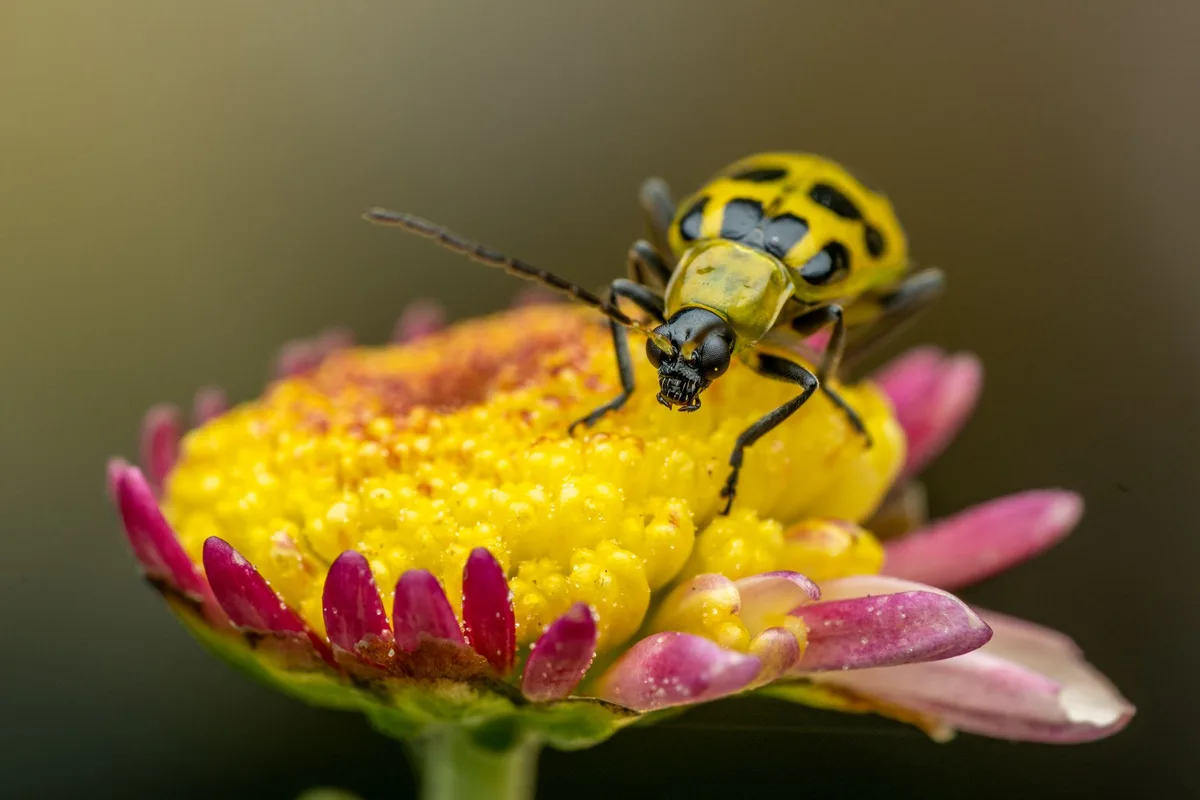
You’ll likely face one of two species. Both cause similar damage, but knowing which one you’re dealing with helps with control choices.
Striped cucumber beetle (Acalymma vittatum) is the more common culprit east of the Rockies. It’s about a quarter-inch long, with a yellow-green body and three black stripes running down its back.
Spotted cucumber beetle (Diabrotica undecimpunctata) is more common in the South and West. It’s the same size, but instead of stripes, it has 12 black spots on its back.
Both species feed on cucurbits like cucumbers, squash, melons, and pumpkins. Both can transmit bacterial wilt. The striped beetle is the primary vector in most regions, but the spotted beetle is equally dangerous if it’s present in your area.
Identification tip: look at the wing covers. Stripes = striped. Spots = spotted.
Simple as that.
The Bacterial Wilt Threat (What Makes This Pest Different)

Bacterial wilt is what separates cucumber beetles from most other garden pests. Aphids and squash bugs cause damage, but they rarely kill a mature plant overnight. Wilt does.
The bacteria overwinters inside adult beetles. When the beetle feeds on a young cucurbit leaf, it leaves behind infected droppings or saliva. The bacteria enters through the feeding wound and multiplies in the plant’s water-conducting tissue.
Symptoms start as a single wilting leaf. Often on a hot afternoon, the plant looks droopy, then recovers overnight. Within a few days, the wilting spreads and becomes permanent.
Cut a wilted stem and you’ll see a sticky, white sap when you press the cut ends together. That’s a classic sign of bacterial wilt.
No chemical cure exists. Remove the plant and dispose of it in the trash, not the compost pile. Do not let infected plants sit in the garden; the bacteria can spread to nearby vines through root grafts or splash water.
The Decision Tree: Choose Your Prevention Path
Your prevention strategy depends on your situation. Use these questions to pick the right path.
Are you starting from seed or transplants?
- If seed: use row covers immediately after planting. Seeds don’t need pollination yet, so you can keep covers on for weeks.
- If transplants: the plants are already vulnerable. Cover them the same day you put them in the ground. Wait? You risk beetle attack on the first warm day.
Did you have cucumber beetles last season?
- If yes: high risk of overwintered beetles returning. Use row covers without fail. Consider a trap crop like Blue Hubbard squash planted 20, 50 feet away. Spray the trap crop to kill beetles that gather there.
- If no: you may still get beetles from neighboring gardens. Use covers anyway for the first 4, 6 weeks.
What’s your risk tolerance for spraying?
- If you want zero sprays: rely on row covers, crop rotation (3, 4 years away from cucurbits), and handpicking the few beetles that appear. Accept some damage.
- If you’re okay with organic sprays: use neem oil or pyrethrin only after covers come off. Apply in the evening to avoid harming pollinators. Reapply after rain.
- If you’re open to conventional insecticides: carbaryl or permethrin work but kill bees. Use only as a last resort and never on open flowers.
Here’s a quick summary table:
| Situation | Best Prevention Path |
|---|---|
| Seed planting, first year | Row covers until flowering |
| Transplants, high beetle pressure | Row covers + trap crop + neem oil after cover removal |
| No covers, beetles appear | Neem oil or pyrethrin spray, scout daily |
| History of bacterial wilt | Row covers mandatory, remove and dispose of any wilted plant immediately |
The decision tree boils down to this: use covers early, act fast when beetles appear, and prioritize prevention over reaction. A little effort in spring saves a lot of heartbreak in summer.
Your Prevention Workflow (Step by Step)

Follow these steps in order. Each builds on the one before it. Skip one, and you’re giving beetles an opening.
Step 1: Prep the site.
Remove all leftover cucurbit vines from last season. Till or turn the soil shallowly (2, 3 inches deep) to disrupt overwintering beetles. Rotate to a bed that hasn’t held cucumbers, squash, or melons for at least three years.
If you can’t rotate, consider a complete soil solarization session in late summer.
Step 2: Plant your cucurbits.
Direct-seed or transplant after soil hits 55°F. Use a soil thermometer to be sure. In most zones, that means late April to mid-May.
Plant trap crops like Blue Hubbard squash at the garden edge, 20, 50 feet from your main bed.
Step 3: Cover immediately.
Drape floating row covers over the soil right after seeding or transplanting. Bury the edges with soil, or weigh them down with boards or landscape staples. The cover must be sealed on all sides.
A gap of just an inch lets beetles crawl underneath.
Step 4: Leave covers on until flowering.
For cucumbers and melons, that’s about 4, 6 weeks from seeding. For summer squash, it’s closer to 3, 4 weeks. Check underneath weekly to make sure the plants are healthy and no beetles sneaked in.
Step 5: Remove covers and scout.
On a calm morning, pull the covers and inspect every plant. Look on the undersides of leaves and inside blossoms. If you see any beetles, handpick them or use a yellow sticky trap nearby to monitor numbers.
Step 6: Apply treatments if needed.
If you find 1 beetle per plant on seedlings or 5 per plant on mature vines, it’s time to act. Dust diatomaceous earth lightly over leaves (reapply after rain). Or spray neem oil in the evening, avoiding bloom.
For heavy pressure, use pyrethrin.
Step 7: Manage the end of season.
After harvest, pull all cucurbit vines and compost them far from the garden. Do not leave plant debris on the soil. Till shallowly again to expose any overwintering beetles to birds and weather.
Common Mistakes That Sabotage Your Efforts
Even experienced gardeners slip up on these. Here’s what to watch for.
Waiting to cover. Many people wait until they see beetles. By then, the beetles have already fed and potentially transmitted wilt. Cover the day you plant, not the day beetles show up.
Using row covers that touch the plants. If the fabric rests directly on leaves, beetles can bite through it. Use hoops or stakes to keep the fabric suspended a few inches above the plants.
Forgetting to seal edges. A loose corner is an open door. Weigh down row covers with soil, bricks, or sandbags. Check after heavy rain, wind, and irrigation.
Removing covers too late. If you leave covers on after flowering, you block pollinators. Female flowers won’t get pollen, so you get no fruit. Remove covers when you see the first open female flower.
Spraying during the day. Neem oil, pyrethrin, and carbaryl all harm bees. Spray only in the late evening after pollinators have returned to their hives. Never spray open flowers.
Relying on one method alone. Row covers are great but not foolproof. Combine them with crop rotation, trap crops, and early scouting for the best results.
Pro Tips from Experienced Growers
These come from veteran vegetable growers and extension specialists. They’re the kind of tricks you learn after a few tough seasons.
Time your planting with the moon. Well, not literally. But research shows that delaying planting by just two weeks after the first beetle emergence peak reduces beetle pressure significantly in many regions. Use your local extension service’s pest alert to find your peak emergence window.
Use kaolin clay as a spray. Kaolin clay (brand name Surround WP) coats leaves in a fine white film. Beetles don’t like landing on it. It’s safe for bees once dry and can be used alongside row covers.
Apply every 7, 14 days during wet weather.
Plant radishes as a companion. Some growers report that interplanting radishes with cucurbits repels cucumber beetles. The evidence is mostly anecdotal, but it’s cheap and easy to try. Plant radish seeds every foot along the row.
Build beetle traps early. Fill a yellow bowl with soapy water and place it at the edge of the garden. Yellow attracts cucumber beetles. They land, get trapped, and drown.
Replace the water every few days.
Handpick in the morning. Beetles are sluggish when it’s cool. Walk the garden at dawn with a jar of soapy water and flick beetles in. It sounds tedious, but it works.
One motivated gardener can clear a dozen plants in ten minutes.
Safety First: Protecting Pollinators and Yourself
Cucumber beetle prevention often involves chemicals. Use them wisely.
Before you spray, identify the pest. Make sure you’re looking at striped or spotted cucumber beetles, not squash bugs or beneficial insects like soldier beetles. A quick ID check can save you from harming helpers.
Never spray open flowers. This is the golden rule. Bees visit cucurbit flowers from early morning until late afternoon. Spray only after sunset when bees are gone.
Choose products with short residual times. Neem oil breaks down in a few hours under sunlight. Pyrethrin degrades within a day. Conventional carbaryl can stay active for a week, so it’s especially risky for bees.
Wear basic protection. When dusting diatomaceous earth, wear a dust mask and goggles. The fine particles can irritate your lungs and eyes. When spraying any concentrate, wear gloves and long sleeves.
Store products according to the label. Keep them out of reach of children and pets. Never pour leftover spray down a drain. Dispose of containers as instructed by your local waste authority.
Real-World Scenario: A Home Gardener’s First Infestation
Let’s walk through a typical case. It shows how the workflow plays out in practice.
Background: A gardener in Ohio plants three hills of zucchini in early May. She doesn’t use row covers because she wants to keep things simple. By mid-May, she notices small yellow beetles on the leaves.
Week 1: She ignores them. The plants look fine. She waters and waits.
Week 2: One zucchini plant starts wilting on hot afternoons. She checks the stem. It’s sticky inside.
That’s bacterial wilt. She pulls the plant and tosses it.
Week 3: A second plant wilts. Now she panics. She runs to the garden center and buys a neem oil spray.
She applies it in the morning. The bees arrive and land on open flowers. She realizes her mistake.
Week 4: The third plant has beetles all over it. She sprays pyrethrin at dusk. The next morning, fewer beetles.
But the plant already shows early wilt signs.
Outcome: She harvests only a handful of zucchini from one surviving plant. The other three are dead.
What she would do differently: Use row covers next year. Put them on at planting. Scout daily after removing them.
Spray only in the evening. Plant a trap crop. Rotate to a new bed.
This scenario happens every year to thousands of home gardeners. The good news? It’s completely preventable.
Start with the workflow above, and you’ll skip the heartbreak.
Frequently Asked Questions
How do I know if I have cucumber beetles or squash bugs?
Cucumber beetles are smaller (about 1/4 inch) and have either stripes or spots. Squash bugs are larger, darker gray-brown, and have a flattened shield shape. Squash bugs also emit a strong odor when crushed.
A quick online image search helps if you are unsure.
Can I use neem oil on cucumber flowers?
Only if you spray in the late evening after bees have stopped foraging. Neem oil can harm bees if applied directly. Never spray open flowers during daylight hours.
Focus on the leaves and stems instead.
Do cucumber beetles only attack cucumbers?
No. They feed on all cucurbits including squash, melons, pumpkins, and gourds. Striped cucumber beetles prefer cucumbers and melons.
Spotted cucumber beetles have a wider diet and will also feed on beans and corn.
How long should I keep row covers on?
Keep them on until the plants start flowering. For cucumbers and melons, that is usually 4 to 6 weeks after seeding. For summer squash, it is closer to 3 to 4 weeks.
Remove covers as soon as you see the first female flowers open.
Can I compost plants infected with bacterial wilt?
No. The bacteria can survive in plant debris and reinfect next year’s crop. Dispose of wilted plants in the trash or burn them.
Do not add them to your compost pile.
What is the best trap crop for cucumber beetles?
Blue Hubbard squash is the most effective trap crop. Buttercup squash also works well. Plant them 20 to 50 feet away from your main cucurbit bed.
Monitor the trap crop closely and spray it with insecticide to kill the beetles that gather there.
Final Verdict: Your Personalized Action Plan
You now have everything you need to prevent cucumber beetles. The decision tree earlier in this guide helps you pick the right path based on your garden history and risk tolerance.
Here is a quick checklist to keep handy next season.
- Rotate cucurbits to a bed that has not held them for 3 years.
- Plant after soil reaches 55°F.
- Cover with floating row covers immediately after seeding or transplanting.
- Seal all edges of the covers.
- Remove covers at first flowering.
- Scout daily for beetles.
- Apply diatomaceous earth, neem oil, or pyrethrin only when needed.
- Pull and discard any plants that show wilt symptoms.
- Clean up all cucurbit vines at the end of the season.
Stick to this plan and you will spend less time fighting beetles and more time enjoying your harvest. The window for prevention is small, but you now know exactly when to act. Good luck out there.