Guide to Japanese Beetle Life Cycle in 2026 (Complete Guide)
You glance out at your lawn and spot those telltale skeletonized leaves. Or maybe you've noticed patches of brown turf that peel back like old carpet. Either way, you're dealing with the Japanese beetle life cycle, and understanding it is the only way to get ahead of the damage.
The Japanese beetle (Popillia japonica) completes its entire life cycle in one year, but it spends most of that time hidden underground as a grub. As of 2026, this invasive pest has spread across most of the eastern and midwestern United States, with established populations reaching as far west as California and into parts of Canada. Here's the thing: you can't control what you can't see.
That's why knowing what each stage looks like and when it happens is the difference between a healthy yard and a beetle buffet.
Quick Answer
The Japanese beetle life cycle has four stages: egg, larva (grub), pupa, and adult. Adults emerge in early summer and feed for 30 to 60 days. Females lay eggs in moist turf.
Grubs hatch and feed on roots through summer. They overwinter deep in soil and emerge as adults the following year. One full cycle takes one year.
Why Identifying Each Life Stage Matters for Control
Timing is everything with Japanese beetles. Spray the adults too early and you miss the peak emergence. Treat the grubs too late and they've already moved deep into the soil for winter.
Each life stage requires a different control method, and the window for effective treatment is surprisingly narrow.
The adults you see flying around in June and July are the same beetles that were grubs in your lawn the previous fall. That means what you do in late summer directly affects how many beetles show up the next year. Our research shows that homeowners who learn to identify each stage and act within the right two-week window see significantly less damage than those who spray reactively.
Another reason identification matters: not every grub you dig up is a Japanese beetle. There are several species of white grubs in North American turf, and they respond to different treatments. Misidentifying them wastes time, money, and introduces unnecessary chemicals into your yard.
This visual guide walks you through each stage so you know exactly what to look for and when to act.
The Four Stages at a Glance (Visual Reference)
Here is the quick version of the Japanese beetle life cycle, from start to finish.
| Stage | Duration | Where to Find It | What It Looks Like |
|---|---|---|---|
| Egg | 10 to 14 days | 2 to 4 inches deep in moist soil | Small white oval, about 1.5 mm |
| Larva (grub) | 8 to 10 months | Turf root zone, overwinters deeper | White C-shaped body with brown head |
| Pupa | 7 to 14 days | Soil chamber, 2 to 3 inches deep | Tan to brown, legless, immobile |
| Adult | 30 to 60 days | On host plants, foliage, flowers | 10 to 12 mm, metallic green with copper wing covers |
The grub stage takes up the vast majority of the beetle's life. From late summer through the following spring, the insect is living under your grass. That's a long time to be causing root damage without you even knowing it.
If you're dealing with lawn issues alongside beetle problems, the right approach to lawn care matters. Pairing your pest control with proper fertilization and species selection keeps your yard resilient. Healthy turf handles grub pressure better than stressed lawns do.
Stage 1: Eggs – What You Never See (But Should Understand)
Adult female beetles emerge from the soil in early summer, feed for a couple of weeks, and then start laying eggs. They're picky about where they lay them. Moist, well-watered turf is their top choice.
Females burrow about 2 to 4 inches into the soil and deposit one to three eggs at a time. Over her lifetime, one female can lay 40 to 60 eggs.
You will almost never see the eggs yourself. They're tiny, translucent, and buried underground. But understanding where and when eggs are laid helps you disrupt the cycle before grubs even hatch.
The timing of egg laying depends on your region and weather. In most of the beetle's range, egg laying peaks in late July through early August. That's the window when keeping your lawn slightly drier can make a difference.
Females prefer moist soil for egg survival, so irrigation practices matter.
Here is what affects egg survival:
- Soil moisture: Dry soil kills eggs quickly. Irrigated lawns are beetle nurseries.
- Soil type: Light sandy soils drain fast and discourage egg laying. Heavy clay holds moisture longer.
- Turf density: Thick, healthy grass gives cover for females to burrow undetected.
The eggs hatch in about 10 to 14 days, depending on soil temperature. Warmer soil speeds up development. Once they hatch, the tiny first-instar grubs immediately start feeding on fine root hairs.
Stage 2: Grubs – The C-Shaped Culprits Below Ground
This is the stage that does the most damage to your lawn. Japanese beetle grubs are classic white grubs: C-shaped, cream-colored bodies with a distinctive brown head capsule. They have three pairs of legs near the head end, and the rear of the body is darker where you can see the digestive tract through the skin.
Grubs go through three growth stages called instars. Each instar is larger and hungrier than the last.
- First instar: About 1/8 inch long. Feeds on fine roots. Hard to spot without a close look.
- Second instar: About 1/4 inch long. Starts chewing through thicker roots.
- Third instar: Up to 1 inch long. This is the overwintering stage and the one that causes visible turf damage.
The damage shows up as irregular brown patches in your lawn, especially during dry spells. If you pull on the grass and it lifts like a loose carpet, grubs have likely severed the roots underneath. Birds, skunks, and raccoons digging up your lawn at night is another sure sign.
They're after the protein-rich grubs.
Grub feeding peaks in late summer when soil temperatures are warmest. As fall cools down, grubs dig deeper into the soil, sometimes 4 to 8 inches down, to overwinter. They stop feeding and go dormant until spring.
How to Tell a Japanese Beetle Grub from Other White Grubs
Not all white grubs are Japanese beetles. Several species share the same C-shaped grub appearance, including June beetles, masked chafers, and European chafers. Here's how to tell them apart.
The main difference is the pattern of hairs on the underside of the tail segment. You need a hand lens or a close macro photo to see it. Japanese beetle grubs have a V-shaped row of short spines.
Other species have different patterns.
| Grub Species | Raster Pattern (Tail Hairs) | Typical Lawn Damage |
|---|---|---|
| Japanese beetle | Two parallel rows forming a V | Moderate to severe |
| June beetle | Random scatter of hairs | Less common in turf |
| Masked chafer | Transverse row of hairs | Severe, sudden |
| European chafer | Z-shaped pattern | Very severe |
If you're unsure what you're dealing with, take a sample to your local county extension office. They can confirm the species for free in most states. That saves you from applying the wrong treatment.
Picking the right approach for your lawn means thinking about the whole system. The best insecticide or biological control won't fix a lawn that's already stressed from poor soil or wrong watering habits. A healthy lawn is your first line of defense.
Stage 3: Pupae – The Hidden Transformation in Soil
The pupal stage is the shortest and least visible part of the life cycle. Once the third-instar grub finishes feeding in spring, it moves back up toward the soil surface. It constructs a small, smooth-walled chamber about 2 to 3 inches deep.
Inside that chamber, the grub transforms. It stops moving. Its body darkens from cream to a tan or reddish brown.
Legs and wing pads become visible pressed against the body. The pupa does not eat. It does not move if you disturb it.
This stage lasts 7 to 14 days, depending on soil temperature.
You will only find pupae if you are actively digging during late spring to early summer. They look like small, mummified beetles. If you find one, adult emergence is just days away.
The timing of pupation depends on your region. In warmer southern areas, it can happen as early as mid-May. In northern states, it may not occur until mid-June.
Soil temperature is the driving factor. Once soil hits about 50 to 55 degrees Fahrenheit consistently, grubs stop feeding and begin pupation.
If you are scouting for pupae, look in the same areas where you found grubs earlier. The pupal chamber is usually within the top few inches of soil. Gently sift through the dirt with your fingers.
A trowel can crush them easily.
Stage 4: Adults – The Iridescent Beetles You Actually Notice
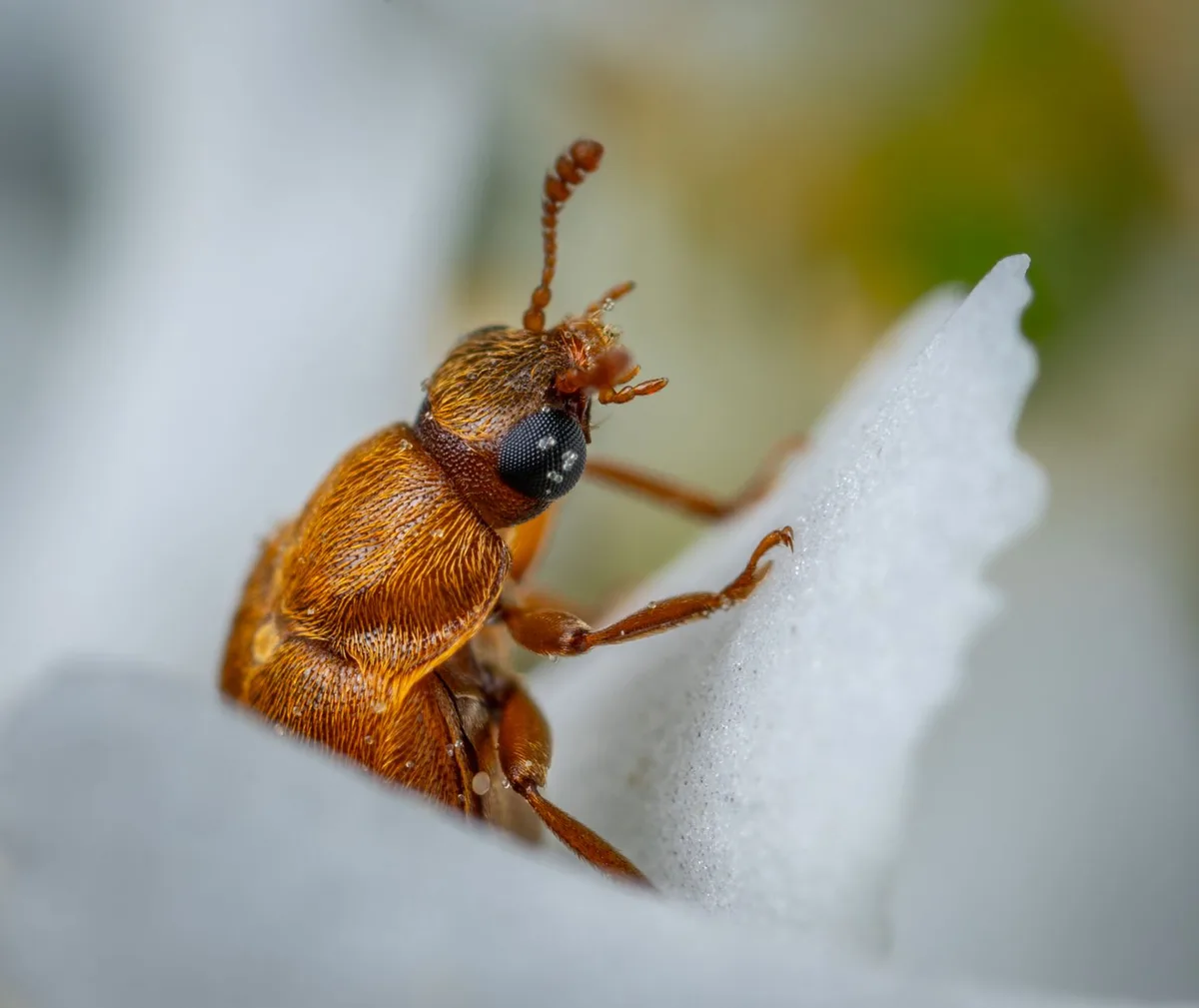
This is the stage everyone recognizes. The adult Japanese beetle is about 10 to 12 millimeters long. It has a metallic green head and thorax.
The wing covers are a shiny copper-brown. The underside of the body is metallic green as well.
The most distinctive feature is the row of five small white tufts of hair on each side of the abdomen. These tufts are key for positive identification. No other common beetle in North America has that exact pattern.
Adults emerge from the soil in waves starting in late June or early July. The peak emergence usually hits around early to mid-July. However, this varies by location and weather.
Our research indicates that tracking degree days is the most reliable way to predict emergence in your specific town.
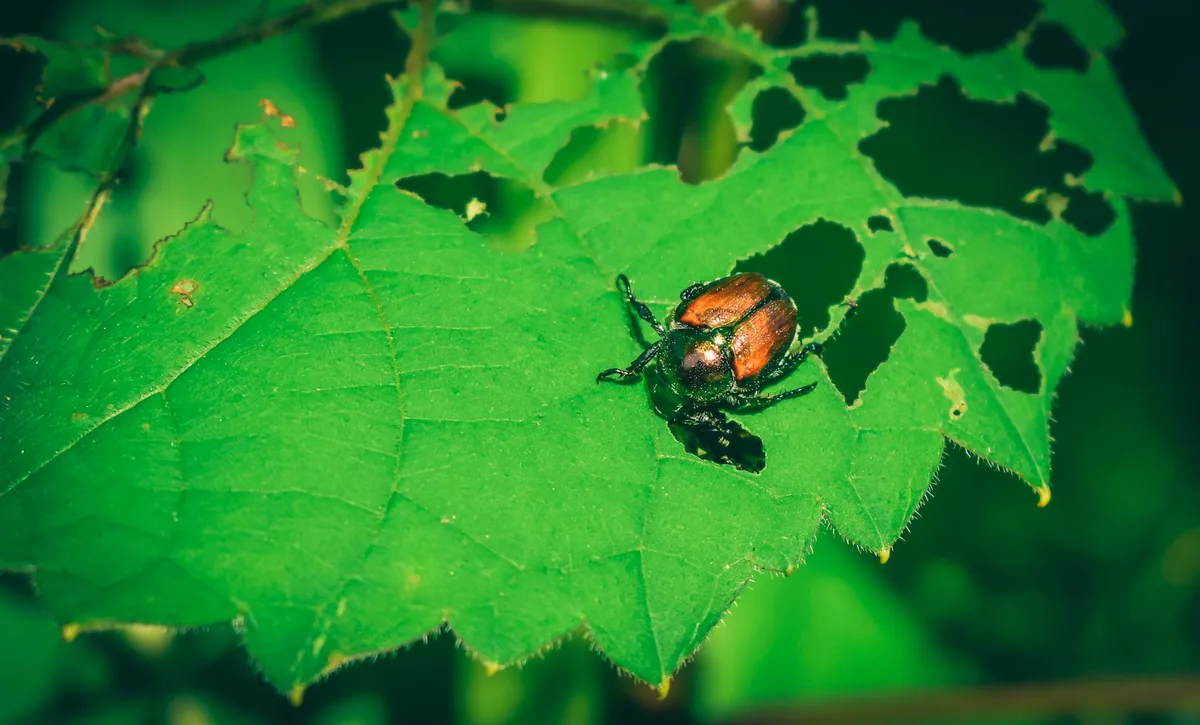
Once they emerge, adults fly to nearby host plants. They feed on the upper surface of leaves, chewing out the tissue between the veins. This creates a skeletonized pattern that is unmistakable.
The damage looks like lace was cut into the leaf.
Adults release aggregation pheromones when they find a good food source. That means once a few beetles land on a plant, more follow quickly. A plant can go from clean to covered in hours.
Key Visual Cues: Wing Covers, White Tufts, and Skeletonized Leaves
Here is what to check when you spot a beetle you think is a Japanese beetle.
- White tufts: Look at the sides of the abdomen. Five distinct tufts on each side. These are visible even when the beetle is resting.
- Wing cover color: Copper-brown with a metallic sheen. Not green or black.
- Skeletonized leaves: The feeding damage looks like a windowpane of veins. The leaf remains intact structurally but the green tissue is gone.
- Aggregation behavior: Beetles cluster on the same plant. If you see dozens on one rose bush, they are almost certainly Japanese beetles.
The feeding period lasts 30 to 60 days. During that time, females periodically return to the soil to lay eggs. A single female can lay eggs multiple times throughout the summer.
Common Visual Mistakes That Mess Up Your Timing
Even experienced gardeners make identification mistakes. Here are the most common ones and how to avoid them.
Mistake 1: Confusing skeletonized damage with other pests
Several insects cause similar leaf damage. Flea beetles leave small round holes. Caterpillars chew irregular edges.
Slugs leave slime trails and smooth-edged holes. Japanese beetle damage is unique because the veins remain intact while the soft tissue between them is eaten. If you look at the leaf and see a lace pattern, it is likely Japanese beetles.
Mistake 2: Misidentifying the adult beetle
The green June beetle looks similar at first glance. It is larger (about 20 millimeters) and does not have the white tufts. The rose chafer is another look-alike.
It is tan with long legs and lacks the metallic green head. The white tufts are the definitive feature.
Mistake 3: Confusing the grub with other white grubs
As we covered earlier, the raster pattern on the underside of the tail segment is the reliable way to tell them apart. Japanese beetle grubs have a V-shaped row of spines. If you dig up a grub and the raster pattern looks different, you may be dealing with a different species that requires a different treatment.
Mistake 4: Treating grubs when they are too deep
Overwintering grubs sit 4 to 8 inches deep in the soil. Surface applications of nematodes or milky spore will not reach them. The correct timing for grub treatment is late July to early August.
That is when newly hatched grubs are in the top 2 inches of soil and actively feeding.
If you are unsure of your identification, take a photo or a sample to your local extension office. A quick confirmation can save you a season of ineffective treatment.
Scouting Your Lawn and Garden: A Season-by-Season Visual Checklist
Knowing what to look for and when keeps you ahead of the beetles. Here is a simple scouting routine for each season.
Spring (March to May)
- Dig several 4-inch soil samples in areas that had grub damage the previous year.
- Count the grubs you find. More than 5 to 10 per square foot may warrant treatment.
- Look for them in the top 2 to 3 inches. They are moving up from overwintering depth.
Early Summer (June)
- Check the edges of your lawn near flower beds. This is where adults emerge first.
- Inspect favored host plants daily: roses, grapevines, linden trees, birch trees, raspberries.
- Look for the first skeletonized leaves. That is your early warning sign.
Mid to Late Summer (July to August)
- This is the peak adult feeding period. Check plants every few days.
- Monitor moist areas of the lawn. This is where females will lay eggs.
- In late July, start digging for new grubs. Look for first-instar grubs at about 1/8 inch.
Fall (September to October)
- Watch for brown patches in the lawn that peel up like carpet.
- Check for animal digging. Skunks and raccoons dig up grubs at night.
- Dig soil samples to assess grub population for the next year.
| Season | What to Look For | Where to Look |
|---|---|---|
| Spring | Overwintering grubs moving up | Top 2-3 inches of soil |
| Early Summer | Adult emergence, first skeletonized leaves | Host plant leaves |
| Mid Summer | Adult feeding, egg-laying sites | Leaves, moist turf |
| Late Summer | Young grubs at root zone | Top 1-2 inches of soil |
| Fall | Mature grubs, turf damage, animal digging | Turf root zone |
Matching Life Cycle Stage to the Right Control Method
Not every stage responds to the same treatment. Applying the wrong control at the wrong time wastes money and chemicals. Here is what works for each stage.
| Life Stage | Best Control Method | Timing Window |
|---|---|---|
| Egg | Reduce irrigation in moist turf areas | Late July to early August |
| Young grub (first/second instar) | Milky spore, beneficial nematodes, or preventive insecticides | Late July through August |
| Mature grub (third instar) | Curative insecticides (if population is high) | September (only if needed) |
| Overwintering grub | No effective treatment (too deep) | Do not treat |
| Pupa | No treatment needed (short stage) | Do not treat |
| Adult | Hand-picking, insecticidal soap, neem oil, or pyrethroids | Late June through August |
Eggs: The easiest way to disrupt egg survival is to keep your lawn slightly drier during the egg-laying period. Female beetles seek out moist soil. If you can let the lawn dry out between waterings in late July and early August, fewer eggs will survive.
Young grubs: This is the most effective treatment window. Milky spore bacteria (Paenibacillus popilliae) and beneficial nematodes (Heterorhabditis bacteriophora or Steinernema feltiae) work best on small, actively feeding grubs. Preventive chemical insecticides like imidacloprid or chlorantraniliprole are also applied during this window.
Adults: Hand-picking is surprisingly effective if you stay consistent. Knock beetles into a bucket of soapy water early in the morning when they are sluggish. Insecticidal soap and neem oil provide some control.
Pyrethroid sprays work well but can harm pollinators, so avoid spraying open flowers.
Mature grubs: If you missed the early window and have high grub populations in fall, you can use a curative insecticide like trichlorfon. These are fast-acting but have a shorter window of effectiveness. Only use them if you count more than 10 grubs per square foot.
Quick Reference: What to Look For Each Month
Here is a month-by-month scouting guide. Use it to stay ahead of the beetles.
| Month | Life Stage Active | What to Check | Action If Found |
|---|---|---|---|
| May | Overwintering grubs moving up | Soil 2-3 inches deep | No treatment needed yet |
| June | Pupae, adults emerging | Soil near lawn edges, host plants | Start monitoring leaves daily |
| July | Adults feeding, eggs laid | Leaves, moist turf | Begin hand-picking or spraying |
| August | Young grubs in root zone | Top 1-2 inches of soil | Apply nematodes or milky spore |
| September | Mature grubs, turf damage | Brown patches, animal digging | Only treat if over 10 per square foot |
Expert Tips for Using Soil Temperature and Degree Days (Without the Math)
You do not need a weather station to predict beetle emergence. Your local cooperative extension office publishes degree day data for your area.
Degree days measure accumulated heat. For Japanese beetles, the base temperature is 50 degrees Fahrenheit. When cumulative degree days hit about 900 to 1050, adults start emerging.
You can find this data online for free. Search for your state's extension degree day tracker. Check it weekly starting in June.
When numbers approach 900, step up your scouting.
The Visual Timeline from Egg to Adult (How Long Each Stage Lasts)
Here is the total timeline from egg to adult beetle.
- Egg: 10 to 14 days
- First instar grub: 2 to 3 weeks
- Second instar grub: 2 to 3 weeks
- Third instar grub: 5 to 7 months (includes overwintering)
- Pupa: 7 to 14 days
- Adult: 30 to 60 days
The whole cycle takes one year. Most of that time is spent underground as a grub.
Frequently Asked Questions
Are Japanese beetle traps effective?
Traps attract more beetles than they catch in most cases. Research shows they can increase damage in your immediate yard. Avoid placing them near gardens or lawns.
Can milky spore eliminate all grubs permanently?
Milky spore builds up in the soil over years. It reduces grub populations but does not eliminate them entirely. It works best as part of an integrated pest management plan.
Do beneficial nematodes work in all soil types?
Nematodes need moist, well-aerated soil to survive. They work well in loamy soil but struggle in heavy clay or dry sand. Water your lawn before and after application.
Should I treat my lawn if I see only a few grubs?
No. Treatment thresholds are 5 to 10 grubs per square foot for healthy lawns and 2 to 3 for stressed lawns. Low numbers cause minimal damage and support beneficial wildlife.
What is the best time of day to hand-pick adults?
Early morning when temperatures are cool. Beetles are sluggish and less likely to fly away. Knock them into a bucket of soapy water for best results.