Guide to House Fly Life Cycle in 2026 (Everything You Need)
You’re chasing flies around your kitchen again. The ones you smashed yesterday are back today, and the buzzing seems louder than before. You clean the counters, take out the trash, maybe set out a trap, but nothing really stops the cycle.
That’s because you’re fighting adults when the real battle is hiding somewhere else.
Understanding the house fly life cycle is the only way to actually break it. These insects complete a full generation from egg to adult in as little as 7 days when temperatures stay between 77 and 86°F. That means one female can produce more than 500 offspring in her lifetime if you don’t interrupt the process at the right stage.
Most people never see the early stages because they don’t know what to look for. So let’s fix that.
Why Visual ID Is the Only Way to Beat the House Fly Life Cycle
Flies don’t just appear out of nowhere. Every adult you swat came from an egg laid somewhere dark, warm, and moist. If you can’t identify the eggs, larvae, and pupae hiding in your home or business, you’ll keep treating the symptom instead of the source.
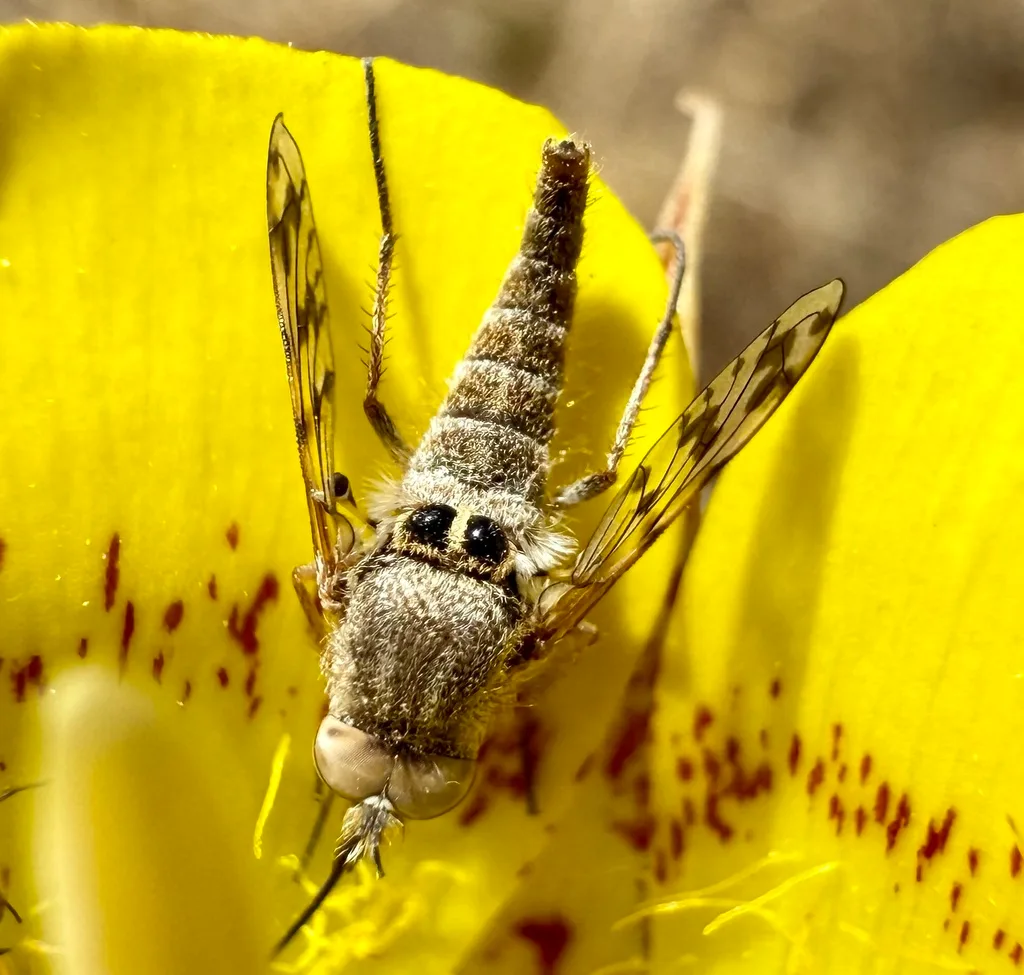
A labeled diagram of the four stages eggs, maggots, pupae, and adults gives you a clear reference. But the real power comes from knowing what each stage looks like in person. Eggs are not tiny rice grains.
Pupae are not cockroach droppings. The visual cues are subtle. Once you learn them, you can spot a breeding site in under a minute.
Here’s the thing: flies are lazy about where they lay eggs. They choose the nearest damp, rotting spot. That could be a crack under your fridge, a pet food dish you forgot to wash, or the slime layer inside a drain.
If you don’t inspect visually, you’ll miss the actual nursery.
What Each Stage Actually Looks Like (Pictures Won’t Replace This)
Let’s go stage by stage. Each one has distinct physical features you can learn in five minutes.
Eggs the clusters you’ll miss if you aren’t looking
House fly eggs are about 1 millimeter long. White, oval, laid in tight clusters of 100 to 150. They look like tiny grains of salt or a cluster of very small rice pieces stuck together.
Fresh eggs are shiny and moist. Within a few hours, they dry out and become harder to spot.
You’ll find them most often on moist organic material. Think the wet layer under a garbage bag, the damp edge of a compost pile, or soiled bedding in an animal pen. If you see a patch of white specks that seem out of place, check with a flashlight.
They hatch in 8 to 12 hours at room temperature.
Maggots size, color, and movement cues per instar
Maggots are the larval stage. They go through three growth phases called instars. A first-instar maggot is about 3 millimeters long and nearly transparent with a dark head.
By the third instar, it reaches 9 to 12 millimeters and turns creamy white with a visible dark gut line.
Key visual traits: no legs, a tapered head that looks like a tiny point, and distinct crawling movements that resemble a looping inchworm motion. When disturbed, they curl up. If you see a mass of small pale worms in your trash, you’re looking at a late-instar group ready to pupate.
A quick way to tell age: first-instar maggots are hard to see without magnification. Second-instar are about the size of a grain of rice. Third-instar are fat, sluggish, and about the length of a smaller bean.
Pupae the brown capsule everyone mistakes for something else
The pupal stage is where the real confusion happens. A house fly pupa is a barrel-shaped capsule, about 5 to 6 millimeters long. It starts as a pale yellowish-brown and darkens to a deep reddish-brown over a day or two.
People mistake them for cockroach egg cases (oothecae), mouse droppings, or even coffee grounds. But cockroach oothecae are larger, ridged, and elongated. Mouse droppings have pointed ends.
A house fly puparium is smooth, rounded at both ends, and slightly flattened on one side.
You’ll find pupae in dry areas near the breeding site. Under rugs, along baseboards, in cracks in concrete, or inside the bottom of a trash can. They look like small brown seeds.
Adult flies sexing them at a glance
Adult house flies are 6 to 7 millimeters long. Gray thorax with four dark longitudinal stripes. Red compound eyes.
Translucent wings held slightly apart at rest.
Sexing them is useful for understanding reproductive potential. Males have narrower eye spacing practically touching on the top of the head. Females have wider spaced eyes, about the width of an extra eye lens.
The female’s abdomen is also slightly more rounded.
The Visual Timeline from Egg to Adult (Temperature Dependent)
Timing matters for two reasons. First, it tells you when to expect the next generation. Second, it helps you figure out how long you need to maintain your control measures.
Here’s the breakdown at optimal temperatures around 80°F.
| Stage | Duration | Key Visual Cues |
|---|---|---|
| Egg | 8 to 12 hours | White clusters, moist, shiny |
| First instar larva | Roughly 1 day | Transparent, tiny, hard to see |
| Second instar larva | 1 to 1.5 days | Creamy, about 3 mm, visible to naked eye |
| Third instar larva | 1.5 to 2 days | 9 to 12 mm, creamy, dark gut line, sluggish |
| Pupa | 3 to 6 days | Barrel-shaped, brown, dry, found away from moisture |
| Adult emergence | Immediately after | Soft wings, whitish body initially, hardens in hours |
If temperatures drop below 60°F, development slows dramatically. At 50°F, it stops entirely. Above 100°F, larvae die.
That’s why fly problems peak in summer and early fall in most temperate regions.
One important note: in heated indoor spaces, the life cycle runs year-round. A heated kitchen or a warm barn can produce continuous generations even in winter.
5 Visual Mistakes That Keep Your Fly Problem Coming Back
You can clean every day and still have flies. Here’s why.
Mistaking pupae for dirt or roach eggs. This is the most common error. Brown capsules in a crack under the sink look exactly like debris. People sweep them away without realizing they just removed a batch that would emerge in three days. If you see small brown seeds along baseboards, inspect them closely. Roll one between your fingers. If it’s hard and hollow, it’s a pupa.
Missing eggs in dark crevices. Eggs are tiny and white. They blend into light-colored surfaces and hide in shadows. A flashlight check behind the fridge, under the stove, and inside the trash can rim reveals what your eyes skip in normal light.
Assuming one adult kill solves the problem. When you see five flies, there are likely fifty pupae about to emerge. Killing the adults does nothing to the pupal stage. They keep hatching for days.
Not checking dry areas for pupae. Larvae crawl away from the moist breeding site to pupate. They move up walls, under rugs, into corners. If you only clean the wet spot, you leave the pupae behind.
Confusing house flies with other species. Blow flies are metallic green or blue. Fruit flies are tiny with red eyes and a tan body. Drain flies look like tiny moths with fuzzy wings. A house fly has four stripes on its thorax. Using the wrong control method wastes time and money. For example, fruit fly traps don’t attract house flies.
How to Inspect for Every Stage in Your Home or Business
A thorough inspection takes about 20 minutes once you know the routine.
Start by following the flies themselves. Where do they land most often? Usually within 10 to 15 feet of a breeding site.
Look for fly speck small dark dots on walls, ceilings, and light fixtures. Those are regurgitated digestive fluids and fecal spots. Heavy specking means a nearby breeding source.
Work outward from the worst speckling. Use a bright flashlight and a magnifying glass or a jeweler’s loupe. Check these areas in order:
- Underneath and behind the refrigerator and stove
- Inside the bottom of kitchen trash cans (including the outer lip)
- Drain pipes in sinks and floor drains
- Pet food bowls and water dishes
- Compost bins with visible moisture
- Garbage disposal splash guard rubber
- Baseboards and corners within 6 feet of the breeding area
Focus on cracks and crevices. Flies love gaps. If you can slide a piece of paper into a crack, a maggot can crawl into it.
When you find a stage, identify it using the visual cues above. That tells you how long you have. Eggs mean emergence in about a week.
Third-instar maggots mean pupation in hours. Pupae mean adults in a few days.
If you’re struggling to locate the source despite heavy adult activity, use a simple sticky trap placed near the worst area. That traps the adults and gives you a count. High numbers in a trap within 24 hours confirm you’re in the right zone.
For ongoing monitoring, check sticky traps weekly. Replace them when they’re full. If you catch fewer than five adults per trap per week, you’re probably winning.
More than twenty means a breeding site is still active.
And if you’re dealing with a persistent indoor problem, using the right tools makes a difference. A good set of indoor fly traps placed near suspected breeding zones can help you identify hot spots faster than random spraying ever will.
Quick-Reference ID Chart (Stage, Size, Color, Where to Look, Time)
This chart is the one you’ll come back to. Print it out or save it to your phone. When you find something suspicious, check it here first.
| Stage | Size | Color | Where to Find It | Duration at 80°F |
|---|---|---|---|---|
| Egg | 1 mm | White, shiny, moist | Damp organic material, trash can rims, pet waste | 8–12 hours |
| 1st instar larva | 3 mm | Nearly transparent, dark head | Same location as eggs, often buried in food waste | ~1 day |
| 2nd instar larva | 5 mm | Creamy off-white | Still in breeding material, starting to crawl outward | 1–1.5 days |
| 3rd instar larva | 9–12 mm | Creamy white, dark gut line | Migrating away from wet area, along baseboards, under rugs | 1.5–2 days |
| Pupa | 5–6 mm | Reddish-brown, barrel-shaped | Dry cracks, corners, under appliances, in carpet edges | 3–6 days |
| Adult | 6–7 mm | Gray thorax, 4 dark stripes, red eyes | Near windows, lights, food sources, breeding sites | 15–30 days |
If you find a brown capsule that looks like a tiny football, that’s a pupa. Don’t sweep it into the trash indoors. Bag it and take it outside.
One pupa you miss becomes dozens of flies you’ll deal with later.
How to Break the Cycle at the Right Stage (Visual Cues Tell You When)
Each stage has a weak point. Hit that point, and you stop the generation.
Eggs and first-instar larvae are the easiest to kill. They’re still in the breeding material. Removing the material outright eliminates them.
Scrape out the trash residue, the pet waste, the drain slime. Bag it, seal it, and put it in an outdoor bin.
Second and third-instar larvae have started crawling. They’re harder to find because they spread out. Focus on the dry zone within a few feet of the breeding site.
Vacuum them up. Empty the vacuum canister into a sealed bag. Do not leave it in the house.
Pupae are the toughest stage. The hard capsule protects the developing fly. Chemical sprays barely penetrate it.
Physical removal is the only reliable method. Scrape baseboards, check under rugs, inspect the bottom edges of trash cans. Dispose of every capsule you find.
This stage is also the one where insect growth regulators work best. Products containing methoprene or pyriproxyfen prevent the pupa from developing into a viable adult. They don’t kill instantly, but they break the cycle over a week.
Adults are the stage you see. Traps and swatters reduce numbers, but they don’t stop the next generation. Use sticky traps to monitor and reduce adult count, but never rely on them alone.
The if/then rule: if you see eggs, clean the spot now. If you see third-instar maggots, check for pupae within 24 hours. If you see empty pupal shells, adults are emerging right now.
Act immediately.
House Fly vs. Blow Fly vs. Fruit Fly vs. Drain Fly (Visual Comparison)
You need to know which fly you’re dealing with. The wrong trap catches nothing.
House fly (Musca domestica), 6, 7 mm, gray thorax with four dark stripes, red compound eyes, translucent wings held slightly apart. Found near garbage, pet waste, manure. Breeds in moist decaying organic matter.
Blow fly (Calliphoridae), 8, 14 mm, metallic blue or green body. Loud buzzy flight. First on scene with dead animals and rotting meat.
If you see these, look for a dead rodent or bird.
Fruit fly (Drosophila), 3 mm, tan body, bright red eyes. Hovers near overripe fruit, fermenting liquids, drains with organic buildup. Breeds in thin slime layers, not in garbage.
Drain fly (Psychodidae), 2, 3 mm, fuzzy moth-like wings, tan to gray. Rests on walls near sinks and drains. Breeding in the organic slime inside drain pipes.

The thorax stripes are your clearest ID feature for house flies. No other common pest fly has that exact pattern. If the fly is metallic, it’s a blow fly.
If it’s tiny with red eyes, it’s a fruit fly. If it’s fuzzy and near drains, it’s a drain fly. Each requires a different approach.
DIY Monitoring: Sticky Traps, Swatting Patterns, and Speck Trails
Monitoring tells you whether your control is working. Without it, you’re guessing.
Sticky traps are cheap and effective. Place one in the room with the most fly activity. Count the flies caught after 24 hours.
More than 20 on a single small trap means an active breeding site nearby. Less than 5 means you’ve likely got it under control.
Position traps near windows, near the kitchen sink, and near trash areas. Replace them when they lose stickiness, usually every two to three weeks.
Swatting patterns tell you something. If you kill the same number of flies every day, you’re not reducing the population. You’re just catching the daily emergence.
A declining count over a week means you’re winning.
Speck trails are your unsung heroes. Flies regurgitate and defecate constantly. Their specks are small dark dots about 0.5 mm.
Heavy specking on a wall or ceiling points directly back to the breeding spot. Follow the specks backward. They lead to the source.
Combine all three methods. Use traps for numbers. Use swatting for daily trend.
Use specks for location. Update your inspection zone based on what the monitoring tells you.
When Infestations Become a Health Code or Public Health Issue
House flies are not just annoying. They carry over 100 pathogens including Salmonella, E. coli, and Shigella. They land on garbage, then on your food, then on your counter.
That’s direct contamination.
Food establishments face serious consequences. Health inspectors consider fly presence a critical violation. A single fly in a kitchen can trigger a re-inspection.
Repeated violations lead to fines or temporary closure. As of 2026, many local health departments require documented pest management plans for any commercial kitchen.
In homes, the threshold is lower but real. A persistent infestation in a home with elderly, very young, or immunocompromised people is a genuine health risk. The CDC advises that fly control around food preparation areas is a basic sanitation requirement.
If you have a breeding site indoors that you cannot eliminate (a wall void with a dead animal, a sewer backup, a crawlspace with wet organic material), you need professional help. This is not a DIY situation. A licensed pest management technician can find hidden sources and apply treatments that are not available to the public.
Public health departments also track fly complaints. In some regions, a report of heavy fly activity triggers a vector control visit. They check for illegal dumping, manure mismanagement, and other community-level sources.
If your neighbors have flies, you have flies. The problem is rarely isolated to one property.
FAQs Based on What People Actually See and Misidentify
What is that brown capsule I found under my fridge?
It is almost certainly a house fly puparium. It measures 5 to 6 mm, barrel-shaped, and reddish-brown. Scoop it up and toss it outside.
If you see several in a row, a breeding site is close by.
Are those tiny white specks on the trash bag fly eggs?
Yes. Fresh house fly eggs are white, about 1 mm, and laid in clusters of 100 to 150. They look like salt grains stuck together.
Scrape that spot into a sealed bag immediately.
How do I tell a house fly maggot from a blow fly maggot?
Both look similar, but blow fly maggots are slightly larger and more yellowish. House fly maggots are creamy white with a dark gut line in the third instar. The surest clue is the adult fly you see nearby.
Metallic color means blow fly. Gray with four stripes means house fly.
Why do I keep finding flies even after cleaning?
You missed the pupae. Larvae crawl away from the wet area to pupate in dry cracks. A thorough baseboard inspection with a flashlight will reveal them.
How long does a full generation take in summer?
Seven to ten days from egg to adult at 80°F. That is why the population explodes so fast. You must break the cycle at multiple stages.
Your Two-Week Visual Inspection Plan to Confirm the Cycle Is Broken
Day 1: Conduct a full inspection using the methods described above. Identify all stages present. Remove every egg cluster, maggot, and pupa you find.
Set sticky traps in suspected areas.
Day 3: Check the traps. Count the adults. If you caught more than ten on a single trap, repeat the full inspection.
The source is still active.
Day 7: Inspect the original breeding sites again. Look for fresh eggs or new pupae. Clean and dry every surface.
Reapply any growth regulator if you used one.
Day 14: Final trap check. If you catch fewer than five flies per trap and find no new stages, the cycle is broken. Maintain tight sanitation and seal entry points to prevent re-infestation.