How to Japanese Beetles (2026) — Beginner-Friendly Guide
If you're staring at skeletal rose leaves or patchy brown spots on your lawn, you've got Japanese beetles. These metallic green invaders can strip a garden overnight, and the common advice, traps, generic sprays, hope, usually makes things worse. The right approach depends on three variables: how many beetles you're dealing with, which life stage you're targeting, and whether you're protecting a few prize plants or an entire yard.
Adult Japanese beetles feed for 30 to 45 days each summer, and a single female lays 40 to 60 eggs that become root-chewing grubs by fall. Timing your control method to the beetle's lifecycle is the difference between stopping an infestation and watching it return next June.
Quick Answer
Japanese beetles require a staged approach based on infestation severity and lifecycle timing. For light infestations (fewer than 10 beetles per plant), handpick adults in early morning and knock them into soapy water. Moderate to heavy infestations need contact sprays like neem oil, pyrethrin, or carbaryl applied during peak feeding periods.
Target grubs in late summer or early fall with beneficial nematodes or milky spore to prevent next season's adults. Avoid pheromone traps near gardens, they attract more beetles than they kill.
What Makes Japanese Beetles So Destructive (And Why Standard Advice Fails)
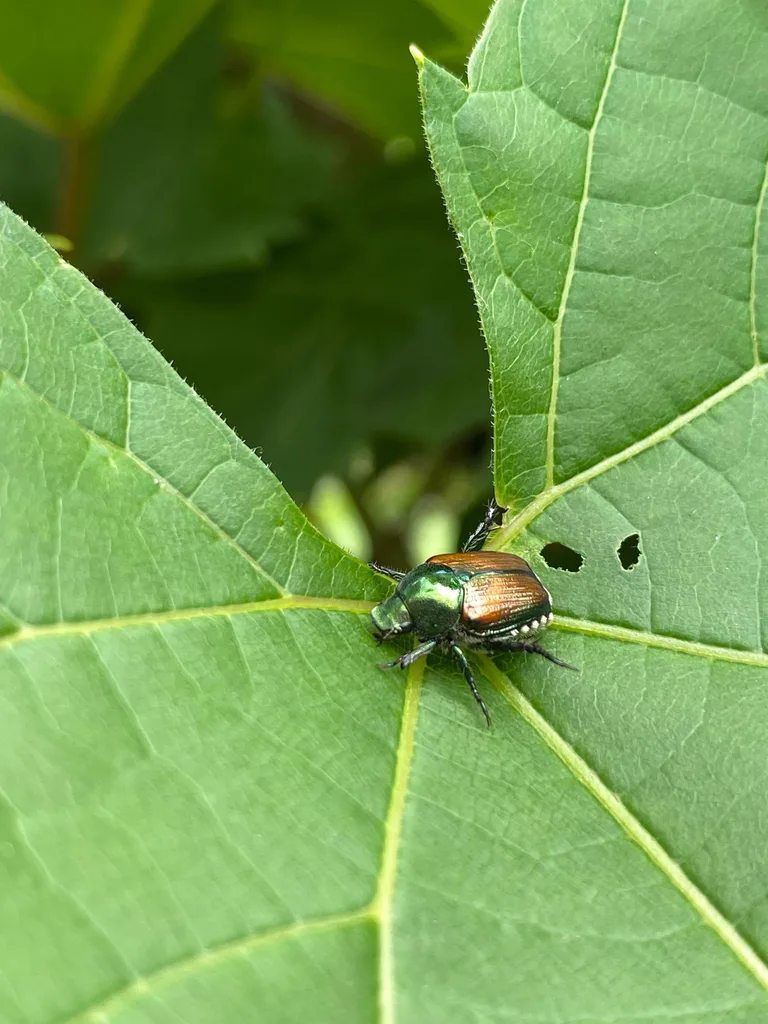
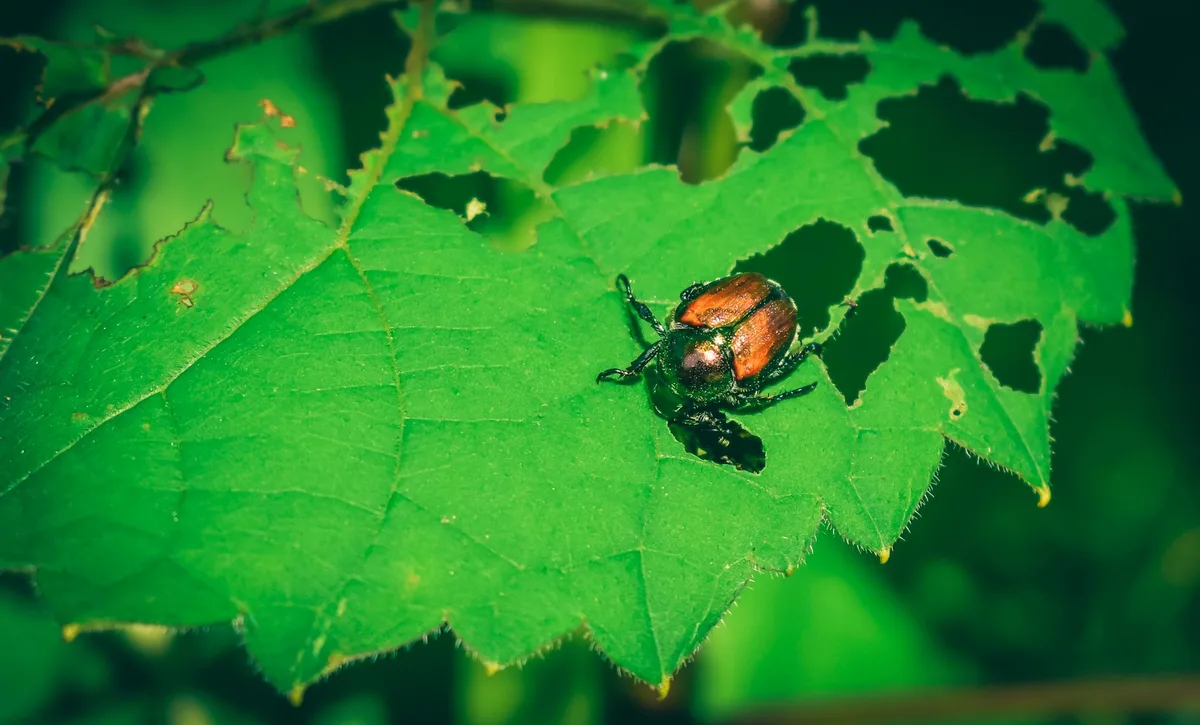
Japanese beetles (Popillia japonica) feed in aggregating clusters, releasing pheromones that draw more beetles to the same plant. What starts as three beetles on a rose becomes thirty by afternoon. They skeletonize leaves, eating all the tissue between the veins, and move methodically through a yard, hitting roses, grapes, lindens, fruit trees, and over 300 other host plants.
The standard advice to "set out beetle traps" usually backfires. Pheromone traps use a floral lure and a sex attractant to pull beetles in from a quarter-mile radius. Research from land-grant universities shows traps catch only 50 to 75 percent of the beetles they attract, meaning you're importing beetles from your neighbor's yard straight into your garden.
If you do use traps, place them at least 50 feet away from any plants you care about, ideally at the edge of your property line where beetles enter.
Japanese beetles are an invasive species that arrived in New Jersey around 1916. They've since spread across the eastern United States, thriving in areas with adequate soil moisture and summer temperatures that support their one-year lifecycle. The Midwest and Mid-Atlantic states see the heaviest damage.
Western states have isolated infestations, but the beetle hasn't yet established widespread populations there.
The beetle's two-stage lifecycle creates two control windows. Adults emerge from the soil in late June through August (timing varies by latitude and soil temperature). They feed, mate, and lay eggs in turf or garden soil.
Those eggs hatch into white grubs that feed on grass roots through fall, overwinter deep in the soil, then resume feeding in spring before pupating into adults. Missing both windows means you're just reacting to damage instead of reducing next year's population.
How to Identify Japanese Beetles vs. Look-Alike Beetles
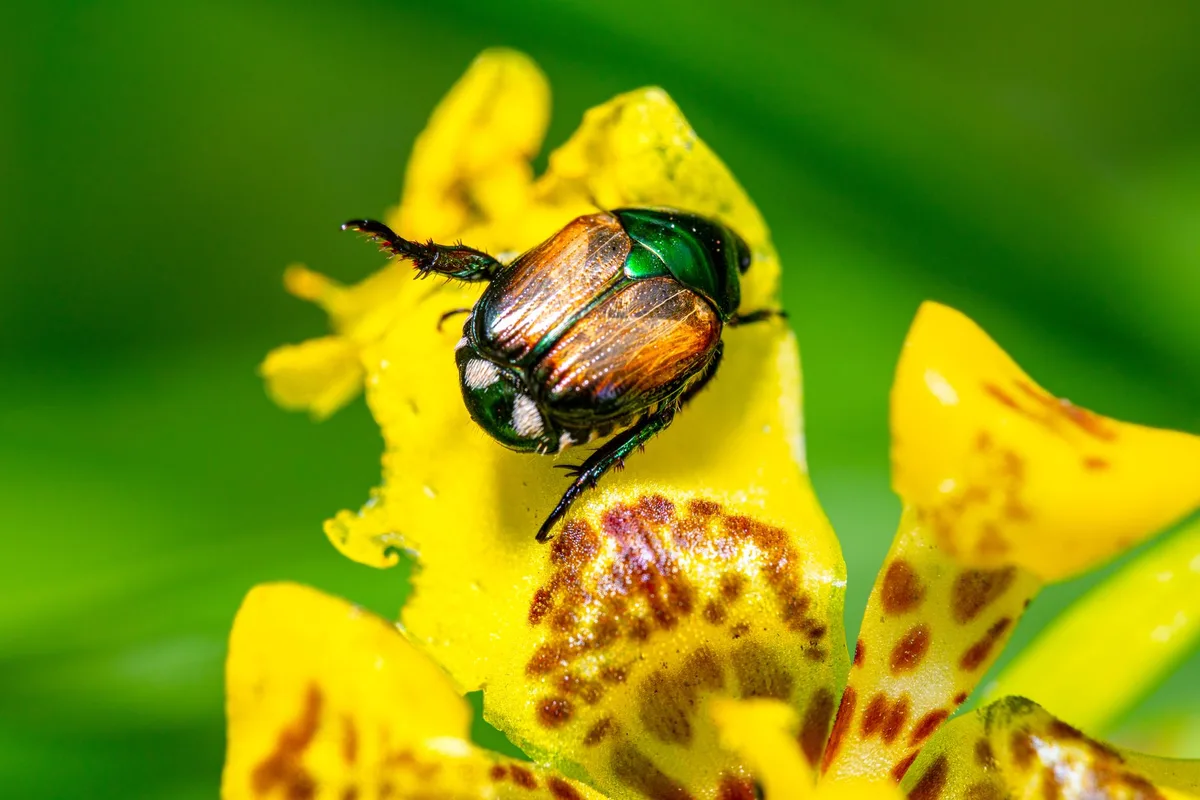
Japanese beetles are about half an inch long with a metallic green head and thorax and copper-brown wing covers. The key identifying feature is five white tufts of hair along each side of the abdomen, visible when you look at the beetle from above or the side. These tufts distinguish Japanese beetles from similar-looking scarab beetles.
Several look-alikes cause confusion. Green June beetles are larger (up to an inch) and solid metallic green with no copper coloring. They fly clumsily during the day and feed on soft, overripe fruit, not the leaves and flowers Japanese beetles prefer.
Rose chafers are tan or light brown, smaller, and have long spiny legs. They also feed on roses but lack the metallic sheen and white tufts.
If you're not sure, check the feeding pattern. Japanese beetles skeletonize leaves, leaving a lacy network of veins. They also cluster in groups on the same plant, often mating while feeding.
A single beetle might be a coincidence, but five to ten beetles on one rosebush is a clear sign of Japanese beetle aggregation behavior.
The adult feeding period lasts four to six weeks depending on weather. Hot, dry conditions shorten the season, while moderate temperatures and adequate rainfall extend it. Peak feeding typically happens mid-July in the Midwest, earlier in southern states, and later in northern areas.
Once you confirm identification, you can match your control strategy to the infestation level and timing.
The One-Year Lifecycle: Why Timing Determines Success or Failure
Japanese beetles complete one full generation per year. Understanding the lifecycle stages tells you when each control method works and when it's a waste of time.
Summer (Late June to August): Adults emerge from the soil when temperatures warm and soil moisture is adequate. Emergence follows a predictable degree-day model, which your state extension office can provide for your region. The first beetles to emerge release aggregation pheromones, pulling in more beetles from surrounding areas.
They feed heavily for 30 to 45 days, mating on host plants and laying eggs in nearby turf or moist soil.
Late Summer to Fall (August to October): Eggs hatch into tiny white grubs that begin feeding on grass roots in the top two to three inches of soil. Grubs are C-shaped, cream-colored, and grow to about an inch long by fall. This is the first grub control window.
As soil temperatures drop in late fall, grubs burrow deeper (four to eight inches) to overwinter below the frost line.
Spring (April to May): Grubs move back up into the root zone as soil warms above 50°F. They resume feeding for a few weeks, causing a second wave of turf damage, then pupate into adults. This is the second grub control window, though it's shorter and less predictable than the fall window.
Timing matters because each control product targets a specific life stage. Foliar sprays (neem, pyrethrin, carbaryl) only kill adults on contact. Soil-applied grub treatments (nematodes, milky spore, imidacloprid) only work when grubs are actively feeding near the surface.
Treating adults in July won't touch the grubs already in your lawn, and treating grubs in November when they're deep and dormant won't reduce the damage.
If you only have time or budget for one intervention, treat grubs in late summer (mid-August to early September). That's when they're small, shallow, and vulnerable. Killing 70 to 80 percent of the grub population means 70 to 80 percent fewer adults next June.
Decision Point 1: How Bad Is Your Infestation?
Before you reach for a spray or start handpicking, assess the damage level. The right control method depends on how many beetles you're seeing and how much plant tissue is already gone.
Light Infestation (Fewer Than 10–15 Beetles Per Plant)
You're spotting beetles on a few plants, but most foliage is still intact. Leaves might have small holes or minor skeletonizing, but the plant isn't stressed. This is the easiest level to manage without chemicals.
Handpicking works. Go out in early morning when beetles are sluggish and temperatures are below 70°F. Knock beetles into a container of soapy water (dish soap works fine).
They'll drown in a few minutes. You'll need to repeat this daily during peak season, but it keeps numbers low without introducing sprays that harm beneficial insects or pollinators.
For high-value plants like prized roses or young fruit trees, cover them with fine mesh netting or floating row covers during the peak feeding window. This works best on smaller plants where you can drape the material without touching foliage. Secure the edges so beetles can't crawl underneath.
Remove covers once peak season ends (usually four to six weeks).
If you've got just a few beetles and time to check your plants daily, you don't need sprays or traps. Consistent handpicking and physical barriers stop light infestations from becoming moderate ones.
Moderate Infestation (Visible Defoliation, Daily New Arrivals)
Your plants show obvious feeding damage, skeletonized leaves on multiple branches, flower buds chewed, and new beetles arriving each day despite handpicking efforts. You're dealing with aggregation behavior, where pheromones are pulling in beetles from neighboring yards.
At this level, handpicking alone won't keep up. You'll need contact sprays to knock down the population quickly, combined with continued monitoring. The goal is to break the aggregation cycle before you lose entire plants.
Organic options include neem oil, insecticidal soap, pyrethrin, and spinosad. Each works differently. Neem oil disrupts feeding and acts as a repellent, but it requires repeat applications every seven days and works best on smaller beetles.
Pyrethrin and spinosad provide faster knockdown but break down quickly in sunlight, so apply in early evening when beetles are still feeding.
Chemical options include carbaryl (Sevin) and synthetic pyrethroids. Carbaryl is a broad-spectrum carbamate that kills on contact and provides seven to fourteen days of residual control. It's highly toxic to bees, so apply only in late evening after pollinators have left and never on blooming plants.
Synthetic pyrethroids (permethrin, bifenthrin, lambda-cyhalothrin) also kill quickly but break down faster than carbaryl.
Moderate infestations require weekly monitoring and repeat applications. Spray every five to seven days during peak beetle activity, adjusting based on how many new beetles you're seeing. If numbers drop below ten per plant, you can switch back to handpicking.
If they climb higher, you're moving into heavy infestation territory.
Heavy Infestation (Skeletonized Leaves, Grub Damage in Lawn)
Your plants are losing structural integrity, entire branches stripped, fruit drop, stunted growth. You're also noticing brown patches in the lawn where grubs are severing grass roots. This is a two-front problem that needs both adult and grub control.
Heavy adult infestations require aggressive foliar treatment. Carbaryl or a synthetic pyrethroid applied every five to seven days will reduce feeding pressure enough for plants to recover. Prioritize high-value or stressed plants first (young trees, prized roses, vegetable gardens).
Mature shade trees can tolerate significant defoliation without long-term harm, so focus chemical applications where they matter most.
At the same time, treat your lawn and garden beds for grubs. Grubs are the source of next year's adults, and a heavy infestation this summer means a worse one next year if you ignore the soil stage. Apply beneficial nematodes or a soil-applied systemic insecticide in mid-August to early September when grubs are small and feeding near the surface.
Heavy infestations often mean your neighbors have beetles too. If you're treating aggressively but seeing constant reinfestation, beetles are flying in from untreated yards nearby. In this case, focus on protecting specific plants with netting or prioritizing the most important areas rather than trying to treat your entire property.
You'll also want to evaluate whether certain plants are worth keeping. Lindens, roses, and grapevines are Japanese beetle magnets. If you're facing annual heavy infestations, replacing a problem plant with a less-preferred species (like flowering shade options beetles avoid) might make more sense than fighting the same battle every July.
Decision Point 2: Are You Targeting Adults, Grubs, or Both?
The most common mistake is treating only the life stage you can see. You spray adults all summer, but grubs are quietly feeding in your lawn, guaranteeing another wave next year. Or you treat grubs in fall but do nothing about the adults currently destroying your roses.
Effective control means thinking one generation ahead.
If you're seeing active feeding damage right now (June through August): You need adult control. Foliar sprays, handpicking, or physical barriers address the immediate problem. But don't stop there.
Plan a grub treatment for late summer to cut the population before it overwinters.
If it's early spring or late summer and you're not seeing adults yet: Focus on grubs. Treating the soil in late August to early September targets the next generation before they grow large and move deep. Spring grub treatments (April to May) work but are less reliable because the window is shorter and grubs pupate quickly.
If you've got both active adults and a history of lawn damage: Treat both. Use foliar sprays to stop current feeding, then apply a grub treatment six to eight weeks later when eggs have hatched. This two-stage approach is the only way to break the cycle in areas with established beetle populations.
Grub control takes longer to show results. You won't see fewer adults until next summer, which is why many gardeners skip it. But if you're dealing with Japanese beetles year after year, it's because you're only treating the symptom (adults) and ignoring the source (grubs in the soil).
Control Methods for Adult Beetles: What Works When
Adult control products fall into three categories: organic contact sprays, synthetic chemical knockdowns, and physical barriers. Each works under different conditions, and knowing when to use each one prevents wasted applications and unnecessary chemical use.
Neem oil is a botanical insecticide derived from neem tree seeds. It disrupts feeding behavior and acts as a mild repellent. It works best on light to moderate infestations when applied every seven days.
Neem requires thorough coverage because it only affects beetles that contact treated foliage. It breaks down quickly in sunlight, so apply in early evening. Neem won't provide instant knockdown, but it reduces feeding pressure over several days without harming most beneficial insects.
Pyrethrin is extracted from chrysanthemum flowers and provides fast knockdown. It paralyzes beetles on contact within minutes. The trade-off is a short residual period (one to two days in sunlight).
Pyrethrin is a good choice when you need immediate relief and plan to reapply frequently. It's toxic to bees, so apply after sunset when pollinators have stopped foraging.
Spinosad is a bacterial fermentation product that acts both by contact and ingestion. Beetles that feed on treated foliage ingest the compound and stop eating within hours. Spinosad breaks down faster than synthetic chemicals but slower than pyrethrin, giving you three to five days of residual control.
It's OMRI-listed for organic use and less toxic to most beneficial insects once the spray dries.
Carbaryl (Sevin) is a broad-spectrum carbamate insecticide that kills Japanese beetles quickly and provides seven to fourteen days of residual control. It's one of the most effective adult control products available, but it's highly toxic to bees and many beneficial insects. Use carbaryl only on non-blooming plants and apply in late evening.
Avoid spraying near flowering plants where pollinators are active.
Synthetic pyrethroids (permethrin, bifenthrin, lambda-cyhalothrin) mimic natural pyrethrin but last longer. They provide five to seven days of residual control and work well on moderate to heavy infestations. Japanese beetles have shown some resistance to pyrethroids in areas with repeated use, so if you've been using the same product for several years and noticing reduced effectiveness, switch to a different chemical class.
Row covers and netting work on high-value plants where you can physically exclude beetles. Use lightweight floating row covers or insect netting with openings smaller than a quarter-inch. Drape the material over plants and secure the edges with soil, stakes, or clips.
This method protects plants completely but only works on smaller specimens where covering is practical. Remove covers once the peak feeding window ends.
For best results, match the product to the infestation level and plant type. Light infestations get neem or handpicking. Moderate infestations need pyrethrin or spinosad with weekly reapplication.
Heavy infestations on non-blooming plants can justify carbaryl if you're losing structural integrity. Never spray blooming plants during the day when bees are present.
Control Methods for Grubs: Stopping the Next Generation
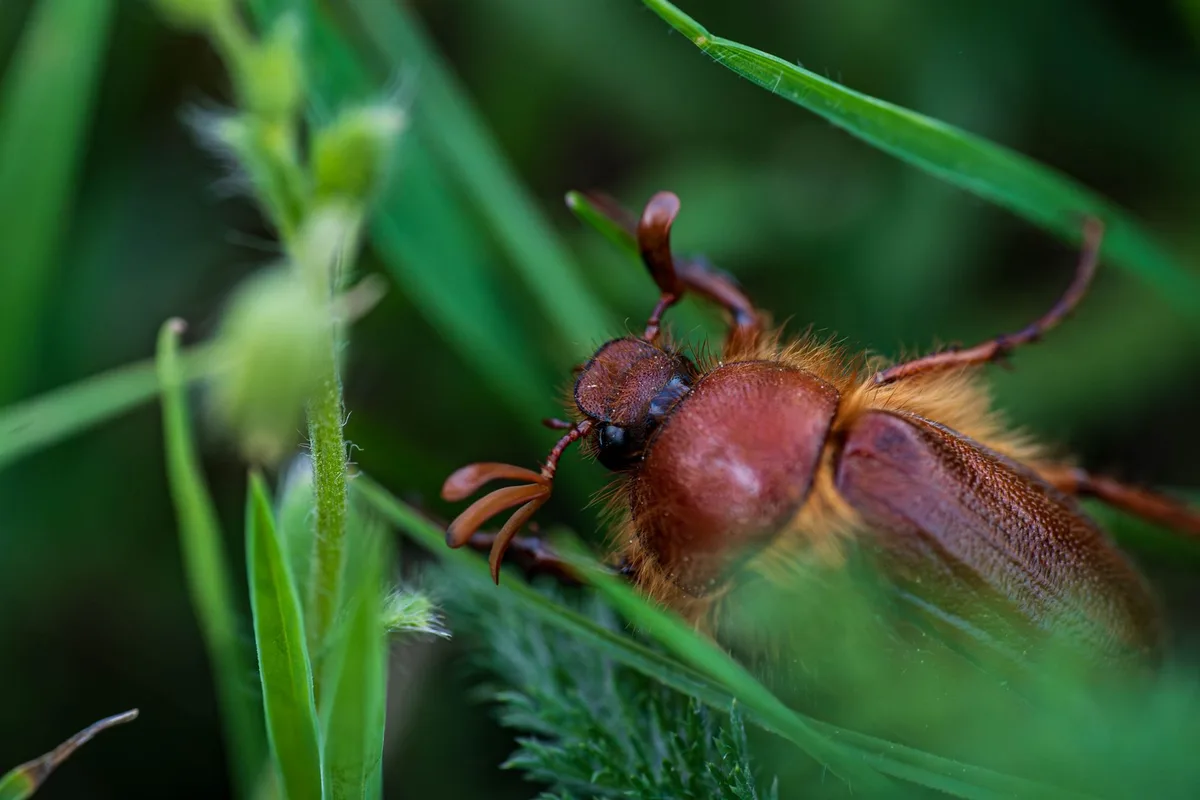
Grub control is where you break the cycle. Treating adults every summer without addressing grubs means you're fighting the same battle every year. The most effective grub treatments target larvae in late summer when they're small, shallow, and vulnerable.
Beneficial nematodes (Heterorhabditis bacteriophora) are microscopic roundworms that parasitize grubs. You apply them as a soil drench, and they seek out grubs in the top few inches of soil, entering through natural openings and releasing bacteria that kill the host within 48 hours. Nematodes work fast but have a short active window.
Soil temperature must be above 50°F, and you need to water them in immediately after application and keep the soil moist for at least two weeks.
Nematodes are living organisms, so they arrive refrigerated with an expiration date. Apply them as soon as possible after purchase. They provide 70 to 85 percent grub reduction when conditions are right, but they don't establish a permanent population.
You'll need to reapply each year. The best application window is mid-August to early September when grubs are newly hatched and feeding actively.
Milky spore (Paenibacillus popilliae) is a bacterial pathogen that infects Japanese beetle grubs specifically. It doesn't affect other white grub species. You apply milky spore as a powder or granular product to the lawn, and it gradually builds up in the soil as infected grubs die and release more spores.
Full establishment takes two to three years, but once established, milky spore can provide suppression for a decade or longer.
The downside is the long establishment period and the need for an existing grub population to spread the bacteria. Milky spore works best in warmer climates (soil temperatures above 60°F) and performs poorly in northern regions with short growing seasons. It's a long-term investment, not a quick fix.
If you're dealing with heavy grub pressure right now, start with nematodes for immediate reduction, then apply milky spore as a follow-up for long-term suppression.
Imidacloprid is a neonicotinoid systemic insecticide applied as a soil drench or granular treatment. It's absorbed by grass roots and moves through the plant, killing grubs that feed on treated roots. Imidacloprid provides season-long control with a single application and also offers some suppression of adult beetles when applied to ornamental plants (though not lawns).
It's effective but carries environmental concerns, particularly regarding pollinator exposure.
Many states and municipalities have restricted neonicotinoid use on flowering plants as of 2026. Check local regulations before purchasing imidacloprid products. When allowed, apply in late summer (mid-July to early August) before grubs hatch so the chemical is in place when they begin feeding.
Water it in thoroughly to move the product into the root zone.
If you're treating turf for grubs, focus on areas with visible damage (brown patches, spongy turf, loose sod that peels back easily). You don't need to treat your entire lawn unless you're seeing widespread grub feeding. Spot treatment saves money and reduces chemical load.
For garden beds and ornamental plantings, applying a targeted fungicide won't help with grubs, but ensuring healthy soil and root systems helps plants tolerate some grub feeding without collapsing.
Why Japanese Beetle Traps Usually Backfire (And When They Don't)
Beetle traps are heavily marketed and widely available, but research consistently shows they create more problems than they solve in most home garden situations. The traps use two attractants: a floral lure that mimics the scent of beetle-preferred plants and a sex pheromone that draws males. Both work extremely well at pulling beetles in from a wide area, sometimes as far as a quarter-mile away.
The problem is capture efficiency. University studies show traps catch only 50 to 75 percent of the beetles they attract. The rest land on nearby plants, feed, mate, and lay eggs.
You've effectively turned your yard into a beacon for every beetle in the neighborhood. If you set a trap near your roses, you'll catch some beetles but attract far more to the area, resulting in worse damage than if you'd done nothing.
The only scenario where traps make sense is when you place them at the edge of your property, at least 50 feet away from any plants you care about, positioned between the beetle source (neighbor's yard, wooded area, agricultural field) and your garden. In this setup, the trap intercepts beetles before they reach your plants. Even then, you need to empty traps every one to two days because dead beetles release aggregation signals that attract more beetles.
If you've already bought traps, don't put them in or near your garden. Place them downwind and at the perimeter where incoming beetles will hit the trap first. Monitor damage on your target plants.
If you're seeing more beetles after trap placement, move the traps farther away or remove them entirely. Traps work in large-scale agricultural or municipal settings where they're spaced strategically across many acres, but in a typical residential yard, they usually increase local beetle density.
Decision Point 3: Organic vs. Chemical: Which Path Fits Your Situation?
Choosing between organic and synthetic control methods depends on four factors: infestation severity, proximity to pollinators, presence of edibles, and your tolerance for repeat applications.
Go organic if:
- You're managing light to moderate infestations where feeding damage is visible but plants aren't structurally compromised.
- You have active pollinator populations (bees, butterflies, beneficial wasps) or you're growing plants specifically for pollinators or hummingbirds.
- You're treating edible crops (vegetables, fruit trees, berries) where you want to avoid synthetic residues and pre-harvest intervals.
- You can commit to weekly monitoring and reapplication during the four to six week peak beetle season.
Organic methods (neem, pyrethrin, spinosad, handpicking) require more frequent attention and won't provide the residual control that synthetic chemicals offer. You'll spray or handpick more often, but you avoid broad-spectrum toxicity and pollinator harm.
Go chemical if:
- You're facing heavy infestations where plants are losing structural integrity and organic methods haven't reduced beetle pressure.
- The plants in question are non-blooming ornamentals where pollinator exposure is minimal.
- You need longer residual control because you can't monitor and treat weekly.
- You've tried organic approaches for two to three weeks without meaningful reduction in feeding damage.
Chemical control (carbaryl, synthetic pyrethroids, imidacloprid for grubs) works faster and lasts longer, but it carries higher risks to non-target insects and requires careful timing and application to minimize harm. Always apply in late evening after pollinators have stopped foraging, never spray blooming plants, and follow label instructions for pre-harvest intervals on edibles.
Hybrid approach:
Many gardeners use organic methods as the default and switch to targeted chemical treatments only on specific plants under heavy attack. For example, you might handpick beetles and use neem oil on most of your garden but apply carbaryl to a prized rosebush that's getting hammered. This minimizes chemical use while protecting high-value plants.
The organic-versus-chemical debate often gets framed as an all-or-nothing choice, but practical pest management is about matching the tool to the problem. Start with the least toxic effective method, escalate only when necessary, and always prioritize pollinator safety and pre-harvest intervals on edibles.
The Timing Window: When to Treat for Maximum Impact
Timing separates effective beetle control from wasted effort. Applying the right product at the wrong time means you're spending money and effort with no reduction in damage.
For adult beetles: Treat during active feeding periods, which run from late June through August in most regions. Peak activity happens mid-July in the Midwest, earlier in the South, later in the North. Monitor local emergence using your state extension office's degree-day models or by scouting your yard daily starting in mid-June.
Once you see the first beetles, expect peak feeding within one to two weeks.
Apply foliar sprays in early evening when beetles are still feeding but pollinators have left. Morning applications waste product because spray residues break down in sunlight before beetles resume feeding at midday. Late-evening applications give the product several hours to dry and bond to foliage before the next day's feeding starts.
For grubs: The primary treatment window is late summer (mid-August to early September) when eggs have hatched and grubs are small, shallow, and feeding actively. Grubs are easiest to kill when they're in the first and second instar stages (small, less than half an inch). By late fall, they've grown large, moved deeper, and become harder to reach with surface-applied products.
A secondary window opens in spring (late April to May) when grubs move back up into the root zone to resume feeding before pupating. This window is shorter and less predictable because grubs pupate quickly once soil warms above 60°F. If you missed the fall window, spring treatment is better than nothing, but expect lower efficacy.
Soil temperature drives grub activity. Beneficial nematodes won't work if soil is below 50°F. Imidacloprid needs time to move into the root zone, so apply it several weeks before grubs are expected to hatch.
Milky spore performs best when soil temperatures are above 60°F for at least several weeks, giving the bacteria time to reproduce inside infected grubs.
Avoid these timing mistakes:
- Spraying adults in early June before emergence peaks. You'll kill a few scouts but miss the main wave.
- Treating grubs in late fall (November or later) when they've burrowed deep and stopped feeding.
- Applying foliar sprays at midday when sunlight degrades the product before beetles resume heavy feeding.
- Using nematodes in cool spring soil (below 50°F) when they're sluggish and won't seek out grubs effectively.
Effective timing means scouting your plants daily starting in mid-June, treating adults as soon as you see aggregation behavior, and marking your calendar for late August grub treatment regardless of whether you're seeing adult damage. The beetles you stop in the grub stage never emerge to feed next summer.
Common Mistakes That Make Infestations Worse
Using pheromone traps inside the garden is the most common mistake. You're advertising free food and mates to every beetle in the area. Place traps at property edges or skip them entirely.
Another mistake is treating only the adults while ignoring grubs. You'll fight the same battle every summer if you never address the soil stage. Late-summer grub treatment cuts next year's population by 70 percent or more.
Spraying during the day wastes product and harms pollinators. Most foliar insecticides break down in sunlight within hours. Apply in early evening when beetles are feeding but bees have stopped foraging.
Relying on companion planting or natural repellents doesn't work. Garlic, marigolds, and other supposed deterrents have no measurable effect on Japanese beetle feeding. You're better off using physical barriers or contact sprays.
Finally, many gardeners give up after one or two handpicking sessions. Light infestations need daily attention for two to three weeks during peak season. Missing a few days lets the population rebound and feeding damage accelerates.
What to Do When Beetles Keep Coming Back (The Reinfestation Problem)
If you're treating aggressively but still seeing new beetles daily, they're flying in from neighboring properties. Japanese beetles are strong fliers and will travel several hundred yards to reach preferred host plants.
Talk to neighbors about coordinating treatment. If everyone on your block treats grubs in late summer, the entire area sees lower adult populations the following year. One untreated yard can supply beetles for an entire neighborhood.
When coordination isn't possible, focus on protecting high-value plants with physical barriers. Row covers keep beetles off completely and don't depend on killing arrivals faster than they appear. This works best on smaller plants like berry bushes or young fruit trees.
You can also reduce the number of highly attractive plants in your landscape. Roses, lindens, and grapevines are beetle magnets. Replacing one or two problem plants with species beetles avoid (like boxwood, dogwood, or shade-tolerant options) reduces the aggregation signal that draws beetles in.
Reinfestation is frustrating but manageable. Shift your goal from eliminating beetles to protecting specific plants while reducing the grub population each fall. Over two to three seasons, consistent grub control lowers regional beetle pressure even if your neighbors do nothing.
Managing Expectations: What Control Actually Looks Like
You won't eliminate Japanese beetles completely. Even aggressive integrated management reduces populations but doesn't eradicate them. The goal is keeping feeding damage below the threshold where plants lose vigor or structural integrity.
Expect to see some beetles and some leaf damage every summer. A few skeletonized leaves on a mature plant won't affect its health. Focus your effort on young plants, edibles, and prized ornamentals where heavy feeding causes real harm.
Grub treatments take a full year to show results. If you treat grubs in August 2026, you'll see fewer adults in summer 2027. Don't expect immediate relief.
This is a multi-season process in areas with established beetle populations.
Light infestations (fewer than ten beetles per plant) are normal in most of the eastern United States. That's not a failure. It means your control methods are working and beetle pressure is manageable without escalating to broad-spectrum chemicals.
Heavy infestations that persist despite treatment usually indicate a neighborhood-wide problem. In that case, protecting individual plants with barriers or replacing highly attractive species makes more sense than trying to treat your entire property every week.
Quick Decision Guide: Match Your Situation to the Right Method
Use this guide to choose your starting point based on what you're seeing right now.
Scenario: Fewer than 10 beetles per plant, minimal leaf damage.
Action: Handpick daily in early morning. Monitor for one to two weeks. If numbers stay low, continue handpicking.
If they climb, move to neem oil or row covers.
Scenario: 10 to 30 beetles per plant, visible skeletonizing, new arrivals daily.
Action: Apply pyrethrin or spinosad every five to seven days. Handpick between sprays. Plan grub treatment for late August.
Scenario: Heavy defoliation, plants losing structural integrity, beetles clustering.
Action: Apply carbaryl or synthetic pyrethroid to non-blooming plants every five to seven days. Cover high-value plants with netting. Treat grubs in late August with nematodes or imidacloprid.
Scenario: Brown patches in lawn, spongy turf, visible grubs when you peel back sod.
Action: Apply beneficial nematodes immediately if soil is above 50°F. Follow with milky spore for long-term suppression. Mark calendar for repeat nematode application next August.
Scenario: Same plants heavily damaged every year despite treatment.
Action: Replace beetle-magnet plants with less-attractive species. Coordinate with neighbors on grub treatment. Focus chemical applications on fewer high-value plants rather than treating everything.
Frequently Asked Questions
Do Japanese beetle traps work?
Traps attract more beetles than they catch, usually worsening damage. Place traps at least 50 feet from gardens, at property edges, or skip them entirely. Handpicking and foliar sprays provide better control without advertising your yard to every beetle nearby.
When should I treat grubs?
Late summer (mid-August to early September) is the best window. Grubs are small, shallow, and actively feeding. Spring treatment (late April to May) works but is less reliable because grubs pupate quickly once soil warms.
Will neem oil kill Japanese beetles?
Neem disrupts feeding and acts as a repellent but doesn't provide instant knockdown. It works best on light to moderate infestations with repeat applications every seven days. For heavy infestations, pyrethrin or carbaryl provides faster control.
How long does the Japanese beetle season last?
Adults feed for four to six weeks, typically late June through August. Peak activity happens mid-July in most regions. Cooler weather and rainfall can extend the season, while hot, dry conditions shorten it.
Can I use dish soap to kill Japanese beetles?
Dish soap doesn't kill beetles on plants, but knocking beetles into a bucket of soapy water drowns them quickly. This handpicking method works well for light infestations when done daily during peak season.
Why are beetles only on certain plants?
Japanese beetles prefer over 300 host plants but show strong preferences for roses, grapes, lindens, and fruit trees. They aggregate on favored plants, releasing pheromones that attract more beetles. Less-preferred plants nearby may go untouched.