How to Identify Mole Cricket Damage for 2026: Complete Guide
If you've ever walked across your lawn and felt it give way like a sponge under your feet, you know something's wrong. Understanding how to identify mole cricket damage is the first step to saving your turf before the problem spreads. These pests don't just chew on grass blades.
They tunnel through the soil, severing roots and leaving your lawn looking ragged.
University extension research shows that a single mole cricket nymph can damage up to a square foot of turf in a month. As of 2026, the southern United States continues to report the highest infestations, especially in sandy, well-drained soils where these insects thrive. The good news is that you don't need a degree in entomology to spot the signs.
You just need to know what to look for and when.
Why Your Spongy Lawn May Be Mole Crickets (Not Grubs or Drought)
The spongy feel is the giveaway. When mole crickets tunnel just beneath the surface, they loosen the soil and sever the grass roots from the crown. The turf loses its anchor.
Walk across it, and you'll feel a springy, almost bouncy sensation that healthy grass never has.
This sponginess is easy to confuse with other problems at first glance. Drought stress makes grass brittle and crispy, not spongy. Grub damage leaves the turf loose but without the raised ridges that mole crickets create.
The difference comes down to touch and a close look at the soil surface.
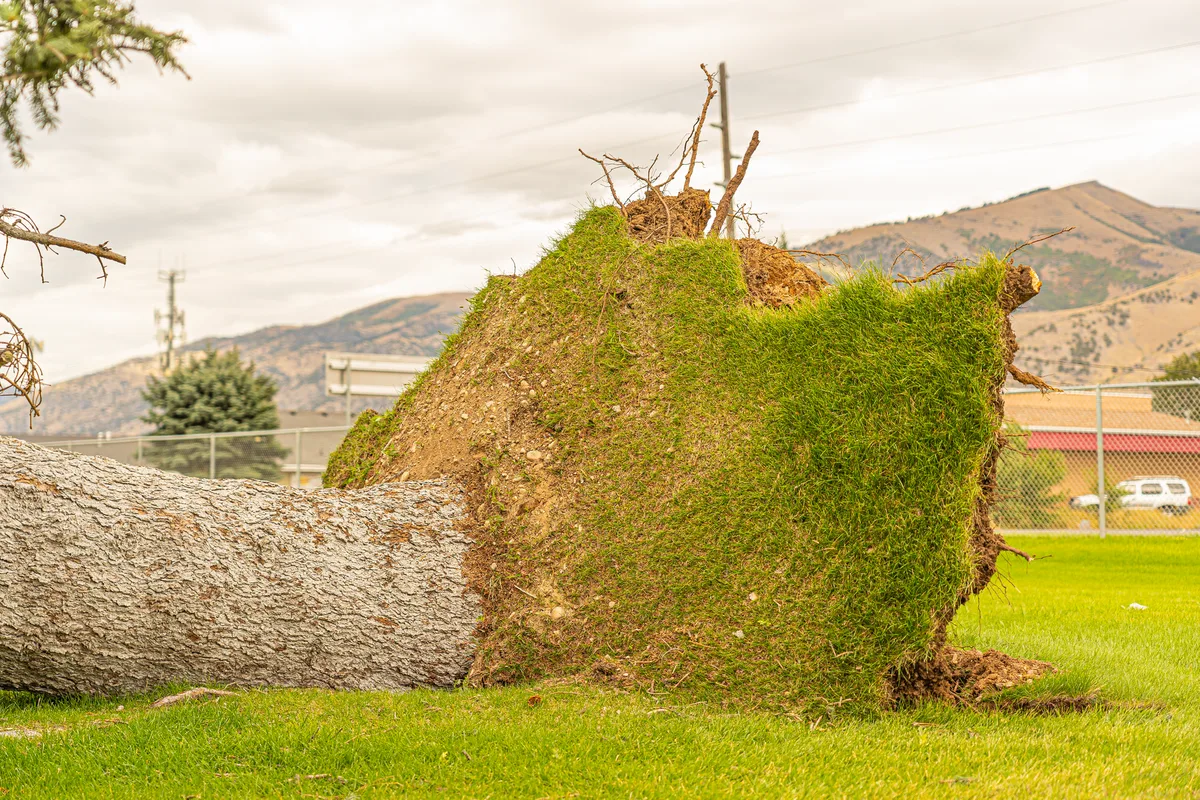
If you see irregular patches of thinning or yellowing grass, push down with your hand. Does it feel like a mattress? That's a strong sign the roots have been pruned by tunneling.
Combine that with raised soil ridges winding through the patch, and you've got a classic mole cricket signature.
Quick Answer: The Two-Minute Soap Flush Test
Mix two tablespoons of liquid dish soap with one gallon of water. Pour it over a two-square-foot area of damaged turf. Wait two to three minutes.
Watch the surface.
If mole crickets are present, they will wiggle to the top within minutes. Count them. One or two nymphs per square foot means it is time to treat.
This test works because the soap irritates their breathing pores, forcing them upward.
Do not confuse this with a general pest flush. The soap flush is specifically designed for tunneling insects. It will not bring up grubs or surface-feeding caterpillars.
Use it only on patches that already show signs of tunneling or sponginess.
Step 1 – Time Your Inspection: Seasonal Clues and Peak Activity Windows
Mole crickets follow a predictable life cycle, and your inspection timing matters more than any other factor. In the southeastern United States, eggs hatch in late spring. The young nymphs are tiny and easy to miss.
By midsummer, they reach a size where their tunneling becomes obvious.
The best time to spot fresh tunnels is early morning, especially after a rain. Moist soil holds the ridge shape better. Dry, crumbly soil collapses and hides the evidence.
Plan your inspection for dawn or dusk when the soil is damp and the light angle casts shadows that make ridges stand out.
Late summer and early fall bring adult activity. Adults emerge at night to feed and mate. You may hear a chirping sound from the lawn after sunset.
That is the male calling. If you hear chirping near damaged turf, you can confirm the species without even digging. This timing also aligns with general pest control timing for many turf insects, so it helps to know what you are dealing with before you act.
Step 2 – Feel the Ground: Spongy Turf and Raised Tunnels vs. Earthworm Casts
Earthworm casts are granular, loose, and scattered. They look like small piles of soil pellets on the surface. Mole cricket tunnels are continuous raised ridges, roughly half an inch in diameter, winding through the grass like a tiny snake trail.
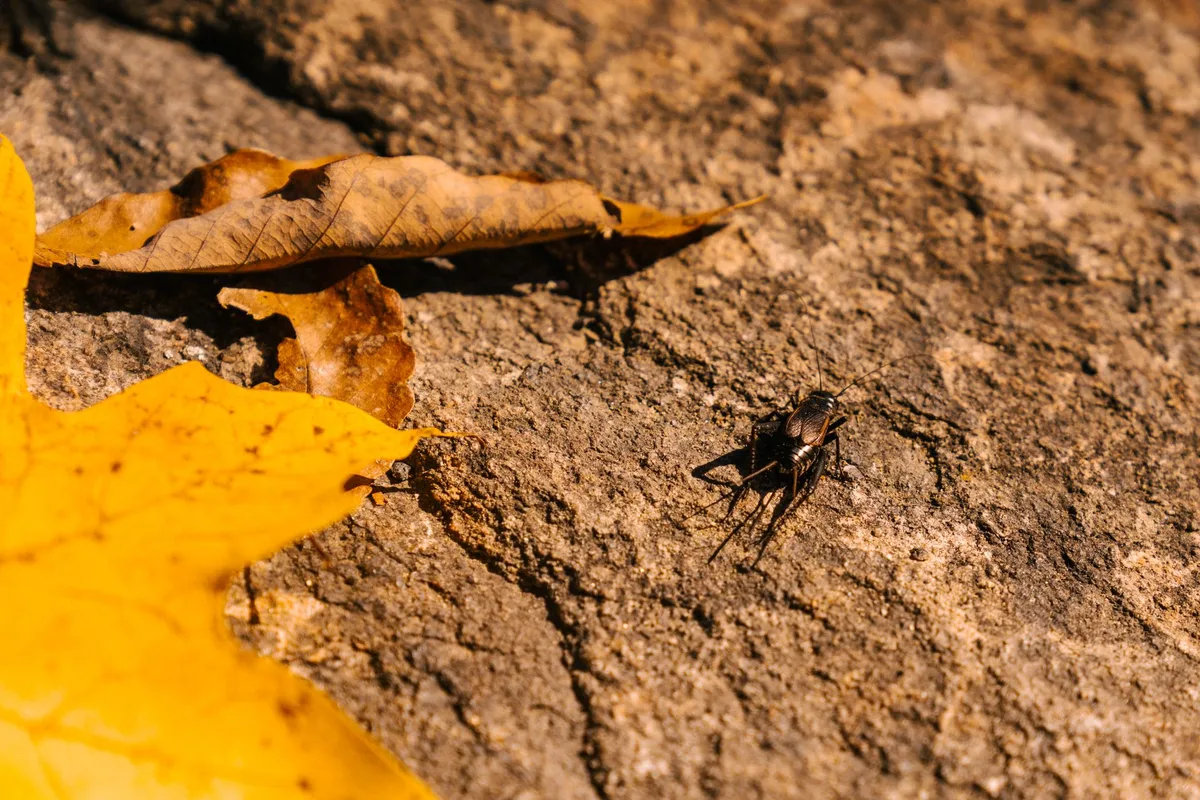
Push your finger along the ridge. If it collapses easily and reveals a small tunnel underneath, that is a mole cricket. Earthworm casts sit on top of the soil and do not form a connected tube.
The spongy feeling underfoot is another clue. Earthworms do not loosen the root zone the way mole crickets do.
This step is where most homeowners get it wrong. They see any soil disturbance and assume mole crickets. Learn to tell the difference between a surface cast and a subsurface tunnel.
Your treatment plan depends on it. If you mistake earthworms for mole crickets, you will waste money on the wrong product. If you mistake drought stress patterns for mole cricket damage, you will overwater and make the tunneling worse.
Step 3 – The Decision Branches: Ridges Present? → Flush Test. No Ridges? → Check for Look-Alikes
Here is where your decision tree starts. Stand at the edge of the damaged area and look for raised ridges. If you see them, move straight to the soap flush test.
That confirms whether the tunnels are active and which life stage is present.
If you do not see ridges, stop and consider the alternatives. Brown patches without tunnels could be grub damage. Grubs eat the roots from below, leaving the turf loose but without the raised soil lines.
Pull back a section of sod. If it rolls up like carpet and you see C-shaped white grubs, that is your answer.
Another common look-alike is drought stress. Drought causes uniform browning that starts at the tips and moves inward. There are no ridges, no sponginess, and no root damage.
The soil will be hard and cracked, not loose. A deep watering test will usually green up drought-stressed grass within a few days.
Fungal diseases like brown patch create circular patches with a smoky border. The grass pulls up easily but the roots are rotted, not severed. You will not see any tunneling underneath.
If you suspect fungus, a quality fungicide can stop the spread once you identify the disease correctly.
Chinch bugs cause straw-yellow patches that spread outward. These insects feed on the stems above the soil line, so you will not find any root damage or tunneling. Part the grass at the edge of the patch and look for tiny black and red bugs near the thatch.
For each scenario, the decision is the same. Identify the symptom. Match it to the pest or condition.
Do not treat until you are sure. Applying the wrong product wastes money and can harm beneficial soil life.
Step 4 – Conduct the Soap Flush: Exact Ratio, Coverage, and What to Count
Mix two tablespoons of liquid dish soap into one gallon of water. Use a plastic watering can or a sprayer with a coarse nozzle. Pour the solution evenly over a two-square-foot area at the edge of the damaged patch, not the center.
Wait two to three minutes. Do not walk away. Stay close and watch the surface.
Mole crickets will wiggle up through the soil and sit on top. Count every nymph or adult you see. One or two per square foot means an active infestation.
Four or more means a heavy infestation that needs immediate treatment.
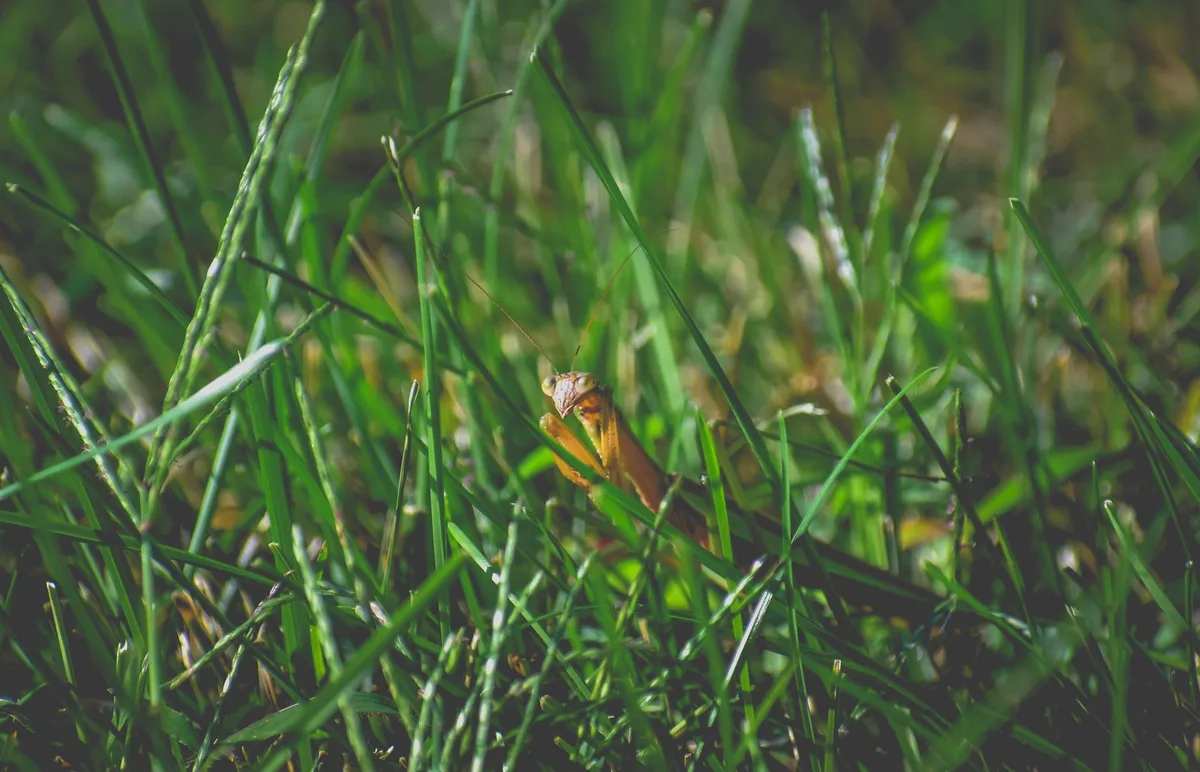
The soap does not kill them. It irritates their breathing pores and forces them to surface. Rinse the area with plain water afterward to avoid leaf burn.
Do this test in the morning when the soil is cool and damp. Hot midday sun gives false negatives because the crickets stay deeper.
If nothing surfaces after five minutes, try a second pour in a different spot. Mole crickets are patchy. They concentrate in certain areas.
One negative test does not mean your whole lawn is clean.
Step 5 – Night Confirmation: Using Chirping Sounds and Flashlight Patrol
Male mole crickets sing at night to attract mates. The sound is a low, continuous chirping, almost like a cricket but deeper and more mechanical. If you hear this chorus coming from your lawn after sunset, you have adults.
Grab a flashlight and head out about one to two hours after dark. Walk slowly along the edge of the damaged area. Listen first.
Then sweep the beam across the turf. Adults will be active on the surface, feeding and moving between tunnels.
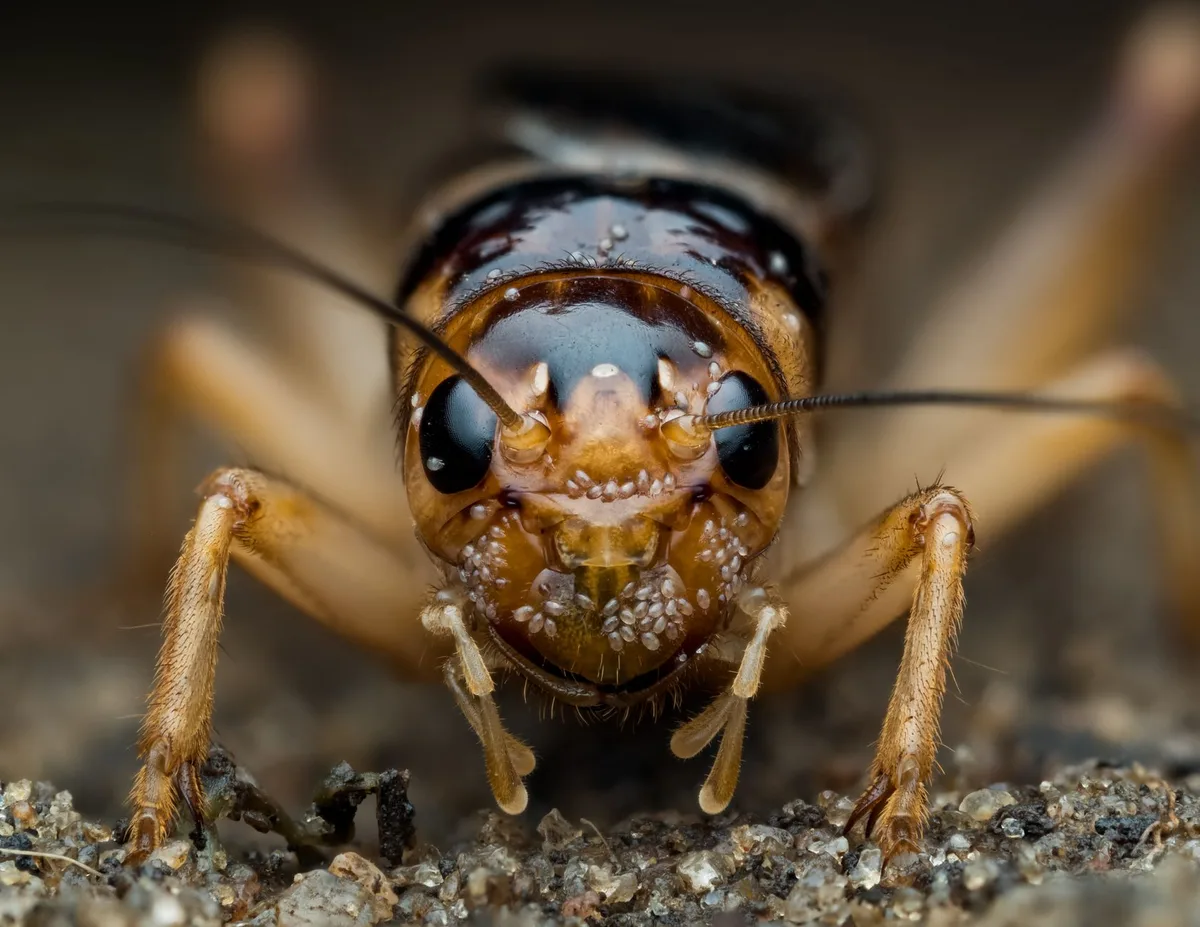
You will see them scurry when the light hits. They are brown, about one to two inches long, with oversized front claws that look like small shovels. That is your confirmation.
Night patrol is most useful in late summer and early fall. That is when adults are mating and laying eggs. If you spot them then, mark the area and plan treatment for the following spring when the nymphs hatch.
Treating adults in the fall helps reduce the egg count for next year.
Common Mistakes That Lead to Misdiagnosis (Grubs, Chinch Bugs, Fungus)
The biggest mistake is treating for grubs when you have mole crickets. Grub damage looks similar above ground. The grass turns brown and pulls up easily.
But grubs leave no raised tunnels. The soil surface stays flat. Roll back a section of sod.
If you see white C-shaped grubs, that is your problem. If you see tunnels, it is mole crickets.
Another common error is confusing chinch bug damage with mole cricket damage. Chinch bugs cause straw-yellow patches that start at the edges and spread inward. The grass stems are chewed, not the roots.
No ridges, no sponginess. The same applies to fungal diseases like brown patch, which creates circular smoky rings with no tunneling at all.
Homeowners also mistake drought stress for insect damage during dry spells. Drought makes the soil hard, not loose. It turns grass crispy, not spongy.
Give the area a deep soak. If it greens up in a few days, you never had mole crickets.
Here is a quick comparison table to keep straight:
| Symptom | Mole Crickets | Grubs | Drought |
|---|---|---|---|
| Feel underfoot | Spongy, bouncy | Loose, no ridges | Hard, crispy |
| Tunnels visible | Yes, raised ridges | No | No |
| Soil surface | Loose, disturbed | Flat | Cracked |
| Root condition | Severed near crown | Eaten entirely | Intact but dry |
| Easy fix? | Targeted insecticide | Grub-specific product | Water deeply |
Decision Guide for Next Steps: Treat Now vs. Monitor vs. Call a Professional
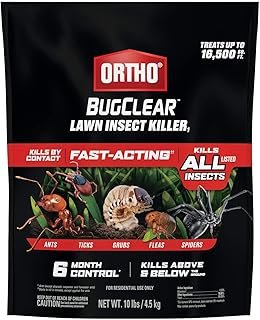
If your soap flush shows one to two nymphs per square foot, you have an active infestation. Treat now with a product labeled for mole crickets. Look for active ingredients like bifenthrin or imidacloprid for nymphs.
Apply in the morning when the soil is moist. Water in lightly after application.
If the flush shows fewer than one nymph per square foot, monitor the area. Mark it with a flag. Recheck in two weeks.
Nymphs grow fast. A light infestation can become moderate in a single growing cycle. Continue to use the same soap flush method to track changes in population density.
If you are unsure of the species or the treatment method, call a professional. A licensed lawn care technician can identify the specific mole cricket species in your region. Tawny mole crickets and southern mole crickets need slightly different treatment windows.
A pro will also know local regulations on pesticide use.
For homeowners who prefer not to use chemicals, beneficial nematodes are a biological control option. These microscopic worms target mole cricket nymphs in the soil. Apply them in the evening when the soil is warm and moist.
They need consistent moisture to survive. University extension research shows that Steinernema scapterisci is the most effective species for mole cricket control. For areas with persistent disease problems, choosing the right fungicide for lawns can help eliminate confusion between fungal patches and tunneling damage.
When to Recheck: Life Cycle Timeline for Nymphs and Adults
Eggs hatch in late spring, usually May through June depending on your location. The nymphs are tiny at first and hard to detect. By July, they reach a size that creates visible tunneling and spongy turf.
That is your first real inspection window.
Recheck every three weeks through the summer. Nymphs go through six to eight molts before becoming adults. Each molt brings a growth spurt.
The damage ramps up accordingly. Your soap flush counts will rise as the season progresses.
Adults emerge in late August through September. That is when you hear chirping at night. If you treated for nymphs in spring, do a follow-up flush in early fall.
The goal is to catch any survivors before they lay eggs for next year.
One full life cycle runs about one year. In warmer climates, some adults survive the winter and lay eggs the following spring. That is why a single treatment rarely solves the problem permanently.
You need to inspect and treat over multiple seasons. Plan to check your lawn at the same time each year. That consistency is what keeps mole cricket damage under control.
Expert Pro Tips for Accurate Identification Every Time
Keep a small notebook or a note on your phone with the date and location of every soap flush test. Over two seasons, that log becomes your personal map of hot spots. You will spot patterns that a one-time inspection misses.
Always inspect your lawn after a quarter-inch or more of rain. Rain settles the dust and makes fresh tunnels pop. Dry conditions hide damage.
If you have irrigation, run the system for 15 minutes the night before you plan to inspect.
Buy a cheap soil thermometer. Mole crickets become active when soil temperatures reach 60°F at a depth of two inches. That is your signal to start checking.
University extension research confirms that temperature is more reliable than calendar dates, especially in years with unusual weather.
Use the same soap solution concentration every time. If you change brands or ratios, your count data becomes useless. Stick with a standard liquid dish soap.
Avoid detergents with bleach or degreasers, which can damage the turf.
If you find multiple species, note which one you see. Tawny mole crickets are more destructive than southern mole crickets. Tawnies feed above ground at night and tunnel more aggressively.
Southern species stay deeper. Different species may need different treatment timing.
Frequently Asked Questions
What time of day is best to check for mole cricket damage?
Early morning is best, especially after rain or irrigation. The soil is damp and cool, so tunnels hold their shape. Fresh ridges are easiest to spot in the low-angle sunlight.
Midday heat dries the soil and collapses tunnels.
Can mole cricket damage look like fungus?
Yes. Both cause irregular brown patches in warm-season turf. The difference is in the root zone.
Fungus leaves roots rotted and dark. Mole crickets leave roots cleanly severed near the crown. Pull up a section of grass and check the root color.
How many mole crickets per square foot is bad?
One to two nymphs per square foot is the action threshold recommended by university extension programs. More than four per square foot is a heavy infestation that requires immediate treatment. Use the soap flush test to get an accurate count.
Do mole crickets come back every year?
Yes, if you do not break the cycle. Adults lay eggs in late summer, and those eggs hatch the following spring. A single season of treatment rarely eradicates them.
You need to inspect and treat over multiple years to keep populations low.
Should I treat my whole lawn or just the damaged spots?
Treat only the areas where your soap flush test confirms activity. Mole crickets are patchy. Broadcasting insecticide over the whole lawn wastes product and harms beneficial insects.
Spot-treat hot spots and recheck untreated areas monthly.
How long does the soap flush test take to work?
Two to three minutes is typical. Crickets surface quickly because the soap irritates their breathing pores. If nothing appears within five minutes, move to a different spot.
One negative test does not clear the area.