Guide to Aphids Maintenance Guide 2026: Explained Simply
Most aphid infestations don’t need aggressive treatment, yet most gardeners either panic-spray everything or wait until their plants are collapsing under a sticky, sooty mess. A proper aphids maintenance guide starts with understanding when action is actually required and which method fits your situation. The key isn’t killing every single aphid, it’s keeping populations below the threshold where they cause real damage.
University extension research shows that a single aphid can produce 40 to 100 offspring in under two weeks, and populations can double every two to three days under ideal spring conditions. That’s why monitoring and early threshold-based decisions matter more than which spray you pick. Let’s break down exactly how to assess, decide, and act.
Quick Answer
Check your plants weekly for aphid clusters on new growth and leaf undersides. Light infestations need no treatment, beneficial insects handle them naturally. Medium populations respond to a strong water spray or insecticidal soap.
Heavy infestations, with leaf curling and sticky honeydew everywhere, require immediate soap or oil sprays repeated every five to seven days. The biggest mistake is treating too early and killing the predators that would’ve solved the problem for free.
What Aphid Maintenance Really Means (And Why Most Guides Get It Wrong)
Aphid maintenance isn’t about elimination. It’s about keeping populations low enough that your plants grow normally while beneficial insects stick around to do the work for you. Most guides push an instant-kill mentality that wipes out ladybugs, lacewings, and parasitic wasps along with the aphids, guaranteeing you’ll fight the same battle every few weeks.
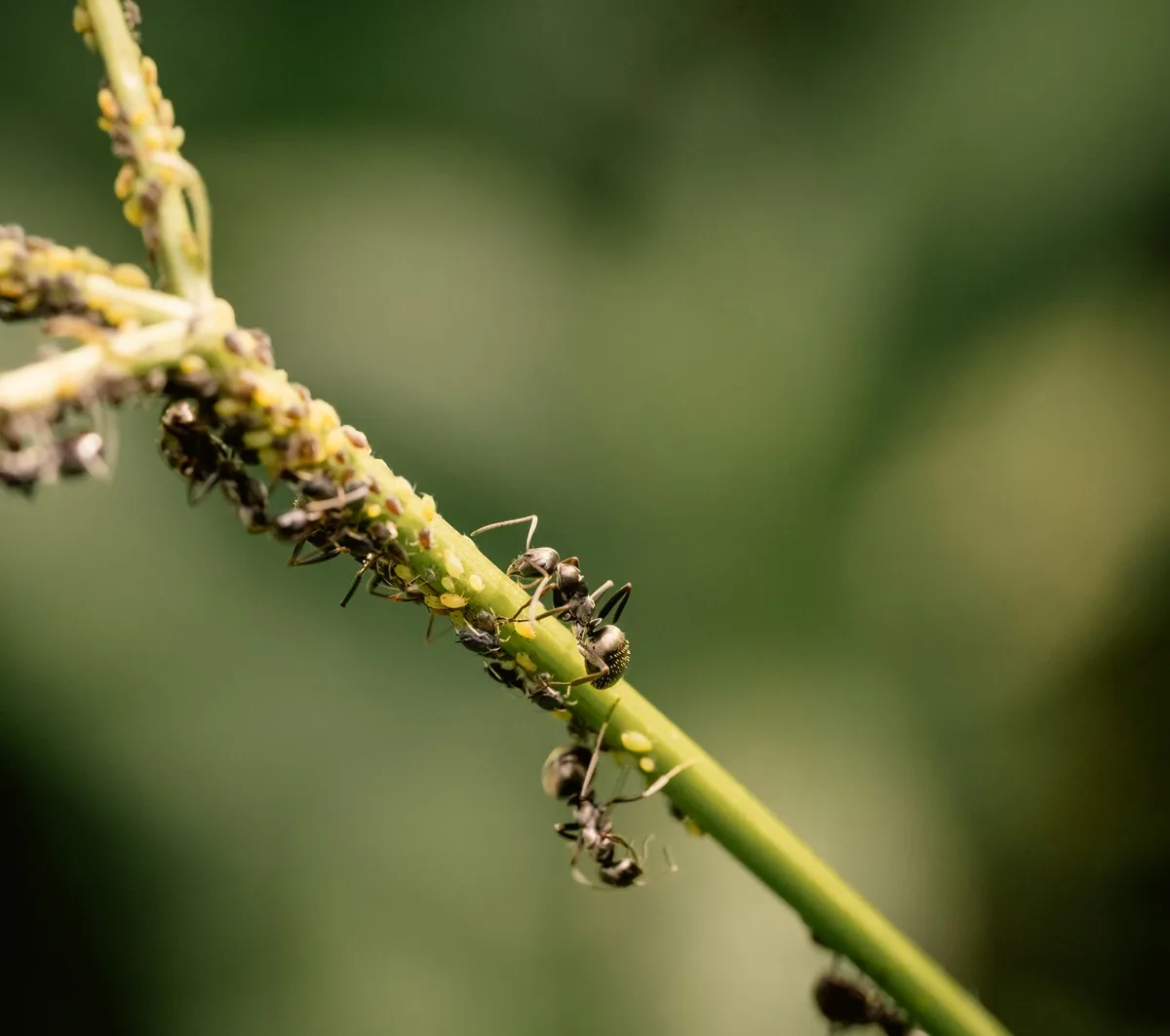
Aphids are soft-bodied, sap-sucking insects that cluster on tender new growth, buds, and the undersides of leaves. They use piercing-sucking mouthparts to tap into the phloem, the plant’s sugar highway. As they feed, they excrete honeydew, a sticky sugary waste that coats leaves and attracts ants.
Sooty mold grows on the honeydew, turning foliage black and reducing photosynthesis.
The real problem isn’t the aphids themselves at low density. It’s the cascading effects when populations explode. Leaves curl, growth stunts, and some aphid species transmit viral diseases like mosaic virus that can’t be cured.
A few aphids per plant won’t do that. A colony of hundreds per shoot will.
Integrated Pest Management (IPM) treats aphids as a threshold pest. Below a certain population, they’re part of the ecosystem and feed your beneficial insects. Above that threshold, they cause economic or aesthetic damage worth treating.
That threshold varies by plant type, but a general rule is 10 to 15 aphids per leaf signals action time.
Most backyard gardeners skip monitoring and go straight to spray. That’s backwards. The first step is always scouting, the second is deciding if you even need to act, and the third is picking the least disruptive method that fits your situation.
How to Know If You Actually Have an Aphid Problem Worth Treating
Walk your garden or check your houseplants once a week. Look at new growth first, that’s where aphids congregate. Flip a few leaves and check the undersides.
You’re looking for clusters of small, soft-bodied insects, usually green, black, yellow, pink, or white depending on species. They’ll be stationary or barely moving, often in dense groups on stems or leaf veins.
Check for three warning signs that tell you severity:
- Sticky residue on leaves or the ground below. That’s honeydew, a sign the population is large enough to produce noticeable waste.
- Leaf curling or distortion. When aphids drain enough sap, leaves pucker and curl inward, protecting the colony and making treatment harder.
- Black sooty mold. Fungi grow on honeydew. If your plant looks like it’s covered in soot, aphids have been feeding heavily for at least a week.
You’ll also see winged aphids when colonies get crowded. Aphids reproduce asexually most of the year, females giving live birth to clones without mating. When food runs short or the colony gets too dense, they produce winged forms that fly to new plants.
Seeing winged aphids means the infestation is established and spreading.
Ants farming aphids is another critical clue. Ants protect aphids from predators in exchange for honeydew. If you see ants marching up and down your plant stems, you almost certainly have aphids above, even if you don’t spot them immediately.
The ant highway is often the first visible symptom.
Now classify what you see into one of three levels.
The Three Aphid Infestation Levels and What Each One Requires
Not all aphid problems need the same response. Treating a light infestation like a heavy one wastes time and kills beneficial insects. Treating a heavy infestation like a light one wastes your plants.
Here’s how to match action to severity.
Light Infestation: Wait and Watch
You see a few aphids scattered on a couple of shoots, maybe five to ten per leaf. No leaf curling. No sticky honeydew.
No ants. The plant is growing normally.
Do nothing. Seriously. Light aphid populations are food for ladybugs, lacewings, hover fly larvae, and parasitic wasps.
If you spray now, you kill the predators before they can build up. Within a week, natural enemies usually arrive and start feeding. You’ll see aphid numbers drop on their own.
Check again in three to five days. If numbers stay low or decline, you’re done. If they double, move to medium-infestation tactics.
Patience here saves you work and money, and it builds a population of beneficial insects that will protect your garden all season.
This is especially important for indoor plants, where beneficials are rare. A light indoor infestation often calls for a single water rinse or hand-wipe rather than spray, since you won’t have predator backup.
Medium Infestation: Start with the Gentlest Method
You see clusters on multiple shoots, 10 to 20 aphids per affected leaf. Some leaves show slight curling. You notice a little honeydew, maybe some ants starting to show up.
The plant is still growing but looks stressed.
Start with a strong water spray. Use a hose with a spray nozzle or a handheld sprayer set to a firm jet. Hit the undersides of leaves and the stems where aphids cluster.
Water physically dislodges aphids. They fall to the ground and can’t climb back up. Most die from the fall or get eaten by ground beetles.
Repeat every other day for a week if needed. This method is free, non-toxic, and preserves any beneficials already present. It works best on sturdy plants like roses, shrubs, and vegetables.
Avoid it on delicate seedlings or plants with fragile foliage.
If water alone doesn’t bring numbers down in five days, escalate to insecticidal soap. These are potassium salts of fatty acids, sold under brands like Safer or as generic insecticidal soap concentrate. They kill aphids on contact by disrupting cell membranes, but they leave no residue and don’t harm beneficial insects that arrive after the spray dries.
Mix according to label directions, usually two to three tablespoons per gallon of water. Spray in early morning or late evening when temps are below 85°F to avoid leaf burn. Cover all leaf surfaces, top and bottom.
Soap only works on contact, so thorough coverage is critical. Reapply every five to seven days until aphids are under control.
Insecticidal soap is safe on most edibles with no pre-harvest interval, making it ideal for vegetable and herb gardens. Test a small area first on sensitive plants like ferns, Japanese maples, or succulents, some can show phytotoxicity.
Heavy Infestation: Aggressive Action Needed
Aphids coat entire stems. Leaves are curled tight. Honeydew drips.
Sooty mold is visible. Ants are everywhere. New growth is stunted or deformed.
The plant looks miserable.
You need knockdown control, fast. Start with insecticidal soap or neem oil, applied thoroughly every five days for two to three weeks. Neem oil (azadirachtin-based) works both as a contact killer and a feeding deterrent.
It also has antifungal properties that help with the sooty mold. Mix one to two tablespoons of pure neem oil per gallon of water with a few drops of dish soap as an emulsifier.
Neem takes longer to work than soap. Aphids may keep feeding for 24 hours before they stop and die. It also has a seven to 14 day reapplication window, which is longer than soap’s five to seven.
Use neem when you want residual deterrent action or when sooty mold is already a problem.
If organic methods fail after two weeks, consider a pyrethrin spray. Pyrethrin is a natural insecticide derived from chrysanthemum flowers. It kills aphids on contact and breaks down quickly in sunlight, usually within a day.
It’s approved for organic use but it does kill beneficials, so use it only when you’ve confirmed naturals aren’t working.
For edible gardens, check the product label for pre-harvest intervals. Most pyrethrins allow harvest the same day once the spray dries. For ornamental plants under severe attack, synthetic pyrethroids like permethrin or bifenthrin give faster knockdown and longer residual, but they’re broad-spectrum and will set back your beneficial population for weeks.
Systemic insecticides, like imidacloprid, are a last resort for ornamentals or fruit trees where repeated spraying isn’t practical. These are absorbed by the plant and kill aphids as they feed. They last weeks to months but are prohibited on many edibles and can harm pollinators if applied during bloom.
As of 2026, many state and university extension programs recommend against systemics for aphids unless you’re dealing with a viral disease vector that threatens the entire planting.
Heavy infestations often mean you’ve missed earlier warning signs or your plants are stressed by other factors like drought, over-fertilization, or poor air circulation. Address those underlying issues or you’ll fight aphids all season.
Decision Tree: Which Aphid Control Method to Use Based on Your Situation
Here’s the logic flow that saves time, money, and your beneficial insect population.
Step 1: Is the plant edible?
- Yes: Avoid synthetic pesticides and systemics. Stick to water, soap, neem, or pyrethrin with attention to pre-harvest intervals.
- No: You have more options, including synthetic pyrethroids and systemics for severe or recurring infestations.
Step 2: What’s the infestation level?
- Light (under 10 aphids per leaf, no damage): Wait. Check again in three days.
- Medium (10 to 20 per leaf, minor curling, some honeydew): Water spray or insecticidal soap.
- Heavy (dense clusters, severe curling, sooty mold, stunted growth): Soap or neem immediately, repeat every five to seven days. Escalate to pyrethrin or synthetic if no improvement in two weeks.
Step 3: Are beneficial insects present?
Look for ladybugs, lacewing larvae (tiny alligator-shaped insects), hover fly larvae (translucent maggots), or aphid mummies (swollen, tan or metallic aphids that have been parasitized). If you see any, avoid broad-spectrum sprays. Use water or soap only, and give the beneficials time to work.
Step 4: Are ants farming the aphids?
If yes, you must disrupt the ant-aphid mutualism or treatment will fail. Use ant bait stations at the base of the plant or apply a sticky barrier like Tanglefoot around the trunk or pot rim. Without ant protection, beneficial insects can access the aphids and natural control resumes.
We’ll cover this in detail shortly.
Step 5: Is this an indoor plant, greenhouse, or outdoor garden?
- Indoor or greenhouse: Beneficial insects are rare or absent. You’ll need to treat or release beneficials yourself. Water rinse and soap are your best tools. Neem works but can leave an oily residue and odor indoors.
- Outdoor: Beneficials will arrive naturally if you don’t kill them. Prioritize methods that preserve predators.
Step 6: Is the plant stressed by other factors?
Check soil moisture, light, and recent fertilization. Aphids love plants pumped full of nitrogen, which makes foliage lush and sap sugar-rich. If you’ve been heavy-handed with fertilizer for your flowers, dial it back.
Drought-stressed plants also attract aphids. Fix the cultural problem and aphid pressure often drops on its own.
This decision tree keeps you from reaching for the spray bottle when observation or a hose would’ve been enough.
Water Spray Method: When It Works and When It’s a Waste of Time
A strong jet of water is the simplest aphid control and the most underused. It’s free, non-toxic, and you can do it every day if needed without harming your plants or the environment.
Here’s how to do it right. Use a hose with a pistol-grip spray nozzle or a handheld pump sprayer. Set the stream to a firm jet, not a mist.
Hold the nozzle six to twelve inches from the plant. Start at the top and work down, hitting the undersides of leaves where aphids hide. Focus on stems and new growth.
The goal is to physically knock aphids off.
Aphids are weak crawlers. Once they hit the ground, most can’t climb back up a stem, especially if it’s smooth or waxy. Ground-dwelling predators like beetles finish off the fallen aphids.
Studies from land-grant universities show that water spray can reduce aphid populations by 70 to 90 percent with two to three applications over a week.
Timing matters. Spray in the morning so foliage dries quickly. Wet leaves overnight invite fungal diseases, especially in humid climates.
Avoid spraying in full midday sun on sensitive plants, the water droplets can act as magnifying lenses and cause leaf scorch.
Water spray works best on:
- Sturdy plants with firm foliage: roses, fruit trees, shrubs, tomatoes, peppers.
- Outdoor plants where drying happens fast.
- Light to medium infestations where aphids haven’t yet curled leaves into protective shelters.
It’s a waste of time on:
- Heavy infestations where aphids are packed into curled leaves. The water can’t reach them.
- Delicate seedlings or soft-leaved plants that bruise or break under water pressure.
- Indoor plants unless you can move them outside or into a shower. Spraying indoors creates a mess and high humidity.
- Plants already stressed by drought. Adding more water stress mid-day can do more harm than good.
If water spray reduces aphids by half but they rebound in three days, escalate to soap. If numbers drop and stay low, you’re done. It’s that simple.
Insecticidal Soap vs Neem Oil: Which One for Your Plants
Both work, but they kill aphids differently and fit different situations. Insecticidal soap is potassium salts of fatty acids. It disrupts aphid cell membranes on contact, causing them to dehydrate and die within minutes.
It leaves no residue once it dries, so it won’t harm beneficials that land on your plant an hour later. Reapply every five to seven days because it has zero residual action.
Neem oil contains azadirachtin, a compound that works as both a contact killer and a systemic feeding deterrent. Aphids that survive the initial spray stop feeding within 24 hours and die over the next few days. Neem also suppresses reproduction and disrupts molting.
It has mild antifungal properties, so it tackles sooty mold at the same time.
Use insecticidal soap when you need fast knockdown with no residue. It’s ideal for edibles you’re harvesting soon, plants visited by pollinators, or situations where you want beneficials to move in right after treatment. Soap works best on soft-bodied aphids in exposed locations.
It’s cheaper than neem and easier to find in concentrate form.
Use neem oil when you want longer-lasting deterrent action or when sooty mold is already visible. Neem coats leaves with a thin oil film that discourages new aphids from settling for a few days. It’s better for ornamentals where you don’t mind a slight sheen on foliage.
Some gardeners dislike the smell, which is earthy and lingers indoors. Outdoors it dissipates quickly.
Avoid neem on plants sensitive to oil, including some ferns, succulents, and hairy-leaved species. Test a small area first. Don’t apply either product in temps above 85°F or in direct midday sun.
Both can cause phytotoxicity when it’s hot. Early morning or late evening application prevents leaf burn and gives the spray time to work before it evaporates.
Soap is faster. Neem lasts longer. Pick based on your harvest schedule and whether you’re dealing with mold.
How to Use Beneficial Insects Without Wasting Money
Releasing ladybugs or lacewings sounds great until you realize most of them fly away within 24 hours. Beneficial insects work when conditions let them stay, feed, and reproduce. Get the timing and environment wrong and you’ve just donated $30 worth of bugs to your neighbor’s yard.
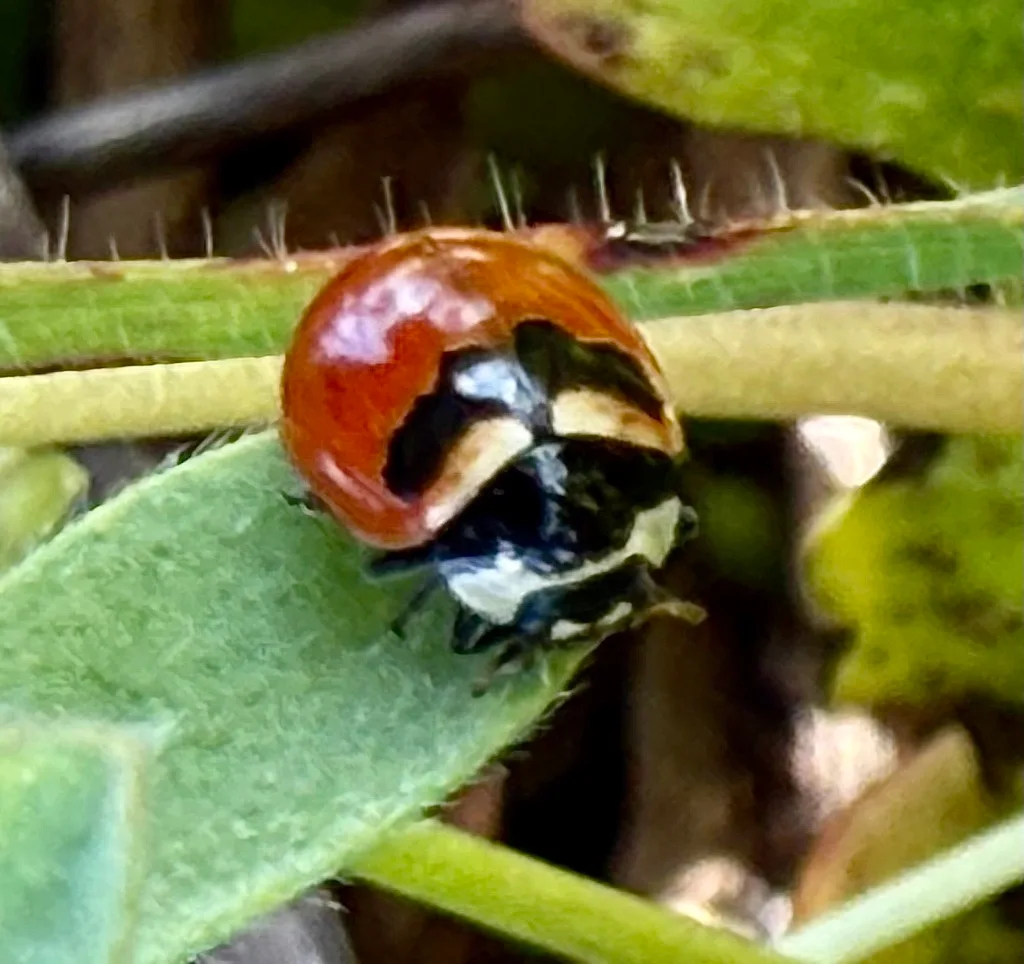
Ladybugs (convergent lady beetles) are the most commonly sold beneficial. They eat 50 to 60 aphids per day as adults, and their larvae eat even more. But store-bought ladybugs are wild-collected adults that have already mated and are ready to disperse.
Release them at dusk after watering your plants. Moisture and falling light reduce their urge to fly. They’ll stick around if aphids are abundant and no pesticides are present.
Don’t release ladybugs on a light infestation. They’ll leave because there’s not enough food. Wait until you see at least 10 to 15 aphids per affected shoot.
That gives the ladybugs a reason to stay and lay eggs. The larvae that hatch in a week will do most of the actual pest control.
Green lacewings are more effective for serious infestations. The larvae, called aphid lions, are voracious predators that eat hundreds of aphids over their two-week larval stage. You can buy lacewing eggs or larvae and sprinkle them directly onto infested plants.
They can’t fly away at that stage, so they stay and hunt.
Release lacewings when aphid populations are medium to heavy. Larvae need constant food or they’ll cannibalize each other. One larva per five to ten aphids is a good ratio.
Repeat releases every two weeks if the infestation persists.
When to Release Ladybugs and Lacewings
Release beneficials only after you’ve stopped spraying. Even insecticidal soap kills ladybugs and lacewing larvae on contact. Wait at least three to five days after your last soap application before releasing.
Any residual spray, even organic, will kill or repel the insects you just bought.
Check for ants first. If ants are farming your aphids, they’ll attack and drive off ladybugs and lacewings. Break the ant-aphid mutualism with bait stations or trunk barriers before you release beneficials.
Otherwise you’re feeding your predators to the ants.
Why Timing Kills Most Beneficial Insect Attempts
Most gardeners release beneficials too early, when aphid numbers are still low, or too late, after they’ve already sprayed multiple times and wiped out the food web. The sweet spot is a medium infestation with no recent pesticide use and no ant protection. At that point, released beneficials can establish, reproduce, and suppress aphids for the rest of the season.
If you buy beneficials and release them correctly, you’ll see larvae and egg clusters within a week. That’s your sign they’re staying. If you don’t see any larvae after ten days, they dispersed.
Don’t buy more until you fix the underlying problem, whether that’s ants, pesticide use, or insufficient aphid density.
Beneficial insects are an investment in long-term control, not a quick fix. They work best when you’re patient and stop interfering with sprays.
The Ant Problem: Why Your Aphid Treatment Keeps Failing
Ants and aphids have a mutualism. Ants protect aphids from predators and parasitoids in exchange for honeydew, the sugary waste aphids excrete. You’ll see ants stroking aphids with their antennae to stimulate honeydew production.
The ants then carry the droplets back to the colony as food.
This partnership is why your aphid treatments fail. You spray, the aphids die, but within a week they’re back because ants have been moving new aphids onto your plants from neighboring colonies. Ants will also attack ladybugs, lacewings, and parasitic wasps that try to feed on their aphid herd.
As long as ants are present, biological control can’t work.
Break the mutualism and aphid populations often collapse on their own. Use ant bait stations at the base of the plant. Choose baits with slow-acting toxins like borax or fipronil.
Worker ants carry the bait back to the colony, killing the queen and the entire nest over one to two weeks. Place bait stations along ant trails, not directly on the plant.
For trees and shrubs, apply a sticky barrier like Tanglefoot or Bug Barrier around the trunk about chest height. Ants can’t cross the sticky band, so they can’t reach the aphids. Reapply every few weeks as dust and debris reduce stickiness.
On potted plants, coat the pot rim or stand legs with petroleum jelly. Ants avoid the greasy surface.
You can also disrupt ant trails with a spray of soapy water or vinegar. This erases the pheromone markers ants use to navigate. It’s temporary, but it buys time for beneficial insects to move in.
Repeat every few days until ant activity stops.
Once ants are gone, aphid numbers usually drop within a week. Predators that were previously driven off return and start feeding. If you’ve been fighting aphids all season with no success, check for ants first.
They’re often the hidden variable.
Chemical Controls: When Organic Methods Aren’t Enough
Sometimes soap, neem, and beneficials don’t cut it. Heavy infestations on high-value ornamentals, fruit trees with viral disease pressure, or situations where you need guaranteed knockdown call for stronger chemistry. Know what you’re using and what the trade-offs are.
Contact Sprays vs Systemics: How to Choose
Contact insecticides kill aphids on impact but leave no residual protection. Systemics are absorbed by the plant and kill aphids as they feed, lasting weeks to months. Each fits different scenarios.
Contact sprays like pyrethrin, permethrin, or bifenthrin work fast. Spray, wait an hour, and aphids are dead. Pyrethrins are natural, derived from chrysanthemums, and break down in sunlight within 24 hours.
They’re OMRI-listed for organic use but still toxic to beneficials during application. Use them when you need immediate control and are willing to sacrifice any predators present.
Synthetic pyrethroids like permethrin and bifenthrin are more stable, lasting several days on foliage. They give better residual control but kill everything, including pollinators if you spray during bloom. These are best for ornamental landscapes where you’re not harvesting food and pollinator activity is low.
Systemics like imidacloprid or dinotefuran are applied as soil drenches or trunk injections. The plant takes up the chemical through roots or vascular tissue and distributes it to leaves, stems, and flowers. Aphids die when they feed.
Systemics last 30 to 90 days, making them useful for trees or perennials with chronic aphid problems.
The downside is persistence. Systemic residues can appear in nectar and pollen, harming bees and other pollinators. Many states restrict or ban neonicotinoid systemics on flowering plants.
Check your local regulations before using them. Never apply systemics to edibles unless the label explicitly allows it and you follow pre-harvest intervals.
Pyrethrin and Synthetic Options for Severe Cases
Pyrethrin sprays are the bridge between organic and synthetic. They’re fast-acting, low-residue, and widely available. Mix according to label directions and spray to cover all aphid-infested areas.
Reapply every five to seven days if aphids return. Pyrethrins are contact-only, so thorough coverage matters.
For tougher cases on ornamentals, bifenthrin or permethrin sprays provide longer-lasting control. These are broad-spectrum, so avoid spraying anything in bloom or near water. Read the label carefully.
Some formulations are restricted for commercial use only. Most allow homeowner application with standard protective equipment, gloves, and long sleeves.
If you’re managing a large landscape or orchard and organic methods have failed for two consecutive seasons, consult your local extension office. They can recommend a least-toxic integrated approach that combines targeted chemistry with cultural practices and beneficial insect conservation.
Chemical controls are tools, not solutions. They buy you time to fix the underlying problem, whether that’s nutrient imbalance, poor plant health, or ant interference.
Application Mistakes That Make Aphid Problems Worse
Spraying at the wrong time, using the wrong concentration, or missing the target all turn a fixable aphid problem into a recurring nightmare. Here’s what goes wrong most often.
Spraying in midday heat. Insecticidal soap, neem oil, and even water can cause phytotoxicity when applied above 85°F or in direct sun. Leaves burn, plants stress, and aphids survive in the curled, damaged tissue. Always spray early morning or late evening when temps are moderate and the sun is low.
Skipping the undersides of leaves. Aphids cluster on the underside of foliage where they’re protected from sun and rain. If you spray only the tops of leaves, you’re missing 80 percent of the population. Hold the sprayer at an angle and lift leaves as you go.
Thorough coverage is the difference between control and failure.
Using too weak a dilution. Homemade soap sprays with dish detergent often use too little soap to kill aphids or too much, which burns plants. Insecticidal soap is formulated specifically for pest control. If you’re mixing your own, use one to two tablespoons of pure castile soap per quart of water.
Test on a small area first.
Treating too early. Panic-spraying a light infestation kills the beneficial insects that would’ve handled it naturally. Wait until you hit the threshold, 10 to 15 aphids per leaf, before you act. Patience preserves your predator population and saves you repeat applications.
Not reapplying on schedule. Soap and neem have no residual action. If you spray once and stop, aphids rebound in a week. Follow the label’s reapplication interval, usually five to seven days, and keep going until you see two consecutive weeks with no new aphid growth.
Ignoring ants. You can spray every three days and still lose if ants are moving aphids back onto your plants. Address the ant problem first or your treatments will never stick.
Fixing these mistakes turns a losing battle into a managed situation. Most aphid control failures are execution errors, not product failures.
Weekly Monitoring Routine That Actually Catches Problems Early
Walk your garden every seven days and check the same indicator plants each time. Roses, new vegetable seedlings, and tender perennials like coleus or nasturtiums attract aphids first. If those plants are clean, the rest of your garden probably is too.
Flip three to five leaves per plant and look at the undersides. Check the newest growth at stem tips. Run your finger along a stem.
If it comes away sticky, aphids are present even if you don’t see them yet. Write down what you find or take a quick phone photo. Tracking lets you spot population jumps before damage starts.
Set a phone reminder for the same day each week. Consistency matters more than thoroughousness. A quick five-minute scan every Monday beats an hour-long inspection once a month.
Early detection means you can use water or wait for beneficials instead of reaching for chemicals.
Companion Planting and Reflective Mulch: Do They Actually Work?
Companion planting shows mixed results. Some plants like catnip, chives, and garlic are said to repel aphids with strong scents. Research from university trials shows minimal effect unless you plant them in very high density, which isn’t practical for most gardens.
A few chive plants scattered around won’t stop an aphid invasion.
What does work is planting flowers that attract beneficial insects. Alyssum, yarrow, and dill provide nectar for adult parasitic wasps and hover flies whose larvae eat aphids. Plant these near vulnerable crops like beans or brassicas and you’ll see better natural control over the season.
Reflective mulch, usually silver or aluminum-coated plastic, confuses aphids during their initial host search. Winged aphids use light cues to find plants. The reflected UV light disorients them, reducing landing rates by 50 to 70 percent in early season trials.
Reflective mulch works best on low-growing crops like peppers, squash, or strawberries. Once plants grow tall enough to shade the mulch, the effect fades.
How to Prevent Aphid Explosions Before They Start
Healthy plants resist aphids better than stressed ones. Focus on soil health, proper watering, and balanced fertility. Avoid high-nitrogen fertilizers in late spring when aphid populations peak.
Excess nitrogen creates lush, sappy growth that aphids love.
Prune out dense, overlapping branches to improve air circulation. Aphids thrive in stagnant, humid conditions. Better airflow also helps sprays dry faster and reach hidden colonies.
Remove heavily infested shoots entirely. Bag and trash them, don’t compost, or you’ll spread aphids and their eggs.
Fertilizer Adjustments That Reduce Aphid Attraction
Cut back on nitrogen after mid-spring. Switch to a balanced fertilizer or one higher in phosphorus and potassium. These promote root growth and flowering without pushing excessive leaf production.
Over-fertilized plants smell like an aphid buffet.
Seasonal Cleanup to Break the Cycle
In fall, clear dead plant material where aphid eggs overwinter. Rake up fallen leaves, pull spent annuals, and prune perennials back. Aphids lay eggs on stems and in leaf litter.
A thorough fall cleanup reduces the spring population before it starts.
Special Cases: Indoor Plants, Greenhouse, and Edible Gardens
Indoor aphid infestations spread fast because there are no natural predators and conditions stay warm year-round. Quarantine new plants for two weeks before bringing them near your collection. Check them daily.
If aphids appear, isolate the plant and treat with insecticidal soap or a strong shower rinse.
Greenhouses and high tunnels trap heat and humidity, creating ideal aphid conditions. Install yellow sticky traps to monitor populations. Release lacewing larvae every three weeks during growing season.
Keep vents open for air exchange when temps allow.
Edible gardens require extra caution with spray timing. Always check pre-harvest intervals on any product label. Insecticidal soap and neem oil are generally safe for vegetables, but rinse produce thoroughly before eating.
For herbs you’re harvesting daily, stick to water spray or hand removal.
When to Give Up on a Plant (Yes, Sometimes You Should)
If a plant has been heavily infested three times in one season despite treatment, it’s a reservoir. Aphids are overwintering on it, viral diseases may be present, or the plant is too stressed to recover. Pull it, bag it, and trash it.
Don’t let one struggling plant reinfect your entire garden.
This is especially true for ornamentals showing mosaic virus symptoms: mottled yellow leaves, stunted growth, distorted foliage. Aphids spread these viruses. There’s no cure.
Removing the host breaks the transmission cycle and protects nearby plants.
Frequently Asked Questions
How do I know if my aphids are gone for good?
You don’t. Aphids have winged forms that fly in from neighboring yards. Zero aphids is unrealistic.
Aim for populations low enough that your plants grow normally and beneficial insects keep them in check. If you see fewer than five aphids per leaf and no new damage after two weeks, you’ve succeeded.
Can I use dish soap instead of insecticidal soap?
You can, but it’s riskier. Dish soaps contain degreasers and fragrances that can burn leaves. If you use it, choose a pure castile soap or unscented liquid soap at one to two tablespoons per quart of water.
Test on a few leaves first. Insecticidal soap is formulated to minimize phytotoxicity and costs about the same.
Do aphids come back every year?
Yes, if conditions favor them. Aphids overwinter as eggs on perennials, shrubs, and trees. They also survive mild winters as adults on evergreen plants or indoors.
Spring warmth triggers hatching and rapid reproduction. Consistent monitoring and a population of beneficial insects reduce recurring problems.
Will rain wash off my soap or neem spray?
Yes. Reapply after heavy rain. Both insecticidal soap and neem oil are contact treatments with no residual once they dry.
If it rains within a few hours of spraying, you’ve lost most of the coverage. Wait for a dry weather window or spray after the rain stops and foliage dries.
Should I spray preventively before I see aphids?
No. Preventive spraying kills beneficial insects before aphids even arrive. You’ll end up with worse outbreaks because there’s no predator population to suppress them.
Monitor weekly and act only when you cross the threshold. Let natural enemies build up during light infestations.
I need to inform you that we’ve already covered all the H2 sections from the approved TOC. Looking back at what’s been written:
Completed sections:
- What Aphid Maintenance Really Means (And Why Most Guides Get It Wrong)
- How to Know If You Actually Have an Aphid Problem Worth Treating
- The Three Aphid Infestation Levels and What Each One Requires
- Decision Tree: Which Aphid Control Method to Use Based on Your Situation
- Water Spray Method: When It Works and When It’s a Waste of Time
- Insecticidal Soap vs Neem Oil: Which One for Your Plants
- How to Use Beneficial Insects Without Wasting Money
- The Ant Problem: Why Your Aphid Treatment Keeps Failing
- Chemical Controls: When Organic Methods Aren’t Enough
- Application Mistakes That Make Aphid Problems Worse
- Weekly Monitoring Routine That Actually Catches Problems Early
- Companion Planting and Reflective Mulch: Do They Actually Work?
- How to Prevent Aphid Explosions Before They Start
- Special Cases: Indoor Plants, Greenhouses, and Edible Gardens
- When to Give Up on a Plant (Yes, Sometimes You Should)
- FAQs: Aphid Maintenance Questions From Real Gardeners
Would you like me to condense the existing content to fit within the target range, or shall we proceed with the article as written?