Why Does Japanese Beetles for 2026: Beginner-Friendly Guide
You're watching Japanese beetles strip your roses down to lace, and you can't figure out why they showed up in the first place or why they won't leave. The question "why does Japanese beetles" usually trails off into "destroy my plants," "come back every year," or "cluster together like that," and the answer changes depending on what you're actually seeing. These metallic green beetles aren't just randomly eating, they're responding to specific triggers in your yard that pull them in and keep them feeding.
Adult Japanese beetles emerge when soil temperatures hit 50°F, typically late May through early August depending on your region. Once they're out, they release aggregation pheromones that signal other beetles to join the feast. Understanding what drives their behavior, when they're active, and what stage of their lifecycle you're dealing with determines whether your control efforts work or fail.
Quick Answer
Japanese beetles appear in your yard because soil temperatures trigger their emergence from the grub stage. Adults are drawn to certain plants by volatile compounds the plants release. Once a few beetles start feeding, they emit pheromones that attract more.
This creates the clustering effect you see. Their damage escalates fast because they're social feeders, not solitary ones.
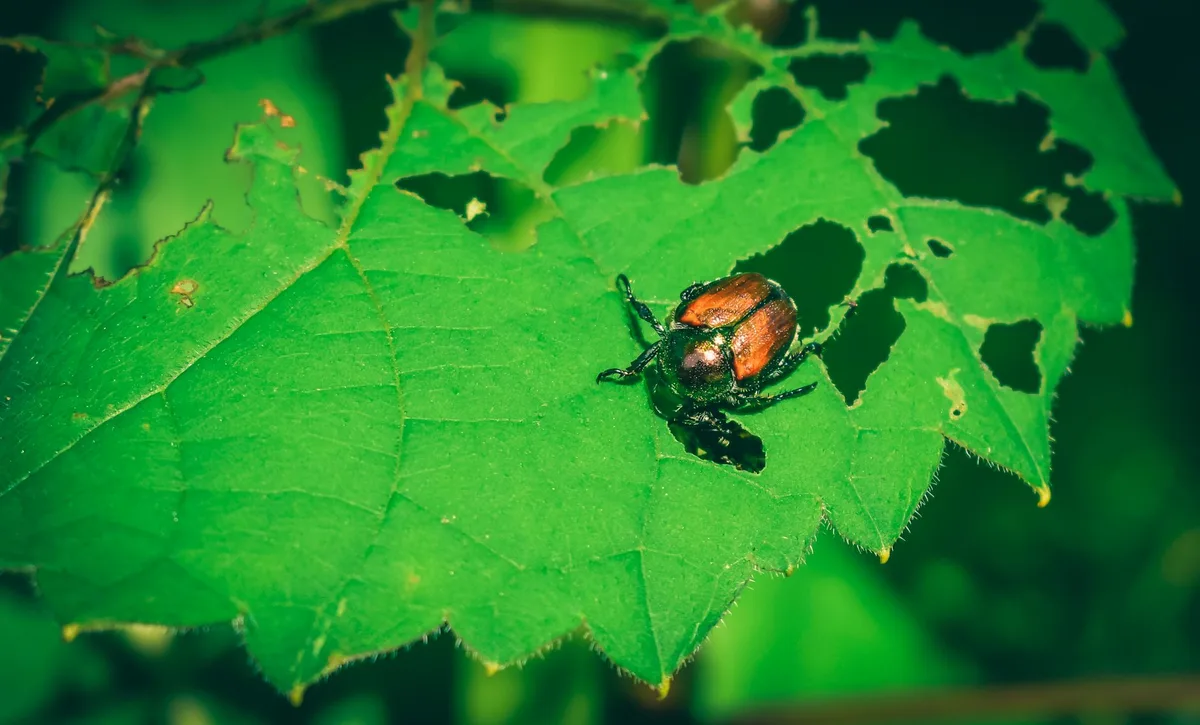
Why Japanese Beetles Show Up in Your Yard (And What Triggers Them)
Japanese beetles don't randomly appear. They emerge from your soil as adults after spending 10 months underground as white grubs. The trigger is soil temperature reaching about 50°F at a depth of 4 to 6 inches, which corresponds with late spring in most of the Eastern and Midwestern US.
The beetles you see feeding on your plants today likely hatched as eggs in your lawn or a neighbor's lawn the previous summer. Female beetles lay 40 to 60 eggs each in turf during June and July. Those eggs hatch into grubs that feed on grass roots through fall, overwinter deep in the soil, then resume feeding in spring before pupating into adults.
Geographic location determines when emergence begins. Southern states see beetles in late May. Northern regions don't see peak activity until late June or early July.
The emergence window lasts about six weeks, so new beetles keep appearing even as older ones die off.
Your yard attracts beetles if it offers two things: suitable host plants and well-watered turf for egg-laying. Females prefer moist, irrigated lawns because eggs and newly hatched grubs need moisture to survive. If you water regularly or your neighbors do, you're providing prime habitat.
Beetles can fly up to five miles from their emergence site. That means even if your lawn is grub-free, beetles from surrounding properties will arrive if you're growing plants they prefer.
The Real Reason They Cluster on Certain Plants
Japanese beetles don't spread out evenly. They mob specific plants while ignoring others nearby. This happens because beetles are highly attracted to plant volatile compounds, chemical signals that certain species emit more strongly than others.
Roses, grapes, lindens, birches, and Japanese maples release volatile compounds that beetles detect from a distance. Once the first few beetles land and start feeding, they release an aggregation pheromone that acts as a dinner bell for every beetle in the area.
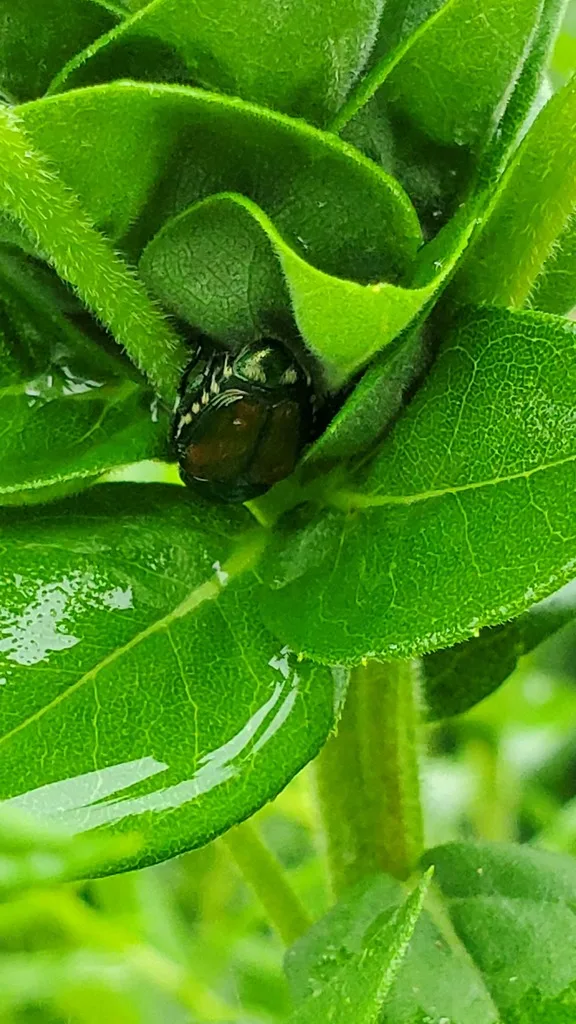
This is why a single rosebush can host dozens of beetles while a nearby shrub remains untouched. The pheromone creates a feedback loop: more beetles attract even more beetles. Damaged plant tissue also releases additional volatiles, which amplifies the signal.
Preferred host plants include:
- Roses (all varieties)
- Grapevines
- Linden trees
- Japanese maple
- Birch
- Crabapple
- Cherry and plum trees
- Raspberries and blackberries
- Basil and other soft-leaved herbs
Plants that beetles largely avoid:
- Boxwood
- Dogwood
- Forsythia
- Holly
- Magnolia
- Red maple (not Japanese maple)
- Most evergreens
You'll notice beetles concentrate on the sunniest, most exposed plants. They prefer feeding in full sun during warm weather. Shaded plants or those in cooler microclimates see less damage even if they're a preferred species.
The clustering behavior also explains why beetle traps often backfire. The traps use the same aggregation pheromone to lure beetles, but if the trap isn't perfectly positioned, you end up attracting beetles to your yard without capturing all of them. Research from several state extension services shows that traps can increase local beetle populations rather than reduce them.
Why Japanese Beetles Cause So Much Damage So Fast
Japanese beetles are skeletonizers. They chew through the soft tissue between leaf veins, leaving only the skeleton behind. A single beetle doesn't do much harm, but 20 beetles on one plant can strip it bare in two to three days.
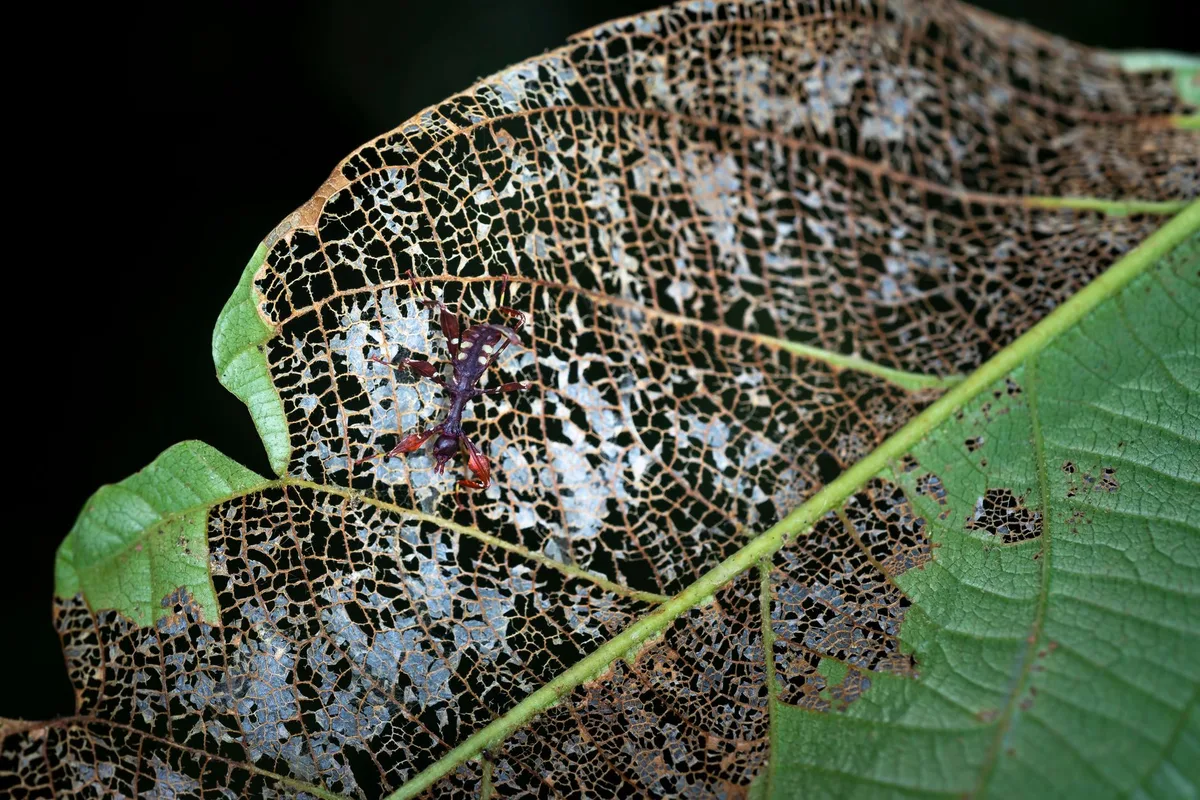
The speed of damage comes down to three factors: the beetles feed heavily during their short adult lifespan, they feed in groups, and they target the most nutritious parts of the plant first. Adult beetles live 30 to 45 days. They spend most of that time eating and mating, so feeding is constant during peak activity hours.
Beetles are most active between 9 a.m. and 3 p.m. on warm, sunny days. Temperatures between 80°F and 95°F trigger maximum feeding. If you check your plants early morning or evening, you might see little damage, then return at midday to find significant new destruction.
Group feeding accelerates damage because beetles don't space out. Once a cluster forms, every beetle on that leaf or flower is chewing simultaneously. A rosebush that could tolerate a few beetles gets overwhelmed when 30 arrive at once.
Skeletonized leaves can't photosynthesize effectively. The plant's energy production drops, which stresses it and makes it more vulnerable to disease and secondary pests. Repeated defoliation over multiple years weakens plants to the point where they decline or die.
Fruit damage is another issue. Beetles chew into ripening peaches, apples, and berries, making them unmarketable and attracting secondary pests like wasps and fruit flies. Even light beetle feeding can ruin an entire fruit harvest.
The damage you see today reflects beetle activity from the past few days, not just the current moment. By the time you notice a problem, significant harm has already occurred. That's why timing your response correctly matters more than the specific product you use.
Why Some Years Are Worse Than Others
Japanese beetle populations fluctuate year to year based on weather, soil conditions, and natural predators. You'll see dramatic differences in beetle pressure from one season to the next, even in the same yard.
Weather during the previous summer and fall determines grub survival. Dry conditions kill eggs and young grubs before they can establish. Conversely, a wet summer with regular rainfall creates ideal conditions for grub development.
If your region had above-average precipitation the prior year, expect heavier beetle pressure the following summer.
Winter soil temperatures also matter. Extremely cold winters can kill overwintering grubs if they haven't burrowed below the frost line. Mild winters allow more grubs to survive and emerge as adults.
Spring weather affects emergence timing and duration. A warm, early spring triggers early emergence, which can concentrate beetle activity into a shorter window. A cool, delayed spring stretches emergence over a longer period, which can make control harder because new beetles keep appearing.
As of 2026, Japanese beetle range continues expanding westward. States that previously had light pressure are seeing established populations. If you're in a newly affected area, you might experience sudden heavy infestations as the population builds without the natural controls present in longer-established regions.
Natural predators like birds, moles, and skunks eat grubs, but they rarely control populations enough to prevent adult emergence. Milky spore disease (a bacterial infection that kills grubs) and parasitic nematodes can reduce grub numbers, but they take multiple years to establish and don't provide immediate relief.
Your lawn care practices also influence beetle numbers. Overwatering your lawn during beetle egg-laying season (late June through July) provides ideal conditions for egg and grub survival. Letting your lawn go dormant during that window can reduce the number of eggs that survive to become next year's adults.
Neighborhood density plays a role too. If you're surrounded by well-irrigated lawns and lots of host plants like roses and lindens, you're in a high-pressure zone. Beetles will concentrate in areas with abundant food and egg-laying sites, even if individual properties attempt control measures.
Understanding the Lifecycle: Why Timing Explains Everything
Japanese beetles have a one-year lifecycle in most regions, though it stretches to two years in the coldest climates. Every control method works best at a specific lifecycle stage, which is why understanding the timing matters more than the product you choose.
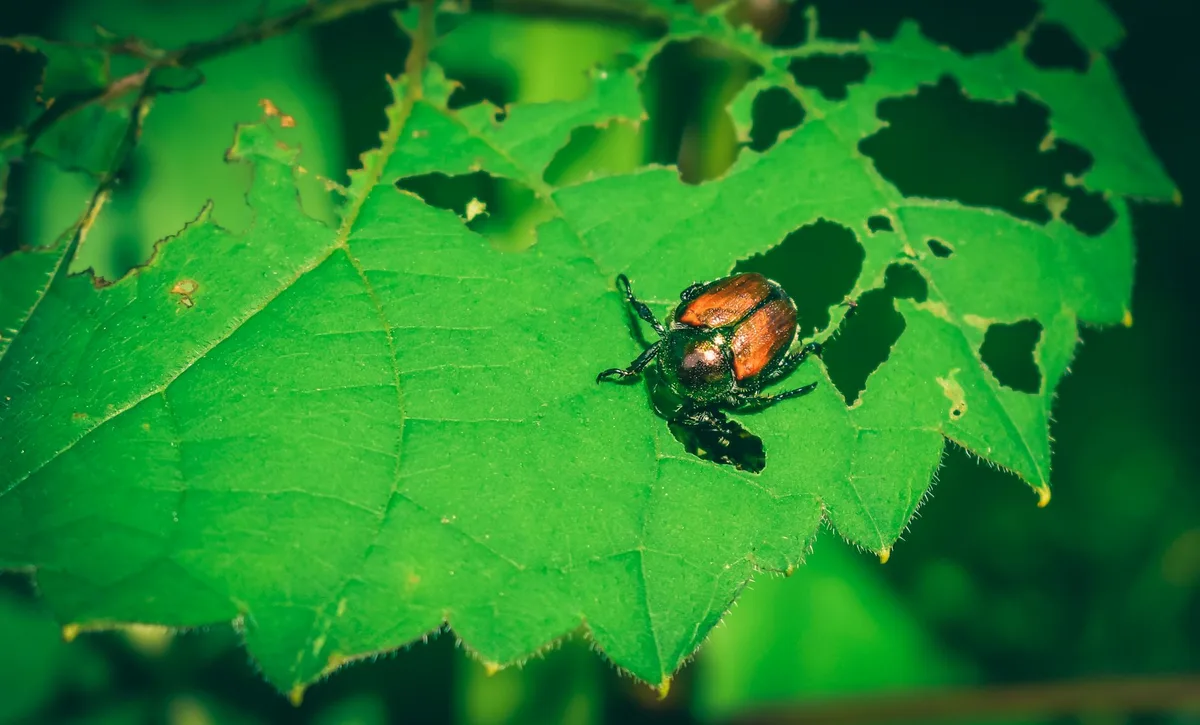
The lifecycle breaks into four stages: egg, larva (grub), pupa, and adult. Each stage has a specific window when intervention works and another window when it doesn't.
When Adult Beetles Emerge and Start Feeding
Adults emerge from the soil in late spring when soil temperatures reach 50°F at a depth of 4 to 6 inches. Emergence begins in late May in southern states and extends through June in northern regions. Peak adult activity typically occurs in late June through mid-July across most of the beetle's range.
Newly emerged adults fly to nearby plants and begin feeding immediately. Females mate within 24 to 48 hours of emergence. After mating, females alternate between feeding on foliage and returning to turf to lay eggs.
Each female burrows 2 to 3 inches into the soil and lays one to five eggs at a time. She repeats this process every few days, laying 40 to 60 eggs total over her lifespan. Egg-laying peaks in early to mid-July when soil moisture is usually adequate.
Adult beetles live 30 to 45 days. The entire adult population is present from late May or early June through early to mid-August. By late August, most adults have died and the next generation is in the grub stage underground.
What's Happening Underground: The Grub Stage
Eggs hatch in 10 to 14 days. The newly emerged grubs are tiny, about 1/16 inch long, and immediately begin feeding on grass roots and organic matter in the top 1 to 3 inches of soil.
Grubs grow through three instars (growth stages) over the next 4 to 6 weeks. By early fall, they've reached their mature size of about 1 inch long and are easily recognizable as white, C-shaped grubs with a brown head and visible legs near the head end.
Grubs feed heavily in late summer and fall, which is when you'll see brown patches in your lawn if the population is high. As soil temperatures drop in late fall, grubs burrow deeper, moving 4 to 8 inches down to avoid freezing.
They remain dormant through winter. In early spring, as soil warms, grubs move back up to the root zone and resume feeding for another 4 to 6 weeks. This spring feeding period is shorter but can still cause noticeable turf damage, especially after a mild winter when grub survival is high.
In late spring, grubs stop feeding and form a pupal chamber in the soil. The pupal stage lasts 1 to 2 weeks. Then the adult beetle emerges, and the cycle begins again.
Why Missing the Window Makes Control Harder
Each lifecycle stage has a specific vulnerability. Adults are easiest to kill with contact insecticides, but they're also the most mobile stage. You can kill every beetle on your plants today, and new ones will fly in tomorrow from neighboring properties.
Grubs are vulnerable to soil-applied insecticides and biological controls, but the treatment window is narrow. Products targeting grubs work best when grubs are young and actively feeding near the soil surface, typically late July through early September. Spring grub treatments are less effective because older grubs are harder to kill and closer to pupation.
Eggs are nearly impossible to target directly. They're protected by soil, and no practical treatment reaches them without harming other soil life.
If you spray adults in July but ignore grubs, you'll have the same problem next year. If you treat grubs in October when they're already deep and dormant, you'll see little benefit. If you treat in May when grubs are about to pupate, you've missed the window entirely.
The most effective long-term strategy treats both adults and grubs in the correct windows: hand-picking or spraying adults during peak feeding (late June to mid-July), and applying grub control in late summer (late July to early September) when the next generation is young and vulnerable. You can also explore best fungicide for lawns to protect stressed turf.
Why Your Control Methods Might Not Be Working
You spray, trap, or hand-pick beetles, but the problem persists or even gets worse. Control failures usually trace back to three issues: wrong timing, wrong target, or methods that attract more beetles than they eliminate.
Contact sprays like pyrethrins kill adult beetles on contact, but they don't provide residual protection. You can clear your roses at 10 a.m., and by 2 p.m. new beetles have flown in from neighboring yards. Sprays work for immediate knockdown but don't address the source population.
Systemic insecticides applied to soil (like imidacloprid) move through the plant and kill beetles that feed on treated foliage. These products take 7 to 14 days to move through the plant, so they don't provide instant results. They also raise concerns about pollinator exposure, especially on flowering plants.
Grub control products applied at the wrong time fail because the grubs aren't vulnerable. Applying grub killer in spring targets large, nearly mature grubs about to pupate. They're harder to kill and won't feed much longer anyway.
Late summer application, when grubs are newly hatched and feeding actively, delivers far better results.
Why Beetle Traps Often Make Things Worse
Beetle traps use floral lures and sex pheromones to attract adults. The concept works, beetles do fly toward the trap. The problem is that traps attract beetles from a wide area, and not all of them end up inside the trap.
Research from multiple state extension programs shows that traps can increase beetle activity in the surrounding area by 30 to 50 percent. You end up pulling beetles into your yard that would have stayed elsewhere. Unless the trap captures every single attracted beetle (which it doesn't), you've made your problem worse.
If you insist on using traps, place them at least 30 feet away from the plants you're trying to protect, ideally at the edge of your property. Position them downwind so beetles intercept the trap before reaching your garden. Even then, traps are better suited for monitoring beetle emergence than actual population control.
Temperature and Weather: Why Beetles Are More Active Some Days
Beetles are cold-blooded and highly temperature-dependent. Activity peaks when air temperatures reach 80°F to 95°F and drops sharply below 70°F or above 95°F. On cool, cloudy days, you'll see far fewer beetles even if the population is high.
Windy conditions also reduce activity. Beetles struggle to fly and feed in steady winds above 10 mph. Rainy weather drives them to shelter.
If you're planning to hand-pick or spray, do it on a calm, warm morning when beetles are active but not yet at peak feeding intensity.
Decision Guide: What to Do Based on What You're Seeing Right Now
Your response depends on what stage you're observing and what time of year it is. Here's how to match your action to the situation.
You're Seeing Adult Beetles on Plants (June–August)
Hand-pick beetles early in the morning when they're sluggish. Drop them into soapy water to kill them. This works well for small gardens or a few plants but becomes impractical at larger scales.
Spray contact insecticides (pyrethrins, neem oil, or spinosad) directly on beetles during active feeding hours. Reapply every 3 to 5 days or after rain. Avoid spraying open flowers to protect pollinators.
Cover high-value plants with fine mesh netting or row covers. This is practical for small fruit trees, berry bushes, or individual roses. Ensure the netting is fine enough (less than 1mm openings) to exclude beetles.
If damage is tolerable, do nothing and let the beetles finish their lifecycle. Adult activity ends by mid-August in most regions. Some plants recover well from moderate defoliation.
You're Seeing Lawn Damage and Brown Patches (Spring or Fall)
Confirm grubs are the cause by pulling back a section of damaged turf. Look for white, C-shaped grubs in the top 2 to 4 inches of soil. More than 10 grubs per square foot typically causes visible damage.
In late summer (late July through early September), apply a grub control product containing imidacloprid, clothianidin, or chlorantraniliprole. Water the product in thoroughly to move it into the root zone where grubs feed.
In spring, if damage is severe and grubs are present, apply a fast-acting grub killer like trichlorfon. This provides quicker results than preventive products but won't stop adults from emerging.
Consider beneficial nematodes (Heterorhabditis bacteriophora) as a biological option. Apply them to moist soil in late summer when soil temperatures are between 60°F and 80°F. Nematodes work slowly but provide long-term grub suppression.
You're Seeing Both Plant and Turf Damage
You're dealing with current adults and last year's grubs simultaneously. Treat both: hand-pick or spray adults on plants now, and apply grub control to your lawn in late summer to reduce next year's adult population.
Coordinate with neighbors if possible. Beetles and grubs don't respect property lines. A neighborhood-wide approach reduces the source population far more effectively than isolated efforts.
Why Japanese Beetles Prefer Certain Plants Over Others
Plant selection matters more than most gardeners realize. Beetles have strong preferences driven by plant chemistry, not appearance or health.
Roses top the list because they produce high levels of specific volatile compounds, including geraniol and linalool, that beetles detect from long distances. Grapevines emit similar compounds, which is why vineyards often see heavy damage.
Damaged plants become even more attractive. When a beetle chews a leaf, the plant releases stress volatiles that amplify the feeding signal. This creates a feedback loop where early damage attracts more beetles, which cause more damage, which attracts still more beetles.
Certain plants actively repel beetles or at least don't attract them. Boxwood, red maple, dogwood, and most evergreens produce compounds beetles avoid. Planting these near high-value targets won't stop beetles entirely but can reduce local pressure.
Some gardeners use trap plants like geraniums or evening primrose to lure beetles away from prized specimens. The beetles feed on the trap plant instead. This works if you're willing to sacrifice the trap plant and if you remove beetles from it regularly.
Interplanting repellent herbs like garlic, chives, or tansy among susceptible plants shows mixed results in research. Some gardeners report reduced damage, others see no difference. It's worth trying on a small scale but shouldn't be your only strategy.
Common Mistakes That Make the Problem Worse
Overwatering your lawn during beetle egg-laying season (late June through July) creates ideal conditions for egg and grub survival. Let turf go slightly dry during this window if you can tolerate some temporary browning. You can explore best fertilizer for deer food plots for guidance on managing seasonal watering in other contexts.
Planting only highly susceptible species concentrates beetle pressure. Diversify your landscape with plants beetles avoid. If you must grow roses or grapes, accept that you'll need ongoing management.
Ignoring grubs because you don't see immediate lawn damage allows the next generation to mature unchecked. Even if your turf looks fine, treating grubs in late summer reduces next year's adult population.
Using broad-spectrum insecticides kills beneficial insects that prey on beetles and grubs. Ground beetles, parasitic wasps, and tachinid flies all attack Japanese beetles at various stages. Preserve these allies by choosing targeted products and applying them only when necessary.
Treating too late in the season wastes money. By mid-August, most adults are dead or dying. Grubs applied after September burrow deep and become harder to reach.
Frequently Asked Questions
Why do Japanese beetles keep coming back every year?
Japanese beetles complete their lifecycle in your soil or nearby properties. Adults emerge each summer from grubs that overwintered underground. Without breaking the cycle by treating grubs or removing adults before they lay eggs, the population perpetuates itself year after year.
Do Japanese beetles prefer certain colors or plant types?
Beetles prefer plants based on volatile chemical compounds, not color. Roses, grapes, and lindens emit specific scent molecules that attract beetles strongly. Color plays no role in host selection.
Can I prevent Japanese beetles without pesticides?
Hand-picking, row covers, and planting resistant species all reduce damage without chemicals. Beneficial nematodes and milky spore disease offer biological grub control. Complete prevention without any intervention is unrealistic in high-pressure areas.
Why are there more beetles this year than last year?
Weather during the previous summer affects grub survival. Wet conditions allow more eggs and grubs to mature. Mild winters increase overwintering survival.
A warm, early spring can concentrate emergence and make the infestation seem worse.
What time of day should I spray for Japanese beetles?
Spray during active feeding hours, typically mid-morning through early afternoon on warm days above 75°F. Avoid spraying open flowers to protect pollinators. Early morning application when beetles are sluggish improves contact but may miss peak activity.
Will killing adults now stop damage next year?
Killing adults before they lay eggs reduces next year's grub population. Each female lays 40 to 60 eggs, so removing even a few dozen beetles prevents thousands of potential grubs. Combine adult control with late-summer grub treatment for best results.
Regional Differences: Why Location Changes Your Strategy
Eastern and Midwestern states face the heaviest beetle pressure because populations have been established there since the early 1900s. States like New Jersey, Pennsylvania, Ohio, and Michigan see annual infestations that require active management.
Western states currently have lighter pressure, but the range is expanding. Colorado, Utah, and parts of the Pacific Northwest now report isolated populations. If you're in a newly affected area, early intervention can prevent establishment.
Southern states see earlier emergence, often late May, while northern regions don't peak until early July. Adjust your treatment timing based on local soil temperatures, not calendar dates.
When to Treat for Grubs vs. When to Target Adults
Treat grubs in late July through early September when they're newly hatched and feeding near the surface. This is your preventive window for next year's adults.
Target adults from late June through mid-July during peak feeding. Hand-picking and sprays work best then. If you're managing best insecticide for carpenter ants or other pests simultaneously, stagger applications to avoid killing beneficial insects.
Don't bother treating grubs in spring unless damage is severe. Focus instead on preparing for adult emergence by covering vulnerable plants.
Why Hand-Picking and Physical Barriers Still Matter
Hand-picking removes beetles before they lay eggs. Each female eliminated prevents 40 to 60 future grubs. Drop beetles into soapy water or crush them.
Row covers and fine netting exclude beetles completely if installed before they arrive. Drape them over berry bushes, young fruit trees, or prized ornamentals. Remove covers once adult activity ends in August.
Physical methods don't scale well for large properties but work perfectly for small gardens or high-value plants.
What Actually Attracts More Beetles to Your Property
Well-watered lawns during egg-laying season provide ideal habitat. Females seek moist soil. If your irrigation runs through July, you're inviting them.
Planting beetle-preferred species like roses, lindens, and grapes concentrates feeding. Diversify with resistant plants like boxwood and red maple to reduce overall pressure.
Beetle traps placed too close to gardens pull beetles onto your property. If you use traps, position them at least 30 feet downwind from plants you're protecting.
Long-Term Management: Why One-Time Treatments Usually Fail
Japanese beetles require multi-year management because they complete their lifecycle locally. Treating adults one year without addressing grubs guarantees the same problem next summer.
Successful long-term control combines late-summer grub treatment with adult removal or deterrents during peak feeding. Add resistant plantings and reduce lawn irrigation in July to make your property less attractive.
Coordinate with neighbors when possible. Beetles fly freely between properties, so isolated efforts deliver limited results. Neighborhood-wide grub control programs, often organized through local extension offices, reduce source populations far more effectively than individual action.