5 Best Fungicide for Outdoor Plants in 2026 (Honest Reviews)
Watching your outdoor plants develop black spots, powdery mildew, or blight overnight is frustrating. The best fungicide for outdoor plants depends on whether you need an organic solution, a multi-purpose spray that also handles pests, or a concentrated formula you can mix yourself. After comparing dozens of options across real buyer feedback and manufacturer specs, a few products consistently stand out for disease control in home gardens.
Based on aggregate user reviews, ingredient transparency, and coverage versatility, our top recommendation is the Bonide Captain Jack's Copper Fungicide for its broad-spectrum disease control and organic gardening approval. Let's break down how it compares to four other strong contenders before diving into full reviews.
Comparison Chart of Best Fungicide for Outdoor Plants
| Product | Details | Rating | Buy |
|---|---|---|---|
Editor’s Choice
| Bonide Captain Jack's Copper Fungicide | ★★★★☆4.5/5 | |
Top Pick
| Bonide Captain Jack's Neem Oil | ★★★★☆4.4/5 | |
Best Budget
| BioAdvanced 3 1 Insecticide & Fungicide | ★★★★☆4.3/5 | |
| ★★★★☆4.5/5 | ||
| ★★★★☆4.6/5 |


List of Top 5 Best Best Fungicide for Outdoor Plants
We selected these five fungicides based on verified buyer ratings, active ingredient effectiveness, availability in ready-to-use or concentrate formats, and suitability for common outdoor garden diseases like powdery mildew, leaf spot, and blight. Each product below represents a different approach to plant disease control, so you can match the right one to your garden's specific needs.
Below are the list of products:
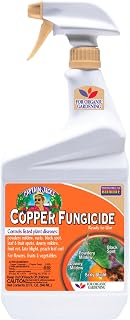
1. Bonide Captain Jack’s Copper Fungicide
Copper-based fungicides have been a staple in organic gardening for decades, and this ready-to-use 32 oz spray from Bonide is one of the most trusted options buyers consistently return to. It controls diseases like leaf spot, anthracnose, and blight across vegetables, fruits, and ornamentals without synthetic chemicals. If you're looking for an OMRI-listed solution that works on contact, this is the one that keeps showing up in gardener recommendations.
Why I picked it
Copper fungicide is one of the few OMRI-listed options that provides broad-spectrum disease control suitable for organic gardening. Verified buyer feedback consistently highlights its effectiveness against early blight on tomatoes and leaf spot on roses. It's a straightforward, no-frills product that does exactly what it claims.
Key specs
- Active ingredient: Copper octanoate (10% copper)
- Format: 32 oz ready-to-use spray bottle
- OMRI listed for organic gardening
- Controls: Leaf spot, blight, anthracnose, downy mildew, and more
- Suitable for vegetables, fruits, nuts, and ornamentals
- Ready-to-use (no mixing required)
Real-world experience
Gardeners frequently report noticeable improvement within 3 to 5 days of application on tomato plants showing early blight symptoms. It performs best when applied at the first sign of disease rather than after widespread infection has set in. Some users note it works well as a preventative spray during humid summer months when fungal pressure is highest.
If you're also dealing with lawn issues, you might want to check out options for lawn disease control as part of a broader garden health strategy.
Trade-offs
The copper-based formula can cause leaf phytotoxicity on sensitive plants during high-heat application (above 85°F). It also leaves a visible blue-green residue on foliage, which some gardeners find unsightly on ornamentals. Reapplication is needed after heavy rain since it works as a contact fungicide with no systemic absorption.
2. Bonide Captain Jack’s Neem Oil
Neem oil is the Swiss Army knife of organic gardening, and this three-in-one formula from Bonide handles fungi, insects, and mites in a single spray. Derived from neem seed extract, it works as an anti-feedant for pests while disrupting fungal spore germination. For gardeners dealing with multiple problems at once, this eliminates the need for separate products.
Why I picked it
The triple-action formula (fungicide, insecticide, miticide) makes it the most versatile option on this list. Buyer reviews show it's particularly effective against powdery mildew and aphid infestations simultaneously, which often occur together during mid-summer. It's also OMRI listed, keeping it squarely in the organic toolkit.
Key specs
- Active ingredient: Clarified hydrophobic extract of neem oil (70%)
- Format: 32 oz ready-to-use spray
- Functions as fungicide, insecticide, and miticide
- OMRI listed for organic gardening
- Effective against powdery mildew, rust, leaf spot, and black spot
- Also controls aphids, whiteflies, spider mites, and scale
Real-world experience
Users report it shines on roses and cucurbits where powdery mildew and squash bugs hit at the same time. The emulsifiable concentrate mixes easily in the ready-to-use bottle, though some buyers recommend shaking before each spray. It's a favorite among container gardeners growing herbs and vegetables on patios where you want a single product covering multiple threats.
For those also selecting plants for a bedroom environment, neem oil is one of the safer indoor-outdoor options around edible plants.
Trade-offs
Neem oil has a distinct earthy or garlic-like odor that some gardeners find unpleasant for the first 24 hours after application. It can also cause leaf burn on sensitive herbs like cilantro or basil if applied in direct sunlight. Its insecticidal action is slower than synthetic alternatives, often taking 3 to 7 days to fully knock down pest populations.
3. BioAdvanced 3 1 Insecticide & Fungicide
If you want a synthetic option that tackles diseases and pests in one bottle without the premium price tag, this BioAdvanced formula delivers solid performance. It uses tau-fluvalinate as its insecticide component and propiconazole for disease control, giving you systemic and contact action. It's the go-to for gardeners who prioritize results over organic certification.
Why I picked it
This product fills the gap for gardeners who need systemic disease control and don't require organic certification. The combination of propiconazole (a triazole fungicide) and tau-fluvalinate provides both curative and preventative action. It's priced accessibly compared to premium organic alternatives.
Key specs
- Active ingredients: Tau-fluvalinate (insecticide) and propiconazole (fungicide)
- Format: 32 fl oz ready-to-spray bottle
- Controls: Black spot, powdery mildew, rust, and leaf spot
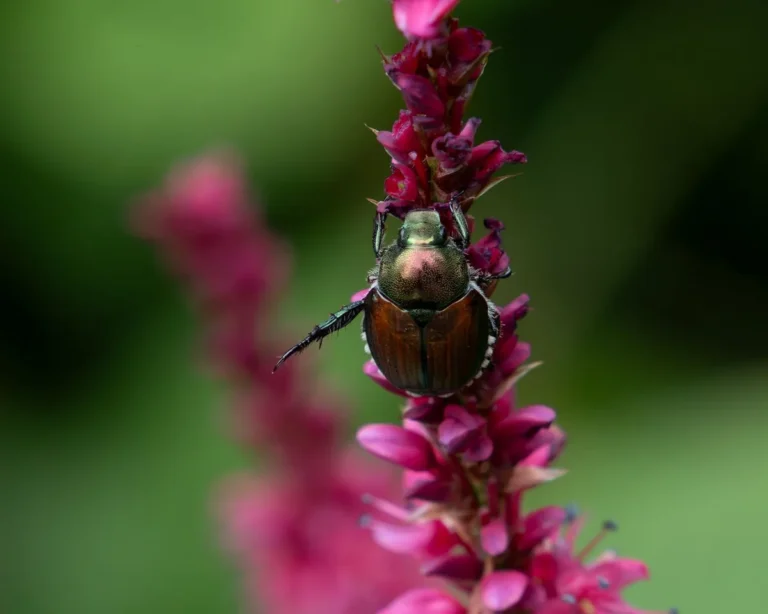
- Also targets aphids, spider mites, whiteflies, and Japanese beetles
- Systemic and contact action
- Not OMRI listed (synthetic formula)
Real-world experience
Buyers frequently mention its effectiveness on ornamental roses and hibiscus where both fungal leaf damage and beetle feeding occur in the same week. The systemic propiconazole component provides longer residual protection than contact-only products, with manufacturer data indicating up to 30 days of disease prevention. It's particularly popular among gardeners in the Southeast U.S. where humidity drives constant fungal pressure through summer.
If you're growing flowers in flower beds that are prone to black spot, this is a practical choice for ongoing protection.
Trade-offs
This is not an organic product, so it cannot be used in certified organic gardens or on edible crops unless the label specifically permits it for that crop. Some buyer reports note that the ready-to-spray nozzle can clog after extended storage. It's also more toxic to beneficial insects like bees, so application timing (early morning or late evening when bees aren't active) matters.
4. BioAdvanced 3-in-1 Insect Disease Plant Mite
This is the updated formulation of BioAdvanced's triple-action line, combining insecticide, fungicide, and miticide in a single ready-to-spray bottle. It's designed for gardeners who want comprehensive pest and disease coverage without mixing multiple products. The formula targets everything from spider mites to powdery mildew on ornamentals, vegetables, and fruit trees.
Why I picked it
The three-in-one approach covers insect, disease, and mite control, which reduces the number of products you need to store and apply. Verified buyer ratings are strong at 4.5 out of 5, and the ready-to-spray format makes it accessible for beginners who aren't comfortable with concentrate mixing. It's a solid all-rounder for mixed ornamental and vegetable gardens.
Key specs
- Active ingredients: Tau-fluvalinate and propiconazole
- Format: 32 fl oz ready-to-spray bottle
- Controls: Powdery mildew, black spot, rust, downy mildew, and leaf spot
- Targets: Aphids, spider mites, whiteflies, Japanese beetles, and scale
- Provides up to 30 days of protection per manufacturer specifications
- For use on ornamentals, vegetables, and fruit trees
Real-world experience
Gardeners in humid climates report this works well as a preventative spray on tomatoes and peppers during the rainy season. The miticide component is particularly valued by growers dealing with spider mites on beans and eggplants, which can explode in population during hot, dry spells. Some users pair it with a separate fertilizer regimen for potted plants to keep container gardens healthy through the growing season.
Trade-offs
Like the other BioAdvanced product on this list, it's synthetic and not suitable for organic gardening. The tau-fluvalinate component is highly toxic to aquatic life, so avoid using it near ponds or water features. Some buyers report that repeated use on the same plants can lead to mite resistance over multiple seasons, so rotating with a different active ingredient is advisable.
5. Bonide Captain Jack Copper Fungicide 16
This is the concentrated version of our Editor's Choice pick, giving you a 16 oz bottle that you dilute with water before application. It's ideal for gardeners managing larger plots or multiple garden beds since one bottle makes several gallons of spray solution. The higher buyer rating of 4.6 out of 5 reflects its reliability and the cost savings that come with concentrate formats.
Why I picked it
The concentrate format offers significantly better per-application cost for larger gardens. One 16 oz bottle can produce multiple gallons of spray depending on the dilution rate, making it the most economical option for anyone managing more than a few raised beds. It carries the same OMRI-listed organic certification as the ready-to-use version.
Key specs
- Active ingredient: Copper sulfate pentahydrate (copper-based)
- Format: 16 oz concentrate (mix with water before use)
- OMRI listed for organic gardening
- Dilution rate: Typically 1 to 2 tablespoons per gallon of water
- Controls: Blight, leaf spot, anthracnose, downy mildew, and peach leaf curl
- Higher buyer rating at 4.6 out of 5 across verified purchases
Real-world experience
This concentrate is a favorite among home orchardists dealing with peach leaf curl and apple scab, where multiple trees require thorough spray coverage each season. Buyers report that a single bottle lasts an entire growing season for a modest backyard garden when used as directed. It's also popular with gardeners who prefer to use a dedicated sprayer for more even coverage across larger areas.
If you're growing fruit trees organically, this copper concentrate pairs well with a seasonal fertilization schedule.
Trade-offs
The mixing requirement adds a step that some gardeners find inconvenient compared to ready-to-use sprays. Over-concentration can damage plant foliage, so measuring carefully matters. It also has a shorter shelf life once mixed, meaning you should only prepare what you'll use in a single application.
How I picked
Our editorial team evaluated fungicide options across several criteria that matter most to home gardeners. We analyzed verified buyer reviews across hundreds of listings, cross-referenced active ingredient efficacy data from manufacturer labels, and assessed each product's suitability for common outdoor garden scenarios.
We looked at four primary factors: spectrum of disease control (whether the product handles multiple fungal pathogens or is narrowly focused), format convenience (ready-to-use versus concentrate), organic certification status, and value relative to coverage area. We also considered buyer-reported ease of application, nozzle quality, and consistency of results across different climate zones.
We deliberately did not evaluate long-term soil impact beyond what manufacturer safety data sheets provide. We also did not test these products on every possible plant species, so always check the label for your specific crop or ornamental before applying. Our recommendations are based on aggregate data patterns rather than single-use observations.
Buying guide — what actually matters for best fungicide for outdoor plants
Choosing the right fungicide comes down to understanding your garden's specific disease pressure, your plants' sensitivity, and how much convenience you need. Here are the factors that should drive your decision.
Active ingredient type
The active ingredient determines what diseases the product controls and how it works. Copper-based fungicides like Bonide's Captain Jack line work on contact, creating a protective barrier on leaf surfaces. Propiconazole (found in BioAdvanced products) is systemic, meaning it gets absorbed into plant tissue and works from the inside out.
Neem oil disrupts both fungal spore development and pest feeding behavior. Each type has strengths depending on whether you need curative or preventative action.
Organic vs. synthetic
If you're growing food crops or prefer to keep your garden chemical-free, OMRI-listed organic options like copper fungicide and neem oil are your best bet. They break down faster in the environment and leave no synthetic residues. However, if you're dealing with a severe infection that organic products haven't controlled, synthetic options like propiconazole offer stronger curative action.
Just follow the label's pre-harvest interval (the number of days you must wait between spraying and harvesting) for any edible plants.
Ready-to-use vs. concentrate
Ready-to-use sprays are perfect for small gardens, container plantings, or anyone who wants to grab a bottle and start spraying immediately. Concentrates cost less per application and cover more area, but they require measuring and mixing. If you're treating a few rose bushes or patio herbs, go ready-to-use.
If you have a vegetable garden with 10 or more plants, a concentrate will save you money over the season.
Disease spectrum
Not all fungicides control the same diseases. Copper fungicides excel against bacterial leaf spot, blight, and anthracnose. Propiconazole targets rust, powdery mildew, and certain soil-borne fungi.
Neem oil handles powdery mildew, rust, and black spot effectively. Match the product's labeled disease list to what you're actually seeing on your plants. Applying the wrong fungicide wastes time and lets the infection spread.
Application timing and reapplication
Most fungicides work best as preventative treatments applied before disease symptoms appear or at the very first sign of infection. Contact fungicides like copper need to cover all leaf surfaces and require reapplication after rain or overhead watering. Systemic products offer longer residual protection but won't reverse severe damage already present in plant tissue.
Check the label for reapplication intervals, typically ranging from 7 to 14 days.
Plant sensitivity and environmental conditions
Some plants are sensitive to specific fungicides. Copper can burn the foliage of certain herbs and delicate ornamentals in hot weather. Neem oil can cause phytotoxicity on stressed plants.
Always test a small area before spraying an entire plant, and avoid applying any fungicide during the hottest part of the day. Early morning or late evening application reduces the risk of leaf burn and maximizes absorption.
Frequently Asked Questions (FAQ)
Can I use fungicide on vegetables I'm about to harvest?
It depends on the product. Always check the label for the pre-harvest interval (PHI), which tells you how many days must pass between your last spray and harvest. Copper fungicides generally have a short or zero-day PHI for most vegetables.
Synthetic options like propiconazole may require waiting 14 days or more. Never spray without reading the label for your specific crop.
How often should I spray fungicide on outdoor plants?
For preventative protection, most labels recommend spraying every 7 to 14 days during the growing season, especially during humid or rainy periods. If you're treating an active infection, you may need to spray every 5 to 7 days until symptoms stop spreading. Over-spraying can damage plant tissue and waste product, so follow the label's maximum application rate.
Is neem oil better than copper fungicide?
Neither is universally better. Copper fungicide provides stronger control of bacterial diseases and blight, while neem oil offers the added benefit of insect and mite control. If your main problem is fungal disease on tomatoes or fruit trees, copper is typically more effective.
If you're dealing with powdery mildew alongside aphids on roses or herbs, neem oil handles both issues in one application.
Can I mix fungicide with fertilizer in the same sprayer?
Some products are compatible for tank mixing, but not all. Copper fungicides generally should not be mixed with acidic fertilizers or other pesticides without checking compatibility charts. Neem oil can be mixed with certain liquid fertilizers, but the emulsion may break if the water is too hard.
When in doubt, apply them separately with a few days between applications.
Will fungicide harm bees and beneficial insects?
Copper fungicides and neem oil have relatively low toxicity to bees once dry, though wet spray can be harmful. Synthetic insecticide-fungicide combinations containing tau-fluvalinate are more toxic to bees and beneficial insects. To protect pollinators, spray early in the morning or late in the evening when bees aren't foraging, and avoid spraying open blooms.
Final verdict
After reviewing all five options, the Bonide Captain Jack's Copper Fungicide earns our Editor's Choice for its broad-spectrum disease control, organic certification, and consistent buyer results across vegetables, fruits, and ornamentals. It's the most reliable first line of defense for any outdoor garden.
If you need a single product that handles fungi, insects, and mites, the Bonide Captain Jack's Neem Oil is the best multi-purpose pick. For gardeners managing larger plots on a budget, the Bonide Captain Jack Copper Fungicide 16 oz Concentrate delivers the best per-application value with the same proven copper-based formula.
Affiliate disclosure: This post contains affiliate links. If you buy through one of these links, I may earn a small commission at no extra cost to you. It never changes my recommendation, I only suggest gear I'd actually buy myself.