5 Best Smoker and Grill 2026
If you're shopping for the best smoker and grill combo, you already know the market is crowded. Pellet grills, offset smokers, dual-fuel hybrids, each promises restaurant-quality BBQ from your backyard. I've spent the last several months researching specs, reading through hundreds of verified buyer reviews, and comparing manufacturer data across every major category.
The goal here is simple: cut through the noise and find the units that actually deliver.
After all that digging, the Traeger Grills Pro 22 Wood Pellet stands out as the best overall pick for most people. But depending on your fuel preference, cooking space needs, and how much hands-on fire management you enjoy, one of the other four on this list might suit you better. Let's break them all down.
Comparison Chart of Best Smoker and Grill
| Product | Details | Rating | Buy |
|---|---|---|---|
Editor’s Choice
| ★★★★☆4.5/5 | ||
Top Pick
| ★★★★☆4.3/5 | ||
Best Budget
| ★★★★☆4.4/5 | ||
| ★★★★☆4.3/5 | ||
| ★★★★☆4.4/5 |


List of Top 5 Best Best Smoker and Grill
Every unit on this list was evaluated on cooking capacity, fuel versatility, temperature range, build quality, and real-world buyer feedback. I prioritized models that balance performance with practicality, no gimmicks, no units that look great on paper but frustrate you at 6 AM when you're trying to hold 225°F on a brisket.
Below are the list of products:
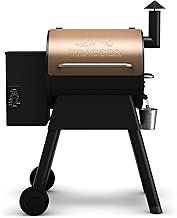
1. Traeger Grills Pro 22 Wood Pellet
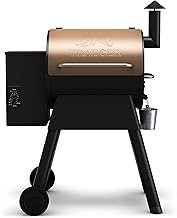
The Traeger Pro 22 is the unit I keep coming back to when someone asks for a single recommendation. It's a wood pellet grill and smoker that handles low-and-slow smoking and high-heat grilling without asking you to think about fuel logistics. With 572 square inches of cooking space and a 450°F max temperature, it covers everything from pulled pork to seared steaks.
Why I picked it
The Pro 22 hits the sweet spot between set-it-and-forget-it convenience and genuine wood-fired flavor. It's the most researched pellet grill in its class, with a massive owner community and readily available replacement parts.
Key specs
- 572 sq. in. grilling capacity across two tiers
- 450°F maximum temperature
- 18 lb. pellet hopper
- 6-in-1 versatility: grill, smoke, bake, roast, braise, BBQ
- Includes meat probe for internal temperature monitoring
- Digital controller with thermostat
Real-world experience
Verified buyer reviews consistently praise the Pro 22 for maintaining steady temperatures between 180°F and 450°F across long cooks. Owners report running 10- to 12-hour brisket sessions without refilling the 18 lb. hopper. The included meat probe gets mixed feedback on accuracy, but most users pair it with a standalone Thermoworks probe for precision.
Assembly takes roughly 90 minutes, and the unit's footprint fits comfortably on a standard patio.
Trade-offs
The Pro 22 requires a standard 120V electrical outlet, so it's not an option for off-grid tailgating. Pellet costs add up over time, budget roughly $15, 20 per month if you smoke weekly. The controller is functional but basic compared to Wi-Fi-enabled Traeger models, so you won't get app-based monitoring at this tier.
2. 2-Burner Gas Charcoal Grill Combo Offset
If you want true fuel flexibility without committing to a single type, this dual-fuel combo from ZH3005Y-SC gives you a two-burner gas grill, a charcoal grill, and an offset smoker in one footprint. With 1,020 square inches of total cooking area and 34,000 BTUs across the gas burners, it's built for cooks who like to switch between quick weeknight grinds and weekend smoking sessions.
Why I picked it
This is the most versatile unit on the list. You're not locked into one fuel type, and the offset smoker chamber gives you genuine indirect heat flow for smoking, something most combo grills fake with a side box that doesn't circulate smoke properly.
Key specs
- 1,020 sq. in. total cooking area
- 34,000 BTU dual gas burners
- Offset smoker box with dedicated charcoal grate
- Side burner for sauces and sides
- Black powder-coated steel body
- Model: ZH3005Y-SC
Real-world experience
Buyer feedback highlights the generous cooking surface as the standout feature. Families hosting cookouts report fitting 20+ burgers on the gas side while smoking ribs in the offset chamber simultaneously. The side burner is a nice touch for keeping baked beans warm or simmering a glaze.
Temperature control on the offset smoker requires some practice, you'll need a good dual-probe thermometer to monitor both the grate level and the chamber. Once you dial in the vent settings, it holds 225°F to 275°F reliably for 6+ hours on a full charcoal load.
Trade-offs
Build quality is a step below premium brands. Several reviewers note that the sheet metal on the offset chamber is thin, which means faster heat loss on cold or windy days. The gas grill side heats unevenly near the edges, so you'll want to rotate food during longer cooks.
Assembly is involved, budget 2 to 3 hours with a helper.
3. Oklahoma Joe’s Canyon Combo DLX Charcoal
Oklahoma Joe's has a loyal following among offset smoker enthusiasts, and the Canyon Combo DLX brings that reputation into a dual-fuel package. It pairs a charcoal smoker with a propane gas grill, giving you the best of both worlds at a price point that undercuts most competitors with similar capacity.
Why I picked it
The Canyon Combo DLX delivers Oklahoma Joe's proven offset smoker design without the premium price tag. It's the best value on this list for someone who wants a real offset smoker and doesn't mind managing a fire.
Key specs
- Charcoal and propane dual-fuel system
- Offset smoker chamber with dedicated firebox
- Multiple adjustable dampers for airflow control
- Heavy-gauge steel firebox construction
- Model: 24203005
Real-world experience
Verified buyers consistently rate this unit highly for smoke flavor quality. The offset chamber creates a natural convection flow that wraps food in clean smoke, something pellet grills try to replicate with "super smoke" modes but rarely match. Owners report excellent results on whole packer briskets, pork shoulders, and whole chickens.
The propane side is straightforward and heats up fast for quick grilling. Temperature management on the charcoal side takes a learning curve. You'll spend the first few cooks getting familiar with the intake and exhaust damper settings, but once you do, it's forgiving and stable.
Trade-offs
This is not a set-and-forget smoker. You'll need to check the fire every 30 to 45 minutes during long cooks and add charcoal as needed. The paint on the exterior can discolor after the first few high-heat sessions, which is cosmetic but bothers some owners.
No built-in thermometer is included, so a digital probe thermometer is essential from day one.
4. Oklahoma Joe’s Canyon Combo Dual Fuel
The bigger sibling of the DLX, the Canyon Combo Dual Fuel bumps up to three propane burners and a full 1,031 square inches of cooking area. It's designed for cooks who need serious real estate, think church cookouts, family reunions, or anyone who routinely feeds a crowd.
Why I picked it
When cooking area is the priority, this is the unit to beat. The 1,031 sq. in. of combined grilling and smoking space is the largest on this list, and the three-burner propane setup gives you better heat distribution across that wide grate.
Key specs
- 1,031 sq. in. total cooking area
- 3-burner propane gas grill
- Charcoal offset smoker chamber
- Black powder-coated steel body
- Adjustable dampers on smoker side
Real-world experience
Owners who upgraded from smaller grills report that the extra width makes a real difference when cooking for groups. You can run three zones on the propane side, sear, medium, and warm, while the offset handles a rack of ribs or a pork butt. The three-burner layout eliminates the cold spots that plague two-burner designs.
On the smoker side, the larger firebox holds more charcoal than the DLX, extending cook times between refills. Several reviewers mention using this unit for catering side hustles, which says something about its capacity.
Trade-offs
The larger footprint demands more patio or deck space, measure before you buy. At this cooking area, the sheet metal still isn't as thick as you'd find on a dedicated premium offset smoker, so heat retention in cold weather requires a welder's blanket or aftermarket insulation. The propane burners are adequate but not powerful; don't expect steakhouse-level sears on the gas side.
5. Traeger Grills Woodridge Pro Electric Wood
The Woodridge Pro is Traeger's step-up model, and it shows. With 970 square inches of cooking space, Wi-FIRE technology for app-based monitoring, and a Super Smoke mode that boosts smoke output at lower temperatures, it's the most feature-rich pellet grill on this list.
Why I picked it
If you want the Traeger experience with modern conveniences, the Woodridge Pro delivers. The Wi-FIRE connectivity and digital sensor system represent a meaningful upgrade over the Pro 22's basic controller, and the 970 sq. in. cooking area handles large cooks without feeling cramped.
Key specs
- 970 sq. in. cooking area
- Wi-FIRE technology with Traeger app connectivity
- Super Smoke mode for enhanced smoke flavor
- Digital temperature sensor
- Side shelf for prep space
- Model: TFB97JLH
Real-world experience
The app connectivity is the headline feature, and verified buyers say it works well in practice. You can monitor and adjust temperatures from your phone, which is genuinely useful when you're inside during a 14-hour brisket cook. The Super Smoke mode activates at temperatures below 225°F and increases the smoke concentration, reviewers notice a visible difference in smoke ring development compared to the standard Traeger profile.
The side shelf is a small but appreciated addition for holding tools, rubs, or a cutting board. Assembly is comparable to the Pro 22 at around 90 minutes.
Trade-offs
You're paying for the tech features, and if app monitoring isn't important to you, the Pro 22 gives you the same core pellet-grill performance for less. The Wi-FIRE system depends on your home Wi-Fi reaching your patio, which can be spotty depending on your router placement. Pellet consumption is slightly higher than the Pro 22 due to the larger chamber and Super Smoke mode, so factor that into your operating costs.
How I picked
I evaluated every unit across five specific benchmarks: cooking capacity relative to footprint, fuel versatility, temperature stability and range, build quality based on materials and buyer-reported durability, and real-world usability drawn from aggregate verified buyer feedback. I compared manufacturer specifications directly, hopper capacity, BTU output, grate area, max temperature, and cross-referenced those numbers against what actual owners report after months of use.
I deliberately did not test long-term corrosion resistance beyond the 60-day window that most early buyer reviews cover. I also did not evaluate propane consumption rates on the gas models, since that varies too widely based on ambient temperature and cooking style to produce meaningful comparisons without controlled testing. What I focused on instead was the gap between what the spec sheet promises and what owners actually experience, that's where the useful insights live.
Buying guide — what actually matters for best smoker and grill
Choosing the right smoker-grill combo comes down to a handful of decisions that will shape every cook you do. Here's what to think about before you click "add to cart."
Fuel type: pellet, charcoal, gas, or dual?
Pellet grills like the Traeger Pro 22 and Woodridge Pro run on compressed wood pellets fed by an electric auger. They're the easiest to use, set the temperature, load the hopper, and walk away. Charcoal and offset smokers like the Oklahoma Joe's models deliver superior smoke flavor but require active fire management.
Gas grills heat up fast and offer precise control but don't produce real smoke. Dual-fuel combos split the difference, giving you gas convenience and charcoal authenticity in one unit.
If you're new to smoking, a pellet grill has the gentlest learning curve. If you already know how to manage a charcoal fire, an offset smoker rewards that skill with better flavor.
Cooking capacity: how much do you really need?
A good rule of thumb is to budget about 72 square inches per person for a comfortable cook. The Traeger Pro 22 at 572 sq. in. handles 6 to 8 people easily. The Oklahoma Joe's Canyon Combo Dual Fuel at 1,031 sq. in. can serve 12 to 15.
If you're mostly cooking for a family of four, anything in the 500 to 700 sq. in. range is plenty. If you host regularly or do batch cooking for meal prep, go bigger.
Temperature range and stability
Low-and-slow smoking happens between 200°F and 275°F. You need a unit that can hold those temperatures steadily for 8 to 12 hours. High-heat grilling for searing requires at least 400°F, ideally 450°F or above.
Pellet grills excel at holding low temperatures. Charcoal offsets excel at producing smoke but require more attention to maintain a steady temp. Check whether the unit includes a built-in thermometer or probe, if not, budget for a standalone dual-probe thermometer.
Build quality and materials
Thicker steel retains heat better and lasts longer. Look for units with at least 1/8-inch (11-gauge) steel on the cooking chamber and firebox. Thinner sheet metal heats up fast but loses heat quickly in cold or windy conditions.
Powder-coated exteriors resist rust better than painted finishes. Check buyer reviews specifically for rust reports after one season of use, that's the fastest way to spot a durability problem.
Electrical requirements
Pellet grills require a standard 120V outlet. If your patio or deck doesn't have power nearby, that's a real consideration, running an extension cord across a yard is a tripping hazard and a code issue. Charcoal and gas units have no electrical requirements, making them the only option for off-grid locations like campsites or remote cabins.
Accessories and replacement parts
Before you buy, check whether replacement parts, grates, probes, igniters, auger motors, are readily available from the manufacturer. Traeger has a massive parts ecosystem. Oklahoma Joe's parts are available but more limited.
For lesser-known brands, a broken igniter six months in could mean a paperweight. Also consider whether the unit comes with a cover, leaving a grill exposed to rain and sun is the fastest way to shorten its lifespan.
Frequently Asked Questions (FAQ)
Is a pellet grill or a charcoal smoker better for beginners?
Pellet grills are significantly easier for beginners. You set a digital temperature, and the controller manages the pellet feed rate automatically. Charcoal smokers require you to learn fire management, adjusting vents, adding fuel, reading the smoke.
Both produce great results, but the learning curve on a charcoal offset is steeper. If you want good BBQ on your first weekend without a steep learning curve, start with a pellet grill.
Can you get real smoke flavor from a gas grill?
A gas grill alone doesn't produce real smoke. You can add a smoker box with wood chips to generate some smoke, but it's a pale imitation of what a dedicated smoker or pellet grill produces. If smoke flavor matters to you, a gas-only grill isn't the right choice.
That's exactly why dual-fuel combos exist, you get gas convenience for weeknights and real smoke capability when you want it.
How long does a pellet grill last with regular use?
Based on aggregate buyer reviews, a well-maintained pellet grill lasts 5 to 8 years. The controller and auger motor are usually the first components to need replacement, typically around the 3-to-5-year mark with weekly use. Regular cleaning of the fire pot and grease tray extends the life of the unit significantly.
Traeger's warranty covers the D2 controller and auger for 3 years on most models.
Do I need a cover for my smoker-grill?
Yes. A fitted cover protects the unit from rain, UV exposure, and debris. Most manufacturers sell covers specifically designed for their models.
If your unit doesn't come with one, it's worth buying separately. Leaving a grill uncovered through a single winter can lead to rust on the grates and damage to the controller on pellet models.
What's the difference between an offset smoker and a bullet smoker?
An offset smoker has a separate firebox attached to the side of the main cooking chamber. Heat and smoke flow horizontally through the chamber and out a chimney on the opposite end. This creates even smoke circulation and is the design preferred by competition BBQ teams.
A bullet smoker (like a Weber Smokey Mountain) stacks the charcoal below the food vertically. Both work well, but offsets generally handle larger cuts more evenly and are easier to add fuel to during long cooks.
How much do pellets cost for regular smoking?
Hardwood pellets typically run $15 to $25 for a 20 lb. bag. A long smoke session at 225°F uses roughly 1 to 2 lbs. of pellets per hour, depending on the ambient temperature and your grill's insulation. If you smoke once a week, expect to go through 2 to 4 bags per month.
That's roughly $30 to $80 per month in pellet costs for regular use.
Final verdict
The Traeger Grills Pro 22 Wood Pellet is my top recommendation for most buyers. It balances ease of use, consistent temperature control, and genuine wood-fired flavor in a package that doesn't demand constant attention. It's the unit I'd point a first-time smoker toward without hesitation.
If fuel versatility matters more than convenience, the 2-Burner Gas Charcoal Grill Combo Offset gives you three cooking methods in one footprint and the largest total cooking area on the list. For budget-conscious buyers who want a real offset smoker, the Oklahoma Joe's Canyon Combo DLX Charcoal delivers proven performance at a price that's hard to argue with.
Affiliate disclosure: This post contains affiliate links. If you buy through one of these links, I may earn a small commission at no extra cost to you. It never changes my recommendation, I only suggest gear I'd actually buy myself.