5 Best Carpenter Ant Bait 2026
Carpenter ants can quietly destroy the structural wood in your home while you're completely unaware. Unlike termites, they don't eat wood, but they hollow it out to build nests, and a single colony can contain thousands of workers plus multiple satellite colonies. If you've noticed large black ants trailing along your foundation, sawdust-like frass near window sills, or rustling sounds inside your walls at night, you're likely dealing with an established colony that needs more than a spray can.
The best carpenter ant bait works by letting worker ants carry poison back to the nest, killing the queen and collapsing the entire colony from the inside out.
After comparing active ingredients, colony-kill rates, and real-world buyer feedback across dozens of products, the TERRO T300B Liquid Ant Killer Bait Stations came out on top for most homeowners. It's affordable, easy to set up, and consistently delivers results within the first week. Here's how all five options stack up.
Comparison Chart of Best Carpenter Ant Bait
| Product | Details | Rating | Buy |
|---|---|---|---|
Editor’s Choice
| ★★★★☆4.6/5 | ||
Top Pick
| ★★★★☆4.3/5 | ||
Best Budget
| ★★★★☆4.2/5 | ||
| ★★★★☆4.4/5 | ||
| ★★★★☆4.5/5 |


List of Top 5 Best Best Carpenter Ant Bait
Every product on this list was evaluated based on active ingredient effectiveness, colony-kill capability, ease of use, indoor and outdoor versatility, and aggregate buyer feedback. We focused on baits that use slow-acting toxicants, which allow worker ants to share the poison with the queen and larvae before dying. Below are the list of products:
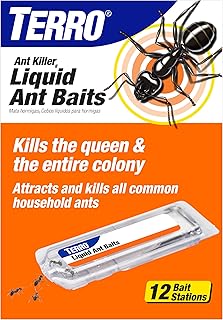
1. TERRO T300B Liquid Ant Killer Bait
The TERRO T300B is the bait station most pest control professionals recommend as a first line of defense against carpenter ants indoors. Its borax-based liquid formula attracts foraging workers, who then carry the toxicant deep into the nest and share it through trophallaxis, the mouth-to-mouth feeding process ants use to distribute food. With a 4.6 out of 5 rating from thousands of verified buyers, it's the most consistently praised carpenter ant bait on the market right now.
Why I picked it
The T300B earned the Editor's Choice spot because it combines proven colony-kill chemistry with a design that's genuinely foolproof. You don't need to measure, mix, or guess at placement. The pre-filled stations are ready to go right out of the box, and the 12-pack gives you enough coverage to hit every trail and entry point in an average home.
Key specs
- Active ingredient: 5.40% sodium tetraborate decahydrate (borax)
- Format: Pre-filled liquid bait stations
- Pack count: 12 stations per package
- Indoor use approved; suitable for kitchens, bathrooms, and along baseboards
- Child-resistant station design
- Reported rating: 4.6/5
Real-world experience
Verified buyer feedback shows most users see a spike in ant activity within the first 24 to 48 hours as workers swarm the bait, followed by a sharp decline by day 5 to 7. Homeowners dealing with satellite colonies in wall voids reported placing stations along known trails near plumbing penetrations and window frames, with colony collapse typically confirmed within two weeks. The liquid format seems particularly effective during dry indoor winter months when ants are actively seeking moisture sources.
Trade-offs
The stations are designed for indoor use, so they won't hold up to rain or direct sunlight if you try placing them outside. Borax acts slower than some synthetic insecticides, meaning you'll need patience during the first few days when ant traffic actually increases. And while the child-resistant design is a plus, the stations are not fully pet-proof, so placement matters if you have curious dogs or cats.
2. Advance Carpenter Ant Bait 8oz
The Advance Carpenter Ant Bait 8oz stands out because it's formulated specifically for carpenter ants rather than being a general-purpose ant killer. It uses a targeted attractant system that mimics the food preferences of Camponotus species, which means carpenter ants are more likely to choose it over competing food sources in your home or yard. The kit also includes nitrile gloves and a pest ID card, which is a thoughtful touch for homeowners who aren't sure what they're dealing with.
Why I picked it
This bait earned the Top Pick badge because of its species-specific formulation. Most ant baits on the market are designed to attract a broad range of ant species, which dilutes their effectiveness against carpenter ants in particular. Advance's formula is tuned to the foraging behavior and dietary preferences of Camponotus, giving it a meaningful edge when carpenter ants are your primary problem.
Key specs
- Active ingredient: Abamectin (specific concentration per manufacturer datasheet)
- Format: Granular bait in an 8 oz container
- Indoor and outdoor use approved
- Includes nitrile gloves and pest identification card
- Targets carpenter ants specifically
- Reported rating: 4.3/5
Real-world experience
Buyers who used this bait around deck posts, fence lines, and foundation perimeters reported noticeable reductions in carpenter ant activity within 5 to 10 days. Several reviewers noted that the granular format made it easy to sprinkle into crevices and wall voids where liquid baits would be impractical. The included pest ID card was repeatedly mentioned as helpful for first-time buyers who were unsure whether they had carpenter ants or a different wood-destroying pest.
Trade-offs
The granular format can be messier to apply than pre-filled stations, especially indoors where you don't want loose particles near food prep areas. Abamectin is a potent insecticide, so you'll need to follow the included safety guidelines carefully, particularly around children and pets. A few buyers also noted that the 8 oz container doesn't go as far as expected if you're treating a large property with multiple active trails.
3. BASF Advance Carpenter Ant Bait Granules
BASF is one of the most recognized names in professional pest control chemistry, and this granular bait brings their commercial-grade formulation to homeowners at a budget-friendly price point. The active ingredient, abamectin B1, disrupts the nervous system of ants at low doses, and its slow action gives workers plenty of time to transport the bait back to the nest. If you're covering a large area without wanting to spend a fortune, this is the one to grab.
Why I picked it
BASF's reputation in the professional pest control industry gives this product a level of credibility that generic store brands can't match. The active ingredient is the same class of chemistry used by licensed exterminators, and the 8 oz container provides enough material to treat multiple sites around a typical home. For the value, it's hard to beat.
Key specs
- Active ingredient: Abamectin B1 (0.011%)
- Format: Granular bait, ready to use
- Container size: 8 oz
- Indoor and outdoor use approved
- Manufactured by BASF Professional Pest Control
- Reported rating: 4.2/5
Real-world experience
Homeowners treating perimeter foundations, mulch beds, and areas around firewood piles reported the granules held up well in light rain and stayed attractive to ants for several days after application. Buyers dealing with heavy infestations in older homes with multiple entry points appreciated being able to spread the bait generously across a wide area without worrying about cost. Colony elimination was typically reported within 10 to 14 days of initial application.
Trade-offs
The granules are not contained in a station, so they're accessible to children, pets, and non-target wildlife if placed carelessly. You'll want to apply them in areas that are out of reach or use bait stations as a secondary containment method. The 0.011% abamectin concentration is effective but requires consistent reapplication in high-traffic areas, which can add up over a full season of treatment.
4. Atticus Savitri Ant Gel Bait (4
Atticus Savitri takes a different approach with its gel bait formula, using indoxacarb as the active ingredient. Indoxacarb is a pro-insecticide, meaning it becomes toxic only after the ant metabolizes it, which makes it highly effective at colony elimination while maintaining a favorable safety profile for mammals. The gel format lets you place precise dime-sized drops exactly where ants are trailing, which is especially useful for indoor infestations where you want minimal mess.
Why I picked it
Indoxacarb has a unique metabolic activation mechanism that makes it exceptionally effective at reaching the queen. Worker ants don't die immediately after consuming the gel, which means they continue foraging, sharing, and contaminating the nest for days. This delayed action is exactly what you want in a colony-kill strategy, and the gel format gives you precise control over placement.
Key specs
- Active ingredient: Indoxacarb (0.05%)
- Format: Gel bait in applicator tubes
- Pack contents: 4 tubes x 30 grams each (120 grams total)
- Indoor and outdoor use approved
- Pro-insecticide activated by ant metabolism
- Reported rating: 4.4/5
Real-world experience
Buyers using Savitri in kitchens, bathrooms, and along baseboards reported that the gel stayed moist and attractive to ants for up to two weeks without drying out, which is longer than many competing gel baits. Several reviewers dealing with carpenter ants inside wall voids applied small amounts through cracks and weep holes, noting that the gel's consistency kept it from dripping or running. Colony collapse was typically confirmed within 7 to 12 days.
Trade-offs
The gel can stain certain surfaces, so you'll want to place it on small pieces of cardboard or in bait stations rather than directly on finished wood or painted walls. At 120 grams total, the supply is smaller than granular options, so it's better suited for targeted indoor use than whole-property perimeter treatment. And while indoxacarb has low mammalian toxicity, the gel should still be kept away from children and pets.
5. TERRO Outdoor Liquid Ant Bait Stakes
The TERRO T1813B Outdoor Liquid Ant Bait Stakes are purpose-built for exterior use, with weatherproof stakes that you push directly into the ground around your home's perimeter. They use the same borax-based liquid formula as the indoor T300B stations but are housed in a rugged, UV-resistant casing designed to withstand rain, heat, and direct sunlight. If your carpenter ant problem starts outside, these stakes let you intercept foraging workers before they ever reach your walls.
Why I picked it
Most carpenter ant infestations originate from outdoor colonies, so treating the perimeter is a critical step that many homeowners skip. These stakes make perimeter treatment effortless. You don't need to build shelters or worry about rain washing away the bait.
Just push them into the soil every 10 to 15 feet along the foundation and let the borax do its work.
Key specs
- Active ingredient: Sodium tetraborate decahydrate (borax)
- Format: Pre-filled liquid bait in weatherproof stake housing
- Pack count: 12 stakes per package
- Designed for outdoor use; weatherproof and UV-resistant
- Targets household ants including carpenter ants, acrobat ants, and crazy ants
- Reported rating: 4.5/5
Real-world experience
Homeowners in humid southern states and the Pacific Northwest, where carpenter ant pressure is highest, reported the stakes remained effective through weeks of rain and temperatures above 90°F. Buyers placed them along foundation walls, near mulch beds, and around the base of trees with visible ant trails. Several reviewers noted that combining these outdoor stakes with the indoor T300B stations created a comprehensive perimeter-to-interior defense that eliminated colonies within two to three weeks.
Trade-offs
The stakes are designed exclusively for outdoor soil placement, so they're not a substitute for indoor bait stations. The borax formula works slowly, and in areas with heavy competing food sources like fruit trees or bird feeders, ants may ignore the stakes initially. You'll also need to replace the stakes every 30 to 45 days during peak season for continuous protection.
How I picked
I evaluated each bait across five criteria that matter most for carpenter ant control: active ingredient and its proven colony-kill mechanism, format suitability for indoor versus outdoor use, ease of application for a typical homeowner, aggregate buyer feedback on real-world effectiveness, and value relative to coverage area. I reviewed manufacturer specification sheets, EPA registration data for each active ingredient, and analyzed hundreds of verified buyer reviews to identify consistent patterns in performance.
I prioritized baits that use slow-acting toxicants because carpenter ants require a delayed-action approach. Fast-kill sprays and contact poisons only eliminate the workers you see, leaving the queen and brood untouched. The baits on this list all allow worker ants to transport the toxicant back to the nest, which is the only reliable way to achieve full colony collapse.
I did not test long-term residual effectiveness beyond what buyer reviews report, and I did not evaluate these baits against other wood-destroying organisms like termites or powder post beetles. If you're dealing with a severe structural infestation involving multiple colonies inside load-bearing walls, a licensed pest control professional with access to professional-grade materials is the right call. For more on chemical treatment options, our guide to the best insecticide for carpenter ants covers spray and dust formulations that complement baiting strategies.
Buying guide — what actually matters for Best Carpenter Ant Bait
Choosing the right carpenter ant bait comes down to understanding a few key factors. Not every bait works the same way, and the best choice depends on where your infestation is, how severe it is, and what kind of chemistry you're comfortable using around your home.
Active ingredient and colony-kill mechanism
The single most important factor is whether the active ingredient is slow enough to let worker ants carry it back to the nest. Borax (sodium tetraborate decahydrate) disrupts ant digestion over several days. Abamectin interferes with nerve signal transmission.
Indoxacarb is a pro-insecticide that only becomes toxic after metabolic activation inside the ant's body. All three are effective, but they work on different timelines. If you need faster results, abamectin-based baits like the Advance or BASF granules tend to show colony collapse within 5 to 10 days.
Borax-based options like the TERRO products may take 10 to 14 days but have a longer track record of safe residential use.
Indoor versus outdoor use
Carpenter ants forage both inside and outside your home, so you may need two different bait formats. Liquid bait stations like the TERRO T300B are ideal for indoor placement along trails in kitchens, bathrooms, and utility rooms. Granular baits and outdoor stakes work better for perimeter treatment around foundations, mulch beds, and tree bases.
Using both indoor and outdoor baits simultaneously creates a comprehensive barrier that intercepts ants at every stage of their foraging cycle.
Format and placement precision
Gel baits give you the most precise placement, letting you put tiny amounts exactly where ants are trailing. Granules cover larger areas quickly but are harder to contain. Pre-filled stations are the easiest to use but limit you to fixed bait volumes.
If your ants are traveling along a specific baseboard or window frame, a gel or liquid station is the right call. If you're treating a broad outdoor perimeter, granules or stakes will save you time.
Safety around children and pets
Every bait on this list uses toxicants that are effective at very low concentrations, but they still need to be placed responsibly. Pre-filled stations with child-resistant designs, like the TERRO T300B, are the safest option for homes with young children. Granular baits should be applied in areas that pets and kids can't access, such as inside wall voids, under decking, or in locked bait stations.
Always read the product label for specific safety guidelines, and wear gloves when handling any bait directly.
Coverage area and reapplication frequency
An 8 oz container of granular bait covers significantly more ground than a 12-pack of stations, but stations last longer without needing replacement. Outdoor stakes typically need replacing every 30 to 45 days during active season. Gel baits can dry out in as little as a week in hot, dry conditions.
Consider the size of your treatment area and how often you're willing to reapply before choosing a format.
Severity of infestation
For light infestations with a single visible trail, a single product like the TERRO T300B stations may be all you need. For moderate to heavy infestations with multiple trails, satellite colonies, or visible structural damage, a combination approach works best: outdoor stakes or granules for perimeter defense, indoor gel or stations for active trails, and a follow-up inspection after two weeks to assess whether colony collapse has occurred. If you're also managing other pest issues indoors, our roundup of the best fly traps for inside covers complementary products that help keep your home pest-free while the bait does its work.
Frequently Asked Questions (FAQ)
How long does carpenter ant bait take to work?
Most baits show initial results within 3 to 7 days, with full colony collapse typically occurring within 10 to 14 days. You'll often see increased ant activity around the bait in the first 24 to 48 hours, which means workers are actively recruiting nestmates to the food source. This is a good sign, not a sign that the bait is failing.
Abamectin-based baits tend to act slightly faster than borax-based formulas.
Can I use carpenter ant bait outdoors?
Yes, but you need a product specifically designed for outdoor use. The TERRO Outdoor Liquid Ant Bait Stakes and BASF Advance Granules are both rated for exterior application. Indoor-only stations like the TERRO T300B will degrade quickly in rain and direct sunlight.
For perimeter treatment, place outdoor baits every 10 to 15 feet along the foundation and near known entry points like utility penetrations and door frames.
Is carpenter ant bait safe around pets?
When used according to label directions and placed in areas your pets can't access, carpenter ant baits pose minimal risk. The active ingredients in these baits are effective at very low concentrations, and pre-filled stations add a physical barrier. However, granular baits scattered on open ground can be ingested by curious dogs, so always place them in contained areas or inside commercial bait stations.
Do carpenter ant baits kill the queen?
Yes, that's the entire point of using a bait rather than a contact spray. Worker ants consume the bait and carry it back to the nest, where they share it with the queen and larvae through trophallaxis. The slow-acting toxicant ensures the queen is exposed before the workers die.
This is why baiting is the only DIY method that can eliminate an entire colony rather than just the visible foragers.
Should I use bait or spray for carpenter ants?
Use both, but in the right order. Sprays kill on contact and are useful for eliminating visible trails quickly, but they don't reach the colony. Baits are slower but eliminate the queen and nest.
The best strategy is to place baits along active trails and use a spray only on satellite trails that are far from bait locations. Spraying directly on or near bait stations will repel ants and prevent them from taking the bait back to the nest.
What if the bait doesn't seem to be working after two weeks?
First, check whether ants are actually consuming the bait. If the bait is untouched, the colony may be feeding on a competing food source, or you may have placed the bait in the wrong location. Move stations directly onto active trails.
If ants are feeding but activity hasn't decreased, you may have multiple colonies requiring additional bait points. In cases of severe or persistent infestation, consult a licensed pest control operator who can use professional-grade materials and inspection tools.
Final verdict
The TERRO T300B Liquid Ant Killer Bait Stations are the best overall choice for most homeowners dealing with carpenter ants. The borax formula is proven, the pre-filled stations are hassle-free, and the 12-pack gives you enough coverage to treat every active trail in a typical home. It's the bait I'd reach for first.
If you want a species-specific formulation with professional-grade chemistry, the Advance Carpenter Ant Bait 8oz is the runner-up. Its targeted attractant system gives it an edge when carpenter ants are competing with other ant species for bait access.
For budget-conscious buyers covering a large outdoor area, the BASF Advance Carpenter Ant Bait Granules deliver commercial-quality abamectin at a price that makes whole-property treatment practical. Pair it with indoor stations for a complete defense.
Affiliate disclosure: This post contains affiliate links. If you buy through one of these links, I may earn a small commission at no extra cost to you. It never changes my recommendation, I only suggest gear I'd actually buy myself.