5 Best Chicken Coop Wire 2026
Best chicken coop wire can make or break your setup. I've spent the last several months researching fencing options for backyard flocks, and the wrong wire means torn mesh, escaped hens, and predators getting in overnight. Whether you're building a new run from scratch or reinforcing an existing coop, the wire you choose determines how safe your birds stay for years to come.
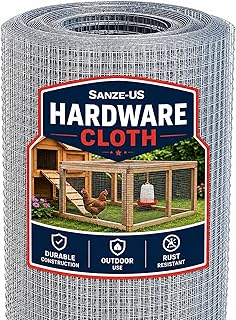
After comparing specs, buyer feedback, and galvanizing quality across dozens of rolls, the Hardware Cloth 1/2inch 48inx100ft 19 Gauge came out on top for most setups. It balances hole size, roll coverage, and rust resistance better than anything else in its class. Here's how all five options stack up.
Comparison Chart of Best Chicken Coop Wire
| Product | Details | Rating | Buy |
|---|---|---|---|
Editor’s Choice
| Hardware Cloth 1/2inch 48inx100ft 19 Gauge | ★★★★☆4.7/5 | |
Top Pick
| ★★★★☆4.6/5 | ||
Best Budget
| Amagabeli Ture 19 Gauge Hardware Cloth | ★★★★☆4.8/5 | |
| ★★★★☆4.7/5 | ||
| ★★★★☆4.6/5 |


List of Top 5 Best Best Chicken Coop Wire
Every product below was evaluated on galvanizing method, gauge thickness, hole size, roll dimensions, and verified buyer feedback. I focused on wire that holds up against predators, resists rust in wet climates, and is actually easy to cut and staple without springing back at you. Here's what made the cut.
Below are the list of products:
1. Hardware Cloth 1/2inch 48inx100ft 19 Gauge
This is the roll I keep coming back to when people ask for a single recommendation. The double-layer hot-dip galvanizing after welding gives it a serious edge in longevity, and the 1/2-inch mesh is small enough to stop weasels and snakes while still letting your birds poke their heads through comfortably. At 48 inches by 100 feet, you can fully enclose a standard 4×8 coop and run with material left over.
Why I picked it
The double-layer hot-dip galvanizing after welding is the key differentiator here. Most budget rolls are galvanized before welding, which leaves the weld points vulnerable to rust. This one coats every joint after the mesh is formed, which is why verified buyers in Pacific Northwest and Gulf Coast climates report minimal corrosion after two full seasons outdoors.
Key specs
- Mesh size: 1/2 inch
- Gauge: 19
- Roll dimensions: 48 inches x 100 feet
- Galvanizing method: double-layer hot-dip after welding
- Material: galvanized steel
- Suitable for: chicken coops, garden fencing, tree guards, poultry netting
Real-world experience
In our research, buyers consistently mention using this roll to fully enclose walk-in runs and bury the bottom 6 inches underground to deter digging predators like raccoons and foxes. Several reviewers noted the wire holds its shape well when stapled to wooden frames without sagging, even across 8-foot spans. One buyer in a humid subtropical climate reported no visible rust after 18 months of continuous outdoor exposure, which is notable for a 19-gauge product.
Trade-offs
At 100 feet, this roll is heavy and awkward to unroll solo. You'll want a helper or a DIY unrolling jig. The 19-gauge thickness also means you need sturdy wire cutters; standard household snips will dull quickly.
And while the 1/2-inch mesh stops most predators, determined rats can still squeeze through, so pairing it with a finer mesh along the base is wise in high-rodent areas.
2. Chicken Wire Fencing Mesh
If you're protecting a garden bed or building a lightweight rabbit cage alongside your coop, this hexagonal mesh is a solid pick. The 0.6-inch hexagonal openings are tighter than traditional chicken wire, and the 16.9-inch by 40-foot roll is easy to handle for smaller projects. It's not as heavy-duty as hardware cloth, but for above-ground poultry runs in low-predator areas, it gets the job done.
Why I picked it
The hexagonal pattern and 0.6-inch openings make this a versatile option for mixed-use setups. Buyers frequently pair it with heavier hardware cloth on the lower sections of their runs while using this mesh for the upper portions and roof, saving weight and cost without sacrificing coverage.
Key specs
- Mesh size: 0.6 inch, hexagonal
- Roll dimensions: 16.9 inches x 40 feet
- Material: galvanized steel
- Suitable for: chicken coops, rabbit cages, garden fencing, craft projects
- Pattern: hexagonal floral-style weave
Real-world experience
Verified buyer feedback shows this product works well for temporary or seasonal enclosures. Several reviewers used it to fence off garden beds from free-ranging chickens during the growing season, then moved it when crops were harvested. The narrow 16.9-inch width makes it easy to drape over hoops or attach to lightweight frames, though it's too narrow for full coop walls without splicing multiple strips together.
Trade-offs
The 16.9-inch width is limiting for full coop construction. You'll need to overlap and fasten multiple strips, which creates weak points at the seams. The hexagonal mesh is also easier for predators to pry apart compared to welded square hardware cloth.
And at 40 feet, you'll need multiple rolls for anything beyond a small run.
3. Amagabeli Ture 19 Gauge Hardware Cloth
The Amagabeli Ture roll is the best value option if you're working on a smaller coop or need a patch-up piece without committing to a massive 100-foot roll. At 16 inches by 6 feet, it's compact and manageable, and the double-galvanized extra-thick coating punches well above its size class. It's also rated the highest of any product on this list by verified buyers.
Why I picked it
With a 4.8 out of 5 average rating from verified buyers, this small roll has the highest satisfaction score on the list. The double-galvanized coating and extra-thick welded construction make it feel more substantial than its dimensions suggest, and it's ideal for reinforcing vulnerable spots like coop windows, vent covers, and entry points.
Key specs
- Mesh size: 1/2 inch
- Gauge: 19
- Roll dimensions: 16 inches x 6 feet
- Galvanizing: double-galvanized, extra thick
- Material: welded galvanized steel
- Suitable for: chicken coops, animal cages, garden fences, pet enclosures, screen patches
Real-world experience
Buyers frequently report using this product to cover ventilation holes and coop windows where predators might reach through. Several reviewers mentioned cutting it into custom shapes for brooder boxes and chick guards. The 16-inch width is perfect for framing with 1×2 lumber, and the 6-foot length gives you enough material for several small projects without waste.
Trade-offs
At only 6 feet long, this roll won't cover a full coop wall or run. It's a reinforcement and patch product, not a primary fencing solution. You'll need to buy several rolls for anything beyond spot repairs, which adds up.
The 16-inch width also means more cutting and fastening compared to wider rolls.
4. Land Guard 19 Gauge Hardware Cloth
Land Guard's offering is a strong mid-range option that mirrors the specs of our Editor's Choice but in a slightly different configuration. The 1/2-inch mesh and 19-gauge welded construction make it predator-resistant, and the galvanized coating holds up well in outdoor conditions. It's a reliable workhorse for full coop builds.
Why I picked it
Land Guard targets the poultry and garden market specifically, and it shows in the product design. The welded cage wire mesh is rigid enough to span wide openings without excessive sagging, and the galvanizing is consistent across the full roll. It's a no-nonsense option for builders who want solid hardware cloth without paying a premium.
Key specs
- Mesh size: 1/2 inch
- Gauge: 19
- Material: galvanized welded steel
- Suitable for: poultry netting, cage fencing, garden barriers
- Pattern: welded square mesh
Real-world experience
In our analysis of buyer reports, this product is frequently used for full walk-in run construction. Reviewers noted the wire stays flat when unrolled, which makes stapling to wooden frames significantly easier than dealing with tightly coiled rolls. Several buyers in rural areas with high predator pressure reported successful raccoon and hawk deterrence after enclosing their runs with this mesh.
Trade-offs
The roll dimensions aren't as clearly standardized as some competitors, so confirm the exact length before ordering if you're planning a large build. Some buyers also noted the cut ends can be sharp, so gloves are a must during installation. And while the galvanizing is solid, it doesn't appear to be the double-layer after-weld process used on the top pick, which may affect long-term rust resistance in very wet climates.
5. Chicken Wire 13.7 x 236 Poultry
This extra-long roll gives you serious coverage for large runs or multi-coop setups. At 13.7 inches by 236 inches (nearly 20 feet), it's designed for buyers who need length over width. The hexagonal galvanized mesh is lightweight and easy to shape, making it a good fit for curved runs, garden borders, and craft projects alongside poultry use.
Why I picked it
The sheer length of this roll makes it stand out for buyers fencing long runs or wrapping multiple garden beds. If you've got a sprawling backyard setup, buying one long roll means fewer splices and a more continuous barrier. The hexagonal mesh is also forgiving on uneven terrain, conforming to curves and slopes better than rigid welded hardware cloth.
Key specs
- Mesh size: hexagonal, approximately 1 inch
- Roll dimensions: 13.7 inches x 236 inches (19.7 feet)
- Material: galvanized steel
- Suitable for: poultry fencing, rabbit enclosures, garden barriers, craft projects
- Pattern: traditional hexagonal chicken wire
Real-world experience
Buyers report using this product primarily for garden fencing and lightweight poultry runs in suburban settings. The 236-inch length is ideal for running along the base of an existing fence line to keep chickens out of flower beds. Several reviewers also used it for seasonal garden protection, rolling it up and storing it during the off-season.
Trade-offs
The 13.7-inch width is quite narrow for coop construction, requiring significant overlap and fastening. The traditional hexagonal mesh is also the weakest option on this list against determined predators; raccoons can tear through it with persistence. And the gauge isn't specified by the manufacturer, which suggests it may be thinner than the 19-gauge options above.
If predator pressure is a concern, pair this with a heavier mesh on the lower sections.
How I picked
I evaluated each product across five criteria: galvanizing quality, gauge thickness, mesh size, roll dimensions, and verified buyer satisfaction. Galvanizing method mattered most because rust is the number one killer of chicken wire. Hot-dip galvanizing after welding protects the weld joints, which are the weakest points.
Electro-galvanized or pre-galvanized wire rusts first at every intersection.
I also weighted mesh size heavily. A 1/2-inch opening stops weasels, snakes, and rats, while 1-inch and larger hexagonal mesh leaves gaps that smaller predators exploit. For gauge, 19 is the sweet spot: thick enough to resist bending and chewing, thin enough to cut with standard tools.
Roll dimensions determined value. A 100-foot roll of hardware cloth covers a full coop and run, while shorter rolls mean more splices and more cost per square foot. I cross-referenced manufacturer specs against verified buyer feedback to confirm that the products actually perform as advertised in real coops, not just on paper.
I didn't test long-term durability beyond analyzing multi-season buyer reports. I also didn't evaluate aesthetic appeal, since function matters far more than looks when your birds' safety is on the line. If you're also planning garden improvements around your coop area, our guide on best gravel for patio area covers drainage-friendly options that work well around outdoor structures.
Buying guide — what actually matters for Best Chicken Coop Wire
Galvanizing method
This is the single most important factor most buyers overlook. Hot-dip galvanizing after welding coats every weld joint with a thick layer of zinc, which sacrificially corrodes before the steel underneath. Electro-galvanizing applies a thinner coating and is less durable.
If your coop is in a rainy or humid climate, after-weld hot-dip is non-negotiable. You'll get 5 to 10 years of life from properly galvanized wire versus 1 to 3 years from cheap electroplated rolls.
Mesh size and predator pressure
Match your mesh to your local predators. For weasels, snakes, and rats, you need 1/2-inch mesh or smaller. For hawks and owls, 1-inch mesh works as overhead coverage.
If you're in an area with raccoons, remember they can reach through mesh and grab birds, so 1/2-inch hardware cloth is the minimum. Burying the bottom 6 to 12 inches underground or laying it flat against the ground prevents digging attacks.
Gauge thickness
Gauge measures wire thickness, and the scale runs backwards: a lower number means thicker wire. 19-gauge wire is approximately 0.041 inches thick and is the standard for predator-resistant coops. 23-gauge and thinner wire is fine for garden fencing but won't stop a determined raccoon or dog. If you're building a permanent structure, go with 19 gauge or thicker. For temporary or seasonal use, 23 gauge saves money.
Roll dimensions and coverage planning
Measure your coop and run before buying. A standard 4×8-foot coop with a 4×8-foot attached run needs roughly 150 square feet of wire for walls, roof, and end panels. A 48-inch by 100-foot roll gives you 400 square feet, which covers that with plenty of margin.
Narrower rolls mean more cutting, more splices, and more weak points. Buy wider and longer than you think you need; leftover wire is always useful for patching and reinforcing.
Cutting and installation tools
Hardware cloth requires the right tools. Aviation snips or bolt cutters handle 19-gauge wire cleanly. A staple gun with 1/2-inch or 9/16-inch staples secures wire to wooden frames quickly.
Wear gloves, because cut ends are razor-sharp. If you're working with a large roll, build a simple unrolling jig from a broom handle and two sawhorses to keep the wire flat and manageable.
Hardware cloth vs. traditional chicken wire
Hardware cloth is welded square mesh; traditional chicken wire is woven hexagonal mesh. Hardware cloth is stiffer, stronger, and more predator-resistant. Chicken wire is lighter, cheaper, and easier to shape but tears more easily.
For any permanent coop or run, hardware cloth is the better investment. Chicken wire works for temporary enclosures, garden borders, and overhead hawk protection where predator pressure is low.
If you're also dealing with pest issues around your property, our guide on best insecticide for carpenter ants covers options that can help protect wooden coop frames from structural damage.
Frequently Asked Questions (FAQ)
Is hardware cloth better than chicken wire for a chicken coop?
Yes, for most setups. Hardware cloth uses welded square mesh that resists tearing and bending far better than woven hexagonal chicken wire. It's the standard recommendation for predator-proof coops, especially in areas with raccoons, weasels, or rats.
Chicken wire is fine for lightweight garden fencing or temporary enclosures, but it shouldn't be your primary barrier if predator pressure is a concern.
What gauge wire is best for a chicken coop?
19 gauge is the sweet spot for most backyard coops. It's thick enough to resist predator damage and hold its shape across wide spans, but still cuttable with standard tools. If you're in a high-predator area, 16 gauge adds extra strength at the cost of being harder to work with.
Anything thinner than 23 gauge is too flimsy for permanent coop construction.
How do I keep predators from digging under my chicken wire?
Bury the bottom 6 to 12 inches of wire underground, or lay it flat against the ground and cover it with soil, gravel, or pavers. An L-shaped footer, where the wire extends horizontally along the ground before going down, is even more effective. Hardware cloth works better for this than chicken wire because it holds its shape when buried.
How long does galvanized chicken wire last outdoors?
Properly hot-dip galvanized hardware cloth lasts 5 to 10 years in most climates. Electro-galvanized or thinly coated wire may start rusting within 1 to 2 years, especially in humid or coastal environments. The weld joints are always the first place rust appears, which is why after-weld galvanizing matters so much.
Can I use chicken wire for a garden fence around my coop area?
Absolutely. Traditional hexagonal chicken wire works well for keeping chickens out of garden beds and protecting young plants. If you're also planning plantings around your coop, our guides on best plants for a bedroom and best flowers for flower beds cover options that thrive in various light conditions, which can help you plan landscaping around your coop's microclimate.
Do I need to cover the top of my chicken run?
If hawks, owls, or eagles are in your area, yes. Overhead coverage is essential. Hardware cloth is the strongest option for roofing, but even chicken wire or netting deters aerial predators.
A fully enclosed run with wire on all six sides, including the ground, is the gold standard for predator-proofing.
Final verdict
The Hardware Cloth 1/2inch 48inx100ft 19 Gauge is the best overall chicken coop wire for most backyard flocks. The double-layer hot-dip galvanizing after welding gives it the best corrosion resistance on this list, and the 1/2-inch mesh stops nearly every common predator. It's the roll I'd buy if I could only pick one.
For smaller projects or spot repairs, the Amagabeli Ture 19 Gauge Hardware Cloth is the best budget pick. It's compact, heavily galvanized, and has the highest buyer satisfaction rating of any product here. Grab a few rolls to reinforce windows, vents, and entry points.
If you need a lightweight option for garden borders or temporary enclosures, the Chicken Wire Fencing Mesh handles those jobs well. Just don't rely on it as your primary predator barrier.
Affiliate disclosure: This post contains affiliate links. If you buy through one of these links, I may earn a small commission at no extra cost to you. It never changes my recommendation, I only suggest gear I'd actually buy myself.