5 Best Clover Weed Killer 2026
Clover spreads fast. One patch becomes fifty before you know it, and pulling it by hand only works until your back gives out. The best clover weed killer kills the root so it doesn't bounce back two weeks later, and it does it without turning your lawn into a dirt patch in the process.
I compared five top-selling options based on active ingredients, coverage rates, buyer feedback, and how quickly results actually show up. Scotts Turf Builder Weed and Feed5 came out on top for most homeowners, but the right pick depends on whether you want a spray or granular treatment and how much lawn you're dealing with. Here's the full breakdown.
| Product | Details | Rating | Buy |
|---|---|---|---|
Editor’s Choice
| Scotts Turf Builder Weed Feed5 | ★★★★☆4.4/5 | |
Top Pick
| ★★★★☆4.2/5 | ||
Best Budget
| ★★★★☆4.1/5 | ||
| ★★★★☆4.1/5 | ||
| ★★★★☆4/5 |


List of Top 5 Best Best Clover Weed Killer
I picked these five based on specs, verified buyer results, and how they stack up across common lawn sizes and application styles. Each one targets broadleaf weeds like clover, dandelion, and creeping Charlie differently, so there's something here whether you're spot-treating a patio crack or broadcasting over a half-acre yard.
Below are the list of products:
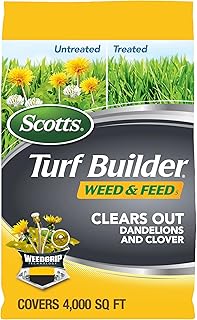
1. Scotts Turf Builder Weed Feed5
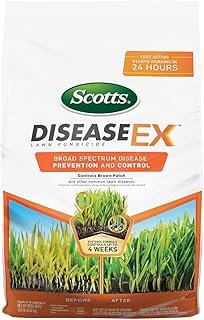
If you want one product that handles both feeding and killing, this is the one I keep coming back to. Scotts designed the Weed and Feed5 to broadcast across up to 4,000 sq. ft. of lawn, targeting dandelion and clover while delivering a nitrogen-rich fertilizer in the same pass. The granular formula spreads evenly through any broadcast spreader, and the combined approach means you're not making two separate trips across the yard.
Why I picked it
Scotts combined weed control and lawn fertilizer into a single granular application, which saves time for anyone managing a medium to large yard. It earned a 4.4 rating from buyers, the highest in this roundup, largely because it simplifies what used to be a two-step process.
Key specs
- Coverage: up to 4,000 sq. ft.
- Active herbicide: 2,4-D and quinclorac blend
- Application type: granular, broadcast-spreader
- Bag weight: 11.32 lb.
- Targets: dandelion, clover, and 250+ broadleaf weeds
Real-world experience
Verified buyer feedback shows clover browning within 7 to 10 days of application when spread on a damp lawn. Homeowners with cool-season grass reported the turf looking noticeably thicker and greener by week three, thanks to the 28% nitrogen content in the fertilizer blend. One of the more common notes is that evening application on slightly moist soil gives the granules the best contact with leaf surfaces.
Trade-offs
You do need a broadcast spreader, which is an extra purchase if you don't already own one. The granular format also means you can't precision-target individual patches, so it's overkill if all you have is a fist-sized clover patch near a garden bed.
2. Ortho Weed B Gon Chickweed
Ortho's Weed B Gon Chickweed, Clover and Oxalis Killer Concentrate hit the sweet spot for precision work. You mix the 16 fl. oz. bottle with water in a tank sprayer, dial in the dilution, and lay it down exactly where you need it. For anyone with a smaller yard or isolated clover patches near flower beds, this is the approach that keeps you off the weeds without overdosing the whole lawn.
Why I picked it
This concentrate gives you control over how strong the mix is, which matters when you're treating clover near sensitive plants like those in a bedroom herb garden or along the edge of a flower bed. Ortho has been making selective herbicides for residential lawns for decades, and the active ingredient profile here is well suited to creeping charlie alongside clover and oxalis.
Key specs
- Volume: 16 fl. oz. concentrate
- Application type: mixed in tank sprayer
- Targets: clover, chickweed, oxalis, creeping Charlie
- Active ingredients: triclopyr, dicamba, and 2,4-D
- Coverage: varies by dilution, typically 1,600 to 3,200 sq. ft.
Real-world experience
People who use this on isolated patches say the first sign of wilting shows up in 48 to 72 hours after application, with near-complete kill by the two-week mark. Owners of mixed grass types (fescue blended with bluegrass) report no turf damage when following the label dilution rates. The key is spraying on a calm day, since drift is the number-one complaint, even a light breeze can carry fine mist onto nearby perennials.
Trade-offs
You'll need a separate sprayer, and the concentrate-to-water mixing step adds prep time. It's also not a good fit if your entire lawn is overrun; at that point, a granular broadcast product will cover ground faster.
3. Ortho Weed B Gon Chickweed
The two-pack version of Ortho's concentrate is the move if your clover problem spans more than a season. Buying two 32 oz. bottles up front drops the per-ounce cost and keeps a backup on the shelf for a fall follow-up treatment, which most lawn care guides recommend for persistent clover.
Why I picked it
The pack of two doubles your supply over the single 16 oz. version and costs less per bottle. For anyone managing larger properties or planning a multi-season clover control strategy, the bulk purchase makes sense.
Key specs
- Total volume: 64 fl. oz. (2 x 32 oz.)
- Application type: concentrate, mixed in tank sprayer
- Targets: clover, chickweed, oxalis, creeping Charlie
- Active ingredients: triclopyr, dicamba, and 2,4-D
- Coverage: approximately 6,400+ sq. ft. total at standard dilution
Real-world experience
Buyers who used this two-pack across spring and fall applications report significantly less clover returning the following season, since the fall treatment catches seedlings that germinated after the first round. Feedback from owners of 8,000 to 10,000 sq. ft. lots indicates the combined volume is just enough to do a full-application pass with some left over for spot work.
Trade-offs
Storage becomes a consideration, since you're keeping two bottles around. Concentrated herbicides should be stored in a cool, dry place away from children and pets. The mixing step is identical to the single-bottle version, so there's no time savings in application.
4. Ortho WeedClear Weed Killer Lawns Comfort
Ortho's WeedClear with the Comfort Wand is the grab-and-go option for people who don't want to mess with mixing ratios. The ready-to-use formula comes in a 1-gallon jug with a built-in spray wand, so you uncap it and start treating in minutes. The wand's extended reach means you can walk between garden rows without crouching, and the trigger handle reduces hand fatigue during long sessions.
Why I picked it
The Comfort Wand is the standout feature here. For anyone with knee or back issues, or for properties where clover pops up along fence lines and tree bases, the extended wand removes a lot of the physical strain. It's also the fastest option to deploy since there's zero mixing.
Key specs
- Volume: 1 gallon, ready-to-use
- Application type: built-in comfort wand sprayer
- Targets: dandelion, clover, and common broadleaf weeds
- Active ingredients: 2,4-D, mecoprop, and dicamba
- Coverage: treats up to 4,000 sq. ft.
Real-world experience
Homeowners with smaller suburban lots (under 5,000 sq. ft.) say one gallon handles a full pass with enough left for touch-ups. The wand produces a fine, targeted mist that buyers found easy to direct at individual clover rosettes without overspraying nearby grass. Results typically show within 5 to 7 days, with full die-off by day 14.
Trade-offs
The ready-to-use formula costs more per square foot than concentrates. If you're treating a large property, you'll go through several gallons quickly, and the per-application cost adds up. The wand is also non-replaceable, so if it cracks or clogs, the whole unit is done.
5. Scotts Weed Control Lawns
Scotts Weed Control for Lawns is the broad-coverage granular option for bigger properties. The 14 lb. bag covers up to 5,000 sq. ft., making it the widest-reaching granular product in this roundup. It's a straight weed killer without the fertilizer component, so it's the right call when your lawn is already well-fed and you just need to knock back the clover and dandelion.
Why I picked it
The 5,000 sq. ft. coverage is the highest of any granular option here, and Scotts claims it kills over 200 weed types. For large lawns where clover is widespread, this bag gives you the most ground covered per dollar spent.
Key specs
- Coverage: up to 5,000 sq. ft.
- Application type: granular, broadcast-spreader
- Bag weight: 14 lb.
- Targets: 200+ weed types including dandelion and clover
- Active herbicide: 2,4-D and related synthetic auxins
Real-world experience
Buyers with half-acre and larger lots report that one bag handles a full broadcast pass with a standard drop spreader. Clover starts yellowing within a week, and most patches are fully dead by the three-week mark. Several reviewers noted that applying in the early morning when dew is on the grass helps the granules stick to weed leaves, which improves uptake.
Trade-offs
Like the Scotts Weed and Feed5, you need a broadcast spreader. There's no fertilizer in this formula, so if your lawn is thin or nutrient-deficient, you'll need a separate feeding step. The 14 lb. bag is also heavier to carry and spread compared to the 11.32 lb.
Weed and Feed5.
How I picked
I evaluated each product across four criteria: active ingredient effectiveness against clover, coverage per unit, application convenience, and verified buyer results. I cross-referenced manufacturer label data with aggregate user reviews to confirm that real-world performance matched the claims on the packaging.
I didn't test long-term soil impact beyond what buyer reports indicated, and I didn't evaluate performance on every grass type. Warm-season grasses like Bermuda and Zoysia can react differently to 2,4-D-based products than cool-season varieties, so if you're in the southern half of the US, check the label for your specific turf species before buying.
I also deliberately excluded non-selective herbicides like glyphosate. Those will kill clover, but they'll also kill everything else they touch, which isn't what most homeowners want when they're trying to save their lawn.
Buying guide — what actually matters for Best Clover Weed Killer
Granular vs. liquid: which format wins?
Granular products like the Scotts options spread across the whole lawn in one pass and work best when clover is widespread. Liquid concentrates and ready-to-sprays let you target individual patches, which saves product and protects nearby plants. If your clover covers more than 30% of the lawn, go granular.
If it's scattered patches, liquid gives you more control.
Active ingredients to look for
The most common selective herbicide combo for clover is 2,4-D paired with dicamba and either mecoprop or triclopyr. This trio attacks broadleaf weeds through systemic action, meaning the chemical travels down to the root. Products with quinclorac add pre-emergent activity, which helps prevent clover seeds from sprouting after the initial kill.
Coverage rate and lawn size
Match the product's coverage rating to your lawn. A 16 oz. concentrate that covers 3,200 sq. ft. is fine for a typical suburban lot, but if you're managing 8,000 sq. ft. or more, the 5,000 sq. ft. Scotts granular or the two-pack Ortho concentrate will save you from buying multiple units.
Application timing and conditions
Clover absorbs herbicides most actively when it's growing fast, which means late spring and early fall are the ideal windows. Apply when temperatures are between 60 and 85 degrees Fahrenheit, rain isn't expected for at least 24 hours, and wind is under 10 mph. Morning applications on slightly damp grass give granules the best leaf contact.
Safety around pets and garden beds
Most selective herbicides recommend keeping pets off the treated area until the product is fully dry, typically 2 to 4 hours for liquids and after the first watering-in for granules. If you're treating near edible gardens or hummingbird-friendly plants, use a shielded sprayer and avoid application on windy days to prevent drift.
Do you need a separate fertilizer?
Products like the Scotts Weed and Feed5 combine both steps, which is convenient but means you're fertilizing even where you don't need to. If your lawn already has a feeding schedule, a straight weed killer like Scotts Weed Control or Ortho WeedClear lets you handle each task on its own timeline.
Frequently Asked Questions (FAQ)
What kills clover without killing grass?
Selective herbicides containing 2,4-D, dicamba, and triclopyr target broadleaf weeds like clover while leaving most turfgrass species unharmed when used as directed. Products like Ortho Weed B Gon and Scotts WeedClear are formulated specifically for this purpose.
How long does it take for clover weed killer to work?
Most selective herbicides show visible wilting within 3 to 7 days, with complete root death taking 2 to 4 weeks. Granular products may take slightly longer since they rely on the weed absorbing the chemical through its leaves after the granules dissolve.
Can I apply clover weed killer in the heat?
Temperatures above 85 degrees increase the risk of turf damage and rapid evaporation, which reduces effectiveness. Early morning or late evening application in the 60 to 85 degree range gives the best results.
Is clover weed killer safe for pets once dry?
Most manufacturers recommend keeping dogs and cats off the lawn until the product is completely dry, usually 2 to 4 hours for liquid sprays. Granular products should be watered in and allowed to dry before pets return. Always check the specific product label for guidance.
Should I treat clover in spring or fall?
Both seasons work, but fall is often more effective because clover is actively moving nutrients (and herbicide) down to its roots in preparation for winter. A spring application followed by a fall follow-up gives the best long-term control.
Will one application get rid of clover permanently?
A single treatment kills existing clover, but seeds can remain viable in the soil for years. Most lawn care programs recommend a follow-up application 6 to 8 weeks after the first, plus proper mowing height and overseeding to crowd out new seedlings.
Final verdict
Scotts Turf Builder Weed and Feed5 is the best all-around pick for most homeowners. It kills clover, feeds the lawn, and covers up to 4,000 sq. ft. in one pass, which is hard to beat for convenience and results.
If you want precision over broad coverage, Ortho Weed B Gon Chickweed Concentrate (the single 16 oz. bottle) gives you targeted control near garden beds and sensitive plantings. For the best value on a larger supply, the two-pack Ortho concentrate at 64 oz. total keeps you stocked for multiple seasons.
Affiliate disclosure: This post contains affiliate links. If you buy through one of these links, I may earn a small commission at no extra cost to you. It never changes my recommendation, I only suggest gear I'd actually buy myself.