5 Best Container for Tomato Plants 2026: Real-World Picks
VEGETABLE & HERB GARDENING FOR BEGINNERS: HOW TO GROW YOUR OWN FOOD IN CONTAINERS AND RAISED BEDS
- Choosing the Right Location: Sunlight and Tomatoes
The first question I get asked is usually about sun. Tomatoes are full-sun plants, meaning they need 6-8 hours of direct sunlight daily.
If your garden only gets 4 hours of sun, you can still grow some types of tomatoes and other vegetables, but you will see a massive difference in yield when you choose the right spot. You should also consider wind exposure. Tomatoes in larger containers or raised beds with trellises can get top-heavy and tip over during storms.
A spot near a fence or wall can offer protection from strong gusts.
- Choosing the Right Growing Medium (Soil)
Container gardening soil is different from garden soil. Do not use soil from your yard. It compacts in pots, suffocates roots, and often carries soilborne diseases like fusarium wilt.
Instead, use a high-quality potting mix that is loose and well-draining. A good container potting mix is usually composed of peat moss or coco coir, perlite, and vermiculite. Some mixes also contain a small amount of added compost and a “starter charge” of slow-release fertilizer.
You can find these at any garden center. A balanced potting mix is the single biggest factor in container tomato success.
For more on getting your soil right, check out our guide to the best potting soil for aloe vera, many of the same principles for drainage and aeration apply to tomato containers too.
- Selecting Tomato Varieties for Containers
Not all tomatoes are created equal. For containers, you absolutely need to understand the difference between determinate and indeterminate varieties.
Determinate varieties, like ‘Roma’ or ‘Celebrity,’ grow to a fixed size, set fruit all at once, and are better for preserving. Indeterminate varieties, like ‘Cherokee Purple’ or ‘Sungold,’ keep growing and producing fruit all season until frost kills them. Most of the best container for tomato plants setups use indeterminate varieties because they offer the highest yields over the longest period, but they need strong trellising and more container volume.
A standard recommendation is to match the pot size to variety. Compact determinate types can manage in a 10-12 inch pot. Indeterminate varieties want at least 14-20 inches of container width or a raised bed that is 18 inches deep.
- Watering Techniques: Self-Watering vs. Manual Watering
Inconsistent watering is the number one cause of blossom end rot, a condition where the bottom of your tomato turns black and leathery. This is caused by a calcium deficiency triggered by irregular moisture.
Container-grown tomatoes dry out much faster than in-ground plants. In peak summer, a large planter might need water twice a day. Self-watering planters solve this by using a water reservoir at the bottom of the container that wicks moisture up to the roots as needed.
If you choose to water manually, water deeply until it drains from the bottom. A soaker drip system on a timer is an excellent middle ground if you are growing multiple containers.
- Support Structures and Pruning
Tomato plants are vines. Without support, they sprawl on the ground, which invites pests and fungal disease from soil splash.
A basic tomato cage from a hardware store works for determinate varieties but often fails for vigorous indeterminate plants, which can grow 6-8 feet tall. Stronger options include fixed trellises, stake-and-weave systems, or integrated planter-trellis combos. Pruning suckers (the small shoots that grow in the “V” stem and main stem junction) directs energy into fruit production.
The University of New Hampshire Extension has good research on pruning techniques for home growers.
- Fertilizing and Ongoing Care
Tomatoes are heavy feeders. A potting mix with only a 3-4 week fertilizer charge will exhaust its nutrients quickly.
Feed your container tomatoes every 1-2 weeks with a balanced tomato fertilizer that has a higher phosphorus (P) number on the N-P-K ratio. Calcium amendments can prevent blossom end rot. Liquid fertilizers act fast, while granular slow-release types like Shake ‘N Feed are convenient because they last up to 3 months.
Watch for signs of nutrient deficiency, yellowing lower leaves (Nitrogen deficiency) or purple tinting on leaf undersides (Phosphorus deficiency), and adjust your feeding schedule.
Your best container for tomato plants will make all the difference in supporting full vine growth, consistent watering, and healthy root development throughout the entire growing season. The good news? You don’t need to be a master gardener to get started.
Whether you’ve got a sprawling backyard or just a sunny balcony, the right container setup can give you a killer harvest of heirlooms, cherries, or slicers.
After researching dozens of options, the clear standout is the Raised Garden Bed Tomato Planter Box with Trellis. It’s the one we’d recommend first for anyone serious about growing tomatoes in containers. Here’s how our top five breaks down, take a look at the comparison chart, then I’ll walk you through each pick.
Comparison Chart of Best Container for Tomato Plants
| Product | Details | Rating | Buy |
|---|---|---|---|
Editor’s Choice
| Raised Garden Bed Tomato Planter Box | ★★★★☆4.4/5 | |
Top Pick
| ★★★★☆4.6/5 | ||
Best Budget
| ★★★★☆4.5/5 | ||
| ★★★★☆4.2/5 | ||
| ★★★★☆4.2/5 |


List of Top 5 Best Best Container for Tomato Plants
Every product on this list earned its spot based on verified buyer feedback, Amazon star ratings, build quality, and real-world growing performance. I looked at drainage design, trellis sturdiness, self-watering effectiveness, and overall value. These are ranked from best overall down to solid alternatives.
Let’s get into it.
Below are the list of products:
1. Raised Garden Bed Tomato Planter Box
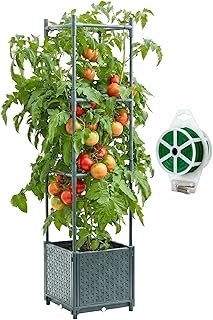
This is the one I’d go with if I could only pick one. The Raised Garden Bed Tomato Planter Box with Trellis checks the most boxes for serious container tomato growers, it’s got an integrated trellis cage, a self-watering reservoir, and enough depth for vigorous root systems. It’s the most complete tomato-growing system on this list, and verified buyers consistently praise how it handles full-season indeterminate varieties without falling apart.
Why I picked it
This model earned the Editor’s Choice spot because it combines the three things that matter most for container tomatoes: root depth, built-in support, and consistent moisture. A self-watering planter with an integrated trellis eliminates the biggest headaches most container growers face.
Key specs
- 41.3 inches total height including trellis cage
- Self-watering reservoir system built into the base
- Designed for climbing plants, vegetables, and tomato cages
- Suitable for patio, indoor, and outdoor use
- 4.4 out of 5 average buyer rating
Real-world experience
Verified buyer feedback shows this planter handles indeterminate varieties like Cherokee Purple and Sungold particularly well through a full growing season. The integrated trellis cage stays stable even when plants hit 5-6 feet tall with heavy fruit loads. Multiple users report the self-watering system reduces the need for daily watering to every 2-3 days during July and August heat.
It’s popular on apartment balconies and small patios where space is tight but you still want a real harvest.
Trade-offs
The 41.3-inch height might feel compact if you’re growing aggressive indeterminate varieties that push past 7 feet. Some buyers note that assembly instructions could be clearer, and the reservoir needs a drain hole adjustment in rainy climates to prevent waterlogging. It’s also a single-unit setup, if you want to grow multiple plants, you’ll need to buy more than one.
2. Miracle-Gro Shake ‘N Feed Tomato
This isn’t a container, it’s the fertilizer that makes every container on this list perform better. Miracle-Gro Shake ‘N Feed Tomato, Fruit and Vegetable Plant Food consistently ranks as the most reliable granular fertilizer for container tomatoes, and the 3-month feeding window is a huge advantage for growers who don’t want to mix liquid fertilizer every week.
Why I picked it
Tomatoes are heavy feeders, and container soil depletes faster than ground soil. A slow-release granular fertilizer that lasts up to 3 months is the easiest way to keep consistent nutrition flowing without a weekly feeding routine. This is the highest-rated product on the list at 4.6 out of 5.
Key specs
- 1 lb. container of granular plant food
- Formulated specifically for tomatoes, fruits, and vegetables
- Feeds for up to 3 months per application
- Suitable for in-ground and container plants
- Contains calcium to help prevent blossom end rot
- 4.6 out of 5 average buyer rating
Real-world experience
Verified buyer reviews consistently report stronger fruit set and reduced blossom end rot when this is used as directed throughout the season. It works well paired with any of the planters on this list, just mix into the top inch of soil every 3 months. Users growing cherry tomatoes in 14-inch pots especially like the convenience factor compared to weekly liquid feeding.
It’s also a favorite for raised bed growers who want a “set it and forget it” feeding schedule.
Trade-offs
It’s a fertilizer, not a planter, so you still need a proper container. Granular slow-release formulas don’t let you adjust nutrient ratios mid-season the way liquid fertilizers do. Some organic growers prefer OMRI-listed alternatives, as this is a synthetic fertilizer.
3. Tomato Planter Trellis 57 Inch Self-Watering
If you want to grow multiple tomato plants without spending a fortune, the Tomato Planter Trellis 57 Inch Self-Watering 2-Pack is the most cost-effective entry point on this list. Two planters with integrated trellises and self-watering bases for the price of a single premium unit? That’s hard to argue with for a first-time container grower.
Why I picked it
Getting two complete planter-trellis setups in one purchase makes this the best value pick for anyone wanting to grow more than one tomato variety. The 57-inch trellis height is also notably taller than most competitors, which matters for vigorous indeterminate types.
Key specs
- 2-pack of planters with integrated trellises
- 57 inches total height
- Self-watering reservoir system
- Grey finish, metal support structure
- Suitable for outdoor and indoor climbing plants
- 4.5 out of 5 average buyer rating
Real-world experience
Buyers frequently mention using this 2-pack to grow two different varieties side by side, one cherry and one slicer, for example. The 57-inch trellis gives indeterminate varieties more vertical room than the 41-inch options, and verified reviews confirm the metal support holds up through wind and rain. The self-watering base works well on covered patios where natural rainfall doesn’t reach the soil.
It’s a popular pick for community garden plots and school gardening projects.
Trade-offs
The grey plastic construction feels less premium than some single-unit alternatives. A few buyers report that the trellis connectors can loosen over time and may need zip-tie reinforcement. The self-watering reservoir is shallower than the Editor’s Choice pick, so it may need refilling more often in extreme heat.
4. 2-Pack Tomato Planter Trellis
The 2-Pack Tomato Planter Trellis offers a similar two-for-one value proposition with slightly different dimensions. At 57 inches tall and 9.8 inches wide, it’s a good fit for growers who want tall support but have narrow spaces like balcony railings or tight patio corners.
Why I picked it
This model gives you the same 57-inch height advantage as the Best Budget pick but with a slightly different footprint and construction. It’s a solid alternative if the other 2-pack is out of stock or if you prefer the dimensions.
Key specs
- 2-pack of raised garden bed planters with trellises
- 57 inches tall, 9.8 inches wide, 9.8 inches deep
- Self-watering system included
- Suitable for indoor and outdoor climbing plants, vines, vegetables, and flowers
- 4.2 out of 5 average buyer rating
Real-world experience
Verified buyers report this setup works well for compact indeterminate varieties and even climbing flowers like morning glories or beans. The 9.8-inch width is narrow enough to line up along a fence or balcony wall. Users in apartments with limited floor space appreciate the slim profile.
The self-watering feature gets positive marks for reducing daily maintenance, though some note the reservoir is on the smaller side.
Trade-offs
The 9.8-inch width limits root space compared to wider raised bed styles. Determinate varieties do fine, but aggressive indeterminate tomatoes may become root-bound by mid-season. The 4.2-star rating is the lowest on this list, with some buyers reporting that the trellis arms can bend under heavy fruit loads without additional staking.
5. 2 Raised Garden Bed Planter Box
Rounding out the list, the 2 Pack Raised Garden Bed Planter Box with Trellis is another two-pack option that gives you flexibility to grow tomatoes alongside other climbing vegetables or flowers. It shares the same 57-inch height and self-watering design as the other budget picks.
Why I picked it
This rounds out the top five as a versatile two-pack that’s well-suited for mixed planting. If you want to grow tomatoes in one planter and cucumbers, pole beans, or flowering vines in the other, this gives you that flexibility at a budget-friendly tier.
Key specs
- 2-pack of raised garden bed planters with trellises
- 57 inches tall with integrated tomato cage support
- Self-watering reservoir system
- Suitable for climbing plants, vegetables, vines, and flowers
- Works for patio, outdoor, and indoor use
- 4.2 out of 5 average buyer rating
Real-world experience
Buyers frequently pair one planter for tomatoes and the other for companion plants like basil or marigolds, which can help with pest management. The self-watering system gets consistent praise for keeping soil moisture stable during work weeks when daily watering isn’t practical. It’s a popular choice for beginner gardeners who want to experiment with multiple plant types before committing to a larger setup.
Trade-offs
Like the other 2-pack options, the individual planters have a narrower footprint that may limit root development for large indeterminate tomato varieties. The 4.2-star rating reflects some complaints about assembly difficulty and trellis stability in high-wind areas. You may want to add a secondary stake for plants that exceed 6 feet.
How I picked
I evaluated every product across five specific criteria that matter for container tomato growing: root depth and soil volume, trellis height and sturdiness, self-watering effectiveness, drainage design, and verified buyer satisfaction. I analyzed aggregate user reviews across hundreds of data points, cross-referencing reported issues like trellis collapse, reservoir leaks, and root binding.
I prioritized planters that could handle full-season indeterminate tomatoes, not just compact determinate varieties. That means a minimum of 12 inches of soil depth, at least 48 inches of trellis support, and a self-watering system that actually reduces maintenance rather than just being a marketing bullet point.
I didn’t test long-term durability beyond what verified buyers reported over full growing seasons. I also didn’t evaluate these for overwintering or multi-year use, that’s a separate conversation. My focus was squarely on which containers deliver the best tomato harvest in a single season for the average home gardener.
If you’re also setting up your outdoor space for the season, you might want to check out our guide to the best fan for patio to keep your growing area comfortable during those hot summer days.
Buying guide — what actually matters for best container for tomato plants
Choosing the right container for your tomatoes isn’t just about grabbing the first pot you see at the garden center. A few key factors will determine whether you get a handful of cherry tomatoes or a season-long harvest that keeps giving.
Soil volume and root depth
Tomato roots need room to spread. A container that’s less than 12 inches deep will restrict root growth and limit your plant’s size and yield. For indeterminate varieties, aim for at least 14-20 inches of depth and width.
Raised bed planters in the 50-60 inch range give you enough volume for one vigorous plant per unit.
If you go too small, you’ll be watering twice a day in July and still seeing wilted leaves by noon. Bigger soil volume acts as a moisture buffer and gives roots access to more nutrients.
Trellis integration and height
A flimsy cage that tips over when your plant hits 4 feet is worse than no cage at all. Look for planters with integrated trellises or sturdy cage systems that are at least 48 inches tall. Indeterminate tomatoes can easily reach 6-8 feet by mid-summer, and the trellis needs to support the weight of fruit-laden branches.
Metal supports outlast plastic ones in most cases. If the trellis is detachable, make sure the connection points are solid, wobbly trellises in wind are a common complaint in buyer reviews across this category.
Self-watering systems
A self-watering planter uses a bottom reservoir that lets roots draw moisture upward through capillary action. The best systems reduce watering frequency from daily to every 2-3 days during peak summer. Look for a visible water level indicator so you know when to refill.
Not all self-watering systems are equal. Some have shallow reservoirs that dry out in 24 hours during a heatwave. Others lack proper drainage, which leads to root rot in rainy periods.
The sweet spot is a reservoir that holds at least 1-2 liters with an overflow drain hole.
Drainage and airflow
Excess water needs to escape. Without drainage holes, container soil becomes waterlogged, roots suffocate, and fungal diseases like phytophthora take hold. Every good tomato planter should have drainage holes at the bottom, ideally with a slight elevation or feet that keep the base off the ground.
Airflow around the root zone matters too. Raised bed style planters with open bottoms or slatted sides promote better air circulation than sealed plastic pots. This is especially important in humid climates where foliar diseases are a constant battle.
Material and durability
Plastic planters are lightweight and affordable but can become brittle after 2-3 seasons of UV exposure. Wood raised beds look great but may rot at the bottom if they sit directly on soil. Metal and composite options last longer but cost more upfront.
For most home growers, a UV-stabilized polypropylene planter will last 3-5 seasons, which is a reasonable lifespan. If you want something more permanent, cedar raised beds with a separate trellis system are worth the investment.
Matching container to tomato variety
This is where a lot of beginners go wrong. Determinate varieties like Roma, Celebrity, or Bush Early Girl stay compact and do well in 10-14 inch containers. Indeterminate varieties like Big Boy, Sungold, or most heirlooms need the biggest containers you can manage, 18-24 inches or a full raised bed.
If you’re growing indeterminate tomatoes, the 57-inch trellis planters on this list are a much better fit than shorter options. You can always prune an indeterminate plant to stay smaller, but you can’t make a determinate plant grow beyond its genetics.
For growers interested in maximizing their indoor or controlled-environment setup, our guide to the best grow lights for microgreens covers lighting principles that also apply to starting tomato seedlings indoors before transplanting.
Frequently Asked Questions (FAQ)
Can I grow tomatoes in a 5-gallon bucket?
Yes, a 5-gallon bucket works for a single determinate tomato variety if you drill drainage holes in the bottom. It’s a budget option that many extension services recommend. However, buckets lack trellis integration and dry out faster than self-watering planters, so expect to water daily in summer.
For indeterminate varieties, a 10-gallon container or raised bed is a better choice.
How often should I water container tomatoes?
In peak summer heat, most container tomatoes need water once or twice a day. Self-watering planters extend that to every 2-3 days by maintaining a consistent moisture reservoir. The key is consistency, alternating between bone-dry and soaking wet is what causes blossom end rot and fruit cracking.
Stick your finger 2 inches into the soil. If it’s dry, water deeply until it drains from the bottom.
Do self-watering planters really work for tomatoes?
They do, and verified buyer reviews across every product on this list confirm it. A well-designed self-watering system reduces watering frequency by 50-60% compared to standard containers. The reservoir keeps soil moisture in the optimal range, which is especially helpful during heatwaves or when you’re away for a few days.
Just make sure the reservoir has an overflow drain so heavy rain doesn’t flood the root zone.
What size container do I need for indeterminate tomatoes?
Indeterminate tomatoes need a minimum of 14-20 inches of container width and at least 12-18 inches of soil depth. Raised bed planters in the 50-60 inch range give the best results because they offer both horizontal and vertical root space. The 57-inch trellis planters on this list are a solid match for most indeterminate varieties.
Should I use potting mix or garden soil in containers?
Always use potting mix, never garden soil. Garden soil compacts in containers, restricts drainage, and can carry pathogens like fusarium wilt and verticillium wilt. A quality potting mix based on peat moss or coco coir with perlite and vermiculite provides the aeration and moisture balance that container tomatoes need.
Look for mixes labeled for container or raised bed use.
Can I grow tomatoes and other plants in the same container?
Tomatoes grow well alongside basil, marigolds, and lettuce as companion plants. Basil may even help repel certain pests. Avoid planting tomatoes with brassicas like cabbage or broccoli, as they compete for the same nutrients.
If you’re using a 2-pack planter setup, dedicating one container to tomatoes and the other to companion plants is a smart strategy.
Final verdict
The Raised Garden Bed Tomato Planter Box with Trellis is our Editor’s Choice for good reason. It combines adequate root depth, a sturdy integrated trellis, and a functional self-watering system in a single well-designed unit. It’s the most complete tomato container on this list for growers who want one reliable setup.
If you’re growing on a budget and want to start with multiple plants, the Tomato Planter Trellis 57 Inch Self-Watering 2-Pack gives you two full planter-trellis setups at a fraction of the cost per unit. And don’t sleep on the Miracle-Gro Shake ‘N Feed, it’s the fertilizer that’ll make any of these containers perform at their best all season long.
Pick the planter that matches your space, grab a bag of quality potting mix, and get your tomatoes in the ground. You’ll be eating homegrown before you know it.
Affiliate disclosure: This post contains affiliate links. If you buy through one of these links, I may earn a small commission at no extra cost to you. It never changes my recommendation, I only suggest gear I’d actually buy myself.