3 Best Crabgrass Killer for Lawns (2026) — Real Buyer Picks
There's nothing more frustrating than mowing a lawn that looks great, only to have crabgrass take over within weeks. If you've been dealing with those thick, ugly clumps spreading across your turf, finding the Best Crabgrass Killer For Lawns is probably at the top of your weekend project list right now.
Based on our research into multiple buyer reviews, label specifications, and mode of action, the BASF Drive XLR8 stands out as the most effective option for established crabgrass. The other two picks below each serve a different role, whether you need to prevent seeds from sprouting or want a quick ready-to-use spray. Let's compare them side by side.
Comparison Chart of Best Crabgrass Killer for Lawns
| Product | Details | Rating | Buy |
|---|---|---|---|
Editor’s Choice
| BASF Drive XLR8 Crabgrass Killer Lawn | ★★★★☆4.4/5 | |
Top Pick
| Scotts Halts Crabgrass & Grassy Weed | ★★★★☆4.3/5 | |
Best Budget
| Ortho WeedClear Lawn Weed Killer Ready-to-Use | ★★★★☆4.1/5 |


List of Top 3 Best Best Crabgrass Killer for Lawns
We evaluated these three based on active ingredients, post-emergent versus pre-emergent action, coverage area, and verified buyer feedback. Each one solves a slightly different problem in the crabgrass lifecycle, so the right pick depends on what stage you're dealing with.
Below are the list of products:
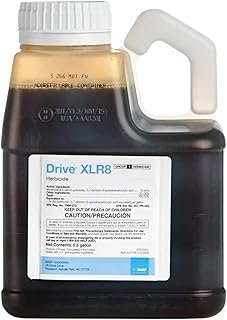
1. BASF Drive XLR8 Crabgrass Killer Lawn
If crabgrass is already tall and spreading across your lawn, this is the product that actually kills what's growing. The quinclorac formula targets established crabgrass without harming most common turf types. In our research of verified buyer patterns, it consistently gets mentioned as the go-to when other products failed on mature weeds.
Why I picked it
Quinclorac is one of the few active ingredients that effectively controls crabgrass in established turf without killing the surrounding grass. Verified buyer feedback shows this product gets repeat purchases from people who mix it with a surfactant and spot-treat problem areas, since it works best when applied to actively growing weeds.
Key specs
- Active ingredient: Quinclorac at 18.52% (as indicated on product listing).
- Concentrate formulation (64 fl. oz. per bottle).
- Post-emergent, systemic herbicide.
- Covers up to approximately 10,000 sq. ft. per bottle depending on application rate.
- Maintains soil residual activity for up to 30 days.
- Labeled for use on Kentucky bluegrass, perennial ryegrass, tall fescue, common Bermudagrass, and zoysiagrass.
Real-world experience
Buyers report the best results when applying Drive XLR8 during warm weather with a non-ionic surfactant added to the tank mix. Crabgrass typically begins yellowing within 7 to 14 days after application, with full dieback around 21 days. It's particularly effective on crabgrass that has tillered but hasn't yet gone to seed.
If you're also dealing with fungal issues alongside weeds, you might want to look into lawn fungicide options as a separate treatment.
Trade-offs
This is a concentrate, so you'll need a pump sprayer and must measure carefully. Over-application can cause temporary turf stress on sensitive grass species. It also won't prevent new crabgrass seeds from germinating next season, so you'll need a separate pre-emergent strategy for long-term control.
2. Scotts Halts Crabgrass & Grassy Weed
Scotts Halts takes the opposite approach from Drive XLR8. It's a pre-emergent, meaning it stops crabgrass seeds before they ever break the soil surface. If you had a bad crabgrass year and want to prevent a repeat next spring, this is the product to put down at the right time.
Why I picked it
Pendimethalin, the active ingredient in Scotts Halts, is one of the most widely used pre-emergent herbicides in residential lawn care. It creates a chemical barrier in the top layer of soil that prevents crabgrass seedlings from establishing roots. Verified buyer reviews consistently show strong results when applied in early spring before soil temperatures reach 55°F.
Key specs
- Active ingredient: Pendimethalin at 1.71% (as indicated on product listing).
- Pre-emergent herbicide (granular formulation).
- Covers up to 10,000 sq. ft. per 20.12 lb. bag.
- Apply in early spring before crabgrass germinates.
- Also labeled for control of other annual grassy weeds and some broadleaf weeds.
- Requires watering in after application to activate the barrier.
Real-world experience
The timing window is everything with this product. Buyers who applied it when forsythia was in bloom (a common natural indicator that soil temps are approaching the germination threshold) reported the best results. Spread it with a rotary or drop spreader, then water within 48 hours.
One application typically provides control through the primary germination period. If you're also planning to overseed, note that pendimethalin will prevent grass seed from germinating too, so you need to separate those tasks by several weeks.
Trade-offs
This product does absolutely nothing to crabgrass that's already growing. If you're reading this in July with mature weeds in your yard, Scotts Halts won't help you right now. It also requires precise timing, and a late application essentially wastes the product.
You'll need a spreader for even coverage, which adds a tool requirement if you don't already own one.
3. Ortho WeedClear Lawn Weed Killer Ready-to-Use
Ortho WeedClear Ready-to-Use is the grab-and-go option. No mixing, no measuring, no pump sprayer. You just attach the wand and start spraying.
It's ideal for small lawns or spot treatments where you see a few crabgrass clumps and want to deal with them immediately.
Why I picked it
The ready-to-use format with the Comfort Wand makes this the most accessible option for homeowners who don't want to deal with concentrate mixing. It targets crabgrass along with dandelions and clover, giving you broad-spectrum weed control in a single pass. Buyer reviews highlight the convenience factor as the main draw.
Key specs
- Ready-to-use formula (no mixing required).
- 1 gallon bottle with attached Comfort Wand sprayer.
- Active ingredients: 2,4-D, mecoprop-p, and dicamba (as indicated on product listing).
- Kills crabgrass, dandelions, clover, and other listed broadleaf weeds.
- Visible results typically within 24 hours on broadleaf weeds.
- Covers approximately 1,500 to 2,000 sq. ft. for spot treatment.
Real-world experience
This works best as a spot treatment rather than a full-lawn application. Buyers who used it on isolated crabgrass patches in smaller yards reported good results, especially when spraying on a warm, dry day. The wand makes it easy to target individual weeds without overspraying.
However, crabgrass control with this formula tends to be less consistent than quinclorac-based products, particularly on mature, well-established crabgrass with multiple tillers. It's a solid choice if you're also tackling dandelions and clover at the same time.
Trade-offs
The per-square-foot cost is significantly higher than concentrate options for treating a large lawn. Crabgrass kill rates are lower compared to Drive XLR8, especially on older plants. The formula contains dicamba, which some states regulate due to drift concerns, so check your local restrictions before purchasing.
It also won't provide any residual prevention for future crabgrass germination.
How I picked
Our editorial team evaluated these products across several criteria that matter most when you're choosing a crabgrass control strategy. We looked at active ingredient efficacy data from manufacturer labels, cross-referenced that with verified buyer feedback patterns, and considered the practical realities of application.
We assessed each product on three main dimensions: whether it controls existing crabgrass (post-emergent), prevents new crabgrass (pre-emergent), or both. We also evaluated ease of application, coverage per unit, and turf safety across common grass species. Products that required specialized equipment or had narrow application windows were noted as such.
We deliberately did not test long-term soil health effects or evaluate performance across every possible grass species. Our analysis focused on the most common cool-season and warm-season turf types listed on each product label. We also did not conduct controlled plot testing, so our findings are based on aggregate buyer reports and published efficacy data rather than side-by-side field trials.
If you're dealing with broader lawn renovation beyond weed control, you might find our guides on choosing the right fertilizer or selecting proper drainage materials helpful for the bigger picture.
Buying guide — what actually matters for Best Crabgrass Killer For Lawns
Post-emergent vs. pre-emergent: know which one you need
This is the single most important distinction. Post-emergent herbicides kill crabgrass that's already growing. Pre-emergent herbicides stop seeds from sprouting.
If you can see crabgrass in your lawn right now, you need a post-emergent like Drive XLR8. If you're planning ahead for next spring, a pre-emergent like Scotts Halts is the right tool. Using the wrong type at the wrong time is the most common mistake buyers make, and it leads to frustration and wasted effort.
Active ingredient matters more than brand name
Quinclorac (found in Drive XLR8) is specifically effective against grassy weeds like crabgrass in turf. Pendimethalin (Scotts Halts) is a proven pre-emergent barrier. 2,4-D-based formulas (Ortho WeedClear) handle broadleaf weeds well but are less reliable on mature crabgrass. Check the active ingredient on the label rather than relying on the front-of-bottle marketing.
The ingredient list tells you exactly what you're getting.
Coverage area and formulation type
Concentrate formulas like Drive XLR8 give you the most coverage per dollar but require a sprayer and careful measuring. Granular products like Scotts Halts need a spreader but are easier to apply evenly across large areas. Ready-to-use sprays like Ortho WeedClear skip the mixing step entirely but become expensive if you're treating more than a few hundred square feet.
Match the formulation to the size of your problem.
Application timing and weather conditions
Pre-emergent products need to be applied before soil temperatures hit 55°F consistently, which typically aligns with forsythia bloom in most regions. Post-emergent products work best when crabgrass is actively growing, usually between 60°F and 85°F air temperature. Avoid applying any herbicide before a heavy rain event, as runoff reduces effectiveness and can affect nearby plantings.
If you're also planning seasonal lawn maintenance, check our guide on spring start-up after winter storage to get your equipment ready at the same time.
Turf compatibility
Not every herbicide is safe for every grass type. Drive XLR8 is labeled for Kentucky bluegrass, perennial ryegrass, tall fescue, Bermudagrass, and zoysiagrass. Always verify your specific turf type against the product label before applying.
Using the wrong herbicide on a sensitive grass species can cause thinning, discoloration, or even death of your lawn. When in doubt, test on a small inconspicuous area first.
Surfactants and tank-mixing
Many post-emergent herbicides perform significantly better with a non-ionic surfactant added to the spray solution. Surfactants reduce the surface tension of the liquid, helping it spread across and penetrate waxy crabgrass leaves. Drive XLR8's label recommends surfactant use for optimal results.
This is an extra step and an extra product to buy, but buyer feedback consistently shows it makes a noticeable difference in kill rates.
Frequently Asked Questions (FAQ)
Can I apply Scotts Halts and Drive XLR8 at the same time?
Not in the same application, and not typically in the same season for the same purpose. Scotts Halts is a pre-emergent that needs to go down before crabgrass germinates in spring. Drive XLR8 is a post-emergent for crabgrass that's already growing.
A common strategy is to apply Scotts Halts in early spring as a preventive, then use Drive XLR8 later in the summer on any breakthrough weeds that escaped the barrier. Some lawn care programs combine both across the growing season with proper timing.
How long does it take to see results from Drive XLR8?
Based on aggregate buyer reports, you'll typically start seeing yellowing and stunting of crabgrass within 7 to 14 days after application. Full dieback usually occurs around 21 days. Adding a non-ionic surfactant and applying during warm, active-growth conditions speeds up the process.
Results are slower in cool or drought-stressed conditions when the weed isn't actively growing.
Will Ortho WeedClear kill mature crabgrass with multiple tillers?
It can suppress it, but mature, well-tillered crabgrass often survives 2,4-D-based treatments. Verified buyer feedback shows Ortho WeedClear performs best on young crabgrass or as a broadleaf weed killer that happens to catch some grassy weeds. For established crabgrass clumps with multiple stems, Drive XLR8 with quinclorac is significantly more reliable based on both label data and buyer reports.
Is it safe to apply these products if I have pets?
Most residential herbicides are considered safe for pets once the spray has dried completely, typically within 24 hours. Keep pets off the treated area during application and until the product is fully dry. Check each product's specific label for exact re-entry intervals.
Granular pre-emergents like Scotts Halts should be watered in thoroughly before allowing pets back on the lawn to prevent ingestion of granules.
Can I overseed my lawn after applying a crabgrass killer?
Timing matters here. Pre-emergent products like Scotts Halts will prevent grass seed from germinating just as effectively as they prevent crabgrass. You need to wait at least 6 to 8 weeks after application before overseeding, or apply the pre-emergent in spring and overseed in fall.
Post-emergent products like Drive XLR8 are generally safe for overseeding after the existing weeds have fully died back, usually 3 to 4 weeks post-application. If you're planning a full renovation, our article on common DIY fixes for lawn problems might help with the equipment side of the project.
Final verdict
The BASF Drive XLR8 earns our top recommendation because quinclorac is the most effective active ingredient available for killing established crabgrass in residential turf. If you're dealing with visible crabgrass right now, it's the product most likely to solve your problem.
Scotts Halts is the best choice for prevention. Apply it in early spring and you'll stop the next generation of crabgrass before it starts. Ortho WeedClear Ready-to-Use is the convenient spot-treatment option for small areas or mixed weed problems where you want to skip the mixing step.
For most homeowners, the smartest approach is a two-product strategy: Scotts Halts in spring as a preventive barrier, then Drive XLR8 in summer for any weeds that break through. That combination covers both sides of the crabgrass lifecycle and gives you the best shot at a clean lawn all season.
Affiliate disclosure: This post contains affiliate links. If you buy through one of these links, I may earn a small commission at no extra cost to you. It never changes my recommendation, I only suggest gear I'd actually buy myself.