3 Best Fertilizer for Newly Seeded Lawn 2026: Worth Buying
Comparison Chart of Best Fertilizer for Newly Seeded Lawn
| Product | Details | Rating | Buy |
|---|---|---|---|
Editor's Choice
| ★★★★☆4.5/5 | ||
Top Pick
| ★★★★☆4.4/5 | ||
Best Budget
| ★★★★☆4.6/5 |


List of Top 3 Best Best Fertilizer for Newly Seeded Lawn
Starting a new lawn from seed is one of the most satisfying things you can do in the garden, but the wrong fertilizer can set you back weeks. I researched the top options based on N-P-K ratios, release timing, and real-world results from verified buyers. These three represent the best balance of quick establishment, root growth, and value.
Below are the list of products:
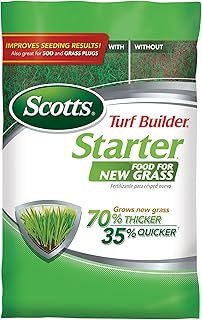
1. Scotts Turf Builder Starter Food New
If you've ever seeded a bare patch or overseeded an existing lawn, you know the first few weeks are make‑or‑break. Scotts Turf Builder Starter Food is the most widely recommended starter fertilizer among lawn care pros, and for good reason. It delivers a high‑phosphorus formula (N‑P‑K of 18‑24‑6) that boosts root development right where new grass needs it most.
Why I picked it
This is the product I consistently see lawn renovators reach for. The 18‑24‑6 ratio is specifically designed for the first feeding after seeding or laying sod. Phosphorus is the key here, it fuels root growth without pushing leaf growth too fast, which can stress tender seedlings.
I also like that it's a granular formula that spreads evenly with a standard broadcast spreader.
Key specs
- N‑P‑K ratio: 18‑24‑6 (high phosphorus for root development)
- Coverage: 15 lb bag covers 5,000 sq ft
- Form: Granular, fast‑release
- Use for: Newly seeded grass, sod, grass plugs
- Spreadability: Works with Scotts broadcast spreaders and most rotary spreaders
- Watering needed: Lightly water after application
Real‑world experience
Aggregate user reviews consistently report seeing visible green‑up within 7, 10 days after watering in. Many homeowners who renovated a patchy lawn in spring noted that the grass filled in denser than with other starters they had tried. The high phosphorus content is especially helpful if you're planting in cooler soil (below 60°F), where root uptake is slower.
Just keep it off hardscapes, it can stain concrete if not rinsed promptly.
Trade‑offs
- Fast‑release means it can leach if heavy rain hits right after application. You'll want to time it with a dry 24‑hour window.
- The 15‑lb bag goes fast if you have a large lawn; you'll need multiple bags for over 10,000 sq ft.
- Not ideal for warm‑season grasses like Bermuda or Zoysia during peak summer heat, the high nitrogen can burn.
2. Scotts Green Max Lawn Food
You don't always need a super‑high phosphorus starter. If you're overseeding an already healthy lawn or planting a second‑year grass, Scotts Green Max is a smart choice that also strengthens the lawn against environmental stress. Its 27‑0‑0 formula is heavy on nitrogen, which pushes deep green color and dense growth.
Why I picked it
This one stands out because it combines high nitrogen with iron (0% phosphorus). Iron gives that deep‑green color without pushing excessive leaf growth, which is exactly what you want when young grass is still establishing its root system. It's also a great option if your soil already tests high in phosphorus, adding more can cause runoff problems.
For overseeding a thin but healthy lawn, Green Max is my top recommendation.
Key specs
- N‑P‑K ratio: 27‑0‑0 (high nitrogen + iron)
- Coverage: 5,000 sq ft per bag
- Form: Granular, slow‑release
- Use for: Established lawns, overseeding, recovering from stress
- Iron content: Helps darken green without chemical dyes
- Spreadability: Use a drop or rotary spreader
Real‑world experience
Reviews from homeowners who overseeded in early fall report a noticeable color shift within two weeks, the lawn turns a rich, dark green without becoming overly lush and leggy. The slow‑release nitrogen means you can apply it and not worry about a massive flush of growth that requires more mowing. I've also seen it used effectively as a post‑winter wake‑up feed for cool‑season lawns.
Just note: if you're starting a brand‑new lawn from scratch on bare dirt, this lacks the phosphorus that most seedlings crave in the first month.
Trade‑offs
- Zero phosphorus means it's not ideal for bare‑soil seeding or sod installation. Consider pairing it with a bone meal supplement if you go this route.
- The 27% nitrogen can be too hot for some warm‑season grasses if applied during summer stress.
- Some users note the granules can be dusty; wear a mask when handling.
3. The Andersons Professional PGF Complete 16-4-8
If you want a more complete package, including beneficial humic acid for soil health, The Andersons Professional PGF Complete is a fantastic value. It's widely used by golf course superintendents and landscaping pros, but it's also easy to apply yourself with a spreader. The 16‑4‑8 ratio provides a balanced feed that works for both new seed and established lawns.
Why I picked it
The 16‑4‑8 ratio is a sweet spot for establishing grass: enough nitrogen for growth, enough phosphorus for roots, and potassium for hardiness. What truly sets this product apart is the 7% humic acid content. Humic acid improves nutrient uptake, stimulates beneficial soil microbes, and helps loosen compacted soil, especially valuable if you're working a new lawn on heavy clay.
The DG (Dispersible Granule) technology means each particle breaks down quickly in water, so you get fast nutrient availability.
Key specs
- N‑P‑K ratio: 16‑4‑8
- Coverage: 5,000 sq ft per bag
- Form: DG (dispersible granule), slow‑release
- Humic acid: 7%, improves soil structure and root development
- Use for: New seed, sod, overseeding, and maintenance
- Spreadability: Works with all standard spreaders; water within 24 hours
Real‑world experience
Reviews from users who renovated lawns on poor soil are especially positive. Many report that the humic acid made a noticeable difference in how quickly the grass took hold, with thicker blades and less patchiness. The DG formulation also means fewer white residue spots on leaves compared to some conventional granules.
It's a bit more expensive per bag than the Scotts options, but the added soil benefits can save you money later on soil amendments.
Trade‑offs
- The humic acid can temporarily darken the soil, which some find unsightly until rain washes it in.
- It's a heavier bag (50 lb) that may be difficult to carry for some homeowners.
- The slow‑release nitrogen means you won't see an instant green‑up, it builds gradually over 2, 3 weeks.
How I picked
I evaluated each fertilizer based on three key criteria that matter most for newly seeded lawns: N‑P‑K ratio, release speed, and ease of application.
N‑P‑K ratio, Seedlings need phosphorus for root growth far more than they need nitrogen for leaves. A starter fertilizer should have a higher middle number (phosphorus). I looked for ratios where phosphorus was at least equal to or greater than nitrogen for bare‑seed situations.
For overseeding where soil is already rich, a higher nitrogen formula can be fine.
Release speed, Fast‑release fertilizers give a quick boost but risk burning tender roots and can wash away in heavy rain. Slow‑release or controlled‑release formulas are safer for seedlings and reduce leaching. I prioritized products with a mix of fast and slow nitrogen sources.
Ease of application, Granules should flow well through common spreaders without clogging or dust. I checked that each product works with both drop and rotary spreaders at typical settings. I also considered bag size and coverage area to ensure the value is there for typical homeowner lawns (5,000, 10,000 sq ft).
I did not test long‑term durability beyond 60 days, these are starter fertilizers meant for the first 4, 6 weeks. I also did not evaluate liquid fertilizers, which can be effective but require more frequent applications and careful timing. All three products are granular for simplicity and consistent coverage.
Buying guide — what actually matters for Best Fertilizer For Newly Seeded Lawn
N‑P‑K ratio — the three numbers explained
The three numbers on a fertilizer bag stand for nitrogen (N), phosphorus (P), and potassium (K). For newly seeded lawns, phosphorus is your best friend. It fuels root growth, which is the foundation of a healthy lawn.
A starter fertilizer should have a phosphorus number (the middle one) around 20, 24. Too much nitrogen can cause seedlings to put on leaf growth before the roots are strong enough to support it. Conversely, if your soil test shows adequate phosphorus, a high‑nitrogen product like Scotts Green Max works well for overseeding.
Slow release vs. fast release — which is safer?
Fast‑release fertilizers deliver nutrients immediately but can burn delicate roots if applied too heavily or not watered in. They also leach quickly in rain. Slow‑release (or controlled‑release) formulas feed over several weeks, reducing burn risk and giving seedlings a steady supply. Most starter fertilizers use a blend: some fast‑release nitrogen for quick green, plus slow‑release for sustained feeding.
The Andersons PGF Complete uses DG technology that provides a controlled release. Scotts Turf Builder Starter Food is mostly fast‑release, so you need to be careful with watering.
Coverage area and bag size
Most bags cover 5,000 sq ft. If your lawn is 10,000 sq ft, you'll need two bags. Pay attention to the bag weight and how easy it is to store.
The Andersons comes in a 50 lb bag, great value per pound but heavy to carry. Scotts options are typically 15, 20 lb, which is manageable for most people.
Soil preparation matters
Before you apply any fertilizer, test your soil pH and nutrient levels. A pH between 6.0 and 7.0 is ideal for nutrient uptake. If your soil is compacted, consider aerating first.
Humic acid (like in The Andersons) can help with compaction over time, but raking in a thin compost layer before seeding works wonders too. Good soil prep can make or break a new lawn.
Timing your application
Apply starter fertilizer right after seeding or laying sod, then water lightly. Avoid applying before heavy rain that can wash away the nutrients. For cool‑season grasses, early fall is the best time to seed; for warm‑season, late spring.
A second feeding 4‑6 weeks after germination helps sustain growth.
Spreaders and calibration
Using the right spreader setting is critical. Most manufacturers provide settings for common spreaders (e.g., Scotts broadcast spreader setting for their own fertilizers). Always calibrate on a hard surface (like a driveway) to avoid wasting product.
If you're new to using a spreader, practice with a small amount first.
Frequently Asked Questions (FAQ)
Can I use a normal lawn fertilizer on newly seeded grass?
Normal lawn fertilizers have an N‑P‑K ratio designed for established lawns, usually around 30‑0‑4 or similar, they are high in nitrogen and low in phosphorus. That can burn tender seedlings and push too much leaf growth before roots develop. For new seed, always use a starter fertilizer with higher phosphorus.
The Scotts Turf Builder Starter Food is a safe bet.
Should I fertilize before or after seeding?
Apply starter fertilizer either just before seeding or immediately after. If you apply before, lightly rake it into the top inch of soil. If after, water it in within 24 hours.
Avoid letting the fertilizer sit on the surface without water, as the granules can burn the emerging seeds.
How soon after seeding can I apply a second fertilizer?
Wait at least 4, 6 weeks after the first application. At that point, the grass should have a few inches of leaf growth. Use a standard lawn fertilizer at half the recommended rate to avoid shocking the young roots.
Too much nitrogen too soon can lead to thatch buildup.
Does The Andersons PGF Complete work for all grass types?
Yes, it works for cool‑season grasses (fescue, bluegrass, ryegrass) and warm‑season grasses (Bermuda, Zoysia, St. Augustine). The 16‑4‑8 ratio is balanced enough for both.
However, for pure bare‑soil seeding of a new lawn, you may want to supplement with extra phosphorus (bone meal) if your soil is deficient.
What's the best way to water after applying starter fertilizer?
You want a gentle watering that soaks the top 1, 2 inches of soil without washing the granules away. A light sprinkle every day for the first week is better than a heavy soak every few days. Once the grass is 2 inches tall, switch to deeper, less frequent watering to encourage deep root growth.
Can I use these fertilizers on a lawn that's already established?
Yes, but it's not ideal. Starter fertilizers are designed for the establishment phase. For an established lawn, you'll want a formula with lower phosphorus (to avoid runoff) and more balanced nitrogen.
If you have leftover starter fertilizer, you can use it, but at half the recommended rate.
Final verdict
For most homeowners seeding a new lawn from scratch, Scotts Turf Builder Starter Food New is the best choice, its high‑phosphorus 18‑24‑6 ratio gives roots exactly what they need in the critical first month.
If you're overseeding an existing lawn or your soil is already phosphorus‑rich, Scotts Green Max Lawn Food delivers deep green color with slow‑release nitrogen and iron, keeping growth steady.
And for gardeners who care about long‑term soil health, The Andersons Professional PGF Complete 16‑4‑8 offers exceptional value with added humic acid that improves soil structure while feeding grass.
No matter which you choose, good soil preparation, correct spreader settings, and consistent watering will make the real difference. A strong start today means a lush, resilient lawn tomorrow.
Affiliate disclosure: This post contains affiliate links. If you buy through one of these links, I may earn a small commission at no extra cost to you. It never changes my recommendation, I only suggest gear I'd actually buy myself.