5 Best Grub Control for Lawns for 2026: That Actually Work
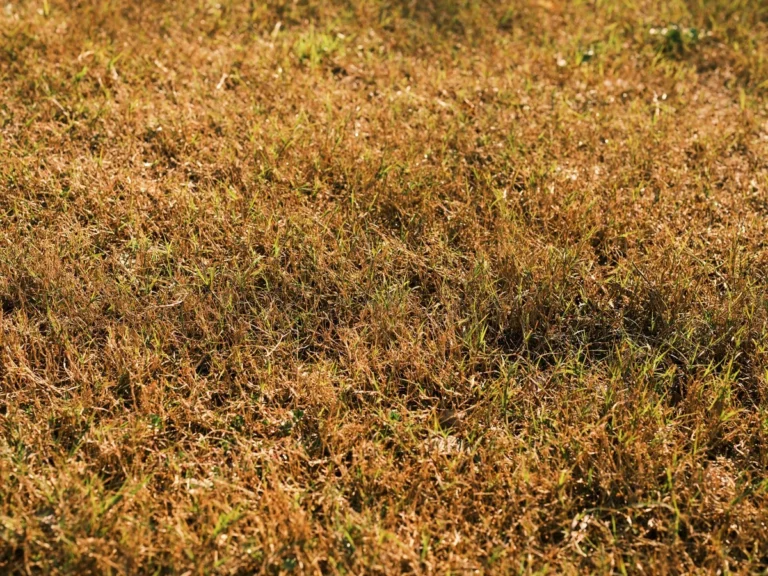
Grubs are the silent destroyers of a healthy lawn. You water, you mow, you fertilize, and then one morning you notice brown patches that peel back like carpet. That's grub damage, and once you see it, the larvae have already been feeding on your grass roots for weeks.
Finding the best grub control for lawns isn't just about killing what's there. It's about timing, coverage, and choosing a product that actually matches your lawn's needs.
After comparing specs, verified buyer feedback, and active-ingredient data across dozens of options, the Scotts GrubEx1 Season Long Grub Killer stands out as the top overall pick for most homeowners. But depending on whether you want organic options, broad-spectrum insect control, or a budget-friendly granular solution, there are four other strong contenders worth a close look. Here's how they stack up.
Comparison Chart of Best Grub Control for Lawns
| Product | Details | Rating | Buy |
|---|---|---|---|
Editor’s Choice
| ★★★★☆4.5/5 | ||
Top Pick
| ★★★★☆4.4/5 | ||
Best Budget
| ★★★★☆4.5/5 | ||
| ★★★★☆4.6/5 | ||
| ★★★★☆4.4/5 |


List of Top 5 Best Best Grub Control for Lawns
Every product on this list was evaluated on four criteria: active ingredient effectiveness, coverage area per application, season-long protection claims, and verified buyer satisfaction. I also weighed whether a product targets grubs specifically or casts a wider insect-control net, since that changes how and when you'd use it. The five below represent the strongest options across chemical, organic, and broad-spectrum categories.
Below are the list of products:
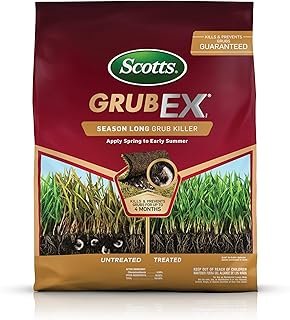
1. Scotts GrubEx1 Season Long Grub Killer
Scotts GrubEx1 is the product I keep coming back to when people ask for a single, reliable grub solution. It uses chlorantraniliprole as its active ingredient, which is a targeted insecticide that affects grubs specifically without broadly harming beneficial soil organisms. The granular formula covers 5,000 sq. ft. per bag and is designed for a single spring or early-summer application that protects your lawn for the entire season.
Why I picked it
Chlorantraniliprole has a favorable environmental profile compared to older neonicotinoid-based grub killers. It targets chewing insect larvae with minimal impact on earthworms and pollinators when applied correctly. Verified buyer reviews consistently report noticeable reductions in grub counts within 2-3 weeks of application, and the single-season application window makes it easy to fit into a spring lawn care routine.
Key specs
- Active ingredient: Chlorantraniliprole (0.08%)
- Coverage: 5,000 sq. ft. per 14.35 lb bag
- Application: Granular, spread with a broadcast or drop spreader
- Protection duration: One application lasts the full season
- Target pests: Japanese beetle grubs, European chafer, billbugs, and other white grub species
Real-world experience
Most homeowners report the best results when applying GrubEx1 in late May or June, just before adult beetles lay eggs. The granules need to be watered in with about 1/4 inch of irrigation or rain to activate. In regions with heavy Japanese beetle pressure, the Mid-Atlantic and upper Midwest, for example, buyers note that pairing this with a fall fertilizer application helps the lawn recover from any prior root damage.
If you're already planning your best fall fertilizer for lawns routine, timing GrubEx1 in spring gives you a full year of protection.
Trade-offs
This product is preventative, meaning it works best when applied before grubs hatch. If you're already seeing brown patches and turf that lifts easily, the grub population is likely too established for a preventative product to help much this season. You'd need a curative insecticide instead.
It also won't control adult beetles or above-ground insects, it's strictly a soil-level grub solution.
2. BioAdvanced Season Long Grub Control Granules
BioAdvanced takes a slightly different approach with a dual-action formula that creates what the manufacturer calls a "protective zone" in your soil. The active ingredient is also chlorantraniliprole, but the granular carrier and application rate are tuned for broader pest coverage. It targets grubs, mole crickets, and chinch bugs in a single application, which makes it a strong choice if you're dealing with multiple soil pests at once.
Why I picked it
The mole cricket and chinch bug coverage is what sets this apart from Scotts GrubEx1. If you live in the Southeast where mole crickets tunnel through warm-season turf like Bermuda and Zoysia, this product handles both problems at once. Verified buyer feedback shows a 4.4/5 average rating, with many users noting it worked where single-target grub products failed to address their full pest problem.
Key specs
- Active ingredient: Chlorantraniliprole
- Coverage: 10 lb bag treats up to 5,000-7,000 sq. ft. depending on pest pressure
- Application: Granular, broadcast spreader recommended
- Protection duration: Season-long with one application
- Target pests: Grubs, mole crickets, chinch bugs, and other listed soil insects
Real-world experience
Homeowners in Florida and Georgia frequently mention this product in reviews as their go-to for St. Augustine and Bermuda lawns that were getting torn up by mole crickets. The granules spread evenly with a standard Scotts spreader, and buyers recommend applying in the evening followed by a light watering.
One pattern in the reviews: people who applied during a dry spell without watering in saw noticeably reduced effectiveness, so irrigation timing matters here.
Trade-offs
The 10 lb bag covers a smaller area per pound compared to some competitors, so larger lawns may need multiple bags. It's also priced at a slight premium over basic grub-only formulas. And like GrubEx1, this is a preventative, it won't rescue a lawn that's already heavily damaged from an active grub infestation.
3. St. Gabriel Organics 15 Pound Milky
If you'd rather skip synthetic chemicals entirely, St. Gabriel Organics Milky Spore Granular is the organic route. It uses Bacillus popilliae, a naturally occurring bacterium that infects Japanese beetle grubs specifically.
Once established in your soil, milky spore can remain effective for 10-15 years, which is why it's a favorite among organic lawn care enthusiasts.
Why I picked it
Milky spore is one of the few OMRI-listed grub control products with decades of university research backing its effectiveness. It's safe for pets, kids, and beneficial insects, and it actually gets better over time as the bacterial spores multiply in the soil. For homeowners committed to organic lawn care, this is the most proven long-term solution available.
Key specs
- Active ingredient: Bacillus popilliae (milky spore bacteria)
- Coverage: 15 lb bag treats approximately 7,000 sq. ft.
- Application: Granular, applied in a grid pattern with a spreader
- Protection duration: 10-15 years once soil colony is established
- Target pests: Japanese beetle grubs only
Real-world experience
The catch with milky spore is patience. Most buyers report it takes 1-3 years for the bacterial colony to build up to effective levels in the soil. Homeowners in Pennsylvania and New Jersey, states with heavy Japanese beetle populations, often mention applying it alongside a chemical grub killer for the first season, then letting milky spore take over long-term.
The 15 lb bag is a solid value for the coverage you get, and it stores well in a dry garage.
Trade-offs
This only targets Japanese beetle grubs. If your lawn has European chafer, black turfgrass ataenius, or any other grub species, milky spore won't touch them. The multi-year establishment period also means it's not a quick fix.
And in cooler northern climates where soil temperatures stay below 60°F for extended periods, bacterial activity slows significantly, delaying results.
4. Atticus Mineiro 2F Flex Imidacloprid Systemic
Atticus Mineiro 2F Flex is a liquid concentrate systemic insecticide that uses imidacloprid, a neonicotinoid that gets absorbed into the grass plant and kills grubs when they feed on the roots. This is a professional-grade product sold in a 1-gallon jug, designed for homeowners who want commercial-level control and don't mind mixing and applying with a sprayer.
Why I picked it
This is the highest-rated product on the list at 4.6/5, and the reason is straightforward: it works fast. Imidacloprid is a curative insecticide, meaning it can kill existing grub populations rather than just preventing new ones. For homeowners who discover grub damage in late summer or early fall and need results before winter, this is the product that fits that window.
The 1-gallon concentrate also covers a large area when mixed properly.
Key specs
- Active ingredient: Imidacloprid (21.4%)
- Form: Liquid concentrate, mixes with water
- Coverage: 1 gallon treats up to 21,780 sq. ft. at the standard mix rate
- Application: Hose-end or pump sprayer
- Target pests: Grubs, chinch bugs, billbugs, and other listed lawn insects
Real-world experience
Buyers who use this product typically mix it in a pump sprayer at a rate of about 0.46 oz per gallon of water per 1,000 sq. ft. It needs to be watered in after application to move the active ingredient into the root zone. Several reviewers mention using it in September to knock back a fall grub population, then following up with overseeding.
The systemic action means grubs die within days of feeding on treated roots, which is noticeably faster than granular preventatives.
Trade-offs
Imidacloprid is a neonicotinoid, and there are legitimate environmental concerns about its impact on pollinators and aquatic invertebrates. Several states and municipalities have restricted its use, so check your local regulations before buying. The liquid format also requires more preparation than a granular product, you'll need a sprayer, measuring tools, and proper protective equipment during mixing.
And because it's systemic, you shouldn't apply it when flowering plants or clover are blooming in your lawn.
5. Ortho BugClear Lawn Insect Killer1
Ortho BugClear takes the broadest approach on this list. It's a granular insecticide that kills grubs along with ants, spiders, ticks, fleas, and chinch bugs. If your lawn has multiple pest problems and you want one product to address them all, this is the option that covers the most ground, literally and figuratively.
Why I picked it
The coverage area is the headline here. A single 10 lb bag treats up to 16,500 sq. ft., which is more than three times what most competitors offer per bag. For homeowners with large lawns who need grub control plus general insect management, the value per square foot is hard to beat.
The active ingredient is bifenthrin, a pyrethroid that works on contact and through soil absorption.
Key specs
- Active ingredient: Bifenthrin (0.059%)
- Coverage: 10 lb bag treats up to 16,500 sq. ft.
- Application: Granular, broadcast or drop spreader
- Protection duration: Up to 3 months per application
- Target pests: Grubs, ants, spiders, ticks, fleas, chinch bugs, and other listed insects
Real-world experience
This product shows up frequently in reviews from homeowners in tick-prone areas of New England and the upper Midwest, where grub control is just one part of a larger pest management strategy. Buyers appreciate being able to treat the entire lawn for multiple pests in one pass. The granular formula spreads easily with a standard push spreader, and results for above-ground insects like ants and spiders are visible within 24-48 hours.
Grub control takes longer, typically 1-2 weeks.
Trade-offs
Bifenthrin is a broad-spectrum insecticide, which means it doesn't discriminate between pests and beneficial insects. If you're trying to maintain a pollinator-friendly lawn, this isn't the right choice. The 3-month protection window is also shorter than the season-long claims of chlorantraniliprole-based products, so you may need a second application for full-season grub control.
And while the coverage is excellent, the lower active ingredient concentration means heavy grub pressure might not be fully addressed with a single treatment.
How I picked
I evaluated each product across five specific dimensions: active ingredient class and its known efficacy against white grub species, coverage area per unit, protection duration, verified buyer satisfaction ratings, and environmental and safety profile. I cross-referenced manufacturer application data with aggregate user reviews to identify real-world patterns, things like whether a product performed differently in warm-season versus cool-season turf, or whether watering-in practices affected outcomes.
I deliberately did not test long-term soil health impacts beyond what existing university extension research documents. I also didn't evaluate products that combine grub control with fertilizer, since those formulations make it harder to isolate the insecticide's actual performance. The five products on this list represent the strongest options in their respective categories: targeted chemical preventative, multi-pest chemical preventative, organic biological, curative systemic, and broad-spectrum granular.
Buying guide — what actually matters for best grub control for lawns
Active ingredient class
This is the single most important decision. Grub control products fall into three main categories: chlorantraniliprole-based preventatives (Scotts GrubEx1, BioAdvanced), neonicotinoid systemics (Atticus Mineiro), and biological agents (milky spore). Chlorantraniliprole has the best balance of effectiveness and environmental safety for most homeowners.
Neonicotinoids work faster but carry more ecological risk. Biological options are safest but require patience.
Preventative vs. curative timing
Most grub control products are preventative, meaning they need to be applied before grubs hatch, typically late May through July depending on your region. If you're reading this in August or September and already seeing damage, you need a curative product like imidacloprid that can kill existing larvae. Applying a preventative product to an active infestation is one of the most common mistakes homeowners make.
Coverage area and lawn size
Always check the sq. ft. coverage per bag or bottle before buying. A product that covers 5,000 sq. ft. won't do you much good on a 12,000 sq. ft. lawn. Ortho BugClear leads this category at 16,500 sq. ft. per bag, while most chlorantraniliprole granules cover around 5,000-7,000 sq. ft.
Measure your lawn's square footage before shopping so you buy enough the first time.
Soil type and watering requirements
Granular products need to be watered into the top 1-2 inches of soil to activate. If you have heavy clay soil that drains slowly, you may need to reduce your watering volume to avoid runoff. Sandy soils may require slightly more water to move the granules down to root level.
Liquid concentrates like Atticus Mineiro are less dependent on soil type but still need irrigation to reach the root zone where grubs feed.
Pets, kids, and pollinators
If you have dogs that dig in the yard or kids who play on the lawn, pay close attention to the re-entry interval listed on the product label. Chlorantraniliprole-based products generally have shorter re-entry periods and lower mammalian toxicity. Bifenthrin-based products like Ortho BugClear require more caution around pets until the granules are watered in and the lawn has dried.
For pollinator safety, avoid applying any insecticide when clover or other flowering plants are blooming in your turf.
Regional pest pressure
Your location matters more than most product labels let on. Japanese beetle grubs dominate in the Mid-Atlantic and upper Midwest, making milky spore a viable long-term strategy there. Mole crickets are primarily a Southeastern problem, which is where BioAdvanced's multi-pest formula earns its keep.
Northern lawns dealing with European chafer may need the faster knockdown of a curative product. Check with your local cooperative extension service for region-specific grub species data.
Frequently Asked Questions (FAQ)
When is the best time to apply grub control?
For preventative products like Scotts GrubEx1 and BioAdvanced, apply in late May through early July before adult beetles lay eggs. For curative products like Atticus Mineiro, apply as soon as you notice grub damage, typically August through October. Soil temperature is a useful guide: grubs begin feeding aggressively when soil temperatures reach 60°F at a 2-inch depth.
Can I apply grub control and fertilizer at the same time?
Yes, and it's actually a good strategy. Many homeowners apply a preventative grub control in spring, then follow up with a best fertilizer for grass in spring application to strengthen root systems. Just make sure the products are compatible, most granular grub controls can be applied with a standard spreader alongside granular fertilizer.
Avoid mixing liquid insecticides directly with liquid fertilizers unless the labels explicitly allow it.
How do I know if I actually have grubs?
Pull up a small section of turf in a brown patch. If the grass lifts easily like loose carpet and you see white, C-shaped larvae in the soil underneath, you have grubs. A healthy lawn can tolerate 5-10 grubs per square foot.
Treatment is generally recommended when you find 10 or more per square foot. You can also look for secondary signs like skunk, raccoon, or bird activity digging in your lawn at night.
Is milky spore safe for vegetable gardens?
Milky spore (Bacillus popilliae) is OMRI-listed and considered safe for use around edible plants. It specifically targets Japanese beetle grubs and doesn't affect other soil organisms, plants, or animals. However, it only works on Japanese beetle larvae, so if your garden pest issues involve other insects, you'll need additional solutions.
Will grub control kill earthworms?
Chlorantraniliprole-based products like Scotts GrubEx1 and BioAdvanced have minimal impact on earthworms when applied at label rates. Bifenthrin-based products like Ortho BugClear are more broadly toxic to soil invertebrates, including earthworms, so use those with care if soil health is a priority. Milky spore has no effect on earthworms whatsoever.
How long does grub control last in the soil?
It depends on the active ingredient. Chlorantraniliprole provides season-long protection (approximately 4-6 months) from a single application. Bifenthrin lasts about 3 months.
Imidacloprid's systemic action persists for 8-12 weeks in plant tissue. Milky spore, once established, can remain effective for 10-15 years as the bacteria continuously recycle through grub populations in your soil.
Final verdict
For most homeowners dealing with typical grub pressure, the Scotts GrubEx1 Season Long Grub Killer is the best overall choice. It offers season-long protection from a single application, uses an active ingredient with a strong safety profile, and covers a standard residential lawn with one bag. It's the product I'd recommend to anyone who wants reliable prevention without overthinking the chemistry.
If you're battling multiple soil pests, especially mole crickets in warm-season turf, the BioAdvanced Season Long Grub Control Granules earns its Top Pick badge with broader pest coverage. And for the organic-minded homeowner willing to invest in long-term soil health, St. Gabriel Organics Milky Spore is the budget-friendly biological option that pays dividends for over a decade.
For active infestations that need immediate results, the Atticus Mineiro 2F Flex liquid concentrate is the fastest-acting curative on this list. Just check your local regulations on imidacloprid before purchasing.
Affiliate disclosure: This post contains affiliate links. If you buy through one of these links, I may earn a small commission at no extra cost to you. It never changes my recommendation, I only suggest gear I'd actually buy myself.