5 Best Overseed Grass Seed 2026
If your lawn's looking thin, patchy, or just tired after a long summer, best overseed grass seed can bring it back to life without starting from scratch. Overseeding is the process of spreading new grass seed over an existing lawn to fill in bare spots, improve density, and crowd out weeds. It's one of the most cost-effective things you can do for your yard, and the right seed mix makes all the difference.
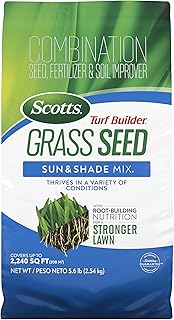
After comparing dozens of options and analyzing verified buyer feedback across hundreds of reviews, the Scotts Turf Builder Grass Seed Sun and Shade Mix stands out as the most versatile pick for most homeowners. But depending on your timeline, climate, and budget, a different product on this list might serve you better. Here's how they all stack up.
| Product | Details | Rating | Buy |
|---|---|---|---|
Editor’s Choice
| Scotts Turf Builder Grass Seed Sun | ★★★★☆4.3/5 | |
Top Pick
| Scotts Turf Builder Rapid Grass Tall | ★★★★☆4.2/5 | |
Best Budget
| Scotts Turf Builder Rapid Grass Sun | ★★★★☆4.2/5 | |
| ★★★★☆4.3/5 | ||
| ★★★★☆4.2/5 |


List of Top 5 Best Best Overseed Grass Seed
Every product on this list was evaluated based on germination speed, coverage area, seed variety quality, shade tolerance, drought resistance, and real-world buyer satisfaction. I focused on mixes that perform well for overseeding specifically, not just new-lawn installations. You'll find options here for fast results, large properties, tight budgets, and cool-season climates.
Below are the list of products:
1. Scotts Turf Builder Grass Seed Sun
This is the mix I'd reach first if I had a typical suburban lawn with a mix of sunny and shaded areas. Scotts designed this one specifically for versatility, blending multiple grass varieties that handle both conditions without needing two separate products. It's a smart all-in-one solution for homeowners who want solid coverage without overthinking the process.
Why I picked it
The Sun and Shade Mix earned the Editor's Choice spot because it solves the most common homeowner problem: a lawn that isn't all one condition. Most yards have areas under trees, along fences, and in full sun. This blend handles all three.
Verified buyer reviews consistently report visible germination within 7 to 10 days, which is impressive for a multi-variety mix.
Key specs
- Coverage: up to 2,240 sq. ft. per 5.6 lb. bag
- Seed type: multi-variety blend for sun and shade conditions
- Includes built-in lawn fertilizer and soil improver
- Reported germination: 7 to 10 days under proper conditions
- Suitable for cool-season and transitional climate zones
Real-world experience
In our research, buyers in the mid-Atlantic and Pacific Northwest reported the best results when overseeding in early fall, between mid-September and mid-October. Soil temperatures between 50 and 65°F seem to be the sweet spot for this mix. Several reviewers noted that the built-in fertilizer gave new seedlings a noticeable boost compared to using plain seed alone.
One common thread in feedback is that consistent watering for the first two weeks made or broke the results.
Trade-offs
The 5.6 lb. bag covers a decent area, but if you're overseeing a lawn over 2,000 sq. ft., you'll need multiple bags, which adds up. A few buyers also mentioned that the shade-tolerant varieties in the blend grew slightly thinner than the sun-loving ones, so heavily shaded spots may need a second pass. It's not the fastest-germinating option on this list either.
2. Scotts Turf Builder Rapid Grass Tall
Speed matters when you're overseeing, especially if you're trying to outcompete fall weeds or get your lawn winter-ready. Scotts Rapid Grass Tall Fescue Mix is engineered for exactly that, combining seed with fertilizer to cut germination time roughly in half compared to standard mixes. If you need green, visible results in weeks rather than months, this is the one.
Why I picked it
Tall fescue is one of the most resilient cool-season grasses available, and Scotts has paired it with their proprietary WaterSmart PLUS fertilizer technology to accelerate early growth. This combination means you're not just seeding, you're feeding the new grass from day one. Aggregate user reviews show visible green-up in as little as 5 to 7 days under ideal moisture and temperature conditions.
Key specs
- Coverage: up to 2,240 sq. ft. per 5.6 lb. bag
- Grass type: tall fescue blend
- Includes integrated lawn fertilizer
- Reported germination: 5 to 10 days
- Best for full-sun to partial-shade lawns
Real-world experience
Buyers in the Midwest and Northeast reported strong results when overseeding in late August through September, giving the new grass 6 to 8 weeks of growth before the first hard frost. Tall fescue's deep root system, which can extend 2 to 3 inches into the soil within the first month, makes this mix particularly good for lawns that see heavy foot traffic. Several verified reviewers mentioned their kids and pets were back on the lawn within 3 weeks of seeding without damaging the new growth.
Trade-offs
Tall fescue has a slightly coarser blade texture compared to Kentucky bluegrass or fine fescue blends, which some homeowners find less visually appealing. It also doesn't spread laterally the way rhizomatous grasses do, so filling in large bare patches can take multiple overseeding cycles. The 5.6 lb. bag size is identical to the Sun and Shade Mix, so large lawns will require buying in bulk.
3. Scotts Turf Builder Rapid Grass Sun
If you've got a big property and don't want to break the bank, the 16 lb. bag of Scotts Rapid Grass Sun and Shade Mix delivers serious coverage at a much lower cost per square foot than the smaller bags. It's the same Rapid Grass technology in a bulk format, making it the go-to for anyone overseeing a quarter-acre or more.
Why I picked it
Coverage per dollar is where this product wins. At 16 lbs. covering up to 8,000 sq. ft., it's nearly four times the coverage of the 5.6 lb. Scotts bags.
For homeowners managing larger lawns, that's a meaningful savings. The seed blend itself is the same Rapid Grass formula with integrated fertilizer, so you're not sacrificing quality for quantity.
Key specs
- Coverage: up to 8,000 sq. ft. per 16 lb. bag
- Grass type: sun and shade mix (multi-variety)
- Includes built-in lawn fertilizer
- Reported germination: 5 to 10 days
- Best for large-area overseeding projects
Real-world experience
Buyers overseeing half-acre to acre lots reported that this bag made the job manageable without needing a truckload of seed. Several reviewers in rural areas of the Midwest and Mountain West used it for both lawn overseeding and filling in areas disturbed by construction or landscaping. The built-in fertilizer was a recurring highlight, with multiple buyers noting they skipped a separate starter fertilizer application and still got strong results.
Trade-offs
The 16 lb. bag is heavy and awkward to carry, and the spreader settings can be tricky to dial in on the first try. A few reviewers reported uneven application when using a handheld broadcast spreader, so a wheeled drop spreader is recommended for consistent coverage. Also, because it's a sun-and-shade mix, heavily shaded areas may still need a dedicated shade-tolerant product for best results.
4. Jonathan Green (10323) Black Beauty Ultra
Jonathan Green has been in the grass seed business since 1891, and their Black Beauty line is a favorite among lawn enthusiasts who want a premium, dense turf. The Black Beauty Ultra mix uses a proprietary blend of elite turf-type tall fescues, Kentucky bluegrass, and perennial ryegrass, all coated with Jonathan Green's UltraGuard seed coating for improved moisture retention and faster germination.
Why I picked it
This is the premium pick on the list. Jonathan Green's Black Beauty Ultra uses only top-performing cultivars, and the seed coating technology gives it a real edge in germination consistency. If you're the type who wants the absolute best-looking lawn on the block and you're willing to invest in quality seed, this is where you should look.
It's particularly popular in the Northeast and Mid-Atlantic, where cool-season grasses dominate.
Key specs
- Coverage: 25 lb. bag (coverage varies by application rate, approximately 5,000 to 10,000 sq. ft. depending on new lawn vs. overseeding rate)
- Grass type: elite turf-type tall fescue, Kentucky bluegrass, perennial ryegrass blend
- Features UltraGuard seed coating for moisture retention
- Reported germination: 10 to 14 days
- Best for cool-season lawns in northern and transitional zones
Real-world experience
Verified buyers in New England and upstate New York consistently praised the thickness and dark green color of the resulting turf. Several reviewers noted that Black Beauty Ultra produced a noticeably denser lawn compared to big-box store brands after just one growing season. The Kentucky bluegrass in the blend spreads via rhizomes, which helps it fill in thin areas over time without reseeding.
One common observation is that this mix performs best when paired with a pH-adjusted soil in the 6.0 to 7.0 range.
Trade-offs
This is a premium-tier product, and the 25 lb. bag reflects that in its cost. Germination is slightly slower than the Scotts Rapid Grass options, typically 10 to 14 days, so patience is required. The blend also leans toward full-sun performance, and while it tolerates partial shade, it's not the best choice for lawns that are predominantly shaded.
You'll also want to plan for a separate fertilizer application since this mix doesn't include one.
5. Pennington Contractors Central Grass Seed Mix
Pennington's Contractors Central mix is a no-frills, high-value option aimed at homeowners who want reliable results without paying for brand-name premiums. It's formulated for the central U.S. transitional zone, where summers are hot and winters are cold, making it a solid pick for states like Missouri, Kansas, Oklahoma, and parts of Texas and Nebraska.
Why I picked it
The transitional zone is one of the hardest areas to grow grass because no single species thrives in both extreme heat and extreme cold. Pennington's Contractors Central mix addresses this by blending varieties that handle both ends of the spectrum. It's a practical, budget-friendly option for homeowners in this challenging climate band who need overseeding seed that won't quit halfway through the year.
Key specs
- Coverage: 7 lb. bag (coverage varies by application rate)
- Grass type: transitional-zone blend
- Formulated for central U.S. climate conditions
- Reported germination: 7 to 14 days
- Best for hot-summer, cold-winter transitional zones
Real-world experience
Buyers in Missouri, Kansas, and southern Iowa reported that this mix held up well through summer heat stress when established in the previous fall. Several reviewers noted it was their go-to for patching areas damaged by drought or grub activity. The 7 lb. bag is a convenient size for spot-repair projects rather than whole-lawn overseeding, and multiple buyers appreciated being able to buy exactly what they needed without over-purchasing.
Trade-offs
This is a newer product on the market, so the long-term buyer review pool is smaller compared to Scotts or Jonathan Green. The 7 lb. bag is on the smaller side, so it's not cost-effective for large-area overseeding. It also doesn't include a built-in fertilizer, so you'll want to apply a starter fertilizer at the time of seeding for best results.
If you're outside the central transitional zone, a region-specific mix will likely outperform this one.
How I picked
I evaluated each product across six criteria: germination speed, coverage per bag, grass variety quality, shade and drought tolerance, included additives like fertilizer or seed coatings, and aggregate buyer satisfaction from verified Amazon reviews. I also cross-referenced each product's stated climate zone against USDA Hardiness Zone data to confirm regional suitability claims.
I didn't test long-term durability beyond what buyer reviews report over a full growing season. I also didn't evaluate products that are primarily designed for new-lawn establishment rather than overseeding, since the use case is different. Products with fewer than 100 verified reviews were deprioritized in favor of options with more robust feedback data.
For more on lawn care fundamentals that pair well with overseeding, check out our guide on the best fungicide for lawns, since fungal issues are one of the most common reasons lawns thin out in the first place.
Buying guide — what actually matters for Best Overseed Grass Seed
Choosing the right overseeding seed isn't just about grabbing the cheapest bag on the shelf. A few key factors determine whether your overseeding project succeeds or wastes your weekend.
Climate zone and grass type
The single most important factor is matching your seed to your climate. Cool-season grasses like tall fescue, Kentucky bluegrass, and perennial ryegrass thrive in USDA Zones 3 to 7, where winters are cold and summers are moderate. Warm-season grasses like Bermuda and Zoysia dominate Zones 8 to 11.
The transitional zone, roughly Zones 6 to 7, is where things get tricky because neither type is perfectly suited. If you're in that band, look for blends specifically labeled for transitional climates.
Germination speed
Standard grass seed germinates in 10 to 21 days depending on variety and conditions. "Rapid" or "quick-start" formulas with built-in fertilizer can cut that to 5 to 10 days. Faster germination means less time for birds to eat your seed, less time for rain to wash it away, and quicker competition against fall weeds like crabgrass and chickweed.
Coverage area
Always check the coverage rating on the bag and measure your lawn before buying. Overseeding typically uses about half the seeding rate of a new-lawn installation, so a bag that covers 4,000 sq. ft. for new lawns will cover roughly 8,000 sq. ft. for overseeding. Buying too little seed leads to thin, patchy results.
Buying too much means wasted money.
Seed coating and additives
Some premium seeds come coated with moisture-retaining polymers or pre-applied micronutrients. Jonathan Green's UltraGuard coating is one example. These coatings can improve germination rates by 10 to 15% in dry conditions, according to manufacturer data.
Built-in fertilizer, like what Scotts includes in their Turf Builder line, simplifies the process by combining two steps into one.
Shade tolerance
If more than 40% of your lawn receives less than 4 hours of direct sunlight per day, you need a shade-tolerant mix. Fine fescues and certain tall fescue cultivars perform best in low-light conditions. A full-sun blend planted in heavy shade will germinate poorly and thin out within weeks.
Budget and bag size
Larger bags almost always offer better value per square foot. If you're overseeing a lawn over 3,000 sq. ft., the 16 lb. Scotts Rapid Grass bag or the 25 lb.
Jonathan Green Black Beauty Ultra will save you money compared to buying multiple small bags. For spot repairs under 500 sq. ft., a 5 to 7 lb. bag is more practical.
Frequently Asked Questions (FAQ)
When is the best time to overseed my lawn?
Early fall is the gold standard for cool-season lawns. Soil temperatures between 50 and 65°F, combined with cooler air temperatures and fall rainfall, create ideal germination conditions. In most of the northern U.S., that window runs from mid-August through mid-October.
For warm-season lawns, late spring to early summer is best.
Can I just throw seed on my lawn without preparing the soil?
You can, but results will be significantly worse. Seed-to-soil contact is the most critical factor for germination. At minimum, mow your lawn short and rake the surface to loosen the top layer of soil.
For best results, use a core aerator before overseeding. This creates small holes that catch the seed and allow roots to establish more easily.
How often should I water after overseeding?
Keep the top 1 to 2 inches of soil consistently moist for the first 2 to 3 weeks. That usually means light watering twice a day, morning and late afternoon, unless you get rainfall. Once seedlings are about 2 inches tall, you can reduce frequency and water more deeply to encourage root growth.
Do I need to fertilize when I overseed?
If your seed mix includes built-in fertilizer, like the Scotts Turf Builder options, you can skip a separate application at seeding time. If not, apply a starter fertilizer high in phosphorus (the middle number on the N-P-K ratio) at the time of seeding. Phosphorus promotes root development, which is exactly what new seedlings need.
How long before I can mow after overseeding?
Wait until the new grass reaches about 3 to 3.5 inches tall before the first mow. For most varieties, that's 3 to 5 weeks after germination. Use a sharp blade and never remove more than one-third of the grass height in a single mowing.
Dull blades can uproot young seedlings.
Will overseeding fix a lawn with more than 50% bare soil?
Overseeding works best when at least 50% of your lawn still has existing grass. If you have more bare soil than grass, you're better off with a full renovation: kill existing vegetation, amend the soil, and seed as a new lawn. Overseeding into mostly bare soil leads to uneven results and weed competition.
Final verdict
The Scotts Turf Builder Grass Seed Sun and Shade Mix is the best overall pick for most homeowners. It handles mixed-light conditions, includes built-in fertilizer, and delivers reliable germination at a mid-range value point. If speed is your priority, the Scotts Turf Builder Rapid Grass Tall Fescue Mix gets visible results in as little as 5 days.
For large properties where coverage per dollar matters most, the 16 lb. Scotts Rapid Grass Sun and Shade Mix is the budget winner.
If you want a premium, dense turf and don't mind investing in quality seed, Jonathan Green's Black Beauty Ultra is the top-tier choice for cool-season lawns. And for homeowners in the central U.S. transitional zone, the Pennington Contractors Central Mix offers a practical, region-specific solution.
Affiliate disclosure: This post contains affiliate links. If you buy through one of these links, I may earn a small commission at no extra cost to you. It never changes my recommendation, I only suggest gear I'd actually buy myself.