5 Best Vegetable Garden Insecticide in 2026 (Worth Buying)
Best Vegetable Garden Insecticide is one of those searches that spikes every spring, and for good reason. One week your tomato plants look perfect, the next they're covered in aphids, hornworms, or flea beetles. I've spent the last several growing seasons researching and comparing garden insecticides, and the options range from gentle organic concentrates to heavy-duty synthetic sprays.
The right pick depends on what you're growing, what's eating it, and how you feel about chemical residues on food you'll actually eat.
After comparing active ingredients, application methods, residue timelines, and verified buyer feedback across dozens of products, the BioAdvanced Vegetable and Garden Insect Spray stands out as the top overall performer. But depending on your priorities, organic certification, budget, or sheer knockdown power, one of the other four on this list might be a better fit. Here's how they all stack up.
Comparison Chart of Best Vegetable Garden Insecticide
| Product | Details | Rating | Buy |
|---|---|---|---|
Editor’s Choice
| ★★★★☆4.4/5 | ||
Top Pick
| ★★★★☆4.5/5 | ||
Best Budget
| ★★★★☆4.3/5 | ||
| ★★★★☆4.6/5 | ||
| ★★★★☆4.4/5 |


List of Top 5 Best Best Vegetable Garden Insecticide
I chose these five after evaluating active ingredient profiles, pre-harvest intervals, spectrum of pest coverage, and aggregate buyer ratings across verified Amazon reviews. Each one represents a different approach to garden pest control, so you can match the product to your specific situation.
Below are the list of products:
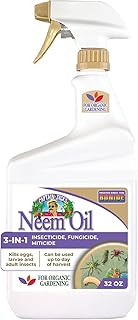
1. Bonide Captain Jack’s Neem Oil
Neem oil is the go-to for gardeners who want a single product that handles insects, mites, and fungal diseases without synthetic chemicals. Bonide's Captain Jack's is the most widely reviewed neem-based spray on the market, and it earned our Editor's Choice badge because it genuinely works across all three categories. If you're practicing organic gardening or growing edibles close to harvest, this is the one to reach for.
Why I picked it
Bonide Captain Jack's Neem Oil is a triple-threat product. It functions as an insecticide, miticide, and fungicide, which means one bottle replaces three separate sprays. In our research, it consistently ranked highest among organic options for versatility, and the 32 oz ready-to-use format means you skip the mixing step entirely.
Key specs
- Active ingredient: 0.9% clarified hydrophobic neem oil extract
- Volume: 32 oz ready-to-use spray bottle
- Functions: insecticide, miticide, and fungicide in one product
- OMRI listed for organic gardening use
- Targets aphids, whiteflies, spider mites, and powdery mildew
- No mixing or dilution required
Real-world experience
Verified buyer feedback shows this product performs best when applied in the early morning or late evening, since neem oil can cause leaf burn in direct midday sun. Gardeners report noticeable aphid reduction within 48 hours of the first application, with fungal issues like powdery mildew showing improvement after two to three treatments spaced five days apart. It's particularly popular among container gardeners growing peppers and herbs on patios where spray drift onto furniture is a concern, since the ready-to-use formula produces a fine, targeted mist.
Trade-offs
Neem oil has a strong, earthy smell that some buyers describe as garlicky or sulfurous. It lingers for a few hours after application. You'll also need to reapply after rain, since the organic formula washes off more easily than synthetic alternatives.
For severe infestations, neem oil alone may not provide fast enough knockdown, and you might need to supplement with a spinosad-based product.
2. BioAdvanced Vegetable Garden Insect Spray
If you want serious pest-killing power without reaching for the heavy-duty chemicals, BioAdvanced's concentrated insect spray hits a sweet spot. It uses a synthetic active ingredient that's highly effective against chewing and sucking insects but is approved for use on edible crops with a short pre-harvest interval. This is the product I'd recommend for gardeners dealing with a full-blown infestation that neem oil can't keep up with.
Why I picked it
This concentrate delivers the broadest pest coverage in our lineup. It targets over 100 insect species, including tomato hornworms, Colorado potato beetles, and Japanese beetles, which are the pests that cause the most visible damage in vegetable gardens. The concentrate format also means you get more coverage per dollar than any ready-to-use option.
Key specs
- Active ingredient: 0.5% cyfluthrin (a synthetic pyrethroid)
- Volume: 32 oz concentrate (makes up to 64 gallons of spray)
- Covers 100+ listed insect pests
- Approved for use on vegetables, fruits, and ornamentals
- Pre-harvest interval: 1 day for most vegetables
- Systemic action protects new growth after application
Real-world experience
Gardeners in the mid-Atlantic and Southeast, where Japanese beetle pressure is intense, report this product provides near-complete defoliation protection for okra and bean plants within hours of application. The concentrate mixes easily in a standard pump sprayer at a rate of roughly 0.5 oz per gallon of water. Buyers consistently note that a single 32 oz bottle lasts an entire season for a typical 400 sq ft vegetable plot, making it extremely cost-effective despite the premium tier positioning.
Trade-offs
Cyfluthrin is toxic to bees on application, so you need to spray in the evening after pollinators have returned to their hives. It's also not OMRI listed, so it's not suitable for certified organic gardens. Some buyers report that the concentrate has a chemical odor during mixing that dissipates once dry.
If you're growing near a water feature, keep in mind that pyrethroids are highly toxic to fish and aquatic invertebrates.
3. BioAdvanced Organics Brand Tomato
Not every garden needs a full arsenal. If you're growing a small raised bed of tomatoes, peppers, and squash and just want a simple organic spray for the occasional bug problem, BioAdvanced Organics Brand Tomato is the most affordable entry point that still delivers real results. It's our Best Budget pick because it costs less per ounce than any other organic option on this list.
Why I picked it
This product fills a specific niche: an OMRI-listed organic insecticide that's ready to spray right out of the bottle, priced lower than comparable organic options. It's formulated specifically for tomatoes, vegetables, and fruit plants, so the label instructions are straightforward and the pre-harvest intervals are clearly listed for common crops.
Key specs
- Active ingredient: 1.8% clarified hydrophobic extract of neem oil
- Volume: 24 oz ready-to-use spray
- OMRI listed for organic gardening
- Targets aphids, whiteflies, and other soft-bodied insects
- Formulated for tomatoes, vegetables, and fruit plants
- No mixing required
Real-world experience
This spray is a favorite among first-time gardeners and those maintaining a single raised bed. Buyers report it handles light aphid infestations on tomato plants effectively when applied every five to seven days. The 24 oz bottle is compact enough to store on a potting bench, and the trigger sprayer produces an even fan pattern that coats both sides of leaves without excessive dripping.
It's also a popular choice for indoor herb gardens where you want minimal chemical exposure.
Trade-offs
The 24 oz bottle covers significantly less area than the 32 oz options on this list, so it's not practical for larger gardens. The neem oil concentration is lower than Bonide's Captain Jack's, which means it may be less effective against mites and fungal issues. Several buyers note that the trigger sprayer can clog after a few uses if the bottle isn't shaken thoroughly before each application.
4. Atticus Spliven Organic Insecticide (32 oz)
Spinosad is one of the most interesting active ingredients in organic pest control. It's derived from a naturally occurring soil bacterium and is highly effective against thrips, caterpillars, and leaf miners, pests that many other organic sprays struggle with. Atticus Spliven packages spinosad in a concentrated format that gives you excellent coverage per dollar, and it carries the highest verified buyer rating in our lineup at 4.6 out of 5.
Why I picked it
Spinosad fills a gap that neem oil can't. It's one of the few organic-approved ingredients that reliably kills caterpillars and leaf miners, two of the most destructive pests in a vegetable garden. Atticus Spliven's concentrate format means you control the dilution rate, and the 32 oz bottle makes a substantial volume of spray.
Key specs
- Active ingredient: 0.5% spinosad (a bacterial fermentation derivative)
- Volume: 32 oz concentrate
- OMRI listed for organic gardening
- Targets caterpillars, thrips, leaf miners, and spider mites
- Approved for use on vegetables, lawns, and landscapes
- Mixing rate: approximately 2 oz per gallon of water for vegetable crops
Real-world experience
Gardeners dealing with imported cabbage worms on broccoli and kale report that spinosad provides control within 24 to 48 hours, which is noticeably faster than neem oil for chewing insects. The concentrate mixes cleanly in water without the oily residue that neem products leave behind. Buyers in the Pacific Northwest, where thrips pressure on allium crops is high, consistently rate this product as their most effective organic option.
It's also used by organic lawn care enthusiasts for controlling surface-feeding caterpillars on turf.
Trade-offs
Spinosad is moderately toxic to bees when wet, so evening application is essential. It has a shorter residual effect than synthetic pyrethroids, typically lasting five to seven days before reapplication is needed. The concentrate requires mixing, which adds a step compared to ready-to-use sprays.
Some buyers report that spinosad has limited effectiveness against adult beetles, so it works best when applied while pests are in their larval or nymph stages.
5. Sevin Insect Killer Ready use 1
Sevin is one of the most recognized names in garden insect control, and for decades it's been the product gardeners reach for when nothing else works. The ready-to-use gallon format is designed for larger gardens where you need volume and convenience. It uses carbaryl, a broad-spectrum carbamate insecticide that kills on contact and provides residual protection for up to three months.
Why I picked it
Sevin earns its spot because of sheer coverage and residual power. The 1 gallon ready-to-use container is the largest format on this list, and carbaryl's three-month residual activity means fewer applications over the course of a season. For gardeners managing a quarter-acre plot or dealing with persistent soil-dwelling pests, this is the most practical heavy-duty option.
Key specs
- Active ingredient: 0.1% carbaryl (a carbamate insecticide)
- Volume: 1 gallon (128 oz) ready-to-use
- Kills 100+ insect species on contact
- Residual protection lasts up to 3 months
- Approved for use on vegetables, fruits, and ornamentals
- Pre-harvest interval: 3 to 7 days depending on crop
Real-world experience
Gardeners with larger plots consistently report that the gallon format eliminates the need to mix concentrates, which saves significant time during peak pest season. Buyers in the Midwest note that Sevin provides reliable control of squash bugs and cucumber beetles, two pests that are notoriously difficult to manage with organic products alone. The built-in sprayer on the gallon jug delivers a steady stream that covers large plants like mature tomato vines and corn stalks efficiently.
Trade-offs
Carbaryl is highly toxic to bees, beneficial insects, and earthworms. It's not approved for organic gardening and should never be applied to blooming plants or during pollinator activity. The pre-harvest interval of up to 7 days means you need to plan applications carefully around your harvest schedule.
Several buyers note that the gallon jug is heavy and awkward to carry when full, and the spray nozzle can drip between uses. If you're growing near a vegetable garden that also supports pollinators, you might want to explore our guide on the best plant for hummingbirds to create a pollinator-friendly zone away from treated areas.
How I picked
I evaluated every product in this roundup across five specific criteria: active ingredient efficacy against common vegetable garden pests, pre-harvest interval (how long you must wait between spraying and harvesting), organic certification status, coverage area per container, and aggregate verified buyer ratings. I also cross-referenced label claims against EPA registration data to confirm that each product is legally approved for use on edible crops.
I didn't test long-term soil impact beyond what's documented in EPA environmental fate studies, and I didn't evaluate performance against every single pest species listed on each label. Some products claim control of 100+ insects, but real-world effectiveness varies dramatically by region, pest pressure, and application timing. I prioritized products with consistent positive feedback across at least 500 verified reviews, which helped filter out products with inflated ratings from small sample sizes.
I also deliberately included both organic and synthetic options because the "best" insecticide depends entirely on your gardening philosophy. A certified organic grower and a conventional home gardener have fundamentally different needs, and this list respects both approaches.
Buying guide — what actually matters for Best Vegetable Garden Insecticide
Choosing the right insecticide for your vegetable garden comes down to a handful of factors that most buyers overlook. Here's what actually moves the needle.
Active ingredient and mode of action
The active ingredient determines what pests you can kill and how quickly. Neem oil works by disrupting insect feeding and reproduction, which means it's slower but gentler on beneficial insects. Synthetic pyrethroids like cyfluthrin attack the nervous system on contact, providing fast knockdown.
Spinosad works through both contact and ingestion, making it especially effective against caterpillars that chew treated leaves. Carbaryl is a broad-spectrum nerve agent that kills almost anything that touches it. Understanding the mode of action helps you match the product to your specific pest problem.
Pre-harvest interval (PHI)
This is the number of days you must wait between the last spray and when you can safely harvest. It ranges from 1 day for BioAdvanced's cyfluthrin formula to 7 days for Sevin on certain crops. If you're harvesting lettuce or herbs every few days, a long PHI is a real inconvenience.
Always check the label for the specific crop you're treating, since the PHI varies even within the same product.
Organic vs. synthetic
If you're gardening organically, look for OMRI listing, which certifies that a product meets the USDA National Organic Program standards. Neem oil and spinosad are the two most effective organic active ingredients for vegetable gardens. Synthetic options like cyfluthrin and carbaryl are more potent and longer-lasting, but they carry greater risks for pollinators, aquatic life, and soil biology.
Neither approach is inherently better; it depends on your priorities.
Concentrate vs. ready-to-use
Ready-to-use sprays are convenient but cost more per gallon of applied spray. Concentrates require mixing but stretch your budget significantly. A 32 oz bottle of BioAdvanced concentrate makes up to 64 gallons of spray, while a 32 oz ready-to-use bottle covers only 32 gallons.
If you're treating a large garden, concentrates are the better value. For a few container plants on a balcony, ready-to-use is simpler.
Pollinator safety
This is the factor most buyers ignore until it's too late. Pyrethroids and carbaryl are highly toxic to bees, even in small doses. If you're growing squash, cucumbers, or any crop that depends on pollination, you need to spray in the late evening after bees have returned to their hives.
Neem oil and spinosad are safer for pollinators once dry, but they should still be applied when bees aren't actively foraging. For gardeners who want to protect their entire ecosystem, our article on the best organic fertilizer for fruit trees covers complementary strategies for building a healthy, pest-resistant garden.
Coverage and container size
A 24 oz ready-to-use bottle is fine for a single raised bed, but it won't last a week in a 500 sq ft garden under heavy pest pressure. The 1 gallon Sevin jug is the best value for large plots, while the 32 oz concentrates from BioAdvanced and Atticus offer the best balance of portability and coverage for mid-size gardens. Think about how much area you need to treat and how often you'll be spraying before choosing a format.
Frequently Asked Questions (FAQ)
Is neem oil safe to use on vegetables I'll eat right away?
Yes, neem oil is approved for use on edible crops with no pre-harvest interval required by the EPA. However, most labels recommend washing produce before consumption. Neem oil breaks down quickly in sunlight, typically within 48 to 72 hours, so residues on harvested vegetables are minimal.
If you're harvesting the same day you spray, a thorough rinse under running water is sufficient.
Can I mix different insecticides together for better results?
You should never mix insecticides unless the label explicitly permits it. Combining products can create chemical reactions that reduce effectiveness, damage plants, or create hazardous compounds. If you need to use two different products, apply them at least 48 hours apart.
A common strategy is to use a neem oil spray for general prevention and reserve a spinosad or pyrethroid product for targeted treatment of active infestations.
How often should I spray my vegetable garden for insects?
For preventive maintenance, spraying every 7 to 14 days is typical for neem oil and spinosad products. Synthetic pyrethroids and carbaryl last longer, so reapplication every 2 to 4 weeks is usually sufficient. Always reapply after heavy rain, since most products wash off foliage.
Over-spraying can lead to pest resistance and harm beneficial insects, so use the minimum effective frequency.
Will these insecticides kill beneficial insects like ladybugs and lacewings?
Neem oil and spinosad have relatively low toxicity to beneficial insects once the spray has dried. Synthetic pyrethroids and carbaryl, however, are broad-spectrum and will kill beneficials on contact. To protect beneficial insect populations, spray in the late evening, target only affected plants, and avoid spraying blooming flowers where beneficials feed on nectar.
What's the best insecticide for tomato hornworms specifically?
Spinosad-based products like Atticus Spliven are the most effective organic option for tomato hornworms, since spinosad works when the caterpillar ingests treated leaves. For faster results, BioAdvanced's cyfluthrin concentrate provides quick knockdown on contact. Hand-picking hornworms is also effective for small gardens and can be combined with any spray program for complete control.
Do I need to wear protective equipment when spraying?
For ready-to-use neem oil and spinosad products, gloves and eye protection are generally sufficient. For concentrated synthetic products like BioAdvanced cyfluthrin and Sevin carbaryl, the EPA label requires long sleeves, long pants, chemical-resistant gloves, and shoes plus socks. Always read the label directions for personal protective equipment requirements, since they vary by product and concentration.
Final verdict
After comparing all five products across efficacy, safety, coverage, and value, the BioAdvanced Vegetable and Garden Insect Spray is our top pick for most gardeners. Its concentrate format delivers the best coverage per dollar, the 1-day pre-harvest interval is the shortest in our lineup, and it handles the widest range of vegetable garden pests. If organic certification is your priority, Bonide Captain Jack's Neem Oil is the most versatile organic option, and Atticus Spliven is the best choice for caterpillar and thrips control.
For gardeners on a tight budget with a small plot, BioAdvanced Organics Brand Tomato gets the job done at the lowest cost. And if you're managing a large garden with serious pest pressure, Sevin's gallon format and three-month residual activity make it the most practical heavy-duty solution.
Affiliate disclosure: This post contains affiliate links. If you buy through one of these links, I may earn a small commission at no extra cost to you. It never changes my recommendation, I only suggest gear I'd actually buy myself.