Guide to Can You Over Fertilize a Lawn: Pro Tips & Tricks
You grab the bag of fertilizer, spread it across the lawn, and hope for that deep green carpet you see in magazines. Then a week later, your grass looks scorched, brown at the tips, or growing so fast you can barely keep up with the mower. Can you over fertilize a lawn?
Yes. Absolutely. And it happens more often than most people realize.
In our research, over-fertilization is one of the top three reasons homeowners damage their turf each year. The numbers are clear: applying more than 1 pound of nitrogen per 1,000 square feet in a single application with a quick-release product can cause visible burn within 48 hours. As of 2026, university extension programs across the country still report that fertilizer misuse is a leading cause of lawn decline.
Let's walk through what happens when you overdo it, how to spot the signs, and most importantly, how to fix it.
Quick Answer
Yes, you can over fertilize a lawn. It causes fertilizer burn, weak growth, and environmental harm. Apply no more than 1 pound of nitrogen per 1,000 square feet per application.
Use slow-release products to reduce risk. Always water after application to prevent salt damage.
So, Can You Actually Over-Fertilize a Lawn? (Yes, and Here's What Happens)
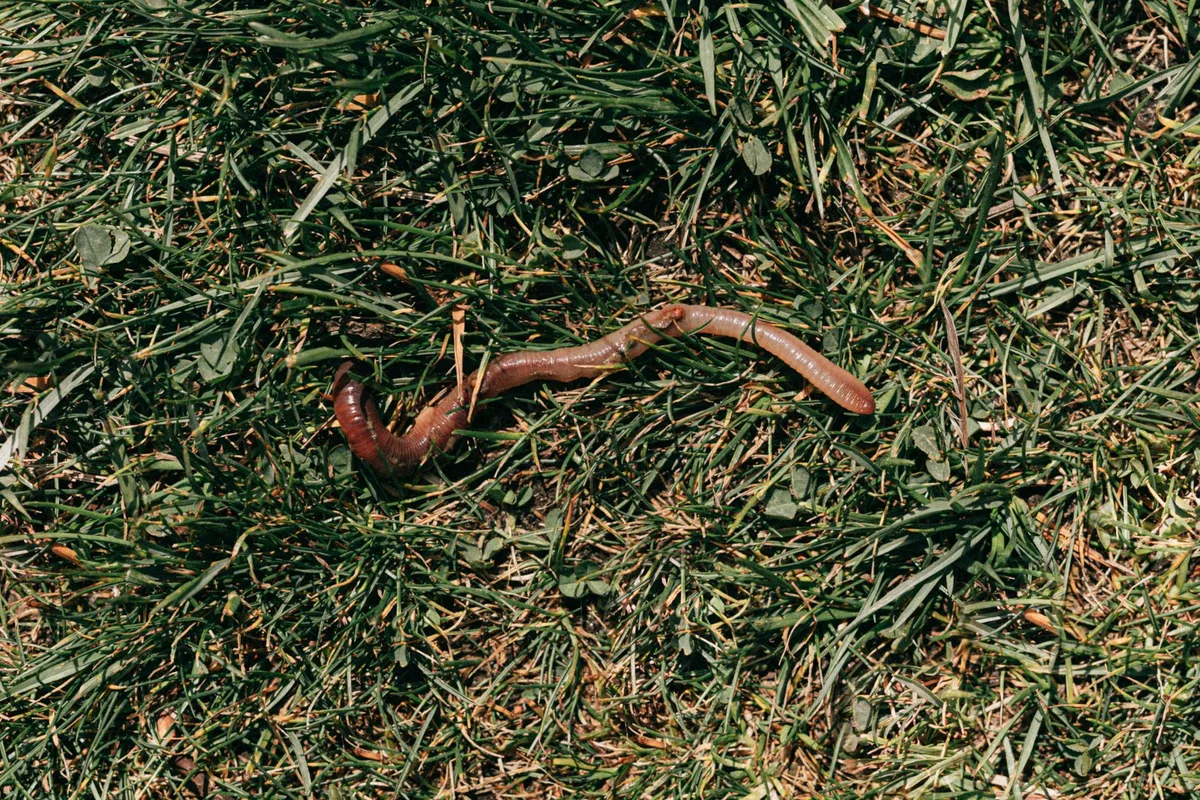
Over-fertilizing doesn't just mean you wasted money on product you didn't need. It actively damages your lawn and the soil beneath it. When you apply too much fertilizer, especially one high in nitrogen, the salts in the product draw moisture out of the grass blades.
This is called fertilizer burn, and it looks exactly like it sounds: brown, crispy patches that appear within days.
But the damage goes deeper than what you see on the surface. Excess nitrogen that the grass can't use doesn't just sit there. It moves.
In sandy soils, it leaches down past the root zone and into groundwater. In clay soils, it runs off into storm drains and nearby waterways. Both scenarios are bad for the environment and, depending on where you live, potentially illegal.
Then there's the impact on the grass itself. Too much nitrogen forces rapid leaf growth at the expense of root development. You end up with a lawn that looks lush for a few weeks but has shallow roots that can't handle drought, heat, or heavy foot traffic.
That lush green lawn? It's actually weaker and more disease-prone.
Manufacturer specifications for most lawn fertilizers recommend applying no more than 1 pound of actual nitrogen per 1,000 square feet per application. That's about 3.3 pounds of a 30-0-0 fertilizer, or 5 pounds of a 20-0-0 blend. Going over that threshold is where the trouble starts.
Why This Matters More Than You Think (Money, Lawn Health, and the Environment)
Let's talk dollars. A typical 40-pound bag of lawn fertilizer costs between $15 and $40. If you over-apply, you're burning through that product twice as fast.
Worse, you might need to buy seed to repair the damage, pay for extra water to flush the salts out, or hire someone to fix the mess. A $30 mistake can easily turn into a $200 problem.
For the lawn itself, the effects compound over time. Grass that's constantly pushed with high nitrogen develops a thick layer of thatch. Thatch is that spongy layer of dead stems and roots between the soil and the living grass.
It harbors pests and diseases, makes the lawn spongy underfoot, and blocks water and air from reaching the soil. Once thatch gets over half an inch thick, you're looking at core aeration and possibly dethatching to fix it.
Environmentally, the stakes are high. Nitrogen runoff from lawns is a major contributor to algae blooms in lakes and ponds. Those blooms kill fish, make water unsafe for swimming, and cost communities millions in cleanup.
Some states now restrict phosphorus in lawn fertilizers entirely, and several have seasonal blackout dates for nitrogen application. Ignoring these rules can result in fines.
What "Over-Fertilizing" Really Means
Over-fertilizing is more nuanced than just dumping extra product on the lawn. It depends on the type of fertilizer you use, the timing, the grass species, and the soil conditions. Let's break down what's actually happening under the surface.
It's Not Just About Too Much Nitrogen
Most people think nitrogen is the only culprit. It's the main one, sure, but phosphorus and potassium can cause issues too. Too much phosphorus can lock up iron and zinc in the soil, leading to yellowing grass that looks nutrient-deficient even though you're feeding it.
Excess potassium can interfere with calcium and magnesium uptake, throwing off the whole nutrient balance.
The real problem is the salt index. Every fertilizer has a salt index value, which measures how much the product increases the salt concentration in the soil solution. Urea has a salt index of about 75.
Ammonium sulfate is around 69. Calcium nitrate sits at 53. The higher the salt index, the more likely the product is to burn your grass.
Salt Index, Ammonia Burn, and the Danger of Quick-Release Fertilizers
Quick-release fertilizers like ammonium sulfate or urea dissolve fast in water. That's great if you want an instant green-up, but it's dangerous because the salts hit the roots all at once. If the soil is dry and the temperature is above 85°F, the concentration can spike high enough to kill grass cells within hours.
Slow-release fertilizers, on the other hand, use coatings or organic compounds that break down gradually. Polymer-coated urea releases nitrogen over 8 to 12 weeks. Sulfur-coated urea lasts about 6 to 8 weeks.
These products have a much lower risk of burn because the nitrogen becomes available slowly, matching the grass's natural uptake rate.
Ammonia burn is a slightly different mechanism. When urea hits warm, moist soil, an enzyme called urease converts it to ammonium and then to ammonia gas. If too much ammonia is released at once, it can damage leaf tissue and kill beneficial soil microbes.
This is why you see advice to water in fertilizer after application: it moves the urea below the soil surface, where the conversion happens more slowly and safely.
How to Spot Over-Fertilization Before You Panic
The signs of over-fertilization are unmistakable once you know what to look for. The key is catching it early before the damage becomes permanent.
The First Signs: Tip Burn, Yellowing, and Crust on the Soil
The earliest indicator is tip burn. The ends of the grass blades turn brown or yellow while the base stays green. This happens because the salts draw water out of the leaf tips first.
If you catch this within 24 to 48 hours of application, you can often reverse the damage by watering heavily.
Next comes general yellowing, especially on the lower leaves. This seems counterintuitive. You just fed the lawn, so why is it turning yellow?
The answer is that high salt levels damage the roots, preventing them from taking up water and nutrients. The grass is effectively dehydrated and starved, even though the fertilizer is sitting right there.
In severe cases, you'll see a white or crusty residue on the soil surface. That's crystallized fertilizer salts. If you see this, the soil salt concentration is dangerously high.
Stop fertilizing immediately and start flushing.
The Aftermath: Thatch Buildup, Disease, and Weak Roots
If over-fertilizing continues season after season, the lawn develops a chronic thatch problem. Thatch is the layer of undecomposed organic matter that builds up faster than the soil microbes can break it down. It creates a barrier that prevents water, air, and nutrients from reaching the roots.
Disease pressure also goes up. Grass that's growing fast from high nitrogen is tender and succulent, exactly the kind of tissue that fungi love to attack. Brown patch, dollar spot, and rust all thrive on lawns that are overfed with nitrogen.
The one exception is slow-release nitrogen, which actually helps suppress some diseases by promoting steady, balanced growth.
Weak roots are the hidden cost. University of Georgia turf research shows that grass receiving high rates of quick-release nitrogen develops a root system that's up to 40 percent shallower than grass fed with slow-release sources at the same total nitrogen rate. Shallow roots mean the lawn needs more water, more frequent mowing, and more overall maintenance just to survive.
When It's Not Over-Fertilization (Other Look-Alike Problems to Rule Out)
Before you panic, rule out other causes. Dog urine spots look similar to fertilizer burn, but they're usually circular with a dark green ring around the edge. Fungal diseases often show distinct patterns like rings or patches with gray or pink mold at the edges.
Drought stress causes uniform browning across the entire lawn, not just in streaks or patches that match your spreader pattern.
The easiest way to confirm fertilizer burn is to look at the application pattern. If the damage follows the lines of your spreader passes or appears worse where you overlapped, it's almost certainly fertilizer-related. If the damage is random or affects only certain areas, look for other causes.
The Real Risk Factors
Not all lawns are equally at risk. Some factors make over-fertilization much more likely, and knowing them ahead of time can save you a lot of trouble.
Your Grass Type Matters (Cool-Season vs. Warm-Season Tolerance)
Cool-season grasses like Kentucky bluegrass, tall fescue, and perennial ryegrass can handle moderate nitrogen rates but are sensitive to high salt applications, especially in summer heat. Warm-season grasses like Bermuda, zoysia, and St. Augustine are generally more tolerant of high nitrogen but have different seasonal windows for application.
Here's a quick comparison of recommended nitrogen rates for common grass types:
| Grass Type | Max N per 1,000 sq ft per application | Annual N total |
|---|---|---|
| Kentucky bluegrass | 0.75 – 1.0 lb | 3.0 – 4.0 lb |
| Tall fescue | 0.75 – 1.0 lb | 2.5 – 3.5 lb |
| Perennial ryegrass | 0.5 – 0.75 lb | 2.0 – 3.0 lb |
| Bermuda grass | 0.5 – 1.0 lb | 2.0 – 4.0 lb |
| Zoysia | 0.5 – 0.75 lb | 1.0 – 2.0 lb |
| St. Augustine | 0.5 – 0.75 lb | 1.5 – 3.0 lb |
Centipede grass is the most sensitive. It needs very little nitrogen, usually no more than 1 pound total per year. Over-fertilizing centipede is one of the fastest ways to kill it.
Soil Texture and Drainage (Why Sandy Lawns Leach and Clay Lawns Run Off)
Your soil type determines how fertilizer behaves after application. Sandy soils have large pores and low organic matter. Water moves through them fast, carrying nitrogen below the root zone before the grass can use it.
This means you're more likely to lose nitrogen to leaching, but you're also less likely to get fertilizer burn because the salts don't concentrate near the roots.
Clay soils are the opposite. They have tiny pores and high water-holding capacity. Fertilizer salts can build up in the root zone because water moves slowly.
The risk of burn is higher, and runoff during heavy rain sends fertilizer straight into storm drains.
Loam soils are ideal. They drain well enough to prevent salt buildup but retain enough moisture to keep nutrients available. If you have loam, you're in the sweet spot.
Weather and Timing (Don't Feed in a Heat Wave)
Temperature matters more than most people think. Grass growth slows down above 85°F for cool-season grasses and below 60°F for warm-season grasses. Applying fertilizer when the grass isn't actively growing is a waste of money and a recipe for runoff or leaching.
Rain forecasts are another factor. Applying fertilizer right before a heavy rain means most of it washes away. But applying when the soil is bone dry, with no rain expected, means the salts sit on the surface and concentrate as water evaporates.
The ideal window is a day when light rain is forecast within 12 to 24 hours, or you can water it in yourself.
Spreader Mistakes and Overlap Burns
This is the most common cause of over-fertilization in our experience. A drop spreader applies fertilizer in a straight line, so if you miss a row and overlap, you double the rate in that strip. A rotary spreader throws product in a fan pattern, and the edges are lighter than the center.
Most people try to compensate by overlapping, but they overdo it.
The fix is calibration. Set your spreader to the manufacturer's recommended setting for the product you're using. Then do a test pass on a hard surface to check the pattern width.
Adjust your walking speed and overlap until the distribution is even. It takes 10 minutes and saves you from burning stripes into your lawn.
How to Fertilize Without Overdoing It (A Safe, Practical Approach)
The goal is to feed the grass, not the soil. A carefully planned approach prevents problems before they start.
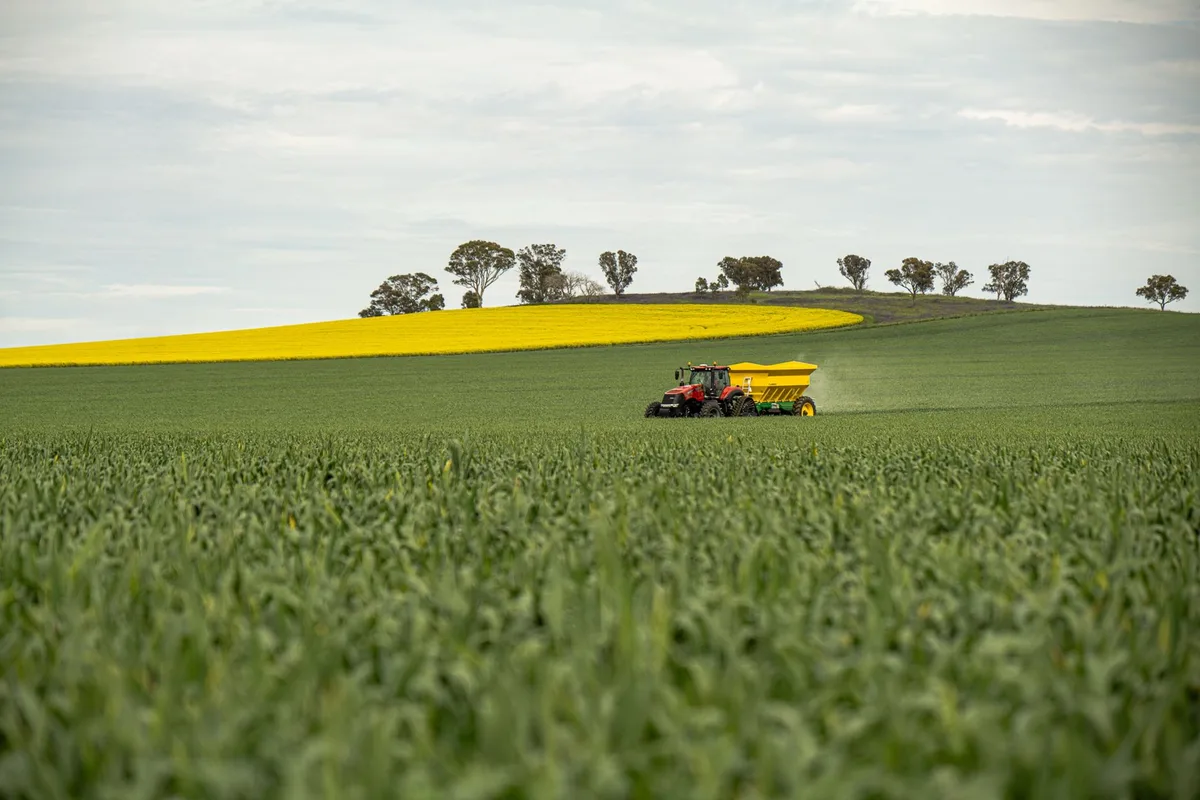
Step 1: Soil Test First (What You're Actually Working With)
Guessing what your lawn needs is the number one cause of over-fertilization. A soil test tells you exactly how much nitrogen, phosphorus, and potassium are already in the soil, plus the pH and organic matter content. Without this data, you're flying blind.
You can get a soil test kit from your local cooperative extension office for about $10 to $20. Collect samples from several spots in the yard, mix them together, and send them in. The results take about two weeks.
The report will tell you exactly how much fertilizer to apply and what ratio to use.
The common advice to "apply a balanced 10-10-10" is a myth. Most lawns don't need phosphorus or potassium every year. A soil test might show you only need nitrogen, or a specific blend like 30-0-6 with slow-release nitrogen.
Applying a complete fertilizer when only nitrogen is needed is a form of over-fertilization, even if the total rate is correct.
Step 2: Calculate Your Nitrogen Rate Per 1,000 Square Feet
Measure your lawn area first. Walk off the length and width, or use a measuring wheel. Divide the total square footage by 1,000 to get your base number.
Now look at the fertilizer bag. The N-P-K numbers show the percentage of each nutrient by weight. A 30-0-0 bag has 30 percent nitrogen.
That means each pound of fertilizer contains 0.3 pounds of actual nitrogen. To apply 1 pound of nitrogen per 1,000 square feet, you need 3.3 pounds of that product per 1,000 square feet.
| Desired N rate (per 1,000 sq ft) | Product analysis | Product needed |
|---|---|---|
| 0.5 lb | 30-0-0 | 1.7 lb |
| 0.75 lb | 20-0-0 | 3.75 lb |
| 1.0 lb | 10-10-10 | 10 lb |
Most lawns do best with 0.5 to 0.75 pounds of nitrogen per application for cool-season grasses, and 0.25 to 0.5 pounds for warm-season types. Err on the low side if you're unsure.
Step 3: Calibrate Your Spreader (It's Not Optional)
Set your spreader to the number on the bag as a starting point, but verify it. Put a small amount of fertilizer in the hopper, walk a measured 50-foot line on a hard surface, and collect what falls. Weigh it.
Compare to your calculated rate.
If you're applying more than you need, open the spreader setting or walk faster. If you're applying less, close the setting or walk slower. This takes 15 minutes and pays off all season.
Step 4: Apply at the Right Time, the Right Way
Apply fertilizer when the grass is actively growing and the soil is moist but not saturated. Early morning is best, when dew is still on the grass, because the moisture helps dissolve the granules.
Use a pattern that minimizes overlap. For a drop spreader, line up the wheel marks from the previous pass. For a rotary spreader, overlap by about half the throw width.
Apply half the product in one direction and the other half perpendicular to it. This gives even coverage and prevents streaks.
Step 5: Water It In Correctly (Not Too Little, Not Too Much)
Watering after application serves two purposes. First, it washes the fertilizer off the grass blades so it doesn't burn the leaves. Second, it moves the nutrients into the soil where roots can reach them.
The right amount is about a quarter to half an inch of water. That's enough to wet the soil to a depth of about 4 to 6 inches. More than that, and you start leaching nitrogen below the root zone.
A simple tuna can or rain gauge placed in the yard tells you how long to run your sprinklers.
Don't water so heavily that you see runoff pooling in the street. That's your money and potential environmental fines washing away.
If you're using a slow-release fertilizer, you can water immediately. If you're using a quick-release product, water within 4 hours. Waiting longer increases the risk of burn.
You Messed Up. Here's How to Fix It.
So the damage is done. The lawn has brown streaks, the tips are crispy, and you're kicking yourself. Don't panic.
Most lawns recover if you act quickly.
Step 1: Flush the Lawn With Water (How Much and How Fast)
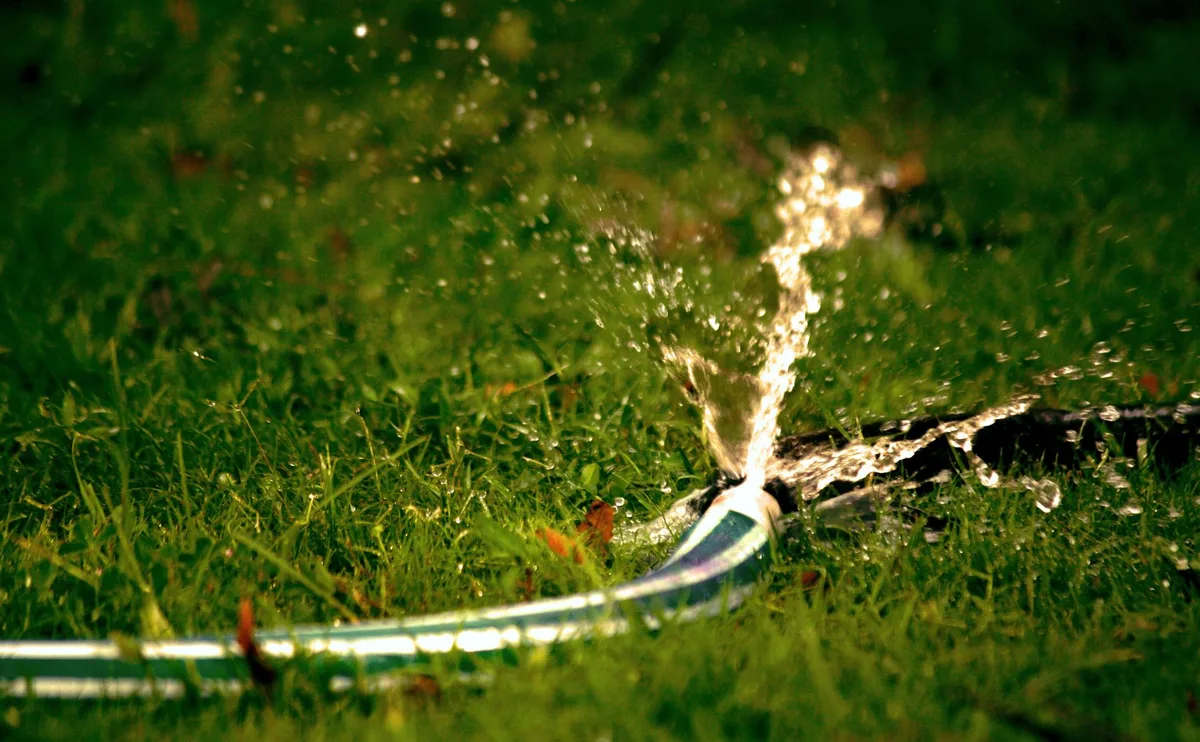
The immediate goal is to dilute the salt concentration in the soil. Start watering as soon as you notice the problem. Apply enough water to move the salts below the root zone, which means about 1 inch of water.
On a typical lawn, that's roughly 600 gallons per 1,000 square feet.
Water slowly to prevent runoff. Use a sprinkler that delivers water at a rate the soil can absorb. Sandy soils can handle faster application.
Clay soils need a slower, longer soak. The goal is to push the salts down, not wash them away sideways.
Do this flushing twice, 24 hours apart. Monitor the lawn for signs of improvement. Green tissue recovering within a week is a good sign.
If there's no change after three days, the roots may be too damaged to recover.
Step 2: Stop Feeding and Let It Recover
Do not apply any more fertilizer until the lawn shows clear signs of recovery. That usually means two to four weeks of normal growth without any new burn symptoms. Applying more fertilizer during recovery is like pouring salt in the wound.
During this period, focus on proper watering. Keep the soil consistently moist but not soggy. Deep, infrequent watering encourages root growth.
Frequent shallow watering keeps the roots near the surface and makes the lawn more dependent on you.
Step 3: Rake Out Dead Patches and Reseed if Needed
Areas where the grass has died completely need to be removed. Rake out the dead material to expose bare soil. Loosen the top quarter inch of soil with a rake or cultivator.
Spread a thin layer of topsoil or compost, then sow fresh seed. Choose a variety that matches your existing grass type. For cool-season lawns, use a blend of Kentucky bluegrass, tall fescue, and perennial ryegrass.
For warm-season lawns, use Bermuda or zoysia seed, or consider sod for faster results.
Keep the seeded areas moist until germination. A light watering twice a day, morning and evening, works well. Once the seedlings are about 2 inches tall, transition to deeper, less frequent watering.
Step 4: Adjust Your Future Plan (Lower Rates, Different Product)
Learn from the mistake. If you burned the lawn with a quick-release product, switch to a slow-release option. Polymer-coated urea or sulfur-coated urea are safe bets.
Organic fertilizers like milorganite or compost have very low salt indexes and almost never cause burn.
Reduce your application rate by 25 percent next time. If you were applying 1 pound of nitrogen per 1,000 square feet, drop to 0.75 pounds. A lighter application fed more frequently is better than a heavy dose all at once.
This "spoon-feeding" approach keeps the grass growing steadily without shocking it.
Invest in simple DIY maintenance tools. Clean your spreader after each use to prevent clogging. Store fertilizer in a dry place to keep it free-flowing.
A few minutes of preventive care save hours of repair work later.
Frequently Asked Questions
How long does it take for a lawn to recover from over-fertilization?
Mild cases recover in 7 to 14 days with proper flushing and watering. Severe cases with dead patches can take 4 to 6 weeks. The grass needs time to grow new roots and replace damaged leaf tissue.
Patience is the most important tool.
Can over-fertilized grass die, or will it always come back?
Yes, it can die. If the salt concentration is high enough, root cells collapse and the plant cannot recover. Grass that turns completely brown and crispy at the base is likely dead.
Rake it out and reseed.
Should I fertilize again after a burn, or wait until next season?
Wait. Do not apply any fertilizer until the lawn is fully recovered and actively growing again. That could be 4 to 8 weeks.
Fertilizing during recovery stresses the lawn even more. If recovery stretches into the fall, skip the winterizer application for that season.
Is it possible to over-fertilize with a slow-release product?
Yes, but it's harder. Slow-release products have lower salt indexes and release nitrogen gradually, so the risk of burn is much lower. However, applying too much can still cause thatch buildup, disease, and environmental harm.
Follow the label rates.
Do I need to water immediately after applying fertilizer?
If you're using a quick-release product, water within 4 hours. For slow-release products, watering immediately is still recommended to wash fertilizer off the blades. The only exception is when you're applying in the rain, in which case skip the extra water.
Organic vs. Synthetic: Which One Is Safer for a Beginner?
Organic fertilizers like milorganite or compost have very low salt indexes. They release nitrogen slowly as soil microbes break them down. This makes accidental burn much less likely than with synthetic quick-release products.
Synthetic fertilizers give you more control over exact nutrient ratios. They work faster and cost less per pound of nitrogen. But the risk of over-application is higher, especially for beginners who haven't calibrated their spreader.
Our take: Start with a slow-release organic or polymer-coated synthetic if you're new to lawn care. The margin for error is wider. Once you have a season or two of experience, you can switch to quicker products if needed.
Common Mistakes People Make When Trying to "Green Up" Fast
Applying fertilizer before a heavy rain washes most of it into storm drains. That's wasted money and potential pollution.
Using a high-nitrogen product in late summer stresses warm-season grasses and pushes cool-season grasses into vulnerable growth just before fall. Stick to the right product for the season.
Ignoring spreader overlap creates burned stripes that take weeks to fade. Overlapping by more than half the throw width doubles the rate in those strips.
The Environmental & Legal Side (No One Talks About This)
Excess nitrogen that runs off your lawn ends up in local waterways. It feeds algae blooms that kill fish and make water unsafe. Several states now restrict phosphorus in lawn fertilizers and ban nitrogen application during rainy seasons.
Fines for violating these rules range from $50 to $500 depending on your location. Check your local cooperative extension website for seasonal blackout dates. Most municipalities post them online.
The Bottom Line
Over-fertilizing is easy to do and costly to fix. One year of smart feeding beats one season of over-feeding every time. Soil test, measure your lawn, calibrate your spreader, and water after application.
That simple routine prevents 90 percent of fertilizer problems. If you do mess up, flush with water and wait. The lawn will thank you next season.
Slow-Release vs. Quick-Release (The Burn Potential Spectrum)
Quick-release fertilizers dissolve fully within 24 hours. That's when the salt hit is strongest. Slow-release products meter out nitrogen over weeks, keeping soil salt levels low.
If you've ever burned a lawn, switching to a slow-release formula is the single best fix.
Milorganite, Compost, and Other Low-Risk Options
Milorganite has a salt index near zero. Compost adds organic matter along with nutrients. Both release nitrogen so slowly that burn is nearly impossible.
They cost more per pound of nitrogen but save you from costly recovery work later.
Why "Organic" Doesn't Mean You Can't Overdo It
Organic fertilizers can still cause problems. Too much compost or manure can raise phosphorus levels high enough to lock up iron. Excess organic matter can also tie up nitrogen temporarily, leaving your lawn pale and weak.
Follow label rates even for natural products.
Applying Before a Rainstorm
Heavy rain washes fertilizer off your lawn and into storm drains. You lose the product and risk polluting local waterways. Check the 24 hour forecast.
If more than half an inch of rain is expected, wait.
Thinking More Is Better (It Never Is)
The "if a little is good, more is better" mindset destroys more lawns than any disease. Stick to 0.5 to 0.75 pounds of nitrogen per 1,000 square feet per application. Your lawn uses only what it can absorb.
The rest is waste.