Guide to Common Landscaping Mistakes 2026
You've spent a weekend digging, planting, and mulching. You stood back, admired your work, and felt good. Then months later, things look worse than when you started.
Common landscaping mistakes don't just waste your time. They cost real money. Dead plants, bloated water bills, and even structural damage to your home can all trace back to decisions made before the first shovel hit the dirt.
Per USDA research, roughly 80% of newly planted trees fail within their first five years due to improper planting depth alone. That's not bad luck. That is preventable.
Once you understand the patterns, you can sidestep them entirely.
Quick Answer: The 5 Most Costly Landscaping Errors
Skip the soil test. Plant sun-lovers in full shade. Bury the root flare.
Water shallowly every day. Grade the yard toward the house. Each of these five errors kills plants, wastes water, or damages property.
Avoid them and you are already ahead of most DIY landscapers.
Why This Matters More Than You Think
The real cost of a landscaping mistake isn't the price of a dead shrub. It's the cumulative bill. You pay for the plant, the soil amendments, the water, the labor, and then the replacement.
Then you get to do it all over again.
In our research, the financial hit from a single improperly planted tree can easily exceed $500 when you factor in removal, stump grinding, and replacement. That is a chunk of change for an error that takes thirty seconds to avoid.
Then there are the hidden costs. Poor drainage around a foundation can lead to basement leaks that cost thousands. Overwatering breeds fungus, which spreads to plants you did not mean to kill.
Improper grading sends stormwater into your neighbor's yard and creates headaches nobody wants.
The goal here is simple. Learn which mistakes happen most often, why they happen, and exactly what to do instead.
Mistake #1: Planting Without a Soil Test
Most people dig a hole, drop in a plant, and hope for the best. That approach works maybe fifty percent of the time.
The truth is that soil is not just dirt. It is a living system with a specific pH, texture, and nutrient profile. Plant a blueberry bush in alkaline clay and it will struggle no matter how much you water it.
The pH is wrong. The drainage is wrong. The plant was set up to fail from day one.
What a soil test actually tells you
A basic soil test measures three things. pH level, which runs from acidic to alkaline. Macronutrients like nitrogen, phosphorus, and potassium. And soil texture, meaning whether you have sand, silt, clay, or a loamy mix.
Extension service labs run these tests for around ten to twenty dollars. You collect a small sample from several spots in your yard, mail it in, and wait about two weeks. The report you get back is specific to your property.
It tells you exactly what to add and what to leave alone.
How to fix soil without guessing
If your soil is heavy clay, organic matter is your best friend. Compost, aged manure, or leaf mold improves drainage and adds nutrients. If your soil is sandy, organic matter helps it hold moisture longer.
Fertilizer is not a one-size-fits-all product. Without a test, you might dump nitrogen on soil that already has plenty, which burns roots and pushes weak growth. Use a test first, then apply the right product at the right rate.
For more tailored advice, check our guide on organic fertilizer recommendations for different plant types. The same logic applies to slow-release fertilizer options for flower beds. Match the product to the soil, not the other way around.
A quick soil texture test you can do right now
Grab a handful of moist soil from your yard. Squeeze it firmly. Open your hand.
If it holds its shape and feels sticky, you have clay. If it crumbles immediately, you have sand. If it forms a loose ball but breaks apart with a gentle poke, that is loam.
Loam is what you want. Everything else needs work.
Mistake #2: The Wrong Plant in the Wrong Place
This is the single most common landscaping error we see. A gorgeous rhododendron goes into a full-sun southern exposure. A lavender plant lands in a damp, shady corner.
A maple gets planted three feet from the foundation.
Every plant has specific needs for sunlight, moisture, and space. Ignoring those requirements is like putting a cactus in a swamp. It might survive for a season.
It will not thrive.
Sun exposure is not optional
Full sun means six or more hours of direct sunlight per day. Part sun means four to six hours. Shade means less than three hours.
Read the tag before you buy. If it says full sun and your yard is mostly shaded by that big oak, put it back.
For shaded areas, look for plants bred to handle low light. Our recommendations on shade-tolerant flowers give you solid starting points. Dry, hot yards call for drought-tolerant trees that laugh at the summer heat.
Mature size is the part everyone ignores
That cute little arborvitae you bought at the garden center? It grows to fifteen feet tall and eight feet wide. Plant it too close to the house and you will be fighting it for years.
Blocked gutters, scratched siding, roots against the foundation.
Always look up the mature height and spread before planting. Then double that number for spacing from your house. Your future self will thank you.
Microclimates matter more than zone numbers
The USDA hardiness zone tells you the average winter low temperature in your area. That is useful information. But your yard has microclimates that the zone map does not capture.
A south-facing brick wall absorbs heat and radiates it at night. That spot might be a full zone warmer than the rest of your yard. A low-lying area where cold air settles?
That freezes earlier and stays colder. Watch your yard through the seasons before you plant. The map is a guide.
Your eyes are better.
Mistake #3: Killing Your Trees at Planting Time
Trees are the most expensive plants in your landscape. They are also the ones most likely to be planted wrong. The error is almost always the same.
The tree is put in too deep.
Why depth matters
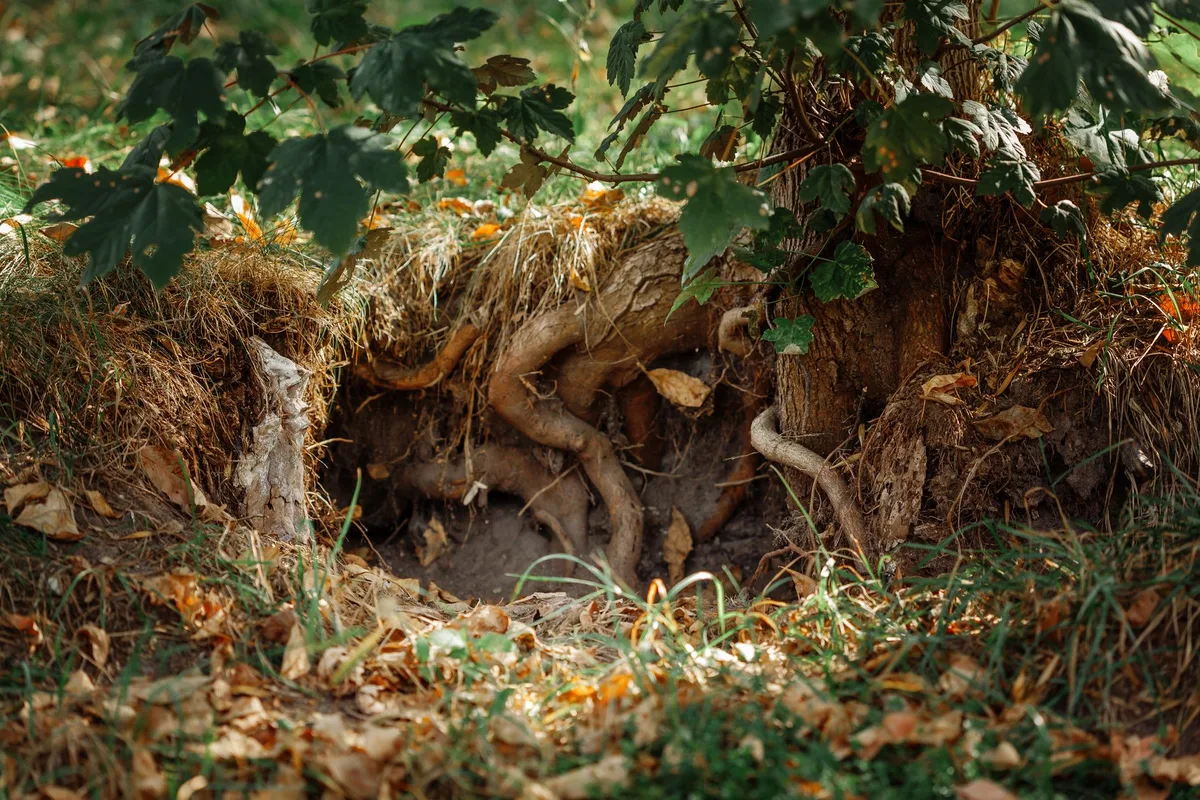
A tree's root flare is the spot where the trunk widens at the base and the roots begin to branch out. That flare must be at or slightly above the soil grade. Bury it even a few inches and you start a slow death.
The buried section of trunk tries to grow roots upward, circling roots that eventually strangle the tree. It takes years, but the outcome is predictable. The tree declines, the canopy thins, and one day it falls over in a moderate wind.
How to plant a tree the right way
Dig the hole two to three times as wide as the root ball. Make the depth exactly the height of the root ball, measured from the bottom to the root flare. Do not dig deeper.
Do not amend the backfill soil with peat moss or compost. Use the same dirt you removed.
Place the tree in the hole. Make sure the root flare is visible above the rim. Backfill the hole.
Water it in thoroughly. Remove any stakes after the first growing season. Trees that are staked too long grow weaker trunks.
The volcano mulching problem
Piling mulch up against the trunk looks tidy. It is also one of the fastest ways to kill a tree. That "mulch volcano" traps moisture against the bark, inviting rot, fungus, and rodents.
Keep mulch two to three inches deep and pull it several inches away from the trunk. Flatter is healthier.
When to call for help
Large trees or trees near power lines are not a DIY job. If the tree is taller than you or the root ball weighs more than you can safely lift, bring in a professional. An arborist certified by the International Society of Arboriculture has the training and equipment to do it right.
That cost beats an emergency removal by a long shot.
This is the first half of the article. The remaining sections will cover watering mistakes, grading and drainage errors, pruning, lawn care, safety and legal issues, diagnosing struggling yards, when to hire a pro, real-world case studies, and a decision guide to keep you on track.