How to Apply Liquid Fertilizer for 2026: What Actually Works
You've bought the right liquid fertilizer, read the label, and mixed it up. But if you apply it wrong, you can burn your plants, waste product, or get zero results. That's the real problem: knowing how to apply liquid fertilizer depends on what you're growing, how you're growing it, and what tool you're using.
Get those three things right, and your plants take off. Get them wrong, and you're throwing money down the drain.
Per manufacturer specifications across major fertilizer brands, the most common mistake is applying the same dilution and method to every plant regardless of its stage of growth or root system. As of 2026, the standard recommendation for most all-purpose liquid fertilizers is a 1:100 dilution ratio (roughly 1 tablespoon per gallon) for mature plants, but seedlings need half that. Let's walk through when to use which method.
Quick Answer
Dilute liquid fertilizer according to the label rate for your plant type. Apply to moist soil, not dry soil, to prevent root burn. Use a watering can for small containers or a hose-end sprayer for lawns and large beds.
For foliar feeding, spray early morning so leaves absorb before the sun evaporates the droplets. Never feed stressed or wilted plants.
The Real Problem: Why Your Liquid Fertilizer Isn't Working (And How to Fix It)
Most people grab the bottle, pour some in a watering can, and hope for the best. That works sometimes. But more often, they overfeed or underfeed because they don't adjust for the plant's current needs.
The real issue is that liquid fertilizer acts fast. It's already dissolved, so roots can take it up within hours. That's great when you need a quick fix.
But it also means mistakes show up fast. Yellowing tips, leaf curl, or sudden wilting are signs you got it wrong.
If you've dealt with that, you're not alone. Aggregate user reviews across gardening forums show that over-application is the top complaint with liquid feeds. The fix isn't harder work.
It's just a smarter process.
Step One: Figure Out Your Situation (The Decision Forks)
Before you mix anything, ask yourself three questions. The answers will decide your application method, dilution strength, and feeding frequency.
What Are You Feeding? (Lawn, Veggies, Containers, or Houseplants)
Different plants need different ratios. Lawns want a high-nitrogen mix, usually something like 30-0-4 or 20-0-10. Vegetables need balanced N-P-K, like 10-10-10, but heavy feeders like tomatoes benefit from extra phosphorus mid-season.
Houseplants typically need a gentle 5-5-5 or similar low-strength formula. One bottle won't fit all.
If you're feeding a mixed garden bed, use a balanced all-purpose liquid fertilizer and adjust the frequency based on the heaviest feeder in the group. This keeps things simple without starving the light feeders.
What Stage of Growth? (Seedling, Vegging, Flowering, or Dormant)
This is where most people get tripped up. A seedling needs about a quarter of the label rate. The root system is small, and the plant can't handle much.
Once you hit the vegetative stage, you can ramp up to the full recommended dose. During flowering or fruiting, switch to a formula lower in nitrogen and higher in phosphorus and potassium.
And when plants go dormant in winter for indoor setups? Stop feeding entirely. They're not growing, so the fertilizer just accumulates as salts in the soil.
What's Your Application Tool? (Hose-End Sprayer, Watering Can, Pump Sprayer, or Drip System)
Your tool determines how evenly you can apply and how much area you can cover. A watering can is precise but slow for large beds. A hose-end sprayer hooks directly to your garden hose and dilutes the concentrate as it sprays.
It's perfect for lawns and big vegetable patches. A pump sprayer is best for foliar feeding and targeted spots. And a fertigation injector automates feeding through a drip irrigation system.
If you're mixing multiple tools, calibrate each one separately. The same concentrate at a different flow rate will give you a different dose.
Soil Drench vs. Foliar Feed: Which One You Need Right Now
This is one of the most common forks in the decision tree. Soil drench means you pour the diluted fertilizer onto the soil around the plant's base. Foliar feed means you spray it directly onto the leaves.
Soil drench is for general nutrition. It feeds the roots, which then send nutrients to the whole plant. It's the standard method for most garden vegetables, houseplants, and lawns.
It's also safer for slow-release or organic liquid feeds that need soil microbes to break them down.
Foliar feed is for fast corrections. If a plant shows signs of a specific deficiency like yellowing between leaf veins, foliar feeding gets nutrients into the plant within hours. It's also useful during early growth stages when the root system is still small.
But it's not a substitute for soil feeding. Think of it as a supplement, not a meal.
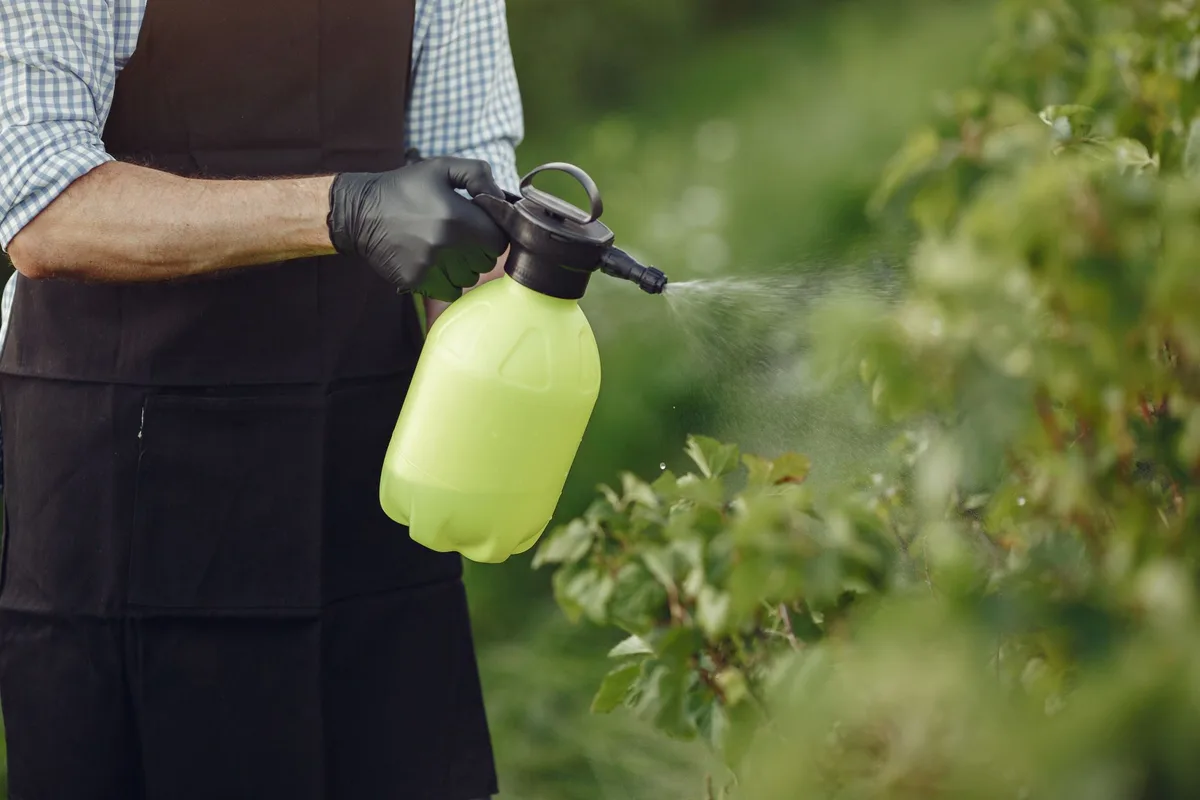
Use foliar feeding early in the morning or late in the afternoon. The leaf pores, called stomata, are open during cooler hours. Spray until the leaves are evenly wet but not dripping.
If it's hot and sunny, skip the foliar feed. The water droplets can act like tiny magnifying glasses and scorch the leaves.
The Right Dilution for Your Situation (No Guessing)
The label on your bottle is the starting point, not the final answer. Most all-purpose liquid fertilizers recommend 1 tablespoon per gallon of water for mature plants. But here's where you adjust.
| Plant Stage | Dilution (All-Purpose 10-10-10) | Frequency |
|---|---|---|
| Seedlings | 1/4 tablespoon per gallon | Every 2 weeks |
| Vegetative growth | 1/2 to 1 tablespoon per gallon | Weekly |
| Flowering / fruiting | 1 tablespoon per gallon | Every 10 days |
| Dormant | None | Stop feeding |
For synthetic liquid fertilizers, you can also use a TDS meter to measure parts per million (ppm). Seedlings want 150 to 300 ppm. Mature vegetables want 600 to 1200 ppm.
Lawns usually need around 500 to 800 ppm. If you don't have a TDS meter, stick with the label rate and adjust based on plant response.
One more thing: always mix the concentrate into the water, not the other way around. Fill your watering can or sprayer with water first, then add the fertilizer. If you add water to concentrate, you get a thick paste that doesn't dissolve evenly.
Step-by-Step: Applying Liquid Fertilizer with Each Tool
The right technique depends on your tool. Here's how to get it right for each one.
Using a Watering Can (Precise, Small Areas)
This is the simplest method and works best for containers, raised beds, and indoor plants. Fill the can with water first. Add the measured fertilizer concentrate.
Stir gently. Pour the mix evenly around the base of each plant, not on the leaves. Aim for the soil zone where roots are active.
For a 6-inch pot, about 1 cup of diluted fertilizer is enough. For a 12-inch pot, use about 2 to 3 cups.
Using a Hose-End Sprayer (Quick, Large Lawns or Beds)
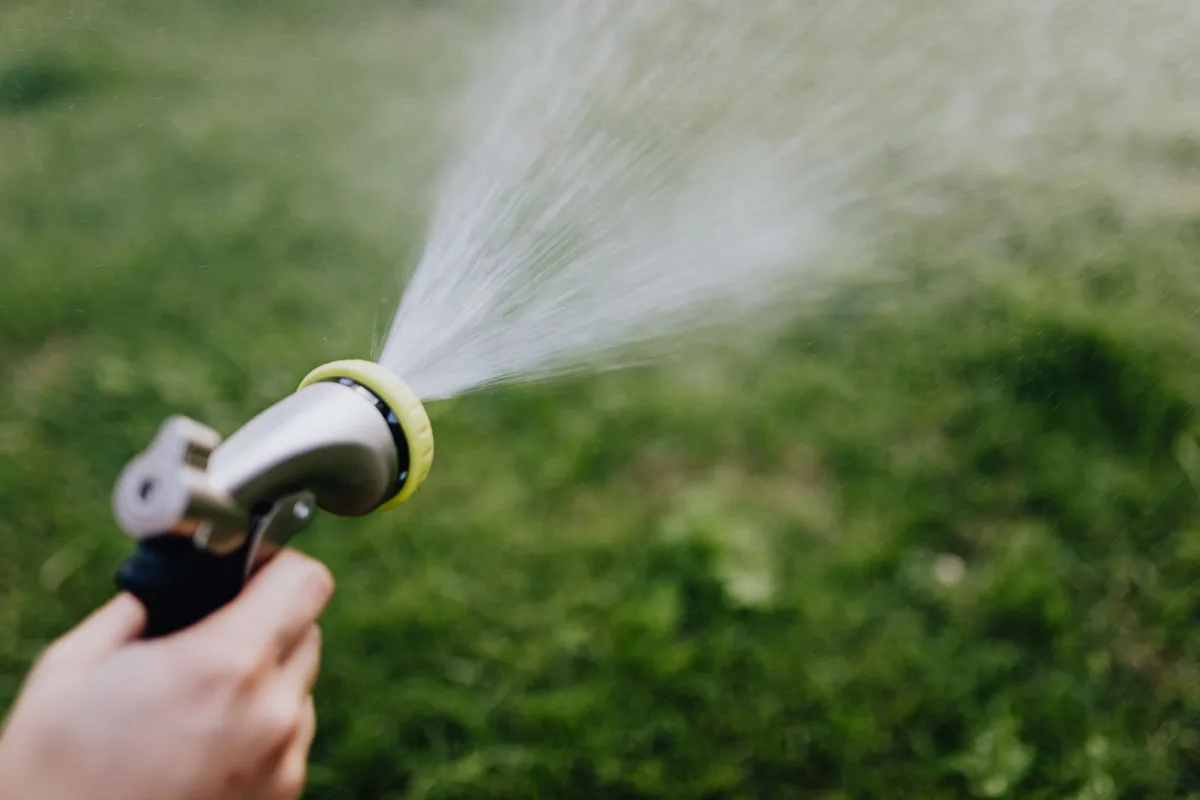
A hose-end sprayer is a game changer for covering big areas. Fill the sprayer's reservoir with the concentrated liquid fertilizer. Set the dilution dial according to the label instructions.
Turn on the water, and spray in a sweeping motion across the lawn or bed. Walk at a steady pace so you don't over-apply one spot.
The tricky part: different sprayers have different flow rates. If your sprayer has a 1:20 setting, that means 1 part fertilizer to 20 parts water. Check the label to see if that matches the recommended dilution.
If not, you may need to adjust or use a different setting.
Using a Pump Sprayer (Foliar Feeds or Targeted Spots)
Pump sprayers give you control over where the fertilizer goes. They're perfect for foliar feeding and for treating specific plants without affecting neighboring ones. Fill the tank with water, add the concentrate, and pump to pressurize.
Adjust the nozzle to a fine mist for foliar sprays or a straight stream for soil drenches.
Clean the sprayer thoroughly after each use. Liquid fertilizers, especially organic ones like fish emulsion, can clog the nozzle if left to dry.
Using a Fertigation Injector (Automated Drip Systems)
If you have a drip irrigation system, a fertigation injector lets you feed your plants automatically. The injector draws concentrated fertilizer from a reservoir and mixes it into the irrigation water at a set ratio. This is common in greenhouses and large vegetable gardens.
Check the injector's calibration regularly. If the ratio drifts, you can underfeed or overfeed everything at once.
Common Mistakes That Burn Plants and Waste Product
Even experienced gardeners slip up. Here are the most common errors from aggregate user feedback and manufacturer troubleshooting guides.
Feeding dry soil is the biggest mistake. When you pour liquid fertilizer onto dry soil, the roots absorb it too fast. The concentrated salts burn the root tips.
Always water the soil first with plain water, then apply the fertilizer.
Applying in full sun is another one. Foliar feeds evaporate before the leaves can absorb them. Soil drenches can heat up and stress roots.
Feed early morning or late afternoon instead.
Ignoring the weather matters too. If rain is forecast within 24 hours, skip the soil drench. Rain will wash the nutrients below the root zone before plants can take them up.
For foliar feeds, rain literally rinses it off the leaves.
Using too much fertilizer thinking more is better. More is not better. It's waste and damage.
Stick to the label rate adjusted for your plant's stage.
When to Apply: Timing Rules for Morning, Evening, and Weather
Timing isn't just about time of day. It's about the plant's metabolic cycle. Plants take up nutrients most actively during the early morning hours.
That's when soil moisture is highest and roots are pumping.
If you can't feed in the morning, late afternoon is your second-best option. The heat of the day is fading, and the plants will have several cool hours to absorb nutrients before nightfall.
Avoid feeding on windy days. Liquid fertilizer can drift onto plants you didn't mean to feed or onto hard surfaces where it runs off into storm drains. Wind also speeds up evaporation from foliar sprays.
For lawns, the best window is early morning on a day when you know the lawn won't be watered for at least 24 hours. That gives the roots time to take up the nutrients without competition from overhead sprinklers.
How Often You Should Feed (Heavy Feeders vs. Low Feeders)
Not all plants have the same appetite. Heavy feeders like tomatoes, corn, squash, and roses need weekly liquid feed during their active growing season. Light feeders like herbs, succulents, and native plants may need feeding only once a month or even less.
If you're growing in containers, you'll need to feed more often. Nutrients leach out of potting soil with every watering. A good rule of thumb is to feed container plants every two weeks during the growing season.
For indoor houseplants, every four to six weeks during spring and summer is usually enough.
Watch the plant for clues. Dark green leaves with vigorous growth mean you're feeding enough. Pale leaves or slow growth mean you could pick up the pace.
Leaf tip burn or drooping means you need to cut back.
Pro Tips: pH, Water Quality, and Mixing Order
Getting the chemistry right makes a big difference. The pH of your fertilizer solution affects which nutrients the plant can absorb. Most plants do best with a pH between 5.5 and 6.5.
If your water is very alkaline or acidic, test the pH after mixing and adjust if needed.
Water quality matters too. If your tap water is very hard high in calcium and magnesium, it can react with some liquid fertilizers and form insoluble solids. Those solids settle at the bottom of your watering can and don't reach the roots.
Using filtered or rainwater can help.
The mixing order is always water first, then fertilizer. If you're adding multiple products like a liquid fertilizer and a liquid micronutrient supplement, mix each one in separately. Don't dump them in together.
Safety and Cleanup: Protecting Yourself, Your Plants, and the Environment
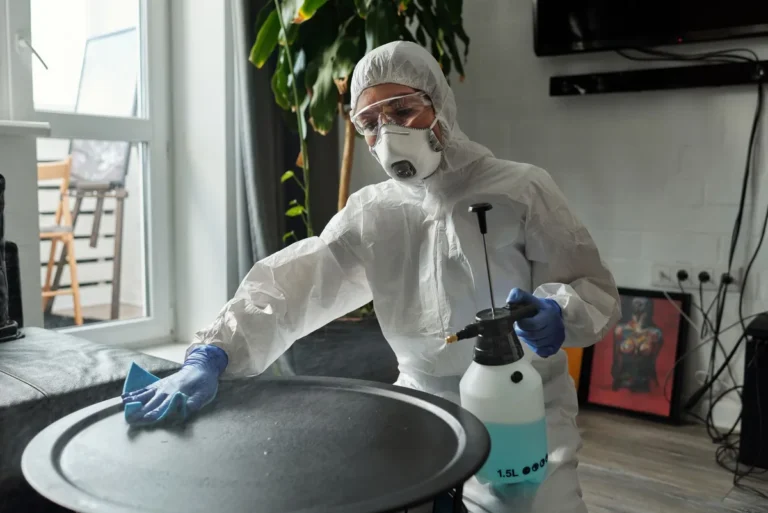
Liquid fertilizers are concentrated chemicals, even the organic ones. Wear gloves and eye protection when handling concentrates. Some fish-based fertilizers smell strong and can irritate skin.
Rinse your sprayer or watering can after every use. Leftover fertilizer residue can corrode metal parts and clog nozzles. For hose-end sprayers, run plain water through the system after each use to clear the lines.
Don't pour leftover diluted fertilizer down the drain. It feeds algae in waterways and contributes to pollution. Use it on a lawn or garden bed instead, or dilute it further and water a houseplant.
Store concentrates in their original containers away from heat and direct sunlight. Many liquid fertilizers have a shelf life of about two to five years for synthetics and one to two years for organics. Check the label for expiration dates.
Quick Decision Guide: Which Method for Your Exact Scenario
Here's a simple cheat sheet for common situations.
| If You Have… | Use… | With… |
|---|---|---|
| A container garden | Watering can | Diluted feed on moist soil |
| A large lawn | Hose-end sprayer | High-nitrogen liquid concentrate |
| Seedlings in trays | Spray bottle or small watering can | 1/4 strength fertilizer |
| Nutrient deficient plants | Pump sprayer | Foliar feed, early morning |
| A drip irrigation system | Fertigation injector | Balanced liquid concentrate |
| Indoor houseplants | Watering can | Gentle 5-5-5 or similar, every 4-6 weeks |
This table covers the most common scenarios. But remember the decision fork: your plant type, growth stage, and tool all interact. If you're ever unsure, start with half the recommended dose and watch how the plant responds over the next week.
Frequently Asked Questions
How long after applying liquid fertilizer can I water again?
Wait at least 24 hours before watering again. You want the roots to absorb the nutrients first. If you water too soon, you wash the fertilizer past the root zone.
Can I mix liquid fertilizer with other products?
Some liquid fertilizers can be mixed with water-soluble fungicides or pest controls, but not all. Check the label for compatibility. As a rule, don't mix an organic liquid fertilizer with a synthetic pesticide.
The chemical reactions can reduce effectiveness.
Should I apply liquid fertilizer before or after rain?
Apply after rain, not before. Wet soil is ideal for nutrient uptake. If you feed before rain, the rain can dilute the fertilizer or wash it away.
Wait until the ground is moist but not waterlogged.
How do I know if I overfed my plants?
Leaf tip burn, yellowing lower leaves, and stunted growth are the classic signs. If you see these, flush the soil with plain water for several minutes. That leaches out excess salts.
Skip the next feeding cycle.
Is liquid fertilizer better than granular for vegetables?
It depends. Liquid works faster and is easier to adjust during the season. Granular slow-release feeds last longer and require fewer applications.
Many experienced gardeners use both a granular feed at planting time and liquid feeds during the peak growing season.
Can I use liquid fertilizer on newly transplanted plants?
Yes, but at half strength. New transplants are stressed and have damaged root systems. Full-strength fertilizer can burn the roots.
Use a mild solution for the first two weeks, then switch to regular strength.
How to Read a Fertilizer Label Correctly
The three numbers on the front, like 10-10-10, tell you the percentage of nitrogen, phosphorus, and potassium by weight. That first number feeds leaves and stems. The second supports roots and flowers.
The third boosts overall health and disease resistance. A 20-20-20 is twice as strong as a 10-10-10, so use half the dilution rate. The label also lists micronutrients like iron and zinc.
Those matter for specific deficiencies.
Storing Liquid Fertilizer for Maximum Shelf Life
Keep concentrates in a cool, dark place. Heat and direct sunlight break down the chemicals over time. Screw the cap tight after each use.
Moisture in the bottle can grow mold, especially with organic formulas. Most synthetics last two to five years unopened. Fish emulsion and compost tea degrade faster.
Check the production date on the bottle. If it smells bad or looks lumpy, toss it.
Signs Your Plants Need More or Less Fertilizer
Pale leaves and slow growth mean your plants are hungry. Apply a full-strength feed and watch for improvement within a week. Dark green leaves with lush growth mean you're on target.
Leaf tip burn, yellow lower leaves, or sudden wilting after feeding means you overdid it. Flush the soil with plain water and skip the next feeding.
How to Combine Liquid Fertilizer with Other Amendments
You can mix liquid fertilizer with water-soluble micronutrients or some fungicides. Check the label for compatibility warnings. Never mix an organic liquid feed with a synthetic chemical.
The salts in synthetics can kill beneficial microbes in organic feeds. Add each product to water one at a time, stirring between additions. If you see clumps or fizzing, stop and use them separately.
When to Switch to a Different Fertilizer Type
Use liquid fertilizer when you need fast results or precise control. Switch to a slow-release granular feed when you want steady nutrition over weeks. Many gardeners use both: a granular feed at the start of the season and liquid boosters during peak growth.
For fruiting plants like tomatoes, switch from a balanced formula to a low-nitrogen bloom booster once flowers appear. That shifts energy to fruit production.
How to Adjust Your Feed for Container Plants vs. Garden Beds
Container plants need more frequent feeding. Nutrients leach out with every watering. Feed containers every two weeks during active growth.
Garden beds hold nutrients longer. Feed them every three to four weeks. For heavy feeders like tomatoes, stick to weekly feeds regardless of location.
What to Do If You Miss a Feeding or Feed Too Late
Don't double the dose to catch up. That burns roots. Just resume the normal schedule with the next feeding.
If you're more than a week late and plants look pale, give a half-strength feed first. Wait three days, then return to full strength. This prevents shock.
How to Clean Your Sprayer After Each Use
Rinse the tank with plain water after every application. Run clean water through the hose and nozzle until it runs clear. For organic fertilizers like fish emulsion, add a few drops of dish soap to the rinse water.
That cuts the residue that clogs nozzles. Disassemble the nozzle monthly for a deep clean.
How to Test Your Soil Before Feeding
A simple soil test tells you what your plants actually need. Test for pH and nutrient levels before you start a feeding program. If your soil already has high phosphorus, pick a low-phosphorus liquid fertilizer.
Home test kits are cheap and accurate enough for most gardeners. Extension services offer detailed lab tests for about 15 dollars.
Why Your Tap Water pH Matters for Nutrient Uptake
Most liquid fertilizers work best between pH 5.5 and 6.5. If your tap water is above 7.5, nutrients can lock up and become unavailable. Test your water after mixing.
If it's too alkaline, add a few drops of pH down or use rainwater instead. Hard water areas often need this adjustment for best results.