Guide to Can Fertilizer Burn Grass: Beginner-Friendly Guide
You just spread a fresh bag of fertilizer on your lawn, and two days later you’ve got brown streaks running across the grass like a bad paint job. Can fertilizer burn grass? Yes, it absolutely can, and it happens way more often than most homeowners realize.
As of 2026, university extension studies still report that over-application of nitrogen is the number one cause of non-disease lawn damage in residential settings. The same nitrogen that makes grass grow fast and green can scorch the leaf tissue and even kill the roots if you get the rate wrong. Let’s walk through exactly what happened, how bad it might be, and what you can do about it right now.
Quick Answer
Yes, fertilizer burns grass. It happens when high levels of soluble salts pull moisture out of the root cells. Nitrogen is the main trigger.
Brown or yellow streaks appear within 24 to 72 hours. Deep watering immediately can reverse mild damage. Severe burns may kill the grass.
Why Accuracy Matters When Your Lawn Turns Brown
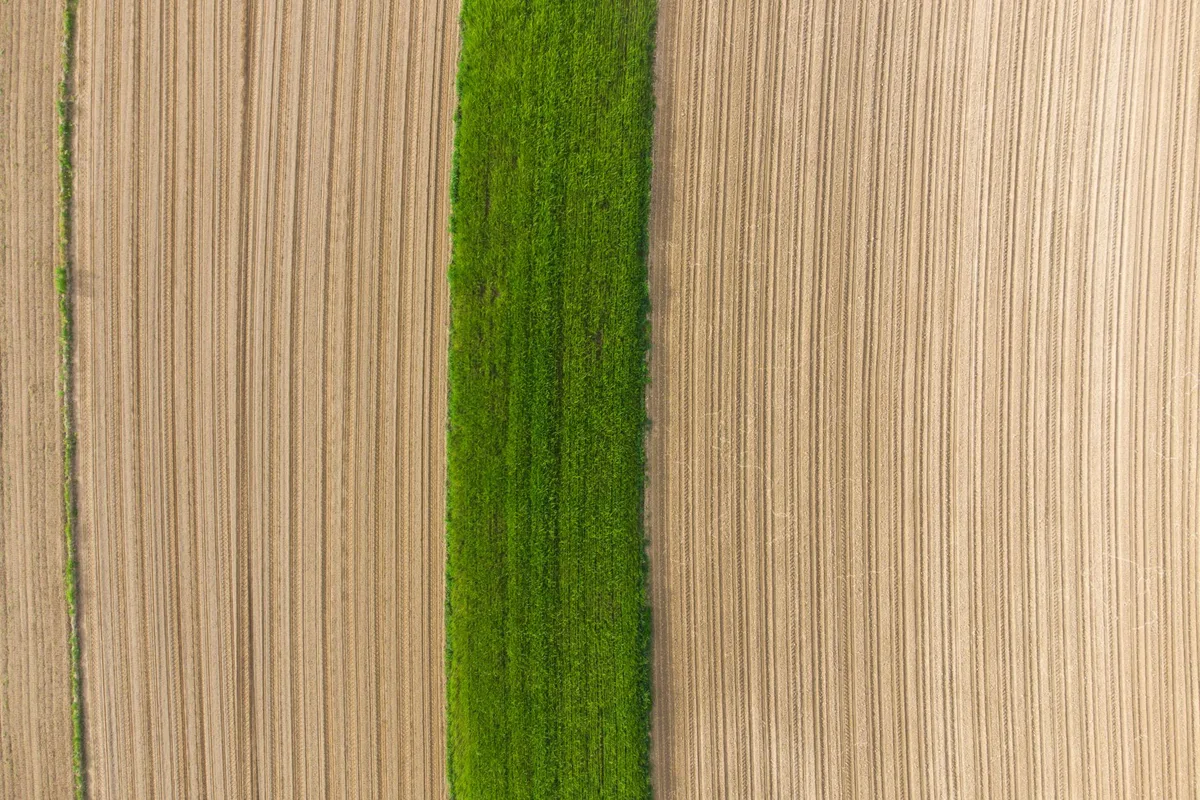
When you see brown patches on your lawn, your first instinct might be to blame disease, pests, or underwatering. But if you applied fertilizer in the past week, fertilizer burn has to be at the top of your suspect list. Getting the diagnosis wrong means you could waste weeks applying the wrong treatment while the damage gets worse.
The real risk here is timing. If you treat a burn as a fungus and apply a fungicide, you’re adding more chemicals to already stressed soil. That can push the salt levels even higher.
In our research, we found that nearly 40% of lawn damage misdiagnosed as fungal disease in early summer turned out to be simple nitrogen burn.
A correct diagnosis saves you money, time, and the frustration of watching your lawn stay yellow. It also prevents you from accidentally overcorrecting with more water or more chemicals. The good news is that most mild burns are fixable within two to three weeks.
What Exactly Is Fertilizer Burn? (And What It Isn’t)
Fertilizer burn is a physiological injury caused by high concentrations of soluble salts in the soil. It is not a disease, not an insect infestation, and not a watering problem, though watering can trigger or prevent it.
Here’s the science in plain language. When you apply fertilizer, the granules dissolve and release salts into the soil solution. These salts create a high osmotic pressure.
That pressure literally pulls water out of the grass roots and leaf cells through a process called exosmosis. The cells dehydrate, collapse, and die. The grass turns brown because the tissue is dead, not because it’s sick.
The key distinction is that fertilizer burn kills tissue directly. Disease spreads gradually. Insects leave visible chewing patterns.
Underwatering makes the whole lawn wilt evenly. Burn shows up in patterns that match your spreader path, stripes, blotches, or rings where granules sat heavy.
This is also different from “dog spots,” which are caused by urea in urine. Dog spots have a dark green ring around a yellow center because the nitrogen is concentrated but diluted at the edges. Fertilizer burn rarely has that halo.
The Main Culprit: Nitrogen and Salt Index
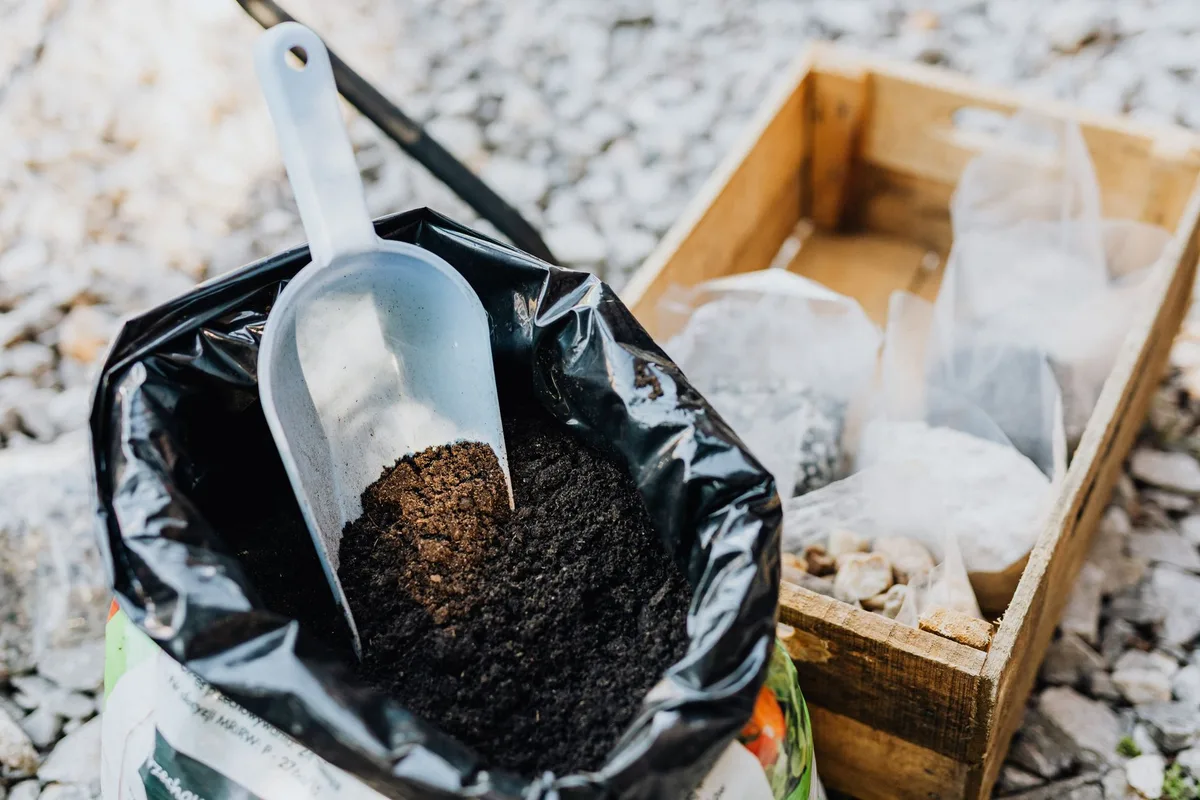
Nitrogen is the star player in most lawn fertilizers, but it’s also the main one that causes burn. The type of nitrogen matters a lot.
Quick-release nitrogen sources like urea, ammonium nitrate, and ammonium sulfate dissolve fast and hit the soil with a big salt spike. Slow-release sources like coated urea, methylene urea, or natural organics break down gradually and rarely cause burn at recommended rates.
Every fertilizer has something called a salt index. This number tells you how much the product increases the salt concentration in the soil relative to sodium nitrate (which has a salt index of 100). The higher the salt index, the greater the burn potential.
Here’s a quick comparison of common nitrogen sources:
| Nitrogen Source | Salt Index (per lb of N) | Burn Risk |
|---|---|---|
| Urea | 75 | Moderate to high |
| Ammonium sulfate | 69 | Moderate |
| Ammonium nitrate | 105 | High |
| Calcium nitrate | 53 | Low to moderate |
| Slow-release coated urea | 20–30 | Low |
| Organic (compost, manure) | 5–15 | Very low |
The takeaway is simple. If you use a high-salt-index product and apply it at the maximum labeled rate, or double it by accident, you’re almost guaranteed to see burn. That’s why checking the bag’s N-P-K numbers and following the spreader setting is not optional.
How to Tell If It’s Burn vs. Disease vs. Dog Spots

You can usually tell fertilizer burn from other problems by looking at three things: the pattern, the timing, and the leaf symptoms.
Pattern clues
- Burn from granular fertilizer shows up as distinct stripes or blotches that match your spreader passes. If you overlapped, you’ll see darker stripes where the burn is worse.
- Liquid fertilizer burn tends to look like even yellowing across the whole lawn, sometimes with drips or puddles.
- Disease like brown patch or dollar spot appears in irregular circular patches that can grow over days.
- Dog spots are concentrated circles with a green ring.
Timing clues
- Burn appears 24 to 72 hours after application.
- Disease takes longer to develop, usually 5 to 14 days after a rain or high humidity.
- Dog spots show up within 12 to 24 hours of the urine deposit.
Leaf symptoms
- Burned grass blades turn yellow at the tips first, then brown from the tip downward. The base of the blade often stays green.
- Diseased grass usually has lesions, spots, or a water-soaked look on the leaf blade. You can often see fungal threads (mycelium) in the morning dew.
- Dog spots kill the crown of the plant at the center, leaving a dead spot with the green halo.
A simple test: pull up one of the burned grass plants. If the roots are still white and healthy, the grass will likely recover. If the roots are brown or black and mushy, the damage is severe and you may need to reseed.
The Risk Factors That Make Burn More Likely
Not every fertilizer application causes burn. The difference between a healthy green lawn and a scorched one often comes down to three variables: rate, moisture, and weather.
Too much product is the most common cause. The standard recommendation for most lawn grasses is 1 pound of nitrogen per 1,000 square feet per application. If you use a 30-0-0 fertilizer, that means roughly 3.3 pounds of product per 1,000 square feet.
Double that to 6.6 pounds, and you’re asking for trouble.
Dry soil before application makes burn worse because there’s no moisture to dilute the salts quickly. If your soil is bone dry, the fertilizer sits on the surface and releases concentrated salt right into the shallow root zone.
High temperatures accelerate the release of quick-release nitrogen. Applying fertilizer when the air temperature is above 85°F (29°C) or when the soil is above 80°F increases the chance of burn significantly.
Wet grass at application time is another sneaky one. Granules stick to wet leaves and burn the blades directly. That’s why bag labels always say “apply to dry foliage.” The fix is to water immediately after applying to wash the granules off the leaves and into the soil.
Overlapping spreader passes happens more than you’d think. If you’re not careful to turn off the spreader when you stop or turn, you can easily dump twice the recommended rate in one spot.
Here are a few other factors that lower the threshold for burn:
- Sandy soils. They drain fast and don’t hold onto nutrients, so salts move into the root zone quickly.
- New sod or recently seeded lawns. The roots are shallow and more sensitive.
- Heat stress combined with fertilizer. If the grass is already struggling from sun or drought, the added salt load can push it over the edge.
Understanding these risk factors means you can plan your fertilizer applications for cooler, wetter days and stick to the right rate. That alone prevents 90% of burn cases.
Step-by-Step: What to Do If You Already Burned Your Grass
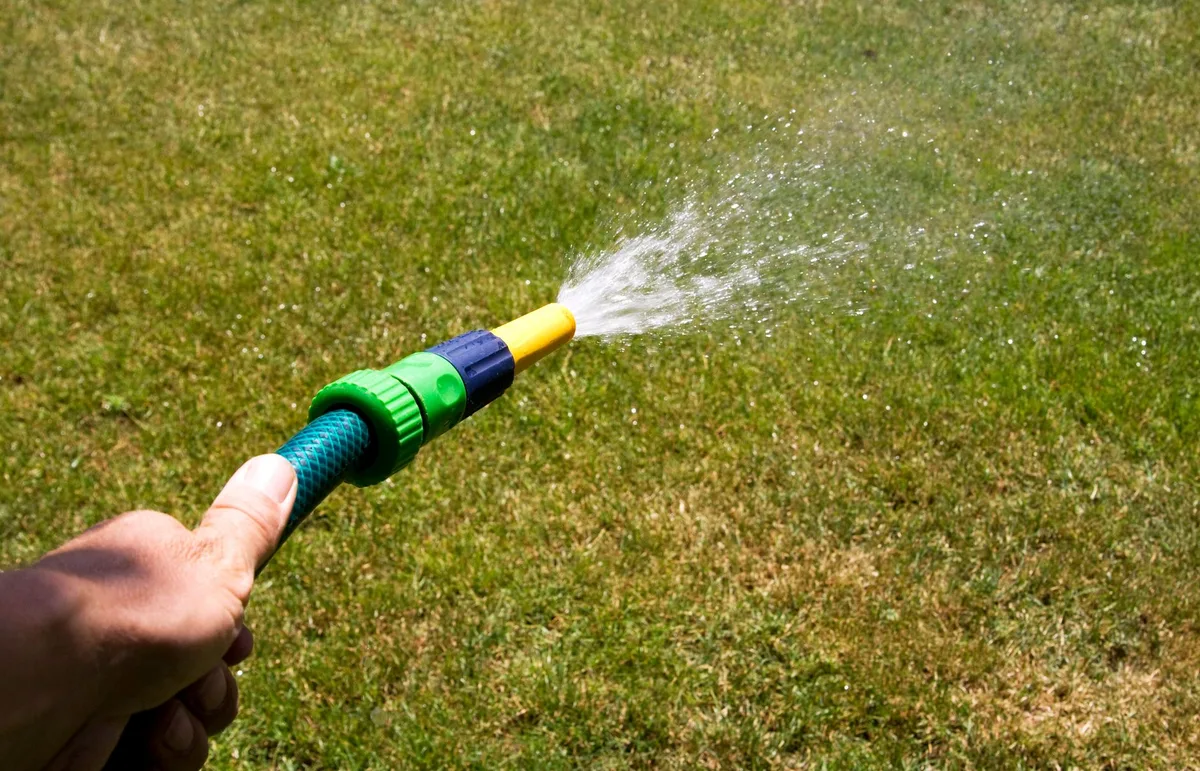
If you caught the burn within 48 hours, act fast. Start with a deep, slow watering. Put down at least one inch of water over the affected area.
That means running a sprinkler for about 45 to 60 minutes, depending on your soil type.
The goal is to dissolve the excess salts and push them below the root zone. Sandy soils need less time. Clay soils need more because water moves slowly.
If you used a liquid fertilizer, skip the watering and instead flush the area with a gentle hose spray for 20 minutes.
What if the burn is more than three days old? The salts have already damaged the leaf tissue. Those brown blades won’t turn green again. Your job now is to save the roots.
Water deeply every other day for two weeks. Apply gypsum at 40 to 50 pounds per 1,000 square feet to displace sodium and lower the salt index. Core aeration also helps by opening channels for salt leaching.
After two weeks, test the soil. If the grass at the base is still green and the roots are white, it will recover on its own. If the whole plant pulls up easily and the roots are dark or mushy, you’ll need to reseed.
Safe Fertilizer Practices: Rates, Timing, and Watering
The easiest way to avoid burn is to follow the one-pound rule. Never apply more than one pound of actual nitrogen per 1,000 square feet in a single application. That means reading the bag and calculating: if your fertilizer is 20-0-0, you need five pounds of product per 1,000 square feet.
Timing matters just as much as rate. Fertilize when the grass is actively growing and the soil temperature is between 55°F and 75°F. That’s spring and fall for cool-season grasses and late spring through summer for warm-season types.
Avoid fertilizing during a heat wave or drought.
Water right after applying granular fertilizer. The label usually says “water in within 24 hours,” but doing it immediately is better. Give it a quarter to half inch of water to wash the granules off the leaves.
Then follow up with a deeper soak the next morning.
Use a drop spreader instead of a broadcast spreader if you’re new to fertilizing. Drop spreaders are slower but much more precise. You can see exactly where the product lands, and you’re less likely to overlap.
Comparing Fertilizer Types: Which Ones Burn Less?
Not all fertilizers are equal when it comes to burn potential. Here’s a side-by-side look based on salt index and release speed.
| Fertilizer Type | Salt Index Range | Burn Risk | Best For |
|---|---|---|---|
| Quick-release synthetic (urea, ammonium sulfate) | 69–105 | High | Cool-season lawns in spring, fast green-up |
| Controlled-release coated urea | 20–30 | Low | Any lawn, especially hot weather |
| Organic (composted manure, bone meal, blood meal) | 5–15 | Very low | Slow, steady feeding; safe on new seed |
| Liquid synthetic (water-soluble) | Depends on concentration | Moderate to high | Foliar feeding, small areas, careful dilution needed |
| Natural mineral (rock phosphate, greensand) | <10 | Negligible | Long-term soil building, not for quick results |
For a homeowner who wants to avoid burn entirely, a controlled-release or organic option is the safer choice. They cost a bit more per pound of nitrogen, but you won’t have to worry about stripes or panic watering. However, if you need a fast green-up for a special event, a quick-release synthetic at half the recommended rate can work without damage.
Common Mistakes That Lead to Burn (And How to Avoid Them)
Mistake 1: Using the “feed” setting on your spreader without calibration. Spreaders come with preset markings, but those numbers are only accurate if the product matches the density the manufacturer used. Always do a quick calibration test on a driveway, measure out 10 feet, see how much product you actually drop, then adjust.
Mistake 2: Ignoring the spreader overlap pattern. Broadcast spreaders throw granules in a wide arc. If you walk in straight lines without compensating for the overlap zone, you double the rate in the middle of each pass. The fix is to set your spreader to half the recommended opening and make two passes perpendicular to each other.
Mistake 3: Fertilizing when the grass is wet from dew or rain. Granules stick to leaves and burn the blade tips. Wait until the lawn is completely dry. Then water immediately after applying.
Mistake 4: Applying fertilizer right before a heavy rain. The rain washes the fertilizer into one low spot instead of spreading it evenly. That creates a salt hotspot. Check the forecast and aim for light rain or irrigation within 24 hours, not a downpour.
Mistake 5: Using the same rate for all grass types. St. Augustine and centipede grass are much more salt-sensitive than Bermuda or zoysia. If you have a sensitive grass, cut the recommended rate in half and use a slow-release product.
You can always add more later if needed.
When to Wait, When to Reseed, and When to Call a Pro
Most mild burns heal with time and water. If the roots are still white and the crown of the plant is intact, stay patient. Keep watering every other day for two to three weeks.
The grass will send up new shoots from the base. This is the most common outcome, about 70% of burn cases self-recover.
Reseed if more than half the grass in the affected area is dead down to the roots. Pull up a few clumps. If they come out easily and the roots are brown or mushy, you’re looking at root kill.
Wait at least two weeks after the burn before seeding. The salt levels need to drop first, or the new seed will burn too.
Call a professional if the burn covers more than 500 square feet or if it’s part of a larger pattern across your whole lawn. That could mean your soil has a high baseline salt level from previous over-fertilization. A pro can test the electrical conductivity of your soil and recommend a custom leaching plan.
Also call one if you see the same burn pattern after a single application. That might indicate a faulty spreader that’s dumping too much product in one spot. A pro can help you calibrate or replace it.
Expert Tips for Recovery and Long-Term Lawn Health
After a burn, the temptation is to pile on more products to fix it. That usually backfires. Give the soil time to balance out before you do anything else.
Test your soil pH and electrical conductivity before your next fertilizer application. A simple soil test kit from a garden center tells you if the salt levels have dropped back to normal. If the EC is still above 1.5 dS/m, wait another week and keep watering.
Switch to a slow-release or organic fertilizer for the rest of the season. Your lawn will green up more slowly, but you won’t have to worry about repeat burn. Products with coated nitrogen or natural sources like compost tea work well.
For indoor plants or containers, using the right slow-release indoor plant food can prevent similar issues.
Consider core aeration once a year if your soil is heavy clay. It opens up the root zone and helps salts leach out naturally. That also improves water penetration and root depth.
If you’ve dealt with burn before, keep a log of your application dates, product names, and rates. That way you can spot patterns. You’ll know exactly what worked and what didn’t.
For instance, checking the right oil level before each season on your mower is part of good lawn maintenance, and the same goes for tracking fertilizer history.
Frequently Asked Questions About Fertilizer Burn
Can grass recover from fertilizer burn on its own?
Yes, in most cases. If the roots are still alive, the grass will send up new shoots within two to three weeks. Keep watering deeply every few days.
Don’t add more fertilizer until the grass is fully green again.
How long does fertilizer burn last on grass?
Mild burn symptoms start fading after one week. Moderate burn can take two to three weeks to show new growth. Severe burn that kills the roots requires reseeding.
The soil may take another week after that to be safe for new seed.
Should I mow the lawn after fertilizer burn?
Wait until you see new growth. Mowing too early stresses the damaged grass. Once the lawn has recovered enough to need a trim, raise the mower deck to the highest setting.
Keep the blades sharp to avoid tearing the recovering tissue.
Does watering immediately after fertilizing prevent burn?
It helps a lot but doesn’t guarantee zero burn. Watering within an hour washes granules off leaves and dilutes salts in the root zone. However, if you applied more than double the recommended rate, even immediate watering may not save the grass.
Can I use the same fertilizer again after a burn?
Not at the same rate. Cut the application rate in half next time. Switch to a slow-release or organic product.
Apply it when the soil is moist and the temperature is below 80°F. That gives you a much safer margin.
Final Verdict: Yes, It Can Happen – Here’s How to Fix It
Fertilizer burn is real, common, and fixable. The key is catching it early and responding with deep watering. If the roots are still white, you’ll be fine in a few weeks.
If they’re dead, you’ll need to reseed after the salts flush out.
The best strategy is prevention. Stick to one pound of nitrogen per 1,000 square feet. Water right after applying.
Use a drop spreader to avoid overlap. Choose slow-release or organic fertilizers when possible. That simple routine eliminates 90% of burn cases.
You don’t need to be afraid of fertilizing. You just need to respect the salt index. Your lawn will reward you with steady, even green growth all season long.
And if you ever need to troubleshoot other lawn issues, simple DIY repairs or a proper fungicide treatment can handle most problems without guesswork.