How to Fix Compacted Soil 2026
If you've ever tried to push a shovel into dry, rock-hard ground and felt like you were hitting concrete, you already know what compacted soil does to a garden or lawn. That's exactly when you need to learn how to fix compacted soil, before your plants, grass, or flowers start to suffer. Water that pools instead of soaking in, grass that thins out no matter how much you water, and roots that struggle to grow are all signs of a bigger problem underfoot.
Our research points to one hard number worth remembering. The USDA Natural Resources Conservation Service lists a bulk density above 1.6 grams per cubic centimeter in clay soil as severely compacted. That's the point where roots can't physically push through.
Most people don't need expensive lab tests to spot it, though. A simple screwdriver test or a water infiltration check can tell you everything you need to know, which is exactly where we'll start.
Quick Answer
To fix compacted soil, start with a simple screwdriver test. If water infiltration drops below 1 inch per hour, you have compaction. For light compaction in lawns, core aeration works best for most situations.
For garden beds, use a broadfork or till and add organic matter. Always match the method to your soil type and how deep the compaction runs.
Do You Actually Have Compacted Soil? (The 60-Second Test)
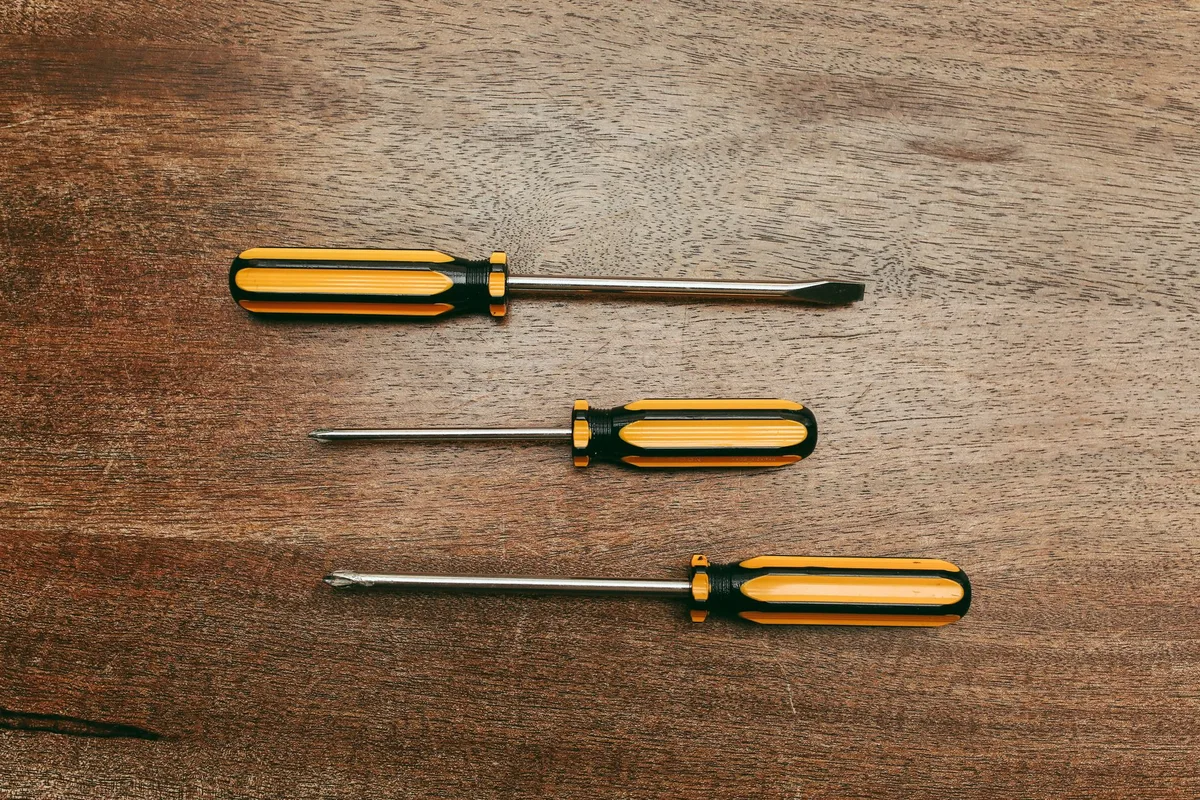
You do not need a soil scientist or a fancy penetrometer to know if your soil is compacted. Try this test right now. Grab a regular screwdriver, a standard 6-inch flathead works great, and push it into your lawn or garden bed where the soil is dry.
If it goes in smoothly, your soil is fine. If you have to push hard or it only goes an inch or two before stopping, you have compaction.
There is another easy check that adds hard data. Dig a small hole about 4 inches deep and fill it with water. Time how long it takes for the water to completely soak in.
According to NRCS standards, soil that drains at less than 1 inch per hour is compacted enough to stress most plants.
- Screwdriver goes in easily → No action needed
- Screwdriver goes in 2-3 inches with resistance → Light compaction
- Screwdriver barely enters → Moderate to severe compaction
- Water still sitting after 1 hour → Severe compaction
If you hit that last category, do not just throw grass seed at it and hope. The compaction will choke new roots before they ever get a chance. Fix the soil first, then worry about what grows on top.
Step 1: Know Your Soil Type – Clay, Sand, or Something In Between
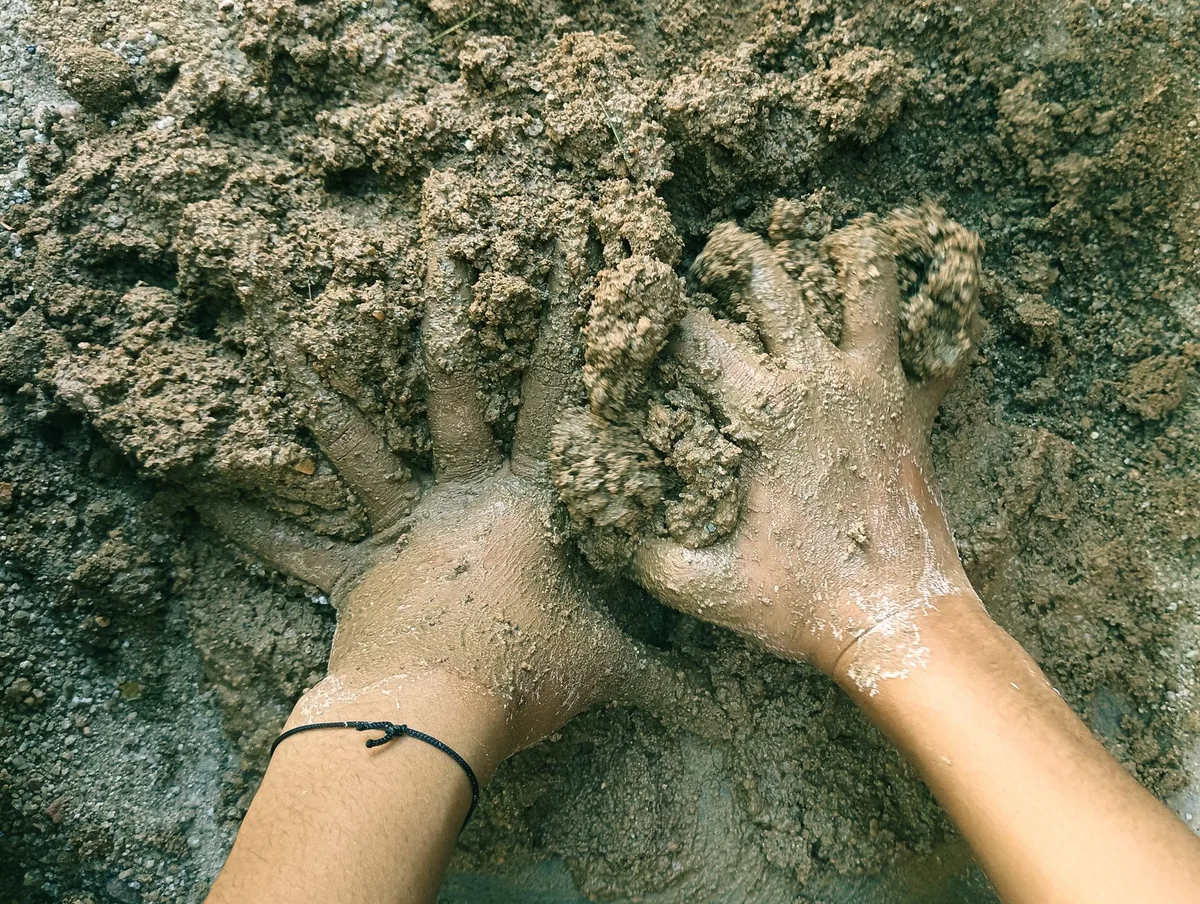
Here is where most people get the fix wrong. They treat clay soil the same way they treat sandy soil, and the results are frustrating. The truth is your soil type determines which method will actually work on compacted ground.
Take a handful of moist soil and squeeze it. Then try to roll it into a ribbon between your thumb and forefinger. This is called the ribbon test, and it is surprisingly accurate.
- Clay soil feels sticky when wet and forms a long, flexible ribbon. It gets rock hard when dry.
- Sandy soil feels gritty and crumbles easily. It does not hold its shape at all.
- Loam feels smooth and forms a short ribbon that breaks easily. This is the gold standard for soil health.
Clay soils compact more easily than any other type. The particles are tiny and flat, so they pack together tightly with almost no air space. That is why adding sand alone to clay soil often makes things worse, it creates something closer to concrete.
Sandy soils compact less often, but when they do, the fix is usually organic matter rather than mechanical aeration.
If you are working with heavy clay, you might also need to choose the right plants that tolerate those conditions. Our guide on the best flowers for flower beds includes varieties that handle compact clay better than most.
Step 2: How Deep Is the Compaction? (Surface vs. Hardpan)
Depth changes everything. Surface compaction, the top 2 to 3 inches, is usually caused by foot traffic, heavy equipment, or rain pounding bare soil. Deep compaction, often called hardpan or plow pan, can sit 4 to 12 inches below the surface and needs a completely different approach.
Here is how to figure out your depth. Take a metal probe, a long screwdriver, or a length of rebar and push it into the ground in several spots across your yard. Mark where it hits resistance.
- Resistance only in the top 2 inches → Surface compaction from foot traffic or rain. Easy to fix with aeration.
- Resistance starts at 2 inches but looser below → Light compaction. Core aeration plus organic matter usually solves this.
- Hard layer at 4 to 8 inches with softer soil above → Hardpan from old plowing, construction, or natural clay pan. Needs deep treatment.
- Uniform resistance throughout → Could be heavy clay soil itself, not necessarily compaction. A soil test helps here.
For surface compaction, you can rent a core aerator from any hardware store for about 50 to 100 dollars for a half day and fix the whole lawn in an afternoon. For hardpan, you are looking at deeper tools like a subsoiler, a broadfork for garden beds, or even best trees for hot dry climates with deep taproots that can naturally break through the hard layer over time.
Your Decision Tree: Which Method to Use
Now comes the practical part. Based on your soil type and compaction depth, here is the decision tree that will point you directly to the right fix. Read through the options and pick the one that matches your situation.
If you have clay soil with light to moderate compaction in a lawn: Core aeration is your best first step. Rent a walk-behind core aerator and run it over the lawn in two perpendicular passes. Follow up with a thin layer of compost, about 1/2 inch, raked into the holes.
This adds organic matter and active microbes directly into the root zone.
If you have sandy soil with compaction in a lawn: Skip the aeration. Sand does not hold cores the same way clay does. Instead, focus on adding organic matter.
Top-dress with 1/4 to 1/2 inch of compost. The compost helps bind sand particles together and creates actual soil structure. Our guide on best slow release fertilizer for flowers can help you pick the right nutrient source for sandy soils that drain fast.
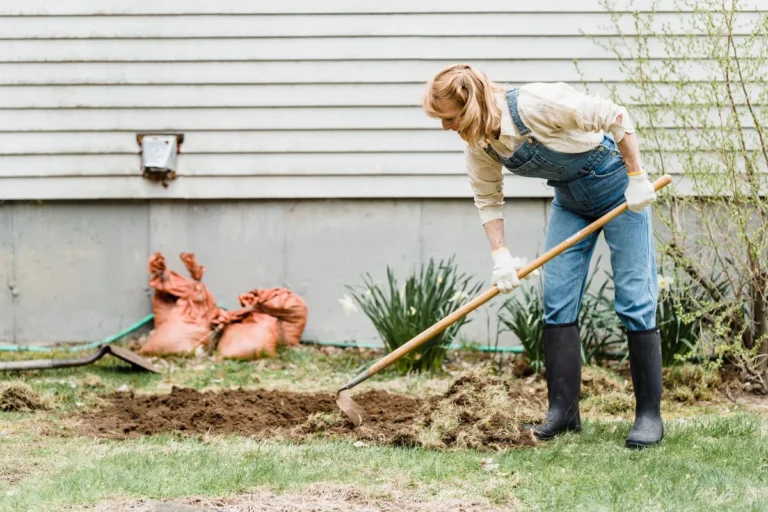
If you have a garden bed or vegetable patch with compaction: Do not run a power aerator over it. Use a broadfork instead. A broadfork is a hand tool with long tines that you push into the soil and pull back to lift it without turning the layers over.
Then amend with 2 to 3 inches of compost or aged manure. This preserves soil structure and earthworm populations while breaking compaction.
If you have a hardpan layer deeper than 4 inches: This is the toughest scenario. For small garden beds, plant deep-rooted cover crops like daikon radish or forage turnips in fall. Their taproots will punch through the hardpan as they grow.
For lawns, you may need a professional with a deep subsoiler or soil ripper. Alternatively, consider building raised beds on top of the compacted area.
If you have new construction soil: This is often some of the worst compaction you will encounter. Heavy equipment compacts soil down to 12 inches or more. Start with deep core aeration, then Till in 3 to 4 inches of organic matter if it is a garden area.
For lawns, you may need multiple years of annual aeration and top-dressing before the soil truly recovers. A good fungicide for lawns can help prevent disease problems while the grass is stressed during recovery.
If you have a small area and no access to power tools: Use a manual core aerator, the step-on kind with hollow tines, or a broadfork. It takes longer, but it works. You can also try liquid soil aerators for very light compaction.
We will cover those honestly in the next section.
This decision tree is not theoretical. It is based on how soil physics actually works. Clay and sand behave differently, and depth determines whether your effort pays off.
Skip the step of matching method to your specific situation, and you might spend a weekend doing work that makes the problem worse. Do it right the first time, and you will see results within a single growing season.