How to Improve Air Circulation Around Plants 2026
Quick Answer
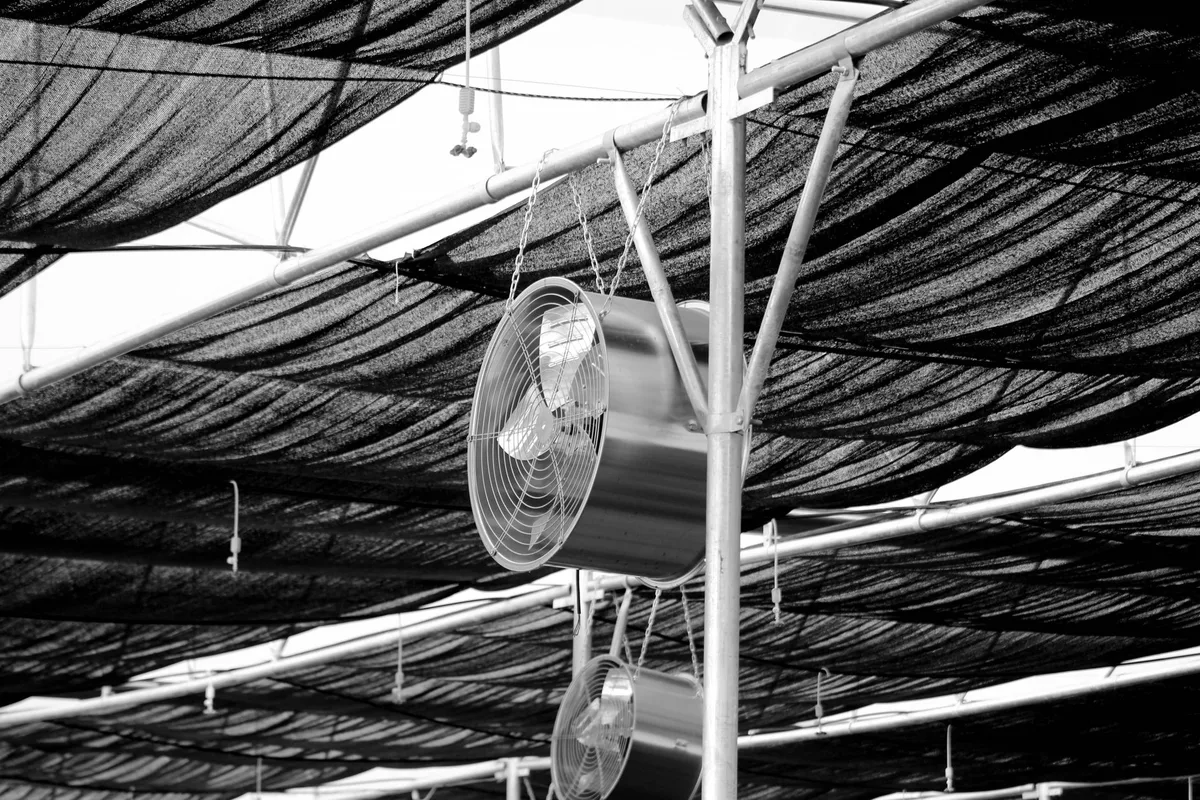
Give your plants a gentle, indirect breeze. Place an oscillating fan 2 to 4 feet away on low speed. Angle it upward slightly.
Watch for signs of windburn like curling leaves. Adjust distance and speed as needed.
Your houseplants may have the right light, the right soil, the right watering schedule, and still look miserable. Brown leaf tips, mold on the soil surface, a persistent gnat problem, these are all signs that you need to learn how to improve air circulation around plants. Still air is a silent killer in indoor gardening.
Research from university horticulture programs shows that most indoor spaces only achieve 0.5 to 1 air change per hour, while actively growing plants benefit from 4 to 6 air changes per hour. That gap is why so many plant parents struggle with mold, rot, and weak growth even when they do everything else right. Let's start by figuring out whether you actually have an airflow problem.
Do You Actually Have an Airflow Problem?
Not every brown leaf tip means your air is stale. But a few telltale signs make the diagnosis pretty clear.
Watch for these symptoms:
- Fungus gnats hovering around the soil surface. Still, damp soil is their breeding ground. Moving air dries the top layer and breaks their life cycle.
- Powdery mildew or white fuzz on leaves. This fungus loves humidity with zero air movement.
- Brown or crispy leaf edges that aren't caused by underwatering. Stagnant air traps heat and moisture around the leaf surface, which disrupts transpiration.
- Leggy or stretched growth. If your plant is reaching toward a window but not filling out, airflow might be part of the problem.
- Soil that stays wet for more than a week after watering. Good air movement helps soil dry at a healthy rate.
The hand test. Hold your hand at leaf level in the problem area. If you feel no air movement at all, you have a stagnant pocket. Move your hand around the room and note where the air feels dead.
Corners, shelves, and windowsills with no cross breeze are the usual suspects.
If you're noticing fungus gnats as part of the problem, you might also want to check out our guide on the best fly traps for inside to tackle the adult population while you fix the airflow.
The Three Variables That Decide Your Fix
Your solution depends on three things. Get these right and you'll know exactly which branch to follow below.
Room size and shape. A small bedroom with one window behaves differently than an open living room or a closet grow tent. Larger rooms need more airflow volume. Smaller rooms need gentler, more targeted movement.
Plant density and height. A shelf packed with 30 plants traps air between leaves. A single monstera on a stand does not. The more plants you have in one spot, the more intentional your airflow needs to be.
Humidity baseline. If your room already sits at 30% relative humidity, adding a fan will dry things out further. If you're at 70% humidity, moving air is essential to prevent mold. You need to know your starting point before you pick a strategy.
A simple hygrometer costs about ten dollars and removes the guesswork. Without one, you're flying blind.
Branch 1: You Have a Shelf or Corner Setup
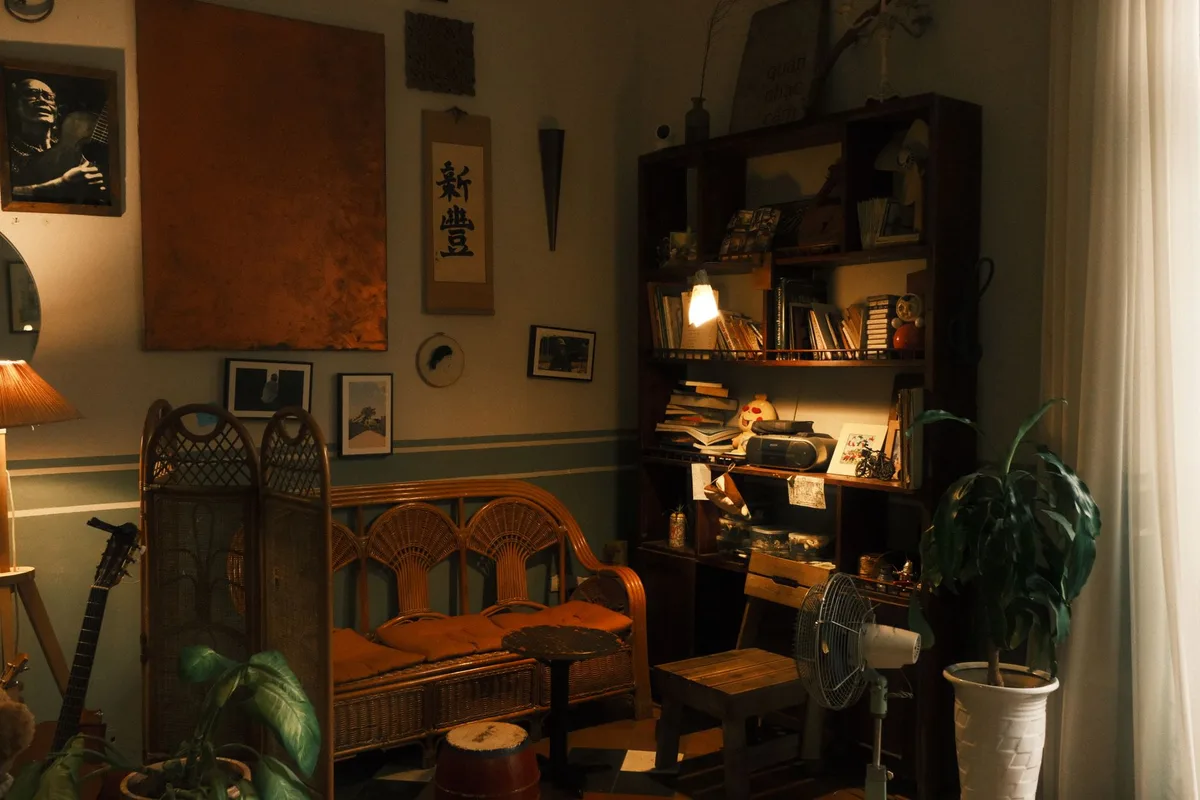
This is the most common setup for indoor plant collectors. A metal shelving unit, a windowsill, a corner stand, plants stacked together with limited air reaching the middle rows.
The fix is a clip-on fan positioned above the plants, not directly in front of them.
Clip the fan to the shelf above your top row. Angle it slightly downward so air sweeps across the leaves from above. Set it to low or medium speed.
Oscillation matters here, a fixed fan will only hit the plants directly in its path.
Why above instead of in front? Air moving horizontally at leaf height creates a direct blast on the first row of plants. The leaves closest to the fan take the full force. Plants behind them get almost nothing.
Air coming from above creates a gentle, sweeping movement that reaches more leaves without windburn.
Distance rule. Keep the fan at least 18 inches from the nearest leaves. Closer than that and you risk desiccation, especially on thin-leaved plants like calatheas and ferns.
If you're working with a south or east-facing window setup, our guide to the best plants for a south east facing window can help you choose species that thrive in that specific light while you dial in the air movement.
Branch 2: You're Using a Grow Tent or Cabinet
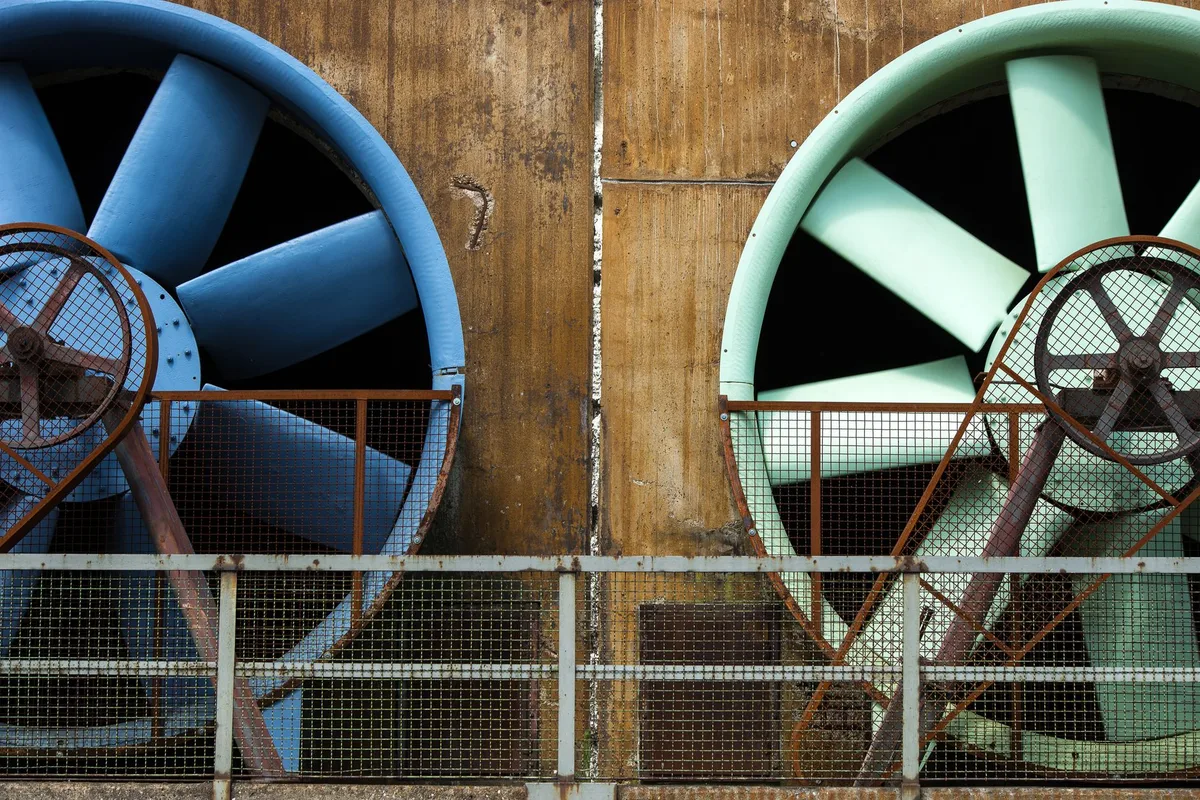
Grow tents and enclosed cabinets are a different beast entirely. They're designed to be sealed for light control, which means zero natural air exchange. Stagnation happens fast.
You need an inline duct fan with a carbon filter, not a desk fan.
Here's why. A clip-on or oscillating fan inside a tent just recirculates the same stale air. It moves air around, sure.
But it doesn't bring in fresh CO2 or vent out hot, humid air. An inline fan mounted to the tent's top port pulls air out through the carbon filter, creating negative pressure that draws fresh air in through the bottom vents.
Sizing matters. For a 2×2 foot tent, you need an inline fan rated at 100 to 150 CFM. For a 4×4 tent, you need 200 to 400 CFM. Undersized fans can't exchange the air fast enough.
Oversized fans can create too much negative pressure, collapsing the tent walls.
Setup rules:
- Mount the fan at the top of the tent. Heat and humidity rise.
- Keep the passive intake vents open at the bottom.
- Run the fan 24/7 during the light cycle. That's standard practice.
- Use a speed controller so you can adjust airflow based on temperature and humidity.
If you're growing from seed in a tent, pairing good airflow with the right light makes a big difference. Our article on the best grow light for seedlings covers what to look for in a setup like this.
Branch 3: You're Dealing with a Terrarium or Enclosure
Terrariums, cloches, and vivariums create their own microclimate. The glass walls trap humidity, which is great for moisture-loving plants. But they also trap stale air, which leads to condensation, mold, and rot.
Your approach depends on whether the terrarium is open or closed.
Open terrariums. These have a wide opening or no lid. They already exchange some air with the room. If you see condensation inside the glass, you're getting too little airflow.
The fix is simple, move it to a spot with gentle room airflow. A desk near a ceiling fan or an oscillating fan on low across the room is usually enough. Never aim a fan directly into the opening.
Closed terrariums. These have a glass lid or stopper. They can go weeks without needing water because the system recycles moisture. But if condensation covers more than half the glass surface, you need more air exchange.
Open the lid for a few hours every two to three days. Some growers use a small USB-powered fan inside the enclosure on low for 15 minutes twice a day. That works well for larger setups.
The condensation rule. Light fogging in the morning that clears by midday is normal. Constant dripping or pooled water at the bottom means you need more venting. Adjust your lid opening schedule accordingly.
Branch 4: Your Room Runs Dry or Has Forced Air
Many homes use forced-air heating and cooling. Central HVAC systems move air through the whole house, which sounds good for plants, but the reality is complicated.
The problem with HVAC vents. Forced air is dry. In winter, indoor humidity can drop to 20% or lower. That's too dry for most tropical houseplants.
A vent blowing directly on a calathea or fern will crisp its leaves in days. And the airflow is intermittent, it only runs when the thermostat calls for it, which means long periods of stillness between cycles.
If you have this setup, here's what to do:
- Block direct drafts. Move plants away from HVAC vents, or redirect the vent with a deflector.
- Add a gentle room fan on low to fill the gaps between HVAC cycles. This prevents long stagnant periods.
- Raise humidity with a humidifier or pebble trays. Moving air without moisture just accelerates water loss from leaves.
- Group plants together. They create their own humidity microclimate, which helps offset the dry air.
A bedroom with forced air presents unique challenges. Our guide to the best plants for a bedroom covers species that handle lower humidity and intermittent airflow, so you can match your plant choices to your actual room conditions.
How to Position a Fan Without Hurting Your Plants
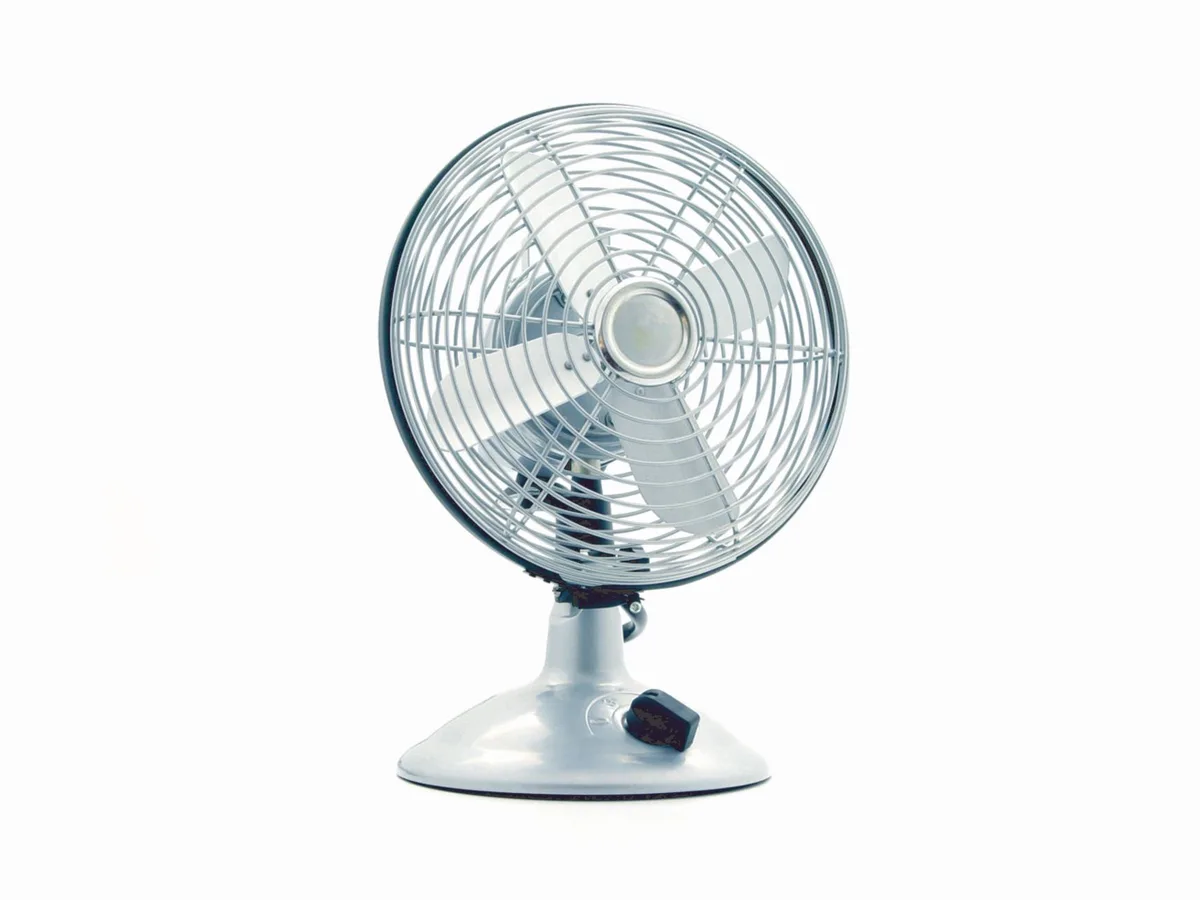
Getting the fan position right is the difference between healthy growth and stressed plants. Here are the rules that matter.
The golden rule: indirect sweep, not direct blast.
Aim the fan so it moves air across the space, not directly at the plants. An oscillating fan set to sweep a broad area is better than a stationary fan locked onto one spot. If you can feel the breeze on your face from two feet away, it's too strong for most houseplants.
Distance and speed guidelines:
| Plant Type | Distance from Fan | Speed Setting | Duration |
|---|---|---|---|
| Seedlings | 3 to 4 feet | Low | 6 to 8 hours/day |
| Tropicals (calatheas, ferns) | 4 to 5 feet | Low | 4 to 6 hours/day |
| Succulents and cacti | 2 to 3 feet | Low to medium | 8 to 12 hours/day |
| Orchids | 3 to 4 feet | Low | 6 to 8 hours/day |
| Mature houseplants | 3 to 4 feet | Medium | 8 to 12 hours/day |
Signs you're overdoing it. Curling leaf edges, brown tips that appear quickly, leaves that feel papery or brittle, and soil that dries out in less than two days. If you see any of these, move the fan farther away or lower the speed.
Ceiling fans. If you have one, use it on low speed in reverse mode during winter to gently push warm air up. In summer, run it forward to create a downdraft. Ceiling fans are excellent for whole-room air movement and don't create the harsh direct blast that desk fans can.
Mistakes That Make Airflow Worse
Even with good intentions, it's easy to make things worse. Here are the most common mistakes we see.
Blowing directly onto wet soil. This is the number one fungus gnat mistake. A fan aimed at the soil surface dries it out faster, but it also kicks gnat larvae deeper into the pot and spreads fungal spores around the room. Aim the fan at leaf level, not the pot.
Using one stationary fan for a full room. A stationary fan creates a single lane of moving air. Everything outside that lane stays stagnant. Use an oscillating fan or place multiple small fans in different spots.
Blocking the fan behind dense foliage. If your plant is large and bushy, a fan placed behind it does nothing for the leaves on the other side. Position the fan to move air across the canopy, not behind it.
Running it on high 24/7. Constant high-speed airflow stresses plants and dehumidifies the soil too fast. Most plants benefit from intermittent airflow. A timer set to run the fan 30 minutes on and 30 minutes off during the day works well.
Ignoring nighttime airflow. Plants transpire less at night, but stale air still causes problems. A very low, gentle airflow overnight is better than nothing at all.
Tools That Help Beyond a Fan
A fan is the main tool, but a few other items make the job easier and more effective.
Fabric pots. Fabric containers allow air to reach the root zone from all sides. This improves oxygen exchange and helps soil dry more evenly. Pairing a fabric pot with good room airflow is one of the best things you can do for root health.
Our guide to the best pots for pothos plants explains why breathable containers matter for vigorous growth.
Hygrometer with min-max tracking. A basic digital hygrometer tells you current humidity. One with min-max memory shows you the range over 24 hours. That matters because you might see 50% humidity during the day but discover it hits 80% at night when the furnace is off.
That nighttime spike is where mold starts.
Timer plug. Plug your fan into a timer and set it for intermittent cycles. This saves energy, reduces noise, and gives plants rest periods. A mechanical timer costs about ten dollars.
Shelving design. Wire shelving allows air to flow through all levels. Solid wood shelves trap air between rows. If you're building a plant shelf setup, choose wire shelving for the best airflow.
Pruning. Thinning out dense growth opens up air channels through the canopy. Prune a few older leaves from the center of bushy plants to let air reach the inner stems. This is free and takes two minutes.
How Your Plant Type Changes the Answer
Different plants have different airflow needs. Here's how to tailor your approach.
Succulents and cacti. These plants come from dry, breezy environments. They handle more airflow than tropicals. A medium-speed fan 2 to 3 feet away is fine.
The main risk is that moving air dries the soil faster, so adjust your watering schedule.
Tropicals (calatheas, ferns, alocasias, anthuriums). These plants evolved on forest floors with gentle, filtered breezes. They need airflow but not direct wind. Low speed, 4 to 5 feet away, indirect.
Any stronger and leaves will brown at the edges.
Orchids. Phalaenopsis and other epiphytic orchids grow on trees in nature. They're used to constant, gentle airflow around their exposed roots. Stagnant air around the roots leads to rot.
A low fan placed 3 to 4 feet away, aimed at the pot level, works well.
Seedlings. Young plants need airflow to develop strong stems. A gentle breeze from 3 to 4 feet away on low speed for 6 to 8 hours a day builds stem thickness and prevents damping-off disease.
Ferns. Ferns are sensitive to dry air and direct drafts. They need airflow, but gentle and indirect. Place them where the room's background air movement reaches them, not where a fan can blow on them directly.
Quick Decision Guide
| Your Setup | First Thing to Try | Second Option |
|---|---|---|
| Shelf with many plants | Clip fan above, low speed, oscillating | Wire shelving for better passive flow |
| Grow tent or cabinet | Inline duct fan with carbon filter | Add speed controller for fine tuning |
| Terrarium or closed enclosure | Open lid 2-3 hours every 2 days | Small USB fan inside on timer |
| Single plant on a desk | Move to spot with room cross breeze | Small oscillating fan 4 feet away on low |
| Whole room with forced air | Redirect HVAC vents away from plants | Add room oscillating fan on low during off cycles |
| Bathroom with no window | Exhaust fan left on for 30 min after shower | Small clip fan on counter |
| Plants on a windowsill | Crack the window an inch | Oscillating fan on floor aiming upward |
When You've Done Everything and Plants Still Struggle
Sometimes the airflow is fine and something else is wrong. If you've added a fan, checked the position, and your plants still look unhappy, revisit these factors.
Light. Poor light slows photosynthesis, which reduces transpiration. A plant that's not transpiring can't move water through its system, and stagnant conditions follow. Make sure your light levels are adequate for your plant species.
Watering. Overwatering in low-light conditions is the most common plant killer. Good airflow helps, but it can't fix soil that's constantly wet. Check soil moisture before watering.
Pot size. A plant in a pot too large for its root system holds excess moisture in the soil. The roots can't drink it fast enough, and the soil stays wet even with good airflow. Downsize if needed.
Room size. A 300-square-foot room with one fan and one plant doesn't need more airflow. But a 300-square-foot room with 50 plants definitely does. If you have a dense collection, consider whether you're simply exceeding what one fan can handle.
Seasonal changes. Winter brings dry air from heating systems. Summer brings humidity. Your airflow needs change with the seasons.
Adjust fan speed and duration as the weather shifts.
Frequently Asked Questions
Can I use a ceiling fan instead of a regular fan for plants?
Yes. A ceiling fan on low speed creates excellent whole-room air movement. Run it in forward mode during summer and reverse mode during winter.
The key is to keep it on low so the breeze is gentle across the whole room.
How many hours a day should I run a fan for plants?
Most plants benefit from 6 to 12 hours of gentle airflow during daylight hours. A timer set to run the fan intermittently, such as 30 minutes on and 30 minutes off, works well. Overnight low-speed airflow is beneficial in humid conditions.
Will a fan help with fungus gnats?
Yes. Moving air dries the top layer of soil, which discourages fungus gnat larvae from developing. Combine this with sticky traps for adults and allow the soil to dry between waterings for the best results.
Can air circulation be too strong for plants?
Yes. Direct, constant, high-speed airflow causes windburn. Leaves curl, brown at the edges, and lose moisture faster than the roots can replace it.
If leaves look crispy or curled, move the fan farther away or lower the speed.
Does air circulation help prevent powdery mildew?
Absolutely. Powdery mildew spores need stagnant, humid conditions to germinate. Moving air disrupts spore settlement and reduces humidity around the leaf surface.
Good airflow is one of the most effective preventive measures.
Should I point a fan at the soil or at the leaves?
Point it at the leaves, not the soil. Air moving across the canopy helps transpiration and CO2 exchange. Aiming at the soil can spread fungal spores and dry the surface too fast, which wastes water without helping the plant.