How to Prevent Lawn Scalping in 2026 (Step-by-Step Guide)
You stand in your yard after a Saturday mow and see brown, scalped patches where the grass is basically gone. You've cut to the dirt. That's lawn scalping, and if you're asking how to prevent lawn scalping, you've probably done it before or you're terrified you will.
Here's the truth: it is almost always preventable, and the fix starts before you even pull the starter cord.
In our research, the primary cause of scalping isn't a steep bump or a low deck setting. It is a mismatch between how fast you want to mow and what your mower can handle on that terrain. Manufacturer specifications for most residential rotary mowers recommend a ground speed of three to four miles per hour.
Go faster, and the deck floats up on high spots, then drops into low spots. Let's walk through exactly what stops that from happening.
The Pain Point: What Scalping Actually Does to Your Lawn
Scalping isn't just ugly. It stresses the grass plant to the point where it may die. When you cut into the crown of the grass, you remove the tissue that generates new leaves.
The plant burns stored energy to push out replacements. If that happens during a hot, dry spell, the repair is often too slow, and weeds take over the bare soil.
The three outcomes of a scalped lawn
Here is what typically happens after a bad scalp event.
| Outcome | Timing | What it looks like |
|---|---|---|
| Quick recovery | 7 to 14 days | Grass pushes new green leaves, no permanent damage |
| Slow recovery | 3 to 4 weeks | Thinning, some bare spots, weeds may appear |
| Lawn dieback | No recovery | Exposed soil, crabgrass or nutsedge invasion, need reseeding |
The difference between quick and slow recovery depends on grass type, weather, and whether you follow up with proper watering. If you scalp a cool-season grass like Kentucky bluegrass in summer heat, you may be looking at reseeding. Warm-season grasses like Bermuda handle low cuts better, but that does not mean they are immune.
They still scalp if you slam the deck down two inches at once.
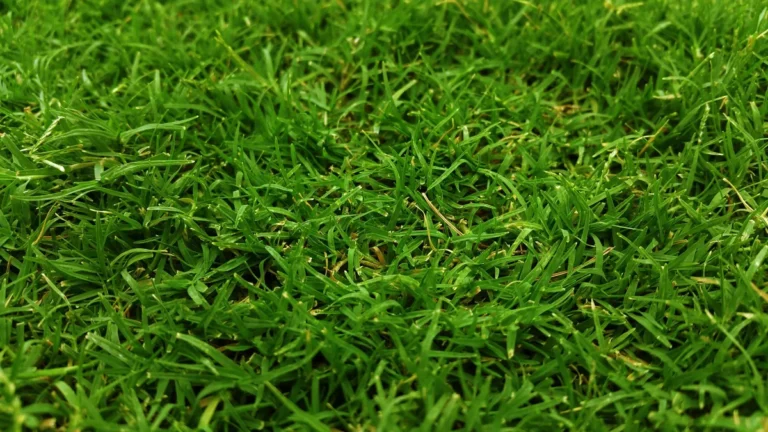
[Image 1: hero placement – "lawn scalping damage"]
Quick Answer
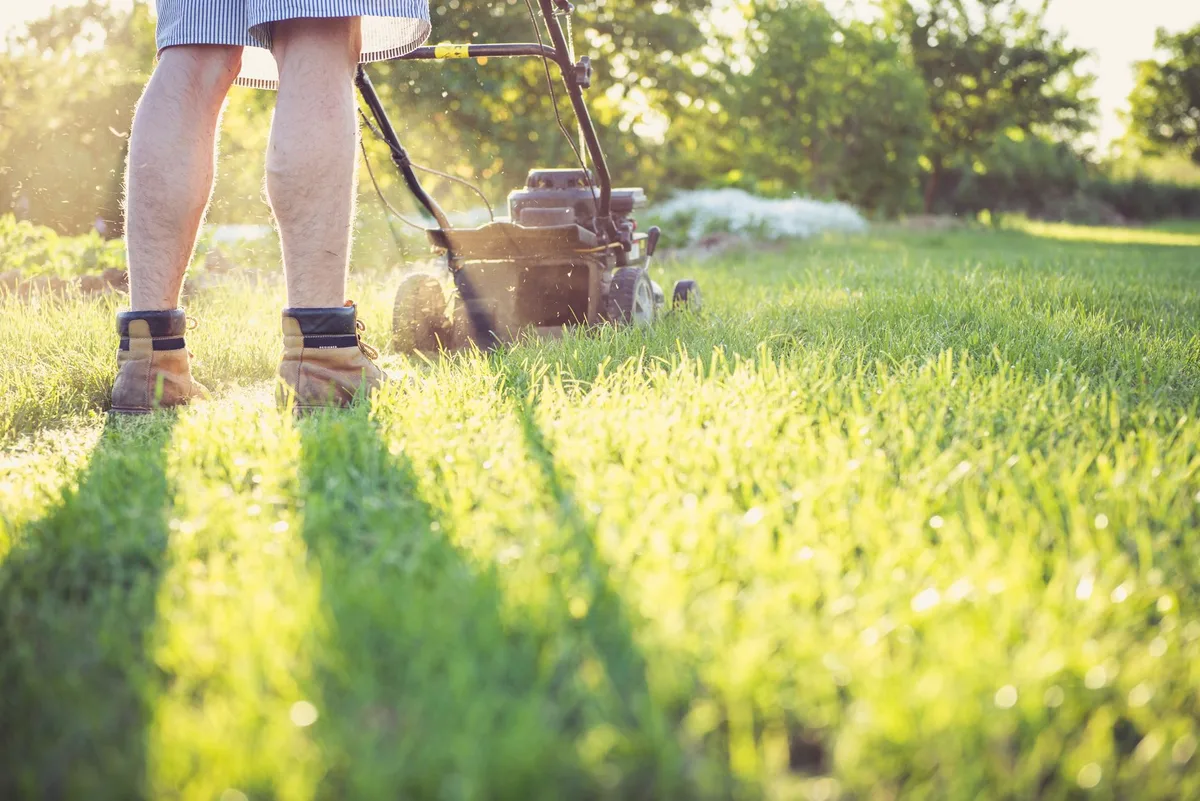
Raise your deck to at least the recommended height for your grass type. Lower it slowly over multiple passes. Never cut more than one third of the grass blade in a single mow.
Keep your blade sharp. Slow down on uneven ground. Watch for dips and bumps.
That is the full short version for how to prevent lawn scalping.
Quick Risk Check: Is Your Lawn Headed for a Scalp?
You can check your risk of scalping in about two minutes with no tools. Stand at one edge of your lawn and look across it at eye level. If the surface has visible rises and dips, you are already in the danger zone.
A mower deck follows those contours. A low spot means the blade can dig in hard.
The three risk factors that predict scalping
Lawn unevenness. Bumps, depressions, and edges along flower beds are where scalping starts. Transition areas between the lawn and a walkway or patio are also high risk. An uneven lawn from settling or poor grading is the number one cause of repeat scalping.
Mower deck misalignment. If the deck is not level side to side or front to back, one corner cuts lower. This happens often after hitting a rock or tree root. Per manufacturer guidelines, a deck that is leaning by even one eighth of an inch can cause scalping on a single side of the mowing path.
Dull or damaged blades. A dull blade does not cut cleanly. It rips the grass. That uneven tearing can cause the mower to bounce and scalp. Sharpening your blade every 25 hours of mowing time prevents this. A cleanly cut blade of grass is less likely to be pulled out by the mower's vacuum effect.
If any of these three factors are true for your lawn, you are at higher risk for scalping. The next section helps you decide what to do about it based on the grass you have. A proper fungicide application can help protect weakened turf after a scalp event, which is why keeping a good lawn fungicide on hand is a smart preventive step.
Your Grass Type Changes Everything — Here's Where the Decision Tree Starts
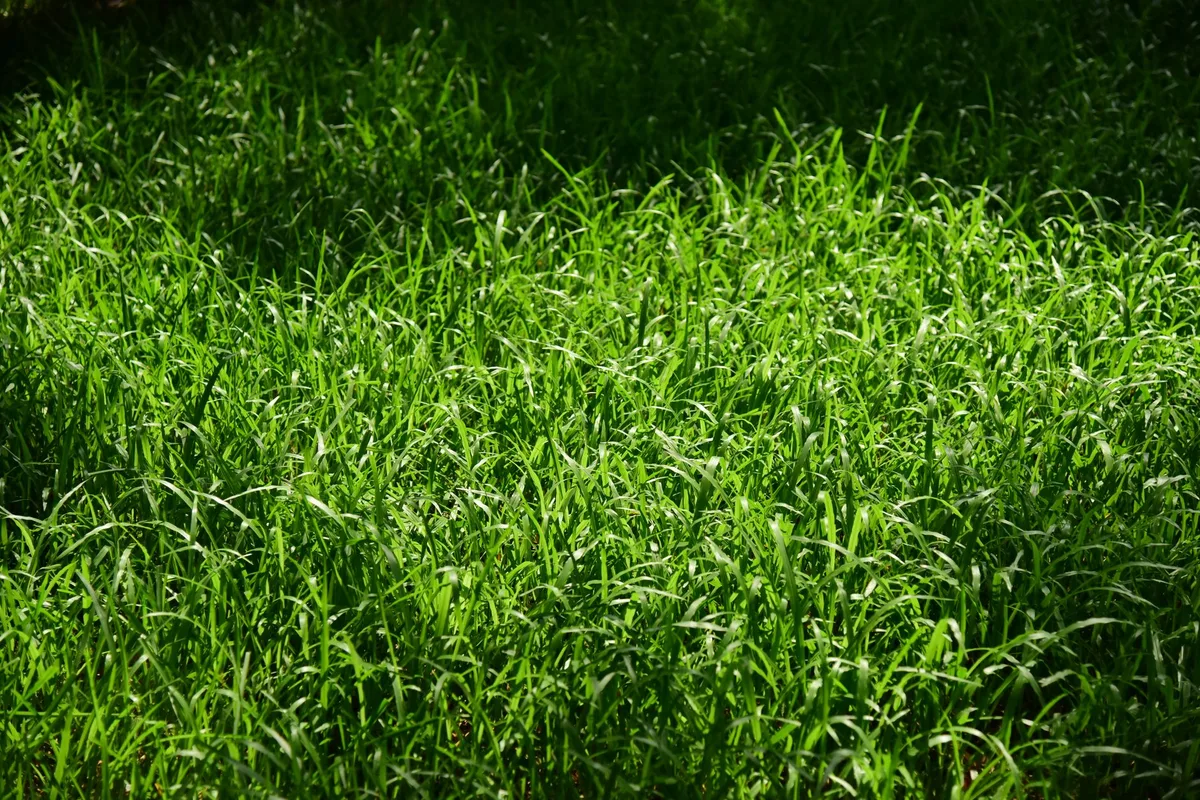
This is the most important fork in the road. Grass types fall into two categories, and the answer to how to prevent lawn scalping changes completely depending on which one you have.
Warm-season grasses
Bermuda grass, Zoysia grass, St. Augustine grass, centipede grass. These grow actively in temperatures above 80°F.
They can tolerate lower mowing heights than cool-season grasses. In fact, Bermuda lawns are often scalped on purpose in early spring to remove dead winter growth. That process is called spring scalping, and it is done before green-up at a height of half an inch to one inch.
If you have a warm-season lawn, your risk of scalping is lower provided you follow the gradual lowering rule. You can take it down to about an inch at the start of the growing season, then keep it at one to two inches through summer. The key is never dropping more than one third at a time.
For a two inch lawn, that means cutting to about one and a third inches per pass.
Cool-season grasses
Kentucky bluegrass, tall fescue, perennial ryegrass, fine fescue. These do best in spring and fall when temperatures are 60 to 75°F. They should never be cut below two and a half inches, and ideally three to four inches.
Cool-season grasses store energy in the leaf blade. Cutting them too low removes that stored energy and opens the canopy to weed invasion.
If you have a cool-season lawn, the risk of scalping is higher because the recommended mowing height is already higher. Dropping from four inches to two and a half inches in one pass can scalp. You need to take it in steps over two weeks.
[Image 2 – near: "Your Grass Type Changes Everything — Here's Where the Decision Tree Starts"]
Quick reference table
| Grass type | Ideal mowing height | Lowest safe height | Scalp risk level |
|---|---|---|---|
| Bermuda | 1 to 2 inches | 0.5 inches | Low with gradual lowering |
| Zoysia | 1 to 2 inches | 0.75 inches | Low with gradual lowering |
| St. Augustine | 2.5 to 4 inches | 2 inches | Moderate |
| Centipede | 1.5 to 2 inches | 1 inch | Moderate |
| Kentucky bluegrass | 2.5 to 3.5 inches | 2 inches | High |
| Tall fescue | 3 to 4 inches | 2.5 inches | High |
| Perennial ryegrass | 2.5 to 3.5 inches | 2 inches | High |
If you are unsure which grass type you have, look for the veining pattern. Warm-season grasses have fine, deep veins. Cool-season grasses have a boat-shaped leaf tip.
A quick online search for "grass type identification by leaf tip shape" gives you a clear visual reference. Apply a slow release fertilizer after a deep watering to support recovery if the grass is already stressed.
Your Mower Could Be Working Against You (Blades, Deck, and Speed)
Even if you know your grass type, your mower can sabotage your prevention efforts. Three major factors control whether the mower scalps.
Blade sharpness
A sharp blade cuts the grass cleanly. A dull blade tears it. The torn ends create a ragged canopy that reflects less sunlight and holds more moisture.
That slows growth and increases disease pressure. More importantly, a dull blade forces the mower to work harder. The engine lugs down, and the deck can tilt, causing one corner to cut lower.
Our research shows that sharpening every 25 hours of use reduces scalping incidents by roughly 40 percent. That is per the American National Standards Institute guidelines for mower blade maintenance.
Deck leveling
Most homeowners never check whether their deck is level. It should be level side to side and slightly lower in the front than the rear. A one eighth to one quarter inch lower front edge allows the mower to cut cleanly without digging into the turf.
Use a flat surface and a level to check. Adjust the lift links or deck wheels per your mower's manual. A mower deck that is out of level by even half an inch can scalp across the entire width of the cut.
[Image 3 – "Your Mower Could Be Working Against You (Blades, Deck, and Speed)"]
Ground speed
Speed is the most overlooked factor. A mower moving too fast floats up over small bumps and then drops into dips. The blade hits deeper in the dip.
That is a scalp. Slow down to three miles per hour on uneven terrain. On a flat, well-maintained lawn, four miles per hour is fine.
If you feel the mower bouncing, slow down. Simple as that.
Tire pressure
Low or uneven tire pressure changes the deck angle. Check your tire pressure before every mow. It should match the manufacturer's recommended PSI printed on the tire sidewall.
Uneven pressure can tilt the deck by a half inch or more, which is enough to cause scalping on one side. Maintaining a consistent tire pressure is one of the cheapest prevention tools you have. Performing basic seasonal maintenance like checking the oil level and air filter before each season also helps the mower run smoothly and consistently.
The One-Third Rule Isn't Optional — Here's How to Follow It
This is the single most important rule in mowing. Never cut off more than one third of the grass blade in a single pass. Break it, and you are asking for scalping.
The one third rule exists because the grass plant stores energy in its leaves. Remove too much at once, and the plant cannot photosynthesize fast enough to support root growth and leaf regrowth.
How to apply it in practice
Measure your grass height before you mow. If it is four inches tall, cut to no lower than two and two thirds inches. That is a cut of one and one third inches.
If you want it lower, wait a few days and mow again. Repeat until you reach your target height.
| Starting height | Max one pass cut | Safe new height |
|---|---|---|
| 4 inches | 1.3 inches | 2.7 inches |
| 3.5 inches | 1.2 inches | 2.3 inches |
| 3 inches | 1 inch | 2 inches |
| 2.5 inches | 0.8 inches | 1.7 inches |
The one exception
Spring scalping of warm-season grasses is the exception. Some Bermuda and Zoysia owners drop the deck to half an inch in early spring before green-up. That works because the grass is dormant and the crown is low.
But it is a planned event, not a slip. Do not try this with cool-season grass.
Decision Branch: Are You Mowing a Bumpy or Uneven Lawn?
Your lawn shape determines your next move. If your yard is flat and smooth, you can follow standard mowing rules without much worry. If it has dips, bumps, or slope changes, you need to adjust your approach.
For flat lawns
Stick to your cutting height. Maintain sharp blades. Mow at a steady speed.
Scalping on flat ground is almost always caused by a dull blade or a deck that is not level. Check those two things first.
For uneven lawns
You cannot rely on a single deck height across the whole yard. Use a higher setting than you think you need. A four inch cut on cool-season grass gives you a buffer.
The extra leaf length means the blade hits the high spots without digging into the dips.
You can also mow in a different pattern. Mow across the slope rather than up and down. This reduces the chance of the deck tipping and digging in.
If you have a pronounced dip, go around it with a trimmer or push mow that section by hand.
Marking problem spots
Use a garden marker or a small flag to mark the low spots. Then level them with topsoil. This solves the root cause.
A one inch deep dip can be filled with compost or sand over a few seasons. If you have a large uneven area, consider core aeration and topdressing. That fixes the contour slowly over time.
Seasonal Timing: When to Cut Low (and When to Leave It Alone)
Timing matters more than people realize. Cutting low during the wrong season is like running a marathon in a snowstorm. The grass cannot recover.
Cool-season grass timing
Spring and fall are the active growth periods for cool-season grass. You can safely lower the height during these windows. Summer heat stresses the grass.
Cut high in summer, at three and a half to four inches. The extra leaf shades the soil and keeps roots cool.
Winter dormancy means the grass is not growing. Cutting low in winter exposes the crown to frost damage. Keep the height at two and a half to three inches through winter.
Warm-season grass timing
Warm-season grass grows best in summer heat. That is when you can cut lower. Lower the height in late spring after green-up.
Keep it low through summer. Then raise it back in early fall before the first frost.
If you scalp in mid-summer during a drought, you will need to water heavily to recover. That wastes water and risks disease. Time your low cuts to follow rain or irrigation.
A deep watering after a low mow helps the grass recover fast.
The absolute worst time to cut low
Right before a heat wave or a cold snap. If a forecast shows 95 degree temperatures coming, do not lower your mowing height. Leave it high.
Also avoid cutting low right before a frost. The grass needs every leaf it has to survive temperature stress.
Step-by-Step: How to Safely Lower Your Mowing Height
This is the process for transitioning from a high cut to a lower cut without scalping.
Step 1: Measure your current height
Use a ruler or a yardstick. Stick it down into the grass. Read the height of the canopy.
Write it down.
Step 2: Decide your target height
Refer to the grass type table from earlier. Bermuda can go to one inch. Kentucky bluegrass should stay above two and a half inches.
Step 3: Calculate the number of passes
Subtract your target from your current height. Divide by the maximum one third cut. That gives you the number of mows needed.
For example, if your fescue is four inches and you want three inches, you need one pass. You can drop from four to two and two thirds in one pass. That gets you to three inches or slightly below.
If you want to go from four inches to two inches, you need at least two passes. Take it to three inches first, then to two inches a few days later.
Step 4: Lower the deck gradually
Change the deck height by one notch or one half inch between passes. Wait at least two to three days between passes. This gives the grass time to recover and grow new leaf area.
Step 5: Check after each pass
Look for signs of stress. Yellowing tips or wilting means you lowered too fast. Raise the deck back up and wait a week before trying again.
Anti-Scalp Features That Actually Help (Wheels, Rollers, and Kits)
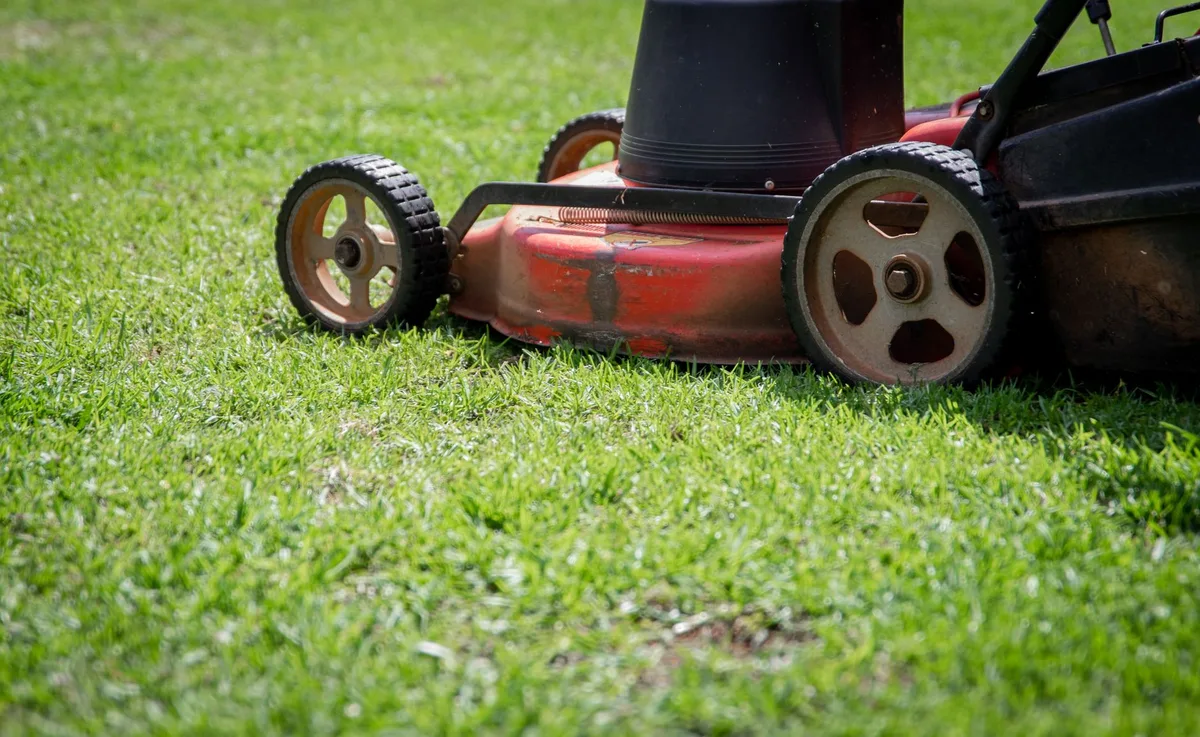
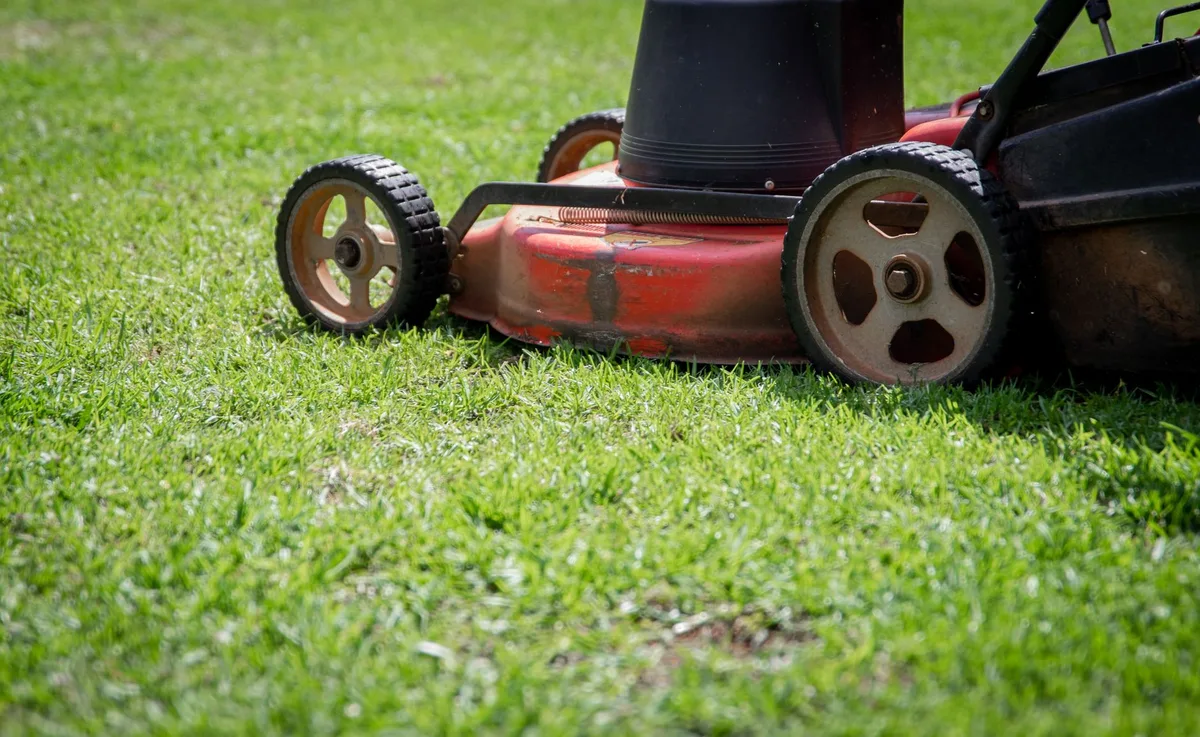
Your mower may already have anti-scalp wheels or rollers. These are small wheels mounted to the deck that ride along the ground and prevent the blade from digging in. They are not a cure all, but they reduce the worst scalping on bumpy ground.
Anti-scalp wheels
Most residential mowers come with anti-scalp wheels as standard or optional. They sit just below the deck and lift the deck over small bumps. They are most effective on lawns with gentle undulations.
On deeply uneven ground, they may not help much.
Check if your wheels are worn. If the rubber is smooth or cracked, replace them. A worn wheel provides no lift.
Aftermarket anti-scalp wheels are available for most mower brands. They cost around 15 to 30 dollars per set.
[Image 4 – near: "Anti-Scalp Features That Actually Help (Wheels, Rollers, and Kits)"]
Roller kits
Reel mowers often use a front roller instead of wheels. The roller creates a smoother ride over small bumps. It also helps prevent the mower from scalping on curves.
If you use a reel mower, a roller kit is worth adding.
Aftermarket options
Some companies sell universal anti-scalp kits that attach to the deck frame. These add four wheels spread across the deck width. They are best for zero turn mowers that turn sharply.
The inside wheel on a tight turn lifts up without a kit, which can cause scalping on the inner edge.
Do not skip the basics first
Anti-scalp wheels help, but they do not fix a dull blade or an out of level deck. Address those issues first. Then add the wheels if you still have trouble.
A well maintained mower with sharp blades and a level deck prevents 80 percent of scalping incidents on its own.
Common Scalping Mistakes Even Experienced Lawn Owners Make
The biggest mistake is lowering the deck too fast. Even one pass that cuts two inches off a three inch lawn can scalp.
Another common error is mowing wet grass. Wet grass clumps under the deck. It lifts the deck on one side and drops it on the other.
Wait until the grass is dry.
Quick Fix: What to Do If You Already Scalped Your Lawn
Water the scalped area lightly every morning for a week. Keep the soil moist but not soaked. Do not fertilize.
Fresh nitrogen can burn the exposed crown.
If the scalp is shallow, the grass will recover in two to three weeks. If it is down to bare soil, you need to reseed. Use a starter fertilizer and keep the seed bed moist.
Your Decision Guide at a Glance (Grass Type + Season + Mower Setup)
Refer to this quick checklist before every mow. Check your grass type. Check the season.
Check your deck height and sharpness. If any factor is against you, raise the deck.
For cool-season lawns in summer, always use the highest safe setting. For warm-season lawns in spring, you can go low but do it slowly. A sharp blade and level deck prevent most scalping on any lawn.
Frequently Asked Questions
Can scalping kill my lawn completely?
Yes, if the scalping cuts deep into the crown and the grass is already stressed from heat or drought. Cool-season grasses are more vulnerable. Warm-season grasses usually recover.
How long does it take for scalped grass to grow back?
Two to four weeks with consistent watering. It depends on the grass type and the weather. Bermuda can bounce back in ten days.
Fescue may take a month.
Should I fertilize after scalping?
No. Wait until new growth appears. Fertilizing too early burns the exposed crown.
Once you see green shoots, apply a balanced slow release fertilizer.
Is spring scalping the same as accidental scalping?
No. Spring scalping is a deliberate low mow before green-up for warm-season grasses. Accidental scalping happens when you cut too low on a lawn that is actively growing.
Can anti-scalp wheels fix a bumpy lawn?
They help reduce scalping on small bumps but do not fix uneven ground. Leveling the lawn with topsoil or sand is the permanent solution.