How to Store Garden Chemicals Safely in 2026 (Quick Guide)
You shouldn’t store garden chemicals like they’re just another box in the garage. The way you arrange those bottles, cans, and bags can mean the difference between a safe shed and a serious hazard. If you’ve ever wondered how to store garden chemicals safely, the answer isn’t complicated, but it does require a system that accounts for heat, moisture, children, pets, and chemical reactions.
In our research, one of the most overlooked facts is that many garden chemicals can degrade or become dangerous when stored above 90°F. Even a plastic shed in July can push internal temperatures past 120°F. Following a few simple rules, proper containment, separation of incompatible products, and secure locking, will protect your family and your investment.
Let’s walk through exactly what to do.
Quick Answer
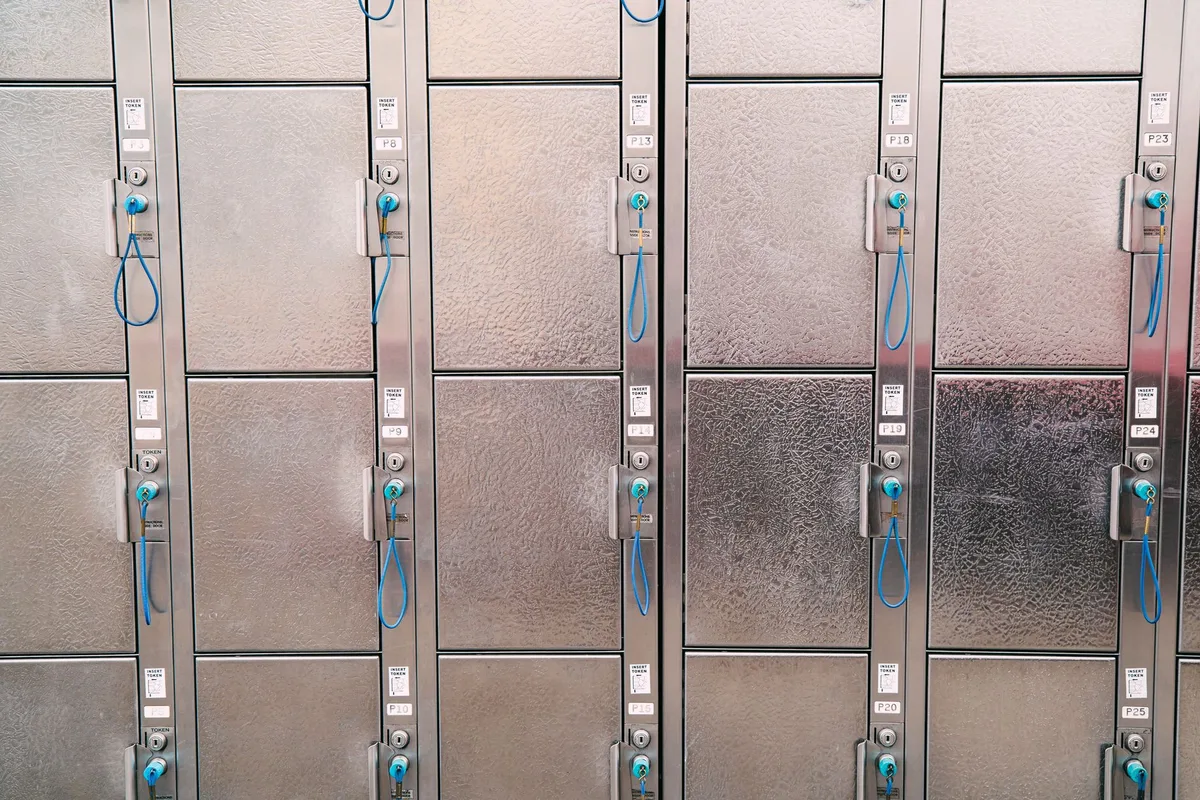
Store garden chemicals in their original containers. Keep them in a cool, dry, locked cabinet. Never mix different products together.
Use secondary containment bins under liquids. Dispose of expired chemicals at a hazardous waste facility.
Why This Matters More Than You Think
Garden chemicals aren’t just messy. They can be reactive. A common mistake is storing a weed killer next to a fertilizer that contains ammonium nitrate.
When those two get damp together, they can produce toxic gases or even start a fire. That’s not fear-mongering. The National Fire Protection Association (NFPA) classifies certain garden chemicals as Class 3 flammable liquids.
If you have kids or pets, the stakes get even higher. A curious toddler can unsnap a child-resistant cap faster than you’d believe. A dog can knock over a bottle and ingest a lethal dose.
According to poison control data, thousands of accidental exposures happen each year from improperly stored household chemicals, and garden products are a big piece of that.
Here’s the good news: most of these accidents are completely preventable. You just need a plan and a few simple pieces of equipment. Once you have them in place, you can stop worrying every time someone opens the shed door.
The Core Facts: What Garden Chemicals Are We Talking About?
Let’s be specific. The term “garden chemicals” covers a wide range of products, and each has its own storage requirements. Here’s a quick breakdown of the main categories you’re likely dealing with:
- Herbicides, weed killers like glyphosate, 2,4-D, and pre-emergent granules. Usually stable at room temperature but can freeze and separate.
- Insecticides, including sprays, dusts, and systemic granules. Some contain pyrethroids or neonicotinoids that are sensitive to heat.
- Fungicides, often copper-based or sulfur-based. Copper sulfate can corrode metal containers over time.
- Fertilizers, synthetic formulas (like ammonium nitrate or urea) and organic blends (like bone meal or blood meal). These can absorb moisture and clump, and some are explosive in the wrong conditions.
- Rodenticides, bait blocks and pellets that must be kept out of reach of nontarget animals.
- Adjuvants and surfactants, spreader-stickers and wetting agents used to improve coverage. Usually water-based and can freeze.
Each type has a slightly different ideal temperature range. But the rule of thumb is: keep everything in a space that stays between 40°F and 90°F. If you live in a climate where your shed hits 100°F in August, you need to move those chemicals indoors (but not into living spaces) or invest in a ventilated cabinet.
The Real Dangers: Fire, Poisoning, and Contamination
Three main risks come from poor storage, and they all deserve serious attention.
Fire
Some fertilizers, especially those containing ammonium nitrate, can become oxidizers. That means they can make a small flame explode. Storing them near gasoline, oil, or other combustibles is a recipe for disaster.
In 2023, the EPA investigated at least two major fires in garden sheds that started from improperly stored chemical mixes.
Poisoning
Kids, pets, and even wildlife can accidentally ingest granules or liquids. The most dangerous scenario is when someone transfers a chemical into an unlabeled soda bottle or food container. We see this in incident reports every year.
Never, ever decant garden chemicals into anything that isn’t the original bottle or a clearly marked, food-grade container.
Contamination
A leak in a fertilizer bag can soak into the floor and contaminate groundwater. If your shed sits near a well or a vegetable garden, that’s a direct health risk. Even a small spill of a concentrated herbicide can kill a patch of lawn for years.
The National Pesticide Information Center (NPIC) recommends a simple principle: store chemicals in a dedicated, separate area, never near food, feed, or water sources.
Your Storage Setup: Where and What to Use
Now let’s talk equipment. You don’t need to spend a fortune, but you do need the right gear. Here’s the minimum viable setup for home use:
| Item | Purpose | Estimated Cost |
|---|---|---|
| Lockable metal or heavy-duty plastic cabinet | Keeps chemicals out of reach and limits spread of fire | $60 – $200 |
| Secondary containment tray (shallow plastic bin) | Catches drips and leaks from liquid containers | $10 – $30 |
| Child-resistant padlock or key lock | Adds a physical barrier for curious hands | $5 – $20 |
| Inventory log (paper or digital) | Helps you track what you have and when it expires | Free |
| Labels and permanent marker | Replaces faded original labels | $3 – $8 |
Where you place the cabinet matters, too. Do not put it near a water heater, furnace, or electrical panel. Keep it off the ground, a simple pallet or shelf will prevent flooding from a burst pipe or heavy rain.
Also make sure the area is dry and well-ventilated. A damp corner in a basement is almost as bad as a wet shed.
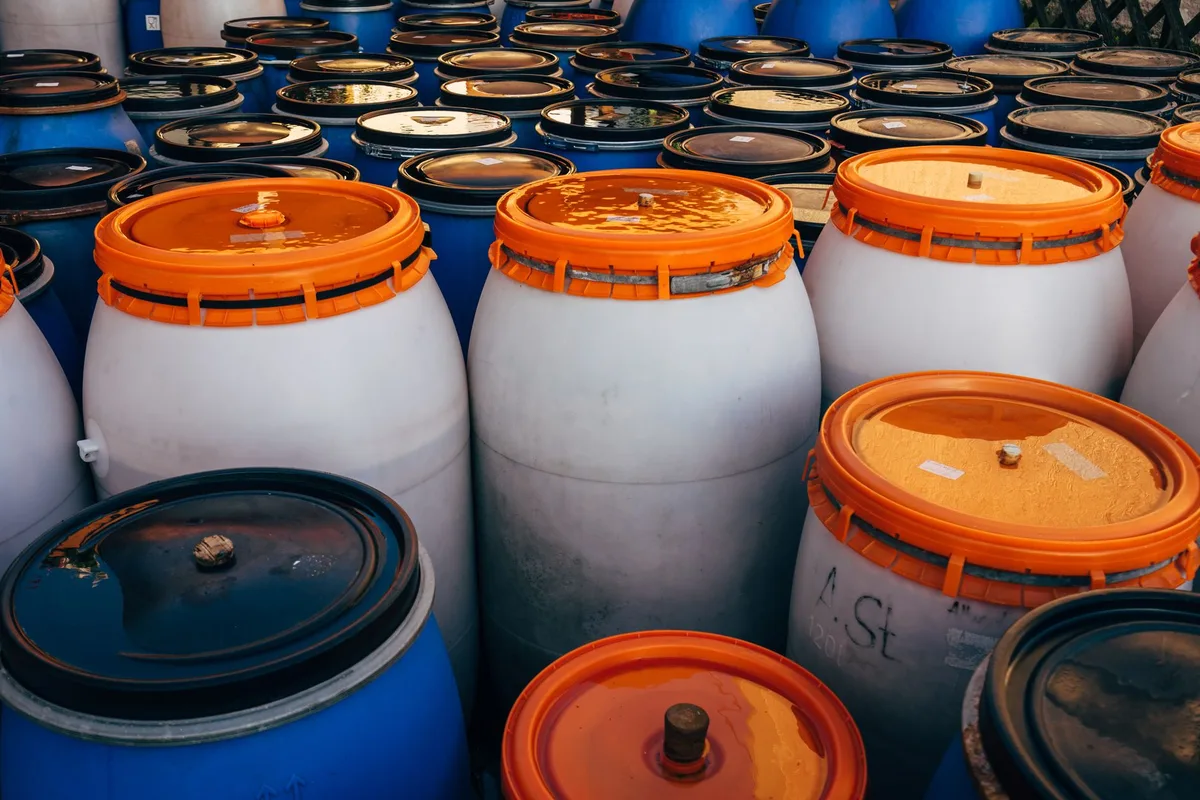
Notice in the photo above how each bottle sits inside its own plastic tray. That’s secondary containment. If a cap loosens or a container cracks, the spill stays in the tray, not on the floor.
The Step-by-Step: How to Organize Your Chemical Storage
Ready to set things up? Follow these steps in order.
Step 1: Take an inventory
Pull everything out. Write down the product name, the active ingredient, the date you bought it, and the expiration date. If the label is faded or missing, consider the chemical unusable, take it to a hazardous waste facility.
Step 2: Sort by hazard and compatibility
You need to separate products that can react with each other. The basic rule: oxidizers (like some fertilizers) away from combustibles (like oils or solvents). Acids away from bases.
Liquids stored below dry powders (so if a liquid leaks, it doesn’t contaminate the powder). For a typical home gardener, just grouping by type (herbicides together, fertilizers together) is a good start.
Step 3: Transfer to safe containers if needed
If the original bottle is cracked or rusted, do not try to patch it. Put on gloves, find a clean, properly labeled HDPE (recycling code #2) container, and transfer the chemical. Write the full name and date on the new container.
Never use a milk jug or soda bottle.
Step 4: Place liquids in secondary containment
Set each liquid container (or group of small containers) into its own plastic tray or bin. The tray should hold at least 110% of the volume of the largest container.
Step 5: Lock the cabinet
Install a padlock that requires a key or combination. If you have kids, do not rely on a magnetic childproof lock alone, those are easy for a determined toddler to defeat.
Step 6: Maintain an inventory log
Stick a sheet on the inside of the cabinet door. Every time you add a product, write it down. Every year, check expiration dates and dispose of anything that’s past its prime.
Old fungicides can lose potency and harbor mold.
One more pro tip: store your most-used chemicals near the front and your least-used in the back. That way you aren’t shuffling through bottles every spring.
If you’re looking for the right fertilizer for a specific plant, you might also want to check our guide on the best slow release fertilizer for flowers for a scheduled feeding approach.
What NOT to Do: Common Mistakes That Turn a Shed Into a Hazard
You’d be surprised how often well-meaning gardeners make the same errors. The good news is they’re easy to fix once you know what to watch for.
Storing chemicals on the floor. This is the most common mistake we see. A leak or a flood turns your entire shed floor into a contaminated zone. Always keep containers on a shelf or pallet, even if it’s just a concrete block with a wooden plank on top.
Mixing different products in one container. Never combine leftover herbicides or fertilizers hoping to save space. Chemical reactions can release toxic fumes or heat. The EPA has documented cases of garage fires started this way.
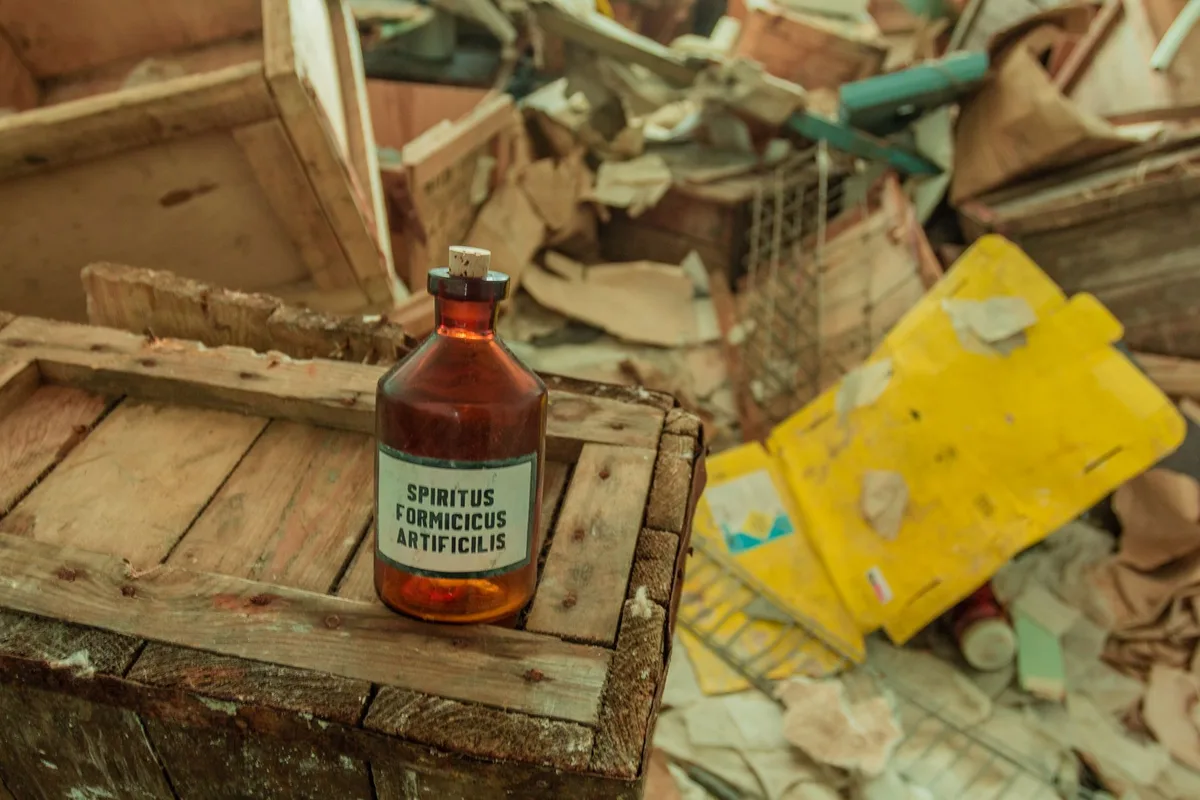
Letting labels fade or peel off. The container above is a perfect example of what not to do. Once that label goes, you have no idea what’s inside. If you can’t read the active ingredient, the safety warnings, or the application rate, the chemical is effectively unusable.
Mark the bottle with a permanent marker or print a new label and tape it on.
Storing near heat sources. Water heaters, furnaces, and even direct sunlight through a window can raise temperatures past safe limits. Keep the cabinet at least three feet away from any appliance that generates heat.
Using food containers for storage. This one deserves its own warning. A soda bottle full of weed killer looks just like a soda bottle full of soda to a child. It’s one of the most reported causes of accidental poisoning.
Use only the original container or a clearly labeled HDPE jug.
Temperature, Humidity, and Shelf Life: The Invisible Killers
Most people don’t think about temperature until something goes wrong. But heat and moisture are the two biggest threats to chemical stability.
How heat affects chemicals. For every 10°F above 90°F, the degradation rate of many pesticides roughly doubles. That means a bottle left in a hot shed all summer might lose half its potency by fall. Some products, like certain liquid fungicides, can also separate or crystallize after repeated heat cycles.
Freeze damage. Cold is just as bad. Liquid concentrates that freeze and thaw can break down chemically or cause the container to crack. If you live where winter temperatures drop below 32°F, move liquid chemicals indoors to a heated garage or basement.
Granular products handle cold better but can still absorb moisture.
Humidity and caking. Wet powders and granules absorb humidity from the air. That leads to hard clumps that won’t dissolve properly in your sprayer. Keep the storage area below 60% relative humidity.
A small dehumidifier in the basement or a silica gel pack inside the cabinet can help.
Shelf life by chemical type. Not all products last the same amount of time. Here’s a rough guide based on manufacturer specifications:
| Chemical Type | Typical Shelf Life | Signs of Degradation |
|---|---|---|
| Liquid concentrates | 2 to 5 years | Separation, cloudiness, sediment |
| Wettable powders | 1 to 3 years | Hard clumps, discoloration |
| Granular fertilizers | 1 to 2 years | Caking, ammonia smell |
| Ready-to-use sprays | 1 to 2 years | Cloudiness, foul odor |
| Organic fertilizers | 6 months to 1 year | Mold, strong ammonia smell |
Check your inventory once a year. Dispose of anything past its prime.
Locking It Down: Child Safety and Pet Safety
If you have kids or animals, a lock isn’t optional. It’s the single most effective barrier between a curious hand and a toxic substance.
What kind of lock works best. A keyed padlock or a combination lock on the cabinet door is the standard. Avoid magnetic childproof locks designed for kitchen cabinets. A determined toddler can often pry them open.
For sheds, a hasp with a padlock is simple and reliable.
Where to install the lock. Mount the lock at adult eye level. That puts it out of reach of children and makes it harder for a dog to accidentally nudge the door open. If the cabinet has its own built-in lock, test it every season to make sure it still engages properly.
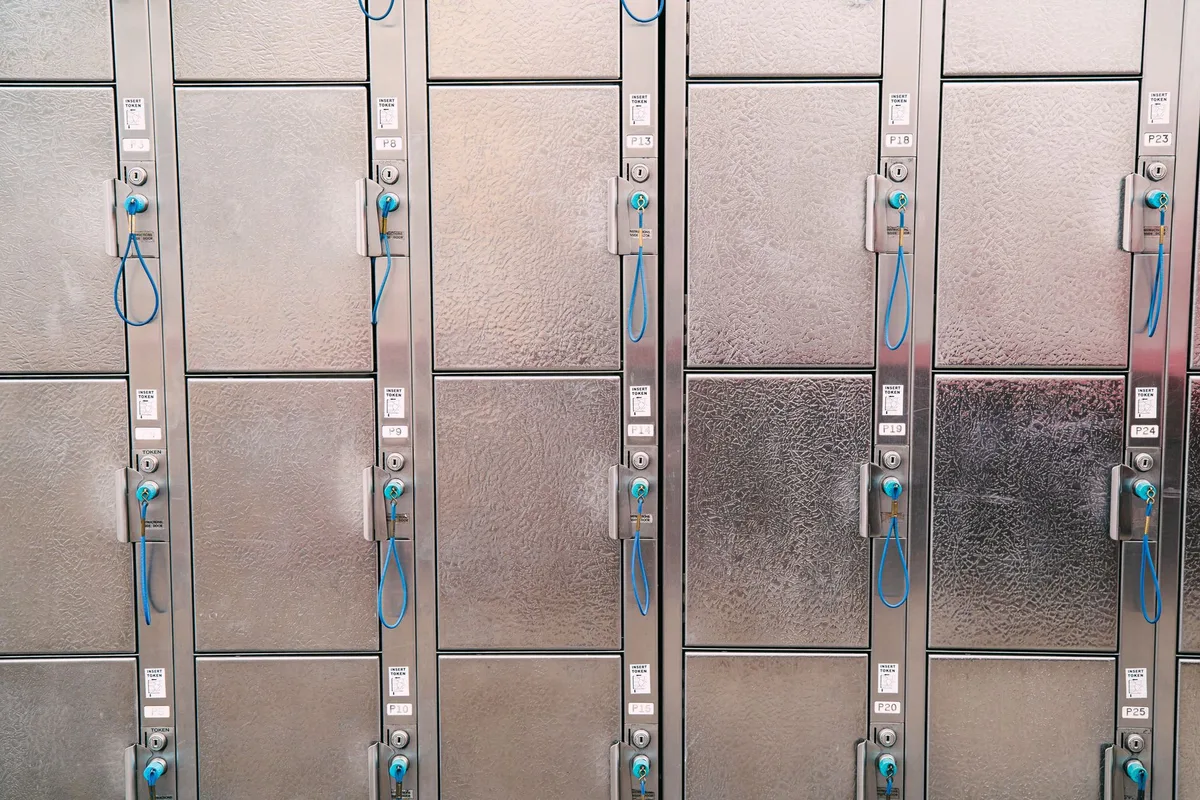
Pet-specific risks. Dogs especially are drawn to sweet-smelling chemicals. Rodenticides often use flavorings to attract rodents, but those same flavors attract dogs. One granule of some products can kill a small dog.
If you have pets, store rodenticides in a separate, locked metal canister inside the already locked cabinet.
What if you have no kids or pets. You might think you’re safe. But consider visitors. A neighbor’s child, a grandkid, or a friend’s dog can wander into an unlocked shed in seconds.
Locking the cabinet costs nothing and removes the risk entirely.
When Chemicals Go Bad: Expiration, Disposal, and Cleanup
Every garden chemical has an expiration date. Using an expired product is a waste of money. It won’t work properly, and it might even damage your plants or contaminate your soil.
But the real question is what to do with the leftovers.
How to tell if a chemical has expired. Check the label for a manufacture date or expiration date. If there’s no date, assume it’s safe for 2 to 3 years from purchase. Physical signs of spoilage include separation that won’t re-mix, a rotten egg smell, or large hard clumps in powders.
Never pour chemicals down the drain. That includes the sink, the toilet, the storm drain, or the ground. Most municipal water treatment plants cannot filter out all pesticide residues. Storm drains flow directly into creeks and rivers.
Pouring anything down them is illegal in many jurisdictions.
Triple rinsing empty containers. If the product is used up and the container is empty, rinse it three times. Pour the rinse water into your spray tank and use it on the intended plants. Then puncture the container so it can’t be reused, and recycle it if your local program accepts HDPE.
If not, put it in the trash.
Disposing of full or partially full containers. This is trickier. You cannot throw a full bottle of herbicide in the garbage. Your best option is a household hazardous waste collection event or facility.
Many counties offer this service free of charge. Search for your local HHW program online. As of 2026, most urban counties have drop-off locations open at least monthly.
Cleanup after a spill. Act fast. Wear gloves and goggles. Absorb liquid spills with kitty litter, sand, or commercial absorbent.
Sweep it up and place it in a sealed plastic bag. Dispose of that bag at your HHW facility. Do not hose it down or let it soak into the ground.
Legal and Compliance: What the Law Expects From You
You don’t need to be a lawyer to store garden chemicals. But you do need to know a few rules, especially if you store larger quantities.
For home users. The laws are generally light. You must keep chemicals in their original containers with legible labels. You must store them away from food, feed, and water sources.
That’s the baseline for most states. Some states have additional rules about child-resistant storage.
For larger properties or farms. If you store more than a certain volume, you may fall under the EPA’s Worker Protection Standard. That means you need a dedicated storage area that is locked, ventilated, and clearly marked. You may also need a spill containment plan and regular inspections.
Check with your state’s department of agriculture.
OSHA and the GHS labeling system. Even for home users, it’s good practice to follow the Globally Harmonized System of classification. That means your containers should have a clear signal word (Caution, Warning, or Danger), a hazard statement, and a precautionary statement. If the original label is damaged, print a new one from the Safety Data Sheet.
Fines for improper disposal. In many states, dumping garden chemicals can result in fines from $500 to $10,000. Serious cases involving groundwater contamination can lead to criminal charges. The safest move is always to use a designated HHW facility.
What about expired fertilizers. Fertilizers are generally less regulated than pesticides. But they still require proper disposal. If the bag is torn or the granules have turned to mush, do not spread them on your lawn.
The nutrient imbalance can cause runoff and algae blooms in local water bodies. A controlled application at the right time of year is better. For that, check our guide on the best organic fertilizer for fruit trees and other targeted uses.
When to Call in a Pro: Commercial Storage vs. Home Storage
If you’re a home gardener with a dozen bottles, you don’t need a professional. A locked cabinet and a drip tray will do the job.
But if you run a landscaping business or a small farm, the rules change. Commercial storage requires a dedicated room or locked shed with ventilation, fire-rated construction, and spill containment that meets local fire codes. You may also need a written inventory and regular inspections.
If you store more than 50 gallons of liquid concentrate or 500 pounds of dry product, most states consider you a commercial operation. At that point, call your state’s department of agriculture or a certified hazardous materials consultant. They can walk you through the permitting and inspection process.
Trying to do it yourself can result in fines or worse.
Your Quick Decision Guide: A Simple Checklist
Use this before you close the cabinet door each season.
- Is the cabinet locked? Yes / No
- Are all labels readable? Yes / No
- Are liquids in secondary containment? Yes / No
- Is the temperature stable between 40°F and 90°F? Yes / No
- Are incompatible chemicals separated? Yes / No
- Are expired products set aside for disposal? Yes / No
- Is the inventory log updated? Yes / No
If you answered No to any item, fix it before walking away.
Frequently Asked Questions
Where is the best place to store garden chemicals at home?
A cool, dry, locked cabinet in a detached garage or basement works best. Avoid living areas, kitchens, and basements with open floor drains. Keep it away from heat sources and direct sunlight.
Can I store garden chemicals in a plastic shed?
Only if the shed stays below 90°F in summer and above freezing in winter. Most plastic sheds exceed both limits. A wooden shed with ventilation is usually better, but indoor storage is safest.
How do I dispose of old garden chemicals?
Take them to a household hazardous waste facility. Never pour them down the drain or throw them in the trash. Search online for your county’s HHW drop-off locations.
What happens if garden chemicals freeze?
Liquid concentrates can separate, crystallize, or break the container. If a chemical has frozen and thawed, shake it well. If it doesn’t return to a uniform liquid, do not use it.
Dispose of it properly.
Do I need a special cabinet for garden chemicals?
A general-purpose metal or heavy-duty plastic cabinet with a lock works well. You don’t need a flammable liquids cabinet unless you store large quantities of solvents or oil-based concentrates.
How often should I check on stored chemicals?
At least twice a year: once in spring before planting season and once in fall before winter. Check for leaks, expired products, and faded labels. Update your inventory each time.