How to Yard Drainage 2026
Standing water in your yard isn’t just ugly. It’s a red flag that tells you water has nowhere to go, and that means trouble for your foundation, your lawn, and your sanity every time it rains. Learning how to yard drainage works starts with understanding why water pools in the first place, then choosing the right fix based on your soil, slope, and budget.
Most residential drainage problems fall into one of four categories, and each has a different solution. According to the USDA Natural Resources Conservation Service, proper yard drainage requires a minimum slope of 2% away from structures, which translates to about 2 inches of drop per 10 feet. Let’s walk through how to diagnose your problem and pick the method that actually works.
Quick Answer
Fixing yard drainage starts with finding out why water pools. You need to identify the water source, check your yard’s slope, and test your soil type. If your yard drains poorly because of flat terrain or clay soil, you’ll need either surface grading, a French drain, or a catch basin system.
Most DIY French drains cost $10 to $25 per linear foot and require a 1% to 2% slope to work properly.
Why Your Yard Holds Water (And What That Tells You)
Water collects in your yard for three main reasons: bad grading, poor soil drainage, or no outlet for runoff. Sometimes it’s all three at once.
Bad grading means your yard is flat or slopes toward your house instead of away from it. Gravity wonps, so water follows the path of least resistance. If that path leads to a low spot in your lawn or up against your foundation, you’ve got a grading problem.
Clay soil is the second culprit. Clay has an infiltration rate below 0.06 inches per hour, which means water sits on top instead of soaking in. You can have perfect slope and still end up with a swamp if your soil won’t absorb runoff.
The third issue is blocked or missing outlets. Water has to go somewhere. If your downspouts dump onto the lawn, your driveway channels runoff into a dead end, or your neighbor’s yard drains onto yours, you’re fighting an upstream battle.
Here’s what each problem looks like in real conditions:
| Symptom | Likely Cause | What Happens After Rain |
|---|---|---|
| Puddles near foundation | Negative slope toward house | Water pools within 10 feet of walls |
| Soggy low spot in middle of lawn | Natural depression or settled fill | Water sits for 24–48 hours |
| Entire yard stays wet | Clay soil or high water table | Grass stays spongy for days |
| Driveway or patio floods | No surface drain or poor slope | Water sheets across hardscape |
Most homeowners assume they need a French drain when the real fix is regrading or extending a downspout. Misdiagnosing the problem costs you time and money, so start by figuring out where the water comes from and where it needs to go.
Find Your Drainage Problem: A Quick Decision Guide
You can’t pick a solution until you know what you’re solving for. Walk your yard during or right after a heavy rain and watch where water flows.
Standing Water After Rain
If you see puddles that stick around for more than 24 hours, you’ve got a drainage problem. The question is whether water is pooling because it can’t drain through the soil or because it has nowhere to flow.
Dig a test hole about 12 inches deep in the wet area. Fill it with water and time how long it takes to drain. If it empties in under an hour, your soil drains fine and you have a grading issue.
If it’s still full after four hours, you’re dealing with clay or a high water table.
Soggy Lawn That Never Dries
A lawn that feels like a sponge days after rain usually means compacted soil or a subsurface issue. You might have a hardpan layer a few inches down that’s blocking water from moving deeper.
Try pushing a screwdriver into the wet area. If it stops after 3 or 4 inches, you’ve hit compacted soil or clay. Surface fixes won’t help here.
You’ll need subsurface drainage like a French drain or soil amendment.
Water Pooling Near Your Foundation
This is the one you fix first, because standing water near your foundation leads to basement leaks, hydrostatic pressure, and cracked footings. Check your downspouts. Most foundation water problems come from roof runoff dumping too close to the house.
If your gutters work but water still pools, check the grade. You need at least 6 inches of drop over the first 10 feet away from your foundation. Anything less and water flows back toward the house.
Runoff From Slopes or Hardscapes
Water that sheets off a driveway, patio, or uphill neighbor’s yard needs somewhere to go. If it’s dumping onto your lawn faster than the soil can absorb it, you’ll see surface erosion, channels, or standing water at the bottom of the slope.
This calls for a surface drainage solution like a swale or channel drain. You’re not trying to move water through the soil. You’re trying to intercept it and redirect it before it becomes a problem.
Check Your Yard’s Natural Drainage Before You Dig
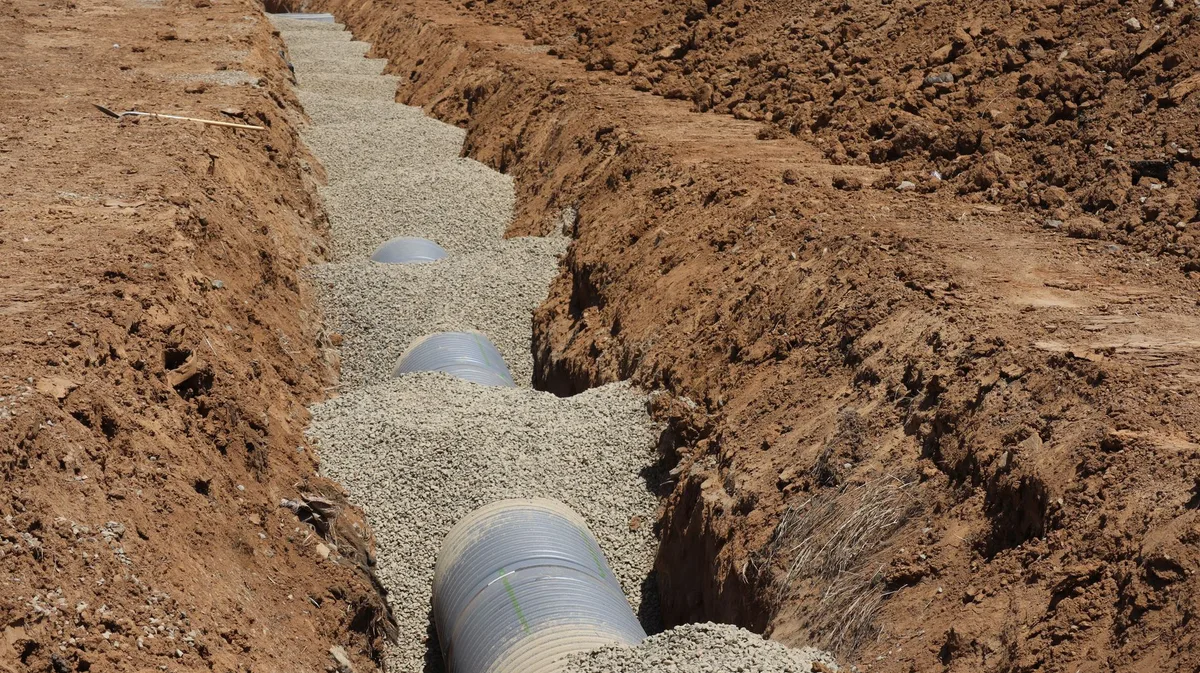
You don’t need a surveyor to figure out how water moves across your property. A 4-foot level, a tape measure, and 20 minutes will tell you most of what you need to know.
How to Read Your Yard’s Slope
Slope is measured as a percentage. A 2% slope means the ground drops 2 inches for every 100 inches of horizontal distance, or about 2 feet per 100 feet. That’s the minimum you want for surface drainage.
Grab a 4-foot level and a tape measure. Set one end of the level on the ground near your foundation and lift the other end until the bubble centers. Measure the gap between the lifted end and the ground.
That’s your drop over 4 feet.
If the gap is less than 1 inch, your slope is under 2% and you’ve found your problem. If it’s negative (the level slopes back toward the house), water is actively flowing toward your foundation.
Do this test in several spots around your house and across any low areas. Mark problem zones with spray paint or flags so you know where to focus your fix.
Test Your Soil Type (And Why It Matters)
Soil type determines whether you need surface drainage or subsurface drainage. Clay holds water. Sand drains fast.
Loam is somewhere in between.
Squeeze a handful of damp soil. If it forms a tight ball that holds its shape, you’ve got clay. If it crumbles and won’t stick together, it’s sandy.
Clay needs subsurface drains because water won’t percolate. Sandy soil usually just needs better grading.
Run a percolation test if you’re planning a dry well or infiltration trench. Dig a hole 12 inches deep and 12 inches wide. Fill it with water and let it drain completely.
Fill it again and measure how much the water level drops in one hour. Anything under 1 inch per hour means slow drainage and rules out dry wells.
Identify Where Water Enters and Where It Needs to Go
Walk your property line and look for high ground. Water flows downhill, so if your neighbor’s yard sits higher than yours, you’re getting their runoff. Check for natural drainage paths, driveway slopes, and roof drainage points.
Now find your outlet. That’s where your drainage system will dump collected water. Options include a storm sewer connection, a drainage ditch, a swale to the street, or daylight drainage to a lower part of your property.
You can’t build a drainage system without a legal place to send the water.
Never drain onto a neighbor’s property without permission. That’s illegal in most places and a fast way to start a property line war. If you don’t have a natural outlet, you’ll need a dry well or a sump pump to manage the water on-site.
When Simple Grading Fixes the Problem (And Saves You Thousands)
Most people skip straight to installing drains when all they really need is a few yards of fill dirt and a weekend of work. Regrading costs a fraction of what you’ll spend on a French drain, and it’s permanent.
Regrading vs. Installing Drains: Which Do You Actually Need?
If water pools because your yard is flat or slopes the wrong way, grading solves it. You’re just reshaping the surface so gravity does the work. No pipes, no gravel, no filter fabric.
Regrading works when your soil drains reasonably well and you just need to direct surface water away from problem areas. It won’t fix clay soil, a high water table, or subsurface water. For those, you need a drain system.
Here’s the decision matrix:
| Your Situation | Best Fix |
|---|---|
| Water pools near foundation, soil drains in 1–2 hours | Regrade away from house |
| Flat yard, puddles sit for days | Regrade + possibly aerate/amend soil |
| Clay soil, water sits for 24+ hours | French drain or curtain drain |
| Water sheets off driveway onto lawn | Channel drain or swale |
| High water table, always soggy | Subsurface drain + dry well or outlet |
Regrading is also the cheapest fix. You’ll spend $200 to $500 on fill dirt and a rental compactor for a typical residential job. A professionally installed French drain runs $3,000 to $10,000 depending on length.
How to Regrade a Yard Without Heavy Equipment
You don’t need a skid steer for most grading jobs. A wheelbarrow, a rake, and some fill dirt will handle 90% of residential drainage fixes.
Start by stripping sod from the low area and any section you need to raise. Roll it up and set it aside. You can reuse it if you work fast.
Bring in topsoil or a sand-soil mix. Avoid pure clay fill, because that’ll make drainage worse. Spread the fill in 2-inch layers and compact each one with a hand tamper or a plate compactor.
Rented plate compactors cost about $75 per day and make the job go faster.
Slope the fill at 2% minimum, aiming for 3% if you can. That’s about 3 inches of drop over 10 feet. Use your level and tape measure to check as you go.
Pack the fill tight. Loose soil settles and you’ll end up with the same low spot in six months.
Once you’ve built up the grade, replace the sod or seed it. Water daily for two weeks to establish roots. The fill needs to settle under rain before you’ll know if you got the slope right, so check it again after a heavy storm.
Surface Drainage Solutions: When Water Stays on Top

Surface drainage intercepts water before it soaks in. You’re building a path that moves runoff away from problem areas and toward an outlet. This works when your issue is too much water arriving too fast, not soil that won’t drain.
Swales: The Natural Drainage Channel
A swale is a shallow, grass-lined ditch that channels water across your yard. It’s the least invasive drainage solution and blends into your landscaping if you shape it right.
Swales work best on slopes or between properties where you need to redirect sheet flow. They don’t handle heavy volumes like a pipe system, but they’re cheap and easy to maintain.
Dig a shallow trench with gently sloped sides. You want a wide, flat bottom about 12 to 18 inches across and 4 to 6 inches deep. The sides should slope at a 3:1 ratio (3 feet horizontal for every 1 foot vertical) so you can mow over them.
Grade the swale at 1% to 2% slope in the direction you want water to flow. Seed it with erosion-resistant grass or line it with river rock if it’ll carry heavy flow. Swales need regular mowing and occasional reshaping, but they’re the most natural-looking drainage option.
Channel Drains for Driveways and Patios
Channel drains (also called trench drains) are surface grates set into concrete or pavers. They catch water before it sheets across hardscapes and dump it into a drainpipe that runs to an outlet.
You’ll see these at the bottom of sloped driveways, along garage door thresholds, and around pool decks. They handle high volumes fast and keep water off surfaces where it’ll freeze or cause erosion.
Installing a channel drain means cutting a trench across your driveway or patio, setting the grate system in concrete, and connecting it to a solid discharge pipe. The grate sits flush with the surface so you can drive over it.
Channel drains cost $10 to $30 per linear foot for materials, plus concrete and pipe. They’re permanent and low maintenance. Just pull the grate once a year and flush out leaves and debris.
Catch Basins and Where to Place Them
A catch basin is a buried box with a grate on top. Water flows in through the grate, and an outlet pipe at the bottom carries it away. They’re the go-to solution for low spots where water collects and you can’t regrade.
Place catch basins at the lowest point in a problem area. Water will naturally flow to them. Connect the outlet pipe to a French drain, a dry well, or a discharge point.
The basin traps sediment so your pipes don’t clog.
A standard residential catch basin is 12 inches square or 18 inches round and about 24 inches deep. You’ll pay $100 to $300 for the unit plus another $50 to $100 for pipe and fittings. Installation is straightforward: dig the hole, set the basin level, connect the outlet pipe, and backfill around it.
Catch basins need cleaning every year or two. Pop the grate, scoop out sediment and leaves, and flush the outlet with a hose. If you skip this, the basin fills with mud and stops working.
Subsurface Drainage: When Water Sits Below the Surface
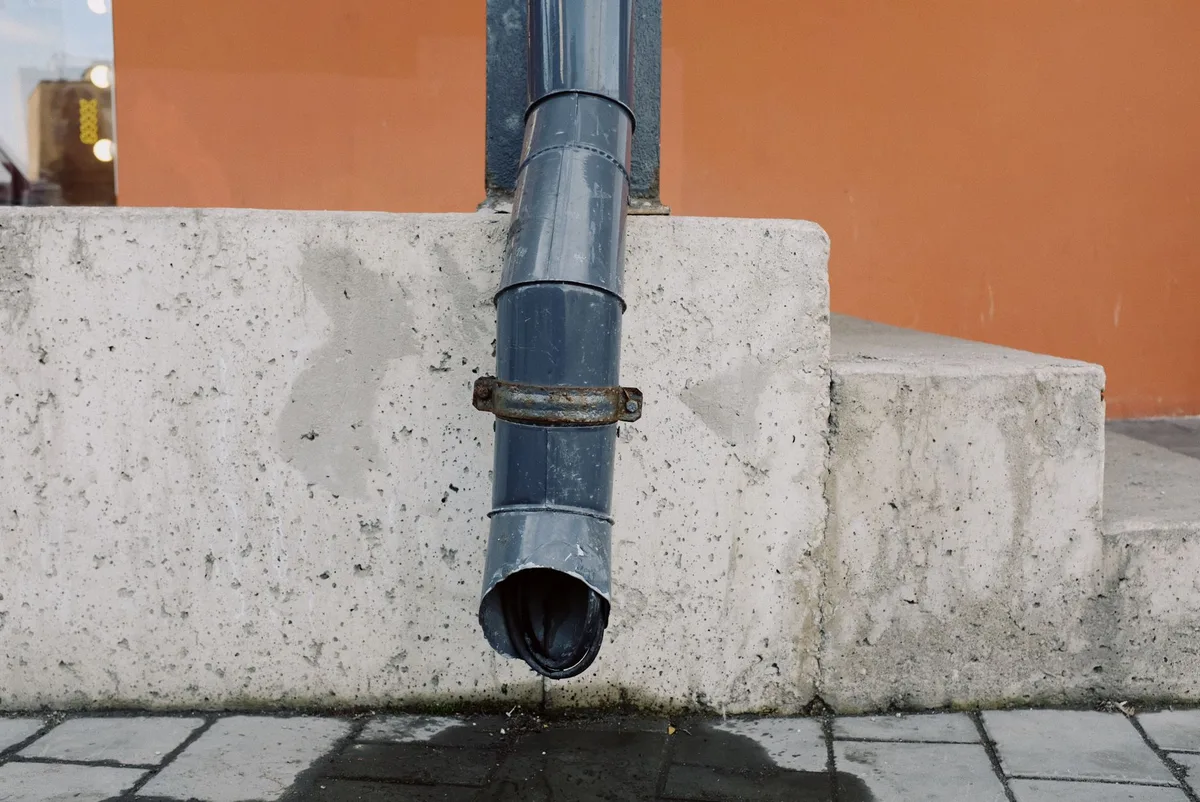
Subsurface drainage tackles water that won’t drain through the soil or sits just below the surface. You’re installing a buried system that collects water and moves it to an outlet before it can pool.
French Drains: How They Work and When to Use Them
A French drain is a gravel-filled trench with a perforated pipe at the bottom. Water seeps into the gravel, enters the pipe through the perforations, and flows out to a discharge point. It’s the most common residential subsurface drainage fix.
You need a French drain when water sits in the soil for more than 24 hours after rain, when you’ve got clay soil that won’t percolate, or when regrading won’t solve the problem. They work for soggy lawns, wet basements, and foundation drainage.
French drains don’t work without an outlet. The pipe has to empty somewhere lower than the problem area. If you don’t have a natural outlet, you’ll need a dry well or a sump pump system to handle the collected water.
Step-by-Step: Installing a French Drain the Right Way
Call 811 at least 48 hours before you dig. Utility strikes can kill you or cost you thousands in repair fees. Mark your trench line with spray paint once utilities are flagged.
Dig the trench 6 to 12 inches wide and 18 to 24 inches deep. Slope it at 1% minimum, which is 1 inch of drop per 8 feet of trench. Use a string level or a laser level to check slope as you dig.
If the trench slopes backward, water won’t flow.
Compact the trench bottom with a hand tamper. Lay geotextile filter fabric across the bottom and up both sides, leaving enough to wrap over the top later. This fabric stops soil from clogging the gravel and pipe.
Add 3 to 4 inches of #57 crushed stone or 3/4-inch gravel. Set the perforated pipe on top with holes facing down. Connect pipe sections with couplings, not tape.
Run solid pipe for the last 10 feet to the outlet so collected water doesn’t leak back out.
Cover the pipe with 3 to 6 inches of gravel. Wrap the fabric over the top, overlapping by at least 6 inches. Backfill with soil, tamp it down, and replace sod or seed.
Dry Wells vs. Draining to Daylight
Draining to daylight means your pipe empties onto the surface at a lower elevation. It’s the simplest outlet and costs nothing extra. You just need a spot where the pipe can discharge without causing erosion or flooding someone else’s property.
A dry well is a buried pit filled with gravel. Water empties into it and slowly percolates into the surrounding soil. You use a dry well when you don’t have a place to drain to daylight and your soil has decent infiltration.
Dry wells don’t work in clay. If your percolation test showed less than 1 inch per hour drainage, the well will fill up and stay full. You’ll need to drain to daylight, tie into a storm sewer if allowed, or install a sump pump to lift water out.
Standard residential dry wells hold 50 to 300 gallons depending on size. You can buy prefab units or build one from stacked concrete rings. Wrap it in filter fabric, backfill with gravel, and connect your drain pipe to the inlet.
Curtain Drains for Slope and Foundation Protection
A curtain drain (also called an interceptor drain) runs horizontally across a slope to catch water before it reaches your house or yard. It’s installed uphill from the problem area, not in the wet spot itself.
Curtain drains work when water is flowing downhill from a neighbor’s property, a hillside, or a poorly graded area. You’re intercepting subsurface flow before it becomes a problem. Install them 10 to 20 feet uphill from your foundation or the soggy area.
The trench and pipe setup is identical to a French drain. You just place it higher on the slope. Water hits the gravel trench, drops into the pipe, and gets routed around your property to an outlet.
Choosing the Right Pipe, Gravel, and Fabric
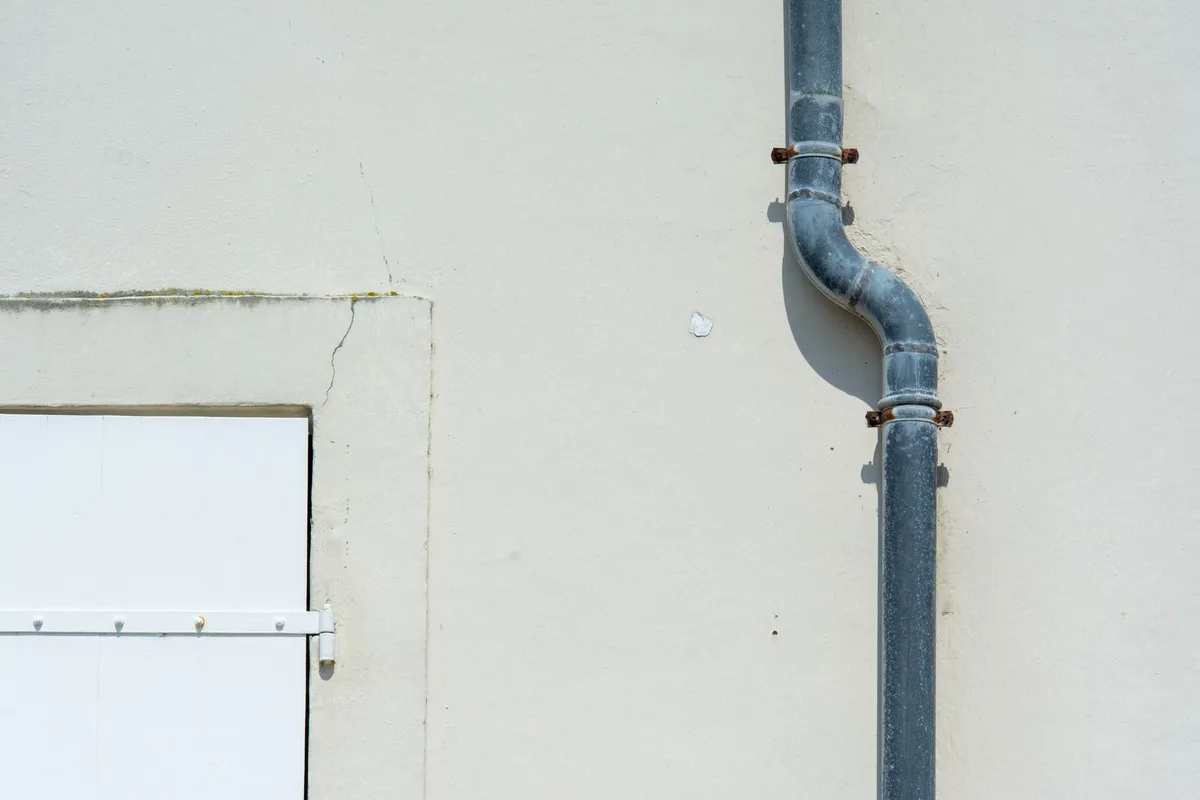
Using the wrong materials turns a drainage project into a maintenance nightmare. Cheap landscape fabric clogs in two years. Undersized pipe backs up.
Pea gravel washes away. Here’s what actually works.
Perforated vs. Solid Pipe (And Where Each Goes)
Perforated pipe has holes or slots that let water in. Use it for the entire length of your French drain where you’re collecting water. Solid pipe has no holes.
Use it for the discharge section where you’re just moving water to the outlet.
Most residential drainage uses 4-inch corrugated perforated pipe. It’s flexible, cheap, and easy to work with. Rigid PVC works too but costs more and requires solvent welding at joints.
Corrugated pipe just snaps together with couplings.
The perforations should face down, not up. Water enters from the gravel below and sides. Holes facing up let soil fall in and clog the pipe.
Some installers still do it wrong because it looks counterintuitive, but manufacturer specs and field performance confirm holes go down.
Switch to solid pipe for the last 10 to 20 feet before your outlet. You don’t want collected water leaking back into the soil near the discharge point. Solid pipe keeps flow moving to where you want it.
Why Filter Fabric Matters More Than You Think
Filter fabric (geotextile) wraps your drain to keep soil out of the gravel and pipe. Without it, fine particles migrate into the voids, the gravel clogs, and water stops flowing. The drain fails in 3 to 5 years instead of lasting 30.
Don’t use landscape fabric. It’s too thin and breaks down under soil pressure. You need nonwoven geotextile rated for subsurface drainage.
Look for 4-ounce or heavier fabric. It costs $0.50 to $1 per square foot and holds up under load.
Lay the fabric so it lines the trench bottom and sides with enough extra to wrap completely over the gravel after the pipe is in. Overlap seams by at least 6 inches. If soil can get in anywhere, it will.
Gravel Size and Depth: The Numbers That Actually Matter
Use #57 stone or 3/4-inch crushed stone for French drains. This size drains fast, doesn’t compact, and creates enough void space for water to move. Pea gravel is too small and washes out.
Larger stone leaves gaps that let soil through.
You need 3 to 4 inches of gravel under the pipe and 3 to 6 inches over it. Skimping here saves you maybe $20 and kills drainage performance. The gravel layer is what collects and channels water to the pipe.
A 100-foot trench that’s 12 inches wide and has 10 inches of total gravel depth (4 under, 6 over) needs about 3 cubic yards of stone. That’s roughly $150 to $200 delivered. Budget for it and don’t cut corners.
Slope, Depth, and Outlet: The Three Things That Make or Break Your Drain
You can use the right pipe, the right gravel, and the right fabric, but if your slope is wrong, the drain won’t work. These three measurements determine success or failure.
Minimum Slope Requirements (1% Is Not Optional)
Drainage pipe needs at least a 1% slope to move water. That’s 1 inch of drop for every 8 feet of pipe, or about 1.5 inches per 10 feet. Anything flatter and water sits in the pipe instead of flowing.
Aim for 2% if your site allows it. Faster flow means less chance of sediment buildup and better long-term performance. Use a 4-foot level and shims to check slope every 10 feet as you lay pipe.
A laser level makes this easier but isn’t required.
If you accidentally create a low spot or a backward slope, water will pool there and the drain will stop working. Fix it before you backfill. Digging it up later costs more than getting it right the first time.
How Deep to Dig Based on Your Problem
French drains typically run 18 to 24 inches deep. That’s deep enough to catch subsurface water but shallow enough to dig by hand. Foundation drains go deeper, usually to the bottom of the footing, but that’s a different project.
If you’re draining a soggy lawn, 18 inches works. If you’re protecting a basement or crawlspace, you’ll need to go deeper and possibly hire someone with excavation equipment. Don’t dig next to your foundation without knowing where the footing is.
Deeper isn’t always better. If your water table is high, a deep drain just fills with groundwater and doesn’t help surface drainage. Match depth to the problem you’re solving.
Finding a Legal, Functional Outlet for Your Water
Your drain has to empty somewhere, and that somewhere has to be lower than your problem area. Walk your property and look for natural drainage paths, ditches, storm sewer inlets, or a low corner where water can daylight without causing erosion.
Check local codes before you tie into a storm sewer or drain onto public property. Some municipalities allow it, others don’t. Draining onto a neighbor’s lot without permission can result in fines or a lawsuit.
If you don’t have a natural outlet and your soil drains well, a dry well works. If your soil is clay, you’ll need a sump pump in a basin at the end of your drain line to lift water up and discharge it elsewhere.
Common Drainage Mistakes That Waste Money and Create New Problems
Most drainage failures happen because someone skipped a step, used the wrong material, or didn’t plan for where the water would go. Here are the mistakes that show up in every other project.
Installing a French drain when grading would work is the most expensive error. People see standing water and assume they need a buried system. Half the time, adding 6 inches of fill and sloping it away from the problem solves it for $200 instead of $2,000.
Using landscape fabric instead of geotextile is a close second. Landscape fabric tears, clogs fast, and doesn’t filter fine soil. Your drain stops working in 3 years and you’re digging it up to rebuild it.
Skipping the outlet planning is the third big failure. You can’t just run a pipe into the ground and hope it drains. If there’s nowhere for water to go, it backs up and your system fails.
Always identify and confirm your outlet before you start digging, especially when working on sloped terrain that might benefit from choosing the right gravel for proper water flow.
Running pipe with zero or negative slope means water won’t move. Check slope every few feet with a level as you install pipe. A low spot or backward section turns your drain into a stagnant water storage system.
Digging without calling 811 can get you killed or fined. Hitting a gas line, power line, or fiber optic cable isn’t worth the time you save by skipping the call. It’s free, it’s the law in most states, and it takes two days.
Frequently Asked Questions
How long does a French drain last?
A properly installed French drain with geotextile fabric and crushed stone lasts 20 to 40 years. Drains without fabric or those using pea gravel clog in 3 to 10 years and need replacement.
Can I install drainage in winter?
You can dig and install drainage pipe in winter as long as the ground isn’t frozen. Avoid working in heavy rain or snow because it’s hard to check slope and the trench will fill with water. Spring and fall are ideal.
Do I need a permit for yard drainage?
Permit requirements vary by municipality. Most areas don’t require permits for simple yard drainage like French drains or swales. You may need one if you’re tying into a storm sewer, altering grading near a property line, or working in a floodplain.
Check with your local building department.
How much does professional drainage installation cost?
Professional French drain installation costs $50 to $100 per linear foot, including labor and materials. A 50-foot drain runs $2,500 to $5,000. Catch basins add $300 to $600 each.
Grading work costs $500 to $2,000 depending on the size of the area.
Can I drain my sump pump into a French drain?
Yes, but only into the solid discharge section, not the perforated collection area. Sump pumps move high volumes fast, and dumping that into a French drain designed to collect slow seepage can overwhelm it. Run a separate solid pipe from the pump to your outlet or daylight location.
What do I do if my drain stops working?
If your French drain stops moving water, it’s usually clogged with sediment or roots. Flush it with a garden hose from the outlet end. If that doesn’t work, use a drain snake or call a professional with a hydro jet.
Drains installed without fabric often can’t be saved and need rebuilding.
Before You Dig: Permits, Property Lines, and Utility Strikes
Call 811 at least two business days before you dig anywhere on your property. This free service marks underground utilities so you don’t hit gas, electric, water, sewer, or fiber optic lines. Hitting a utility can kill you, cause an explosion, or result in fines up to $10,000.
Check local setback requirements before you trench near a property line. Most municipalities require drainage work to stay at least 3 to 5 feet inside your boundary. Draining onto a neighbor’s property without an easement or written permission violates most local codes and can trigger civil action.
Some areas require permits for drainage projects that alter grading, tie into storm sewers, or involve work near wetlands. Call your local building department and describe your project. They’ll tell you if you need a permit.
Working without one can force you to remove the system and start over.
DIY vs. Hiring a Pro: What Each Option Really Costs
DIY French drain installation costs $10 to $25 per linear foot for materials. You’ll need pipe, gravel, fabric, and basic hand tools. A 50-foot drain runs $500 to $1,250 in materials plus two weekends of labor.
Professional installation costs $50 to $100 per linear foot including labor, materials, and equipment. The same 50-foot drain costs $2,500 to $5,000 installed. You’re paying for excavation speed, guaranteed slope, and someone else’s back.
Go DIY if your trench is under 100 feet, you’ve got decent soil, and you’re comfortable with manual labor. Hire a pro if you need more than 200 feet of drain, you’re working in heavy clay or rocky soil, or the job requires a trencher or excavator.
Cost Breakdown by Drainage Type
| Drainage Solution | DIY Cost | Professional Cost |
|---|---|---|
| Regrading (small area) | $200–$500 | $500–$2,000 |
| 50 ft French drain | $500–$1,250 | $2,500–$5,000 |
| Catch basin install | $150–$350 | $400–$800 |
| Dry well (50 gal) | $200–$400 | $800–$1,500 |
| Channel drain (10 ft) | $150–$300 | $500–$1,000 |
When DIY Makes Sense (And When It Doesn’t)
DIY works when you’ve got straight runs, minimal obstacles, and reasonable soil conditions. If you can dig a test trench in under an hour, you can handle the full job.
Hire out if you’re trenching through rock, tree roots, or alongside a foundation. Hire out if the project involves more than 200 feet of pipe or needs heavy equipment. Hire out if you’re not confident checking slope accurately, because bad slope kills the whole system.
Maintaining Your Drainage System So It Lasts Decades
Inspect your system once a year, ideally in early spring before heavy rains start. Walk the trench line and look for settling, exposed pipe, or new wet spots. Check grates and catch basins for debris.
Pull grates from catch basins and channel drains and scoop out leaves, dirt, and sediment. Flush the outlet pipe with a garden hose to confirm flow. If water backs up, you’ve got a clog downstream.
French drains need almost no maintenance if installed correctly with fabric and proper gravel. Tree roots are the biggest long-term threat. If you planted trees or large shrubs near the drain line, roots can infiltrate and clog the pipe in 10 to 15 years.
Your Drainage Decision Path: What to Do Based on Your Situation
If water pools near your foundation and your soil drains in under two hours, regrade away from the house. Add fill, slope it at 2%, and extend downspouts at least 10 feet out.
If your entire yard stays soggy for days and you’ve got clay soil, install a French drain from the wet area to a functional outlet. Use 4-inch perforated pipe, geotextile fabric, and crushed stone. Slope it at 1% minimum.
If water sheets off a driveway or patio, install a channel drain at the low edge and connect it to solid pipe running to daylight or a dry well. If you’ve got a low spot that collects runoff, drop in a catch basin with an outlet pipe.
If water flows onto your property from uphill, install a curtain drain 10 to 20 feet uphill from the problem area to intercept it. Route collected water around your yard to a safe outlet. Match the solution to the source, confirm your slope and outlet, and the system will work for decades.