How Lawn Fertilizer Mistakes to Avoid (2026) — Simple Steps
You've probably looked at your lawn one spring day and thought, "A little fertilizer will fix that right up." That instinct makes perfect sense. But here's the thing: lawn fertilizer mistakes to avoid are far more common than you'd think. And those mistakes cost you more than just a patchy yard.
Our research shows that a single over-application of quick-release nitrogen can burn over 500 square feet of turf in a matter of days. That's wasted money, wasted effort, and a lot of frustration. Let's walk through what actually goes wrong so you can skip the trial-and-error.
How Lawn Fertilizer Mistakes to Avoid (2026) — Simple Steps
Quick Answer
The most common lawn fertilizer mistakes are skipping a soil test, applying the wrong N-P-K ratio, and over-fertilizing. Timing matters too. Always water fertilizer in within 48 hours.
Calibrate your spreader before each use. And never apply before heavy rain.
Why Getting Fertilizer Wrong Actually Costs You More Than a Bad Lawn
Getting it wrong hits your wallet first. Over-fertilizing wastes product, and you could easily burn through a $50 bag in one bad application. Then you're looking at reseeding or sod repair, which runs hundreds more.
The environmental cost is real too. Nitrogen runoff from residential lawns enters local waterways, feeding algae blooms that suffocate fish and plants. The United States Environmental Protection Agency has flagged urban fertilizer runoff as a significant source of water pollution.
That's not something we think about when we grab a spreader, but it matters.
There's also the labor factor. A burned lawn needs weeks of careful watering and sometimes a proper application of fungicide to recover. You can find our guide on choosing the right treatment for common fungal issues.
Key takeaway: one mistake snowballs fast. Time, money, lawn health, and the ecosystem all take a hit.
The #1 Mistake Almost Everyone Makes: Skipping a Soil Test
You wouldn't refill a prescription without a diagnosis. Yet most people grab a bag of 10-10-10 without ever checking their soil's pH or nutrient levels.
Here's why that's a problem.
Grass needs different nutrients depending on what's already in the ground. If your soil is already high in phosphorus (say, from years of previous fertilizing or nearby construction), adding more does nothing. Worse, it can lock up other nutrients your grass actually needs.
A simple soil test from your local Cooperative Extension office costs about $15 to $30. It tells you exactly three things:
- Your soil's pH level
- Which nutrients are deficient
- The exact fertilizer blend your grass needs
As of 2026, many extensions still offer these tests by mail. You dig a small sample, bag it, and mail it in. Results come back in one to two weeks.
No guesswork involved.
Let's break down what the test tells you.
| Soil pH Range | What It Means | What to Do |
|---|---|---|
| Below 6.0 | Too acidic | Apply lime to raise pH |
| 6.0 – 7.0 | Ideal for most turf | Maintain current regime |
| Above 7.0 | Too alkaline | Apply sulfur to lower pH |
Without this data, you're fertilizing blind. That's the root cause of at least half the mistakes on this list.
Picking the Wrong N-P-K Ratio for Your Grass Type and Season
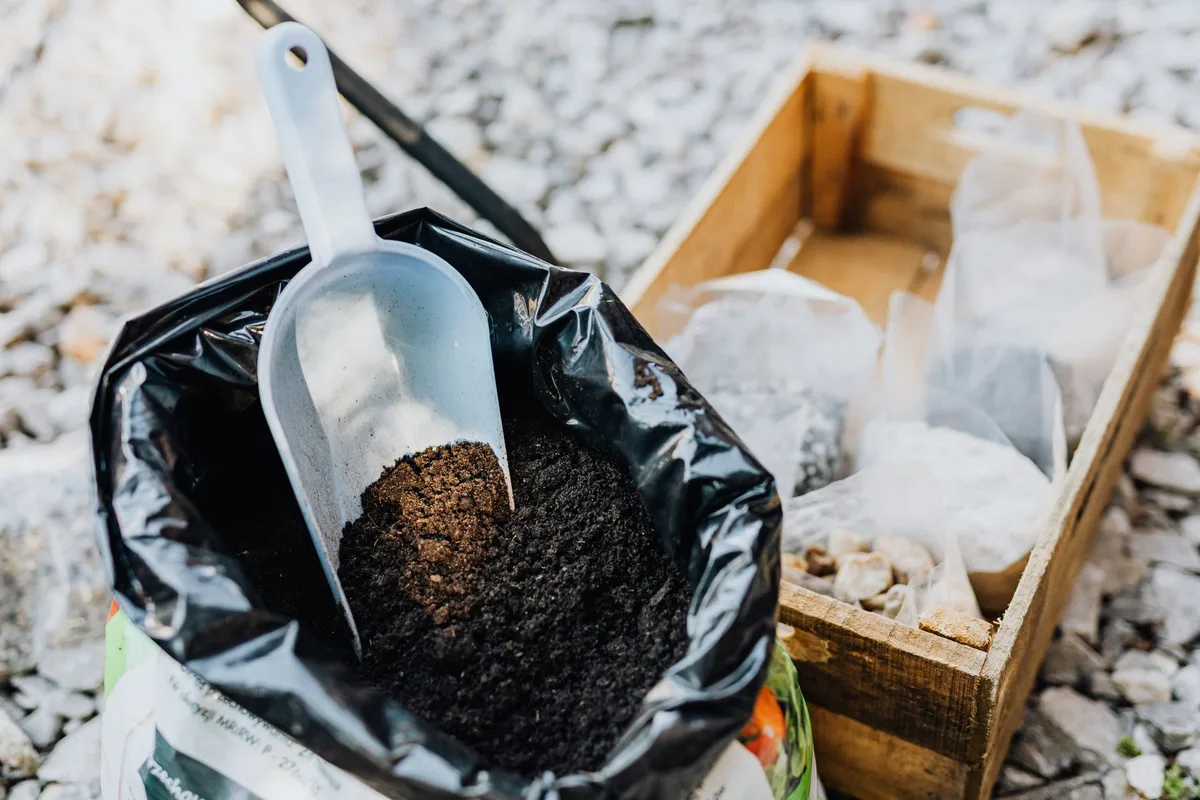
Every fertilizer bag has three numbers: N-P-K. Nitrogen, phosphorus, potassium. They're not decorative.
Here's what each one does:
- Nitrogen (N): Drives green growth and leaf development. This is what makes your lawn look lush.
- Phosphorus (P): Supports root development and flowering. Most established lawns need very little of it.
- Potassium (K): Boosts stress tolerance, cold hardiness, and disease resistance.
The mistake is grabbing a one-size-fits-all blend for the entire season.
For cool-season grasses (fescue, bluegrass, ryegrass), you want a higher nitrogen ratio like 16-4-8 or 20-10-10 during spring and fall. In summer, drop the nitrogen and increase potassium to help the lawn handle heat stress.
For warm-season grasses (Bermuda, zoysia, St. Augustine), a 15-5-10 or similar blend works well during the growing season. Cut back in late fall as the grass goes dormant.
If you're also feeding flowering plants or trees in your yard, the wrong N-P-K there can affect your lawn when overspray or runoff occurs. We've covered the best fertilizer blends for specific plants in other articles. A general rule: what's good for your bougainvillea isn't good for your turf.
Applying at the Wrong Time of Year (And How to Read Your Grass, Not the Calendar)
Timing is everything. You can use the perfect blend and still waste it by applying when the grass can't use it.
Cool-season grasses hit their growth peak in spring and fall. Warm-season grasses take off in late spring through summer. If you fertilize a cool-season lawn in July, the nitrogen sits in the soil, unused, until the weather cools.
Much of it washes away before then.
How do you know when the time is right?
Look at your grass, not the calendar.
- It's too early if the grass is still mostly brown or just starting to green up.
- It's too late if the grass has already gone dormant (brown in summer or winter).
- The ideal window is when the lawn is actively growing and you've had at least two full mowings.
A good rule of thumb: apply only when your lawn needs a mow every five to seven days. That's a sign of active growth. If you're only mowing every two weeks, the grass isn't hungry.
For most homeowners, that means two to four applications per year. In our research, following a simple schedule with the right intervals gives better results than piling on more product.
The Nitrogen Overload Trap: Burn, Runoff, and Weak Roots
This one hurts to see. A healthy lawn turns yellow or brown almost overnight.
That's nitrogen burn. It happens when you apply too much soluble nitrogen at once. The grass roots can't absorb it fast enough, so the excess salt pulls water out of the leaf cells.
The tissue dries up and dies.
Symptoms look exactly like drought stress, but the soil is moist. If you see dark green patches with yellow edges or brown streaks where your spreader overlapped, you've got burn.
The problem is compounded by runoff. Heavy rain shortly after application washes all that nitrogen into storm drains. You lose the fertilizer, and the local waterway gets a nutrient spike that feeds algae.
There's a subtler problem too. Nitrogen overload pushes lush, rapid top growth. That sounds good, but it comes at a cost.
The grass puts all its energy into leaves, not roots. Shallow roots mean less drought tolerance and more vulnerability to disease. You end up with a lawn that looks great for a month then crashes hard in July.
We've seen this pattern repeatedly. The fix is simple: use a slow-release nitrogen source for at least half your annual nitrogen. Polymer-coated or sulfur-coated granules feed the lawn gradually over six to twelve weeks.
No burn, no crash, no wasted product. Your lawn builds deeper roots that handle summer stress much better.