What Causes Mulching 2026
If you're seeing clumps of grass left behind after mowing, or watching your garden mulch turn into a soggy mat that smothers your plants, you're asking the right question: what causes mulching? The answer depends entirely on which kind of mulching problem you're dealing with. Lawn mower mulching failures stem from wet grass, dull blades, and poor deck airflow, while garden mulch issues come down to depth, material choice, and moisture management.
Most homeowners don't realize that "mulching" describes two completely different yard care scenarios, and confusing them leads to hours of wasted effort. According to land-grant university extension research, cutting more than one-third of grass height in a single pass is the single most common setup mistake that triggers clumping. Let's walk through how to diagnose your exact problem and fix it.
Quick Answer
What causes mulching depends on context. Grass clumping under a mower happens when grass is wet, blades are dull, or you're cutting too much at once. Garden mulch mats and compacts when applied too thick, holds too much moisture, or breaks down anaerobically.
Poor mower airflow and deck buildup make grass clumping worse. Excess mulch depth (over 4 inches) blocks oxygen and creates fungal problems.
What "Mulching" Means, And Why You're Asking
When you search "what causes mulching," you're likely facing one of two frustrations. Either your lawn mower is leaving behind wet clumps of grass instead of finely chopped clippings, or the wood chip mulch around your plants is turning into a dense, smelly mat.
These are completely separate problems with different causes and fixes. A mulching mower is designed to cut grass into tiny pieces and blow them back into the turf as natural fertilizer. When that system fails, you get unsightly piles of clippings, an uneven cut, and a clogged mower deck.
Garden mulch, on the other hand, is the layer of organic material (wood chips, shredded bark, leaves, or straw) you spread around plants to suppress weeds and hold moisture. When it compacts or mats, it blocks water and oxygen from reaching roots. It can also breed mold and fungus.
The rest of this guide treats them as separate decision branches. Figure out which problem you're dealing with, then jump to the relevant section.
The Two Main Mulching Problems (And How to Tell Which One You Have)
Start with this simple diagnostic. If the problem happens while you're mowing, involves your lawn mower, and shows up as clumps or windrows of grass on your lawn, you have a grass clumping issue.
If the problem is in your flower beds, vegetable garden, or around trees, involves bagged mulch or compost, and shows up as a hard crust, sour smell, or plants struggling to grow, you have a mulch matting issue.
Here's a quick comparison to confirm:
| Problem Type | Where It Happens | What You See | Main Causes |
|---|---|---|---|
| Grass clumping | Lawn surface, mower deck | Wet clumps, uneven cut, deck buildup | Wet grass, dull blade, wrong height |
| Mulch matting | Garden beds, tree rings | Hard crust, sour smell, mold | Too thick, poor drainage, wrong material |
Once you've identified your problem, the causes and fixes diverge completely. The next two sections cover each in full detail.
What Causes Grass Clumping and Mower Deck Buildup
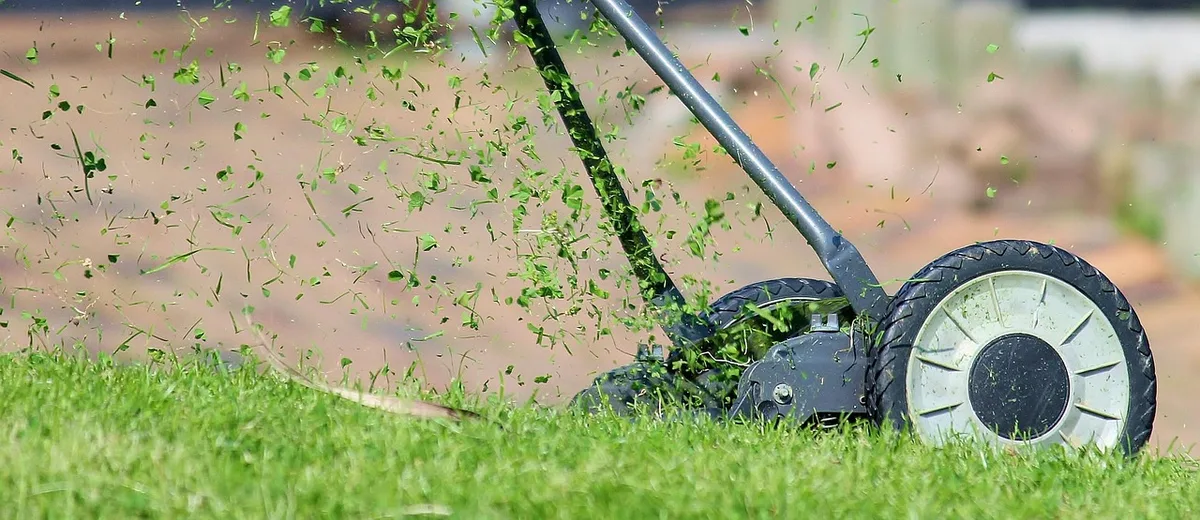
Grass clumping happens when your mower can't process clippings fast enough to distribute them evenly. Three factors control how well a mulching mower works: grass moisture, blade performance, and cutting load.
When Grass Moisture Is the Problem
Wet grass sticks to everything. Morning dew, rain, or high humidity can turn a clean cut into a sticky mess. Wet clippings clump together instead of dispersing, and they cake onto the underside of your mower deck.
Manufacturer maintenance guides specify that mulching mowers perform best when grass is dry. If you're mowing early in the morning or right after a storm, you're fighting physics. The blade cuts wet grass into strips, but those strips bind together and fall in clumps instead of sifting back into the turf.
You'll also see this in shaded areas where dew lingers, or in humid climates like the Southeast US where grass never fully dries. The fix isn't complicated: wait until midday when the sun has dried the lawn, or switch to side discharge or bagging when conditions are damp.
When Your Mower Blade or Deck Is the Issue
A dull blade tears grass instead of slicing it cleanly. That creates ragged edges that mat together and increases the volume of clippings your deck has to process. Most manufacturers recommend sharpening blades every 20 to 25 hours of mowing, but that drops to every 10 hours if you're cutting sandy or abrasive soil.
Mulching blades have a curved design with extra cutting edges that chop clippings multiple times before releasing them. If you're running a standard high-lift blade in a mulching mower, you won't get the recut action needed to pulverize clippings. The wrong blade simply can't do the job.
Deck buildup compounds the problem. As wet grass cakes onto the underside of the deck, it reduces airflow and blade clearance. That kills the vacuum effect that lifts grass for a clean cut.
Scrape the deck clean after every few mows, especially in wet conditions.
When You're Cutting Too Much at Once
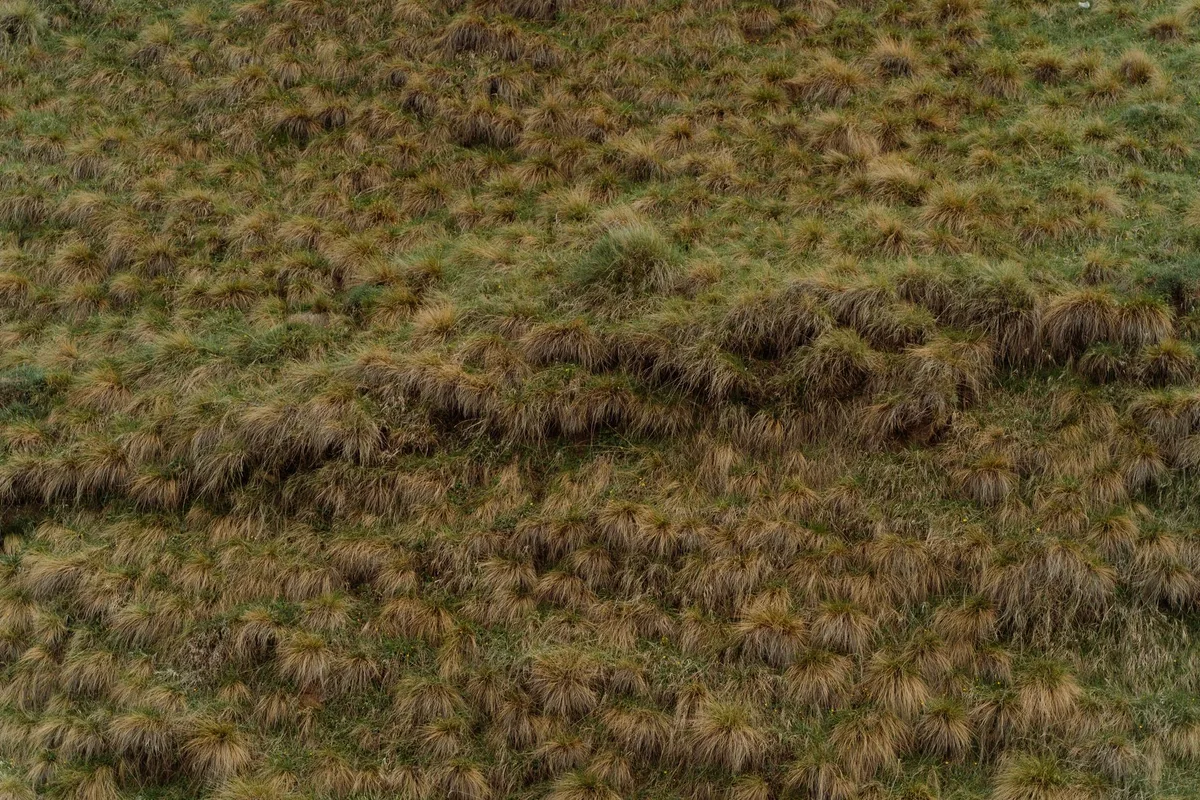
The one-third rule is non-negotiable. If you cut more than one-third of the grass height in a single pass, you overload the deck with clippings. No mower can mulch that volume effectively, even in perfect conditions.
Let's say your grass is 6 inches tall and you drop the deck down to 3 inches. You've just dumped 3 inches of clippings into a system designed to handle maybe 1 inch. The result is clumping, deck clogging, and a poor cut.
Overgrown grass also bends under the mower instead of standing upright for the blade. That creates an uneven cut and leaves behind stragglers. If you've let the lawn go for two weeks, make two passes at different heights instead of trying to fix it in one run.
Tall grass holds more moisture near the base, so even "dry" overgrown turf can behave like wet grass. Mow more frequently, and you'll cut less material each time.
What Causes Mulch to Mat, Compact, or Smother Plants
Garden mulch turns into a problem when it loses its loose, breathable structure. That happens due to depth, material type, and how water moves through the layer.
Mulch Depth and Material Type
Most extension research recommends 2 to 4 inches of mulch around plants. Go deeper than 4 inches and you create anaerobic conditions at the bottom. Oxygen can't penetrate, beneficial microbes die off, and anaerobic bacteria take over.
That's what causes the sour, rotten smell.
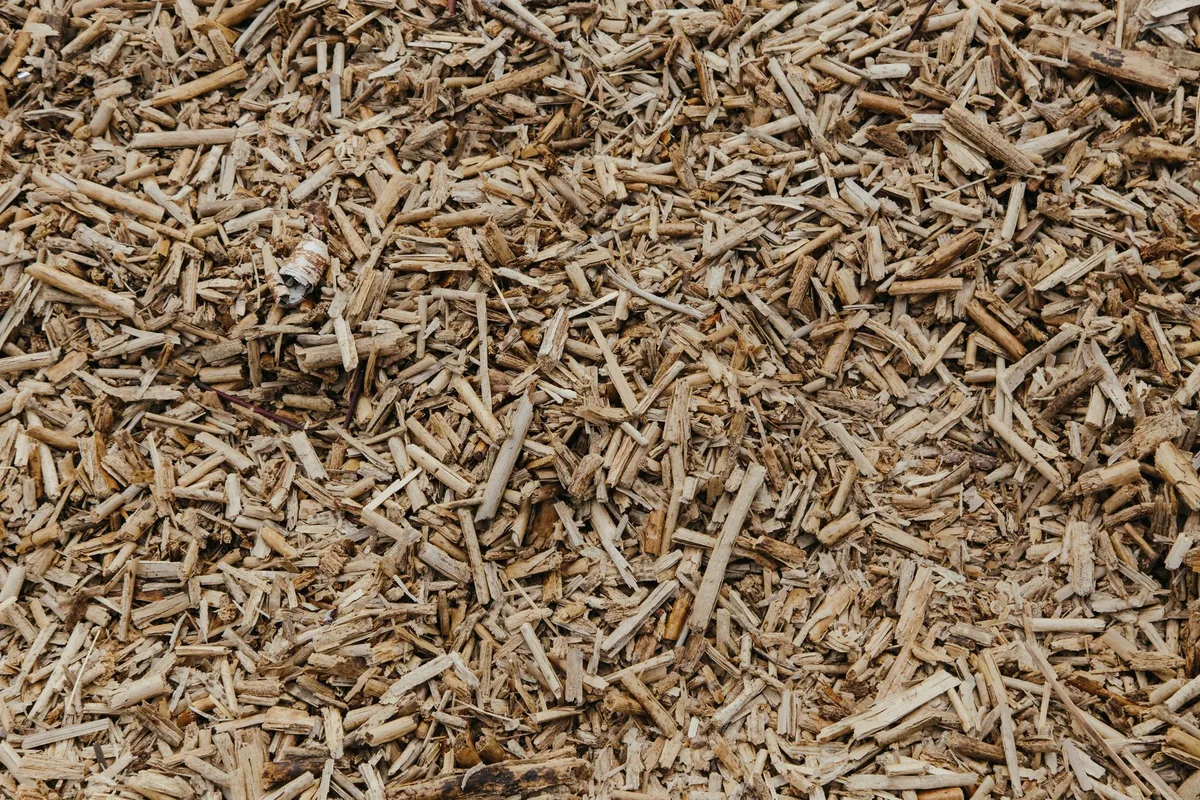
Certain mulch materials compact faster than others. Fine particles like shredded hardwood or dyed mulch settle more than chunky cedar bark or pine nuggets. As the fine material breaks down, it forms a dense mat that sheds water instead of letting it soak through.
Double-shredded mulch looks tidy, but it packs tight within a few months. Coarser mulch stays loose longer and allows better air circulation. If you're dealing with heavy clay soil or poor drainage, coarse mulch is the better choice.
Moisture Retention Gone Wrong
Mulch is supposed to hold moisture, but too much turns it into a sponge. In high-rainfall areas or poorly drained beds, mulch can stay saturated for days. That blocks oxygen, promotes fungal growth, and creates a breeding ground for slime molds and artillery fungus.
Thick mulch piled against plant stems or tree trunks traps moisture right where it does the most damage. Bark rot, crown rot, and fungal infections follow. Always leave a 2- to 3-inch gap around the base of plants.
Hydrophobic mulch is another issue. When certain types of mulch (especially aged wood chips) dry out completely, they repel water instead of absorbing it. Rain runs off the surface, and the soil underneath stays dry.
Fluff and turn the mulch layer every few months to prevent this.
Anaerobic Decomposition and Sour Mulch
Healthy mulch breaks down slowly in the presence of oxygen. When air can't reach the lower layers, anaerobic bacteria take over. They produce hydrogen sulfide and other sulfur compounds that smell like rotten eggs.
You'll also see white or gray fungal threads and slimy patches.
This happens most often with fresh wood chips or uncomposted yard waste. Fresh material has a high carbon-to-nitrogen ratio, which ties up nitrogen as it decomposes. That can stunt plant growth even if the plants aren't directly smothered.
The fix is to rake and turn the mulch to reintroduce oxygen, or remove the compacted layer and replace it with fresh material. Some gardeners mix compost into the bottom layer to balance the carbon-to-nitrogen ratio and speed up healthy decomposition.
How Mowing Conditions Change Everything
Grass clumping isn't just about your mower. The conditions you're mowing in can override even a perfectly tuned machine. Time of day, season, and weather all shift the odds.
Mowing in the morning means you're cutting through dew. Even if it hasn't rained, grass blades hold moisture overnight. By midday, that moisture evaporates, and the same lawn that clumped at 8 a.m. will mulch cleanly at 2 p.m.
Spring and early summer are the worst seasons for clumping. Grass grows fast, stays green and moist, and often gets ahead of your mowing schedule. In late summer and fall, cooler nights and slower growth make for drier, easier cutting.
If you live in a humid climate, you're fighting elevated moisture levels all season long. Coastal areas, the Southeast, and the Pacific Northwest see persistent dew and frequent rain. In these regions, waiting for "dry" conditions might mean you never mow.
Instead, adjust your expectations and clean the deck more often.
Shaded lawns stay wet longer than sunny ones. If part of your yard is under trees, mow the sunny sections first and save the shaded areas for last. That gives them extra time to dry out.
How Mower Setup Affects Mulching Performance
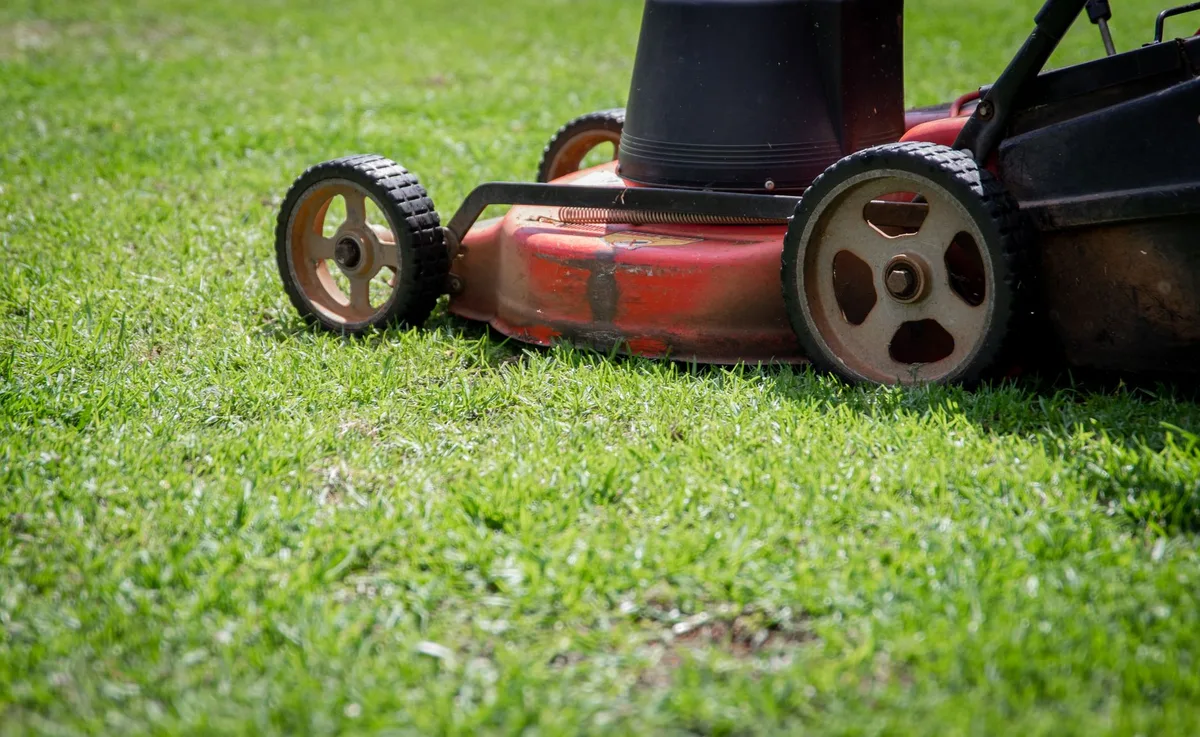
Your mower's configuration controls whether clippings get chopped fine or dumped in clumps. Three setup factors matter most: blade type, cutting height, and engine speed.
Blade Type and Sharpness
Mulching blades have a curved profile with multiple cutting edges. They create a lifting action that holds clippings in the deck longer, allowing multiple cuts before discharge. Standard blades have a flat profile and are designed to lift grass once and eject it quickly.
If you're mulching with a standard blade, you're missing the recut action that turns clippings into fine particles. Switching to a genuine mulching blade can cut clumping problems in half, even if every other variable stays the same.
Blade sharpness matters just as much as blade type. A sharp edge slices cleanly and produces lightweight clippings that disperse easily. A dull edge tears and crushes, creating dense clumps that fall straight down.
Sharpen every 20 to 25 hours, or sooner if you hit rocks or roots.
Cutting Height and Deck Pitch
Cutting too low forces the mower to process more material. It also scalps the lawn, stresses the grass, and increases the chance of hitting dirt or debris that dulls the blade. Most cool-season grasses perform best at 2.5 to 3.5 inches.
Warm-season varieties like Bermuda can go lower, but 2 inches is usually the minimum for clean mulching.
Deck pitch refers to the front-to-back angle of the mower deck. Most manufacturers set a slight forward tilt so the front sits about 1/8 to 1/4 inch lower than the rear. That helps the blade contact grass at the right angle for a clean cut.
If your deck is level or tilted backward, the blade drags instead of slicing. You'll see an uneven cut and more clumping. Check your owner's manual for the correct pitch and adjust the front wheels or deck hangers as needed.
Engine Speed and Airflow
Mulching mowers rely on high blade speed to chop clippings multiple times. That requires running the engine at full throttle. If you're mowing at half throttle to save fuel or reduce noise, you're cutting blade speed in half and killing the mulching effect.
Deck airflow depends on blade speed and deck design. The spinning blade creates a vacuum that lifts grass upright before cutting. If the engine bogs down in thick grass, blade speed drops, airflow collapses, and clippings pile up instead of getting recut.
Keep the air filter clean and the engine tuned. A clogged filter chokes airflow to the carburetor, which reduces power and throttle response. Cleaning the air filter takes five minutes and can prevent hours of frustration with clumping grass.
How to Fix Grass Clumping Issues (Step-by-Step)
Start with the easiest fixes first. Most clumping problems come down to timing, blade condition, and deck maintenance.
Step 1: Wait for dry conditions. If the grass is wet from dew or rain, wait until midday. Even perfect equipment can't mulch soggy clippings cleanly.
Step 2: Check blade sharpness. Run your finger along the cutting edge (with the spark plug disconnected). A sharp blade feels like a butter knife. A dull one feels rounded or has visible nicks.
Sharpen or replace as needed.
Step 3: Scrape the deck. Tip the mower on its side (air filter up) and scrape off caked grass with a putty knife or deck scraper. Spray the underside with silicone lubricant or cooking spray to reduce future buildup.
Step 4: Raise the cutting height. If you're cutting below 2.5 inches, raise the deck one notch. Taller grass is healthier and produces less clipping volume per pass.
Step 5: Mow more often. If you're letting grass grow for two weeks between cuts, switch to weekly mowing. Shorter intervals mean less material to process each time.
Step 6: Make two passes. For overgrown grass, mow at the highest setting first, then drop down and make a second pass a day or two later. That keeps clipping volume manageable.
If you've done all of this and still see clumping, the problem is likely a worn or wrong blade, low engine power, or a deck design that just doesn't handle your grass type well.
How to Prevent Mulch Matting in Garden Beds
Garden mulch stays loose and functional when you control depth, choose the right material, and manage moisture.
Start with a 2- to 3-inch layer for most shrubs and perennials. Tree rings can go up to 4 inches, but never pile mulch against the trunk. Leave a 2- to 3-inch gap so bark can breathe.
Coarse mulch resists compaction better than fine shreds. Pine bark nuggets, cedar chunks, and hardwood chips stay loose for a full season. Double-shredded mulch looks neat but settles into a mat within a few months, especially in wet climates.
Turn or fluff the mulch layer every few months. Use a garden rake or hand cultivator to break up the surface crust and reintroduce oxygen. That prevents anaerobic pockets and keeps decomposition aerobic and odor-free.
If you're dealing with sour mulch, rake it aside, let it dry for a few days, then spread it back out in a thinner layer. Add fresh material on top to dilute the problem. In severe cases, remove the affected mulch entirely and start over.
Avoid piling on new mulch every spring without removing the old layer. That builds depth year after year until you're well past the safe 4-inch limit. Pull back old mulch, fluff it, and top-dress with just 1 inch of fresh material.
Common Mistakes That Make Mulching Problems Worse
Trying to mulch in the wrong conditions wastes time and wrecks your lawn's appearance. Mowing wet grass is the top mistake. You'll spend more time scraping the deck than you save by not waiting for it to dry.
Running a dull blade is a close second. Torn grass clumps more than sliced grass, and you're stressing the turf at the same time. Sharpen every 20 hours, or hire someone to do it if you don't have a bench grinder.
Cutting too low overloads the deck and scalps the lawn. If you can see bare dirt or brown patches after mowing, you're cutting too short. Raise the deck and stick to the one-third rule.
Letting grass get overgrown between mows creates a backlog the mower can't handle. Weekly mowing in spring and every 10 days in summer keeps clipping volume light.
In garden beds, the biggest mistake is piling mulch too thick. More isn't better. Once you pass 4 inches, you're blocking oxygen and inviting fungal problems.
If your mulch has a sour smell or white fungal threads, you've gone too deep.
Another common error is using the wrong mulch type for your climate. Fine shredded mulch works great in dry areas but turns into a soggy mat in the Pacific Northwest. Match your material to your rainfall and drainage.
When to Switch from Mulching to Bagging or Side Discharge
Mulching isn't the right choice for every mowing session. When conditions work against you, switching modes saves time and improves cut quality.
If the grass is wet and you can't wait, switch to side discharge. The clippings will land in windrows, but at least they won't clog the deck. You can rake them up later or let them dry and mow over them again in a day or two.
Bagging makes sense when the lawn is overgrown or you're cutting for the first time in weeks. Collect the clippings, compost them, or spread them thin in flower beds as a nitrogen source.
In fall, when you're mowing up leaves along with grass, side discharge or bagging handles the extra volume better than mulching. Whole leaves don't chop cleanly and can smother the turf if left in place.
If you've got a small engine mower (under 160cc) or you're cutting thick, fast-growing grass like fescue or ryegrass in spring, mulching may overload the deck no matter what you do. Switch modes during peak growth, then go back to mulching in summer when growth slows.
Some mowers marketed as "3-in-1" do all three jobs poorly. If your mulching performance is consistently bad even in good conditions, the deck design might not be up to the task. A dedicated mulching mower with a deep deck and strong engine will always outperform a budget side-discharge mower with a mulch plug bolted on.
Seasonal and Climate Factors That Trigger Mulching Issues
Spring brings fast growth and heavy dew, which means more clumping even with a sharp blade. Grass grows fastest when soil temps hit 50 to 65°F, and morning moisture lingers until midday.
Summer heat slows cool-season grasses and dries out the lawn, making mulching easier. Warm-season grasses like Bermuda peak in July and August, so you'll mow more often but conditions stay drier.
Fall leaf drop mixes whole leaves with grass clippings. That overloads the deck and leaves clumps unless you switch to bagging or make multiple passes. Wet leaves stick to everything and clog the deck faster than wet grass alone.
Humid climates see persistent moisture problems. Coastal areas and the Southeast deal with dew most mornings, so waiting until afternoon becomes the standard routine.
How to Maintain Your Setup for Clean Mulching Year-Round
Sharpen the blade every 20 to 25 hours of runtime. Mark your calendar or track hours on a notepad stuck to the mower. A sharp edge makes more difference than any other single factor.
Scrape the deck after every third or fourth mow, or more often in wet conditions. Use a putty knife or deck scraper, and spray the underside with silicone or cooking oil to slow buildup.
Check the right oil level before each season. Low oil reduces engine power, which drops blade speed and kills mulching performance. Change the oil every 50 hours or once per season, whichever comes first.
Replace the air filter annually, or twice a year if you're mowing dusty or sandy soil. A clogged filter chokes the engine and reduces throttle response.
Frequently Asked Questions
Why does my mower leave clumps even when the grass is dry?
Check blade sharpness first, then inspect the deck for buildup. If both are fine, you're likely cutting too much at once or running the engine below full throttle.
Can I mulch wet grass if I slow down?
Slowing down helps a little, but wet clippings still stick together and cake onto the deck. You're better off waiting a few hours or switching to side discharge.
How often should I replace a mulching blade?
Replace when sharpening no longer restores a clean edge, usually after two to three seasons. Blades wear thin over time and lose their curved profile.
What's the best mulch depth to avoid matting?
Stick to 2 to 4 inches. Anything deeper blocks oxygen and creates anaerobic conditions that lead to sour smells and fungal growth.
Does mulch type matter for preventing compaction?
Yes. Coarse materials like pine bark nuggets resist compaction better than fine double-shredded mulch, especially in wet climates.
Decision Guide: Diagnosing Your Mulching Problem
If you're seeing grass clumps on the lawn, check these in order: grass moisture, blade sharpness, cutting height, and deck buildup. Fix the first problem you find, then test again.
If garden mulch is matting or smells sour, measure the depth and check for drainage issues. Rake and fluff the layer, remove excess material, and switch to coarser mulch next time.
For persistent mower clumping despite dry conditions and a sharp blade, the issue is likely underpowered equipment or a deck design that can't handle your grass type. Consider switching to side discharge during peak growth or upgrading to a mower with a deeper deck and stronger engine.