Guide to Whiteflies Maintenance Guide 2026: Explained Simply
You’ve found tiny white insects clustered on the underside of your plant leaves, and they scatter into a cloud when you brush past. That’s a whitefly infestation, and a proper whiteflies maintenance guide can stop it before it spirals into stunted growth, yellowing leaves, and sticky honeydew coating every surface. These piercing-sucking pests reproduce fast, completing their life cycle in as little as 21 days at warm temperatures.
The key to successful control is matching your response to the infestation level and plant environment. University Extension research confirms that monitoring thresholds drive the most effective integrated pest management programs, so you’re not spraying blindly or waiting until populations explode.
Quick Answer
A whiteflies maintenance guide starts with weekly monitoring using yellow sticky traps. Action thresholds trigger escalating treatments: mechanical removal for light infestations, insecticidal soap or neem oil for moderate ones, and biological or systemic treatments for heavy populations. Indoor plants need year-round vigilance.
Outdoor gardens face seasonal spikes in warm climates. Repeat applications every 5 to 7 days target newly hatched nymphs. Quarantine new plants for 2 to 3 weeks to prevent introduction.
What Whiteflies Are and Why They’re Hard to Control
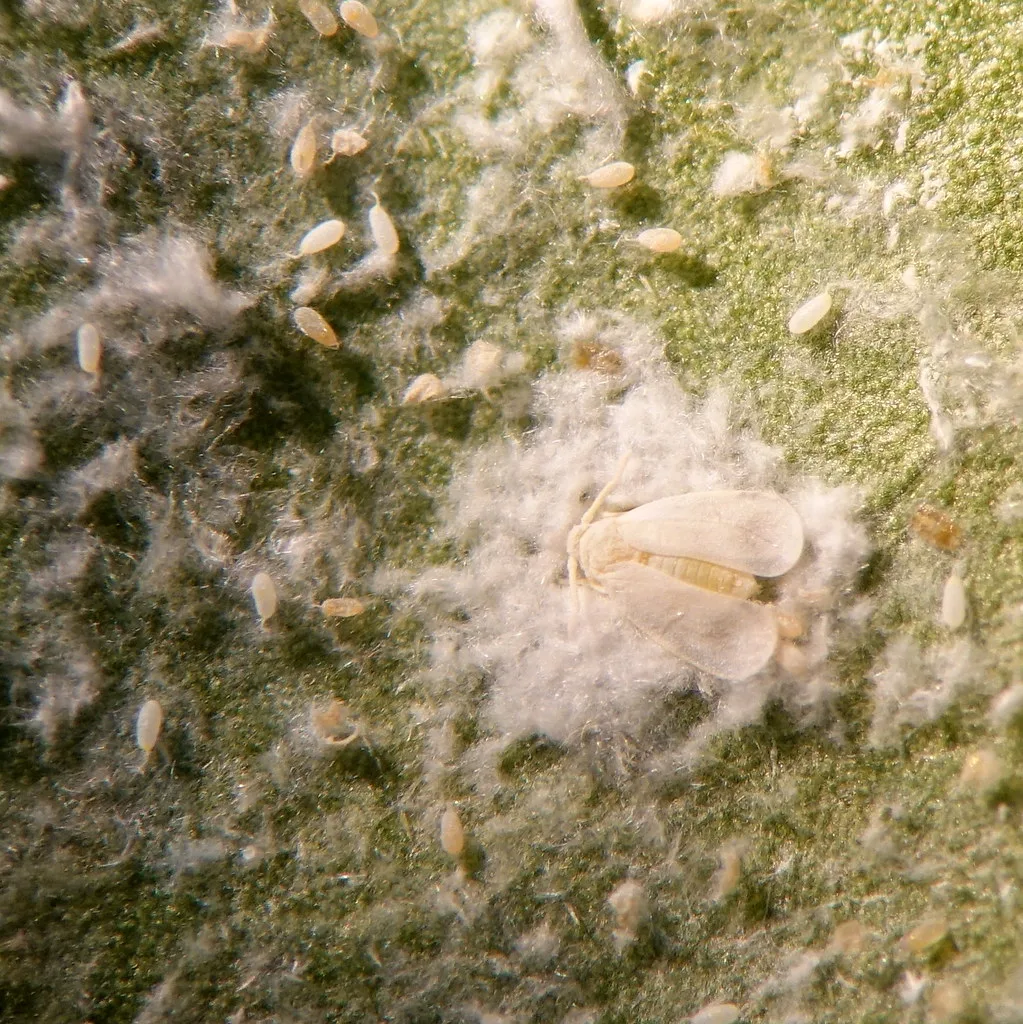
Whiteflies belong to the Aleyrodidae family, a group of piercing-sucking insects that feed on plant phloem. The most common species you’ll encounter are the greenhouse whitefly (Trialeurodes vaporariorum) and the silverleaf whitefly (Bemisia tabaci). Adults look like tiny white moths, about 1/16 inch long, with powdery white wings.
They’re deceptively tough to eliminate because of their biology. A single female lays 200 to 400 eggs over her lifetime, all tucked on leaf undersides. Those eggs hatch into scale-like nymphs that don’t move.
They just sit and feed, hidden from contact sprays.
The life cycle completes in 21 days at 80°F, but stretches to 36 days at cooler temperatures around 64°F. That means populations can explode in warm indoor environments or heated greenhouses. Even outdoor infestations rebound quickly in summer heat.
Whiteflies excrete honeydew, a sticky sugar-rich waste that coats leaves and stems. Sooty mold grows on the honeydew, blocking photosynthesis and weakening plants further. Some whitefly species also transmit plant viruses like Tomato Yellow Leaf Curl Virus, which can devastate entire crops.
Their rapid reproduction and protected nymph stage make single-treatment solutions ineffective. You’re fighting overlapping generations at all life stages simultaneously, which is why a maintenance routine beats a one-time spray.
How to Know If You Actually Have Whiteflies (Not Fungus Gnats or Aphids)
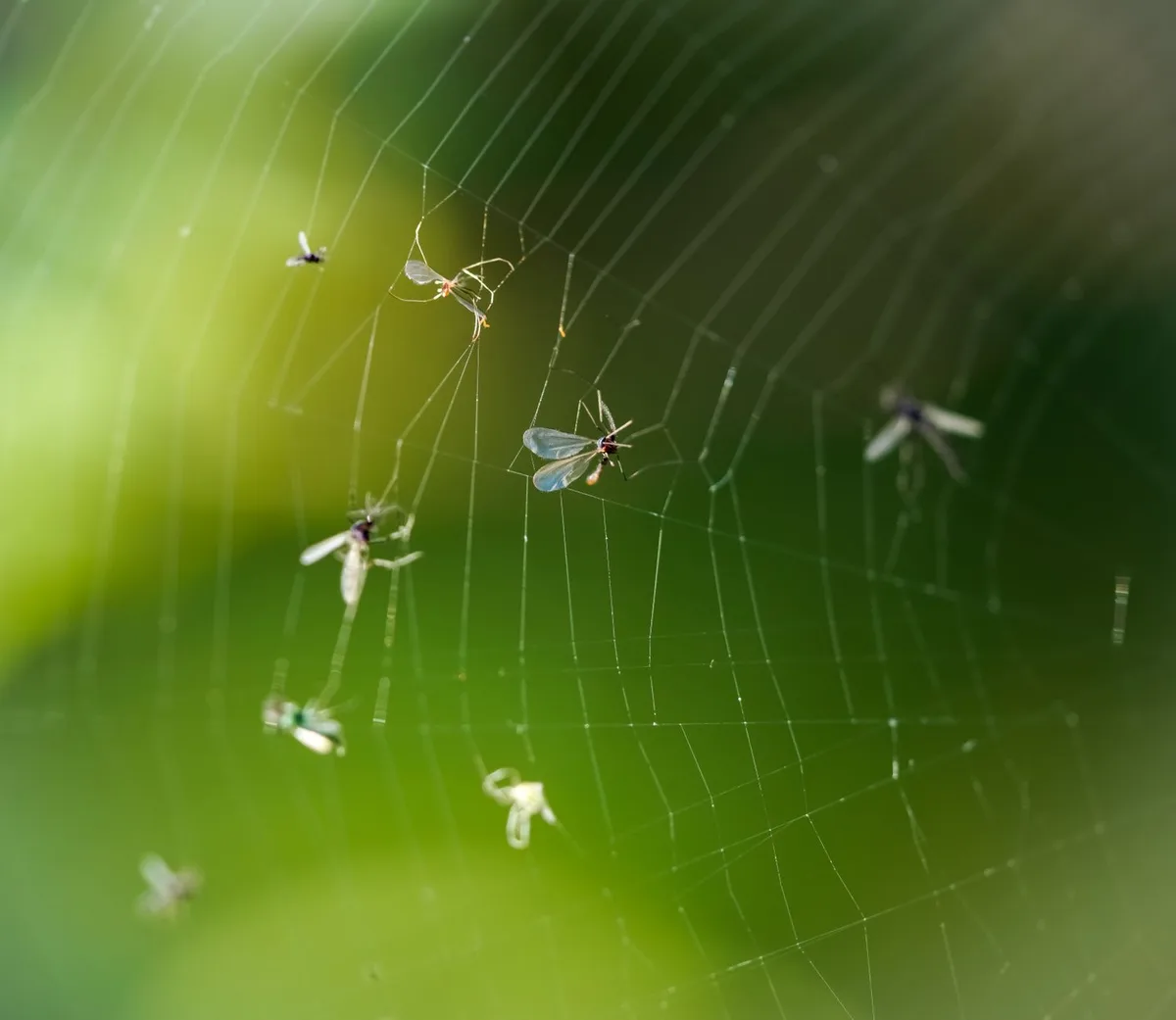
Whiteflies get confused with fungus gnats and aphids, but they’re distinct. Shake or brush a leaf gently. If a cloud of tiny white insects takes flight and settles back down quickly, those are adult whiteflies.
Fungus gnats are dark and tend to hover around soil, not leaves.
Turn a leaf over and look closely. Whitefly eggs are pale, oval, and often arranged in circular patterns. Nymphs look like translucent or pale yellow scales, flat against the leaf surface.
They don’t move once they settle. Aphids are pear-shaped, usually green or black, and crawl around actively.
Check for honeydew and sooty mold. Both whiteflies and aphids produce honeydew, but whitefly infestations concentrate on leaf undersides. You’ll see the sticky residue directly below affected leaves.
Sooty mold appears as a black powdery coating on the honeydew.
Adult whiteflies prefer new growth but will colonize any part of the plant as populations grow. Look for yellowing leaves, especially older ones, as the plant loses nutrients to constant feeding. Severe infestations cause leaf curling, wilting, and stunted growth.
If you’re still unsure, place a yellow sticky trap near the plant canopy. Whiteflies are strongly attracted to yellow. If the trap fills with small white-winged insects within a few days, you’ve confirmed the pest.
The Whitefly Life Cycle and Why Timing Matters for Treatment
Understanding the whitefly life cycle is the difference between wasted effort and effective control. There are four stages: egg, nymph (four instars), pupa, and adult. Each stage responds differently to treatment.
Females lay eggs on leaf undersides, usually on new growth. Eggs hatch in 5 to 10 days depending on temperature. The first instar nymph, called a crawler, moves a short distance to find a feeding site.
Once it settles and inserts its mouthparts, it stays put through three more nymph stages and a pupal stage.
This immobile nymph period lasts 10 to 14 days. Nymphs look like flat scales and are nearly impossible to remove with water spray. They’re also protected from many contact insecticides by a waxy coating.
That’s why sprays often fail when you only treat once.
The final nymph stage, called a pupa, develops into a winged adult. Adults emerge, mate, and females begin laying eggs within days. At 80°F, the entire cycle takes 21 days.
Multiple generations overlap, so you’ll always have eggs, nymphs, and adults present at the same time.
Contact sprays like insecticidal soap and horticultural oils kill eggs and adults but have limited effect on later-stage nymphs. That’s why repeat applications every 5 to 7 days are essential. You’re targeting newly hatched crawlers and adults while waiting for protected nymphs to mature and become vulnerable.
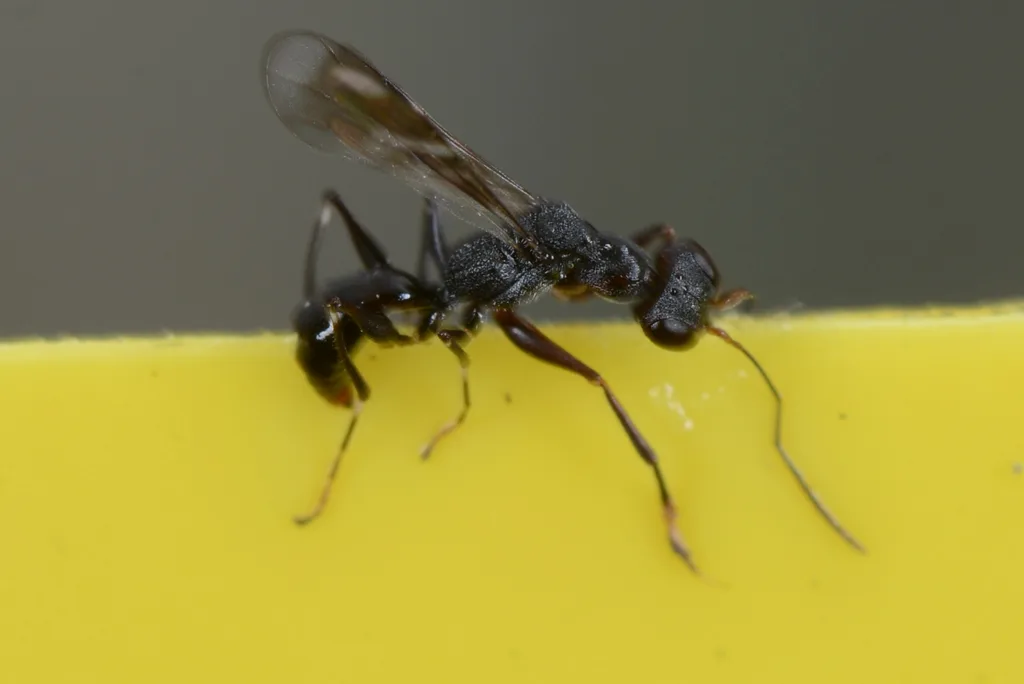
Systemic insecticides, absorbed by the plant, kill nymphs as they feed. These work well for indoor potted plants but take longer to show results. Biological controls like the parasitoid wasp Encarsia formosa target nymphs specifically, laying eggs inside them.
The wasp larva consumes the nymph from the inside.
Timing treatments to the life cycle means you’re not just spraying and hoping. You’re disrupting reproduction and preventing the next generation from establishing.
When to Act: Monitoring Thresholds That Trigger Treatment
Whitefly maintenance starts with monitoring, not spraying. Action thresholds tell you when populations justify treatment. Treating too early wastes time and money.
Waiting too long lets the problem spiral out of control.
Weekly monitoring gives you the data to make smart decisions. It’s a simple routine that prevents surprises and keeps infestations manageable.
Setting Up Yellow Sticky Traps for Accurate Monitoring
Yellow sticky traps are the standard monitoring tool for whiteflies. The insects are strongly attracted to bright yellow. Place traps at canopy height or just above, near the tops of plants where adults congregate.
For indoor plants, one trap per large plant or one trap per 100 square feet of growing area works well. Outdoor gardens benefit from traps spaced every 10 to 15 feet along rows or beds. Use stakes or clips to hold traps vertically, facing plants.
Check traps weekly. Count the number of adult whiteflies on each trap. Replace traps when they’re covered with insects or debris, usually every 1 to 2 weeks.
Keep a simple log of counts over time so you can spot trends.
Traps serve two purposes. They capture adults, reducing reproduction slightly. More importantly, they give you early warning.
A sudden spike in trap counts means populations are growing and treatment may be needed soon.
Don’t rely on traps alone for control. They’re a monitoring tool, not a cure. Heavy infestations require integrated treatment, but traps guide your timing and help you measure whether your control methods are working.
How Many Whiteflies Mean It’s Time to Treat
Action thresholds vary by crop value, tolerance, and environment. For ornamental houseplants, 5 or more adults per sticky trap is a common trigger. At that level, populations are building but still controllable with lower-intensity methods.
For vegetable gardens, especially high-value crops like tomatoes and peppers, 1 or more nymphs per leaf is a stricter threshold. Whiteflies transmit viruses in these plants, so early action prevents disease spread. Check the undersides of at least 10 leaves per plant, focusing on mid-canopy foliage.
Greenhouse growers often use even tighter thresholds, especially if they’re using biological controls. Introducing Encarsia formosa works best when nymph densities are low, around 0.5 to 1 nymph per leaf. Higher densities overwhelm the parasitoids.
If you’re seeing clouds of adults when you disturb plants, you’re past the threshold. That’s a moderate to heavy infestation requiring immediate escalation to stronger treatments.
Threshold-based treatment saves you from calendar spraying, where you treat on a fixed schedule regardless of pest presence. You’re only acting when monitoring shows a real problem, which reduces chemical use and preserves beneficial insects. For indoor plants, consistent monitoring prevents infestations from establishing in the first place.
Decision Tree: Choosing Your Control Method Based on Infestation Level
Your control strategy depends on how many whiteflies you’re seeing and where they’re feeding. Light infestations respond to gentle methods that preserve beneficial insects. Heavy infestations need stronger, faster-acting treatments.
Here’s how to match your response to the problem.
Light Infestation (Early Detection): Mechanical and Physical Removal
If you’re catching fewer than 5 adults per trap and seeing only a few nymphs scattered across plants, mechanical removal works. It’s low-cost, non-toxic, and buys you time to monitor whether populations are stabilizing or growing.
Spray plants with a strong stream of water, focusing on leaf undersides. This dislodges eggs, crawlers, and some nymphs. Do this every 2 to 3 days for a week or two.
It won’t eliminate an infestation, but it slows reproduction.
A handheld vacuum works surprisingly well for adults. Use a small battery-powered model and gently vacuum the undersides of leaves in the morning when adults are less active. Empty the vacuum into a sealed bag and dispose of it immediately.
Remove heavily infested leaves if only a few are affected. Bag them and discard them in the trash, not compost. This reduces the breeding population without chemicals.
Reflective mulches placed around outdoor plants disorient whiteflies and reduce landing rates. Silver or aluminum-coated plastic mulch works best for vegetable gardens. This is a preventive tactic, not a cure for established infestations.
Moderate Infestation: Insecticidal Soap, Neem Oil, and Horticultural Oils
When trap counts rise above 5 adults or you’re finding 1 to 3 nymphs per leaf, it’s time for contact sprays. Insecticidal soap, neem oil, and horticultural oils kill on contact but leave no residual, so repeat applications are necessary.
Insecticidal soap works by disrupting insect cell membranes. It kills eggs, crawlers, and adults but has limited effect on later-stage nymphs. Mix a 1 to 2 percent solution (follow label rates) and spray thoroughly, covering all leaf surfaces.
Repeat every 5 to 7 days for 3 to 4 applications.
Neem oil contains azadirachtin, which disrupts insect growth and feeding. It works more slowly than soap but has some systemic and repellent effects. Dilute 1 to 2 tablespoons per gallon of water.
Spray in early morning or late evening to avoid phytotoxicity from sun exposure.
Horticultural oils smother eggs and nymphs by coating their bodies. Use a lightweight summer oil at 1 to 2 percent concentration. Don’t apply oils in temperatures above 85°F or to drought-stressed plants.
They can cause leaf burn under those conditions.
Rotate between soap, neem, and oil to prevent resistance and reduce the chance of damaging plants. Never mix products unless the label explicitly allows it. Spray when temperatures are below 80°F and plants are well-watered.
Coverage is everything. You must hit the undersides of leaves where nymphs and eggs hide. Use a pump sprayer with an adjustable nozzle.
Tilt the sprayer up and work from below the canopy. Missing even a few leaves lets populations rebound.
Heavy Infestation: Biological Controls and Systemic Treatments
If you’re seeing clouds of adults and multiple nymphs per leaf, you need faster-acting or longer-lasting solutions. Biological controls and systemic insecticides offer that, but each has trade-offs.
Encarsia formosa is a tiny parasitoid wasp that lays eggs inside whitefly nymphs. The wasp larva consumes the nymph, then emerges as an adult to parasitize more. Release 2 to 5 wasps per plant when nymph densities are around 0.5 to 1 per leaf.
Higher densities overwhelm the wasps.
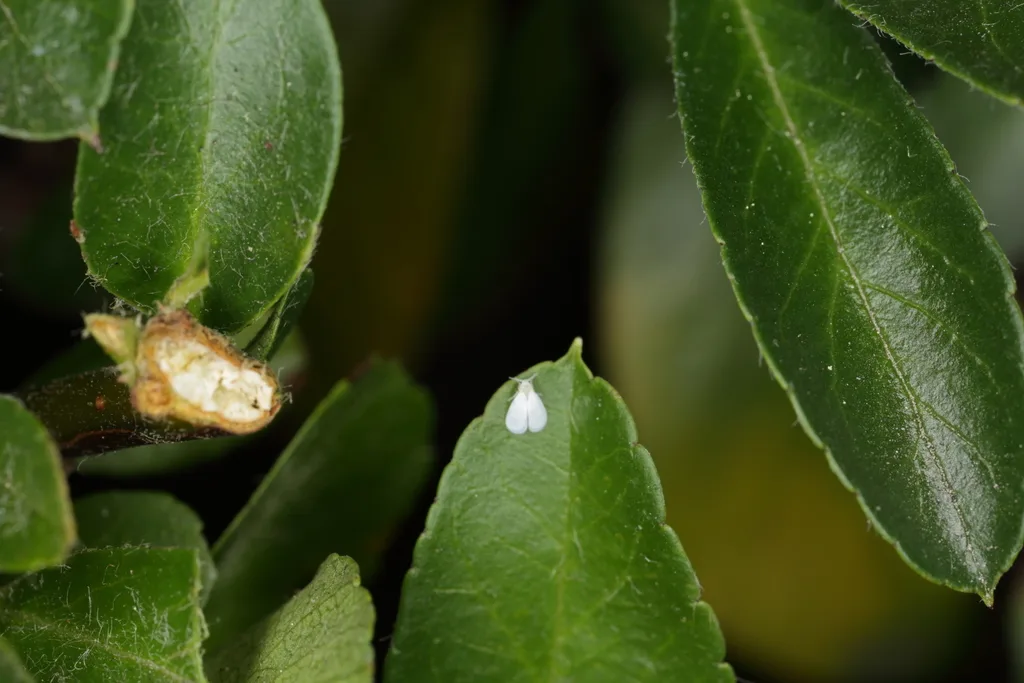
Encarsia works best in greenhouses or indoor growing spaces where temperatures stay between 70 and 80°F. Outdoor use is less reliable because wasps can disperse. Don’t use broad-spectrum insecticides for at least 2 weeks before or after releasing wasps.
They’re extremely sensitive to most chemicals.
Predatory beetles like Delphastus catalinae feed on whitefly eggs and nymphs. They’re more tolerant of temperature swings and work well outdoors. Release rates vary, but 5 to 10 beetles per plant is typical for moderate infestations.
They reproduce on-site if prey is abundant.
Systemic insecticides like imidacloprid or acetamiprid are absorbed by plant roots or leaves and kill nymphs as they feed. They’re effective for potted indoor plants where you can apply a soil drench. Outdoor vegetable use is restricted in many states as of 2026 due to pollinator toxicity concerns.
Apply systemics as a soil drench at label rates. The plant takes up the active ingredient over 7 to 14 days. You’ll see nymph death within a week, but adults remain until they die naturally or are controlled by other means.
Systemics offer 4 to 8 weeks of protection but don’t use them on flowering plants visited by bees.
Severe or Resistant Infestations: Chemical Insecticides and Rotation Strategy
When nothing else works, chemical insecticides provide fast knockdown. Pyrethrin, spinosad, and acetamiprid target adults and nymphs. Resistance is a real problem, so rotation by mode of action is critical.
Pyrethrin is a botanical insecticide derived from chrysanthemums. It kills quickly but breaks down in sunlight within hours. It’s OMRI-listed for organic use.
Spray in late evening to maximize contact time. Repeat every 3 to 5 days for 2 weeks.
Spinosad is a microbial insecticide effective against soft-bodied insects. It has some residual activity, lasting 7 to 10 days. It’s less toxic to beneficials than synthetic pyrethroids but still harmful to bees during application.
Spray after dusk when pollinators aren’t active.
Acetamiprid is a neonicotinoid with systemic and contact activity. It controls both adults and nymphs. Use it as a last resort for ornamentals or non-edible plants.
Pre-harvest intervals (PHI) for vegetables range from 3 to 14 days depending on the crop. Check the label.
Rotate insecticides by IRAC mode of action group. Pyrethrin is Group 3A, spinosad is Group 5, and acetamiprid is Group 4A. Using the same mode repeatedly selects for resistant populations.
Alternate between groups with each application cycle.
Don’t spray during full sun or high heat. Phytotoxicity and reduced efficacy are common mistakes. Always follow label rates.
More isn’t better and can harm plants or leave illegal residues on edibles.
Indoor vs. Outdoor Whitefly Maintenance: Different Strategies for Different Environments
Indoor and outdoor whitefly problems look similar but require different maintenance routines. Temperature, humidity, and the presence of natural predators all shift your approach.
Indoor Plant Maintenance (Houseplants, Grow Rooms, Small Greenhouses)
Indoor environments favor whiteflies year-round. Temperatures stay warm, humidity is often moderate, and natural predators are absent. That means vigilance is constant, not seasonal.
Quarantine every new plant for 2 to 3 weeks before introducing it to your collection. Place it in a separate room and inspect it twice a week. Most infestations arrive on new plants, especially from retail nurseries.
Yellow sticky traps are your early warning system. Place one trap near each group of plants. Check weekly and log counts.
A sudden spike means you’ve got an emerging problem, even if you don’t see adults yet.
If you spot whiteflies, isolate the affected plant immediately. Treat it separately so you’re not spreading adults to clean plants. Insecticidal soap or neem oil work well indoors because you can control spray drift and reapply easily.
Biological controls like Encarsia formosa thrive indoors if you can maintain steady temperatures. They’re a good fit for grow rooms or greenhouses where you’re managing dozens of plants. Release them early, before populations explode.
Avoid systemic insecticides on edibles grown indoors. If you’re growing herbs, tomatoes, or peppers, stick with OMRI-listed products like neem or spinosad. Residues linger longer indoors than out.
Clean honeydew buildup regularly. Wipe leaves with a damp cloth or spray with water. Honeydew attracts ants and supports sooty mold, which blocks light and weakens plants.
Outdoor Garden Maintenance (Vegetables, Ornamentals, and Large-Scale Plants)
Outdoor infestations are seasonal in most climates. Warm-weather spikes happen in late spring through early fall. Cold winters kill off populations in USDA zones 6 and colder, giving you a clean start each spring.
In southern states and frost-free zones, whiteflies overwinter on host plants and weeds. Year-round monitoring is necessary. Populations dip in winter but never disappear completely.
Start monitoring in early spring when temperatures consistently reach 70°F. Place sticky traps along garden rows or near high-value crops like tomatoes, peppers, and cucumbers. Check traps weekly through the growing season.
Natural predators like ladybugs, lacewings, and spiders help suppress outdoor populations. Avoid broad-spectrum insecticides that kill these beneficials. If you must spray, use selective products like insecticidal soap or spinosad.
Reflective mulches reduce whitefly landing rates by 30 to 50 percent in research trials. Lay silver plastic mulch at planting time for vegetables. It also warms soil and suppresses weeds, so it’s a multi-benefit tactic.
Remove weeds and volunteer plants that host whiteflies. Common hosts include lambsquarters, pigweed, and nightshade species. Clean garden borders reduce reservoir populations that reinfest your crops.
If you’re growing flowering plants for pollinators, time insecticide applications carefully. Spray in late evening after bees have returned to hives. Choose products with short residual activity and low bee toxicity.
Drip irrigation reduces humidity around plants compared to overhead watering. Lower humidity slows whitefly reproduction slightly and reduces disease spread. It’s a small edge but worth incorporating into your routine.
Step-by-Step Application Guide for Contact Sprays
Contact sprays only work if you apply them correctly. Poor coverage and wrong timing are the top reasons treatments fail. Here’s how to get it right.
Step 1: Choose the right time of day. Spray in early morning or late evening when temperatures are below 80°F. Avoid midday heat. Oils and soaps can burn leaves in direct sun.
Step 2: Mix the product at label rates. Don’t guess. Use a measuring cup or syringe. Over-concentration causes phytotoxicity.
Under-concentration wastes time and money.
Step 3: Fill your sprayer and test the nozzle. A pump sprayer with an adjustable nozzle gives you the most control. Set it to a fine mist, not a jet stream. Test on a non-target surface first.
Step 4: Start from the bottom and work up. Tilt the sprayer wand upward to reach leaf undersides. Most nymphs and eggs are on the lower leaf surface. Top-only coverage misses 80 percent of the population.
Step 5: Spray until runoff. You want the solution dripping off leaves. That’s how you know you’ve achieved full coverage. Don’t soak the soil, but don’t be stingy on foliage.
Step 6: Mark your calendar for the next application. Contact sprays have no residual. Repeat every 5 to 7 days for 3 to 4 rounds. Skipping a round lets newly hatched nymphs mature and reproduce.
Step 7: Rotate products after one full treatment cycle. If you used insecticidal soap for 3 applications, switch to neem oil or horticultural oil for the next cycle. Rotation reduces resistance risk and plant stress.
Wear gloves and eye protection when mixing and spraying. Even organic products can irritate skin and eyes. Rinse your sprayer thoroughly after each use to prevent clogging and cross-contamination.
How to Use Biological Controls (Encarsia formosa and Predatory Beetles)
Biological controls work best when you introduce them early and create the right conditions. They’re not rescue treatments. Think of them as long-term suppression tools that prevent infestations from becoming severe.
Encarsia formosa arrives as parasitized whitefly pupae glued to paper cards. Hang the cards near infested plants at canopy level. Wasps emerge over 2 to 3 weeks.
Release 2 to 5 wasps per plant for light to moderate infestations. Higher densities need repeat releases every 2 weeks.
Temperature matters. Encarsia is most active between 70 and 80°F. Below 64°F, they become sluggish and stop reproducing. Above 85°F, their life span shortens and effectiveness drops.
Maintain stable temperatures if possible.
Don’t use insecticides within 2 weeks before or after releasing Encarsia. Residues from pyrethrins, neem, and even soaps can kill the wasps. If you’ve been spraying, wait for residues to break down before introducing biologicals.
Delphastus catalinae beetles are shipped as adults. Release them directly onto infested plants in the evening. They immediately start feeding on eggs and small nymphs.
Each beetle consumes 150 to 160 eggs per day, according to university research.
Beetles tolerate a wider temperature range than Encarsia, working well from 60 to 95°F. They’re better suited for outdoor use or unheated greenhouses. Populations can establish if prey remains available.
Monitor weekly after releases. You should see parasitized nymphs (they turn black) within 10 to 14 days if Encarsia is working. Beetle populations build more slowly, but you’ll notice fewer eggs on leaves after 2 to 3 weeks.
Biological controls cost more upfront than sprays. A pack of 500 Encarsia runs $30 to $50, enough for 100 to 250 plants depending on infestation level. For serious indoor growers or greenhouse operators, the investment pays off in reduced spray costs and labor.
If you’re managing indoor crops, biologicals integrate well with IPM programs.
Building a Weekly Maintenance Routine That Actually Prevents Reinfestation
A consistent weekly routine catches problems before they spiral. Skip a week and populations can double. Here’s what works.
Week 1-4: Active Treatment Phase
Week one starts with a full inspection. Check every plant, focusing on leaf undersides and new growth. Count nymphs on 10 leaves per plant.
Log the numbers so you can track progress.
Apply your chosen treatment on day one. Mark your calendar for the next application 5 to 7 days out. Replace sticky traps if they’re full.
Clean honeydew off leaves with a damp cloth.
Week two repeats the spray. Inspect again before treating. You should see fewer adults and dead nymphs turning brown or black.
If populations haven’t dropped, escalate to a stronger treatment or check your coverage technique.
Week three is your third application. By now, you’re targeting the last generation of eggs that hatched after your first spray. Don’t skip this round even if you’re seeing fewer pests.
The life cycle overlap means stragglers are still reproducing.
Week four is your final spray in most cases. Inspect 3 to 4 days after the last application. If trap counts stay below threshold and nymph counts are near zero, you can shift to monitoring mode.
Month 2+: Monitoring and Maintenance Phase
Switch to weekly inspections without automatic spraying. Check traps and count insects. If trap counts stay below 5 adults and you’re not finding new nymphs, you’re in maintenance mode.
Replace traps every 1 to 2 weeks. Keep logging counts. A sudden spike means you need to restart treatment, but catching it early keeps it manageable.
Quarantine new plants for 2 to 3 weeks before adding them to your collection. This is where most reinfestations start. Inspect new arrivals twice during quarantine.
One whitefly-infested plant can undo a month of control work.
Common Mistakes That Make Whitefly Problems Worse
Spraying only the tops of leaves misses 80 percent of the pest population. Nymphs and eggs live on undersides. Tilt your sprayer up and work from below the canopy.
Treating once and stopping is the most common failure. Contact sprays have no residual. You’re fighting overlapping generations, so 3 to 4 applications spaced 5 to 7 days apart are necessary.
Using the same insecticide repeatedly builds resistance. Rotate by mode of action. Pyrethrin, spinosad, and acetamiprid belong to different groups.
Alternate between them across treatment cycles.
Ignoring threshold counts leads to overtreatment or delayed action. Monitor weekly with sticky traps. Treat when counts justify it, not on a fixed calendar.
Introducing new plants without quarantine spreads infestations. Two weeks of isolation catches problems before they reach your main collection. It’s the easiest prevention step most people skip.
Dealing with Honeydew, Sooty Mold, and Secondary Plant Damage
Honeydew is sticky, sugar-rich waste excreted by feeding whiteflies. It coats leaves, stems, and anything below infested plants. Sooty mold grows on the honeydew, forming a black powdery layer that blocks light.
Wipe honeydew off with a damp cloth or spray plants with water. Do this weekly during active infestations. Removing honeydew before mold establishes keeps plants healthier.
Sooty mold doesn’t directly harm plants, but it blocks photosynthesis. Affected leaves produce less energy, weakening the plant. Once whiteflies are controlled, the mold stops spreading.
It washes off with water or weathers away naturally outdoors.
Yellowing leaves and stunted growth are signs of prolonged feeding stress. Remove heavily damaged foliage. Feed plants with a balanced fertilizer to help them recover.
Recovery takes 2 to 4 weeks after pests are eliminated.
Quarantine and Prevention: Stopping Whiteflies Before They Start
Quarantine every plant before it joins your collection. Place it in a separate room or area for 2 to 3 weeks. Inspect it twice a week.
Look for adults, eggs, and nymphs on leaf undersides.
Place a yellow sticky trap near the quarantined plant. If you catch adults within the first week, treat immediately before moving it. One infested plant can spread whiteflies to dozens of others.
Clean tools and pots between uses. Whitefly eggs can survive on contaminated surfaces for several days. Wipe pruners, stakes, and pot rims with soapy water or rubbing alcohol.
Avoid overcrowding plants. Dense foliage creates humid microclimates that favor whiteflies and make spray coverage harder. Space plants so air circulates freely and you can reach all leaf surfaces.
Which Products Work and Which Don’t: Treatment Comparison
| Product | Kills Eggs | Kills Nymphs | Kills Adults | Residual | Best For |
|---|---|---|---|---|---|
| Insecticidal soap | Yes | Crawlers only | Yes | None | Light to moderate, repeat weekly |
| Neem oil | Yes | Partial | Yes | 5-7 days | Moderate, organic approved |
| Horticultural oil | Yes | Yes | Yes | None | Moderate, avoid heat |
| Pyrethrin | No | Partial | Yes | Hours | Fast knockdown, repeat often |
| Spinosad | No | Yes | Yes | 7-10 days | Moderate to heavy |
| Imidacloprid (systemic) | No | Yes | No | 4-8 weeks | Heavy, potted plants only |
| Encarsia formosa | No | Yes | No | Ongoing | Prevention, greenhouses |
Insecticidal soap and horticultural oils work best when you catch infestations early. They’re safe for edibles and low-toxicity. You’ll need to spray frequently because they don’t persist.
Neem oil offers a middle ground with some systemic uptake and repellent effects. It’s slower than soap but lasts longer between applications.
Systemic insecticides like imidacloprid provide weeks of control with one application. Use them only on non-flowering ornamentals or potted plants away from pollinators.
Biological controls prevent infestations from becoming severe. Release them early and maintain stable conditions for best results.