Why Does My Yard Flood (2026) — Beginner-Friendly Guide
If you’ve ever stepped outside after a heavy rain to find your lawn turned into a wading pool, you’re not alone. The question “Why does my yard flood?” is one of the most common frustrations for homeowners, and the answer usually comes down to three main culprits: where the water comes from, how fast your soil absorbs it, and which direction your yard slopes.
According to the EPA, a typical 1,000‑square‑foot roof sheds about 600 gallons of water during a one‑inch rainstorm. That’s a lot of water looking for a place to go. If your gutters, downspouts, and yard drainage aren’t set up to handle it, you’ll see pooling fast.
Let’s walk through the most likely causes, and the fixes that actually work.
Quick Answer
Your yard floods because water arrives faster than it can drain away. That can be from your roof, your soil, or your slope. The answer is usually a combination of poor downspout routing and slow percolation.
Fix the roof runoff first, it’s the easiest win.
The Real Problem: You’ve Got a Lake Where Your Lawn Should Be
Standing water isn’t just ugly. It kills grass, breeds mosquitoes, and can seep into your foundation. If water sits for more than 24 hours after a storm, you’ve got a drainage issue that needs attention.
Most homeowners assume the problem is “bad drainage” and immediately think about digging up the yard. But more often than not, the real cause is something simple, and cheap to fix. That’s why it pays to diagnose before you dig.
The three main suspects are always the same. Roof runoff that dumps too close to the house. Soil that acts like concrete.
And a yard that slopes the wrong way. We’ll tackle each one.
Quick Self‑Check: Three Questions That Narrow It Down
Before you spend a dime, ask yourself these three questions. Answer them after your next rain.
1. Is water collecting right under your gutters or downspouts?
If you see puddles directly below a downspout, that water is coming off your roof and not being carried far enough away.
2. Does the water sit in the same spots every time, even in light rain?
That points to compacted soil or a low spot in the yard itself, not necessarily roof runoff.
3. Does your yard feel soggy everywhere, not just in a few low areas?
That’s a sign of a high water table or heavy clay soil that drains too slowly.
These three questions point you toward the right branch of the decision tree. Let’s follow each one deeper.
Condition #1 – Is the Water Coming from Your Roof?
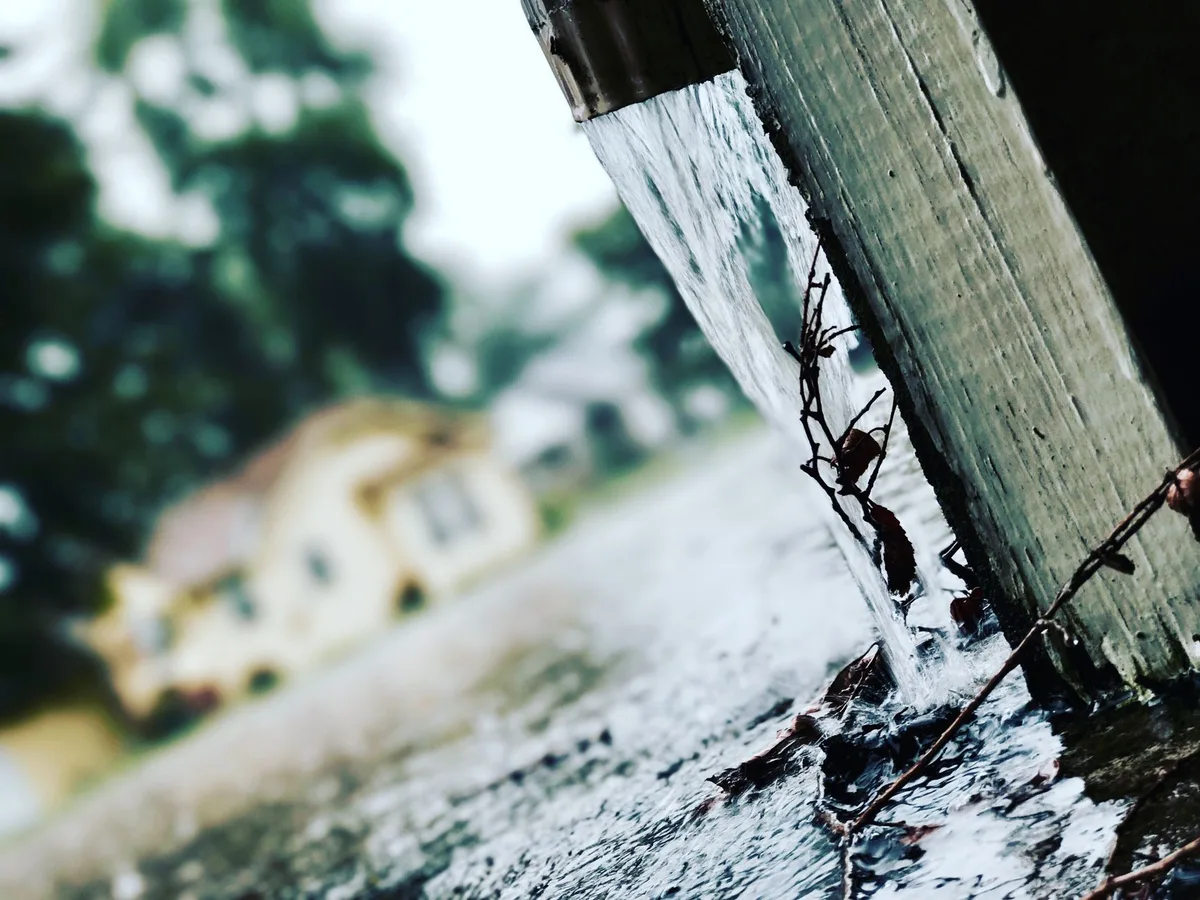
This is the most common cause of yard flooding. Your roof collects rain and funnels it into gutters, then downspouts. If those downspouts stop short, say, within a foot or two of the foundation, all that water ends up right next to your house.
The fix is straightforward. You want every downspout to discharge at least five feet from the foundation. In heavy clay soil, ten feet is even better.
A simple downspout extension costs about $10 and can solve the problem instantly.
While you’re at it, check your gutters. Clogged gutters spill water over the sides, creating puddles against the house. Regular cleaning with a sturdy rake, our article on the best rakes for pine needles covers what works on tough debris, can prevent that backup.
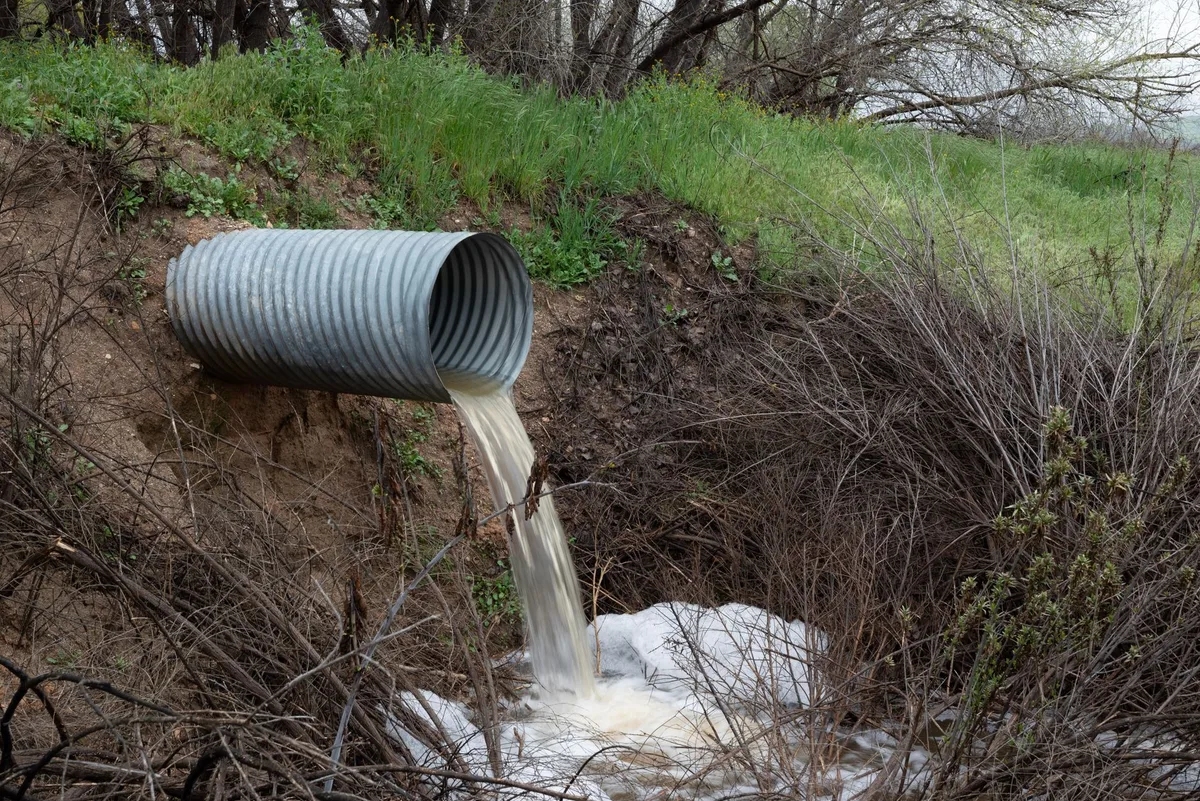
Also look for disconnected sections or broken downspout pipes underground. A split pipe can dump a huge volume of water into one spot without you ever seeing it. Run a hose through the downspout line to test for blockages.
Condition #2 – Is Your Soil Just Not Absorbing?
Even if your roof water is routed away properly, your soil might not be drinking it up. This is especially true in areas with heavy clay or compacted soil from construction. As of 2026, the USDA Natural Resources Conservation Service still estimates that over 40% of U.S. suburban soils have percolation rates below the ideal range.
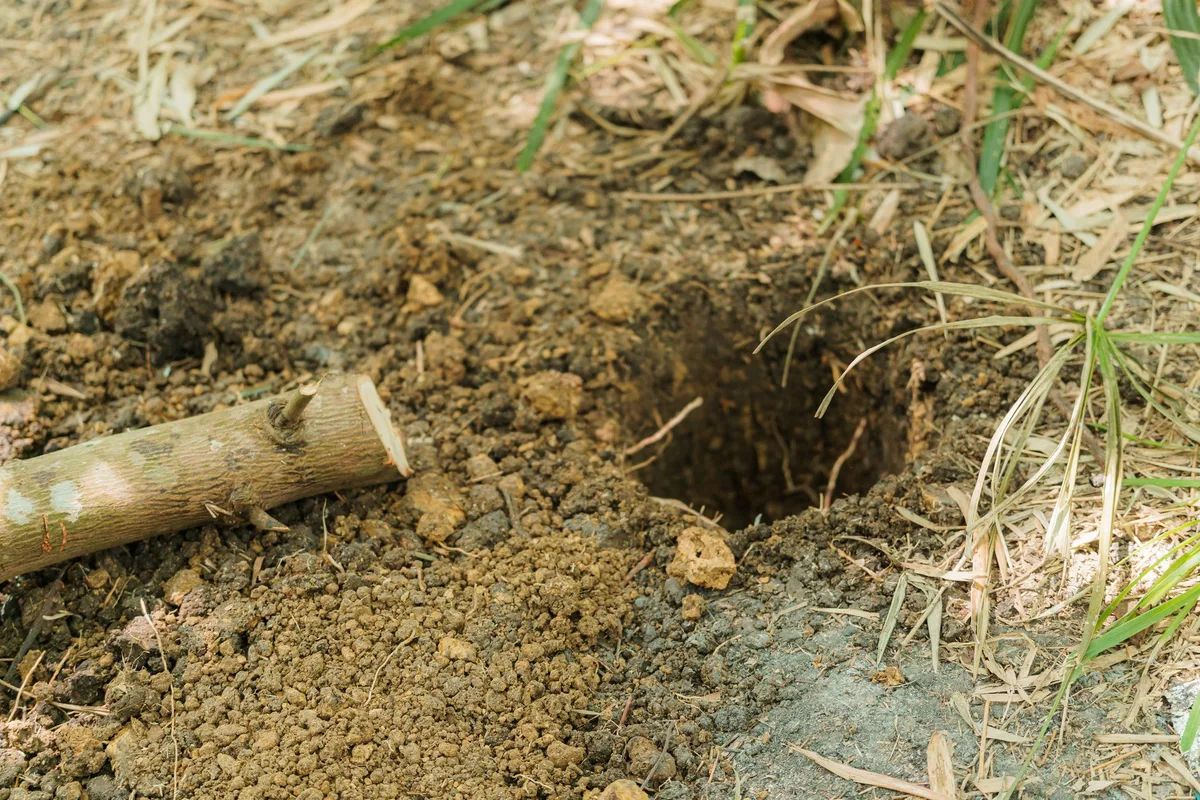
Here’s how to test yours. Dig a hole about six inches wide and twelve inches deep. Fill it with water and let it drain completely.
Then fill it again and measure how fast the water level drops. If it falls less than one inch per hour, your soil is slow. If it falls less than half an inch per hour, you’ve got a major drainage bottleneck.
Compacted soil from foot traffic, heavy equipment, or just years of neglect can also block absorption. Aerating your lawn once a year, especially with core aeration, opens up the soil and gives water a path down. Standing water that lasts more than a day also raises your risk of lawn diseases; applying a best fungicide for lawns can help prevent fungus from taking hold in soggy spots.
In extreme compaction cases, you may need to amend the soil with compost or sand, or install a subsurface drain. But start with the percolation test first, it’s free and tells you exactly what you’re dealing with.
Condition #3 – Is the Yard Flat or Sloping the Wrong Way?
If your roof runoff is fine and your soil drains okay, the next suspect is the grade of your yard. Water flows downhill. If your yard is flat or slopes toward your house, every drop that hits the ground will head toward your foundation.
You don’t need surveying equipment to check. After a rain, watch where the water moves. Walk the yard with a four‑foot level and see if the ground tilts toward the house or away from it.
The ideal slope is at least 2 percent, that’s a two‑inch drop for every ten feet.
If you find low spots or depressions where water collects, those are easy to fix. Fill them with topsoil and compact gently, then seed or sod. But if the entire yard grades toward your house, you’re looking at a bigger regrading job.
Sometimes the issue is a neighbor’s yard or a nearby hill that sends runoff onto your property. In that case, a shallow swale, a gently sloping trench, or a small berm can redirect the water to a spot where it can drain harmlessly. Using gravel in that swale?
Our guide to the best gravel for patio area can help you pick a material that won’t wash away.
For more permanent fixes, consider a rain garden in the low area. Plant it with moisture‑loving native species that can handle periodic flooding. If your climate is dry, you might also look into the best trees for hot dry climates that can help with evapotranspiration.
Start with the grade check. It’s often the missing piece that explains why water pools in spots that seem like they shouldn’t.