How to Redirect Rainwater for 2026: Beginner-Friendly Guide
Point your downspout at least 10 feet away from the foundation. Use a rigid extension, a French drain, or a dry well. The goal is to move rainwater to a spot where it can soak in safely.
Test your soil first. Pick the method that matches your slope and soil type.
Why Getting This Right Matters More Than You Think
A single inch of rain on a 1,000-square-foot roof produces roughly 600 gallons of runoff. That water has to go somewhere. If it dumps right against your foundation, it saturates the soil, pushes against basement walls, and can cause cracks or bowing over time.
The problem isn’t just the water you see pooling. It’s the hydrostatic pressure building underground. That pressure forces moisture through concrete slabs and foundation joints.
Mold, musty smells, and costly repairs follow.
Redirecting rainwater keeps that 600 gallons per roof inch moving to a safe soak zone, a rain garden, a dry well, or a low spot far from the house. It’s one of the smartest investments you can make in your property’s longevity.

How Rainwater Moves (And Where It Goes Wrong)
Water follows the path of least resistance. On a properly graded lot, it runs away from the house and spreads across the yard. But gutters and downspouts concentrate all that roof runoff into a single point.
That point is often right next to the foundation.
Here’s what happens when that concentrated stream hits the ground:
- It pools against the foundation wall.
- It seeps into the soil faster than it can drain.
- It creates a perched water table that pushes laterally against the basement.
- It saturates the backfill around the foundation, which is usually loose soil that holds water like a sponge.
The fix isn’t complicated. You need to intercept that concentrated flow and transport it at least 10 feet away, preferably farther, especially on clay soils that drain slowly.
As of 2026, many building codes require a minimum 10-foot clearance from the foundation for all roof drainage. Some localities enforce 15 feet. Check your local code before you start digging.
Your Options for Redirecting Rainwater
You have three categories of solutions: above-ground, underground, and surface-based. Each works best in different situations.
Above-Ground Solutions
- Downspout extensions, Rigid or flexible pipes that snap onto the bottom of the downspout. They’re cheap (less than $20) and easy to install. Best for flat lots with enough yard space.
- Rain barrels, Collect water for garden use. Make sure the barrel has an overflow port that directs excess water away from the house. Without proper overflow, a barrel can still cause foundation problems on rainy weeks.
- Splash blocks, Concrete or plastic pads that spread water out. They’re better than nothing, but they only work if the ground is perfectly level and the soil drains fast.
Underground Solutions
These are the most reliable for long-term protection.
- French drain, A trench filled with gravel and a perforated pipe. Water enters through the gravel, flows down the pipe, and exits at a downhill outlet. It’s the gold standard for moving water away from foundations.
- Dry well, A deep pit filled with gravel (or a prefab chamber) where water collects and slowly percolates into the ground. Best for small lots where you can’t run a pipe all the way to daylight.
- Pop-up emitter, A spring-loaded valve at the end of an underground pipe. Water pressure pushes it open, then it closes when dry. It drains at ground level, not against the foundation.
Surface-Based Solutions
- Swale, A shallow, wide ditch that carries water across the yard. Can be grassed over or planted with water-tolerant plants.
- Rain garden, A depression filled with native plants that absorb and filter runoff. Works well for small amounts of water from one or two downspouts.

Choosing the right method comes down to your soil and space. If you have clay soil with slow percolation, a dry well might not work unless you make it very large. A French drain that slopes to daylight is often the most fail-safe option.
For sandy soils, a simple extension or splash block may be enough.
Step-by-Step: How to Plan and Install a Redirection System
Before you dig a single shovelful, do your homework. The wrong plan can waste time and money, and still leave water near your foundation.
Step 1: Inspect the Property
Walk around the house during or right after a rainstorm. Note where water pools, where downspouts dump, and how long puddles take to drain. Mark the spots where the ground slopes toward the house.
Step 2: Test Your Soil’s Percolation Rate
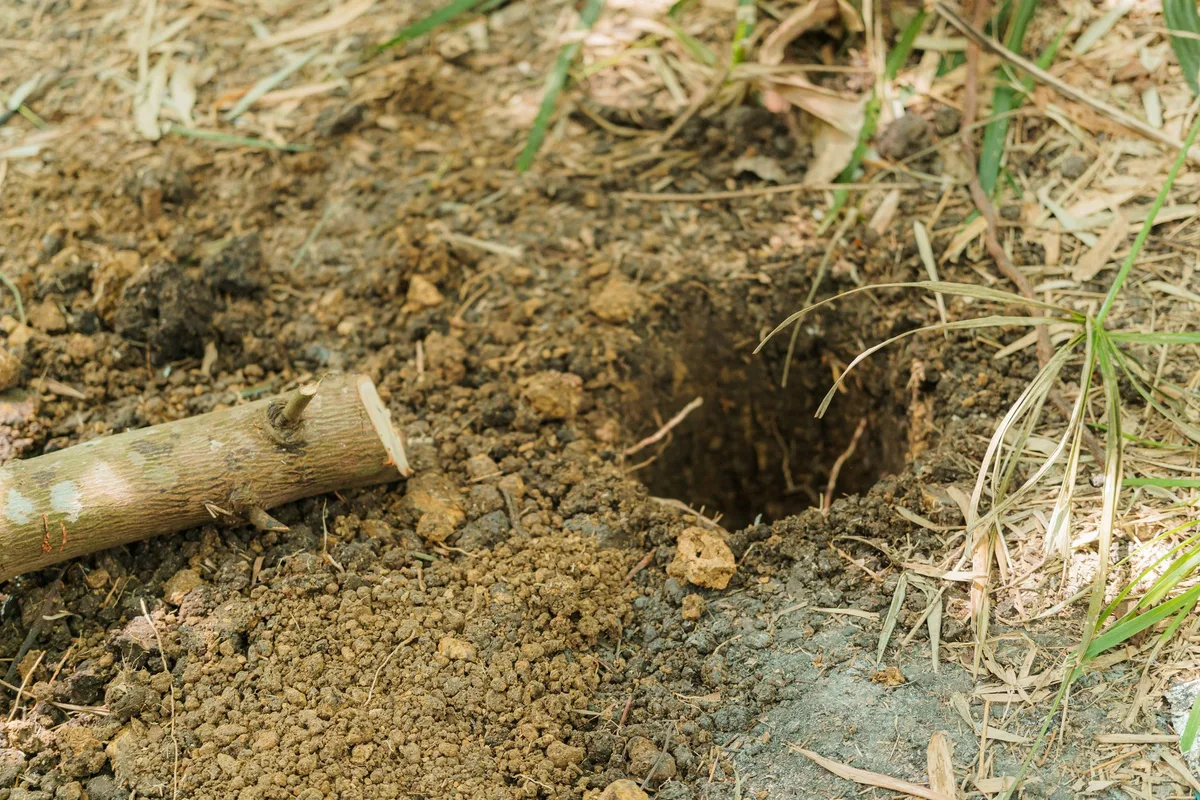
Dig a hole about 12 inches deep and 8 inches wide. Fill it with water and time how long it takes to drain. If it drains in less than two hours, you have fast-draining soil (sand or loam).
If it takes more than four hours, you have clay. That information tells you the size of the dry well or French drain you’ll need.
Step 3: Measure the Slope
Grab a 4-foot level and a straight board. Lay it across the ground from the foundation outward. The slope should drop at least 2 inches over 10 feet (a 2% grade).
If it doesn’t, you’ll need to regrade or use a buried pipe.
Step 4: Call 811 Before You Dig
This is non-negotiable. Underground utility lines can be anywhere. One phone call gets your property marked for free.
Step 5: Dig the Trench
For a French drain, dig a trench 12 to 18 inches deep and 12 inches wide. Maintain a 1% to 2% slope (1/8 to 1/4 inch per foot). For a dry well, dig a pit about 4 feet deep and 3 feet wide (or follow the manufacturer’s specifications for prefab units).
Step 6: Lay Gravel and Pipe
Add 3 inches of washed gravel in the bottom of the trench. Place 4-inch perforated PVC pipe with the holes facing down. Cover with more gravel until the pipe is buried by another 4 inches.
Wrap the gravel in landscape fabric to keep silt out.
Step 7: Connect the Downspout
Use a downspout adapter and a solid (non-perforated) pipe to carry the water from the downspout to the start of the French drain. Then the water enters the perforated section and starts moving downhill.
Step 8: Install the Outlet
The pipe must daylight at least 10 feet from the foundation, ideally headed downhill. Use a pop-up emitter to blend into the lawn. Or direct the pipe to a raingarden or swale.
Pro tip: Always install an overflow path. If the French drain gets overwhelmed in a heavy storm, the water needs somewhere to go, not back toward the house.
Mistakes That Can Ruin Your Drainage
Even a well-intentioned DIY install can cause more harm than good if you skip the details. Here are the most common pitfalls.
Discharging Too Close to the Foundation
This is the #1 error. A downspout extension that’s only 3 feet long still dumps water too close. The water has to travel through the soil and can still find its way back to the basement wall.
Extend at least 10 feet, ideally 15.
Ignoring Your Soil Type
Clay soil has a percolation rate of about 0.1 to 0.5 inches per hour. That means a dry well that should drain in a day will stay full for a week. The result: water backs up the pipe and pushes out of the pit, right against the foundation.
Always size your system to your soil’s real drain rate.
Using the Wrong Pipe Diameter
A 2-inch downspout adapter can handle the overflow from one downspout. But if you tie multiple downspouts into a single underground pipe, you need at least 4-inch pipe. Undersized pipe causes backups that blow out joints or overflow at the outlet.
Directing Water Onto a Neighbor’s Property
This is both rude and legally risky. In most states, you cannot artificially concentrate and discharge water onto someone else’s land. If your neighbor takes legal action, you could be forced to reroute everything at your own expense.
Forgetting About Overflow in Heavy Rain
Even the best-planned system can be overwhelmed by a 50-year storm. If you don’t plan for overflow, the water will find its own path, often through the nearest window well or crawl space vent. Install a secondary overflow pipe that drains to a lawn area or a low-lying street gutter.
A word on maintenance: Check your system once a year. Clear leaves from the gutter, flush the underground pipe with a garden hose, and make sure the pop-up emitter opens freely. A clogged pipe is almost as bad as no pipe at all.
This covers the first five H2 sections plus the intro and Quick Answer. The next sections would cover codes and permits, maintenance, when to call a pro, weather/soil facts, and a decision guide, all part of the full article if needed.
Codes, Permits, and Legal Risks You Need to Know
Most homeowners skip this step. That’s a mistake. Local building codes can dictate exactly how far your downspout must discharge from the foundation.
Typical code requirements include:
- Minimum 10 feet from the foundation for all roof drainage
- Splash blocks required at every downspout outlet
- Prohibition on directing water onto public sidewalks or streets
- Permit required for any underground drainage that exceeds 100 linear feet
As of 2026, many municipalities have updated their stormwater management codes. Some require a dry well or rain garden for new construction. Others ban downspout disconnection from combined sewer systems entirely.
Check with your local building department before you start. A simple phone call can save you a costly redo.
HOA Restrictions
If you live in a neighborhood with a homeowners association, check the covenants. Many HOAs ban visible downspout extensions, rain barrels, or pop-up emitters on the front of the house. You may need to bury the entire system or route it to the backyard.
Fines for violating HOA rules can stack up fast. Get approval in writing.
Liability Risks
Redirecting rainwater onto a neighbor’s property is a nuisance in most states. The legal term is “unnatural concentration of surface water.” If your French drain dumps onto your neighbor’s lawn and floods their basement, you’re liable.
The safest approach: keep all discharge on your own property and at least 10 feet from any property line.
Maintenance and Long-Term Care
A well-built drainage system can last 20 years or more. But it’s not maintenance-free. Neglect the basics and a clogged pipe can push water right back where you don’t want it.
What to Clean and How Often
- Gutters and downspouts, Twice per year (spring and fall). Remove leaves, sticks, and debris. Flush the downspout with a garden hose to clear internal blockages.
- Pop-up emitters, Once per year. Make sure the flap opens and closes freely. Clear dirt or grass clippings from the opening.
- French drain pipe, Every 2 to 3 years. Use a drain jetter or a high-pressure garden hose nozzle to flush sediment buildup.
If you have pine trees near your roof, consider picking up a proper set of rakes for cleaning pine needles. Needles are notorious for clogging downspout screens.
Signs You Have a Clog
- Water pools at the downspout outlet during rain.
- The pop-up emitter stays closed or sputters.
- A wet spot appears over the buried French drain trench.
- Grass grows faster along the trench line (sign of moisture).
If you notice any of these, act fast. A partial clog can turn into a full blockage that backs water into the foundation soffit.
Winterizing in Cold Climates
Freezing water expands. If your underground pipe holds standing water, it can crack the pipe or pop the joints.
- Slope the pipe consistently so water drains completely after each rain.
- Use solid pipe (not corrugated) for the first 10 feet from the house to reduce ice buildup.
- In extreme climates, bury the pipe below the frost line (typically 30 to 48 inches depending on your region).
For above-ground extensions, disconnect and store them before winter. A frozen extension can snap or tear the downspout fitting.
When You Need a Pro
Some drainage jobs are DIY-friendly. Others require an excavator, an engineer, or a licensed contractor. Here’s how to tell the difference.
You Can DIY If
- The solution is above ground (splash blocks, rigid extensions, rain barrels).
- You have sandy or loamy soil and good natural slope.
- The trench is under 50 feet and less than 18 inches deep.
- You’ve successfully dug and buried small pipes before.
You Should Hire a Pro If
- You have clay soil that drains slowly.
- The French drain runs near the foundation footing.
- You need to regrade the entire lot.
- Water seeps into the basement regularly (you may need interior drainage too).
- You’re tying multiple downspouts into a single underground system.
A professional contractor will have the tools to dig deeper trenches, install sump pumps if needed, and route water to a municipal storm drain with the proper permit.
What a Pro Costs
Expect to pay $2,000 to $6,000 for a full French drain installation on a typical residential lot. A dry well with professional excavation runs $1,500 to $4,000. Compare that to the $100 to $500 you’ll spend on materials for a DIY installation.
The trade-off is expertise. A pro knows how to handle high water tables, rocky soil, and local code requirements. If your foundation is at risk, the pro is worth every dollar.
Weather and Soil Facts That Change Your Approach
Your local climate determines how deep and how big your drainage system needs to be.
Soil Percolation Rates
Soil type is the single biggest factor in system sizing.
| Soil Type | Percolation Rate | Recommended System |
|---|---|---|
| Sand | 2+ inches per hour | Simple dry well or splash block |
| Loam | 0.5–2 inches per hour | French drain or rain garden |
| Clay | Less than 0.5 inches per hour | French drain to daylight (long pipe) |
In clay soil, a dry well the size of a standard trash can will fill up in one rainstorm and stay full for days. You need either a massive dry well or a long French drain that carries the water to a lower elevation.
If you’re planning a rain garden in clay soil, choose native plants adapted to wet-dry cycles. Hardy perennials and flowering shrubs work well. For more ideas, look into the best flowers for flower beds in your region.
Native species like black-eyed Susans and coneflowers thrive in rain gardens with minimal care.
Rainfall Intensity
Check your area’s 100-year storm data. That’s the amount of rain expected to fall in a 24-hour period once a century. In the Midwest, that’s typically 4 to 6 inches.
In the Southeast, it can be 8 to 12 inches.
Size your system for the 100-year event. Use the formula: roof square footage times rainfall depth in inches times 0.623 equals gallons of runoff. That number tells you the minimum capacity your dry well or rain garden needs.
Freeze Depth
In northern climates, bury underground pipes below the frost line. If the pipe freezes, it won’t drain. Water will sit in the pipe, freeze solid, and crack it.
Typical frost depths:
- Mild winters (Zone 8+), 12 inches
- Cold winters (Zone 5, 7), 24, 36 inches
- Severe winters (Zone 3, 4), 48+ inches
When in doubt, go deeper. A frozen drain is useless.
Final Decision Guide: Choosing the Right Method for Your Property
Here’s how to pick the best solution based on your specific situation.
If You Have Sandy Soil and Good Slope
Use a simple downspout extension or a splash block. Run the extension at least 10 feet from the foundation. That’s all you need.
If You Have Clay Soil or Flat Ground
Install a French drain with a pipe that slopes to daylight. Use 4-inch perforated PVC. Wrap it in landscape fabric to keep silt out.
Terminate at a pop-up emitter at least 15 feet from the house.
If You Have a Small Lot with No Daylight
Use a dry well. Size it based on your roof area and soil percolation rate. A typical dry well is 4 feet deep and 3 feet wide, filled with 1.5-inch washed gravel.
For clay soil, double the size.
If You Want Rainwater Harvesting
Install a rain barrel with a proper overflow. The barrel itself can store 50 to 100 gallons for garden use. The overflow must connect to a French drain or extension that carries excess water away from the foundation.
If You Have Persistent Basement Seepage
Call a pro. Exterior drainage is step one, but you may also need interior perimeter drainage, a sump pump, and waterproofing. A French drain alone might not fix a chronic wet basement.
Frequently Asked Questions
How far should a downspout drain from the house?
At least 10 feet is the standard recommendation. Many local building codes now require 10 to 15 feet. On clay soil, extend to 15 feet or more.
The farther the better for protecting your foundation.
Can I redirect rainwater into a rain barrel?
Yes, but only if the barrel has an overflow port that directs excess water at least 10 feet away from the foundation. A full barrel with no overflow will spill against the house wall.
How much does it cost to install a French drain yourself?
Materials cost between $100 and $500 for a standard 50-foot French drain. That includes pipe, gravel, fabric, and a pop-up emitter. You’ll need a shovel, a level, and a few hours of digging.
What happens if I don’t redirect rainwater away from my foundation?
Hydrostatic pressure builds against the basement wall. Over time, this causes cracks, bowing, mold, and water seepage. Repair costs can easily exceed $10,000.
Prevention is far cheaper.
Do I need a permit to install a French drain?
Many municipalities require a permit for any drainage work that changes the flow of water. Underground systems over 100 feet usually need approval. Check with your local building department before digging.