Guide to Can Rain Wash Off Insecticide (2026) — Quick Guide
Can rain wash off insecticide? That's the sinking feeling you get when a forecast moves in fast, right after you've sprayed. You put in the work, you mixed the product correctly, and then the sky opens up.
It's a perfectly reasonable worry, and the answer is not a simple yes or no.
Our research shows that most contact insecticides need a rainfast window of 1 to 4 hours, depending on the formulation and active ingredient. As of 2026, the majority of modern products from major manufacturers include explicit rainfastness guidance on their labels. But here's the thing: systemic insecticides, which are absorbed into the plant's tissue, behave very differently.
So what should you actually do when it rains after spraying? Let's walk through it step by step.
Quick Answer
Yes, rain can wash off insecticide. But it depends on several key factors. The product type matters most.
So does the time since you sprayed. Light rain is less risky than a heavy downpour. Check the rainfast window on your product label.
The Real Problem: You Sprayed, Then It Rained — Is Your Treatment Wasted?
When you spend money on insecticide and the time to apply it evenly, a surprise rain feels like a direct hit to your wallet. You're not just losing the chemical. You're losing the protection it was supposed to give your plants.
Pests don't wait for the leaves to dry. They get right back to work.
The real pain here is uncertainty. You don't know if you need to reapply, and reapplying costs time and money. Reapplying too soon can also cause phytotoxicity, especially with some organic oils or soaps.
On the flip side, if you skip a needed reapplication, you might let an infestation take hold. That's especially frustrating after you've already done the hard work.
This is why understanding the mechanics matters. If you've dealt with fungal issues in your lawn, you know that timing is everything with a good fungicide for lawns. The same logic applies to insecticide.
The stakes are high, but the decision tree is actually pretty straightforward once you know the variables.
How Rain Actually Removes Insecticide (And When It Doesn't)
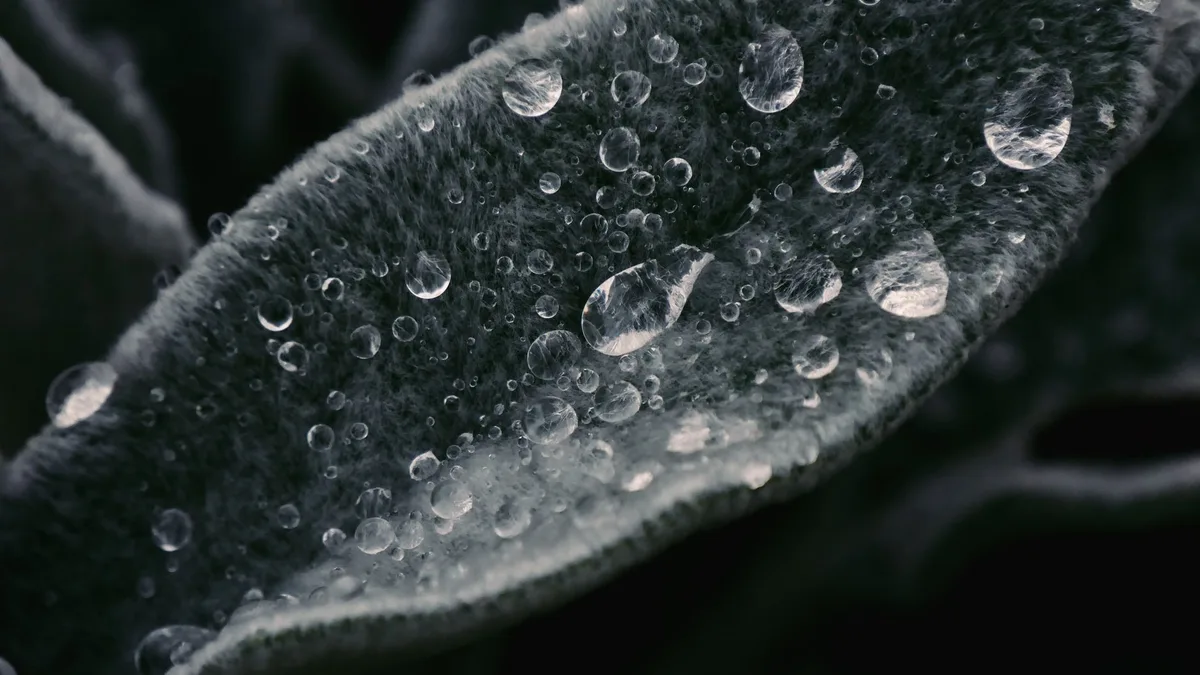
Rain removes insecticide in two main ways: dilution and physical wash-off. When heavy rain hits a leaf, it can physically knock the droplets of product off the surface. That's the most obvious kind of wash-off.
It's like spraying water on a dirty window, the force of the drops pushes the residue away.
The second way is dilution. Even if the rain doesn't blast the product off, it can spread it out so thin that it no longer provides a lethal dose to pests. A light drizzle might not move the product much, but a steady rain that sits on the leaf can dilute the active ingredient until it's useless.
What determines whether the product is gone or still active comes down to one thing: has it dried and bonded to the leaf surface yet? This is where the concept of rainfastness comes in. Rainfastness is the period after application when the product is vulnerable to wash-off.
Once the spray residue dries, most modern insecticides form a bond with the leaf cuticle that water cannot easily break. This is why checking the weather forecast before spraying is so critical.
For a deeper dive into pest control strategies, you might also look into targeted solutions for specific problems, like an insecticide for carpenter ants, which often requires precise timing on application.
Decision Tree: The 4 Variables That Determine Your Next Move
The decision tree for rain wash-off hinges on four main variables. Here's the quick snapshot before we break each one down:
| Variable | Key Question | Impact on Wash-Off |
|---|---|---|
| Product Type | Is it systemic or contact? | Systemic = inside plant, rain is irrelevant. Contact = on the surface, vulnerable. |
| Time Since Spray | How many hours since application? | The rainfast window is ticking. |
| Rain Intensity | Heavy downpour or light drizzle? | Heavy = mechanical wash-off. Light = possible dilution. |
| Leaf Surface & Formulation | Is the leaf waxy or hairy? Does the product have a sticker? | Waxy leaves repel water but also repel spray. Stickers improve adhesion. |
Let's look at each variable in detail.
Variable 1: Product Type — Systemic vs. Contact
This is the single most important factor. If you used a systemic insecticide (like imidacloprid, dinotefuran, or many neonicotinoids), the product is absorbed into the plant's vascular system. It moves through the leaves, stems, and roots.
Rain cannot wash it off because it is inside the plant tissue. Once the product has been absorbed, you are essentially rain-proof.
With contact insecticides (like pyrethrins, spinosad, or insecticidal soap), the product sits on the leaf surface. It kills pests that touch it. Rain can absolutely wash it off because it's just sitting there.
This is the category where timing is everything. The product needs to dry and form a residue. Until then, it is vulnerable to any rain.
Many organic products, like neem oil or horticultural oil, are also contact products. They rely on suffocating or disrupting pests upon contact. They are generally more susceptible to wash-off than synthetic contact products.
But they also tend to degrade faster in sunlight, so timing is doubly important.
If you are managing an orchard, the principles are the same. Good nutrition and pest management go hand in hand. Using the right organic fertilizer for fruit trees can help your trees stay healthy and better tolerate a missed spray.
Variable 2: Time Since Application (The Rainfast Window)
Every insecticide label should tell you, either explicitly or implicitly, how long it takes to become rainfast. In our research, we have seen rainfast windows ranging from 30 minutes to 6 hours. Some products claim rainfastness in as little as 1 hour.
Others, particularly older formulations, may need 4 to 6 hours.
The general rule is that the product must dry completely on the leaf surface. Drying time depends on temperature, humidity, and leaf wetness. On a hot, dry day, a contact product might be rainfast in 30 to 60 minutes.
On a cool, humid day, it could take 3 or 4 hours.
If rain comes within that window, you should assume some wash-off has occurred. The shorter the time between application and rain, the more product you lose. If rain comes after the window, you are almost certainly fine.
Variable 3: Rain Intensity and Amount
Not all rain is the same. A light drizzle that lasts an hour is very different from a sudden thunderstorm that drops half an inch in 15 minutes. The physical force of heavy rain is more likely to displace product droplets.
A gentle mist might not move the product at all, but it can slow down drying.
A good rule of thumb: 0.1 inches of rain within 2 hours of spraying is a yellow flag. 0.5 inches or more within 2 hours is a red flag. If you get a quarter-inch of rain or more within the rainfast window, you should strongly consider a reapplication.
But also consider the leaf angle. Plants with upright leaves shed water more easily. Plants with flat, horizontal leaves hold water longer.
This increases the risk of dilution and wash-off.
Variable 4: Leaf Surface and Formulation
Some plants have waxy leaves that bead up water. This helps the plant shed rain, but it also means your spray might not adhere well in the first place. On those plants, you almost always need a surfactant or sticker to help the product stick.
Other plants have hairy leaves that hold droplets. This can actually help the product stay on the leaf, but it also means water lingers longer, which can slow drying.
The formulation of the product itself also matters. Wettable powders and water-dispersible granules often form a more durable residue than emulsifiable concentrates. Some products come with built-in stickers.
If your product does not have one, you can add a spreader-sticker to the tank mix. This significantly improves rainfastness, especially for contact products.
For gardeners managing specific plants, the timing of insecticide applications can be just as important as choosing a fertilizer for pomegranate trees. Both require you to pay attention to the tree's growth stage and the local weather.
Your Branch-by-Branch Action Guide
Alright, now let's put it all together. Here is your practical decision guide based on the variables above.
Branch 1: You used a systemic product and it rained within 2 hours.
You are likely fine, provided the product had time to be absorbed. Most systemic products are absorbed within 1 to 2 hours. If the rain came after that, do nothing.
If the rain came within 30 minutes of spraying, there is a small chance the product washed off before it was fully absorbed. Wait 24 hours, check for pest activity, and reapply only if you see live pests.
Branch 2: You used a contact product and it rained within the rainfast window.
Assume you need to reapply. The only question is how urgently. If the rain was light and the product had been drying for most of the window, you might be okay.
Check the leaves. Look for visible residue. If you cannot see any, reapply.
If you see residue, you can wait 24 hours and monitor.
Branch 3: You used a contact product and rain is expected within the rainfast window.
Do not spray. Wait for a window of at least 4 hours of dry weather. This is the single best way to avoid wasted product.
Check a reliable weather radar before you mix your tank.
Branch 4: You used a product with a sticker and it rained.
The sticker improves adhesion. You might get away with a light rain. With heavy rain, even a sticker may not save you.
Assume you lost 50% of efficacy. Monitor closely.
Branch 5: You are using an organic product (neem oil, insecticidal soap, spinosad).
These are more vulnerable. They degrade faster and are less rainfast. If rain falls within 4 hours, you should plan to reapply.
Organic growers often use a spreader-sticker to improve rainfastness. For certified organic operations, check your OMRI-approved adjuvants.
When you are planning your garden, keep in mind that healthy plants tolerate pest pressure better. Choosing the right environment, like picking trees for hot dry climates, means you start with stronger plants that can handle a missed spray now and then.
A note on accuracy: proper calibration of your sprayer is just as important as the timing. A poorly calibrated sprayer that delivers too much or too little product can ruin your pest control plan, even if the rain holds off. Always check your equipment before you start.