How to Get Rid of Japanese Beetles: Everything You Need
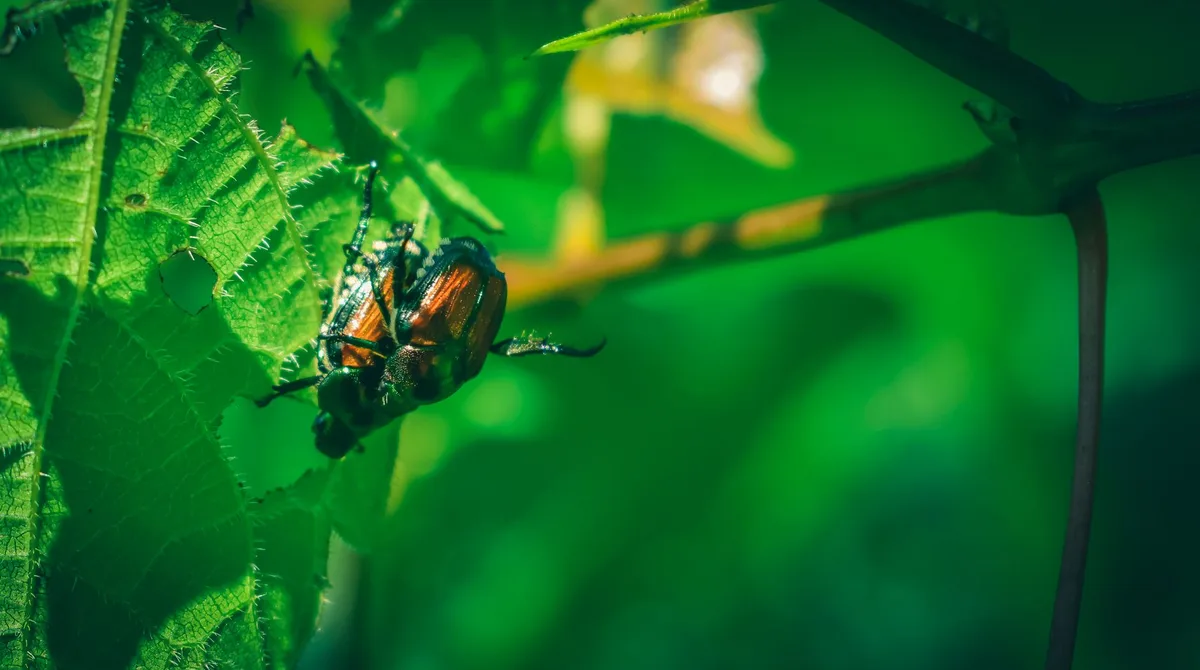
If you’ve ever walked outside to find your prize roses looking like lace, you already know the frustration. Learning how to get rid of Japanese beetles starts with understanding you’re actually fighting two different battles at once. The metallic green and copper adults that skeletonize your leaves are only half the problem.
Their offspring, the c-shaped white grubs living underground, can wreck your lawn just as thoroughly.
Research from university extension programs shows that a single female beetle can lay up to 60 eggs over her 4-to-6-week lifespan. That’s a lot of potential damage from one bug. As of 2026, Japanese beetles have established populations in most states east of the Mississippi and are steadily spreading west.
The good news is that the right approach can stop them. The catch is that what works in July might be useless in May.
Quick Answer
Hand pick beetles in the morning. Drown them in soapy water. Treat grubs in late summer.
Use nematodes for lawns. Apply neem oil weekly to repel adults. Avoid pheromone traps in small yards.
That’s the short version.
What You’re Actually Dealing With (Beetles vs. Grubs — Two Different Fights)
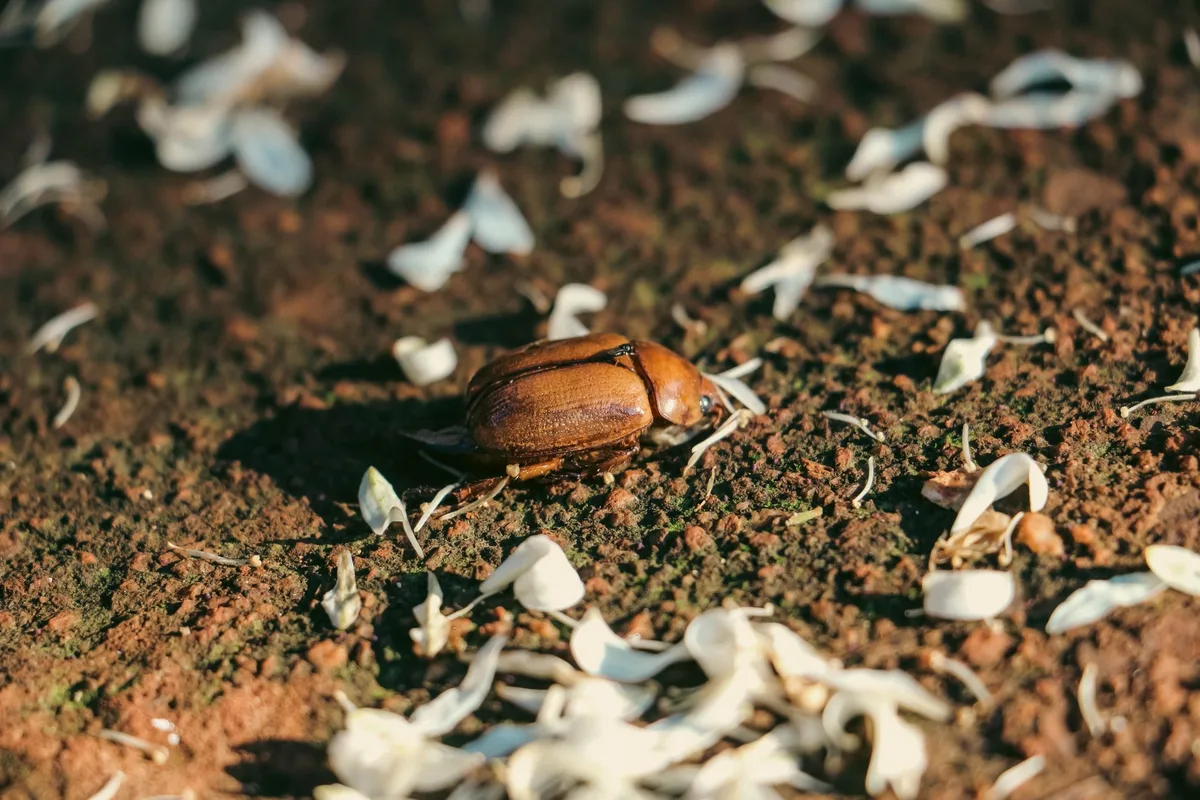
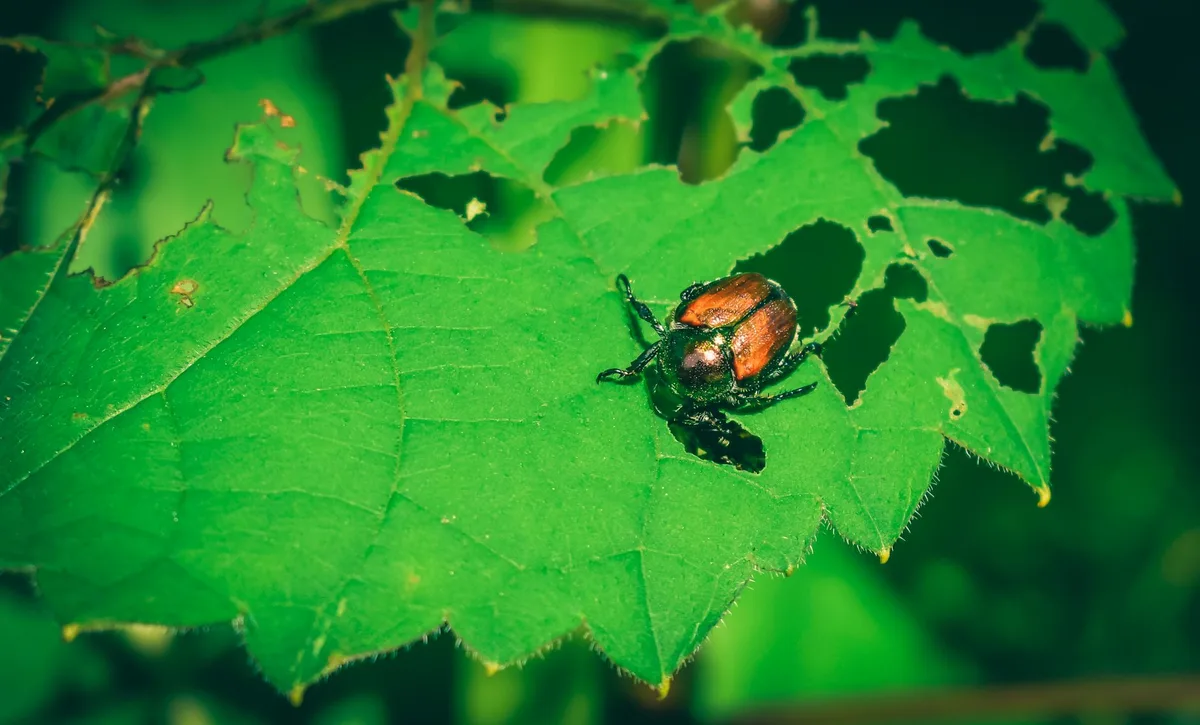
Adult Japanese beetles are the ones you see crawling all over your plants. They eat the soft tissue between leaf veins, leaving that lacy skeletonized look. They’re active from late June through August, depending on your region.
Their favorite targets include roses, grapes, beans, raspberries, and fruit trees.
The grubs are a whole different story. They live in the soil and feed on grass roots. A heavy infestation turns your lawn into spongy turf that peels back like carpet.
Animals like skunks and raccoons dig up the lawn to eat them. That patchy damage you blamed on drought? Grubs might be the real culprit.
You can’t treat both stages the same way. Products that kill adult beetles on leaves won’t touch grubs underground. And grub treatments applied at the wrong time are a complete waste of money.
That’s why knowing which stage you’re dealing with is step one.
If your lawn looks healthy but your plants are chewed, you have an adult beetle problem. If your grass is brown and lifts up easily, you probably have grubs. Sometimes you have both.
The decision tree coming up will help you sort it out.
The One Rule That Changes Everything (Why Timing Decides Your Success)
Timing is the single biggest factor in beating Japanese beetles. Get it wrong and nothing works. Get it right and you can knock the population down significantly in one season.
Here’s the basic timeline:
| Target | Best Timing | Why It Matters |
|---|---|---|
| Adult beetles | Late June to early August | Peak feeding and mating window |
| Eggs in soil | July | Early intervention stops larvae |
| Young grubs | Late July to early September | Smallest, most vulnerable stage |
| Overwintering grubs | No effective treatment | Grubs go deep, sprays miss them |
| Spring grubs | April to May | Too large, moving to pupate |
The key window is late July through August. That’s when newly hatched grubs are tiny and feeding near the soil surface. Beneficial nematodes and milky spore work best when applied during this period.
Adult sprays need to start as soon as beetles appear, usually around the summer solstice in most regions.
Waiting until September means the grubs have grown larger and moved deeper. Most surface treatments won’t reach them. You’ve essentially lost the season and will have to deal with the next generation of adults the following summer.
The Decision Tree: Where Do You Start?
Your approach depends on four factors: the severity of the infestation, what kind of plants are affected, whether you have lawn damage, and your tolerance for synthetic chemicals. Here’s how to decide.
Light Infestation on Ornamentals (Roses, Shrubs, Flower Beds)
If you see fewer than a dozen beetles per plant, hand picking is your best bet. Combined with neem oil sprayed weekly, you can keep damage to a minimum. No chemicals needed beyond a bucket of soapy water.
Skip the traps entirely. Research consistently shows that traps attract more beetles into your yard than they kill. You end up with a worse problem than you started.
Heavy Infestation on Edible Crops (Tomatoes, Beans, Corn, Fruit Trees)
When beetles are swarming your vegetable garden, hand picking alone won’t cut it. You need faster intervention. A pyrethrin-based spray knocks them down quickly and breaks down within hours, making it safe for edibles with a short pre-harvest interval.
For fruit trees, consider kaolin clay spray. It leaves a white film that repels beetles without poisoning the fruit. Just wash it off before eating.
Lawn Damage from Grubs (Brown Patches, Animal Digging, Spongy Turf)
Pull back a square foot of turf near the edge of the damage. If you count more than 10 grubs, treatment is justified. Apply beneficial nematodes in late July or early August.
Water them in well and keep the soil moist for two weeks.
Milky spore is a longer-term option. It takes one to three years to establish but can provide control for a decade or more. It works best in warmer soil, above 60°F.
Organic-Only Garden (No Synthetic Chemicals Allowed)
Your toolkit includes hand picking, neem oil, insecticidal soap, beneficial nematodes, milky spore, kaolin clay, and row covers. Avoid carbaryl and pyrethrin if you need certified organic status. Check the OMRI label on any commercial product.
The organic approach requires more vigilance. You need to scout daily during peak beetle season. It’s doable, but it’s not set-and-forget.
Hand-Picking: The Underrated Gold Standard (When It’s Actually Worth It)
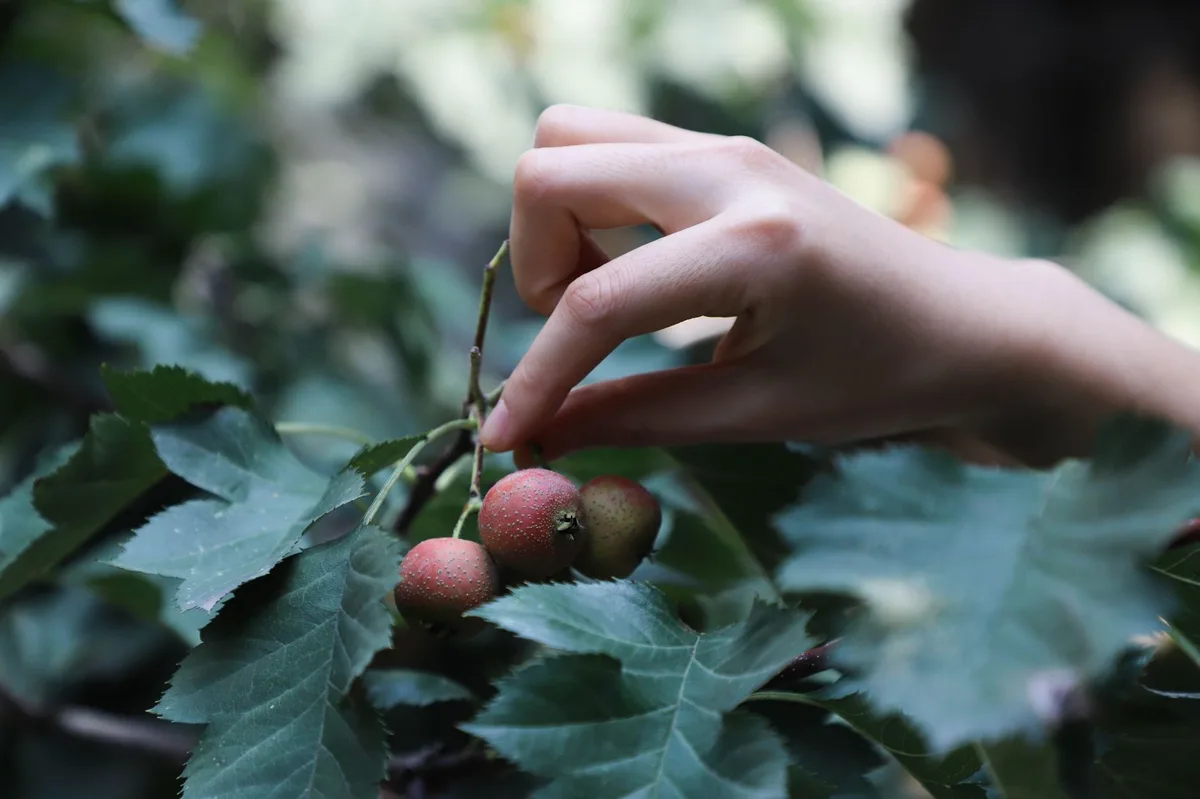
Hand picking sounds tedious. It is, for a few minutes each morning. But it’s also the most targeted, chemical-free method available.
For small to medium gardens, it’s arguably the best option.
The trick is timing. Beetles are sluggish in cool morning temperatures. They warm up and fly away once the sun hits them.
Go out at dawn with a bucket of soapy water. Knock the beetles off the leaves into the bucket. They drown quickly.
Do this every day for a week and you’ll see the population drop dramatically. Aggregated research shows that consistent hand picking can remove enough females to significantly reduce the next generation’s egg count. One beetle removed today means sixty fewer eggs next month.
It’s best for ornamental plants and small vegetable patches. If you have a hundred rose bushes or a half-acre of beans, hand picking alone won’t keep up. But for the home gardener with a few prized plants, it’s the most reliable and satisfying method.
You see results instantly.
Trap Placement: The Biggest Mistake People Make (And How to Do It Right)
Japanese beetle traps seem like a no-brainer. Hang a bag, catch the bugs, problem solved. In reality, they often make things worse.
Here’s why.
The pheromone lure in these traps is incredibly powerful. It can attract beetles from up to a mile away. When you hang a trap near your garden, you’re essentially sending out a dinner invitation.
Beetles fly in, many of them stop to eat your plants before they ever reach the bag. Research from multiple university extensions confirms that traps can increase local plant damage rather than reduce it.
That doesn’t mean traps are useless. They just need to be placed strategically. If you have a large property and can put the trap at the far edge, well away from your garden, they can intercept incoming beetles.
Place them at least 30 feet from any plants you want to protect. Put them downwind so the scent plume draws beetles away rather than across your garden.
Never hang a trap next to a rose bush or vegetable bed. That’s the single most common mistake people make. You’re better off using no trap at all than using one poorly placed.
Milky Spore vs. Beneficial Nematodes: Which Grub Control Fits Your Yard
These two biological controls target the same thing, the grubs in your soil, but they work very differently. Choosing between them depends on your timeline and your climate.
Milky spore is a bacterium that infects grubs as they feed. Once a grub dies, it releases more spores into the soil. The effect builds over time.
University studies show it can provide suppression for 10 years or more in warm soil. The catch is that it takes one to three years to establish. It also needs soil temperatures above 60°F to work well.
Northern gardeners with cool summers may see slower results.
Beneficial nematodes are microscopic worms that actively hunt grubs. They enter the grub’s body and release bacteria that kill it within a few days. Results show up much faster, often within a week or two.
The downside is that nematodes are living organisms. They need moist soil and temperatures above 50°F. They also have a short shelf life and need to be refrigerated until use.
Here’s a quick comparison:
| Factor | Milky Spore | Beneficial Nematodes |
|---|---|---|
| Time to visible results | 1-3 years | 1-2 weeks |
| Duration of control | 10+ years | Season-long (reapply yearly) |
| Soil temp requirement | Above 60°F | Above 50°F |
| Application timing | Spring or fall | Late July to early September |
| Storage | Indefinite shelf life | Refrigerate, use quickly |
| Best for | Long-term prevention | Active infestation control |
For most home lawns, a combined approach works well. Apply nematodes for immediate control during an active grub outbreak. Add milky spore for long-term suppression.
Just don’t apply both at the same time. Let the nematodes do their work first, then apply milky spore a few weeks later. And avoid using lawn chemicals like synthetic fertilizer or fungicide treatments for a week before and after nematode application.
Spray Options: Neem Oil, Insecticidal Soap, or Pyrethrin — What Works When
Sprays are the go-to for heavy adult beetle pressure. But not all sprays are created equal. Choosing the wrong one wastes money and can harm your plants.
Neem oil works as a repellent and antifeedant. It doesn’t kill beetles on contact. Instead, it makes leaves taste bad and disrupts the beetle’s hormone system over time.
Apply it weekly starting before beetles arrive. It works best as a preventive. If you already have heavy damage, neem oil won’t fix it overnight.
It can also burn leaves if applied in direct sunlight. Spray in the evening and let it dry overnight.
Insecticidal soap kills beetles on contact by breaking down their outer shell. It has no residual effect, so it only works if you directly hit the beetle. That makes it best for spot treatment on light infestations.
It’s safe for most plants but can cause leaf burn in hot weather. Rinse edible plants before eating.
Pyrethrin is a botanical insecticide derived from chrysanthemums. It knocks beetles down fast, within minutes of contact. It breaks down in sunlight within hours, making it safe for edibles with a short waiting period.
It’s not selective, though. It also kills bees and other beneficial insects if sprayed on open flowers. Use it only when beetle pressure is severe and target the undersides of leaves where beetles hide.
For edible crops under heavy attack, pyrethrin is the most effective short-term option. For ornamental plants with light to moderate pressure, neem oil plus hand picking works well. Insecticidal soap is best for a quick spot spray when you see beetles but don’t have time to pick them off.
Row Covers and Kaolin Clay: The Physical Barrier Approach
Sometimes the simplest solution is to keep beetles off your plants altogether. Row covers and kaolin clay do exactly that, without any chemicals.
Row covers are lightweight fabric sheets that block beetles from reaching your plants. They let light and water through but keep pests out. Install them on hoops over your vegetable beds before beetles arrive.
The trick is that you need to remove them during pollination for crops like beans, squash, and corn. For leafy greens and root vegetables, you can leave them on all season. Row covers cost between $15 and $40 for a 50-foot roll and last several seasons with careful handling.
Kaolin clay is a fine white powder that you mix with water and spray onto plants. It leaves a thin film that repels beetles by making the surface slippery and unpalatable. It also confuses their visual cues.
Studies show it reduces feeding damage significantly on fruit trees and ornamentals. The white coating washes off with rain and needs reapplication every week or two. It’s OMRI listed for organic use and safe for bees once dry.
Row covers are better for vegetable gardens where you can manage pollination. Kaolin clay is better for fruit trees, roses, and ornamentals where covering isn’t practical. Both methods are excellent for organic gardeners who want to avoid sprays entirely.
The Step-by-Step Workflow for Each Branch
Let’s put this all together into a clear process. Follow the branch that matches your situation.
If you have light infestation on ornamentals:
- Hand pick every morning for one week.
- Apply neem oil spray weekly as a repellent.
- Check plants daily for new beetles.
- Spot spray with insecticidal soap if numbers increase.
If you have heavy infestation on edible crops:
- Apply kaolin clay or install row covers before beetles arrive.
- Use pyrethrin spray for immediate knockdown if beetles are present.
- Hand pick any survivors each morning.
- Reapply barriers or spray after rain.
If you have grub damage in your lawn:
- Confirm the presence of grubs by pulling back a square foot of turf.
- Apply beneficial nematodes in late July to early September.
- Water the lawn thoroughly before and after application.
- Keep soil moist for two weeks after treatment.
- Apply milky spore in spring or fall for long-term control.
If you have both adults and grubs:
- Treat grubs first with nematodes in late summer.
- Hand pick adults or use row covers during peak beetle season.
- Apply milky spore the following spring.
- Use neem oil weekly on vulnerable plants next season.
Stick with your chosen approach for at least one full season. Japanese beetle populations build up over years, and they take time to knock down. Consistency matters more than intensity.
Common Mistakes That Sabotage All Your Effort
Even with the right tools, one misstep can undo weeks of work. The most common error is spraying during the wrong time of day. Applying neem oil or insecticidal soap in full sun burns leaves and evaporates too fast to work effectively.
Always spray in the evening.
Another frequent issue is relying on a single method. Hand picking alone won’t stop a heavy infestation. Nematodes without watering them in properly will die before they reach the grubs.
Combine approaches for real results. A consistent daily routine beats a one time heavy treatment every time.
Safety First: Protecting Bees, Pets, and Your Edible Crops
Broad spectrum sprays don’t discriminate. Pyrethrin and carbaryl kill bees, ladybugs, and other beneficial insects just as effectively as they kill beetles. Never spray open blooms.
If you must spray during flowering, do it at dusk when bees have returned to their hives.
For edible crops, always check the pre harvest interval on the label. Pyrethrin typically requires a 0 to 1 day wait. Neem oil needs 0 to 1 day.
Carbaryl can require 3 to 14 days depending on the crop. Wash all produce thoroughly before eating. Keep pets off treated lawns until sprays have dried completely.
Most products are safe once dry, but wet residues can irritate paws and skin.
Your Quick-Reference Decision Guide (Match the Method to Your Situation)
| Situation | Best Approach | Backup |
|---|---|---|
| Light infestation on ornamentals | Hand pick + neem oil | Insecticidal soap |
| Heavy infestation on edibles | Kaolin clay or row covers | Pyrethrin spray |
| Grub damage in lawn | Beneficial nematodes (late summer) | Milky spore (long term) |
| Both adults and grubs | Nematodes first, then hand pick | Milky spore following spring |
| Organic garden | Hand pick + neem + row covers + nematodes | Kaolin clay for fruit trees |
| Small yard (under half acre) | Skip traps | Hand pick daily |
This table covers the most common scenarios. Match your situation, follow the recommended approach, and stick with it for a full season. Japanese beetle control is not a one time fix.
It’s a consistent strategy that pays off over time.
Frequently Asked Questions
How long do Japanese beetles stay active each summer?
Adults emerge in late June and remain active for about 4 to 6 weeks. Peak feeding occurs in July. By mid August, most adults have died off, though stragglers can appear into early September.
Can Japanese beetles fly?
Yes, they are strong fliers. They can travel several miles in search of food. This is why a single trap can attract beetles from a wide area and why controlling them on your property alone isn’t always enough.
Do Japanese beetles bite humans?
No, they do not bite or sting. Their mouthparts are designed for chewing leaves. They are completely harmless to people and pets, though they can be startling when they land on you.
Will dish soap alone kill Japanese beetles?
Dish soap can drown beetles when they fall into a bucket of soapy water. But spraying a soap solution on plants is less effective than insecticidal soap. Dish soap can damage plant leaves, especially in hot weather.
How often should I apply neem oil?
Apply neem oil every 7 to 10 days during beetle season. Reapply after rain. It works as a repellent and antifeedant, not a contact killer, so consistent coverage matters more than strength.
What plants do Japanese beetles avoid?
They tend to avoid boxwood, dogwood, holly, juniper, lilac, oak, pine, and yew. Planting these near vulnerable roses and fruit trees can reduce damage. This is a passive strategy, not a solution on its own.