How to Identify Mealybug Damage 2026: Step-by-Step Guide
Nothing kills the vibe of a thriving houseplant quite like walking over one morning and spotting something weird on the leaves. White fluff. Sticky spots.
Maybe a black dusty coating that wasn’t there yesterday. If you’ve ever wondered how to identify mealybug damage before it turns into a full-blown infestation, you’re in the right place. Mealybugs are one of the most common sap-sucking pests that target indoor plants, greenhouse specimens, and outdoor ornamentals alike, and catching them early makes all the difference.
Per USDA reporting, over 275 species of mealybugs exist worldwide, and they collectively feed on hundreds of plant genera. The visual cues are distinct once you know what to look for. The trick is learning to read the signs your plant is already giving you.
Let’s walk through exactly what those signs look like.
Quick Answer
Look for white cottony clusters tucked into leaf joints and stem crevices. Check for sticky honeydew on leaves and nearby surfaces. Watch for black sooty mold growing on that sticky residue.
Ants marching up and down the stem are another strong clue. A cotton swab dipped in rubbing alcohol will dissolve the waxy coating on contact.
Why Visuals Matter for Catching Mealybugs Early
Mealybug damage starts subtle. A single female can produce hundreds of eggs inside a fluffy ovisac, and those eggs hatch into crawlers that scatter across the plant. By the time you notice stunted growth or yellowing leaves, the population may have already multiplied.
That’s why visual identification is your first and best defense.
Unlike some pests that hide inside plant tissue or only come out at night, mealybugs are visible to the naked eye throughout their life cycle. You just need to know where to look and what you’re seeing. University extension guides consistently emphasize that early detection through regular visual inspection is the most effective non-chemical control strategy.
A few seconds of inspection each week can save you weeks of treatment later.
Another reason visual ID matters: mealybug damage looks like several other common problems. Powdery mildew, scale insects, and even simple dust buildup can mimic the early signs. Misidentifying the issue means you waste time and money treating the wrong thing while the real problem gets worse.
Our research confirms that home gardeners who learn the specific visual markers outlined here catch infestations three to four weeks sooner than those who rely on guesswork.
The First Clue: Where to Look on Your Plant
If you suspect mealybugs, don’t just glance at the top of the leaves. That’s rarely where they hang out. These pests prefer sheltered, protected spots where they can feed without disturbance.
Leaf Axils, Stem Crevices, and the Crown
The most common hiding place is the leaf axil. That’s the junction where the leaf stem meets the main stem. Mealybugs wedge themselves into this tight angle and start feeding.
They also love stem crevices, especially on plants with rough or ridged bark. On rosette-forming plants like succulents and bromeliads, the central crown where new leaves emerge is a favorite spot.
Start your inspection at these junctions. Part the leaves gently and look into the axils. If you see tiny white cottony tufts, you’ve found your target.
For potted plants, also check the rim of the pot and the saucer underneath. Crawlers sometimes drop down and settle there.
Under Leaves and Along Veins
Flip the leaves over. Mealybugs often cluster along the midrib and major veins on the undersides of leaves. They are less exposed here and protected from overhead watering or rainfall.
Use your finger to feel along the veins. A sticky or slightly bumpy texture can indicate honeydew buildup or the bugs themselves.
Pay extra attention to the newest growth. Mealybugs are attracted to tender, succulent tissue where they can pierce the phloem and extract sap more easily. If your plant has fresh shoots or unfurling leaves, check those first.
This is especially relevant if you’re growing indoor seedlings or tender ornamentals under a grow light setup, where warm conditions accelerate mealybug reproduction.
Root Zone Check (When You Suspect Below-Ground Bugs)
Not all mealybugs live above the soil. Root mealybugs are a separate group that colonizes the root ball. You won’t see white waxy clusters on the stems.
Instead, the plant wilts, growth slows, and leaves turn yellow even though you’re watering correctly.
To check for root mealybugs, carefully slide the plant out of its pot. Look for white, waxy, cottony masses clinging to the roots. Healthy roots are firm and pale.
Infested roots may have a fluffy coating and feel soft or mushy. If you see this, the plant has a below-ground infestation that requires soil treatment or repotting with fresh medium.
Step-by-Step Visual Cues: What You’re Actually Seeing
Now that you know where to look, let’s talk about what to look for. Mealybugs leave behind a trail of visual evidence that builds over time. Here are the five main cues, in roughly the order you’ll notice them.
White Cottony Wax vs. Powdery Mildew
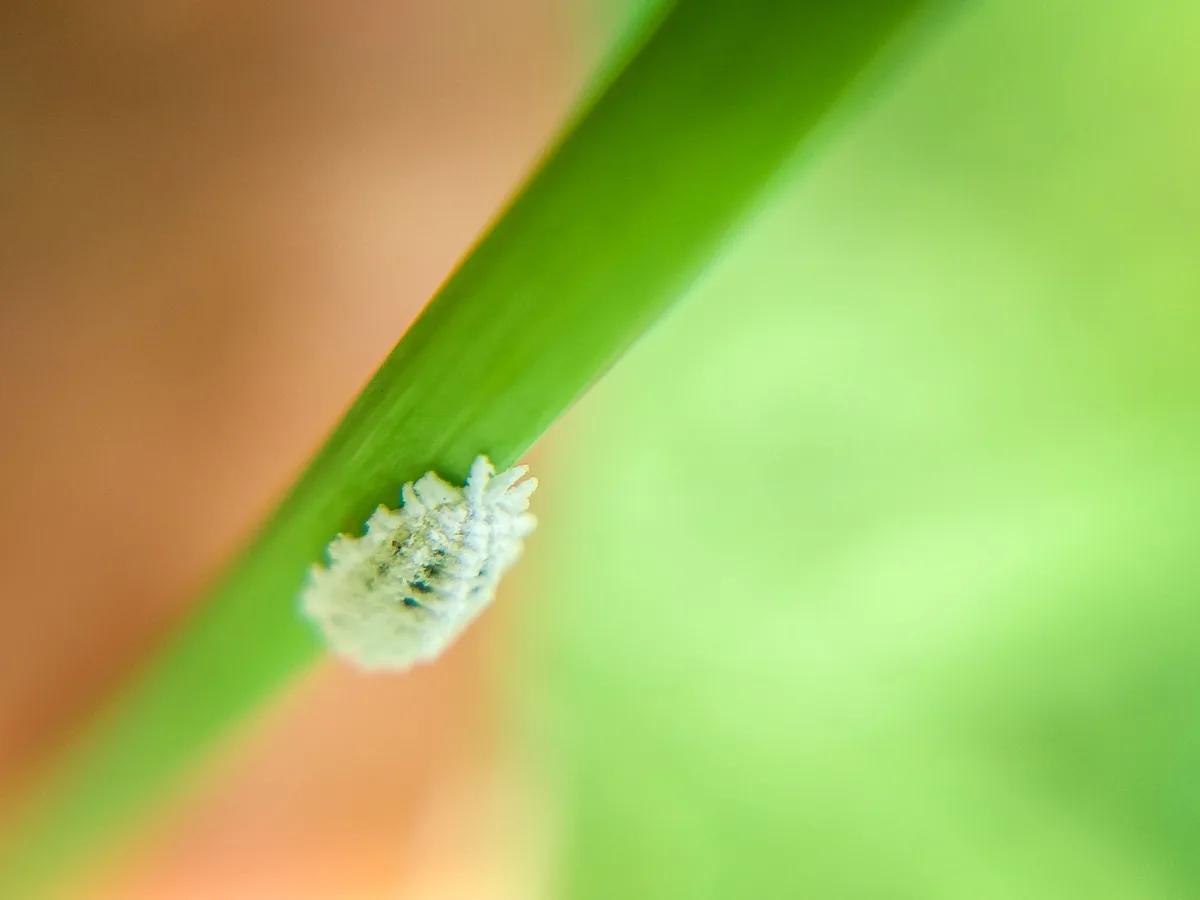
This is the signature sign. Adult mealybugs secrete a white, waxy coating that looks like a tuft of cotton or a tiny piece of lint stuck to the plant. The wax isn’t just decorative.
It protects the insect from predators and helps them retain moisture.
The key distinction is texture. Mealybug wax is fluffy and raised. If you touch it with a fingernail or a cotton swab, it’s soft and slightly crumbly.
Powdery mildew, by contrast, is a flat, powdery coating that spreads across the leaf surface like a dusting of flour. A quick wipe test helps. If the white stuff stays put while your finger brushes off the leaf surface, it’s more likely mealybugs or their egg sacs.
Honeydew: The Sticky Gloss You Can Feel and See
As mealybugs feed on plant sap, they excrete excess sugar and water as a clear, sticky liquid called honeydew. This honeydew drips onto lower leaves, stems, and whatever surface sits beneath the plant.
Run your fingers across a leaf. If it feels tacky or glossy instead of smooth and dry, you’re feeling honeydew. On dark surfaces like a windowsill or a dark ceramic pot, honeydew catches light and looks like a shiny varnish.
It’s one of the easiest early signs to detect because you don’t even need a visual. Your sense of touch works just fine.
Sooty Mold: The Black Coating That Follows
Where honeydew sits, sooty mold follows. This is not a plant disease. It’s a fungus that grows on the sugary honeydew.
The mold itself doesn’t infect the plant tissue, but it blocks sunlight from reaching the leaf surface. Over time, this reduces photosynthesis and weakens the plant.
Sooty mold looks like a layer of black soot or dark ash. It wipes off with a damp cloth relatively easily, which distinguishes it from leaf spot diseases that are embedded in the leaf. If you wipe the black coating off and find healthy green leaf underneath, it’s sooty mold from honeydew, and you need to look for the mealybugs that produced it.
Good fungal management for lawns and ornamentals won’t help here because sooty mold is a symptom, not the root cause.
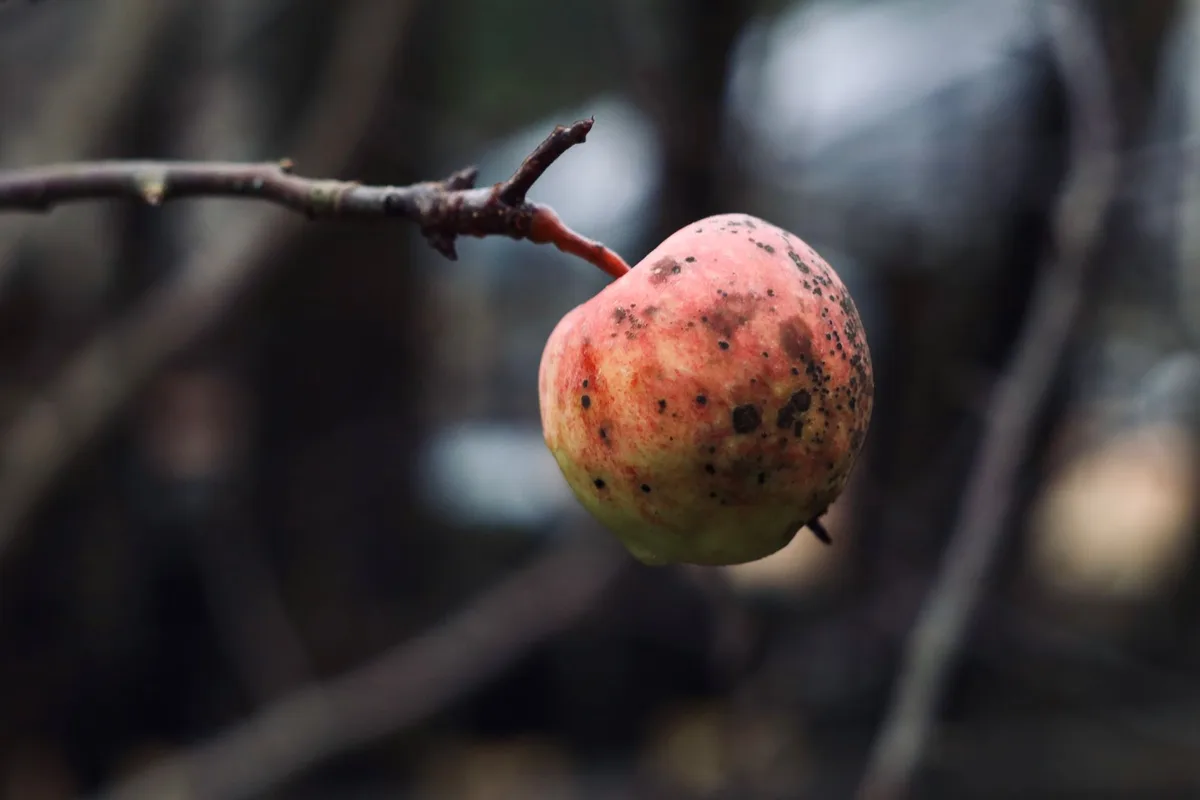
Leaf Distortion, Yellowing, and Stunted New Growth
As the infestation grows, the plant starts showing stress. Leaves curl downward at the edges. New growth comes in distorted, small, or twisted.
Older leaves turn yellow and may drop prematurely. This happens because mealybugs are draining the sap that the plant needs for energy.
These symptoms are not unique to mealybugs. Nutrient deficiencies, overwatering, or other pests can cause similar effects. That’s why you need to confirm by finding the other visual cues on this list.
If you see leaf distortion but no wax, honeydew, or sooty mold, look for other causes such as improper watering or a need for balanced indoor plant nutrition.
Ants as a Visual Traffic Signal
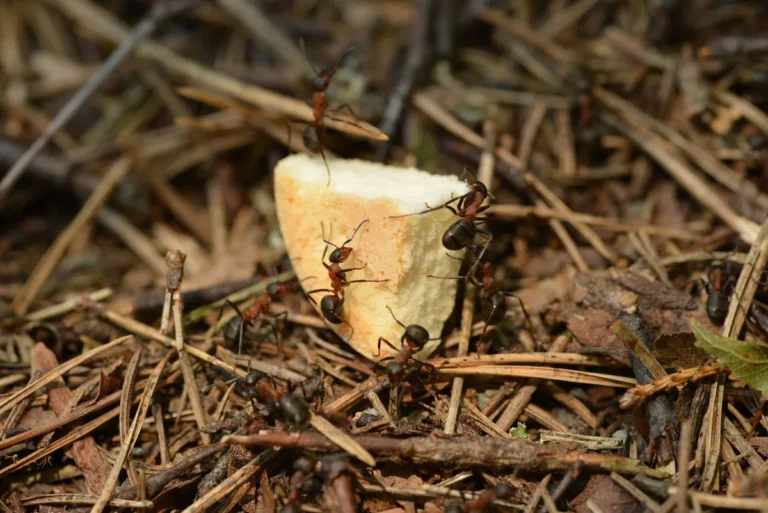
Ants and mealybugs have a symbiotic relationship. Ants protect mealybugs from predators in exchange for honeydew. If you see ants climbing up and down your plant stems, check for mealybugs.
The ants are literally farming them.
Follow the ant trail. It almost always leads to a cluster of mealybugs or a fresh deposit of honeydew. Not all ants farm mealybugs, but the presence of ants on your plants is a strong reason to inspect more closely.
If you need to manage the ants, targeted ant control methods can help break the cycle.
Key Identifiers That Confirm It’s Mealybug Damage
You’ve spotted something suspicious. Now let’s confirm it. These three hands-on tests remove the guesswork entirely.
The Cotton-Swab Alcohol Test
Take a cotton swab and dip it in isopropyl rubbing alcohol. Touch the white cottony spot you found. If it’s a mealybug, the waxy coating will dissolve almost instantly, and you’ll see the soft insect body underneath.
The alcohol penetrates the wax and dries out the bug.
This test is so reliable that it’s a standard recommendation from university extension programs. It’s also a treatment method. A cotton swab with alcohol kills individual mealybugs on contact.
For light infestations, this manual removal approach works well without chemical sprays.
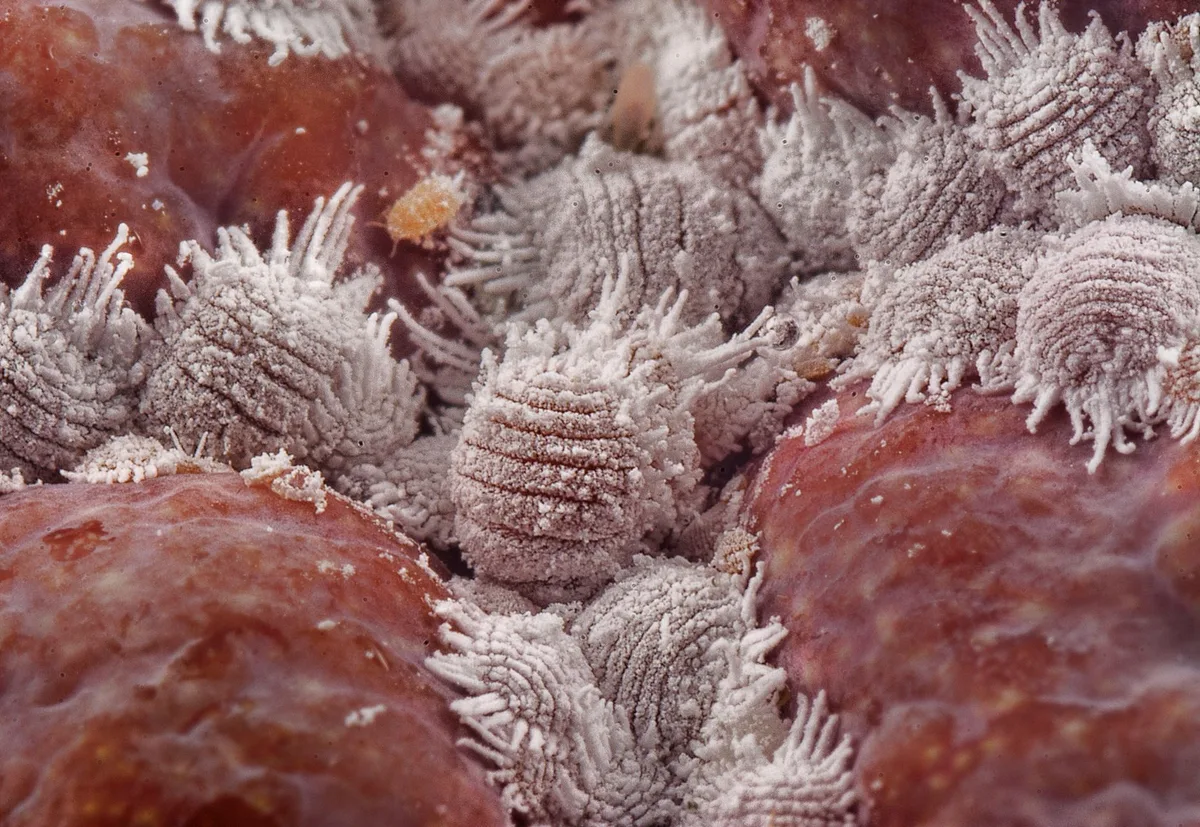
Magnifying Glass Check for Crawlers and Ovisacs
Not all mealybug life stages look the same. Use a 10x magnifying loupe or a macro lens on your phone camera. Look for tiny yellow or pink crawlers that are barely 0.3 mm long.
These are the mobile juveniles that spread the infestation to new parts of the plant.
Also look for ovisacs. These are the fluffy white egg sacs that females produce. They look like a larger, denser cotton ball attached to the stem or leaf axil.
Inside, hundreds of eggs are waiting to hatch. If you see ovisacs, the infestation is already established, and you need to act quickly.
Species Quick Reference: Longtailed vs. Citrus vs. Root Mealybugs
Different species have slightly different visual features. This quick table helps you narrow it down.
| Species | Key Visual Feature | Common Hosts | Typical Location |
|---|---|---|---|
| Longtailed mealybug | Waxy filaments extend from rear, longer than body | Houseplants, succulents, ornamentals | Leaf axils, leaf undersides |
| Citrus mealybug | Two dark stripes down the back, shorter filaments | Citrus, tropical plants, greenhouse crops | Fruit, stems, leaf joints |
| Root mealybug | White wax clings to roots, not stems | Potted plants, succulents, cacti | Root ball, inside pot drainage holes |
If you find the cottony wax on the roots, you have root mealybugs. Above-ground species rarely migrate below the soil line, so the location tells you which treatment path to follow.
Common Visual Mistakes That Trip People Up
Even experienced plant owners make these errors. Knowing them in advance saves you time and frustration.
Mistaking Wax for Dust or Sap Drops
White spots on plants are not always mealybugs. Dry soil particles, perlite dust, or mineral deposits from tap water can look like white specks. The difference?
Dust and minerals are dry and granular. Mealybug wax is soft, waxy, and sticks to the plant tissue. Try brushing it off.
Dust falls away easily. Mealybug wax clings or feels slightly greasy.
Confusing Sooty Mold with Leaf Spot Fungus
Black spots on leaves can be sooty mold or a fungal leaf spot. The test is simple. Wipe the black area with a damp cloth.
If the black comes off cleanly, leaving green leaf tissue underneath, it’s sooty mold. If the black is embedded in the leaf or leaves a brown lesion, it’s a fungal disease. Sooty mold always means honeydew, which means sap-sucking insects like mealybugs.
Proper fungal management for lawns and ornamentals targets the fungus itself, but with sooty mold, you have to solve the insect problem first.
Thinking Ants Only Mean Aphids
Ants farm both aphids and mealybugs. Many gardeners assume ants equal aphids and treat accordingly. But mealybugs produce honeydew too, and ants are just as happy to protect them.
If you see ants and treat for aphids without checking for mealybugs, you’ll miss the infestation. Always inspect the leaf axils and stems regardless of what you think the pest might be.
Overlooking Root Mealybugs Until the Plant Wilts
Root mealybugs are easy to miss because their signs are above-ground stress symptoms without visible bugs. The plant declines slowly, and you try adjusting watering or adding fertilizer. Nothing helps.
By the time you think to check the roots, the damage may be severe. If your plant is failing despite good care and no visible above-ground pests, unpot it and examine the roots. That white waxy coating on the root ball is a dead giveaway.
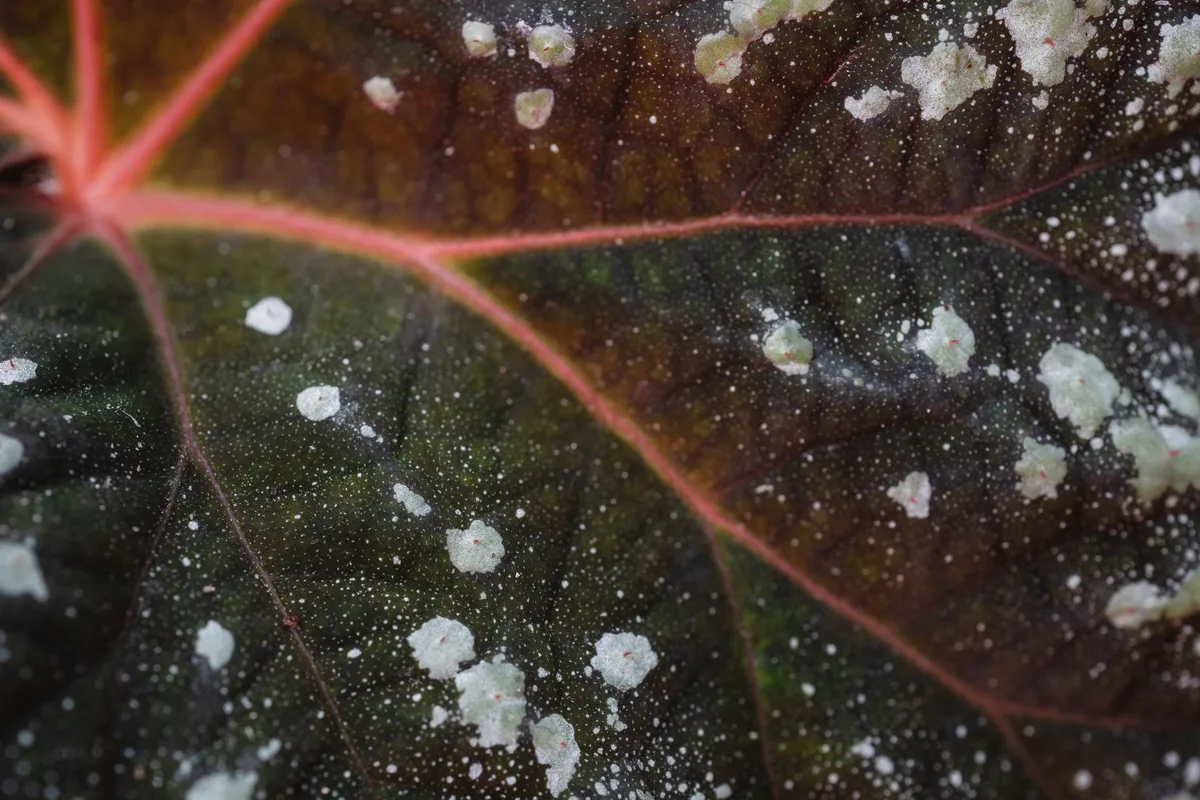
Real Scenarios: What Clean vs. Infested Looks Like
It helps to picture the difference side by side. A clean leaf axil has no visible residue. The stem meets the leaf at a crisp angle with no fluffy interruption.
The leaf surface feels smooth and dry to the touch.
An infested leaf axil looks like someone tucked a tiny piece of cotton wool into the joint. The surrounding leaf may appear slightly shiny or sticky. If you run your finger across it, you feel tackiness.
The plant’s new growth may look stunted or misshapen compared to older leaves.
On succulents, the presentation is different. Mealybugs wedge themselves between tight rosette leaves. The white wax looks like a spider web or fuzzy mold trapped in the center.
On foliage plants like pothos or philodendrons, the bugs cluster along the stem joints and leaf veins, often in a line.
Pro Tips for Spotting Damage Before It Spreads
Check the underside of every leaf. Flip each one. Use a flashlight to catch the glint of honeydew or the white wax. Early infestations often start on the lower leaves where they’re less visible.
Inspect new plants before bringing them home. Quarantine any new addition for at least two weeks. Place it away from your other plants and inspect it three times during that period. This is the single most effective prevention habit you can adopt.
Time your inspections around watering. When you water, leaves and stems are naturally moved and parted. Take those extra few seconds to look into the axils. It costs nothing and catches problems when they’re small.
Use sticky traps as early detection tools. Yellow sticky traps placed near your plants catch winged adult males and crawlers. They won’t catch every female, but a sudden spike in trap captures tells you to inspect more closely. This is especially useful in greenhouses or rooms with many plants.
When to Confirm with a Second Opinion (and How)
If you’re still unsure after performing the alcohol test, you have reliable backup options.
University extension diagnostic services accept plant samples. Most state universities in the US offer low-cost or free pest identification. You can email clear photos or mail a sample in a sealed bag.
They will confirm the species and often recommend treatment tailored to your region.
Your local agricultural office is another resource. County extension agents are trained to identify common pests like mealybugs. They see hundreds of samples each year and can spot subtle differences that home gardeners miss.
Online plant communities help too. Facebook groups and forums dedicated to houseplants often have experienced members who can ID mealybugs from a photo. Just make sure you get multiple confirmations before acting on advice. The alcohol test, however, remains the quickest and most definitive DIY method.
FAQ: Quick Answers on Mealybug Identification
Can mealybugs look like dust?
Yes. Dry soil particles, perlite, and mineral deposits can mimic white spots. The difference is texture.
Dust brushes off easily and feels dry. Mealybug wax is soft, waxy, and clings to the plant. The alcohol test resolves any doubt.
Do all mealybugs produce honeydew?
Most do. The longtailed, citrus, and root mealybugs all excrete honeydew as they feed. A few species produce less, but the presence of sticky residue is a strong indicator of an active infestation.
How fast do mealybugs spread?
Crawlers can move to nearby plants within days. Under warm indoor conditions, a single female can produce hundreds of eggs in a few weeks. Regular inspection every seven to ten days is recommended for high-risk plants.
Can mealybugs live in the soil without being visible?
Yes. Root mealybugs colonize the root ball and stay below ground. Above-ground signs are limited to wilting, yellowing, and slowed growth.
Unpotting the plant is the only way to confirm.
Is the alcohol test safe for all plants?
Isopropyl alcohol at 70% concentration is safe for most plants when applied with a cotton swab. Avoid saturating delicate leaves or soaking the soil. Test a small area first on sensitive species like ferns or succulents.
Final Takeaway: Trust Your Eyes, Verify with Touch and Test
Identifying mealybug damage comes down to three actions. Look for the white cottony clusters in the leaf axils and stem crevices. Feel for the sticky honeydew on leaves and surfaces.
Confirm with the alcohol swab test that dissolves the waxy coating on contact.
The earlier you spot these signs, the easier the problem is to manage. A few minutes of inspection each week can keep your plants healthy and save you from fighting a full infestation. Trust your eyes.
Verify with your fingers. And when in doubt, swab with alcohol. That combination has never failed to reveal the truth about mealybugs.