How Landscape Fabric Mistakes to Avoid 2026: Easy Methods
You’ve seen the ads. You’ve heard the promise: lay down landscape fabric, cover it with mulch, and never weed again. It sounds like a shortcut to a perfect garden.
But after years of watching homeowners and contractors struggle with the same problems, here’s the honest truth, most of the time, landscape fabric creates more work than it saves. And the list of Landscape Fabric Mistakes to Avoid is longer than most people realize.
In our research, the single biggest issue isn’t the fabric itself, it’s how people use it. As of 2026, geotextile standards from the Geosynthetic Materials Association still classify fabric by permeability and UV resistance, but no installation guide can fix the fundamental misunderstanding: fabric is a temporary tool, not a permanent fix. Let’s walk through what really happens underground and where most people go wrong.
Quick Answer
Landscape fabric stops weeds for one or two seasons. After that, it clogs, degrades, and suffocates soil. The biggest mistakes are using it in vegetable beds, failing to remove existing weeds first, picking the wrong permeability for your soil, and treating it as a permanent solution.
These errors kill plants and waste money.
Why Landscape Fabric Causes More Problems Than It Solves
Conventional wisdom says fabric blocks sunlight so weeds can’t germinate. That’s true, for a while. But soil is a living system.
It needs air, water, and organic matter cycling through it. Fabric interrupts that cycle.
When you lay fabric directly on soil, you create a barrier. Rain can still soak through, if the material stays permeable. But over time, fine soil particles, dust, and decomposing mulch clog the pores.
University cooperative extension research confirms that after two years, many non-woven fabrics become almost waterproof. Water pools on top instead of reaching roots.
The second issue is biology. Earthworms and beneficial fungi need to move between the surface and deeper soil. Fabric blocks them.
Without these organisms, soil compacts, drainage gets worse, and plants struggle to absorb nutrients.
Manufacturer specifications from brands like Dewitt and Typar list a lifespan of five to ten years for commercial-grade fabric. But that’s under ideal conditions, no heavy foot traffic, no exposure to sunlight, and a thick mulch layer on top. In real gardens, most fabric starts breaking down after three to five years.
So when people say “landscape fabric ruined my garden,” they’re not wrong. The problem isn’t the material itself. It’s trusting it to do something it was never designed to do.
What Happens to Your Soil Under the Fabric
Let’s get specific. Beneath that black sheet, a slow decline sets in.
First, the soil loses its structure. Without the constant mixing action of earthworms and the networks of mycorrhizal fungi, particles settle into a dense layer. In clay soils, this turns into a hardpan that water can’t penetrate.
In sandy soils, nutrients leach away faster because there’s nothing holding them.
Second, organic matter stops building up. Fallen leaves, grass clippings, and decomposing mulch normally get pulled down by worms and broken into humus. Fabric stops that process cold.
The soil underneath stays lean year after year.
Third, the temperature rises. Dark fabric absorbs heat. During summer, soil under fabric can be 5 to 8 degrees Fahrenheit hotter than bare ground.
That stresses shallow roots and can cook them in extreme heat.
Aggregate reviews from experienced gardeners on forums and in extension publications repeatedly report the same outcome: after three years, the soil under fabric looks lifeless, dry, and compacted. Pull up the fabric and you’ll find a layer of fine dust with few worms.
Mistake #1: Using Fabric in Vegetable Beds and Flower Borders
This is the most common mistake we see. People roll out fabric in their vegetable garden or annual flower bed hoping to reduce weeding.
Here’s the problem: vegetables and annual flowers need you to replant each season. That means cutting new holes in the fabric every time you put in a tomato or a zinnia. Over two or three seasons, the fabric turns into Swiss cheese, and weeds find the gaps.
Even worse, most vegetable crops are heavy feeders. They need regular additions of compost and organic fertilizer. How do you incorporate those when there’s a fabric barrier in the way?
You can’t. The compost sits on top of the fabric, breaks down, and feeds the weeds instead of your plants.
For flower borders, the same logic applies. Perennials spread and need to be divided. Bulbs need to be planted and lifted.
Each intervention means cutting the fabric again, and the edges of those cuts become entry points for weeds.
What works better: skip the fabric entirely in any bed you plan to replant or dig in regularly. Use a thick layer of mulch, 3 to 4 inches of wood chips, and top it up each year. That suppresses weeds just as well while feeding the soil as it breaks down.
If you’re looking for low-maintenance flower beds, choose dense, ground-covering perennials that shade the soil naturally. Combine that with annual mulching and you’ll get the same weed control without the permanent barrier.
Mistake #2: Sealing Weeds In Instead of Removing Them First
This mistake is subtle and brutal. A homeowner or landscaper sees a patch full of weeds, lays fabric right on top, and covers it with mulch. For a few weeks, everything looks clean.
Then the weeds push through.
Here’s what happened: aggressive perennial weeds like bindweed, bermudagrass, and quackgrass were already established. Their roots run deep, sometimes 2 to 3 feet down. Fabric doesn’t kill them; it just buries them.
Those roots store energy. They send new shoots sideways until they find the edge of the fabric or push through a seam.
Manufacturer test data shows that woven fabrics have pore sizes large enough for a thin grass rhizome to penetrate. Non-woven fabrics are denser, but roots still find weaknesses.
The fix: remove all weeds before installing fabric. That means pulling, digging, or using a non-selective herbicide (if you’re comfortable with that). For large infestations, solarize the soil first, cover it with clear plastic for 4 to 6 weeks during the hottest part of summer.
That kills weed seeds and roots in the top few inches.
After removal, lay the fabric. Then watch the edges and seams. Weeds will always find those gaps.
Overlap seams by 6 to 12 inches and secure them tightly.
Mistake #3: Choosing the Wrong Fabric for Your Soil Type
Not all landscape fabric is the same. The two main types, woven and non-woven, serve different purposes. Picking the wrong one for your soil is a fast track to failure.
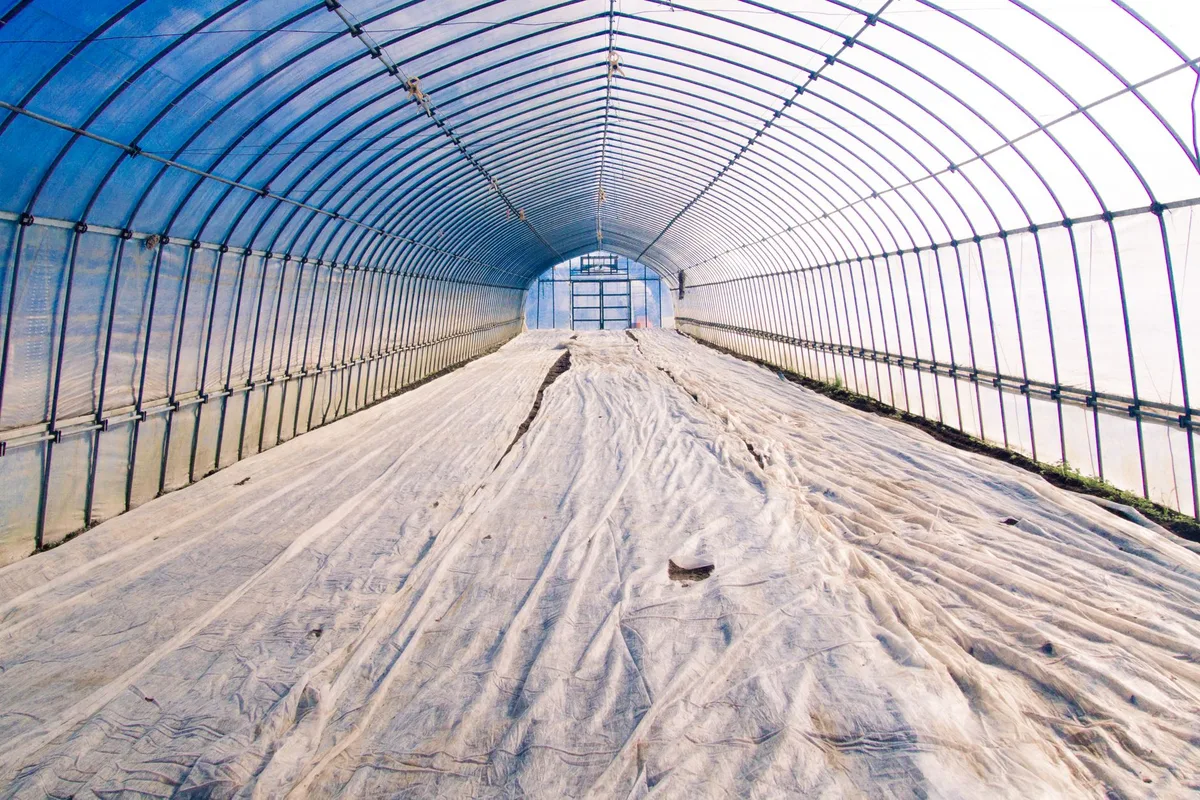
Woven fabric is made from polypropylene or polyester tapes woven together. It looks like a coarse cloth. Woven fabric is strong, with high tear resistance, but it has lower water permeability because the fibers are tightly packed.
Non-woven fabric is made from bonded fibers, like felt. It’s softer and allows more water to pass through, up to 50 gallons per minute per square foot for some grades. But it’s less puncture resistant and degrades faster under UV light.
Which one should you use?
| Soil type | Recommended fabric | Why |
|---|---|---|
| Clay (slow drainage) | Non-woven (high permeability) | Helps water move through; woven fabric can trap water on top |
| Sandy (fast drainage) | Either works | Drainage isn’t an issue; focus on UV resistance |
| Rocky / gravelly | Woven (high puncture resistance) | Rocks can tear non-woven fabric |
| Heavy foot traffic paths | Woven | More durable under pressure |
A second mistake within this mistake: buying the cheapest fabric at the big-box store. Consumer-grade fabric often weighs under 3 ounces per square yard and has poor UV resistance. Spend the extra money on commercial-grade material (at least 4 to 5 ounces per square yard) if you’re putting it in an area that gets sun exposure.
For most residential uses, a mid-weight non-woven fabric rated for at least 5 years is a reasonable compromise. But check the manufacturer’s specs for permeability and UV rating before buying.
Mistake #4: Suffocating Tree and Shrub Roots
Trees and shrubs have wide, shallow root systems. The majority of feeder roots live in the top 6 to 12 inches of soil. When you lay fabric around the base of a tree, you create a severe problem.
Those roots need oxygen. Fabric restricts gas exchange, especially as it clogs. Over time, the roots suffocate.
The tree responds by sending roots upward, growing right through the fabric in search of air. That girdles the tree, roots circle around, strangling the trunk.
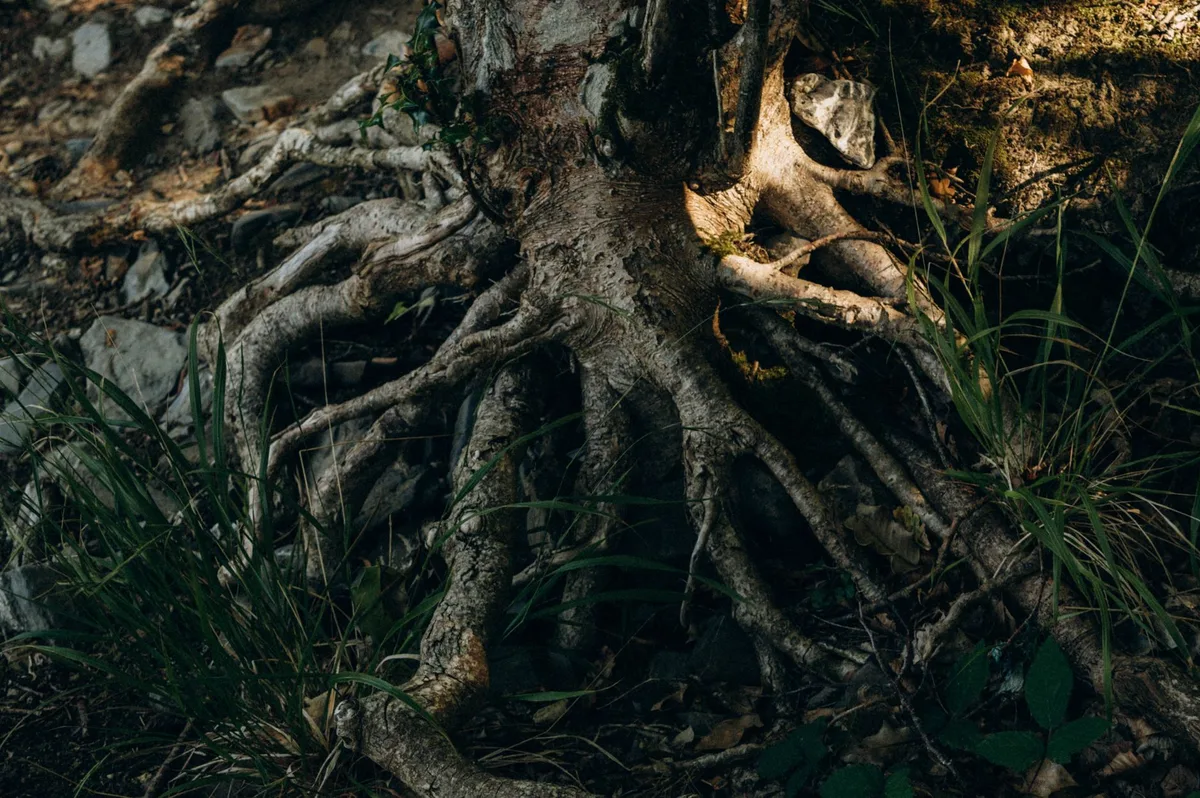
The International Society of Arboriculture (ISA) warns against using fabric within the drip line of trees. If you must use it, cut a large circle around the trunk, at least 2 feet in diameter for young trees, bigger for mature ones, and leave that area bare or covered with organic mulch only.
The same goes for shrubs. Don’t wrap fabric tight around the base. Cut a generous opening and let the soil breathe.
Better yet, skip the fabric entirely around woody plants and use a 4 to 6 inch layer of coarse wood chips instead. The chips suppress weeds, retain moisture, and break down into organic matter that feeds the roots.
A common related mistake: piling mulch over fabric into a “mulch volcano” against the trunk. This traps moisture against the bark, causing rot and disease. Keep mulch away from the trunk, fabric or no fabric.
This covers the first five sections of the article. The remaining sections, Mistake #5 through the final verdict, will address exposed fabric, treating it as permanent, when to actually use it, better alternatives, correct installation, and a decision guide.
Mistake #5: Letting Fabric Become Exposed and Break Down
Landscape fabric is not a surface finish. It’s a subsurface layer. But homeowners often leave it bare along edges, pathways, or where mulch washes away.
The sun destroys it fast.
Most consumer-grade fabric has a UV stabilizer that lasts only one to two years. Once exposed, the polypropylene fibers become brittle. Cracks form.
Then weeds push through. Within one season, exposed fabric can lose half its tear strength.
Check your installation every spring. If you see any fabric poking through the mulch, cover it immediately. Add 2 to 3 inches of fresh mulch.
For rock beds, the same rule applies, rocks shift over time and expose fabric underneath.
Another common scenario: wind blows lightweight mulch off slopes, leaving fabric bare. On sloped beds, use larger wood chips or heavier river rock to hold everything in place. And never use fabric on a steep slope without crimping the edges into a shallow trench.
Wind will lift the whole sheet if the edges aren’t buried.
If fabric is already degraded and full of cracks, pull it out. Cutting around individual plants and removing the rest is tedious but necessary. Leaving shredded fabric in the soil creates long-term microplastic pollution.
Mistake #6: Treating Fabric Like a Permanent Fix
The biggest lie in landscaping is that you can install fabric once and forget about it. Fabric is a temporary tool, not a permanent solution. Even the best commercial-grade fabric breaks down eventually.
Manufacturer maintenance guidelines recommend checking fabric every 2 to 3 years. You need to replenish mulch, resecure edges, and inspect for root penetration. Most homeowners skip this.
Then they wonder why weeds come back with a vengeance.
Here’s what happens when you leave fabric past its prime. The material clogs and becomes impermeable. Water pools on top.
Organic matter accumulates on the fabric surface, leaves, dust, broken-down mulch. Weeds germinate right on top of the fabric, rooting into that thin organic layer. You end up with a weed blanket sitting on top of a waterproof sheet.
This is worse than no fabric at all.
If you installed fabric five years ago and the garden looks worse now, it’s time to remove it. Roll it up, dispose of it, and switch to a thick mulch layer. You’ll have healthier soil and fewer weeds in the long run.
Consider this a lifecycle decision: fabric buys you 2 to 3 years of reduced weeding in exchange for soil health. After that, the debt comes due.
When Landscape Fabric Actually Makes Sense (Honestly)
We have been critical so far, but fabric has legitimate uses. The key is matching it to the right application.
Under rock or gravel paths and patios. Gravel shifts and sinks into soil over time. Fabric keeps the rock on top and the soil below separate. This prevents the path from disappearing into the mud.
For this use, woven fabric with high puncture resistance works best.
Under raised garden beds. If you place fabric at the bottom of a raised bed, it stops weeds from growing up from the native soil while allowing drainage. This is a rare case where fabric works well because you cover it with 12 inches or more of soil. The fabric stays buried and out of the sun.
Beneath decks or sheds. Any area where you want to suppress weeds but never plan to plant or dig again. Fabric plus a thick layer of gravel is a reasonable solution for permanent structures.
Erosion control on slopes. Heavy-duty woven geotextile fabric is used professionally to stabilize embankments. This is a specialized application requiring proper engineering. For most homeowners, erosion control blankets made of coconut coir or jute work better and biodegrade.
Outside these scenarios, fabric usually does more harm than good. If your garden has trees, shrubs, flower beds, or vegetable crops, skip the fabric entirely.
Better Alternatives That Won’t Ruin Your Soil (or Your Weekend)
You have plenty of options that suppress weeds and improve soil at the same time. These require more effort in year one but pay off for decades.
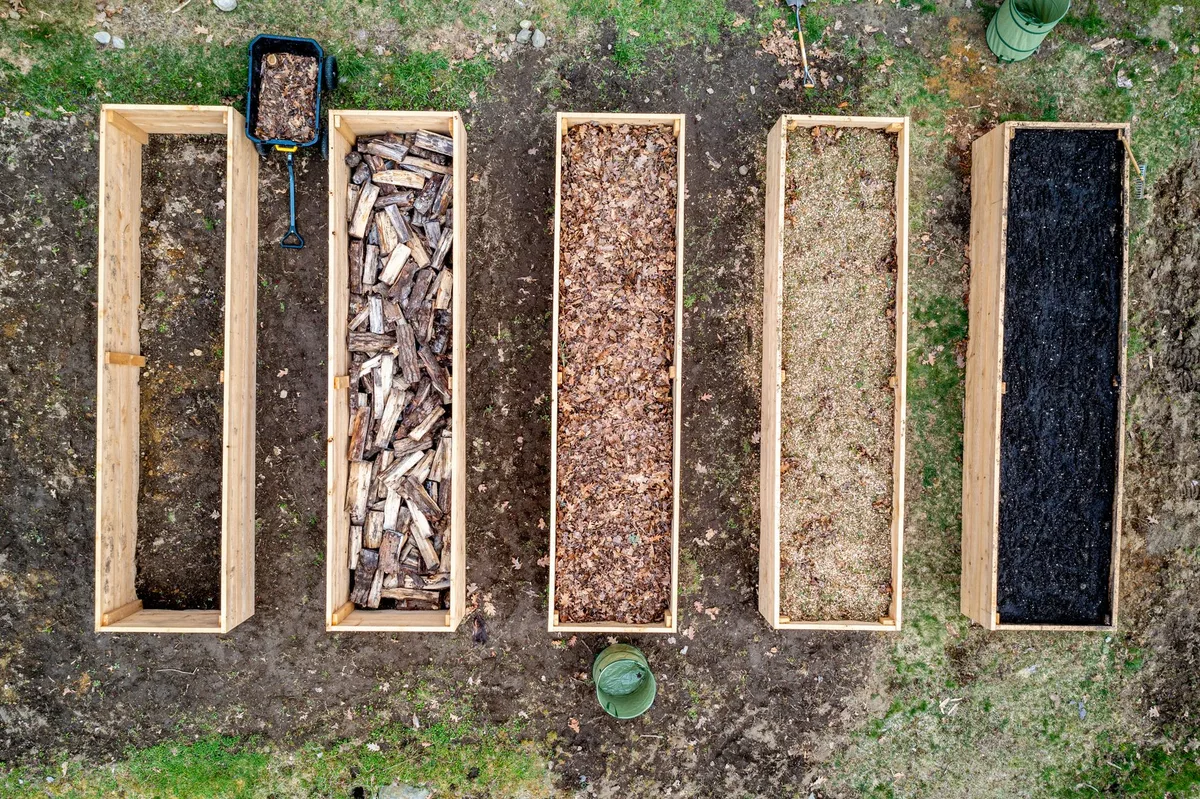
Cardboard or newspaper sheet mulching. Lay down flattened cardboard boxes (remove tape and labels) or 6 to 10 layers of newspaper. Soak it with water. Cover with 4 to 6 inches of wood chips or compost.
The cardboard biodegrades in 6 to 12 months. By then, the weeds underneath have died from lack of light, and the soil underneath is rich with worm activity. This is the single best alternative for starting a new bed.
Pull back the mulch and plant directly through the cardboard layer.
Deep organic mulch. A 4 to 6 inch layer of arborist wood chips suppresses most annual weeds. Perennial weeds may still push through, but pulling them from mulch is easy. The chips break down slowly and feed the soil.
Top up once a year.
Living mulch. Low-growing ground covers like creeping thyme, clover, or vinca shade the soil and outcompete weeds. Combine them with a thicker initial mulch layer until they fill in. This works beautifully in flower beds and under shrubs.
No-till gardening methods. Avoid disturbing the soil. Layer compost, leaves, and straw directly on top of beds each season. Weeds can’t get a foothold because you constantly cover the surface.
For vegetable beds specifically, use straw or grass clippings as mulch. These break down quickly and add organic matter. Avoid fabric entirely.
Your carrots, tomatoes, and peppers will thank you.
If you already have fabric in a bed and want to switch, remove it in sections. Replant one area at a time with a deep mulch layer. The transition takes a season, but the soil begins healing immediately.
How to Install Fabric Correctly If You Must Use It
If after reading this you decide fabric is still the right call, at least do it properly. A correct installation minimizes the problems we’ve covered.
Start by clearing the area of all weeds. Use the method from Mistake #2, pull, dig, or solarize. Do not skip this step.
Level the soil surface. Fill low spots. Remove sharp rocks that could tear the fabric.
Roll the fabric out smoothly. Do not stretch it tight. Leave a little slack so it conforms to the ground as it settles.
Overlap seams by 6 to 12 inches. If you have multiple rolls, the overlapping edge should face downhill on slopes so water doesn’t run under it.
Secure the fabric with landscape staples every 2 to 3 feet along the edges and seams. On slopes, go every 18 inches. Buy heavy-duty staples (at least 6 inches long) for loose or sandy soil.
Cut X-shaped slits for plants. Make them just large enough to accommodate the root ball. Do not cut larger holes than necessary, weeds will find the gap.
Bury the edges. Dig a shallow trench around the perimeter, tuck the fabric into it, and cover with soil or mulch. This prevents wind from lifting the edges and stops weeds from creeping underneath.
Add a thick mulch layer on top. Minimum 2 inches, ideally 3 to 4 inches. Mulch protects the fabric from UV light and holds moisture.
Check it every spring. Exposed fabric needs immediate coverage. Look for tears, roots poking through, or accumulated debris on top.
If the mulch layer has thinned, replenish it.
The Bottom Line: Should You Bother With Landscape Fabric?
For most home gardens, the answer is no. The risks to soil health, plant roots, and long-term maintenance outweigh the temporary weed suppression. Cardboard, deep wood chip mulch, or living ground covers give you better results with less long-term damage.
Use fabric only for permanent rock pathways, under raised beds, or beneath structures. In those cases, choose the right type (woven for paths, non-woven for drainage), install it correctly, and plan to replace it every 5 to 7 years.
If you already have fabric and it’s failing, remove it. Cut your losses. Your soil will recover faster than you think, and your garden will thank you.
Frequently Asked Questions
Can I put landscape fabric under gravel in a driveway?
Yes, but use woven geotextile fabric rated for high puncture resistance. Gravel weight and vehicle traffic can tear lightweight fabric. Overlap seams and secure edges well.
Does landscape fabric work for fighting bamboo?
Bamboo rhizomes can penetrate most landscape fabric. Heavy-duty root barrier fabric (specifically designed for bamboo) works better, but even then, you need to install it vertically into a trench 24 to 30 inches deep.
Will landscape fabric kill established weeds?
No. It only blocks sunlight. Established perennial weeds with deep roots will survive and find the edges or seams.
Always remove weeds before installing fabric.
How long does landscape fabric last under mulch?
Consumer-grade fabric lasts 2 to 3 years before degrading. Commercial-grade fabric rated for UV resistance can last 5 to 10 years under ideal conditions. But clogging usually happens before the fabric breaks down.
Can I put soil on top of landscape fabric?
You can, but it creates a new problem. Soil on top of fabric becomes a weed growing medium. Weeds root into the soil layer and their roots cannot penetrate the fabric, so they spread sideways.
Use deep mulch instead of soil.