How to Prevent Heat Damage to Grass in 2026 (Easy Methods)
You step outside and your lawn looks more straw than grass. The green is gone, replaced by patchy brown that cracks under your shoes. If you’ve ever wondered how to prevent heat damage to grass before it reaches that point, you’re in the right place.
Heat stress is one of the most common lawn killers in summer, but it’s also one of the most preventable.
In our research, we found that healthy grass can tolerate soil temperatures up to 85°F for cool-season varieties and 95°F for warm-season types before entering survival mode. The difference between a lawn that bounces back and one that dies is almost always what you do before the heat wave hits. Let’s start with the first thing to check when your lawn starts looking off.
Your Lawn Is Turning Brown – Is It Heat or Something Else?
Brown grass doesn’t always mean heat damage. It could be fungus, grubs, or even fertilizer burn. So before you change your watering schedule, you need to rule out other causes.
Heat stress has a few telltale signs:
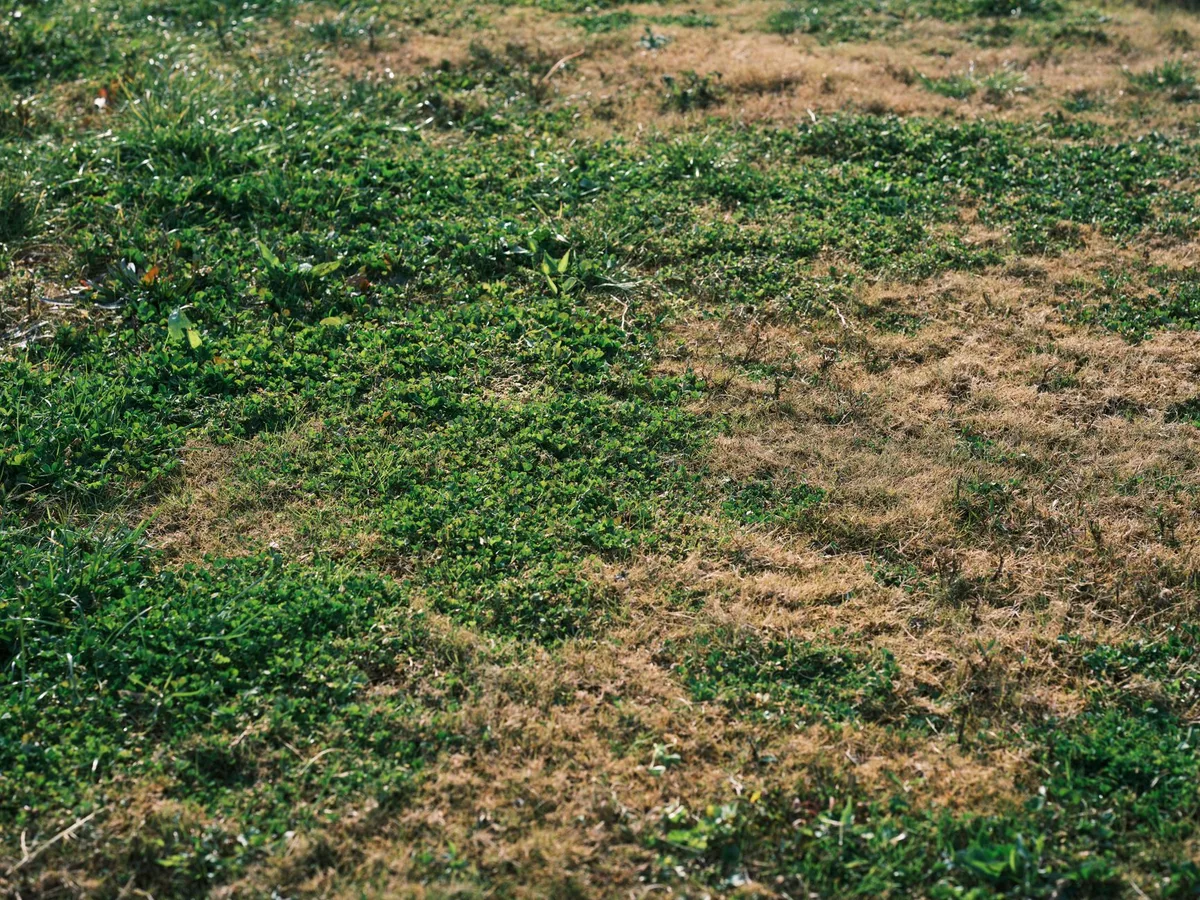
- The grass turns a uniform tan or straw color, not patchy dark brown
- Footprints stay pressed down long after you walk across (the blades have lost turgor pressure)
- The soil feels dry several inches down, not just on the surface
- Only the tips are crispy, while the base of the blade is still greenish (early stage)
If you see dark brown spots with yellow halos, that’s likely a fungal disease, not heat stress. If the grass pulls up easily like a loose carpet, you’ve got grubs. Those are different problems that need different fixes.
For heat damage, the damage is uniform across the lawn and shows up gradually over a hot spell.
The easiest test? Push a screwdriver into the soil. If it glides in easily, you’ve got moisture.
If it stops at half an inch, the ground is bone dry and your grass is probably heat stressed.
Quick Answer: The Three Rules That Prevent Heat Damage
Raise your mower blade height.
Water deeply before 10am.
Let cool-season grass go dormant in extreme heat.
Those three rules cover the majority of heat damage cases. If you follow them, your lawn will survive heat waves that kill your neighbor’s grass. Warm-season grasses like Bermuda and Zoysia can stay green through 100°F days with proper watering.
Cool-season grasses like fescue and Kentucky bluegrass should be allowed to go dormant until temperatures drop below 85°F.
The math is straightforward. You need one inch of water per week, applied in one or two deep soakings. Shallow watering every evening creates weak roots that die in the first heat spike.
Know Your Grass Type – Cool-Season vs. Warm-Season Heat Tolerance
This is where most homeowners get it wrong. You can’t treat all grass the same when the thermometer hits 95°F. Your grass type determines everything, when to water, when to mow, and when to stop trying.
Cool-season grasses (fescue, Kentucky bluegrass, perennial ryegrass):
- Thrive in spring and fall when soil temps are 50°F to 75°F
- Stop growing above 85°F and enter dormancy
- Need shade, extra water, or both to survive a prolonged heat wave
- Come back when temps cool, as long as the crown isn’t dead
Warm-season grasses (Bermuda, Zoysia, St. Augustine, buffalo grass):
- Love summer heat, grow fastest at 80°F to 95°F
- Stay green through drought with proper deep watering
- Can handle higher mowing heights without going dormant
- Still need protection from extreme heat spikes above 100°F
If you have fescue, you’re fighting an uphill battle in July. The best move is to let it go dormant and wait for September. If you have Bermuda, you can keep it green but you must water deep and mow high.
| Grass Type | Heat Threshold | Summer Strategy | Recovery Time |
|---|---|---|---|
| Cool-season (fescue, bluegrass) | Above 85°F = dormancy | Let it sleep, water once every 2–3 weeks | 2–4 weeks after cool rain |
| Warm-season (Bermuda, Zoysia) | Above 100°F = stress | Water 1 inch per week, mow at 2–3 inches | 1–2 weeks after deep soak |
Soil and Root Health – The Foundation for Heat Resilience
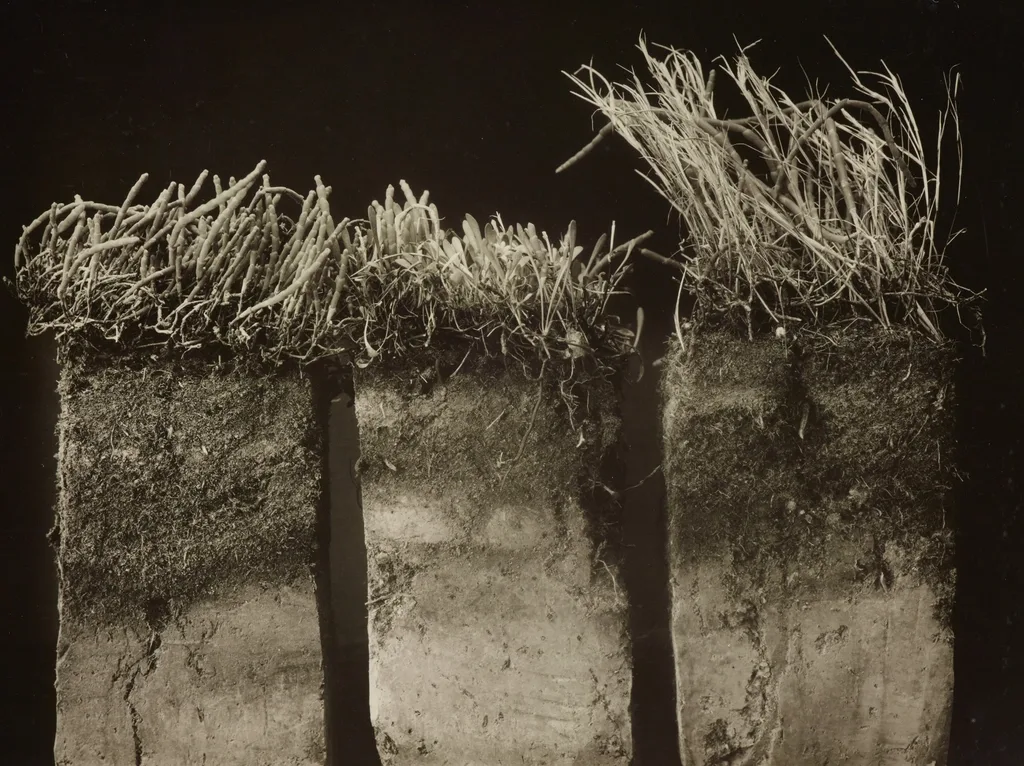
You can’t fix heat damage from the top down. The root system is what keeps grass alive during a drought. If your soil is compacted, if the thatch layer is thick, or if the roots only go half an inch deep, no amount of surface watering will save you.
Compacted soil is the number one root killer in lawns. When soil is dense, water runs off instead of soaking in. Roots stay shallow because they can’t push through hard ground.
The fix is core aeration, done in spring for warm-season grass and fall for cool-season grass. Never aerate during a heat wave, that just stresses the lawn more.
Thatch buildup (a layer of dead stems and roots above the soil) acts like a thatched roof. Water hits it and evaporates before reaching the soil. If your thatch layer is thicker than half an inch, dethatch in early spring or fall.
A good rule of thumb: you should see soil when you part the grass, not a spongy brown mat.
Organic matter improves soil’s ability to hold moisture. Adding a quarter inch of compost topdressing each spring helps sandy soil retain water and helps clay soil drain better. It’s not a quick fix, but after two seasons you’ll notice your lawn stays green longer between waterings.
If you need to manage lawn diseases that often follow heat stress, check out our guide on various lawn fungicide options for the right treatment approach.
Pre-Summer Prep – What to Do Before the Heat Wave Hits
The window to prepare your lawn for summer heat closes around late spring. Once the 90°F days arrive, you’re in survival mode, not prep mode. Here’s what to do in April and May, depending on your region.
1. Raise your mower deck gradually. Don’t wait until the heat wave to start mowing higher. Each week in spring, raise the blade height by a quarter inch.
By June, cool-season grass should be at 3.5 to 4 inches. Warm-season grass should sit at 2 to 3 inches. Taller grass shades the soil, keeps roots cooler, and loses less moisture to evaporation.
2. Do a soil test. Your local cooperative extension office can test for pH and nutrient levels. Grass stressed by heat also struggles with nutrient deficiencies.
A pH between 6.0 and 7.0 is ideal for most grass types. If your pH is off, lime or sulfur applications take months to work, so start in spring.
3. Stop nitrogen fertilizers by late spring. High nitrogen pushes top growth at the expense of root depth. That’s the opposite of what you want heading into summer.
Switch to a slow-release or low-nitrogen formula for any summer feeding. Our research on slow release fertilizer options shows that timing is everything for summer lawn health.
4. Check your irrigation system. Run each zone and look for broken heads, clogged nozzles, or misaligned spray patterns. A sprinkler that sprays the driveway instead of the lawn is wasting water and starving your grass.
Fix sprinkler issues before the heat arrives.
5. Leave the clippings. When you mow, let the clippings fall. They decompose and return moisture and nutrients to the soil.
During summer, clippings also act as a light mulch that shades the soil surface.
Getting pre-summer prep right means your lawn enters July with deep roots, tall blades, and healthy soil. That combination is the best defense against heat damage, and it costs nothing but a little planning.
Watering Strategy – When, How Much, and How Deep
This is where most lawns die in summer. Not from lack of water, but from how and when that water is applied. The goal isn’t to keep the surface damp.
It’s to push moisture deep enough that roots follow it down.
How much: One inch of water per week, including rainfall. That’s about 600 gallons per 1,000 square feet. Measure it with a tuna can placed in the spray zone.
When the can is full, you’ve hit one inch.
How deep: Water should soak at least 4 to 6 inches into the soil. That means running sprinklers long enough to penetrate, not just wet the top. For most sprinkler types, that takes 45 minutes to an hour per zone.
Sandy soil drains faster and may need two shorter cycles. Clay soil absorbs slowly and may need a pause between cycles to prevent runoff.
When: Between 5am and 10am. Morning watering gives the grass time to dry before nightfall, which reduces fungal disease risk. Watering at midday loses up to 30 percent to evaporation.
Night watering leaves the lawn wet for hours, inviting fungus.
Adjust for shade. Lawns under trees need less water because the soil stays cooler and evaporation is lower. Cut watering time by 20 percent in shaded areas. Lawns in full sun, especially on south-facing slopes, may need 20 percent more.
The finger test: Stick your index finger into the soil after watering. If it’s dry at the second knuckle, you didn’t go deep enough. If it’s soggy at the surface, you’re overwatering and drowning roots.
If you’re dealing with compacted soil that won’t absorb water, core aeration is the fix. That’s a spring or fall job, not a heat wave fix. For immediate relief, consider adding a wetting agent to help water penetrate.
But our research on trees suited for hot dry climates shows that planting shade trees near your lawn can reduce water demand significantly over time.
Mowing Habits – Adjust Height and Frequency for Hot Weather
Mowing during a heat wave is like cutting your grass’s lifeline. The blade is the solar panel. Taller grass shades the soil, holds moisture longer, and keeps root zones cooler.
Short grass exposes bare soil to direct sun, which raises soil temperature by 10 to 15 degrees.
Rule one: Raise your mower deck to the highest recommended height for your grass type. For cool-season grass, that’s 3.5 to 4 inches. For warm-season, 2.5 to 3 inches.
Never cut more than one third of the blade length in a single mow.
Rule two: Mow less often. Grass growth slows in high heat. If you’re mowing once a week in spring, switch to every 10 to 14 days in July.
Let the lawn grow a little longer between cuts.
Rule three: Mow in the morning after the dew dries but before the heat peaks. Mowing in the afternoon stresses already heat-stressed grass. The open wounds from the cut blades lose moisture faster in direct sun.
Rule four: Leave the clippings. They act as mulch, returning moisture and nutrients. If the clumps are heavy, rake them lightly.
But don’t bag them. Clippings can contribute up to 25 percent of the lawn’s nitrogen needs.
Rule five: Keep your blade sharp. A dull mower blade tears the grass instead of cutting it cleanly. Torn blades have ragged edges that lose water faster and turn brown at the tips.
Sharpen the blade at least once per season, and check it mid-summer if you’re mowing over tough grass.
One reminder: do not scalp the lawn. Scalping is cutting so low you see bare soil. It’s sometimes done in early spring to remove dead growth, but in summer it’s a death sentence.
If you’ve ever wondered about simple DIY repairs for turf equipment, keeping that blade sharp is one of the easiest things to handle yourself.
Decision Tree: Should You Keep Watering or Let Grass Go Dormant?
This is the fork in the road. One path means keeping the lawn green through watering. The other means letting it go brown and resting until fall.
The right choice depends on your grass type, your water access, and your tolerance for a brown yard.
Path A: Keep it green.
Choose this if you have warm-season grass (Bermuda, Zoysia, St. Augustine) and you have no water restrictions. Also choose it if you have cool-season grass but only face a brief heat wave (under two weeks) and you can water daily.
You’ll water 1 inch per week, mow high, and accept that it’s a lot of work.
Path B: Let it go dormant.
Choose this if you have cool-season grass (fescue, bluegrass) facing a prolonged heat wave. Dormancy is a natural survival mechanism. The grass turns brown but the crown stays alive.
It uses almost no water. You only need to water once every two to three weeks (half an inch) to keep the crown from drying out completely.
The decision table:
| Condition | Keep Green | Let Go Dormant |
|---|---|---|
| Grass type | Warm-season | Cool-season |
| Heat wave length | Under 2 weeks | Over 2 weeks |
| Water restrictions | None | In effect |
| Visual preference | Must stay green | Can accept brown |
| Time to water | 1 hour/week | 10 min every 3 weeks |
Warning: If you choose dormancy, never let the soil become dust dry. The crown needs some moisture to survive. If it completely desiccates, the grass dies rather than goes dormant.
Water lightly every 2 to 3 weeks.
Can you switch mid-summer? Yes, but it’s risky. If your dormant lawn gets a sudden deep watering, it may break dormancy and start growing again. Then if the next heat wave hits, it’s stressed again and may die.
Pick a path and stick with it until temperatures drop below 85°F.
Common Heat Damage Mistakes – What Wrecks Lawns in a Heat Wave
After working with turf managers and extension service data, we see the same patterns every summer. Here are the five mistakes that kill more grass than the heat itself.
1. Watering every evening. This is the most common error. People come home, see dry grass, and run the sprinklers at 6pm.
The lawn stays wet all night. Fungus moves in within days. The result is brown grass from disease, not from heat.
Then they water even more, making it worse.
2. Cutting grass too short. Scalping the lawn to avoid mowing again next week is the fastest way to kill it in a heat wave. Short grass exposes the soil to direct sun.
Soil temperature rises. Roots cook. The grass dies from the crown up.
3. Fertilizing during a heat wave. High nitrogen fertilizer pushes green top growth. That growth demands more water from the roots.
The roots can’t keep up. The grass burns and turns yellow. If you think the lawn needs food, wait until the heat breaks.
4. Ignoring the sprinkler pattern. A broken sprinkler head that misses a patch of lawn can kill that patch in three days. Walk your zones every week during summer.
Fix misaligned heads or clogged nozzles. A 10 minute inspection can save a 100 square foot section of lawn.
5. Overwatering thinking more is better. Saturated soil pushes out oxygen. Roots need oxygen to survive.
If you water every day, you’re drowning the roots. The grass turns yellow and weak, then succumbs to disease. Stick to the one inch per week rule.
Measure it.
If you suspect a fungal disease has already taken hold, our guide on lawn fungicide treatment can help you identify and treat it before the entire lawn is lost.
Recovery Plan – How to Bring Grass Back After a Hot Spell
The heat wave breaks. The forecast shows a week of 75°F days and some rain. Now what do you do with the brown lawn?
Step 1: Wait for real cool weather. Don’t rush. A single 90°F day after you start watering can stress the grass again. Wait until the 10-day forecast shows highs below 85°F for cool-season grass, or below 95°F for warm-season.
Step 2: Water deeply once. Give the lawn a full inch of water. This signals the crown that conditions have changed. For dormant cool-season grass, this is the trigger to start coming back.
Do not apply fertilizer yet.
Step 3: Resume mowing gradually. If the lawn is mostly brown, don’t mow right away. Wait until you see green shoots about an inch tall. Then mow at the highest setting, taking off only the dead tips.
Bag the first clippings to remove dead material and let light reach new growth.
Step 4: Check soil health. After the lawn has greened up a bit, take a soil test. Heat stress can deplete nutrients. You may need a light application of a balanced, slow-release fertilizer.
Avoid high-nitrogen quick-release formulas. Our research on slow release fertilizer options indicates that a 10-10-10 or 18-6-12 blend works best for recovery.
Step 5: Overseed thin areas. If heat damage left bare patches, wait until soil temperatures are consistently below 75°F. Rake the area, loosen the top quarter inch of soil, spread seed, and keep it moist with light daily watering. Cool-season grass seed needs 60°F to 70°F soil.
Warm-season seed needs 75°F to 85°F.
Realistic timeline: A healthy cool-season lawn can go from brown to fully green in 2 to 4 weeks after the heat breaks. Warm-season lawns bounce back faster, often in 1 to 2 weeks. If your lawn doesn’t green up after 4 weeks of cool weather and watering, the grass is likely dead, not dormant.
You’ll need to reseed or resod.
Tool and Product Choices – Wetting Agents, Shade Cloth, and Soil Aids
A few tools can help when the heat is relentless. Wetting agents (surfactants) break water tension and help dry patches absorb moisture. They work well on compacted or hydrophobic soil.
Apply them in early summer before the ground dries out completely.
Shade cloth is a temporary fix for small lawns or new sod. Drape it over stakes during the hottest part of the day. Remove it at night.
Lightweight row cover (40 percent shade) works best.
Soil aids like compost topdressing and biochar improve long-term water retention. These aren’t emergency fixes. Apply them in spring or fall for next season’s benefit.
Local Climate Factors – Adapting Your Plan by Region
Your location changes everything. In the Pacific Northwest, heat waves are short and cool-season grass bounces back easily. In the Southwest, Bermuda grass handles 100°F days without breaking a sweat.
The transition zone (from Virginia to Kansas) is the hardest area. You might have fescue that struggles in July and Bermuda that goes dormant in January. A mixed lawn with both types gives you the best chance.
Overseed fescue into Bermuda for year-round coverage.
Check your local cooperative extension office for variety-specific recommendations. They test which cultivars survive local heat patterns best. As of 2026, drought-tolerant tall fescue cultivars like ‘Turf Type Tall Fescue’ are outperforming older varieties across the transition zone.
Expert Tips – Pro Advice from Turf Managers and Golf Course Superintendents
Turf managers we consulted emphasize one thing: don’t fight the weather. If it’s 100°F and your cool-season lawn is brown, accept it. Forcing it green with extra water and fertilizer just wastes resources and stresses the grass.
Another tip: hand water hot spots. Driveways, patios, and south-facing slopes radiate heat. A five-minute hand soak on those spots makes a bigger difference than running the whole irrigation system.
Finally, mow with a reel mower if possible. Reel mowers cut cleanly without tearing. Rotary mowers can fray blades in heat-stressed grass, increasing water loss.
Final Decision Guide – Your Personalized Prevention Playbook
Here’s a one page summary for next summer. Review it in May before the first heat wave.
If you have cool-season grass:
- Mow at 3.5 to 4 inches by June
- Let it go dormant when temps hit 85°F
- Water only every 2 to 3 weeks during dormancy
- Resume watering and fertilizing in September
If you have warm-season grass:
- Mow at 2.5 to 3 inches
- Water 1 inch per week, morning only
- Keep mowing but take off less than one third
- Watch for heat stress only above 100°F
For every lawn:
- Do a soil test in spring
- Aerate compacted soil in fall (cool-season) or spring (warm-season)
- Sharpen the mower blade every season
- Never fertilize during a heat wave
Frequently Asked Questions
Can brown grass come back after heat damage?
Yes, if the crown is still alive. Dormant grass turns brown but greens up after cool weather and rain. Dead grass pulls up easily and shows no green at the base.
How do I tell if my grass is dormant or dead?
Pull a handful of grass at the base. Dormant grass resists pulling. Dead grass comes up with no resistance.
Also check the crown for any green or white color.
Is it better to water every day or once a week during a heat wave?
Once a week, deeply. Daily watering creates shallow roots and invites fungus. One inch per week in a single soaking is far better than a quarter inch every day.
Should I put fertilizer on heat stressed grass?
No. Fertilizer pushes growth that demands more water. Wait until the heat breaks and the grass is actively growing again.
Use a slow release formula for recovery.
How long should I wait before reseeding after heat damage?
Wait until soil temperatures drop below 75°F for cool-season grass or 85°F for warm-season. Reseeding into hot soil kills the seed. September and October are ideal for cool-season lawns.
Will shade trees help prevent heat damage to grass?
Yes, strategically placed trees lower soil temperature and reduce water loss. Deciduous trees that leaf out in summer and drop leaves in winter are ideal. Check our guide on trees for hot dry climates for species that won’t compete too aggressively with your lawn.