How Long Does Weed Killer Take to Work (2026) — Simple Steps
You grab a sprayer full of weed killer, hit the worst patch of dandelions in your lawn, and then you wait. The big question is always the same: how long does weed killer take to work? The honest answer is anywhere from a few hours to a full two weeks, and it depends on three specific things, the type of herbicide you used, the weed you’re targeting, and the weather the day you sprayed.
Per manufacturer specifications, a contact herbicide like diquat can show wilting in as little as 4 to 12 hours, while a systemic product such as glyphosate takes 7 to 14 days to kill the entire plant, roots included. That range is huge, and if you don’t know which camp your product falls into, you’re left guessing. Let’s break it down by situation so you know exactly what to expect.
Why There’s No Single Answer – It Depends on Your Situation
The reason you can’t get a one-size-fits-all timeline is that “weed killer” covers two completely different modes of action. One type burns what it touches and stops there. The other travels through the plant’s vascular system and shuts everything down from the inside.
The first works fast above ground. The second takes time but does the whole job.
Your specific situation matters just as much. A young, actively growing annual will die faster than a tough, established perennial with a thick taproot. Spraying when temperatures are above 80°F can actually slow absorption because the plant closes its stomata to conserve water.
And if rain falls before the product dries, you’re starting over.
That’s why this guide walks you through a decision tree. You’ll match your product, your weed, and your local weather to a realistic timeline, no more impatient checking after 24 hours and wondering if you wasted your money.
The Quick Answer: What to Expect Right Now
Here are the general timelines for the two main herbicide types. Use this as a snapshot before we dig into the details.
| Herbicide Type | First Visible Effect | Full Kill (above and below ground) |
|---|---|---|
| Contact (diquat, pelargonic acid) | 4–12 hours | 2–4 days (top growth only; roots may regrow) |
| Systemic (glyphosate, 2,4-D) | 24–48 hours | 7–14 days for annuals; 10–21 days for perennials |
| Systemic (triclopyr, dicamba) | 48–72 hours | 7–21 days depending on weed type |
Key note: “First visible effect” usually means yellowing, curling, or wilting. It does not mean the weed is dead. For most systemic products, the plant looks worse before it fully dies, and that’s a good sign.
Contact vs. Systemic – The One Factor That Changes Everything
This is the most important distinction to understand. Choose the wrong type for your goal and you’ll either wait too long or get disappointed by regrowth.
Contact herbicides work like a surface burn. They damage only the plant tissue they touch. If you spray a dandelion rosette, the leaves will shrivel within hours.
But if the plant has a deep taproot and you missed the crown, new leaves can emerge from the root within a week. Contact products are best for young, shallow-rooted annual weeds, things like crabgrass, chickweed, and henbit.
Systemic herbicides are absorbed into the leaves and then move through the phloem to the roots, growing points, and storage tissues. They kill the whole plant, not just the visible part. That’s why they take longer to show results but give longer-lasting control.
Glyphosate, 2,4-D, triclopyr, and dicamba are common systemics.
Which one should you use?
- If you need fast visual cleanup (like for a weekend garden party) and don’t mind spot-treating again later, go with a contact.
- If you want to kill the weed permanently and prevent regrowth, choose a systemic. It takes more patience but saves you from respraying.
A common mistake is using a contact killer on a perennial like bindweed or poison ivy. The top dies back, but the root survives and sends up new shoots in a week or two. That’s not a failure of the product, it’s a mismatch of tool to job.
What Weed Are You Killing? Annuals vs. Perennials
The type of weed dramatically changes the timeline. Annuals complete their life cycle in one season. Perennials live for years and store energy in roots, rhizomes, or bulbs.
Annual weeds (crabgrass, foxtail, pigweed, lambsquarters):
- Young seedlings (under 4 inches), systemic herbicide kills them in 3 to 7 days.
- Fully mature annuals, 7 to 10 days.
- Contact herbicide kills the top in 1 to 2 days, but if the plant has already set seed, the seeds can still germinate later.
Perennial weeds (dandelion, clover, bindweed, Canada thistle, quackgrass):
- Seedlings (first year), 7 to 10 days with systemic.
- Established perennials, 10 to 21 days. Dandelions with large taproots often take the full two weeks.
- Perennials with creeping roots (bindweed, quackgrass) may require a second application 2 to 3 weeks later, because the systemic must reach all spreading underground stems.
A good rule of thumb: if you can pull the weed by hand and get most of the root, it’s probably annual or a young perennial. If it snaps off at the crown and leaves a deep root in the ground, you’re dealing with a tough perennial. That one needs a systemic and patience.
Weather Conditions That Speed Up or Slow Down Results
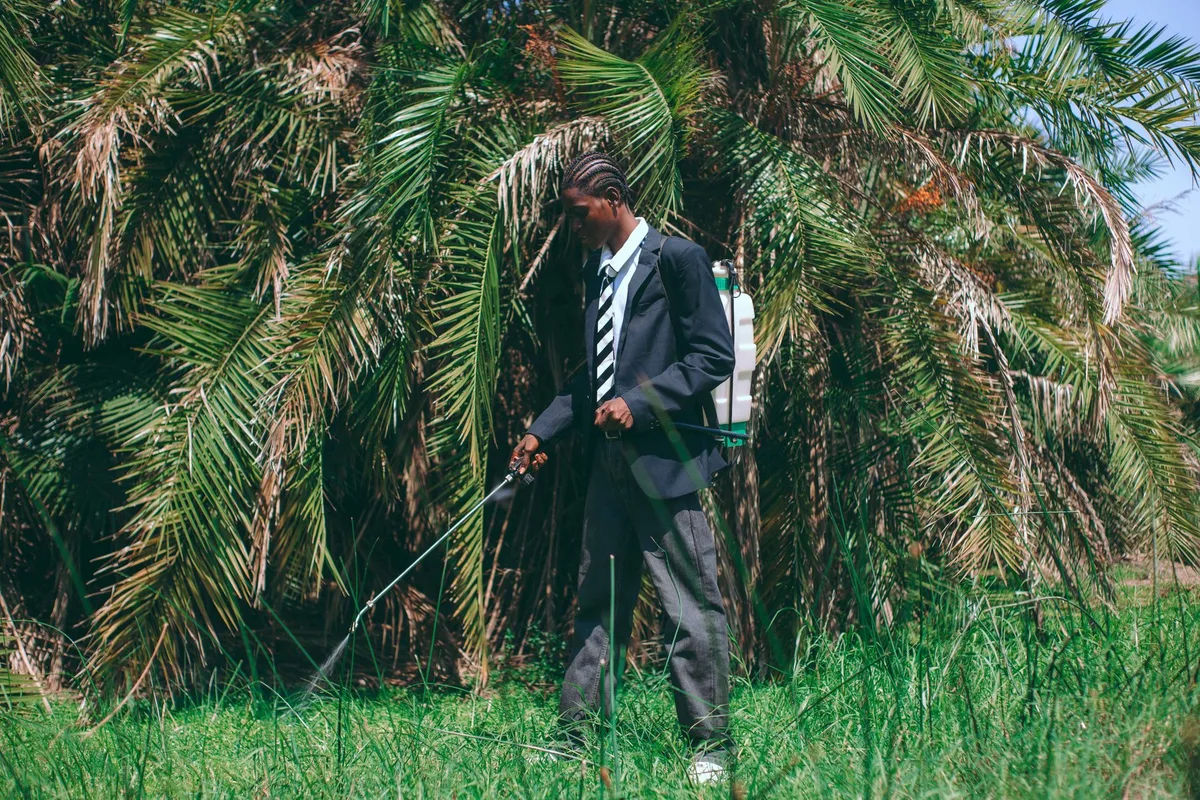
Even the best herbicide won’t work right if conditions are off. Weather is the variable most people overlook, and it can double or halve your timeline.
Temperature:
- Ideal range: 60°F to 85°F. Herbicide absorption peaks in this zone.
- Below 50°F: Systemic activity slows dramatically. The plant isn’t growing or transporting sap, so the chemical sits on the leaf or moves very slowly. You might see no results for 2 to 3 weeks.
- Above 90°F: Some plants close their stomata to conserve moisture, reducing absorption. Also, spray droplets can evaporate before they’re fully taken in.
Rain:
- Rainfast period: most contact products need 1 to 4 hours without rain. Systemics vary: 2,4-D is often rainfast in 2 hours; glyphosate in 4 to 6 hours for older formulations, but newer rainfast versions claim 1 hour.
- If rain comes before the product dries, it washes off and you lose the treatment. No results, no refunds.
Sunlight:
- Many systemic products work best when the plant is actively photosynthesizing. Spraying in full sun on a clear day maximizes uptake.
- Cloudy, overcast days can slow the process by a day or two because the plant isn’t pumping sap as hard.
Wind:
- Spraying when wind exceeds 10 mph can cause drift, reducing the amount that lands on the weed. You might underdose without realizing it, and the weed survives.
Best window to spray:
- Early morning (after dew dries) or late afternoon, when temperatures are moderate.
- Check the 24-hour forecast: dry and warm is ideal. Avoid spraying if rain is expected within 6 hours for most systemics.
If you wait for a perfect day, your results will be faster and more consistent. Spraying in a rush on a cold, damp afternoon is a recipe for a week of staring at a green weed that won’t die.
Now that you understand the three core variables, herbicide type, weed type, and weather, the next section will give you a decision tree to pick your exact timeline. But first, a quick pro tip: if you’ve been struggling with a tough perennial lawn weed, consider that proper seasonal timing matters too. When you’re starting fresh, using the right fertilizer can make your grass thick enough to crowd out weeds on its own.
For instance, picking a high-quality slow release fertilizer for flowers and lawns supports strong root growth, and a healthy lawn is the best weed prevention.
The Decision Tree: Match Your Situation to the Timeline
You’ve got the background. Now let’s turn it into a simple walkthrough. Answer these questions in order and you’ll land on your exact timeline.
Question 1: What kind of herbicide did you use?
- If it’s a contact product (diquat, pelargonic acid, or a “fast-acting” spray): expect visible wilting in 4 to 12 hours. Full top-kill in 2 to 4 days. But remember, roots may survive.
- If it’s a systemic (glyphosate, 2,4-D, triclopyr, dicamba): expect first yellowing in 24 to 72 hours. Full kill in 7 to 21 days depending on the next two questions.
- If you’re not sure: check the label for phrases like “systemic,” “translocated,” or “roots.” If the label says “fast-acting” or “visible results in hours,” it’s probably a contact.
Question 2: What weed are you spraying?
- Annual weed under 6 inches tall (crabgrass, pigweed, chickweed): on the short end of the timeline. Systemic kills in 3 to 7 days. Contact kills the top in 1 to 2 days.
- Young perennial (dandelion seedling, clover patch you caught early): systemic kills in 7 to 10 days.
- Established perennial with a thick taproot or spreading root system (mature dandelion, bindweed, Canada thistle): systemic takes 10 to 21 days. Plan for a second application after 2 to 3 weeks.
- Woody or invasive species (poison ivy, kudzu, Japanese knotweed): 2 to 4 weeks. These require high-concentration glyphosate or triclopyr mixes.
Question 3: What were the weather conditions when you sprayed?
- Ideal (60 to 85°F, sunny, no rain for 6 hours, low wind): use the shorter end of the timelines above.
- Marginal (50 to 60°F, cloudy, or light rain within 4 hours): add 3 to 5 days to the timeline. Systemic activity slows in cool weather.
- Poor (below 50°F, heavy rain within 2 hours, drought-stressed weeds): you may see little to no effect. Consider reapplying when conditions improve.
Question 4: Did you use a surfactant or adjuvant?
- If yes: you’re likely on the shorter end of the range. Surfactants help the herbicide stick to and penetrate the leaf.
- If no and the label recommends one: you may be on the longer end. The herbicide may not absorb fully.
Follow this tree and you’ll know within a day whether your timeline is on track. If the weed looks unchanged past the outer bound of your expected window, something went wrong.
Real-World Scenarios: When You Should See Results
Let’s walk through four common situations. Match yours and see what the clock should look like.
Scenario A: You sprayed a systemic on a sunny 75°F day targeting young dandelions in a lawn.
- Day 1: no visible change. The plant is absorbing the chemical.
- Day 2 to 3: leaf curling or slight yellowing at the center of the rosette.
- Day 5 to 7: most leaves are yellow or brown. The crown is softening.
- Day 10: the dandelion is dead and shriveled. The root is killed.
Scenario B: You used a contact spray on a patch of crabgrass in a flower bed.
- 6 hours: leaves look wilted and discolored.
- 24 hours: the crabgrass is brown and crispy.
- 3 to 5 days: new green shoots may appear from the base if the crown survived. This means you need a follow-up spot spray.
Scenario C: You sprayed glyphosate on a large patch of bindweed in late afternoon, and it rained 3 hours later. The next day was cloudy and 55°F.
- Day 1 to 3: no visible effect. The rain likely washed off some of the product. The cool weather is slowing uptake on what remains.
- Day 5: slight yellowing on some leaves. Other stems look untouched.
- Day 10 to 14: partial dieback. You’ll need to respray on a dry, warm day.
Scenario D: You applied a pre-emergent granule (not a spray) to prevent weed seeds from sprouting.
- This is different entirely. Pre-emergents don’t kill existing weeds. They form a chemical barrier in the soil. You won’t “see” them working at all. The result is simply that no new weeds appear for 6 to 12 weeks.
The takeaway is straightforward: if you hit ideal conditions with the right product, the timeline is predictable. If you cut corners on timing or weather, you’re rolling the dice on a delay.
Common Mistakes That Make Weed Killer Seem Slower (Or Fail)
Most of the time when someone says “weed killer doesn’t work,” it’s not the product. It’s one of these six errors.
1. Spraying when the weed is stressed.
Weeds that are bone-dry from drought, or coated in dust, don’t absorb herbicide well. The chemical sits on the leaf surface and never penetrates. Solution: water the area a day before spraying, or wait 24 hours after a rain.
2. Using a contact killer on a perennial weed.
We covered this above, but it’s the single most common mistake. You burn the leaves, the root survives, and within a week the weed is back. You think the product failed when really you used the wrong tool.
3. Mowing right before or right after spraying.
Mowing removes leaf surface area that the herbicide needs to be absorbed. If you mow immediately after spraying, you remove the chemical before it can translocate. Wait at least 48 hours after application before mowing.
4. Underdosing.
Many people dilute herbicide too much to “stretch” the bottle. The result is a sublethal dose that stunts the weed but doesn’t kill it. Worse, repeated underdosing can encourage herbicide resistance.
Follow the label rates exactly.
5. Spraying in poor light or cold temperatures.
As we covered in the weather section, systemic herbicides need active plant metabolism to move to the roots. Spraying at dusk or in 45°F weather means the plant is effectively asleep. The chemical sits there waiting, and you wait with it.
6. Not using a surfactant.
Many herbicides, especially glyphosate products, work better with a non-ionic surfactant. It breaks the surface tension of water and helps the droplet spread across the leaf. Without it, the chemical beads up and rolls off, especially on waxy leaves like clover or poison ivy.
If you recognize any of these in your routine, fix them before your next application. You’ll see faster, more reliable results.
Pro Advice to Get Faster, More Reliable Results
You don’t need to buy expensive “super” herbicides to get fast results. You just need to optimize the basics.
Spray at the right growth stage.
Weeds that are actively growing and have plenty of leaf surface absorb herbicide best. Spray annuals when they’re 4 to 6 inches tall. Spray perennials when they’re in full leaf but before they flower.
After flowering, many perennials shift energy to seed production and root storage becomes less active.
Use warm, sunny, calm days.
Aim for early afternoon on a day between 65 and 80°F with no rain forecast. The plant’s metabolic rate peaks in these conditions. The herbicide moves faster through the system.
Add a surfactant even if the label says it’s optional.
For tough weeds with waxy or hairy leaves (clover, bindweed, poison ivy), a surfactant makes a measurable difference. Household dish soap works in a pinch at 1 to 2 teaspoons per gallon, but commercial non-ionic surfactants are more reliable.
Split your application on hard-to-kill weeds.
For perennial weeds that keep coming back, one strong application is better than three weak ones. But if the weed is truly stubborn, a split application two weeks apart can be more effective than a single heavy dose.
Keep your lawn healthy.
A thick, well-fed lawn outcompetes weeds naturally. Weeds take hold in bare spots and thin grass. Using the right slow release fertilizer for flowers and lawns builds strong turf that crowds out invaders.
Pair that with a good fungicide for lawns to keep disease from thinning your grass, and you’ll have fewer weeds to spray in the first place.
What to Do If You Don’t See Results Yet
You waited the full timeline. Nothing happened. Before you grab another bottle, run through this checklist.
Did you check the expiration date?
Herbicides can degrade over time, especially if stored in extreme temperatures. If your bottle is more than two years old or sat through a freezing winter, it may have lost potency.
Did you shake the bottle thoroughly?
Concentrates settle. If you didn’t shake well, the first half of your spray was mostly water and the second half was too concentrated. Uneven mixing gives uneven results.
Did the weed get any rain or irrigation within the rainfast window?
Even a light shower within the first 1 to 4 hours can ruin the application. If you’re unsure, consider it a wash and treat again.
Is the weed herbicide-resistant?
This is increasingly common with glyphosate and 2,4-D. In the US, 19 weed species are confirmed glyphosate-resistant as of 2026, per the Weed Science Society of America. If you’ve used the same chemical for years on the same weeds, try rotating to a different mode of action.
Switch from glyphosate to glufosinate or from 2,4-D to triclopyr.
Was the weed just too big or too old?
Very mature weeds with thick bark-like stems and deep roots are harder to kill. You may need a higher concentration (within label limits) or a physical removal method like digging or cutting first.
If none of these apply and the weed is still green after 14 days, treat again. Make sure conditions are ideal this time, proper temperature, no rain forecast, and the right product for the weed. And if you’re dealing with broadleaf weeds in a lawn, spot-treat with a selective product so you don’t damage the grass.
One last tip: track your results. Write down what you sprayed, the date, the temperature, and the outcome. Over a season, you’ll build a personal reference that’s more useful than any generic guide.
Weed Killer Timeline at a Glance
Here’s a quick reference table for all common scenarios.
| Your Situation | First Visible Sign | Full Kill Window | Notes |
|---|---|---|---|
| Contact spray, annual weed | 4–12 hours | 2–4 days | Top kill only; roots may regrow |
| Systemic spray, annual weed | 24–48 hours | 3–7 days | Plant must be actively growing |
| Systemic spray, young perennial | 48–72 hours | 7–10 days | Good first application window |
| Systemic spray, established perennial | 48–96 hours | 10–21 days | May need a second treatment |
| Pre-emergent granules | No visible effect | Prevention lasts 6–12 weeks | Apply before weed seeds germinate |
Bottom line: if you see yellowing or wilting within the first sign window, you’re on track. If not, check your weather, your mixing ratio, and whether you used the right herbicide type for that weed.
Frequently Asked Questions
Why is my weed killer not working after a week?
Most likely you used a contact killer on a perennial weed, the weather was too cold, or rain fell before the product dried. Check those three factors. If none apply, the weed may be resistant to the active ingredient you used.
Can I speed up weed killer results?
You can optimize conditions, but you can’t rush the biology. Spray on a warm, sunny day. Add a surfactant.
Make sure the weed is actively growing and not drought-stressed. That gives you the fastest possible timeline for that product.
Should I pull weeds after spraying?
Wait until the weed is fully dead (brown and crispy). Pulling too early can expose the root system and leave viable roots in the ground. For systemic herbicides, pulling before the chemical reaches the roots defeats the purpose.
How soon can I reapply weed killer?
Check your product label. Most systemic products recommend waiting 14 to 21 days between applications. Reapplying too soon can damage turf or oversaturate the plant.
For contact killers, you can reapply after 7 days if regrowth appears.
Does rain after spraying ruin weed killer?
It depends on the product’s rainfast time. Most contact products need 1 to 4 hours. Most systemics need 2 to 6 hours.
Newer formulations may be rainfast in 1 hour. Check the label. If rain fell before that window, the treatment is likely wasted.