Why Does Tree Borers 2026
You're seeing exit holes in your tree bark, woodpecker damage, or canopy thinning, and you want to know why tree borers attack in the first place. The answer isn't random. Borers target trees based on very specific stress signals, and understanding those triggers helps you diagnose the problem, prevent future infestations, and decide whether treatment makes sense or if it's already too late.
Most wood-boring beetles are secondary pests, meaning they prefer trees already weakened by drought, injury, poor planting, or environmental stress. According to research from USDA Forest Service entomologists, healthy trees with strong sap flow and intact cambium tissue physically repel or kill most borer larvae before they establish feeding galleries. Let's walk through exactly what draws borers to vulnerable trees and how to read the clues.
Quick Answer
Tree borers attack because they detect stress signals. Most species target trees weakened by drought, root damage, or injury. The insects lay eggs on or under bark.
Larvae tunnel through cambium and sapwood, feeding on tissue. Healthy trees produce defensive sap that drowns larvae. Stressed trees cannot mount that response, so borers thrive.
What Tree Borers Are and Why They Attack Trees
Tree borers are the larval stage of wood-boring beetles. The adults are often small, metallic, and easy to overlook. Females lay eggs in bark crevices or directly under the bark surface during their flight period, typically May through July depending on species and region.
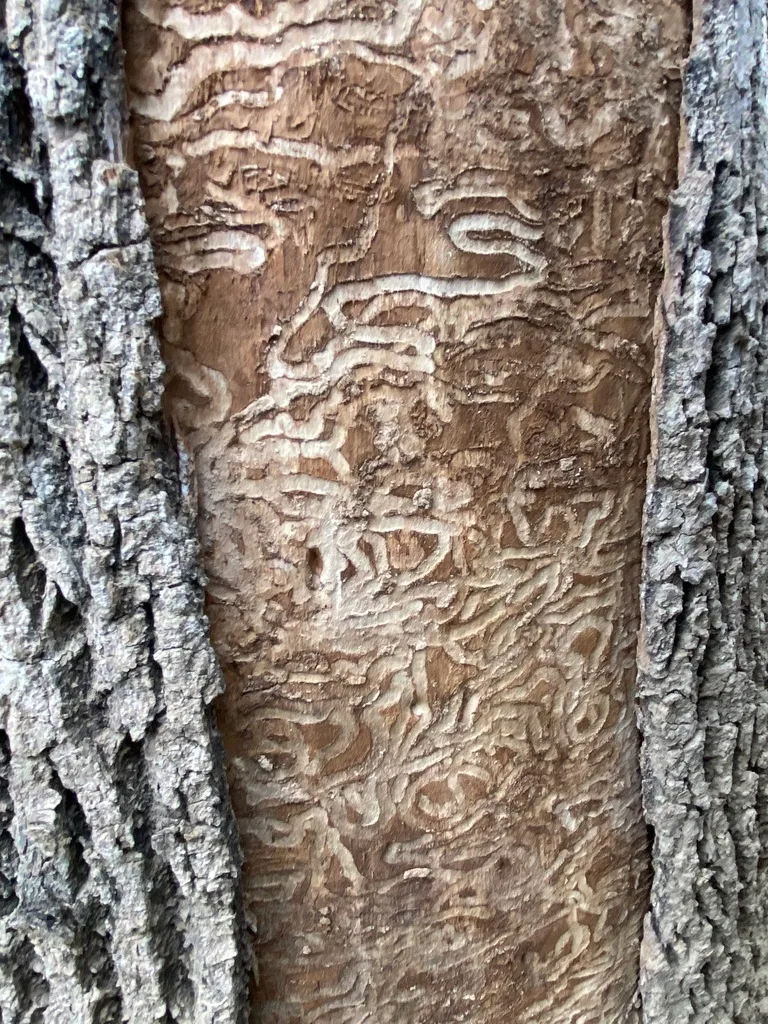
Once the eggs hatch, larvae bore into the cambium layer, the thin band of living tissue between bark and sapwood. That's where the tree moves water and nutrients. The larvae carve serpentine or S-shaped galleries as they feed, disrupting the vascular system.
If enough larvae girdle the trunk or major branches, the tree dies from the top down.
Adult beetles emerge through exit holes in late spring or summer, leaving behind characteristic D-shaped or round holes depending on the borer family. The damage you see, canopy dieback, bark flaking, woodpecker holes, is the tree's failed attempt to compartmentalize the infestation.
Borers exist in every forested and urban environment. Native species like bronze birch borer (Agrilus anxius) and clearwing borers have coevolved with their host trees for millennia. Invasive species like emerald ash borer (Agrilus planipennis), introduced from Asia in the 1990s, have no natural controls and overwhelm even moderately stressed trees.
The Real Reason Borers Target Your Tree: Stress Comes First
The key principle is this: borers are attracted to volatiles and visual cues released by stressed trees. When a tree experiences drought, injury, or root damage, it emits ethanol, monoterpenes, and other compounds that wood-boring beetles use to locate suitable hosts. Healthy trees either don't emit these signals or emit them at concentrations too low to trigger a response.
Once a female beetle lands on a stressed tree, she tests the bark by chewing or ovipositing. If the tree's sap pressure is low and resin or latex flow is weak, the eggs survive. If the tree is vigorous, sap floods the egg site and kills the brood before larvae hatch.
That's why you'll often see a single borer-infested tree surrounded by healthy neighbors, the stressed tree was the only one broadcasting distress.
Research from land-grant university entomology departments confirms that drought is the number-one predisposing factor for borer attack across most species. A tree losing 30 percent of its root system in a construction zone, or one planted too deep with girdling roots, behaves physiologically like a drought-stressed tree. It can't generate the turgor pressure needed to defend itself.
Urban environments compound the problem. Heat island effects, soil compaction, de-icing salt runoff, and reflected heat from pavement all stress trees beyond what they'd experience in a forest. That's why bronze birch borer rarely kills trees in northern forests but devastates landscape birches in parking lots and residential yards.
Some invasive borers, notably emerald ash borer, attack even healthy trees. But even EAB larvae thrive best in trees under some level of stress. Untreated ash trees in high-stress urban settings die faster than those in low-stress forest edges.
The "why" is always tied to the tree's ability to resist.
How to Tell Which Type of Borer You're Dealing With
Identifying the borer species matters because it tells you whether the infestation is a symptom of tree stress (most native borers) or an invasive threat that will spread regardless (EAB, Asian longhorned beetle). The damage pattern, exit hole shape, and host tree species give you the answer.
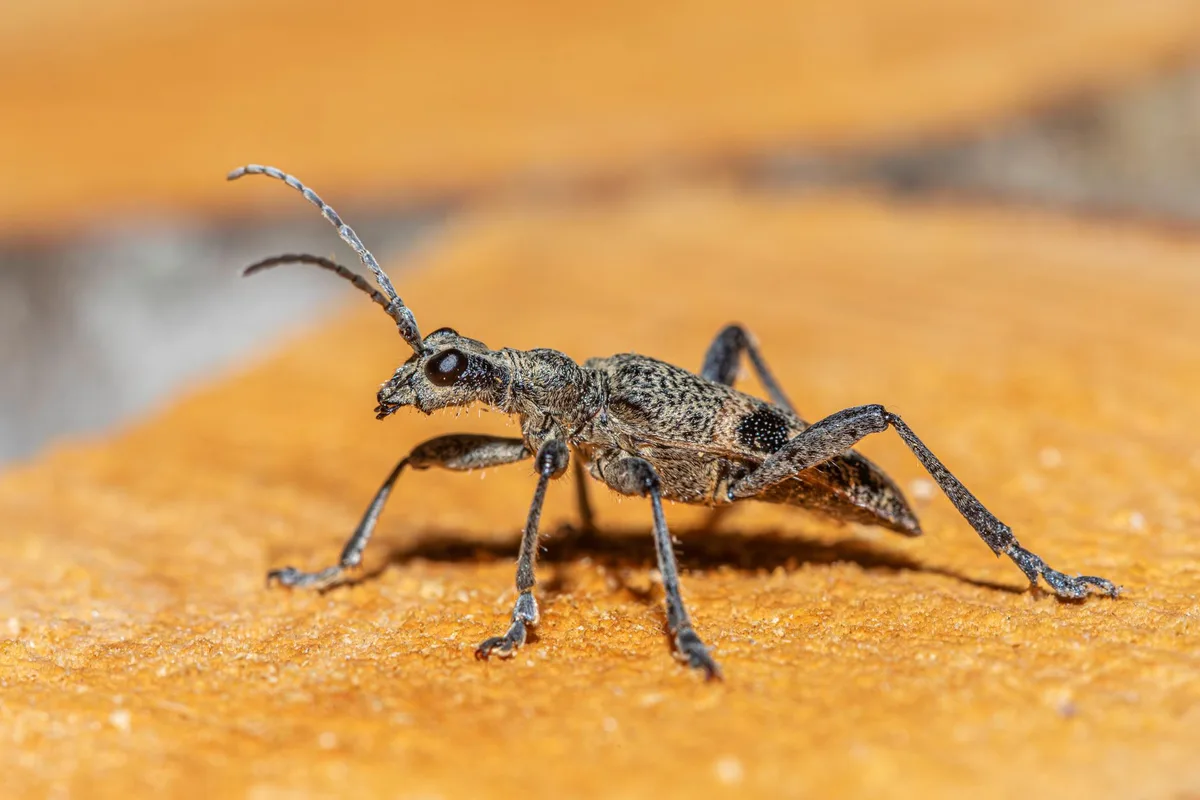
Emerald Ash Borer vs. Bronze Birch Borer vs. Bark Beetles
Emerald ash borer produces D-shaped exit holes about 1/8 inch across. The larvae create serpentine galleries just under the bark, filled with frass that looks like fine sawdust mixed with tiny wood fibers. EAB attacks all species of ash (Fraxinus spp.) and kills trees within two to four years of initial infestation.
Crown dieback starts at the top, and you'll see epicormic sprouting, small shoots emerging from the trunk, as the tree tries to compensate.
Bronze birch borer also leaves D-shaped holes and targets birch trees (Betula spp.), especially European white birch and paper birch. The larvae feed in the same cambium layer. You'll see canopy thinning from the top down, branch dieback, and raised ridges on the bark where the tree tried to wall off galleries.
Bronze birch borer is native, so it's almost always a secondary pest responding to drought or root stress.
Bark beetles (Scolytinae family) are tiny, create round exit holes about the diameter of a pencil lead, and attack conifers and some hardwoods. They tunnel directly into the phloem and sapwood, often carrying fungal spores that cause blue stain or Dutch elm disease. Bark beetle infestations spread tree to tree rapidly during drought years.
The frass is often mixed with resin and pushed out through entry holes, leaving popcorn-like masses on the bark.
Roundheaded borers (Cerambycidae family) leave round exit holes 1/4 to 1/2 inch across. Larvae are large, white grubs with a cylindrical body. They tunnel deep into the sapwood and heartwood, sometimes taking two to three years to complete development.
Common species include the Asian longhorned beetle, an invasive that attacks maples, willows, and many hardwoods.
Clearwing borers (Sesiidae family) look like wasps as adults but are moths. The larvae bore into the cambium of ornamental trees like dogwood, ash, and oak. Exit holes are small and often obscured by frass mixed with sap.
Clearwing borer damage is usually localized to injured or sunscald-damaged bark.
Exit Holes, Galleries, and Frass: Reading the Damage Pattern
Peel back a section of loose bark on an infested tree and you'll see the galleries carved by feeding larvae. Flatheaded borers (Buprestidae family, which includes EAB and bronze birch borer) create wide, flat, S-shaped or zigzag galleries that follow the grain of the wood. The larvae have a broad, flattened thorax behind the head, hence the name.
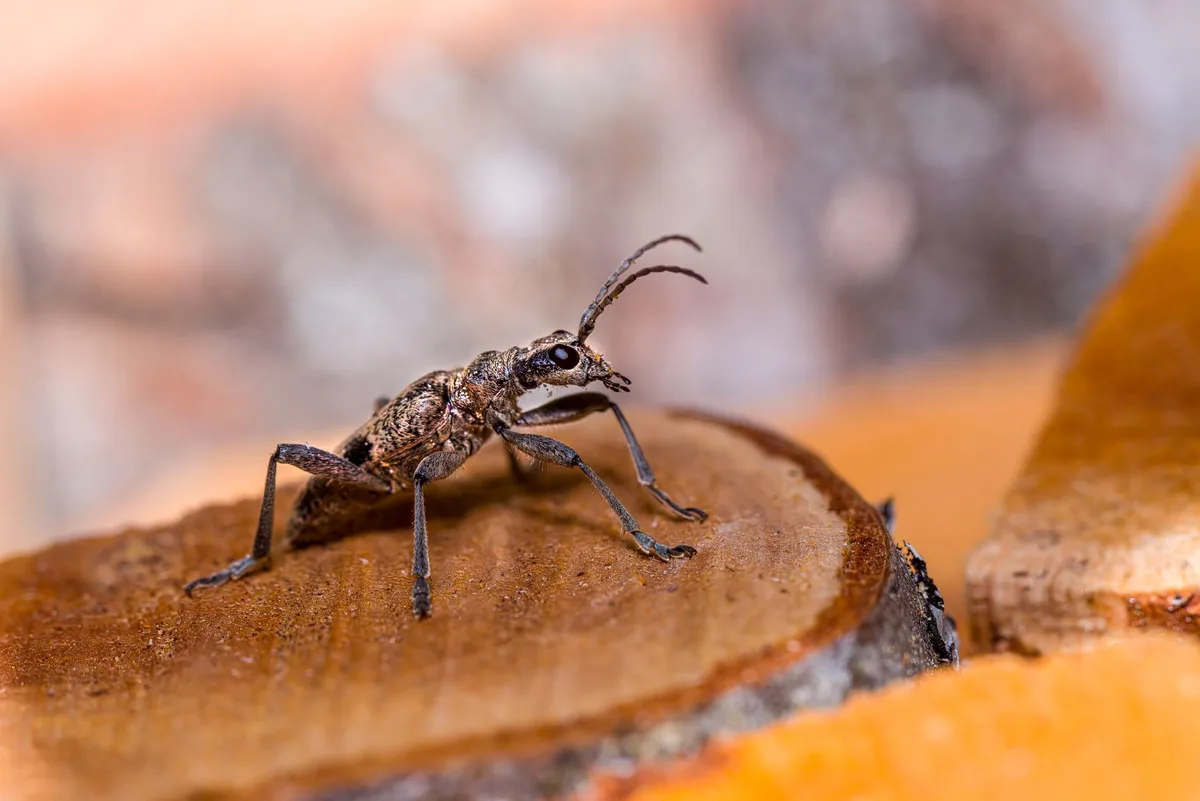
Roundheaded borers carve round, packed tunnels that often cross the grain. The frass is coarse and may be expelled through the exit hole or packed tightly in the gallery. If you find oval frass pellets, you're likely dealing with a clearwing borer.
Bark beetles create intricate patterns called "galleries" that radiate from a central egg chamber. The adult female chews the chamber, lays eggs along the sides, and each larva tunnels perpendicular to the main gallery as it feeds. The result looks like a centipede or engraving under the bark.
Exit holes tell you the borer has already emerged. If you see fresh frass (light-colored sawdust) accumulating in bark crevices or on the ground below the tree, larvae are actively feeding. Woodpeckers flaking bark to reach larvae is another sign of an active infestation.
If the tree is heavily infested and the canopy is more than 50 percent dead, treatment is unlikely to save it.
Why Healthy Trees Usually Avoid Borer Attacks
A healthy tree is a fortress. The cambium layer produces continuous sap flow under turgor pressure. When an insect chews through the bark or a female beetle oviposits, sap floods the wound.
Many tree species also produce resin, latex, or phenolic compounds that are toxic or physically trap insects.
Oak trees exude tannins and phenols that deter most borers. Pine and spruce produce sticky resin that drowns bark beetles. Even non-resinous hardwoods like ash and birch can generate enough sap pressure to expel eggs or drown newly hatched larvae if the tree is well-watered and unstressed.
Research shows that trees with vigorous root systems and adequate soil moisture maintain high xylem water potential, the pressure that drives sap flow. A tree in drought stress has negative water potential, meaning sap isn't moving and defensive compounds aren't being mobilized. Borers exploit that window.
Root health is just as important as canopy health. A tree with a robust, spreading root system in loose, well-aerated soil can pull moisture from a large volume and recover quickly after drought. A tree with circling roots, compacted soil, or recent root damage from trenching can't keep up.
The canopy may look fine in spring, but by mid-summer the tree is signaling stress.
Proper planting depth matters more than most homeowners realize. Trees planted too deep, where the root flare is buried, develop girdling roots and restricted vascular flow. That chronic low-level stress makes the tree a borer magnet for decades.
If you want to reduce borer risk on your property, proper planting and mulching practices are more effective than any insecticide.
The Specific Stressors That Make Trees Vulnerable
Every borer infestation has a backstory. The larvae didn't choose your tree at random. Identifying the stressor helps you decide whether other trees on your property are at risk and what you can do to protect them.
Drought Stress and Root Damage
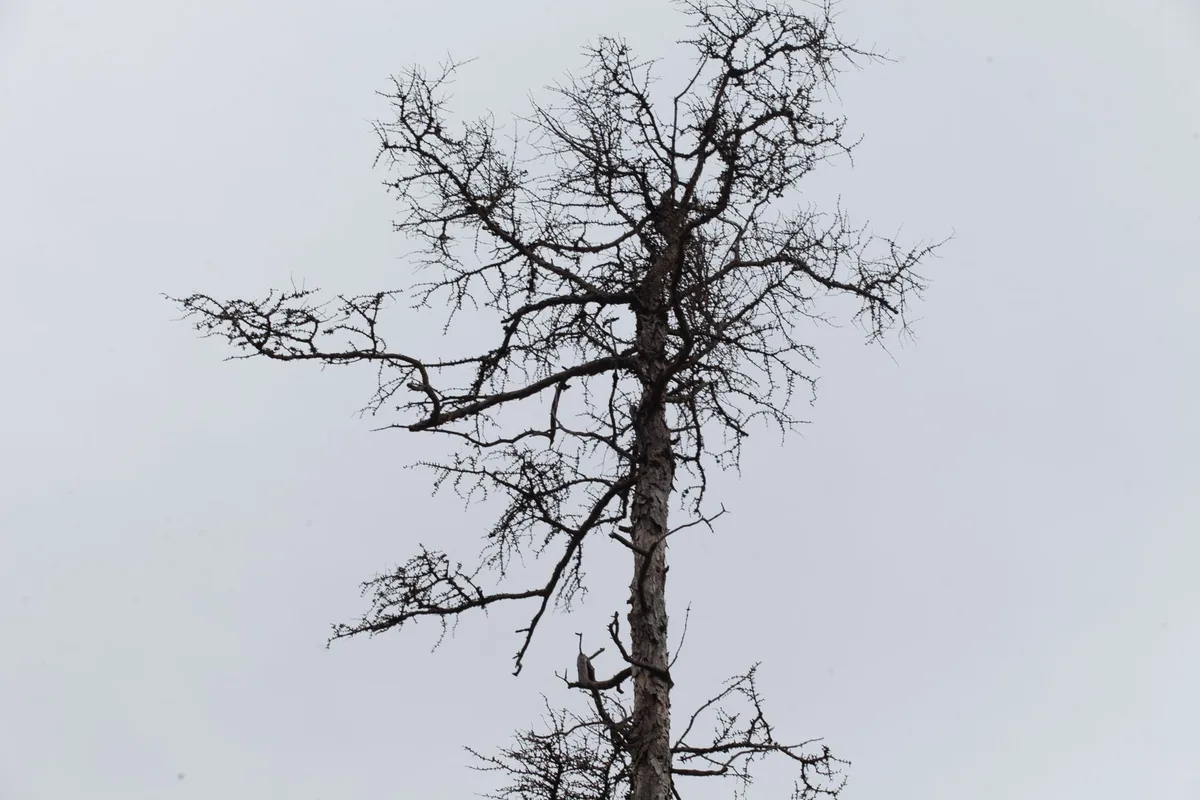
Drought is the most common trigger. A tree losing access to soil moisture for even one growing season becomes vulnerable. The symptoms aren't always obvious.
You might see slightly smaller leaves, earlier fall color, or a sparse canopy. By the time borers lay eggs, the tree's defenses are already compromised.
Root damage from construction, trenching, or grade changes has the same effect as drought. Cutting through major roots eliminates the tree's access to stored water and nutrients. Even if you water the tree heavily after construction, the root system can't recover fast enough to restore normal sap pressure.
Borers detect that vulnerability within weeks.
Girdling roots, roots that wrap around the trunk or other roots, slowly strangle the vascular system. The tree grows slower each year, develops thin canopy, and becomes a target. You won't see girdling roots unless you excavate around the base of the trunk, but chronic slow decline is a red flag.
In arid or semi-arid climates, choosing trees adapted to hot, dry conditions significantly reduces borer risk. Species native to wet, cool climates struggle in low-rainfall regions and broadcast stress signals continuously.
Mechanical Injury, Wounds, and Construction Damage
Any wound that breaks the bark and cambium, lawn mower strikes, string trimmer damage, storm breakage, or pruning cuts, creates an entry point and attracts egg-laying females. Clearwing borers and some roundheaded borers specifically target wounded tissue.
Construction damage isn't limited to root cuts. Soil compaction from heavy equipment, changes in grade that bury or expose roots, and pavement or concrete poured over the root zone all stress trees. As of 2026, urban forestry research consistently shows that construction-related stress is a leading cause of delayed tree mortality and secondary pest infestations in residential landscapes.
Sunscald, bark damage from intense sun exposure on thin-barked trees, creates stress and attracts bronze birch borer and clearwing borers. Young trees or trees suddenly exposed to full sun after adjacent trees are removed are especially vulnerable.
Transplant Shock and Poor Planting Practices
Newly planted trees go through a period of transplant shock as they rebuild their root systems. During that window, typically the first two to three growing seasons, they're more susceptible to borers. Proper watering, mulching, and avoiding root disturbance during planting reduce the risk.
Trees planted too deep, with the root flare buried under soil or mulch, develop chronic stress. The buried stem tissue can't exchange gases properly, roots grow upward into the mulch layer instead of spreading outward, and the tree never establishes a strong root system. Borers find these trees year after year.
Planting the wrong species in the wrong location is another common mistake. A river birch planted in dry, compacted clay will struggle and attract bronze birch borer. An ash tree in an EAB quarantine zone is doomed without preventive treatment.
Matching the tree to the site is the first line of defense.
Urban Heat, Soil Compaction, and De-Icing Salt Exposure
Urban trees face stressors that don't exist in forests. Pavement and buildings reflect and radiate heat, raising local temperatures several degrees. Soil compaction from foot traffic and vehicles limits root growth and water infiltration.
De-icing salts wash into the root zone in winter, causing root tip dieback and foliar burn.
All of these stressors reduce tree vigor and make borers more likely. A sugar maple planted in a parking lot island is under constant assault. Compare that to the same species growing in a forest with deep leaf litter, cool soil, and no compaction.
The forest tree will resist borers. The parking lot tree won't.
If you're managing urban trees, improving the soil environment matters more than reactive insecticide applications. Vertical mulching, aeration, proper irrigation, and protecting the root zone from salt and compaction reduce stress and borer attraction over the long term.
Invasive vs. Native Borers: Does It Change the "Why"?
Native borers evolved alongside their host trees. Bronze birch borer, clearwing borers, and most bark beetles attack only when the tree signals weakness. They're part of the natural forest cycle, accelerating the decline of stressed trees so healthier specimens can take over.
In a managed landscape, that means you can often prevent native borer problems by fixing the underlying stressor.
Invasive borers operate differently. Emerald ash borer and Asian longhorned beetle lack the natural predators, parasitoids, and host resistance mechanisms that keep native borers in check. EAB attacks all ash trees in a region, stressed or not.
Healthy trees may resist longer, but without preventive treatment they eventually succumb.
Asian longhormed beetle targets maples, willows, elms, and other hardwoods. It can complete its life cycle in healthy trees, though infestations still build faster in stressed individuals. The USDA maintains quarantine zones where movement of firewood and nursery stock is restricted to slow the spread.
If you're dealing with an invasive borer, the "why" shifts from tree health to geographic proximity. Your tree was attacked because it's within the insect's expanding range. Treatment or removal becomes necessary regardless of tree vigor.
Native borers give you more options, improve tree health and the problem often resolves.
When Borers Attack Regardless of Tree Health (The Exceptions)
A small number of borer species are primary pests. They can successfully attack and kill vigorous, unstressed trees. Emerald ash borer is the clearest example in North America.
Even ash trees in low-stress forest settings with deep soil and full canopy die within a few years of infestation.
Asian longhorned beetle falls into the same category. It completes its two-year life cycle in healthy maples and other hardwoods. The larvae bore deep into the heartwood, creating structural damage that can't be detected until exit holes appear.
Certain bark beetle species, particularly mountain pine beetle and spruce beetle in western forests, attack healthy conifers during outbreak years. When beetle populations explode, the sheer number of attacking insects overwhelms even vigorous trees' defenses. But those outbreaks are still triggered by regional drought or warming temperatures that weaken entire stands.
For most homeowners, the takeaway is this: if your tree is an ash and you're in an EAB-infested area, expect attack regardless of health. If it's a birch, oak, or other species targeted by native borers, stress is the primary driver and improving tree care reduces risk.
How to Assess Whether Your Tree Is at Risk
Start by identifying the species. Ash trees in EAB zones are high-risk. Birch trees in hot, dry sites are vulnerable to bronze birch borer.
Maples, oaks, and other hardwoods become targets when stressed by construction, drought, or injury.
Walk around the tree and check for exit holes, woodpecker damage, or bark flaking. Look at the canopy from a distance. Thinning at the top, branch dieback, or undersized leaves signal stress.
Epicormic shoots on the trunk mean the tree is trying to compensate for lost canopy.
Dig down a few inches at the base of the trunk and find the root flare, the point where the trunk widens into major roots. If it's buried, the tree is planted too deep and chronically stressed. Check for girdling roots by gently excavating around the flare.
If you find roots circling the trunk, that's a long-term stressor.
Evaluate the site. Is the soil compacted? Is the tree in a parking lot island or near pavement?
Has there been construction, trenching, or grade changes in the root zone within the past five years? Those factors all increase borer risk.
If the tree is already showing exit holes and more than 30 percent canopy dieback, treatment is often not cost-effective. The larvae have already girdled major branches. If the canopy is under 30 percent affected and you can identify and fix the stressor, treatment may buy time while the tree recovers.
The Timing Factor: Why Adult Flight Periods Matter
Borers spend most of their life as larvae inside the tree. The adult beetles emerge, mate, lay eggs, and die within a few weeks. That narrow window is when the insects are vulnerable to contact insecticides and when females are actively seeking new hosts.
Emerald ash borer adults emerge from late May through July, peaking in mid-June in most regions. Bronze birch borer flies from late May through early July. Clearwing borers emerge in late spring to early summer depending on species.
Knowing the flight period for your target borer tells you when to apply preventive treatments and when to expect new damage.
If you're using systemic insecticides like imidacloprid or emamectin benzoate, timing matters less because the chemical stays in the tree's vascular system for months. If you're using contact sprays or trunk treatments, you need to apply during the adult flight period to kill egg-laying females before they oviposit.
Monitoring traps baited with species-specific pheromones can tell you exactly when adults are flying in your area. State extension services and municipal forestry departments often publish local flight-period maps. Using those resources improves treatment timing and success rates.
Common Mistakes That Worsen Borer Problems
The biggest mistake is treating the symptom instead of the cause. Spraying an insecticide on a drought-stressed tree without improving irrigation won't prevent future infestations. The tree is still broadcasting stress signals.
You'll see new exit holes the following season.
Another common error is delaying tree removal. Once a tree is 50 percent dead, it's a borer factory. The larvae emerging from that tree will attack neighboring stressed trees.
Removing heavily infested trees breaks the cycle and protects the rest of your landscape.
Storing firewood near healthy trees is a direct route to infestation. Borers emerge from cut wood for up to two years after the tree is felled. Stack firewood at least 50 feet from living trees, and burn or chip infested wood before adults emerge.
Wounding trees during mowing or string trimming creates entry points for clearwing borers and other opportunistic species. Mulch rings around the base of the tree eliminate the need to mow close to the trunk. Avoid pruning during the flight period when beetles are actively seeking wounded tissue.
Applying systemic insecticides to trees that don't need them is wasteful and potentially harmful to non-target insects. If the tree isn't an ash in an EAB zone and shows no signs of stress, preventive treatment isn't justified. Focus on maintaining tree health through proper watering, mulching, and protecting the root zone.
Frequently Asked Questions
Do all tree borers kill trees?
No. Some clearwing borers and roundheaded borers cause localized damage without killing the tree. Bark beetles and flatheaded borers like EAB and bronze birch borer typically kill the tree by girdling the trunk or major branches.
The outcome depends on the borer species, the number of larvae, and the tree's ability to compartmentalize damage.
Can you save a tree once borers are inside?
It depends on the infestation severity and the borer species. If the canopy is less than 30 percent dead and you're dealing with a native borer, systemic insecticide treatment combined with stress reduction can save the tree. If it's heavily infested or the borer is an invasive like EAB, treatment success drops significantly.
Trees with more than 50 percent canopy loss rarely recover.
Why do borers prefer certain tree species?
Each borer species evolved to feed on specific host trees. The larvae's digestive systems are adapted to the chemistry and structure of those species. Emerald ash borer can only complete its life cycle in ash trees.
Bronze birch borer targets birch species. The beetles locate host trees using visual cues and chemical signals unique to those species.
How long does it take for borers to kill a tree?
Emerald ash borer typically kills untreated ash trees in two to four years. Bronze birch borer may take three to five years depending on tree size and stress level. Bark beetles can kill conifers in a single season during outbreak conditions.
The timeline depends on larval density, tree species, and the tree's ability to resist.
Are borer infestations more common in certain climates?
Drought-prone regions see higher borer activity because water stress is the primary trigger. Urban areas in any climate experience more infestations than rural forests due to compacted soil, heat stress, and construction damage. Invasive borers like EAB spread regardless of climate once established, but their populations build faster in stressed trees.
Should I treat nearby trees if one is infested?
If the infested tree has an invasive borer like EAB and nearby trees are the same species, preventive treatment makes sense. For native borers, assess each tree individually. If neighboring trees are healthy, not stressed, and not the same species as the infested tree, treatment isn't necessary.
Focus on improving growing conditions and monitoring for early signs of attack.
How to Reduce Tree Stress and Prevent Future Attacks
Water deeply during drought. Trees need one inch of water per week during the growing season, either from rain or irrigation. Slow, deep watering encourages deep root growth.
Shallow frequent watering keeps roots near the surface where they're vulnerable to heat and compaction.
Mulch the root zone with two to four inches of organic mulch like wood chips or shredded bark. Keep mulch three inches away from the trunk to prevent rot. Mulch moderates soil temperature, retains moisture, and reduces competition from grass.
Avoid wounding the trunk. Use mulch rings to eliminate mowing near the tree. Prune only when necessary and make clean cuts that heal quickly.
Protect the trunk from construction equipment and vehicle strikes.
When Treatment Makes Sense vs. When It's Too Late
Systemic insecticide treatment works best when applied before borers arrive or when canopy dieback is under 30 percent. Imidacloprid and emamectin benzoate are the most effective options for EAB and other flatheaded borers. Treatment must be repeated annually or biennially depending on the product.
If the tree has lost more than half its canopy, treatment rarely succeeds. The vascular system is too damaged to move the insecticide, and the tree can't recover even if you stop new larvae. Removal is the better option.
For high-value trees like specimen shade trees or mature landscape anchors, consult a certified arborist. They can assess whether treatment is worth the cost and apply restricted-use pesticides that homeowners can't access.
Quarantine Zones, Firewood Rules, and What You Need to Know
Federal and state quarantine zones restrict movement of firewood, nursery stock, and wood products to slow the spread of invasive borers. As of 2026, EAB quarantines cover most of the eastern United States. Asian longhorned beetle quarantines are active in parts of New York, Ohio, and Massachusetts.
Don't move firewood more than 50 miles from where it was cut. Buy local firewood or use kiln-dried certified wood if you're traveling to campgrounds or state parks. Violating quarantine rules can result in fines and accelerates the spread of destructive pests.
Check your state department of agriculture website for current quarantine maps and regulations. Rules change as infestations expand or are eradicated. Staying informed protects your property and the larger urban forest.