When Should You Tree Borers 2026
You're watching your ash tree drop leaves in July, or noticing D-shaped holes punched through the bark, and suddenly you're asking: when should you treat tree borers? The short answer is you need to treat before adult beetles lay eggs or immediately after egg hatch, which for most borers means early spring through early summer. Miss that window and the larvae burrow too deep for insecticides to reach.
Emerald ash borer treatments, for example, work best when applied between late April and mid-June in most of the continental U.S., according to USDA Forest Service guidelines. Timing varies by borer species, treatment method, and your local climate. Let's walk through exactly when to treat each common borer, which application method fits which window, and how to avoid the costly mistakes that kill trees anyway.

Quick Answer
Treat tree borers during their egg-laying or early-larval stage. For emerald ash borer, that's late April through mid-June in most regions. Bronze birch borer requires treatment in May or early June.
Soil drench products work best in early spring before bud break. Trunk injections need active sap flow, typically late April to June. Bark sprays must coincide with adult beetle emergence.
Treating outside these windows wastes money and often fails to protect the tree.
Why Timing Is Everything When Treating Tree Borers
Tree borers spend most of their life cycle hidden under bark or deep in sapwood where insecticides can't reach them. You've got a narrow window when larvae are small enough to contact the chemical or when adults are exposed during egg-laying. Treat too early and the active ingredient degrades before beetles emerge.
Treat too late and larvae are already tunneling through the cambium, safe from contact.
Systemic insecticides like imidacloprid or emamectin benzoate move through the tree's vascular tissue. They need time to distribute before larvae start feeding. Most soil drenches take two to eight weeks to reach the canopy at lethal concentrations.
Trunk injections work faster but still require active sap flow to carry the chemical upward.
The second timing factor is borer biology. Adult beetles emerge, mate, and lay eggs on a predictable schedule tied to temperature and day length. Emerald ash borer adults fly from late May through September, but peak egg-laying happens in June and early July.
Bronze birch borer adults emerge in May and June. If you apply a contact or bark spray outside the adult flight period, you're treating an empty stage.
Cost is the third reason timing matters. Professional trunk injection for a mature ash runs $200 to $600 depending on trunk diameter. Soil drench products for DIY application cost $30 to $80 per tree annually.
Apply during the wrong month and you'll pay again next season, plus replacement costs if the tree dies. A 20-inch diameter ash replacement, including removal and replanting, can exceed $10,000 in urban landscapes.
Preventive treatment works only if you start before infestation or during the first year of light damage. Once canopy dieback exceeds 50 percent, most trees are too far gone to save. Timing the first treatment correctly often determines whether you'll spend $300 once or lose a $15,000 specimen tree.
How to Identify Which Borer Is Attacking Your Tree
You can't time treatment until you know which borer you're dealing with. Each species has distinct exit holes, gallery patterns, and host preferences. Emerald ash borer (EAB) is the most destructive as of 2026, killing tens of millions of ash trees across 35 states.
It creates D-shaped exit holes roughly 1/8 inch wide and attacks only ash species.
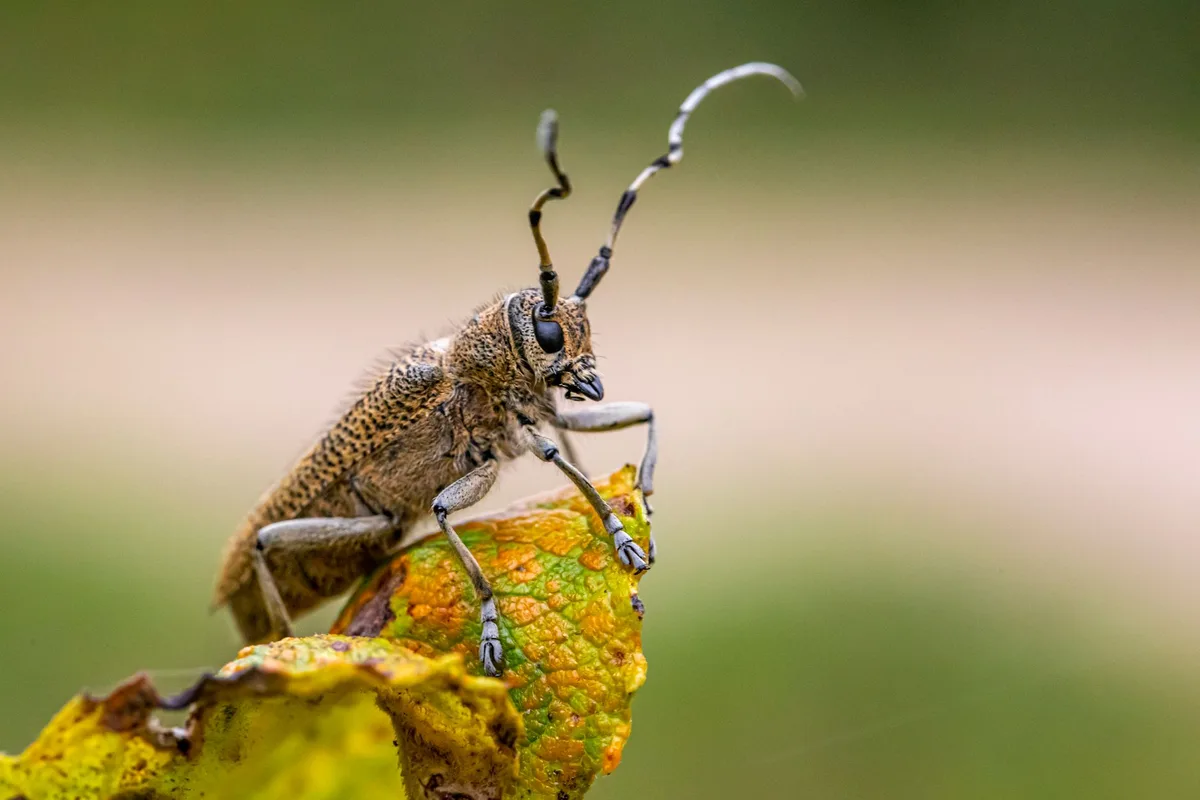
Bronze birch borer leaves round exit holes about 1/8 inch across and targets stressed birch trees, especially European white birch and gray birch. The adults are bronze-colored, elongated beetles. Look for branch dieback starting at the top of the canopy.
Healthy birches in moist soil rarely get infested, but drought-stressed trees are highly vulnerable.
Flatheaded appletree borer attacks a wide range of hardwoods, particularly newly transplanted trees or those suffering from drought, sunscald, or mechanical injury. Exit holes are oval and about 1/4 inch wide. You'll often find them on the trunk's sunny side where bark has been damaged.
This borer is opportunistic and usually signals underlying tree stress.
Clearwing borers (peachtree borer, dogwood borer, lilac borer) are moth larvae, not beetles. They bore into the trunk near ground level or around old wounds and graft unions. You'll see frass mixed with gummy sap oozing from entry holes.
These borers prefer fruit trees, dogwoods, and lilacs. Exit holes are round and roughly 1/4 inch across.
If you're unsure, collect a few exit hole samples or an adult beetle if possible and contact your county cooperative extension office. Most states offer free or low-cost pest identification. Misidentifying the borer leads to wrong treatment timing and wasted applications.
For example, treating for EAB in late summer when bronze birch borer is already dormant does nothing.
Quarantine zones matter too. USDA APHIS maintains maps of EAB and Asian longhorned beetle quarantine counties. If you're inside a quarantine area, treatment timing may be guided by local regulations, and you may need to report infestations.
The Borer Life Cycle: Why Most Treatments Fail
Most borer treatments fail because homeowners treat during the wrong life stage. Borers have four stages: egg, larva, pupa, and adult. Only larvae and adults are vulnerable to insecticides, and the window is shorter than you'd think.
Adult beetles emerge in spring or early summer, feed briefly on leaves, then mate. Females lay eggs in bark crevices or under bark scales. Eggs hatch in one to three weeks depending on temperature.
The tiny larvae bore into the bark and begin feeding on the cambium and sapwood. This is the most damaging stage.
As larvae grow, they create serpentine galleries under the bark that disrupt water and nutrient flow. Emerald ash borer larvae feed for 10 to 12 months. Bronze birch borer larvae feed for one to two years.
During winter, most borers overwinter as larvae deep in the wood, where they're completely protected from contact insecticides.
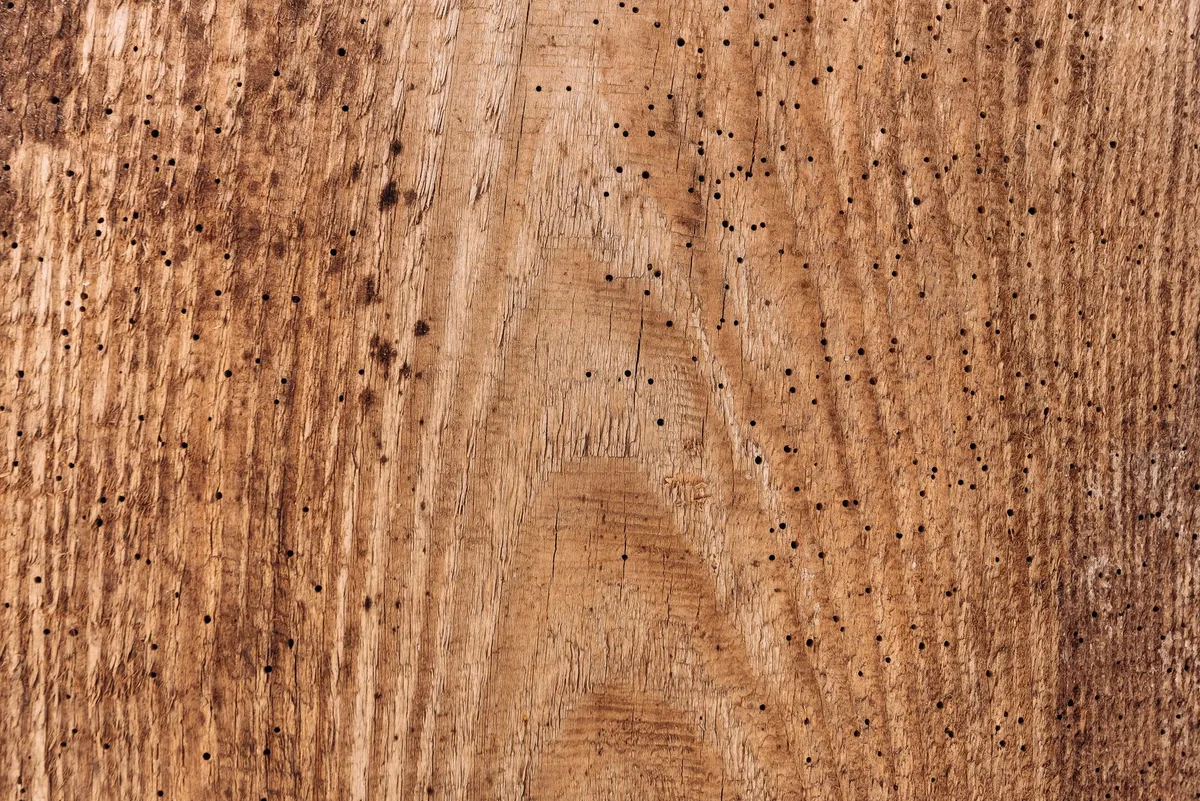
Pupation happens in spring, often just under the bark. Adults chew their way out, leaving exit holes. The cycle repeats.
Some species like clearwing borers have multiple generations per year in warm climates, which extends the treatment window but also increases damage.
Systemic insecticides work because they're absorbed into the tree's vascular tissue. When larvae feed on treated sapwood or phloem, they ingest the chemical and die. But uptake takes time.
Soil drench products rely on root absorption, which is fastest in early spring when roots are actively growing and soil moisture is high. If you drench in late summer when soil is dry and root activity slows, the tree may not take up enough product before larvae finish feeding.
Trunk injection delivers the chemical directly into the sapwood through drilled holes. It's faster, but sap must be flowing upward to distribute the insecticide throughout the canopy. Sap flow peaks in late April through June in temperate climates, right when most borers are laying eggs.
Injecting in July or August when sap flow slows leaves the upper canopy under-protected.
Contact insecticides like permethrin or bifenthrin kill adult beetles and newly hatched larvae on the bark surface. They don't penetrate wood. If you spray after larvae have burrowed in, you're coating bark that nothing will touch.
That's why bark sprays are timed to adult emergence, when beetles are walking on the trunk looking for egg-laying sites.
The lesson: match your treatment method to the borer's current life stage and the tree's physiology. Treating during dormancy or after larvae are deep in galleries is a common and expensive mistake.
When to Treat Emerald Ash Borer (Month-by-Month Timing)
Emerald ash borer treatment timing depends on whether you're applying soil drench, trunk injection, or bark spray. EAB adults emerge from late May through early September, with peak emergence in June and early July in the Midwest and Northeast. Southern states see earlier emergence, northern states see later flights.
Soil drench (imidacloprid, dinotefuran): Apply in early spring, ideally March through early May, before the tree leafs out. The product needs six to eight weeks to move from roots to canopy. If you drench in May, protection peaks in late June and July, right when newly hatched larvae are feeding.
Fall applications (September to October) work for some formulations but are less reliable because root uptake slows as the tree prepares for dormancy.
Trunk injection (emamectin benzoate, imidacloprid): Inject in late April through mid-June when sap is flowing. Emamectin benzoate (trade name TREE-äge) offers two years of protection with a single injection, making it the most cost-effective method for high-value trees. Imidacloprid injections last one year.
Injecting too early, before bud break, risks poor distribution. Injecting after mid-June when sap flow slows leaves the upper canopy under-dosed.
Bark spray (permethrin, bifenthrin, carbaryl): Spray in late May and again in mid-July to target adult beetles during peak flight. This method is least effective because adults spend little time on the trunk and eggs are laid in bark crevices the spray doesn't penetrate. Bark sprays work better as a preventive in low-pressure areas or on small trees where you can coat the entire trunk and major branches.
Preventive vs. curative timing: If your ash is healthy and you're in a quarantine zone, start soil drench or trunk injection treatments in early spring before you see any damage. If you already see canopy thinning or D-shaped exit holes, you're one to three years into infestation. Treat immediately with trunk injection for fastest uptake.
Trees with more than 50 percent canopy loss are usually beyond saving, and treatment isn't cost-effective.
Regional adjustments matter. In southern states (USDA Zones 7 to 9), EAB adults emerge in late April or early May. Soil drench should go down in March.
In northern zones (3 to 5), emergence peaks in late June or July. Drench in April or early May. Your local cooperative extension or state forestry department publishes regional timing guides.
Many professionals use accumulated growing degree days (GDD) to pinpoint emergence, treating when black locust or horsechestnut bloom, which are reliable phenological indicators.
When to Treat Bronze Birch Borer and Other Common Species
Bronze birch borer adults emerge in May and June. Timing treatments for this borer is narrower than EAB because adults fly for only four to six weeks. Trunk injection should happen in late April or early May, before adults emerge, so the tree is fully protected when egg-laying starts.
Soil drenches work if applied in March or early April, but uptake is slower in birch than ash.
Bronze birch borer almost always attacks stressed trees. If your birch is in dry soil, compacted root zones, or suffering from leaf miners, treatment alone won't save it. You need to address the underlying stress.
Mulch the root zone, water during drought, and consider whether the tree is planted in a suitable location. European white birch struggles in hot climates, and no amount of insecticide will make it thrive in USDA Zone 7 or warmer. River birch or other drought-tolerant species may be better long-term choices.
Flatheaded appletree borer: This borer has a long flight period from late May through August. It's more of an opportunistic pest than a primary killer. Treatment timing is less critical because healthy trees resist attack.
If you must treat, apply trunk sprays in late May and again in July. Systemic treatments aren't usually necessary unless the tree is newly transplanted or heavily stressed. Focus on improving tree vigor instead.
Clearwing borers (peachtree, dogwood, lilac): These borers often have two generations per year in warm climates. Adults emerge in late spring (May to June) and again in late summer (August). Trunk sprays should be timed to adult flight: late May and mid-August.
Some professionals apply soil drenches in early spring for season-long protection on high-value fruit trees. Pheromone traps are available for peachtree borer and help pinpoint when adults are flying in your area, which is the best timing signal.
Asian longhorned beetle (ALB): This is a quarantine pest with severe restrictions. Treatment is usually not allowed. Infested trees must be removed and destroyed per USDA APHIS regulations.
If you suspect ALB (large round exit holes, 3/8 inch or bigger, on hardwoods like maple, willow, or elm), contact your state department of agriculture immediately. Do not attempt treatment on your own.
For less common borers, contact your county extension agent. Many land-grant universities publish borer-specific treatment calendars. For example, Michigan State University Extension and Penn State Extension maintain detailed EAB timing guides, and Ohio State has bronze birch borer schedules.
Treatment Windows by Method: Soil Drench vs. Trunk Injection vs. Bark Spray
Each application method has its own timing requirements tied to how the tree absorbs and moves the insecticide. Soil drench works only when roots are actively taking up water and nutrients. Trunk injection requires active upward sap flow.
Bark sprays need direct contact with the pest.
Soil Drench Timing (Early Spring Applications)
Soil drench products like imidacloprid (Merit, BioAdvanced Tree and Shrub) or dinotefuran (Safari) are poured or injected into the soil around the tree's root zone. The tree absorbs the chemical through its roots and distributes it via the xylem to leaves, twigs, and cambium. This takes six to eight weeks in most cases.
Apply soil drenches in early spring, from March through early May in temperate zones, before or just as buds begin to swell. Soil temperature should be above 50°F and soil moisture adequate. Frozen or bone-dry soil slows uptake dramatically.
Water the area 24 hours before application if the ground is dry.
Timing the drench so peak concentration hits the canopy in June and July, when most borer larvae are actively feeding, gives the best results. If you drench in late May, you may miss early-hatching larvae. Fall drenches (September to October) are marketed for some products, but uptake is slower and less predictable as the tree shuts down for winter.
Soil drench is the most affordable DIY option, costing $30 to $80 per tree depending on trunk diameter. It's effective for preventive treatment or light infestations. Trees with advanced dieback or heavily girdled trunks may not distribute the chemical well enough, making trunk injection a better choice.
Trunk Injection Timing (Active Sap Flow Period)
Trunk injection delivers insecticide directly into the sapwood through drilled holes. A professional uses a pressurized or gravity-fed system to push liquid formulation into the vascular tissue. The tree's sap flow carries the chemical upward to branches and foliage within days to weeks.
Inject during active sap flow, typically late April through mid-June in most regions. Sap flow peaks when leaves are expanding and water demand is high. Injecting too early, before bud break, risks the chemical pooling at the injection site instead of moving through the canopy.
Injecting after mid-June, when sap flow slows, leaves upper branches under-protected.
Emamectin benzoate (TREE-äge) is the most widely used trunk injection product as of 2026. It provides two years of protection with a single treatment, which cuts long-term cost compared to annual soil drenches. Imidacloprid injections last one year and cost less per application but require annual retreatment.
Trunk injection costs $10 to $20 per inch of trunk diameter. A 15-inch ash runs $150 to $300. It's more expensive than soil drench but faster-acting and better for trees with poor root uptake or severe stress.
Only licensed arborists or pesticide applicators should perform trunk injections. Improper drilling can wound the tree and create entry points for decay fungi.
Bark Spray Timing (Adult Emergence Window)
Bark sprays (permethrin, bifenthrin, carbaryl) coat the trunk and major branches to kill adult beetles and newly hatched larvae on contact. They don't penetrate bark or sapwood, so timing must coincide exactly with adult flight periods.
For emerald ash borer, spray in late May and again in mid-July to cover the extended emergence period. For bronze birch borer, spray once in late May. For clearwing borers, spray in late May and again in August if you're in a region with two generations per year.
Bark sprays are the least reliable method because coverage is hard to achieve on large trees and rain washes the product off within days to weeks. They work better as a supplemental treatment on small ornamental trees or in low-pressure areas where adult populations are light. Spraying large mature trees requires a hydraulic sprayer and often isn't practical for homeowners.
Avoid spraying during bloom or when pollinators are active. Pyrethroids like permethrin and bifenthrin are highly toxic to bees. Early morning or late evening applications reduce pollinator exposure.
How Your Region and Climate Affect Treatment Timing
Borer emergence and egg-laying are triggered by accumulated heat, measured in growing degree days (GDD). Warmer regions see earlier emergence. Cooler regions see later flights.
A treatment schedule that works in Kentucky won't match timing in Minnesota or Georgia.
Southern states (USDA Zones 7 to 9) typically see emerald ash borer adults emerging in late April or early May. Soil drenches should go down in March. Northern states (Zones 3 to 5) see peak emergence in late June or early July.
Drench in April or early May. Coastal and mountain microclimates add more variability.
Many state forestry departments and cooperative extension services publish regional borer treatment calendars. Michigan State, Ohio State, Penn State, and University of Wisconsin extension offices maintain detailed EAB timing guides with maps and GDD models. Use your state's guide rather than generic national recommendations.
Phenology-based timing is another method professionals use. Treat when specific indicator plants bloom, which correlates with borer emergence better than calendar dates. For example, emerald ash borer adults often emerge when black locust or horsechestnut trees are in full bloom.
Bronze birch borer coincides with lilac bloom.
Drought and heat waves affect sap flow and root uptake. If your region is in severe drought during the typical treatment window, soil drenches may fail because roots aren't pulling water. In that case, delay the drench until after a soaking rain or switch to trunk injection.
Hot dry summers also stress trees, making them more attractive to opportunistic borers like flatheaded appletree borer.
Should You Treat Preventively or Wait for Symptoms?
Preventive treatment makes sense if you're in a known infestation area and your tree is a high-value specimen. Waiting for symptoms means the borer population is already established, and you're playing catch-up. Emerald ash borer can kill an ash in two to four years once canopy decline is visible.
If you live in an EAB quarantine zone and have mature ash trees worth $5,000 or more in landscape value, start preventive soil drench or trunk injection treatments before you see damage. The cost of annual or biennial treatment ($100 to $400 per tree) is far less than removal and replacement, which can run $5,000 to $15,000 for large trees.
For bronze birch borer, preventive treatment is rarely cost-effective unless the tree is a prized specimen in ideal health. Focus instead on reducing stress through proper watering, mulching, and site selection. If the tree is already stressed and showing dieback, treatment may only buy a few extra years.
Symptoms that suggest treatment is urgent include canopy thinning (more than 10 percent leaf loss), epicormic sprouting (water sprouts on the trunk), D-shaped or round exit holes, woodpecker damage (especially vertical bark stripping), and bark splitting. If more than 50 percent of the canopy is gone, treatment success drops sharply and removal is usually the better financial choice.
Preventive treatment for non-quarantine borers like flatheaded appletree borer or clearwing borers is almost never needed. These pests attack only stressed or wounded trees. Improve tree vigor and avoid mechanical damage instead.
Healthy trees resist attack naturally.
When It's Too Late to Treat: Signs Your Tree Is Beyond Saving
Once canopy loss exceeds 50 percent, most trees can't recover even with aggressive treatment. The root system has already been starved of photosynthates for multiple seasons, and dieback accelerates. At this stage, removal is safer and more cost-effective than pouring money into treatments that may extend the tree's life by only one or two years.
Other signs the tree is too far gone include extensive trunk girdling (serpentine galleries visible when you peel back loose bark), mushroom or conk growth on the trunk (indicates heart rot or sapwood decay), and large dead scaffold branches. If woodpeckers have stripped bark off more than 30 percent of the trunk, the cambium is destroyed and the tree can't transport nutrients.
Exit holes covering the entire trunk, especially concentrated near the base, signal a heavy infestation over multiple years. At this point, larvae and pupae are deep in the wood where insecticides can't reach them. Treating now won't kill the current generation, and by the time the next generation is vulnerable, the tree may already be dead.
Trees in severe decline also pose safety hazards. Dead branches drop without warning. Trunks weakened by galleries can snap in windstorms.
If the tree is near a home, power lines, or high-traffic areas, removal should happen before treatment is even considered.
A certified arborist can assess whether treatment is worth attempting. The International Society of Arboriculture maintains a directory of certified arborists who can evaluate canopy health, trunk condition, and likelihood of recovery. Don't rely on tree removal companies for this assessment, as they have a financial incentive to recommend removal over treatment.
How to Time Treatments for Multi-Generational Borers
Some borers, particularly clearwing borers in warm climates, complete two or even three generations per year. This extends the vulnerable window but also means more frequent damage. Timing treatments for multi-generational pests requires either systemic products that persist all season or multiple bark spray applications timed to each adult flight.
Peachtree borer in USDA Zones 7 and warmer typically has two generations. Adults emerge in May and again in late July or August. If you're using bark sprays, you'll need to apply in late April (to catch the first generation before egg-laying) and again in mid-July.
Miss either window and one generation goes untreated, which can still kill young fruit trees.
Systemic soil drenches or trunk injections work better for multi-generational borers because the chemical persists in the tree's tissue for months. A single early-spring soil drench can protect against both generations. Emamectin benzoate trunk injections last two full seasons, covering four or more generations without retreatment.
Pheromone traps are available for some clearwing borers. Place traps in early spring and check weekly. When you start catching adults, that's your signal to apply a bark spray within the next seven to ten days.
This method is more precise than calendar-based timing and accounts for year-to-year weather variation.
For fruit trees attacked by peachtree or lesser peachtree borer, consider combining spring trunk injection with a late-summer bark spray if populations are high. Monitor exit holes each fall. If you're seeing more than two or three new holes per tree, increase treatment frequency or switch to a longer-lasting systemic product.
Common Timing Mistakes That Waste Money and Kill Trees
Treating during winter dormancy is the most common mistake. Borers are deep in the wood and not feeding. Systemic insecticides sit in the vascular tissue with no larvae to contact them, then degrade before spring emergence.
You've wasted the application and left the tree unprotected when it matters.
Applying soil drench when the ground is frozen or bone-dry also fails. Roots can't absorb the chemical. The product either runs off or binds to soil particles instead of entering the root zone.
Always water thoroughly 24 hours before application if soil moisture is low.
Trunk injection during slow sap flow, typically late summer or fall, leaves the canopy under-dosed. The chemical doesn't move upward efficiently. Upper branches, where many borers concentrate, get little to no protection.
Stick to the late April through mid-June window when sap is actively flowing.
Misidentifying the borer and using the wrong timing window is another frequent error. Treating for emerald ash borer in August when adults have finished flying does nothing. Confirm the species first, then match your treatment calendar to that borer's life cycle.
Treatment Cost vs. Tree Replacement: When to Invest
Annual soil drench for a 15-inch ash costs $50 to $100 DIY or $150 to $250 if applied professionally. Biennial trunk injection with emamectin benzoate runs $200 to $400 per treatment. Over ten years, you're looking at $1,000 to $2,000 in treatment costs for a single tree.
Compare that to removal and replacement. Removing a mature ash (20 to 30 inches diameter) costs $1,500 to $5,000 depending on access and height. Stump grinding adds $200 to $400.
Planting a comparable 3-inch caliper replacement tree costs $500 to $2,000, plus another $1,000 to $3,000 if you want a semi-mature tree installed by crane.
Treatment makes financial sense if the tree is healthy or lightly infested (less than 30 percent canopy loss), highly visible, and contributes significantly to property value or landscape aesthetics. If the tree is already in decline, removal is usually cheaper and safer long-term.
Municipal and high-traffic properties face additional costs. Liability for falling branches or trunk failure can exceed tens of thousands of dollars in legal fees and injury claims. In those cases, treating borderline trees isn't worth the risk.
How Professionals Use Degree Days and Phenology to Time Treatments
Growing degree days (GDD) are calculated by subtracting a base temperature (usually 50°F) from the daily average temperature. When accumulated GDD reach a threshold, a specific pest life stage occurs. Emerald ash borer adults typically emerge at 450 to 550 GDD base 50°F in most regions.
State forestry departments and universities publish GDD maps and models each spring. Professionals use these to predict emergence within a week or two, which is far more accurate than calendar dates. You can track GDD for your zip code using online calculators hosted by many land-grant university extension services.
Phenology uses the bloom or leaf-out stage of indicator plants to time pest activity. Black locust bloom coincides with EAB adult emergence. Lilac bloom signals bronze birch borer flights.
This method works because both insects and plants respond to the same accumulated heat cues.
Degree day models and phenology remove the guesswork. If you're managing multiple properties or high-value trees, these tools are worth learning. County extension agents can walk you through how to apply them in your area.
Decision Guide: Your Tree Type, Borer Species, and Best Treatment Window
If you have ash trees in an EAB quarantine zone, apply soil drench in early spring (March to early May) or trunk injection in late April to mid-June. Use emamectin benzoate for two-year protection if budget allows. Start treatments preventively before damage is visible.
If you have birch trees showing dieback, confirm it's bronze birch borer by checking for round exit holes and top-down canopy thinning. Treat with trunk injection in late April or soil drench in March. Address underlying stress with mulch, water, and site improvements.
Consider removing the tree if it's in an unsuitable climate zone.
For fruit trees attacked by clearwing borers, apply bark sprays in late May and again in August if you're in a warm region with two generations. Use pheromone traps to pinpoint adult flights. Trunk injection in early spring offers season-long protection with less reapplication effort.
For opportunistic borers like flatheaded appletree borer, skip treatment and focus on tree vigor. These pests attack only stressed trees. Fix the underlying problem (drought, compacted soil, mechanical damage) rather than applying insecticides that won't address the root cause.
Frequently Asked Questions
Can I treat a tree after I see exit holes?
Yes, but success depends on how many holes and how much canopy remains. Exit holes mean adults have already emerged and laid eggs. You're treating the next generation of larvae.
If canopy loss is under 30 percent, treat immediately with trunk injection for fastest uptake. Over 50 percent loss and treatment rarely saves the tree.
How long does borer treatment last?
Soil drench products last one season. Trunk injection with imidacloprid lasts one year. Emamectin benzoate trunk injection lasts two years.
Bark sprays break down in days to weeks and need reapplication during each adult flight period. Always follow label instructions for retreatment intervals.
Do I need a licensed applicator for trunk injection?
In most states, yes. Trunk injection is considered a pesticide application that requires a commercial applicator license. Some states allow homeowners to inject their own trees with over-the-counter products, but professional application ensures proper dosage and drilling technique.
Improper injection can harm the tree.
Will treating one tree protect nearby trees?
No. Systemic insecticides stay inside the treated tree. They don't move to adjacent trees through root grafts or soil.
Each tree needs its own application. If you have multiple ash or birch trees in a borer-prone area, budget for treating all high-value specimens.
Can I use the same treatment for all borer species?
Timing varies by species, but most systemic insecticides (imidacloprid, emamectin benzoate, dinotefuran) work against a broad range of wood-boring beetles. Confirm the product label lists your target borer. Clearwing borers (moths, not beetles) sometimes require different chemistry.
Always match the product to the pest.