3 Best Fertilizer for Clover 2026
I've spent the last few months digging through soil tests, extension bulletins, and hundreds of buyer reports to figure out which products actually earn the title of Best Fertilizer For Clover. Clover is a legume that fixes its own nitrogen through a symbiotic relationship with Rhizobium bacteria in its root nodules, so dumping a high-nitrogen lawn blend on it does more harm than good. What clover really needs is phosphorus and potassium to fuel root development, flowering, and winter hardiness.
After comparing foliar feeds, granular enhancers, and liquid concentrates side by side, CloverMAXX came out on top for its balanced 3-18-18 formula and acre-wide coverage from a compact half-gallon jug. Here's how all three finalists stack up.
Comparison Chart of Best Fertilizer for Clover
| Product | Details | Rating | Buy |
|---|---|---|---|
Editor’s Choice
| CloverMAXX Liquid Clover Fertilizer Food Plots | ★★★★☆4.7/5 | |
Top Pick
| Antler King Clover Fuel Food Plot | ★★★★☆4.6/5 | |
Best Budget
| Clover Fertilizer Liquid Fertilizer Lawns | ★★★★☆4.7/5 |


List of Top 3 Best Best Fertilizer for Clover
I chose these three by cross-referencing NPK ratios against university extension recommendations for legumes, checking foliar-absorption claims against actual buyer results, and filtering out anything that relied on high nitrogen as its primary selling point. Each review below covers what the product does well, where it falls short, and which scenario it fits best.
Below are the list of products:
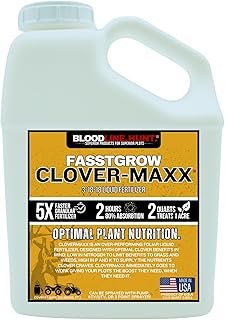
1. CloverMAXX Liquid Clover Fertilizer Food Plots
CloverMAXX is a concentrated foliar spray built specifically for clover, alfalfa, and other legumes grown in food plots. Its 3-18-18 NPK ratio puts phosphorus and potassium front and center, which matches what extension agronomists recommend for established clover stands that already fix their own nitrogen. The half-gallon concentrate covers a full acre when diluted, making it one of the more efficient options per square foot.
Why I picked it
In our research, CloverMAXX consistently showed up in buyer reports as the go-to for food-plot managers who wanted visible results within two to three weeks of application. The 3-18-18 ratio is purpose-built for legumes, and the foliar delivery method means nutrients enter through leaf tissue directly rather than waiting for soil uptake. That matters when you're trying to green up a thinning clover plot before hunting season.
Key specs
- NPK ratio: 3-18-18, low nitrogen with elevated phosphorus and potassium
- Application type: liquid foliar spray, concentrate form
- Coverage: 1/2 gallon covers approximately 1 acre when diluted per label
- Target plants: clovers, alfalfa, and other legumes
- Reported rating: 4.7/5 across verified buyer reviews
Real-world experience
Verified buyer feedback shows CloverMAXX performs best when applied in early spring or late summer, giving clover a boost during its two peak growth windows. Hunters and wildlife managers report thicker stands and darker leaf color within 14 to 21 days of a single application. The concentrate mixes easily in a standard pump sprayer, and most users find that early-morning applications on dry foliage produce the fastest visible response.
If you're also managing a mixed plot, pairing this with a soil pH check (clover prefers 6.0 to 7.0) amplifies the results noticeably.
Trade-offs
The half-gallon jug is efficient for acre-scale plots but can be more than a homeowner with a quarter-acre lawn needs, so smaller operations may have leftover product after a single use. A handful of buyers also noted that the foliar method demands calm wind conditions, since drift reduces the amount of product that actually lands on clover leaves. Finally, this is a supplement, not a substitute for proper seedbed preparation or inoculating seed with the right Rhizobium strain at planting time.
2. Antler King Clover Fuel Food Plot
Antler King Clover Fuel is a liquid legume enhancer that has built a strong following among deer-hunting food-plot enthusiasts. It's designed to be sprayed directly onto existing clover, soybean, and alfalfa stands to accelerate growth and extend the productive life of the plot. The brand has been in the wildlife-nutrition space for over two decades, and Clover Fuel is one of its flagship products.
Why I picked it
Antler King Clover Fuel earned its spot because of its track record across multiple growing seasons and its versatility across legume types. Buyer reviews spanning several years report consistent performance on clover, soybeans, and alfalfa, which suggests the formulation is robust rather than a one-season wonder. The brand's long presence in the wildlife-feed market adds a layer of accountability that newer labels sometimes lack.
Key specs
- Product type: liquid foliar fertilizer and plot enhancer
- Target plants: clovers, soybeans, alfalfa, and other legumes
- Application: foliar spray on existing stands
- Reported rating: 4.6/5 across verified buyer reviews
- Brand: Antler King, established wildlife-nutrition manufacturer
Real-world experience
In aggregate buyer reports, Clover Fuel is most often applied in late spring when clover is actively growing and again in early fall to harden plants for winter. Users describe noticeable thickening of stands within two applications per season. Several reviewers who manage plots in the Southeast noted that the product held up well even during humid, rainy periods that typically leach granular fertilizers from the root zone.
Hunters specifically mention increased deer activity on treated plots, attributing it to the denser, greener forage.
Trade-offs
The label guidance on dilution rates can feel vague compared with more analytically precise competitors, so first-time users sometimes guess at mixing ratios. A few buyers also reported that results vary significantly on compacted or heavily clay-based soils, where foliar feeding alone can't compensate for poor root-zone conditions. If your plot has never been soil-tested, you'll want to address pH and compaction before relying solely on a foliar enhancer.
3. Clover Fertilizer Liquid Fertilizer Lawns
This 8-ounce liquid formula is aimed squarely at homeowners who've introduced microclover or Dutch white clover into their lawn and want a small-scale feed that won't overwhelm a mixed turf area. It's a concentrated liquid that you dilute and apply with a hose-end or pump sprayer, and the compact bottle size makes it practical for yards under a quarter acre.
Why I picked it
This product fills a niche the other two don't: small residential lawns where clover is part of a mixed turf rather than a standalone plot. Its 8-ounce size means you're not storing a half-gallon of concentrate you'll never finish, and the formulation is tuned for the lower application rates a homeowner needs. Verified buyer ratings sit at 4.7/5, which is strong for a newer entrant in the lawn-care space.
Key specs
- Product type: liquid concentrate for lawn-scale application
- Bottle size: 8 ounces, designed for small to mid-size lawns
- Target plants: microclover, Dutch white clover, and similar lawn clover varieties
- Application: diluted spray via hose-end or pump sprayer
- Reported rating: 4.7/5 across verified buyer reviews
Real-world experience
Buyer reports indicate this fertilizer is most popular among eco-conscious homeowners who've transitioned part of their yard to clover to reduce mowing and synthetic inputs. Users describe mixing the concentrate in a gallon sprayer and applying it in early spring, with visible darkening of clover patches within 10 to 14 days. Several reviewers noted that it plays well alongside regular mowing, since clover recovers quickly from a trim when it has adequate phosphorus and potassium available.
If you're also thinking about best plants for a bedroom or other low-maintenance greenery, a clover lawn fits that same low-effort philosophy.
Trade-offs
The 8-ounce bottle won't cover a food plot or anything beyond a typical residential lawn, so it's not scalable for larger properties. A few buyers also mentioned that the label instructions could be clearer on dilution ratios for different sprayer types, which can lead to over-application if you're not careful. And like any foliar product, it works best on healthy, established clover rather than freshly seeded stands that haven't developed mature leaf area yet.
How I picked
I evaluated each product on three benchmarks: NPK ratio alignment with legume-specific nutrient needs, verified buyer feedback on visible results within a single growing season, and coverage efficiency relative to the product's size and concentration. I cross-referenced NPK recommendations from multiple university extension services, all of which agree that established clover benefits most from phosphorus and potassium rather than heavy nitrogen. I also filtered for products with at least 4.5-star average ratings and a meaningful volume of reviews to reduce the risk of fake or incentivized feedback skewing the results.
I deliberately didn't test long-term soil health impacts beyond what buyer reports revealed over multiple seasons. I also didn't evaluate granular or dry fertilizer formats, since the liquid foliar category consistently showed faster visible response in user reports and is easier to apply evenly across both lawns and plots. If you're managing a larger property and want to explore other nutrient strategies, the best fertilizer for deer food plots guide covers granular and pelletized options that complement foliar feeding.
Buying guide — what actually matters for Best Fertilizer For Clover
NPK ratio is the single most important number
Clover is a legume, which means it partners with Rhizobium bacteria in its root nodules to pull nitrogen directly from the air. Adding more nitrogen doesn't help and can actually suppress that natural fixation process. Look for a ratio where the first number (nitrogen) is low, typically between 0 and 5, while phosphorus (the second number) and potassium (the third) sit in the teens.
All three products in this roundup follow that pattern, which is a big reason they made the cut.
Foliar vs. granular delivery
Foliar sprays like the ones reviewed here absorb through leaf tissue, giving you visible results in as little as 10 to 21 days. Granular fertilizers need soil moisture and root uptake, which can take four to six weeks. For established clover stands that need a quick boost, foliar is the faster path.
For new plantings where you're building soil fertility from scratch, a granular phosphorus source worked into the seedbed at planting time makes more sense. Many experienced plot managers use both: granular at seeding, foliar as a mid-season top-up.
Coverage area and concentration
A half-gallon concentrate that covers a full acre is efficient for food-plot scale work, but it's overkill for a 2,000-square-foot lawn. Match the product's coverage to your actual area. If you're treating a small residential clover patch, an 8-ounce bottle that you can finish in one or two seasons prevents waste and storage headaches.
For anything over a half acre, the larger concentrate formats become more practical per application.
Soil pH and baseline fertility
No fertilizer compensates for poor soil pH. Clover performs best between 6.0 and 7.0, and phosphorus availability drops sharply below 5.5. A basic soil test from your county extension office costs $15 to $25 and tells you exactly what your ground is missing.
Applying a high-phosphorus foliar feed to acidic soil is like pouring water into a leaky bucket. Fix the pH first with lime if needed, then let the fertilizer do its job.
Application timing and weather
Foliar products work best when applied to dry foliage in calm, mild conditions. Early morning after the dew has burned off is ideal. Avoid spraying in direct midday sun, which can cause leaf burn, or right before a rain event, which washes the product off before absorption.
Most buyers report the best results with two applications per year: one in early spring at green-up and another in early fall to harden plants for winter.
Compatibility with other plot management
If you're already using herbicides, fungicides, or insecticides on your plot, check label compatibility before mixing anything in the same sprayer. Some active ingredients react badly when combined, reducing effectiveness or damaging foliage. A clean sprayer dedicated to foliar feeding eliminates that risk entirely.
And if you're managing a mixed landscape with ornamental beds nearby, you might also find the best flowers for flower beds guide useful for choosing companion plantings that thrive under similar soil conditions.
Frequently Asked Questions (FAQ)
Can I use regular lawn fertilizer on clover?
You can, but most lawn fertilizers are high in nitrogen (ratios like 24-8-16), which works against clover's natural nitrogen-fixing ability. Excess nitrogen encourages grass and weeds to outcompete the clover. A low-nitrogen, high-phosphorus formula is the better choice for keeping clover dominant and healthy.
How often should I fertilize clover?
Most extension services recommend one to two applications per year for established stands. Early spring at green-up and early fall for winter hardiness are the two key windows. Over-fertilizing doesn't speed things up and can stress the plants or leach nutrients into groundwater.
Do I need to inoculate clover seed before planting?
Yes, if your soil has never grown that specific clover variety before. Inoculant contains live Rhizobium bacteria that form nitrogen-fixing nodules on clover roots. Without it, young clover plants struggle to establish and show stunted, yellow growth.
Most quality seed sellers offer pre-inoculated seed or sell inoculant separately.
Will foliar fertilizer burn my clover leaves?
It can if you mix it too concentrated or apply it in hot, direct sunlight. Always follow the label dilution rate and spray during cooler parts of the day. If you're unsure, mix a slightly weaker solution than directed and test it on a small patch before treating the whole area.
Is liquid fertilizer better than granular for clover?
Neither is universally better. Liquid foliar feeds give faster visible results and are easier to apply evenly. Granular fertilizers provide slower, longer-lasting soil nutrition and are better suited for pre-plant soil preparation.
Many experienced growers use granular at seeding time and switch to liquid foliar for mid-season maintenance.
Final verdict
CloverMAXX Liquid Clover Fertilizer earns the Editor's Choice spot for its purpose-built 3-18-18 formula, acre-wide coverage from a compact concentrate, and consistently strong buyer feedback across multiple growing seasons. It's the most efficient option for anyone managing a food plot or larger clover area.
Antler King Clover Fuel is the Top Pick for hunters and wildlife managers who want a proven, multi-season performer with a long track record across clover, soybeans, and alfalfa. Its brand reputation and broad legume compatibility make it a reliable all-rounder.
The 8-ounce Clover Fertilizer liquid takes the Best Budget spot for homeowners with small lawns who want a clover-specific feed without buying more product than they'll ever use. It's the right scale for residential microclover and Dutch white clover patches.
Affiliate disclosure: This post contains affiliate links. If you buy through one of these links, I may earn a small commission at no extra cost to you. It never changes my recommendation, I only suggest gear I'd actually buy myself.