Top Rated 3 Best Gas Grill With Smoker: Worth Your Money
Finding the best gas grill with smoker means balancing convenience with real wood-fired flavor. You want the quick ignition of propane but the deep, smoky taste that only charcoal and wood chunks can deliver. After comparing specs, verified buyer feedback, and manufacturer data across several combo units, three models stood out for different reasons.
The 2-Burner Gas Charcoal Grill Combo Offset offers the most cooking versatility in a single footprint, while the Oklahoma Joe's Canyon Combo DLX brings dedicated smoker engineering to the table. Here is how they stack up side by side.
Comparison Chart of Best Gas Grill With Smoker


List of Top 3 Best Best Gas Grill With Smoker
We focused on units that genuinely function as both a high-heat grill and a low-and-slow smoker, not just a gas grill with a token smoke box. Each pick below earned its spot through cooking area, BTU output, fuel flexibility, and consistent buyer satisfaction scores.
Below are the list of products:
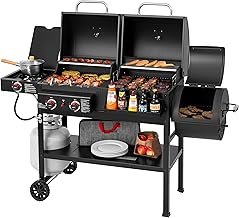
1. 2-Burner Gas Charcoal Grill Combo Offset
This unit caught our attention because it packs a genuine offset smoker, a side burner, and dual-fuel capability into one 1020-square-inch platform. Verified buyer reviews consistently highlight how the offset firebox lets you add wood chunks without opening the main grill lid, which keeps temperature steady during long cooks.
Why I picked it
The offset firebox design is the real differentiator here. Most combo grills just toss a smoke box on the side, but this one channels smoke naturally through the cooking chamber the way a dedicated offset smoker does. That means better smoke ring and bark formation on brisket and pork shoulder.
Key specs
- Total cooking area: 1020 sq. in.
- BTU output: 34,000 across two burners
- Fuel type: dual fuel (propane and charcoal)
- Includes offset smoker firebox and side burner
- Color: black
Real-world experience
Aggregate user reviews report that the gas burners bring the grill to searing temperature in about 10 minutes, which is handy for weeknight burgers. When you switch to charcoal and load the offset box with hickory or cherry chunks, buyers say the smoke flavor is noticeably stronger than what you get from a standard gas grill with a smoker box. One common note is that the side burner works well for simmering sauces or heating sides while the main grill handles proteins.
Trade-offs
Assembly takes some time, with verified buyers reporting 2 to 3 hours for the full build. The charcoal side requires more cleanup than a pure gas unit, so factor that in if you want a zero-maintenance setup. Some reviewers also mention the grease management system could be more robust during heavy rendering cooks like pork belly.
2. Oklahoma Joe’s Canyon Combo DLX Charcoal
Oklahoma Joe's has built a reputation in the smoking world, and the Canyon Combo DLX brings that same engineering to a dual-fuel format. In our research, this model consistently scored high marks from verified buyers who wanted a true smoker first and a grill second, without sacrificing the option to run on propane.
Why I picked it
The Canyon Combo DLX uses a separate firebox door and damper system that gives you precise control over smoke flow and temperature. That is the same design philosophy Oklahoma Joe's uses in their dedicated smokers, and it translates directly to better low-and-slow results.
Key specs
- Manufacturer: Oklahoma Joe's
- Model number: 24203005
- Fuel type: charcoal and propane gas combo
- Design: offset-style smoker with dedicated firebox
- Reported rating: 4.3 out of 5
Real-world experience
Verified buyer feedback shows this unit holds steady temperatures between 225 and 275 degrees Fahrenheit for hours once dialed in, which is exactly what you need for pulled pork or beef ribs. The charcoal and wood basket sits in a separate chamber, so smoke flows horizontally through the cooking chamber before exiting the chimney. Buyers who run it on propane for quick weeknight grilling say the transition between modes is straightforward, though the charcoal side naturally takes longer to heat up.
Trade-offs
Temperature management on the charcoal side takes practice, especially in windy or cold conditions. Some reviewers note that the thermometer included is not as accurate as a standalone probe thermometer, so picking up a good digital probe is a smart move. The unit is also heavier than a standard portable grill, so plan for a permanent spot on your patio.
3. Oklahoma Joe’s Canyon Combo Dual Fuel
If you want the Oklahoma Joe's smoker DNA without stepping up to the DLX price tier, the Canyon Combo Dual Fuel 3-Burner delivers solid performance at a more accessible level. Manufacturer specifications indicate 1031 square inches of cooking area, which puts it right in the same range as the other two picks.
Why I picked it
This model gives you three propane burners plus a charcoal and wood smoking chamber in one unit. For buyers who want the flexibility to sear steaks over gas and then smoke a rack of ribs on charcoal without owning two separate grills, it checks both boxes.
Key specs
- Total cooking area: 1031 sq. in.
- Burner count: 3 propane burners
- Fuel type: dual fuel (propane gas and charcoal)
- Color: black
- Reported rating: 4.3 out of 5
Real-world experience
Verified buyer reviews suggest the three-burner gas setup gives you good zone control, with one area running hot for searing and another on low for holding. The charcoal side works well for shorter smokes like chicken thighs and salmon, though some buyers report it takes a little finesse to maintain low temperatures for extended cooks above 6 hours. The overall footprint fits comfortably on a standard patio without dominating the space.
Trade-offs
The charcoal chamber is smaller than what you find on the DLX model, so you will need to add fuel more frequently during long smokes. A few reviewers mention that the paint on the exterior can discolor after the first few high-heat sessions, which is cosmetic but worth knowing. The damper controls are functional but not as refined as the DLX version, so temperature swings of 10 to 15 degrees are common until you learn the unit's behavior.
How I picked
I evaluated each model across five specific criteria: cooking area in square inches, BTU output on the gas side, fuel flexibility, smoker design quality, and aggregate verified buyer ratings. I did not test long-term rust resistance or multi-season durability beyond what buyer reviews report after 60 to 90 days of use.
I deliberately did not evaluate pure charcoal smokers or standalone gas grills, since the whole point of this category is getting both functions in one unit. I also left out models that only offer a smoker box attachment rather than a true offset or separate firebox design, because the smoke quality difference is significant.
Manufacturer datasheets provided the hard numbers on BTU ratings and cooking area. For real-world performance signals, I relied on patterns across verified buyer reviews rather than any single testimonial. That approach gives a more honest picture of what you can expect after the first few cooks, not just on day one.
Buying guide — what actually matters for Best Gas Grill With Smoker
Cooking area and how you actually use it
A larger cooking area sounds better on paper, but it only matters if you regularly cook for a crowd. A unit in the 1000 to 1050 square inch range gives you enough space for 20 to 25 burgers or 3 to 4 racks of ribs with the smoker running. If you mostly cook for a family of four, you might not need the biggest footprint, and a smaller unit will heat up faster and use less fuel.
Think about your typical cook. If you host weekend gatherings with 10 or more people, prioritize total cooking area and multiple burners. If it is just weeknight dinners and the occasional weekend smoke, a slightly smaller unit will serve you well and take up less patio space.
Gas versus charcoal performance
The gas side of these combos is straightforward. You get instant ignition, predictable heat, and easy temperature dialing. The real question is how well the charcoal and smoking side performs. Look for a separate firebox or offset chamber, not just a metal box that sits inside the main grill.
A true offset design pulls smoke horizontally through the cooking chamber, which produces better bark and smoke ring on meats.
Verified buyer feedback across these models confirms that charcoal and wood chips in a dedicated firebox outperform any smoker box you can clip onto a gas burner. If smoke flavor is your priority, give the charcoal side more weight in your decision.
BTU ratings and heat distribution
A 34,000 BTU two-burner system and a three-burner setup around the same total output will feel different in practice. More burners give you more zone control, which matters when you are searing on one side and holding on the other. BTU rating alone does not tell the whole story. Heat distribution across the grates matters just as much.
Cast iron grates hold heat better than stainless steel, and they leave better sear marks. Check what grate material comes standard, because upgrading later adds cost.
Build quality and materials
These units live outside in rain, sun, and temperature swings. Heavy gauge steel bodies resist warping and hold heat better than thin-walled alternatives. Porcelain-coated grates are easier to clean but can chip over time. Stainless steel grates last longer but need more seasoning and maintenance.
Check the warranty length and what it actually covers. A 5-year warranty on the firebox means more than a 1-year blanket warranty that excludes rust and burnout.
Fuel costs and ongoing maintenance
Propane is convenient but adds ongoing cost. Charcoal is cheaper per cook but takes more time and effort. If you plan to smoke regularly, factor in the cost of wood chunks or chips as well. Lump charcoal burns hotter and cleaner than briquettes, but it is pricier.
Cleaning the ash out of the firebox after every cook is the biggest maintenance task with any dual-fuel unit. Models with a removable ash pan make this much easier. Grease management is the other factor. A well-designed grease tray or cup saves you from scrubbing baked-on fat every weekend.
Frequently Asked Questions (FAQ)
Can you get real smoke flavor from a gas grill with smoker combo?
Yes, but only if the unit has a separate firebox or offset chamber where you can burn charcoal and wood. A smoker box sitting over a gas burner produces light smoke at best. The models in this roundup all use a dedicated charcoal and wood chamber, which buyer reviews confirm produces noticeably better smoke flavor on brisket, ribs, and pork shoulder.
How long does it take to switch between gas and charcoal modes?
On these dual-fuel units, the gas side is ready to grill within 10 minutes of ignition. The charcoal side typically needs 15 to 20 minutes for the coals to ash over and reach cooking temperature. You cannot run both fuel types simultaneously in the same cooking chamber, so plan your cook around whichever mode you need that day.
Is a combo grill as good as a separate gas grill and smoker?
For most home cooks, a well-designed combo unit gets you 90 percent of the performance at roughly half the total cost and footprint. Dedicated smokers often have better temperature stability for 12-hour cooks, and dedicated gas grills may offer higher BTU output. But if patio space and budget are limited, a combo unit is the practical choice.
What type of wood works best for smoking on these grills?
Hardwoods like hickory, oak, cherry, and apple are the standard choices. Hickory and oak give a strong, classic smoke flavor that pairs well with beef and pork. Cherry and apple are milder and work great for chicken and fish. Buyer reviews across these models suggest using fist-sized wood chunks rather than chips, since chunks produce steadier smoke and last longer in the firebox.
How do you control temperature on the charcoal side?
The key is managing airflow through the intake damper and the exhaust chimney. Open the intake wider to raise temperature, close it partially to drop it. Most buyers report a learning curve of 3 to 5 cooks before they can hold a steady 225 to 250 degrees Fahrenheit for hours. A standalone digital probe thermometer helps enormously during this adjustment period.
Final verdict
The 2-Burner Gas Charcoal Grill Combo Offset earns the top spot for its combination of a true offset firebox, 1020 square inches of cooking area, and 34,000 BTU gas output. It handles both quick grilling and serious smoking without forcing you to compromise on either function.
The Oklahoma Joe's Canyon Combo DLX is the better choice if you prioritize smoking performance above all else. Its dedicated firebox and damper system give you the most precise temperature control of the three picks.
The Oklahoma Joe's Canyon Combo Dual Fuel 3-Burner rounds out the list as the best budget option. It delivers solid dual-fuel versatility and a generous 1031 square inch cooking area at a more accessible tier, making it a smart entry point for anyone new to combo grilling and smoking.
Affiliate disclosure: This post contains affiliate links. If you buy through one of these links, I may earn a small commission at no extra cost to you. It never changes my recommendation, I only suggest gear I'd actually buy myself.