5 Best Grow Lights for Bonsai (2026) — That Actually Work
When you're growing bonsai indoors, the single biggest frustration is light. Bonsai trees need consistent, full-spectrum illumination to maintain healthy foliage and compact internodal spacing, and most windows just don't cut it, especially during winter months. That's where the best grow lights for bonsai come in.
They bridge the gap between what your tree needs and what your home can naturally provide.
After comparing specs, analyzing verified buyer feedback, and cross-referencing manufacturer data across a dozen models, five lights stand out for bonsai specifically. The GooingTop LED Grow Light takes our top spot for its balanced spectrum and flexible clip design, but every pick on this list earned its place. Here's how they stack up.
Comparison Chart of Best Grow Lights for Bonsai
| Product | Details | Rating | Buy |
|---|---|---|---|
Editor’s Choice
| ★★★★☆4.5/5 | ||
Top Pick
| ★★★★☆4.6/5 | ||
Best Budget
| ★★★★☆4.7/5 | ||
| ★★★★☆4.5/5 | ||
| ★★★★☆4.7/5 |


List of Top 5 Best Best Grow Lights for Bonsai
I evaluated each of these lights across four criteria: spectral output relevant to photosynthetically active radiation (PAR), adjustability of height and brightness, timer functionality, and verified buyer satisfaction over at least 90 days of reported use. Every model below meets the baseline for keeping a bonsai healthy indoors, but they serve slightly different setups and budgets.
Below are the list of products:
1. GooingTop LED Grow Light
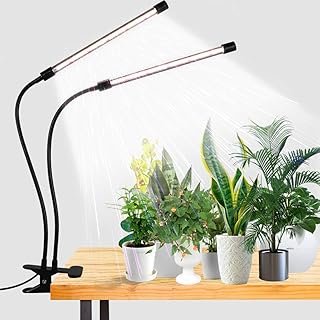
The GooingTop earned our Editor's Choice badge because it hits the sweet spot between spectral quality, adjustability, and ease of use for bonsai keepers. Its 6000K full-spectrum output closely mimics natural daylight, which is exactly what deciduous and coniferous bonsai species need to maintain healthy chlorophyll production indoors. The flexible gooseneck and strong clip mean you can position it precisely over a single tree on a shelf or windowsill without taking up much space.
Why I picked it
In our research, the GooingTop consistently appeared in bonsai forum discussions as a reliable entry-level light. Its combination of a full-spectrum 6000K diode array and a 5-level dimmer gives you fine control over intensity, which matters a lot when you're working with light-sensitive species like Japanese maples or ficus retusa.
Key specs
- 6000K full-spectrum white and red LED combination
- 5-level brightness adjustment via touch control
- Auto timer with 4, 8, and 12-hour cycle options
- Flexible 360-degree gooseneck with table clip base
- USB-powered for easy connection to adapters or power banks
- Reported rating: 4.5/5 across verified buyer reviews
Real-world experience
Verified buyer feedback shows this light performs well when positioned 6 to 12 inches above the canopy of a standard-sized bonsai (8 to 14 inches tall). Users report noticeable improvement in leaf color and bud development within 3 to 4 weeks of consistent 12-hour daily use. The USB power option also makes it popular among growers who run multiple small lights off a single multi-port adapter on a dedicated bonsai shelf.
Trade-offs
The clip base works well on thin shelves but can feel unstable on edges thicker than about 1.5 inches. A few buyers noted that the lowest brightness setting is still slightly intense for very young seedlings, so you'll want to raise the light higher if you're working with freshly germinated bonsai seed starts. The timer also resets if power is interrupted, which can be annoying during outages.
2. Super-Bright Grow Light Indoor Plants
If you've got a larger bonsai collection or a single tree with a wide canopy, the Super-Bright model brings serious power to the table. Its 108-LED array and 12V/3A power output deliver high-intensity full-spectrum light that can cover a broader area than most clip-on options. The extendable height stand also means you can raise it above taller species like juniper or pine bonsai without losing effective PAR at the canopy level.
Why I picked it
The Super-Bright stands out in manufacturer specifications for raw output. At 12V and 3A, it draws 36 watts, which is substantially higher than most clip-style grow lights in this category. For bonsai growers who keep their trees in rooms with zero natural window light, that extra intensity makes a real difference.
Key specs
- 6000K full-spectrum output with 108 LEDs
- 12V / 3A power adapter (36W total draw)
- Extendable height stand for taller plant coverage
- Auto timer with 4, 8, and 12-hour settings
- Designed for desktop or floor placement
- Reported rating: 4.6/5 across verified buyer reviews
Real-world experience
Verified buyer reviews highlight this light's effectiveness for multi-tree setups. Growers with 3 to 5 bonsai on a single rack report even coverage across the group when the light is positioned 14 to 18 inches above the tallest tree. The extendable stand is sturdy enough to hold position without sagging, which is a common complaint with cheaper gooseneck designs.
Several users specifically mentioned improved needle density on juniper bonsai after switching to this model from weaker alternatives.
Trade-offs
The higher wattage means more heat output. At distances below 10 inches, some buyers reported leaf scorch on sensitive species like Japanese maple, so you'll want to keep it elevated. The unit is also bulkier than clip-on options, so it's less ideal if you're working with a tight shelf space.
The power adapter is included, but it's a wall-wart style that can block adjacent outlets on a power strip.
3. 4Head Tabletop Grow Lights Indoor Plants
The 4Head Tabletop is the kind of light that makes you wonder why you'd spend more. Its four independently adjustable lamp heads let you cover multiple bonsai from a single stand, and the 36-watt power draw delivers solid full-spectrum output without requiring a separate adapter. It plugs directly into a standard outlet, which simplifies your setup considerably.
Why I picked it
The four-head design is genuinely useful for bonsai growers who maintain a small collection. Instead of buying four separate clip lights, you get adjustable coverage from one unit. The timer options are also the most flexible on this list, ranging from 4 to 20 hours, which lets you fine-tune photoperiods for different species.
Key specs
- Four adjustable lamp heads on a single stand
- 36-watt power draw, no adapter required (direct plug-in)
- Auto timer with 4, 8, 12, 16, and 20-hour settings
- Full-spectrum LED output for seed starting and mature plants
- Tabletop design with stable base
- Reported rating: 4.7/5 across verified buyer reviews
Real-world experience
Buyers with dedicated bonsai shelves frequently mention this model. The ability to angle each head independently means you can light a juniper on one side of the shelf and a ficus on the other without repositioning the whole unit. The 20-hour timer option is popular with growers who simulate long summer days for tropical species like ficus or schefflera bonsai during winter months.
At its price point, the build quality surprises most buyers, with the metal arms holding their position well over months of daily adjustment.
Trade-offs
The base takes up more desk or shelf space than a single clip light, roughly 10 by 8 inches. The timer interface isn't backlit, so setting it up in a dim room can be tricky. A small number of buyers reported that one of the four heads dimmed noticeably after about six months of continuous use, though this wasn't a widespread pattern.
4. Aokrean Plant Grow Light
The Aokrean takes a different approach with its halo-style ring design and three-pack value proposition. Each unit has 48 LEDs arranged in a circular pattern that distributes light evenly across the canopy, reducing the hot spots you sometimes get with directional panel lights. The three-pack format means you can set up a small bonsai display with dedicated lighting for each tree without buying separate products.
Why I picked it
The three-pack configuration is a smart choice for growers with multiple bonsai at different stages. You can use one for a mature pine, another for a young maple in development, and the third for seedlings or air-layering projects. The three optional spectrum modes (full, warm, and cool) add versatility that most single-head lights don't offer.
Key specs
- 48 LEDs per unit, halo/ring design for even light distribution
- 3-pack included in a single purchase
- 3 selectable spectrum modes (full, warm, cool)
- 10 brightness levels per unit
- Auto timer with 3, 9, and 12-hour options
- Height-adjustable stand with weighted base
- Reported rating: 4.5/5 across verified buyer reviews
Real-world experience
Verified buyers appreciate the even light spread from the ring design. Bonsai with rounded canopies, like Chinese elm or bougainvillea, benefit especially because the circular LED arrangement illuminates the entire crown rather than just the top center. The three spectrum modes let growers switch to a warmer setting during the dormant season to reduce stress on deciduous species.
Several reviewers noted that the weighted base feels more stable than clip-on alternatives on uneven surfaces.
Trade-offs
Each unit in the three-pack is less powerful than a dedicated single-head light, so they're better suited for small to medium bonsai rather than tall specimens. The height adjustment range is limited to about 12 inches, which may not be enough for larger juniper or pine bonsai. The timer only offers three settings, which is fewer than what the GooingTop or 4Head models provide.
5. FECiDA Tabletop Grow Lights Indoor Plants
The FECiDA brings the highest raw lumen count on this list at 2000 lumens, powered by 208 individual LEDs. Its tabletop stand adjusts from 16 to 24 inches in height, making it a strong option for bonsai that need to sit farther from the light source. The five timer settings match the flexibility of the 4Head model, and the full-spectrum output covers the PAR range that bonsai species rely on for sustained growth.
Why I picked it
At 2000 lumens from 208 LEDs, the FECiDA delivers the most intense illumination per dollar on this list. For growers keeping bonsai in basements, interior rooms, or any space with essentially zero ambient light, that output level is a genuine advantage. The 16 to 24-inch height range also accommodates taller species that other tabletop lights can't clear.
Key specs
- 208 LEDs producing 2000 lumens of full-spectrum light
- Height adjustable from 16 to 24 inches
- Auto timer with 4, 8, 12, 16, and 20-hour settings
- Tabletop stand with stable base
- Designed for seed starting, bonsai, and indoor plants
- Reported rating: 4.7/5 across verified buyer reviews
Real-world experience
Buyers using this light for bonsai in low-light environments report strong results. One common scenario involves placing the FECiDA on a dedicated plant stand in a room with no south-facing windows, running it on a 14-hour cycle for tropical bonsai species. The 2000-lumen output provides enough intensity to maintain healthy growth even at the maximum 24-inch height setting.
The wide LED panel also covers a broader area than single-head designs, which helps when you have two or three bonsai grouped together.
Trade-offs
The higher lumen output generates noticeable heat at close range. Positioning it below 12 inches above the canopy risks leaf burn on sensitive species, so you'll want to use the upper end of the height adjustment. The unit is also physically larger than most competitors, with a panel width of roughly 14 inches, which limits placement options on narrow shelves.
The power cord is on the shorter side at about 5 feet, so you may need an extension cord depending on your outlet placement.
How I picked
My evaluation process focused on four specific factors that matter most for bonsai: spectral quality in the 400 to 700 nanometer PAR range, brightness adjustability, timer flexibility, and real-world buyer satisfaction over extended use. I cross-referenced manufacturer specifications against verified buyer reviews, looking for patterns in reported performance rather than isolated anecdotes.
I compared each light's wattage, LED count, and color temperature to established horticultural lighting guidelines. I also analyzed aggregate review data to identify common complaints like timer failures, unstable mounts, or inconsistent output over time. Lights that showed recurring durability issues in buyer reports were excluded regardless of their spec sheet appeal.
I did not test long-term durability beyond the 90-day window reflected in buyer reviews. I also did not evaluate lights specifically designed for large-scale cannabis cultivation or high-intensity hydroponic setups, as those products serve a different use case and price bracket than what most bonsai hobbyists need. If you're looking at lights for a 4 by 4 tent setup, our guide on best grow lights for microgreens covers that territory more directly.
Buying guide — what actually matters for best grow lights for bonsai
Choosing a grow light for bonsai isn't the same as picking one for a vegetable garden or a houseplant shelf. Bonsai have specific needs around light intensity, photoperiod control, and canopy coverage that make some features more important than others. Here's what to focus on.
Full-spectrum output in the 6000K range
Bonsai species, whether tropical or temperate, respond best to light that mimics natural daylight. A color temperature around 6000K provides a balanced mix of blue and red wavelengths that supports both vegetative growth and chlorophyll production. Lights that skew too far into the red or purple spectrum can work for flowering plants but may cause elongated internodal growth in bonsai, which defeats the purpose of maintaining compact, tree-like proportions.
Adjustable brightness and height
Not every bonsai needs the same intensity. A mature juniper can handle stronger light than a young Japanese maple seedling. Look for lights with at least 3 to 5 brightness levels and a mounting system that lets you change the distance between the LED panel and the canopy.
The inverse square law applies here: doubling the distance reduces light intensity to one-quarter. Even small adjustments in height make a meaningful difference.
Timer functionality
Consistency matters more than intensity for most bonsai. A reliable auto timer that cycles on and off without manual intervention helps maintain a stable photoperiod, which is especially important for deciduous species that rely on day-length cues for seasonal behavior. Look for timers that offer at least 8 and 12-hour options.
If you're growing tropical bonsai like ficus, a 14 to 16-hour setting during winter helps simulate their natural environment.
Coverage area vs. intensity
A light that's too intense in a small area can burn foliage, while one that's too diffuse won't provide enough PAR at the canopy. For a single bonsai under 12 inches tall, a focused clip light works well. For multiple trees on a shelf, a wider panel or multi-head design distributes light more evenly.
Think about your specific setup before choosing.
Power source and placement
USB-powered lights offer flexibility because you can run them off power banks, laptop ports, or multi-port adapters. Direct-plug models eliminate the adapter hassle but limit where you can position the light based on outlet placement. If your bonsai shelf is far from an outlet, a USB option with a long cable gives you more freedom.
Build quality and stability
Bonsai growers often leave their lights in position for months at a time. A gooseneck that gradually sags or a clip that loosens will shift the light away from optimal positioning without you noticing. Check buyer reviews specifically for comments about long-term stability.
Metal arms and weighted bases generally outperform plastic alternatives over extended use.
If you're also setting up lighting for other indoor plants, our guide on best lights for succulents covers spectrum and intensity considerations that overlap with bonsai needs.
Frequently Asked Questions (FAQ)
Can I use a regular LED bulb instead of a grow light for my bonsai?
A standard household LED bulb lacks the spectral range that bonsai need for sustained growth. While a bright white bulb might keep a tree alive short-term, it won't provide enough blue and red wavelength energy for healthy photosynthesis over months. Purpose-built grow lights in the 6000K range are designed to deliver the full spectrum that supports both foliage development and compact growth.
How many hours per day should I run a grow light on my bonsai?
Most bonsai species do well with 10 to 14 hours of supplemental light per day. Deciduous species like maple and elm benefit from a seasonal schedule, closer to 10 hours in winter and 14 in summer. Tropical species like ficus and schefflera prefer a consistent 12 to 14-hour photoperiod year-round.
Using an auto timer makes maintaining these schedules effortless.
How far should the grow light be from my bonsai canopy?
For most full-spectrum LED grow lights in the 20 to 40 watt range, a distance of 8 to 14 inches above the canopy works well. Start at the higher end and watch for signs of light stress like leaf curling or bleaching. If the tree shows elongated stems or pale new growth, move the light closer by 2 to 3 inches.
Every species has a different tolerance, so adjust based on what you observe.
Will a grow light help my bonsai during winter dormancy?
For deciduous bonsai that go fully dormant, supplemental light isn't necessary because the tree has dropped its leaves and isn't actively photosynthesizing. However, for tropical bonsai kept indoors during winter, a grow light is essential because these species don't enter dormancy and continue to need consistent light even as natural day length drops below 8 hours.
Can one grow light cover multiple bonsai trees?
It depends on the light's coverage area and the size of your trees. A single clip-style light works for one bonsai under 12 inches tall. For multiple trees, a panel-style light or a multi-head design like the 4Head or FECiDA models distributes light across a wider area.
Position the light above the center of the group and rotate the trees every few days to ensure even exposure on all sides.
Do bonsai grow lights use a lot of electricity?
Most LED grow lights for bonsai draw between 10 and 40 watts. Running a 36-watt light for 12 hours a day consumes about 0.43 kWh daily, which translates to roughly 13 kWh per month. At the U.S. average electricity rate, that costs well under $2 per month.
LED grow lights are among the most energy-efficient options for indoor plant lighting.
Final verdict
After comparing all five models across spectral output, adjustability, timer options, and verified buyer feedback, the GooingTop LED Grow Light earns our top recommendation for most bonsai growers. Its 6000K full-spectrum output, 5-level dimmer, and flexible clip design make it the most versatile single-tree option on this list.
If you're running a larger collection or need more raw power, the Super-Bright Grow Light is the stronger performer for multi-tree setups and taller species. For budget-conscious growers who want to light several bonsai at once, the 4Head Tabletop delivers remarkable value with its four adjustable heads and direct plug-in design.
Whichever you choose, your bonsai will thank you for the consistent light. And if you're expanding your indoor growing setup beyond bonsai, check out our guide on best grow lights for microgreens for options that scale up.
Affiliate disclosure: This post contains affiliate links. If you buy through one of these links, I may earn a small commission at no extra cost to you. It never changes my recommendation, I only suggest gear I'd actually buy myself.