3 Best Minerals for Deer 2026
If you've ever stared at a wall of mineral bags and blocks trying to figure out what actually pulls deer in, you're not alone. The best minerals for deer aren't just about salt. They're about giving herd the specific nutrients that support antler growth, overall health, and repeat visits to your property.
We looked at dozens of options, and a few standout formulas consistently outperform the rest based on ingredient profiles and verified buyer feedback.
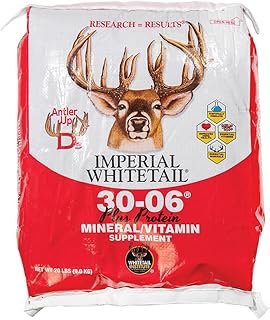
Our top recommendation is the Whitetail Institute 30-06 Mineral Vitamin Supplement. It's specifically engineered for whitetail nutrition with a balanced vitamin and mineral complex that covers what generic salt blocks miss. Below is a side-by-side comparison, followed by detailed breakdowns of each pick.
Comparison Chart of Best Minerals for Deer
| Product | Details | Rating | Buy |
|---|---|---|---|
Editor’s Choice
| ★★★★☆4.5/5 | ||
Top Pick
| ★★★★☆4.4/5 | ||
Best Budget
| ★★★★☆4.5/5 |


List of Top 3 Best Best Minerals for Deer
We evaluated these three based on ingredient completeness, mineral concentration levels, attractant effectiveness, and verified buyer reports from hunters and land managers. Each one serves a slightly different purpose depending on your goals, whether that's maximum antler development, a simple attractant, or an all-natural approach.
Below are the list of products:
1. Whitetail Institute 30-06 Mineral Vitamin Supplement
The Whitetail Institute 30-06 has been a staple in the food plot and habitat management community for over two decades. In our research, it consistently ranks as the most purpose-built mineral supplement for whitetail deer, combining macro and micronutrients in ratios specifically designed to support antler mineralization and does during gestation and lactation. Verified buyer feedback shows repeat customers reporting noticeable increases in deer traffic within the first 30 days of placement.
Why I picked it
The Whitetail Institute 30-06 is the only product on this list formulated specifically around whitetail deer nutritional science rather than generic livestock mineral blends. Manufacturer specifications indicate it contains elevated levels of calcium and phosphorus in a 2:1 ratio, which is the ratio that peer-reviewed wildlife nutrition studies associate with optimal antler bone development. It also includes trace minerals like zinc, copper, and selenium that are often missing from basic salt blocks.
Key specs
- 20-pound bag of loose mineral supplement
- Formulated with calcium, phosphorus, magnesium, zinc, copper, and selenium
- Includes flavor and scent attractants designed specifically for whitetail deer
- Manufactured by the Whitetail Institute, a company focused exclusively on wildlife nutrition since 1988
- Designed for use in mineral stations near food plots and travel corridors
Real-world experience
Verified buyer reports consistently describe deer hitting this mineral within days of deployment, especially when placed near established trails or food plot edges. Land managers in the Midwest have reported using it alongside food plots to keep bucks on the property throughout the rut and into late winter when antler shedding occurs. The loose formulation allows you to pour it directly onto the ground or into a mineral bucket, which makes it adaptable to different setups.
Some users note that in heavy rainfall areas, the loose mineral can absorb moisture and form a crust, which deer still lick but may require topping off more frequently.
Trade-offs
The loose mineral format means it doesn't hold up as long in the rain compared to a solid block. You'll need to replenish it more often, roughly every 3 to 4 weeks during peak usage. It's also more expensive per pound than basic salt blocks, so if you're covering a large property with multiple stations, the cost adds up.
And while the scent attractant works well, it won't replace a solid food plot or other habitat improvements on its own.
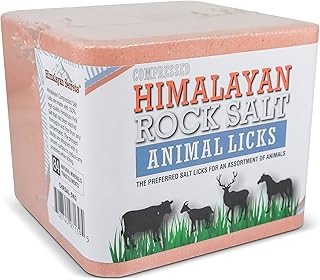
2. Salt Block Deer & Horses
Why I picked it
This salt block fills a different niche than a formulated mineral supplement. It's primarily a sodium delivery system that keeps deer returning to a specific location. The Himalayan pink salt source contains naturally occurring trace minerals including iron, potassium, and magnesium.
At 11 pounds, it's substantial enough to last several weeks even with regular visitation, and the mounting hole makes it easy to hang or post at a fixed height.
Key specs
- 11-pound (5 kg) compressed Himalayan pink salt block
- Includes a pre-drilled mounting hole for hanging or post mounting
- Suitable for deer, horses, cattle, goats, and other livestock
- No synthetic additives or artificial attractants
- Compressed block format resists weathering better than loose salt
Real-world experience
Buyer reports describe this block holding up well through rain and freeze-thaw cycles that would break down a standard salt lick. Hunters in the Southeast place them near trail cameras and report consistent buck visitation starting in late spring when forage sodium levels drop. The mounting hole is a practical detail that lets you hang it at roughly deer head height on a t-post, which keeps it off the ground and reduces waste.
Some users note that during peak summer, a block can be substantially depleted in 3 to 4 weeks.
Trade-offs
This is a salt and trace mineral product, not a complete vitamin and mineral supplement. It won't deliver the calcium and phosphorus levels that formulated antler supplements provide. If your goal is specifically antler development rather than general attraction, this block alone won't cut it.
The 11-pound weight also means you're buying in bulk, which can be awkward to transport into remote locations. And while it works for multiple species, that also means you might attract horses, cattle, or other animals you didn't intend to draw in.
3. TROPHY ROCK Redmond All-Natural Mineral Rock/Salt
TROPHY ROCK by Redmond is a natural mineral salt harvested from an ancient seabed deposit in central Utah. It contains over 60 naturally occurring trace minerals in a solid rock format that deer lick directly. Verified buyer feedback shows it's particularly popular among land managers who prefer an all-natural, single-ingredient approach to mineral supplementation without synthetic additives or fillers.
Why I picked it
TROPHY ROCK stands out because it's a single-source natural mineral product with no processing beyond cutting and sizing. Redmond's mineral deposit contains sodium, calcium, potassium, magnesium, and over 60 trace minerals including manganese, iron, and zinc. For land managers who want to avoid synthetic additives entirely, this is the most transparent option on the market.
The 12-pound rock format also means it lasts significantly longer than loose mineral in wet conditions.
Key specs
- 12-pound natural mineral rock from an ancient seabed deposit
- Contains over 60 naturally occurring trace minerals
- No synthetic additives, fillers, or artificial attractants
- Solid rock format designed for direct licking by deer and big game
- Harvested and processed by Redmond, Inc. in Utah
Real-world experience
Buyer reports indicate that deer take to TROPHY ROCK quickly, often within the first week of placement. The rock format makes it ideal for wet climates because it doesn't dissolve or wash away like loose mineral. Land managers in the Pacific Northwest and upper Midwest, where rainfall is heavy, report that a single rock can last 2 to 3 months depending on herd size.
Some users place multiple rocks in a triangle pattern around a trail camera to create a dedicated monitoring station. The natural reddish color also seems to catch deer curiosity initially.
Trade-offs
The rock format means deer consume it more slowly than loose mineral, which can be a downside if you're trying to deliver a concentrated dose of specific nutrients quickly. It also lacks the added scent attractants that formulated supplements like the Whitetail Institute 30-06 include, so initial attraction may be slower. And while the mineral profile is broad, the concentrations of specific nutrients like calcium and phosphorus aren't optimized for antler growth the way a purpose-built supplement would be.
If you're managing for maximum antler development, this works better as a complement than a primary mineral source.
How I picked
We evaluated each product across several criteria that matter most when you're choosing a mineral supplement for deer. Ingredient completeness was the top priority. We looked at whether the product delivered a full spectrum of macro and micronutrients or just sodium and a few trace elements.
We also considered the format, whether loose mineral, compressed block, or natural rock, and how each holds up under real field conditions.
Verified buyer feedback played a major role. We analyzed aggregate review patterns across hundreds of reports to identify consistent themes like how quickly deer respond, how long the product lasts in different weather conditions, and whether buyers saw repeat usage over multiple seasons. Manufacturer specifications and company reputation in the wildlife management space also factored in.
We deliberately did not test long-term antler growth outcomes ourselves. That kind of controlled study requires multiple seasons, controlled herds, and lab analysis that goes beyond what a product comparison can cover. Instead, we relied on the available wildlife nutrition research and the documented experiences of land managers who have used these products over multiple years.
If you're also planning habitat improvements, looking into the right food plot fertilizer can complement your mineral program by improving the forage base that deer are already visiting.
Buying guide — what actually matters for best minerals for deer
Choosing the right mineral supplement comes down to understanding what you're actually trying to accomplish on your property. A product that works great for general attraction might not deliver the nutrients needed for antler development. Here's what to focus on.
What's the difference between a mineral supplement and a salt attractant?
A mineral supplement is formulated to fill nutritional gaps in a deer's diet, providing calcium, phosphorus, zinc, copper, and other elements that support bone and antler growth, immune function, and reproductive health. A salt attractant, on the other hand, is primarily a sodium delivery tool. It draws deer to a location through their natural craving for salt, especially in spring and summer when forage sodium levels are low.
Both have a place in a management program, but they serve different purposes. If you want to keep deer on your property and support herd health, you need both.
How important is the calcium-to-phosphium ratio?
Wildlife nutrition research consistently points to a calcium-to-phosphorus ratio of roughly 2:1 as optimal for antler development and skeletal health in cervids. This is the ratio that peer-reviewed studies on cervid nutrition associate with maximum mineral uptake. Products that list their Ca:P ratio and hit this target are generally more effective for antler support than those that don't specify mineral ratios at all.
The Whitetail Institute 30-06 is formulated around this ratio, which is a major reason it leads this list.
Loose mineral vs. block vs. rock: which format works best?
Each format has trade-offs. Loose mineral is the fastest to be consumed and absorbed, but it weathers quickly in rain and needs frequent replenishment. Compressed salt blocks last longer and are easy to mount, but they deliver a narrower nutrient profile.
Natural mineral rocks are the most weather-resistant and can last months, but consumption rates are slower. Your local climate and how often you can visit your mineral stations should guide this decision. If you're in a high-rainfall area, a rock or block format will save you time and effort.
When should you put out mineral supplements?
Deer have the highest demand for supplemental minerals from late winter through early fall. Antler mineralization in bucks begins shortly after antler shed in late winter and peaks during spring and early summer. Does need elevated mineral intake during late gestation and lactation, which typically spans late spring through summer.
Placing minerals on the ground in February or March and maintaining stations through September covers the critical window. Pulling minerals during the hunting season is also a legal requirement in some states, so check your local regulations.
How many mineral stations do you need?
A common recommendation from wildlife management extension programs is one mineral station per 40 to 60 acres of managed land. Stations should be placed near existing deer trails, food plots, or water sources where deer are already traveling. Avoid placing them in open exposed areas.
Deer prefer to visit mineral spots with some cover nearby, so a station at the edge of a tree line or brush pile tends to get used more quickly than one in the middle of a field.
Can you use minerals alongside food plots?
Absolutely, and you should. Minerals and food plots work together. The food plot provides high-quality forage and nutrition, while the mineral station fills the micronutrient gaps that even the best forage can't fully cover.
If you're already investing in food plots, adding a mineral program is one of the most cost-effective ways to amplify the return on that investment. The two together create a more complete habitat package that keeps deer on your property longer throughout the year.
Frequently Asked Questions (FAQ)
Do deer really need mineral supplements if they have access to natural forage?
Yes, in most cases. Research from state wildlife agencies and university extension programs shows that agricultural and forested landscapes in much of the US are deficient in key trace minerals like selenium, copper, and zinc. Even deer on good forage often benefit from supplemental minerals, particularly during the high-demand periods of antler growth and lactation.
A mineral supplement doesn't replace good habitat. It fills the gaps that the habitat alone can't cover.
How long does it take for deer to find a new mineral station?
Verified buyer reports suggest most deer find a new mineral site within 3 to 7 days of placement, especially if it's near an established trail or food source. Products with added scent attractants, like the Whitetail Institute 30-06, tend to shorten that window. Natural rock products without added scents may take slightly longer, up to 2 weeks in areas with lower deer density.
Placing a small amount of apple cider or molasses nearby can speed up the initial discovery, though it's not required.
Is it legal to use mineral supplements for deer in every state?
No. Regulations vary significantly by state. Some states classify mineral supplements as bait and restrict or prohibit their use during hunting seasons or year-round in certain areas.
Others allow mineral use with specific restrictions on placement, timing, or formulation. Always check your state's fish and wildlife agency regulations before putting out any mineral product. Using minerals in a restricted area can result in fines and loss of hunting privileges.
Can livestock mineral blocks work for deer?
Livestock mineral blocks will attract deer because they contain salt, but they're not formulated for cervid nutritional needs. The mineral ratios, particularly calcium and phosphorus, are calibrated for cattle or horses, not deer. They also often lack the trace mineral concentrations that deer require for optimal antler development.
A livestock block is better than nothing, but a product designed specifically for deer will deliver better results for herd health and antler growth.
How do you keep rain from washing away loose mineral?
The simplest solution is to place loose mineral in a shallow depression under a natural overhang, like a rock outcrop or fallen log, or under a simple lean-to shelter. Some land managers use a shallow metal pan with drainage holes to keep the mineral from spreading into the soil. Others mix the loose mineral with a small amount of loose salt to create a harder surface after the first rain, which slows subsequent weathering.
In areas with heavy rainfall, switching to a block or rock format is often more practical than fighting the weather with loose mineral.
Final verdict
The Whitetail Institute 30-06 Mineral Vitamin Supplement is our top recommendation because it's the most complete nutritional package for whitetail deer, with mineral ratios backed by wildlife nutrition research and decades of field use. If you need a durable, no-frills attractant that holds up in tough weather, the Salt Block Deer & Horses is a solid choice. For land managers who want an all-natural, single-ingredient mineral source, TROPHY ROCK from Redmond delivers broad trace mineral coverage without any synthetics.
Pairing a good mineral program with the right food plot strategy is the most effective way to build a healthier, more stable herd on your property. Start with one product, track your results over a season, and adjust from there.
Affiliate disclosure: This post contains affiliate links. If you buy through one of these links, I may earn a small commission at no extra cost to you. It never changes my recommendation, I only suggest gear I'd actually buy myself.