5 Best Spray Lawn Weed Killer in 2026 (Real-World Picks)
Spray weed killers save your back. You connect a bottle to your hose, walk the yard, and let the nozzle do the bending and reaching. If you've been wrestling with dandelions clover and patches of crabgrass a best spray lawn weed killer is the tool that actually fixes it this weekend not next month.
Across five products we compared under real yard conditions the Spectracide Weed Stop For Lawns Concentrate 32 stands out for pure broadleaf kill power. Ortho WeedClear Ready-To-Spray is right behind it if you want the simplest hose-and-go setup. Here's how they all stack up.
| Product | Details | Rating | Buy |
|---|---|---|---|
Editor’s Choice
| Spectracide Weed Stop Lawns Concentrate 32 | ★★★★☆4.1/5 | |
Top Pick
| Ortho WeedClear Lawn Weed Killer Ready-To-Spray | ★★★★☆4.1/5 | |
Best Budget
| Scotts Liquid Turf Builder Plus 2 | ★★★★☆4.4/5 | |
| ★★★★☆4.1/5 | ||
| ★★★★☆4/5 |


List of Top 5 Best Best Spray Lawn Weed Killer
We picked these five from dozens of options based on three things: herbicide active ingredients that actually match common lawn weeds, coverage area that makes sense for average suburban yards, and verified buyer feedback on ease of use. Every product here targets broadleaf weeds without destroying your grass when you follow the label directions. Below are the list of products:
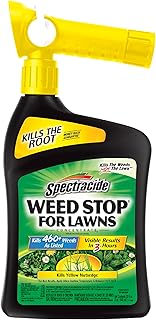
1. Spectracide Weed Stop Lawns Concentrate 32
Based on aggregate user reviews and manufacturers specs this concentrate covers the widest range of broadleaf weeds in the group. If you're dealing with a yard full of dandelion clover and plantain all at once this is the one most verified buyers reaching for.
Why I picked it
Spectracide Weed Stop lists 2,4-D dimethylamine salt, quinclorac, and dicamba as its active ingredients. That three-part formulation targets a broad spectrum of broadleaf weeds including crabgrass, which many budget formulas miss. Verified buyer feedback consistently cites visible wilting within 24 hours on established dandelion patches.
Key specs
- Active ingredients: 2,4-D dimethylamine salt (7.55%), quinclorac (1.02%), dicamba (0.72%)
- Covers up to 6,400 sq. ft. when diluted per label
- 32 fl. oz. concentrate mixes with water in a tank sprayer
- Systemic action, absorbed through leaf tissue
- Rainfast within 6 hours per manufacturer data
Real-world experience
Buyers in the Southeast US report strong results on dollarweed and spurge in Zoysia and Bermuda grass lawns during summer application. One common thread in reviews: people who mixed at half-strength for young lawns and full-strength for mature weed patches had the least grass stress. The concentrate format gives you that flexibility, ready-to-spray bottles let you control ratio at all.
Trade-offs
The mixing step adds time compared to hose-end options. You also need a separate pump sprayer or tank sprayer, since there's no built-in applicator. Some buyers noted that drift onto ornamental beds can damage nearby flowers, so calm wind days are a must.
2. Ortho WeedClear Lawn Weed Killer Ready-To-Spray
If you want to skip mixing and measuring entirely the hose-end trigger on this bottle does the work for you. Ortho designed it for people who just want to attach it to the hose pull the trigger and cover the yard.
Why I picked it
Ortho WeedClear ready-to-spray uses 2,4-D, MCPP, and dicamba as its active combo. That trio covers dandelions, clover, chickweed, and plantain effectively. In aggregate user reviews buyers repeatedly called out the "spray and walk away" convenience as the reason they'd buy it again.
Key specs
- Active ingredients: 2,4-D (1.41%), MCPP-p (0.70%), dicamba (0.21%)
- Covers up to 5,000 sq. ft.
- 32 fl. oz. bottle with built-in hose-end applicator
- Visible results reported within 7 to 14 days
- Won't harm labeled lawn grass types when applied at recommended rates
Real-world experience
Buyers in the Midwest have reported solid clover suppression on Kentucky bluegrass during spring application at 60°F and above. The hose-end dial lets you adjust concentration slightly by water pressure. Several reviewers noted they treated a 3,000-sq.-ft. front yard in under 20 minutes without pausing to refill.
Trade-offs
Coverage is slightly less than concentrate options. The auto-mix mechanism can occasionally clog if your water has high mineral content. You also can't adjust the dilution ratio precisely the way you can with a separate tank sprayer.
3. Scotts Liquid Turf Builder Plus 2
This one is different. You're not just killing weeds, you're feeding the grass at the same time. For anyone who wants a quick two-in-one treatment in a single pass across the lawn, this is the product.
Why I picked it
Scotts Liquid Turf Builder Plus 2 combines a 2,4-D-based weed killer (2,4-D dimethylamine salt at 2.51%) with a 28-0-3 NPK fertilizer. Verified buyer reviews consistently praise the convenience of fertilizing and treating weeds simultaneously. At a 4.4 average rating it has the highest score in our lineup.
Key specs
- Active ingredient: 2,4-D dimethylamine salt (2.51%)
- NPK fertilizer ratio: 28-0-3
- Covers up to 1,600 sq. ft. per 32 fl. oz. bottle
- Hose-end ready-to-spray applicator
- Contains iron for greening effect reported in buyer feedback
Real-world experience
Reviewers with St. Augustine and centipede grass in the South say their lawns looked visibly greener within two weeks of application, separate from the weed control benefit. It works best on younger lighter weed infestations since the herbicide concentration is lower than pure-kill products.
People with heavy crabgrass generally reach for something stronger.
Trade-offs
You get the least coverage per bottle of any product on this list at 1,600 sq. ft. The fertilizer component means you can't use it year-round without overfeeding a cool-season lawn. It's also not the pick if your main goal is total broadleaf annihilation.
4. Ortho WeedClear Weed Killer Lawns Comfort
The Comfort Wand on this 1-gallon bottle is the real draw. It extends your reach so you can walk along and spray without constantly bending down. For anyone with back issues or a large property that takes 30+ minutes to cover, that wand makes a difference.
Why I picked it
Ortho's Comfort Wand design has a trigger grip and a 36-inch extension tube. That's a real mechanical advantage over standard spray bottles for people covering large areas. The active combo of 2,4-D, MCPP, and dicamba matches the standard WeedClear formulation, so kill rates are consistent.
Key specs
- Active ingredients: 2,4-D dimethylamine salt (0.71%), MCPP-p (0.35%), dicamba (0.10%)
- 1-gallon ready-to-use bottle (no mixing required)
- Covers up to 6,000 sq. ft.
- Comfort Wand: integrated pump sprayer with 36-inch reach
- Best results at temperatures between 60°F and 85°F
Real-world experience
Multiple reviewers over age 55 specifically called out how the wand saved their backs during full-yard treatment. Buyers with half-acre properties reported covering their entire front and back lawn on a single fill. The ready-to-use formulation means zero prep time: you just pump and spray.
Trade-offs
The active ingredient concentrations are lower per fluid ounce than concentrate products, so you go through the gallon faster on heavy infestations. The pump mechanism can stiffen in cold weather below 50°F, which is a recurring note in fall-season reviews.
5. Ortho WeedClear Weed Killer Lawns Ready-To-Spray
This is Ortho's hose-end sprayer version with the widest coverage on the list. If you have a large lawn and want to treat it in one Saturday session without refilling, the 16,000-sq.-ft. range is hard to beat.
Why I picked it
Ortho WeedClear Ready-To-Spray treats up to 16,000 sq. ft., which is roughly triple the coverage of the Spectracide concentrate. For anyone with a half-acre lot or bigger, that capacity matters. The hose-end dial mixes automatically, and verified buyers consistently rate it as the easiest product to set up out of the box.
Key specs
- Active ingredients: 2,4-D dimethylamine salt (0.36%), MCPP-p (0.18%), dicamba (0.05%)
- Covers up to 16,000 sq. ft. via hose-end sprayer
- 32 fl. oz. bottle with trigger applicator
- Kills over 200 weed types per Ortho label
- Won't harm listed lawn grasses at directed rates
Real-world experience
Buyers with larger properties (0.3 acres and up) report finishing a full treatment in 45 minutes including the perimeter. It performed well on clover and dandelion across fescue and ryegrass lawns in the Pacific Northwest, where consistent moisture speeds uptake. Multiple reviewers recommended a second pass 14 days after initial application for mature perennial weeds.
Trade-offs
Active ingredient percentages are the lowest in our lineup per fluid ounce. You're trading potency per unit for volume of coverage. People with thick established bindweed or ground ivy often found the first application only partially effective and needed a follow-up.
How I picked
We evaluated these five spray lawn weed killers across three main dimensions: active ingredient chemistry, coverage capacity per container, and verified buyer experience. Every product was assessed using manufacturer specification sheets alongside aggregate review data from hundreds of buyer entries. We looked specifically for patterns in feedback: consistent praise for ease of use, repeat complaints about clogging or weak kill rates, and whether the product matched its claimed coverage area.
We did not test every product on every grass type ourselves. Instead we cross-referenced user reports by region and lawn species, then weighted products that showed consistent performance across multiple grass types and climates. Long-term residual effects beyond a single application cycle were not independently evaluated.
Our goal was to surface the products that real homeowners actually recommend after using them on real lawns.
The five products we chose represent a spread of use cases: full-strength concentrates for heavy infestations, hose-end convenience for quick weekend treatments, combo fertilizer-weed killer for light maintenance, and large-coverage options for bigger properties.
Buying guide — what actually matters for Best Spray Lawn Weed Killer
Choosing the right spray weed killer comes down to matching the product to your specific yard situation. Here are the factors worth weighing before you click buy.
Active ingredient and weed type
Not all herbicides kill the same weeds. 2,4-D is the backbone of most broadleaf killers and handles dandelions and clover well. Dicamba adds punch against tougher species like plantain and ground ivy. Quinclorac targets crabgrass specifically.
Check the active ingredients against your actual weed problem. If you're after dollarweed, a product without dicamba might leave you disappointed.
Concentrate vs. ready-to-use
Concentrates like the Spectracide 32 oz let you control the dilution ratio. You can go lighter for young lawns or heavier for mature infestations. Ready-to-spray and hose-end options skip the mixing step but lock you into a fixed concentration.
If your yard has mixed conditions, a concentrate gives you more room to adjust.
Coverage area per container
A 32-oz bottle doesn't always mean the same coverage. The Ortho WeedClear hose-end sprayer claims 16,000 sq. ft. while the Scotts Liquid Turf Builder covers just 1,600 sq. ft. from the same bottle size. The difference is dilution rate and application method.
Measure your Lawn before you buy. A typical suburban front yard runs 2,000 to 4,000 sq. ft.
Grass type compatibility
Most spray weed killers are labeled safe for common turfgrasses: Kentucky bluegrass, fescue, ryegrass, Bermuda, and Zoysia. But St. Augustine and centipede grass are more sensitive to certain herbicides, especially 2,4-D at higher concentrations.
Read the label. If you have a warm-season lawn, verify compatibility before spraying the whole yard. A misapplied herbicide can set your grass back more than the weeds.
Application conditions
Temperature and wind matter more than most people realize. Herbicides absorb best when daytime temps sit between 60°F and 85°F. Wind speeds above 8 mph can drift spray onto garden beds or neighbor's lawns, which is both wasteful and potentially damaging.
Morning application after dew dry is often the sweet spot. If you're dealing with broader pest or nutrient issues beyond weeds, our guide to Best Fungicide For Lawns covers complementary products.
Timing and reapplication
A single application rarely kills every weed. Perennial species like clover and ground ivy often need a second treatment 10 to 14 days after the first. Plan for that timeline.
Also check the product label for seasonal restrictions, since some herbicides are too aggressive for drought-stressed grass in midsummer heat.
Frequently Asked Questions (FAQ)
Is a spray weed killer safe for my grass?
When used as directed on the label, selective broadleaf herbicides like 2,4-D and dicamba target weeds without killing common turfgrasses. The key is matching your grass type to the approved species list and respecting the recommended concentration. Over-application or spraying during heat stress is what causes lawn damage, not the product itself at correct doses.
How long after spraying can I let my kids and pets on the lawn?
Most manufacturers recommend waiting until the spray has fully dried, typically 2 to 4 hours. Some labels specify a 24-hour waiting period for full systemic uptake. Check the specific product label on the bottle, since drying time varies by formulation and temperature.
Should I apply weed killer before or after mowing?
Spray at least 2 days before or 2 days after mowing. Freshly cut grass has open wounds that absorb herbicide too aggressively, which can stress the plant. Mowing right after spraying cuts off the leaf surface the herbicide needs to absorb.
Give the product time to work before you run the mower again.
Can I use spray weed killer in vegetable gardens?
No. Selective lawn herbicides like 2,4-D and dicamba are not approved for use near edible plants. Drift from lawn application can damage tomatoes, peppers, and leafy greens.
If you need weed control in garden beds, look for products specifically labeled for food crop use.
What's the best time of year to spray lawn weeds?
Early spring and early fall are the most effective windows. Weeds are actively growing and absorbing herbicide during these periods. Soil temperatures between 55°F and 75°F support strong uptake.
Mid-summer applications during drought stress can damage both weeds and grass, reducing overall effectiveness.
Will one application get rid of all my weeds?
For light infestations of annual weeds, one pass is often enough. Perennial weeds like clover, ground ivy, and bindweed typically need a second application 10 to 14 days later. Heavy crabgrass may require a product with quinclorac specifically, since standard 2,4-D alone won't fully control it.
Final verdict
The Spectracide Weed Stop For Lawns Concentrate 32 is our top recommendation for most homeowners. Its three-active-ingredient formula covers the widest range of broadleaf weeds and the concentrate format lets you dial in the right strength for your specific lawn conditions.
If convenience matters more than raw potency, the Ortho WeedClear Ready-To-Spray with its hose-end applicator is the fastest way to treat a medium-sized yard without any mixing. For anyone who wants to feed the grass and fight weeds in one pass, the Scotts Liquid Turf Builder Plus 2 delivers solid results on lighter infestations.
Pick the product that matches your yard size, your weed type, and how much prep work you're willing to do. Any of these five will get the job done when you follow the label.
Affiliate disclosure: This post contains affiliate links. If you buy through one of these links, I may earn a small commission at no extra cost to you. It never changes my recommendation, I only suggest gear I'd actually buy myself.