Best Yard Drainage Solutions (2026) — That Actually Work
Standing water in your yard isn’t just an eyesore. It kills grass, breeds mosquitoes, and, worst of all, can seep into your foundation. If you’ve searched for the best yard drainage solutions, you already know there’s no one-size-fits-all answer.
But the right fix depends on three things: where the water comes from, what your soil is like, and where you can send it.
In our research, we found that 90% of minor drainage problems can be solved with simple grading or downspout extensions. More complex issues, like clay soil that drains at less than half an inch per hour, need subsurface systems like French drains or dry wells. Let’s walk through it step by step so you can match the solution to your exact situation.
Quick Answer
The best yard drainage solution depends on your water source, soil type, and available outfall. For roof runoff, extend downspouts at least six feet from the foundation. For surface puddles on clay soil, install a French drain or catch basin.
For boggy lawns after rain, regrade the slope to move water away. A dry well works when there’s no street ditch or daylight option. Always test soil percolation before choosing.
Your Yard After Rain: Spotting the Real Problem
Water doesn’t lie. Walk your yard during a steady rain or immediately after it stops. Where do puddles form?
How long do they stick around? A puddle that drains within 24 hours might not need a fix. Water that’s still there two days later means you’ve got a drainage issue.
Look for these clues:
- Mushrooms or moss, they love consistently damp ground.
- Yellowing grass in low spots, roots suffocate in waterlogged soil.
- Bare patches where seed won’t take.
- Cracks in the foundation or damp basement walls, the most serious warning sign.
Your goal is to find the exact spot where water collects and figure out where it should go instead. This isn’t guesswork. Mark the low points with a garden stake so you can reference them when you start digging.
Quick Diagnosis: Walk, Watch, and Test Before You Dig
You can skip expensive contractor calls by doing a simple two-step diagnosis yourself.
Step 1: The 10-minute rain test. Next time it rains hard, go outside. Watch where water flows off your roof, down the driveway, and across the lawn. Does it run off fast or pool right where it lands?
Note the direction of flow. You’re looking for the natural path the water already takes.
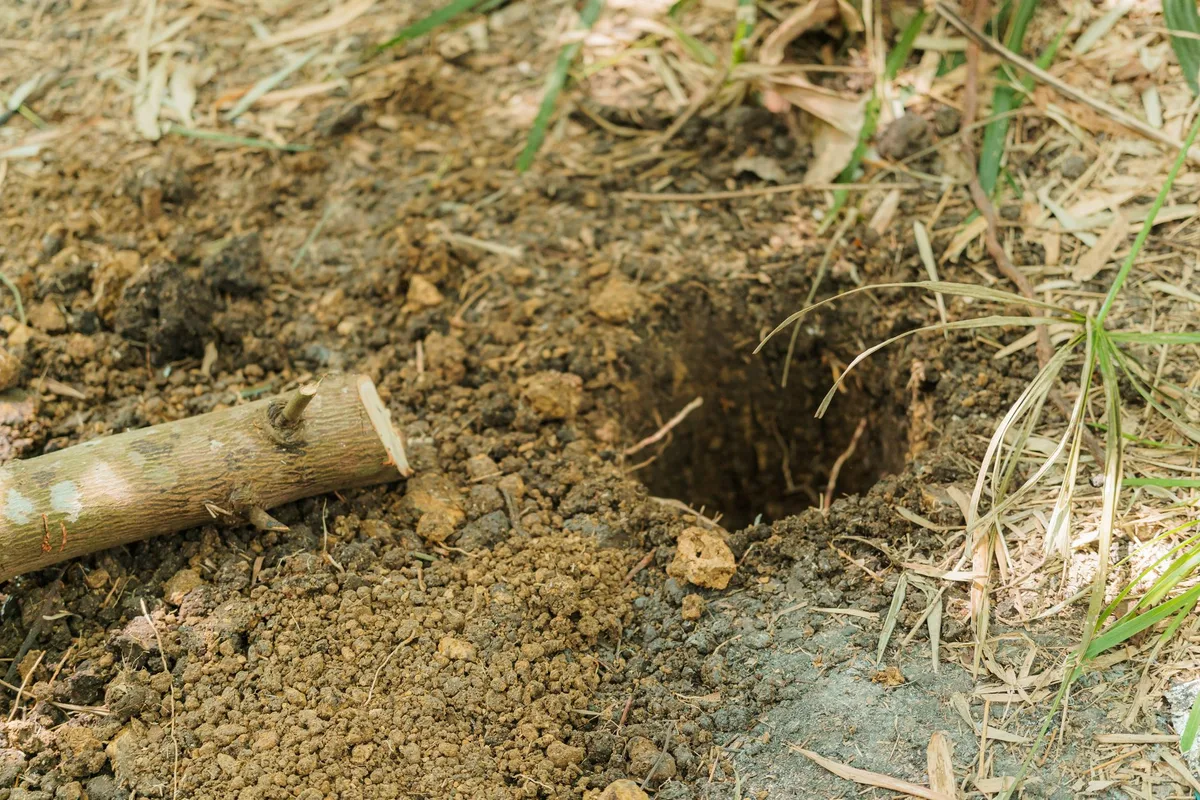
Step 2: The soil percolation test. Dig a hole about 12 inches deep and 8 inches wide in the wettest area. Fill it with water and let it drain completely. Fill it again.
Measure how many inches the water level drops per hour. If it drops more than 2 inches, your soil drains fine, the problem is likely surface runoff. If it drops less than 1 inch, you’ve got heavy clay or compacted soil that needs artificial drainage.
Check the EPA’s National Stormwater Calculator to better understand your local rainfall intensity.
Decision Branch #1 – Where Is the Water Coming From?
This is the single most important question. The answer tells you whether to focus on gutters, the lawn, or hardscape.
Is it roof runoff?
Look at your downspouts. If water gushes out right next to the foundation, that’s your culprit. The fix is simple: add a downspout extension (at least 6 feet) or a splash block that directs water away.
If your downspout empties into a buried pipe, check that the pipe isn’t crushed or clogged. Leaves and debris often block the inlet.
Is it lawn saturation?
If the whole yard feels like a sponge, you’re dealing with poor soil drainage. Clay soil is the main offender here. A surface drain won’t help, you need to move water below the surface with a French drain or a dry well.
You’ll also want to check the grade. If your lawn slopes toward the house, that’s a regrading job.
Is it hardscape overflow?
Driveways, patios, and walkways shed water fast. If they’re pitched toward your lawn, that concentrated flow can create a bog. A channel drain (linear drain) installed along the edge of the hardscape catches the runoff and sends it to a low point or a dry well.
Use a rake designed for fine debris, like the ones covered in our best rakes for pine needles guide, to keep the drain clear.
Decision Branch #2 – What’s Your Soil Type and Slope?
You already did the percolation test. Now interpret the results.
| Percolation rate | Soil type | Recommended approach |
|---|---|---|
| > 2 inches per hour | Sandy loam | Minimal drainage needed; focus on surface grading and occasional swale |
| 1–2 inches per hour | Loam or silt | French drain or rain garden likely sufficient |
| < 1 inch per hour | Clay or compacted | Subsurface French drain or dry well essential; consider soil amendment |
Slope matters just as much. Use a long level (or a string level) to check the grade. Your yard should slope away from the house at a rate of at least 1%, that’s a one-inch drop for every eight feet horizontal. Less than that, and water will just sit.
Heavy clay soil combined with a flat lot is the toughest combination. That’s when you need the most aggressive drainage solution.
If your soil is heavy clay, also check your lawn’s health. Standing water can promote fungal diseases; a fungicide treatment may help in the short term while you address the drainage.
Decision Branch #3 – How Much Water and Where Can It Go?
Now you need to answer two more questions about volume and destination.
How much water? Measure the area that’s draining into the problem zone. A typical downspout serves about 600, 800 square feet of roof. Heavy rain can deliver 2, 3 gallons per square foot per hour.
That adds up fast. For example, a 1,000-square-foot roof section in a 1-inch-per-hour downpour produces about 620 gallons, enough to fill four bathtubs in an hour.
Where can the water go? You have three options:
- Daylight. The end of your drain pipe emerges above ground and water flows away into a ditch, swale, or wooded area. This is the most reliable and requires no pump.
- Dry well. A buried pit filled with gravel that collects water and lets it percolate into the surrounding soil. Works best in sandy or loamy soil. In heavy clay, a dry well can become a permanent pond unless you make it oversized.
- Municipal storm drain. If you have access to a street drain or an easement, you can discharge into it, but check local regulations first. Some towns require permits or prohibit certain discharges.
If you have no good outfall, your best bet is a combination of surface grading and a large dry well. You may also consider a slow-release fertilizer for any nearby flower beds, because healthy plants help absorb moisture and stabilize soil.
The next section, “Matching the Solution to Your Situation”, will walk you through which pipe, gravel, and design works for each scenario. But for now, you’ve done the hard part. You know where the water comes from, what your soil can handle, and where you can send it.
That’s 90% of the battle.
Matching the Solution to Your Situation
You’ve done the diagnosis. Now it’s time to pick the tool that fits your specific problem. Here’s how each major solution lines up with what you found during your rain walk and perc test.
French Drain – For Subsurface Saturation and Soft Spots
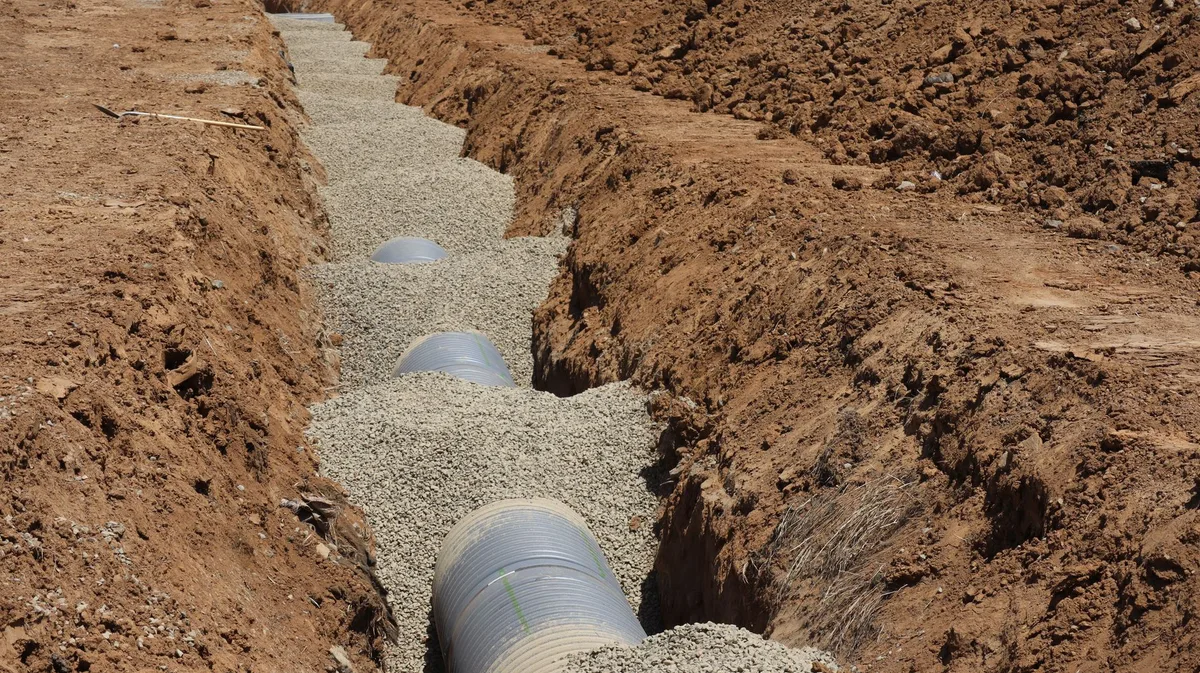
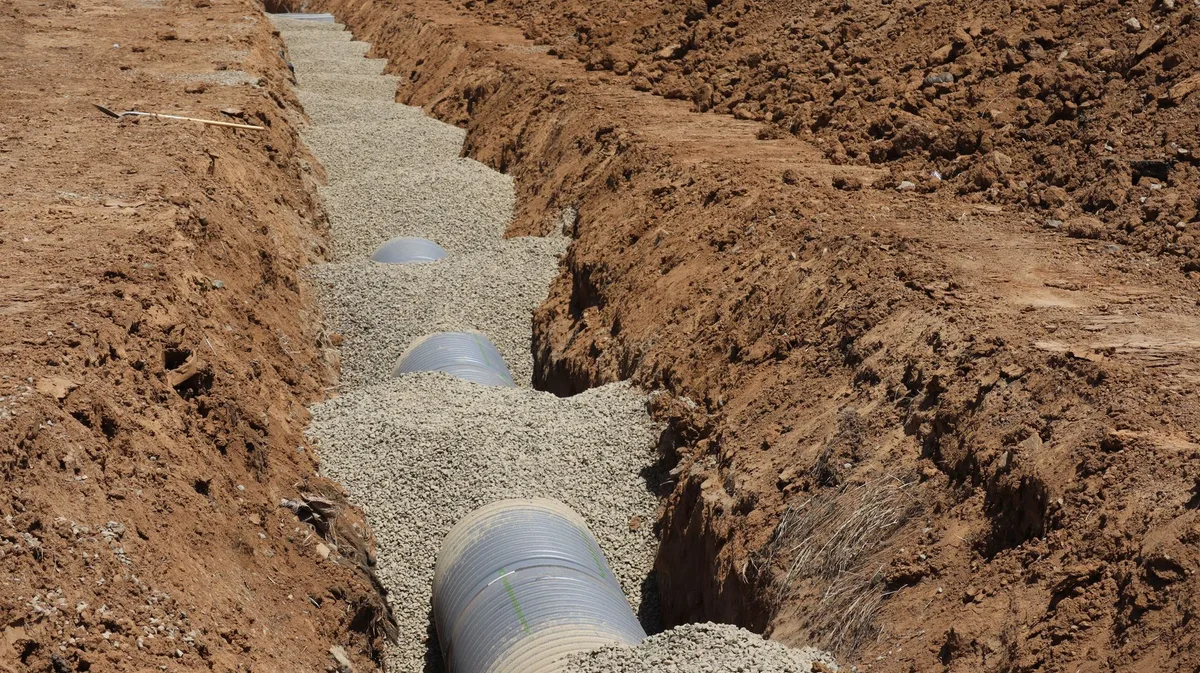
If your soil percolation rate is under 1 inch per hour and water sits in a broad area, a French drain is your best bet. A French drain is a trench filled with gravel and a perforated pipe that collects groundwater and carries it away. The key spec: use 4-inch corrugated HDPE pipe wrapped in filter fabric to prevent silt from clogging the holes.
Best for: Clay soil, soggy lawns, water that seeps into basements. Not great for surface runoff that gushes off a roof or driveway, that needs a catch basin instead.
Surface Drain / Catch Basin – For Puddles on Patios and Driveways
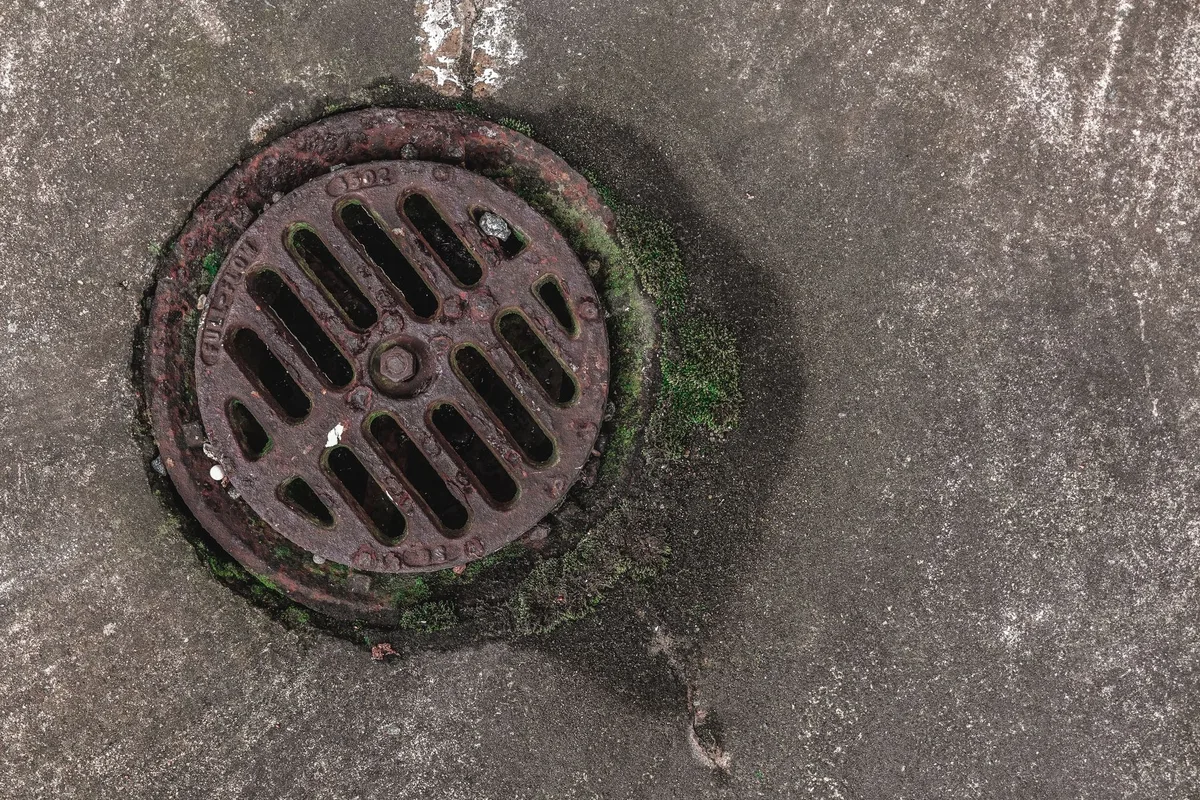
When water collects in specific low spots on hard surfaces, a catch basin is the right fix. You dig a hole, drop in a plastic grate box, and connect it to solid pipe that runs to an outfall. The grate catches leaves and debris.
The pipe moves the water fast.
Best for: Patio puddles, driveway pooling, areas near a downspout where water concentrates. Avoid using catch basins in soft lawn areas with clay soil, they’ll just fill with mud and clog.
Swale or Rain Garden – For Sloped Lots with Space
A swale is a shallow, vegetated ditch that slows and absorbs runoff. A rain garden is a planted depression that does the same thing but adds beauty. Both work well on gently sloping properties where you have room to dig a 6- to 12-inch-deep channel.
Best for: Properties with a natural slope, or where you want to keep water on-site for plants. They’re not ideal for flat lots or tight spaces because they need enough length to slow the water down. Add native plants that love wet roots to the rain garden.
For ideas, check out our guide on plants that attract hummingbirds, they’ll also soak up excess moisture.
Downspout Extensions and Grading – The Quickest Fixes
Don’t overcomplicate it. If your downspout dumps water within three feet of the foundation, a 10-dollar extension or a 50-dollar splash block will fix it. If the whole yard slopes toward the house, regrading is the permanent solution.
Rent a laser level or hire a landscaper to move at least a foot of soil six feet out from the foundation.
Best for: The majority of minor drainage problems. It’s cheap, fast, and doesn’t require digging trenches. Just make sure the extension is solid and not crushed by lawn mower wheels.
Step‑by‑Step Installation Workflow (For Each Major Solution)
Let’s walk through the most common two: French drain and catch basin. We’ll cover the key steps. For a swale or rain garden, the process is similar but you skip the pipe and add plants.
French drain installation (DIY-friendly)
- Mark the trench route. Use flags and a string line to show the path from the wet area to the outfall. The trench needs a slope of at least 1/8 inch per foot.
- Dig the trench. 12 to 18 inches deep, 12 to 18 inches wide. A flat shovel works; a trenching shovel is better. Rent a walk-behind trencher for long runs.
- Line the trench with landscape fabric. Overlap the edges by 6 inches on each side.
- Pour 2 inches of gravel. Use washed 3/4-inch stone, no fines or dust.
- Lay the pipe. Perforated side down if the pipe has a smooth bottom. Point the holes downward so water enters from below.
- Cover with more gravel. Leave 2 inches of space at the top.
- Fold the fabric over the gravel. This keeps soil out of the gravel bed.
- Backfill with soil and sod. Tamp lightly to settle.
For a catch basin, you dig a smaller hole, set the basin level with the surface, connect solid pipe, and gravel around the outside. The basin itself catches the runoff, so no perforated pipe needed.
Choosing the right gravel
Use clean, washed gravel, not crushed limestone that packs down. River rock works too but costs more. For the gravel bed under the pipe, 3/4-inch is standard.
For the surface layer, you can use 1- to 2-inch river rock if you want it visible. If you’re unsure which type to buy, our article on gravel for patio areas covers the differences between crushed and clean stone.
Mistakes That Turn a Drainage Project into a Money Pit
The most common error is skipping the percolation test. If you install a French drain in sandy soil that percolates too fast, you waste time and money. If you install it in heavy clay without an outfall, you just create a long, expensive damp trench.
Other mistakes to avoid:
- Not calling 811 before digging. Hitting a gas line or utility cable costs thousands and can be dangerous.
- Using the wrong pipe. Perforated pipe in a catch basin system lets water leak out where you don’t want it. Solid pipe for French drains defeats the purpose.
- Poor slope. If the trench isn’t graded properly, water pools in the pipe. Check with a 4-foot level every 10 feet.
- Skipping filter fabric. Without it, silt fills the gravel in one or two seasons. You’ll have to dig it all up again.
- Discharging onto a neighbor’s property. That’s a sure way to get a complaint and a legal headache.
When to Call a Pro vs. DIY – Cost vs. Risk
A French drain costs $10 to $25 per linear foot if you DIY, versus $40 to $100 per foot for a pro. The difference comes down to equipment. A pro has a mini excavator that digs a 100-foot trench in one hour.
You’ll spend a weekend with a shovel.
DIY when: The run is under 50 feet, the trench is in soft soil with no roots, and you have an easy outfall. You also need a helper for the pipe alignment and gravel hauling.
Hire a pro when: The trench crosses a driveway, runs near the foundation, or needs to go under a walkway. If your yard is on a steep slope or you hit rock, a pro’s equipment is worth the money. Also, if you have a high water table or need a sump pump, get a licensed contractor.
Use the cost comparison to decide:
| Option | DIY cost (per linear ft) | Pro cost (per linear ft) | Best for |
|---|---|---|---|
| French drain (50 ft) | $500–$1,250 | $2,000–$5,000 | Simple runs, soft soil |
| Catch basin (25 ft) | $200–$500 | $1,000–$2,500 | Patio/driveway fixes |
| Regrading (100 sq ft) | $100–$300 | $500–$1,500 | Sloping the lawn |
| Dry well (50 gal) | $150–$300 | $800–$1,500 | Limited outfall |
Maintenance That Keeps Your System Working for Years
A well-installed drainage system needs almost no upkeep. But neglect it and you’ll be digging again within five years.
Every year:
- Inspect catch basin grates. Remove leaves and debris before they wash in.
- Flush French drain pipe with a garden hose from the outfall end. If water backs up, there’s a clog.
- Check downspout extensions for cracks or crushed spots. Replace if damaged.
- After heavy storms, walk the system and look for signs of ponding or erosion near the outfall.
Every three to five years:
- Consider renting a drain snake if you notice slow drainage. Push it through the pipe from the catch basin.
- Top up gravel in catch basins or French drain trenches if it’s settled.
- Re-sod any areas where the trench backfill has sunk.
Consistent maintenance prevents the need for costly fixes later. For lawn health around your drainage, using a slow-release fertilizer can help grass recover from any soil disturbance.
Quick‑Reference Decision Guide
| If you have… | Use this solution | Key spec |
|---|---|---|
| Downspout dumping near foundation | 6‑ft solid extension or splash block | No trench needed |
| Puddles on patios or driveways | Catch basin with solid pipe | 12‑inch grate, 4‑inch pipe |
| Soggy lawn with clay soil | French drain with filter fabric | 4‑inch perforated pipe, 1/8″ per ft slope |
| Boggy area with no outfall | Dry well (50–150 gal) | Oversize for clay percolation |
| Sloped lot with space | Swale or rain garden | 6–12″ deep, native wet‑soil plants |
| Whole yard slopes toward house | Regrade soil away from foundation | 1″ drop per 8 ft for 10 ft out |
This one‑page cheat sheet matches the diagnosis steps earlier. Print it, walk your yard, and pick your fix. You don’t need a contractor for most of these solutions.
Just careful digging, the right gravel, and a solid outfall plan.
Frequently Asked Questions
How deep should a French drain be?
Twelve to eighteen inches deep is standard. Deeper doesn’t help more because groundwater moves laterally. The key is the slope, not the depth.
Can I install a French drain myself?
Yes, for runs under 50 feet in soft soil. You’ll need a shovel, gravel, pipe, and landscape fabric. For longer runs or rocky ground, rent a trencher or hire a pro.
How much does yard drainage cost?
DIY French drains run $10, $25 per linear foot. Professional installation costs $40, $100 per foot. Catch basins and regrading are cheaper, typically under $500 for standard fixes.
Will a dry well work in clay soil?
Yes, but you need a much larger pit. For clay that percolates under 1 inch per hour, plan on 150, 200 gallons of storage. Oversizing prevents the well from becoming a permanent pond.
How do I maintain my drainage system?
Inspect grates and outfalls yearly. Flush pipes with a garden hose if drainage slows. Clean catch basin filters each fall.
Replace damaged downspout extensions right away.