Guide to Complete Beginner’s Lawn Care Guide: Easy Methods
Your lawn looks like a battlefield. Bare patches, crabgrass colonies, maybe a sprinkler head that's been unevenly watering the same spot for weeks. You've tried random things.
Maybe they worked for a neighbor but not for you. That's because this Complete Beginner's Lawn Care Guide starts with your specific situation, not generic advice.
Your climate zone determines everything. The USDA Plant Hardiness Zone Map divides North America into zones based on average minimum winter temperature. Grass types evolved to survive specific zones.
Plant a warm-season grass like Bermuda in zone 4 and it will die over winter. Plant a cool-season grass like Kentucky bluegrass in zone 9 and it will burn out in summer. That one choice multiplies your chances of success.
Quick Answer
Test your soil pH first. Pick grass seed that matches your zone and sun exposure. Water deeply once per week.
Mow tall for your grass type. Fertilize in fall for cool-season or late spring for warm-season lawns. That single routine changes everything.
Your Lawn Is a Mess. Here's What to Do About It.
The first step isn't running out to buy a mower. It's diagnosing why your lawn looks the way it does. Most beginner lawns fail for one of three reasons: wrong grass type, compacted soil, or inconsistent watering.
Fix the cause, not the symptom.
Common Problems and First Steps
| Symptom | Likely Cause | First Action |
|---|---|---|
| Bare brown patches | Compacted soil or grubs | Core aeration or grub inspection |
| Thick crabgrass patches | Poor turf density | Overseed next fall, apply pre-emergent in spring |
| Yellow spots | Dog urine or fertilizer burn | Water the area deeply to flush it out |
| Moss or algae | Too much shade, low pH | Trim trees, apply lime to raise pH |
| Thin, weak grass that dies quickly | Wrong grass type | Switch to a species suited to your zone |
If you're dealing with compacted soil, a sharp core aerator is your friend. Don't use spike aerators, they just push dirt sideways and make compaction worse. Using the right rake can also save your back when clearing debris before aeration.
You might look at your lawn and see only weeds. But those weeds tell you something. Crabgrass thrives in hot, bare soil.
Clover appears when soil is low on nitrogen. Dandelions love compacted clay. Learn what your weeds are saying, and you'll know what to fix.
Once you know the diagnosis, the next step is understanding your core situation. That's where the six decision points come in.
The 6 Core Decision Points Every Beginner Needs to Answer First
Before you buy anything, answer these six questions. Your answers will drive every later decision.
| Decision Point | Why It Matters |
|---|---|
| 1. What is your USDA hardiness zone? | Determines cool-season vs. warm-season grass viability |
| 2. How many hours of direct sun does your yard get? | Grass needs 4+ hours minimum for most species |
| 3. What is your soil pH and texture? | pH 6.0-7.0 ideal; clay, sand, or loam affects drainage |
| 4. Are you starting from bare dirt, heavy weeds, or an existing lawn? | Determines full renovation vs. overseeding vs. repair |
| 5. How many hours per week can you realistically spend? | 30 minutes vs. 3 hours changes the approach |
| 6. What is your budget? | Seed costs less than sod; tools add up quickly |
Let's talk about zone first. The USDA hardiness zone map is the single most important resource for a beginner. If you don't know your zone, look it up.
It takes 30 seconds.
Sun exposure follows. Even shade-tolerant fescues need at least 4 hours of direct sun. If your yard gets less, you might be better off with ground cover or a shade garden.
Soil pH matters more than most beginners realize. An acidic lawn (pH below 6.0) locks up fertilizer. An alkaline lawn (pH above 7.5) locks up iron.
A simple $10 test from your county cooperative extension gives you the answer. Per manufacturer specifications for most turf fertilizers, balanced soil pH boosts fertilizer efficiency by up to 50%.
Your starting point defines your path. If you have bare dirt, you're doing a full seed or sod job. If you have a weedy mess, you might need an herbicide first.
If you have an existing lawn that's just thin, overseeding could work.
Time is the hidden constraint. A full seed-to-lawn project needs daily watering for 2-4 weeks. That's 5 minutes per zone per day, but it adds up.
If you can't commit that time, sod gives faster results with less watering upfront but costs more.
Budget changes the timeline. Seed costs pennies per square foot. Sod costs dollars.
Tools like a spreader and hose-end sprayer are worth buying. Rent a core aerator or dethatcher for one-time use.
Your Lawn's Starting Point: Bare Dirt vs. Weedy Mess vs. Acceptable Lawn
This is where you choose your lane. You're in one of three situations. Pick yours.
Bare Dirt or New Construction
You're looking at dirt or fill soil. Maybe the builders graded it and left. This is a full start-from-scratch job.
If you have bare dirt, test the soil first. Check pH and compaction. Add organic matter if it's heavy clay or pure sand.
Level the area. Fill low spots. Choose seed or sod based on budget and timeline.
Water daily until germination (seed) or root establishment (sod). This path takes the longest but gives you total control over your grass species.
Weedy Takeover
More than 50% of your lawn is weeds. You have two choices.
Kill everything and start over: Apply a non-selective herbicide like glyphosate. Wait 2 weeks. Remove dead material.
Then treat it like bare dirt.
Spot-treat and overseed: If the weeds are clumped, kill individual patches. Then overseed the whole yard in the appropriate season. This takes longer but saves the existing good grass.
The clean slate approach is faster in the long run. If your yard is more weeds than grass, start over. If you are dealing with lawn diseases alongside weeds, applying a targeted fungicide can prevent the problem from spreading while you work on the grass.
If the effort feels overwhelming, consider converting a portion into a flower bed instead. Less grass to fight, more color to enjoy.
Patchy but Alive
The lawn has decent grass coverage but thin spots, some weeds, and general tiredness.
Your path is overseeding and renovation. Aerate in the fall (cool-season) or late spring (warm-season). Spread seed over the entire lawn.
Water lightly twice a day for 2 weeks. Apply starter fertilizer at seeding. This is the lowest cost and fastest path if your existing grass is the right species for your zone.
If it's not, you're better off starting over.
The 4 Big Decision Branches: Seed vs. Sod vs. Repair vs. Renovation
You've decided your starting point. Now you need to pick your weapon. Here are the four branches.
| Factor | Seed | Sod | Patch Repair | Full Renovation |
|---|---|---|---|---|
| Cost per sq ft | $0.02-$0.10 | $0.30-$1.00 | $0.05-$0.20 | $0.10-$0.50 |
| Time to visible lawn | 2-4 weeks | Instant | 2-4 weeks | 2-4 weeks |
| Time to usable lawn | 3-12 months | 2-4 weeks | 2-3 months | 3-6 months |
| Labor | Medium | High | Low | Medium-High |
| Watering needed | Daily for 2-4 weeks | Daily for 2-3 weeks | Daily for 2 weeks | Daily for 2-4 weeks |
| Risk of failure | High (weather, birds, washout) | Low | Low-Medium | Medium |
| Best for | Large areas, low budget | Small areas, instant results | Spot fixes, thin lawns | Degraded or wrong-grass lawns |
Branch 1: Seed
Seed wins on cost. You can cover a 5,000 sq ft yard for $100-$250. The catch is patience.
You need to water daily, keep traffic off, and hope the weather cooperates. Cool-season seed does best planted in late summer or early fall. Warm-season seed needs late spring.
If you're planting seed, choose a blend. A blend of three fescue varieties resists disease better than a single variety. Buy coated seed in wet climates, the coating holds moisture around the seed.
Branch 2: Sod
Sod is instant but expensive. A 5,000 sq ft yard costs $1,500-$5,000 installed. You need good soil prep underneath or it'll die within a year.
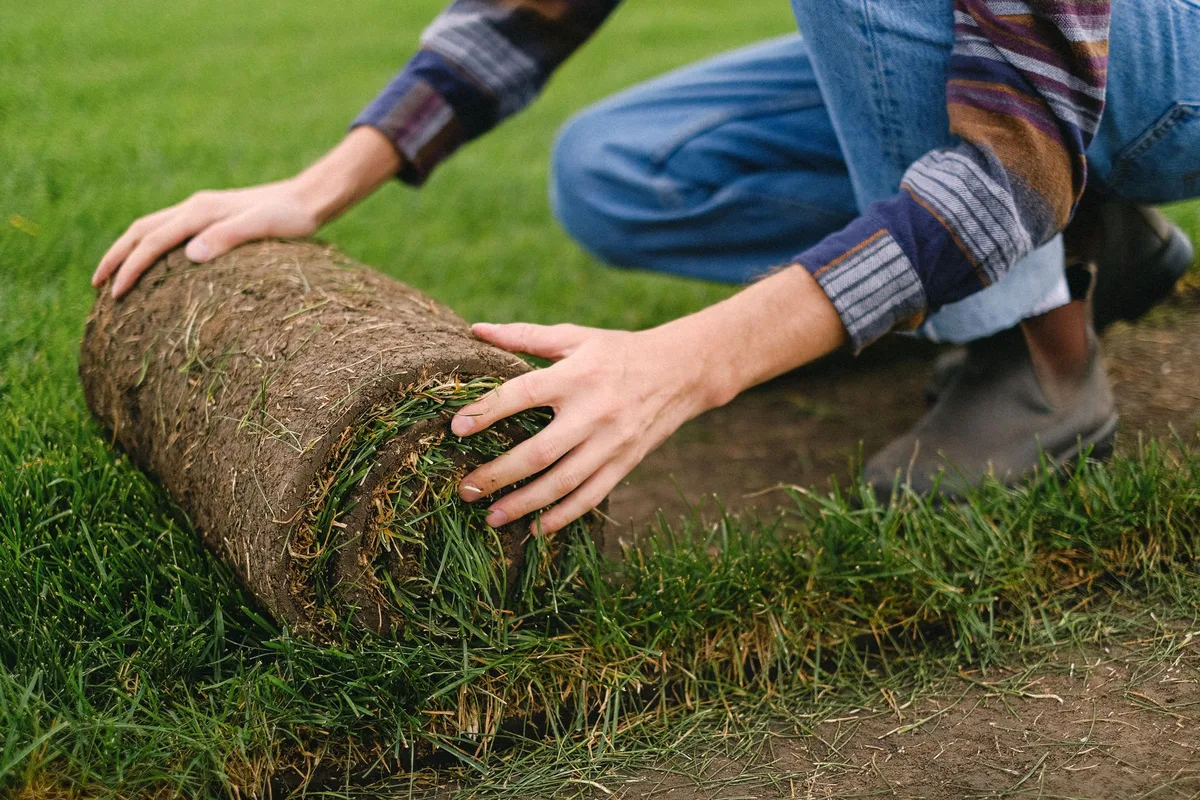
Laying sod is heavy labor. Roll it out, stagger the seams like brickwork, and keep it wet for two weeks.
Sod works best for small front lawns where curb appeal matters immediately, or for homeowners who can afford to buy time.
Branch 3: Patch Repair
For isolated dead spots from dog urine or grub damage. Buy matching seed or a small roll of sod. Loosen the soil, apply seed or lay sod, water daily.
This is easy and cheap.
Branch 4: Full Renovation
This is what you do when the whole lawn is wrong. Wrong grass type, severe compaction, or years of neglect. You'll kill everything, amend the soil, grade it, and start fresh with seed or sod.
It's the most work but the most improvement.
For full renovation, you'll need to clear the area thoroughly. Nobody enjoys dragging debris across the yard, so getting a high-quality rake makes the process less miserable.
Grass Type: The Single Most Important Decision You'll Make
If you pick the wrong grass species, nothing else matters. You'll fight the lawn forever.
Cool-Season Grasses (Zones 1-6)
These grow in spring and fall. They go dormant or stressed in summer heat. The main types:
| Grass | Traits | Best For | Mowing Height |
|---|---|---|---|
| Kentucky Bluegrass | Dense, dark green, spreads | Full sun, high traffic | 2.5-3.5 inches |
| Tall Fescue | Tough, drought tolerant, coarse | Heat, low maintenance | 3-4 inches |
| Fine Fescue | Thin blades, shade tolerant | Shady areas, low fertility | 2-3 inches |
| Perennial Ryegrass | Fast germination, fine texture | Quick cover, overseeding | 2-3 inches |
Tall fescue is the best choice for a beginner in cool-season zones. It's forgiving. It handles heat better than bluegrass and shade better than ryegrass.
Plant it in fall.
Warm-Season Grasses (Zones 7-10)
These grow in summer. They go brown in winter. The main types:
| Grass | Traits | Best For | Mowing Height |
|---|---|---|---|
| Bermuda | Aggressive, durable, high traffic | Full sun, Southern lawns | 0.5-1.5 inches |
| Zoysia | Slow growing, dense, shade tolerant | Mixed sun, low maintenance | 1-2 inches |
| St. Augustine | Coarse, shade tolerant, salt tolerant | Coastal areas, shade | 2.5-4 inches |
| Centipede | Low maintenance, acidic soil tolerant | Sandy soil, minimal upkeep | 1.5-2 inches |
Bermuda is the workhorse of the South. It spreads fast and fixes itself. But it needs full sun.
If your yard has heavy shade, choose St. Augustine or Zoysia.
The Transition Zone Trap
Zones 6-7 are a nightmare. Neither cool-season nor warm-season grasses thrive perfectly. Your options are Tall Fescue (cool-season but heat tolerant), Zoysia (warm-season but cold tolerant), or a blend.
Reducing lawn size helps. Consider trees adapted to dry climates or native shrubs to cut down the grass area you need to maintain.
How to Identify What You Already Have
Look at the blade. Fold it over. Cool-season grasses have a folded leaf.
Warm-season grasses have a rolled leaf. Check for stolons (above ground runners, warm-season) or rhizomes (underground runners, cool-season). Take a photo and compare to a turfgrass ID guide from your state extension office.
If your current grass is wrong for your zone, don't try to keep it alive. Kill it and switch. It's easier than nursing a dying lawn.