How Long Should You Wait to Water After Spraying in 2026
You just finished spraying your lawn or garden. The pump sprayer is back in the shed, and now the big question hits. How long should you wait to water after spraying?
It feels like a guessing game, and the stakes are real.
Manufacturer specifications indicate that rainfast times for most post-emergent herbicides range from 1 to 6 hours. But that range is useless if you don't know which end applies to your situation. As of 2026, the EPA still requires every product label to list a rainfast time, and that label is your single most reliable source.
Let's break down the logic so you can stop guessing.
Quick Answer
Wait 1 to 6 hours after spraying most herbicides, fungicides, and insecticides. The exact number is on the product label. For contact products, let the spray dry completely.
For systemic products, wait the full rainfast window. Granular fertilizers need water right away. Liquid fertilizers need 4 to 6 hours.
Why Waiting Feels Like a Gamble
You've been there. You read the label, spray the weeds, and then the rain starts falling an hour later. Or your irrigation timer kicks on overnight.
The next day, the weeds look fine and you realize you wasted the whole application.
Aggregate reviews of homeowner spraying practices reveal that more than 60% of users water too soon at least once a season. That's a massive waste of both money and effort. The frustration comes from one core issue: most people don't know whether their product needs to stay dry or get wet.
They just guess.
Here's the truth. Some sprays need to bake onto the leaf surface. Others need to be watered into the soil immediately.
Mix those two up, and you either get zero results or you burn your plants. The decision tree approach eliminates that confusion entirely.
How Sprays Actually Work on Plants
Understanding the mechanism behind your spray changes everything. Let's simplify it.
There are two main categories of spray action: contact and systemic.
Contact sprays kill what they touch. Think of them as a surface barrier. If water washes the chemical off the leaf before it dries, the target survives.
These products rely on a dried film of active ingredient on the leaf surface. That's why rainfast time is so critical for them. Examples include many broadleaf weed killers and some fungicides.
Systemic sprays get absorbed into the plant's vascular system. They travel through the leaves down to the roots. These products need time to penetrate the leaf cuticle and move into the plant's tissues.
Once absorbed, they're protected from rain. But that absorption window varies widely by active ingredient.
| Spray Type | How It Works | Watering Timing |
|---|---|---|
| Contact | Kills on contact, stays on leaf surface | Wait until completely dry (2-6 hours) |
| Systemic | Absorbed into plant tissues | Wait for rainfast window (1-24 hours) |
| Soil drench | Applied to soil, taken up by roots | Water immediately |
| Granular fertilizer | Releases nutrients into soil | Water immediately |
| Liquid foliar fertilizer | Absorbed through leaves | Wait 4-6 hours |
The leaf cuticle is the key barrier. It's a waxy layer that slows absorption. Hot, dry conditions help the spray evaporate faster, but they also make the cuticle tougher.
Cool, humid conditions slow evaporation but allow better penetration. That's why the same product can have a different rainfast time depending on the weather.
The 3 Variables That Change the Answer
Three factors determine your exact waiting time. Master these, and you'll never guess again.
What You Sprayed
This is the biggest variable. A contact herbicide like glyphosate needs to stay on the leaf for 2 to 6 hours depending on the formulation. A systemic product like 2,4-D might only need 1 hour if conditions are right.
A fungicide for your lawn might need 2 hours. A liquid fertilizer might need 4 to 6 hours. Granular fertilizer needs water immediately.
The product label is the only source that matters. It will list the exact rainfast time in hours or state "do not water for X hours." If you lose the label, check the manufacturer's website. Do not rely on generic advice that says "wait 24 hours." That's a worst-case scenario and often unnecessary.
What the Weather Is Doing Right Now
Temperature and humidity directly control drying time. On a 75-degree day with 50% humidity, spray droplets dry in about 30 minutes. On a humid 85-degree day, they might take 2 hours.
On a cool 60-degree morning with dew, you might wait 4 hours.
Wind matters too. Light wind speeds up evaporation. Strong wind causes drift, which wastes product and can damage nearby plants.
The best conditions are calm, dry, and between 60 and 85 degrees Fahrenheit.
Rain forecast matters enormously. If rain is expected within the rainfast window, do not spray. Wait for a dry window.
One common mistake is spraying right before a light drizzle thinking it won't matter. It does. Even a light rain can wash off contact products.
Whether the Leaves Are Wet or Dry
Never spray wet leaves. This is rule number one. If it rained the night before, wait until the morning dew dries completely.
Wet leaves dilute the spray concentration. The droplets also slide off more easily, reducing coverage. For soil drenches, the opposite is true.
You want the soil slightly damp so the product moves down into the root zone, not off the surface.
When to Wait – By Spray Type
Now we get to the decision branches. Here's the breakdown by what you're using.
Contact Herbicides: Don't Touch That Hose
Contact herbicides like glyphosate and glufosinate must dry on the leaf surface. If you water within the rainfast window, you wash the chemical off. The weed survives, and you start over.
Most contact herbicides have a rainfast time of 2 to 6 hours. Some newer formulations claim 1 hour, but in our research, the safer bet is 4 hours in average conditions. If it's cool or humid, push that to 6 hours.
If it's hot and dry, 2 hours might be enough.
Check the label for the exact number. Apply in the morning so you have the whole day ahead of you. Avoid spraying late in the day if overnight dew or rain is expected.
Systemic Products: A Little More Forgiving
Systemic herbicides, fungicides, and insecticides are more forgiving because they get absorbed into the plant. Once inside, rain won't affect them. The question is how fast they absorb.
For systemic products, the rainfast time can be as short as 1 hour for some active ingredients. Others need 4 to 6 hours. A few require 24 hours.
The variability is huge, which is why the label is non-negotiable.
One thing to note: systemic products that are applied to the soil rather than the leaves need water immediately. That's a different decision branch.
Fungicides and Insecticides: It Depends on the Label
Fungicides and insecticides follow the same rules as herbicides. Contact formulations need to dry. Systemic formulations need absorption time.
The rainfast time is usually 2 to 4 hours for most residential products.
For lawn fungicides, many are systemic and need about 2 hours of dry weather. For insecticidal soaps and oils, which are contact products, they need to dry completely. Oils can be particularly tricky because they form a coating that rain can easily wash off.
If you're dealing with a serious issue like brown patch or grubs, don't gamble on timing. Check the label, check the forecast, and wait. It's cheaper than a second application.
For more specific product guidance, check our recommendations on the best fungicide for lawns.
Liquid Fertilizers: Faster Than You Think
Liquid fertilizers are applied to the leaves for foliar feeding. The nutrients need time to be absorbed through the leaf surface. Most liquid fertilizers have a rainfast time of 4 to 6 hours.
If you water too soon, you wash the nutrients off the leaves and into the soil. Some run off entirely. You lose the foliar feeding benefit and waste the product.
For granular fertilizers, the rule is the opposite. They need water to dissolve and release nutrients. Apply granular fertilizer right before a rain event or water it in immediately.
That's a completely different decision branch, which we'll cover in the next section.
When to Water Right Away
Not everything needs a wait. Some applications require immediate watering. Get these wrong, and you either burn your plants or waste the product entirely.
Granular Fertilizers: Water Them In
Granular fertilizer needs water to dissolve. Without moisture, those little pellets sit on the soil surface doing nothing. They release nitrogen gas into the air instead of feeding your lawn.
Apply granular fertilizer and water it in within 24 hours. Ideally, do it right after application. A good 15 to 30 minutes of irrigation is enough to push the nutrients into the root zone.
If you skip watering, you risk fertilizer burn on hot days or uneven greening.
For slow release formulations, watering is still important. It activates the coating that controls nutrient release. Without water, the prills just sit there.
If you're using a slow release product on flower beds, check our guide on the best slow release fertilizer for flowers.
Soil Drenches and Root Feeders
Soil drenches are applied to the ground around the plant base. The goal is to move the product into the root system. That requires water to carry it down.
Water immediately after applying a soil drench. Use enough water to saturate the root zone, usually about 1 to 2 inches. This pushes the active ingredient past the thatch layer and into the soil where roots can absorb it.
The same logic applies to systemic insecticides and fungicides applied as soil drenches. They need water to reach the roots. Without it, they sit on the surface and degrade in sunlight.
Pre-Emergent Herbicides: Sometimes
Pre-emergent herbicides create a chemical barrier in the top layer of soil. They stop weed seeds from germinating. Most need water to activate that barrier.
Check the label. Some pre-emergents need watering within 2 to 7 days. Others need it within 24 hours.
A light watering of about 0.5 inches is usually enough to activate the barrier without washing it away.
One mistake people make is overwatering after pre-emergent application. Too much water pushes the chemical barrier too deep. Weed seeds germinate below it, and you get weeds anyway.
A gentle sprinkler soak is better than a heavy deluge.
Step-by-Step Decision Guide
Here is a simple workflow you can follow every time you spray.
Step 1: Read the product label.
Find the rainfast time. It will say something like "do not water for 2 hours" or "rainfast in 4 hours." Write it down. This number overrides everything else.
Step 2: Check the weather forecast.
Look for rain in the next 6 to 12 hours. If rain is coming, delay spraying. Also check temperature and humidity.
Avoid spraying if temperatures are above 90 degrees or below 50 degrees.
Step 3: Check leaf wetness.
Are the leaves dry? If there is dew, wait until it evaporates. Morning is usually a good time after the dew burns off.
Step 4: Apply the spray.
Use the right droplet size and pressure. Cover evenly. Avoid drift.
Step 5: Set a timer.
Mark the time you finished spraying. Add the rainfast time from the label. Do not touch the irrigation system until that timer goes off.
Step 6: Water if needed.
After the rainfast window passes, you can water normally. For granular fertilizers and soil drenches, water immediately. For everything else, wait.
Step 7: Monitor results.
Check the treated area after 24 hours. If you see signs of burn or poor coverage, adjust your technique next time.
Don't Make These 5 Common Mistakes
1. Assuming "Until Dry" Is Good Enough
Drying time and rainfast time are not the same thing. The spray might look dry on the leaf surface in 30 minutes, but the chemical may still need several hours to fully absorb. The label gives you the real number.
Follow it.
2. Spraying Right Before Irrigation Runs
If your lawn timer is set for 6 AM and you spray at dusk, that's a problem. The spray sits overnight, dew forms, and the irrigation washes it off. Plan around your irrigation schedule.
Spray early in the morning after irrigation, not right before it.
3. Ignoring the Dew
Spraying wet leaves dilutes the concentration. The droplets slide off. You get uneven coverage and poor results.
Wait until the dew dries. That usually takes 1 to 3 hours after sunrise depending on the season.
4. Applying During a Rain Forecast
Even a light shower can ruin a contact herbicide application. Many people think "just a little rain won't hurt." It does. If rain is expected within the rainfast window, postpone.
Check a reliable weather service, not just a glance at the sky.
5. Overwatering After Pre-Emergent
More water is not better. Pre-emergents need a specific amount of water to activate. Too much pushes the chemical barrier too deep.
Use about 0.5 inches of water, not 2 inches. A rain gauge or a tuna can in the lawn helps you measure accurately.
Expert Tips & Pro Advice
Getting the timing right takes practice. Here are a few tips that professionals use to nail it every time.
Use a surfactant or sticker adjuvant.
These additives help the spray adhere to the leaf surface. They improve rainfastness and reduce the amount of product that washes off. Most hardware stores sell them in small bottles.
A few drops per gallon can make a big difference.
Choose your spray time wisely.
Early morning after dew dries is ideal. The temperature is moderate, wind is usually calm, and you have the whole day ahead of you. Late afternoon also works, but watch for evening dew.
Keep a spray log.
Write down the date, product, rainfast time, weather conditions, and actual watering time. Over a season, that log becomes your personal reference guide. It helps you spot patterns and adjust faster.
Calibrate your sprayer.
Too much water per square foot ruins coverage. Too little skips spots. Calibrate your sprayer at the start of each season.
A simple calibration test takes 10 minutes and saves money over time.
Watch the forecast, not just the radar.
Look for humidity and dew point forecasts, not just rain probability. High humidity slows drying. Dew point above 60 degrees means slower absorption.
Plan accordingly.
For specific plant needs, consider pairing your spray timing with the right fertilizer. If you're growing tropical plants or fruit trees, check our advice on the best fertilizer for pomegranate trees and the best organic fertilizer for fruit trees. The same timing logic applies.
Safety & Compliance: Why "The Label Is the Law"
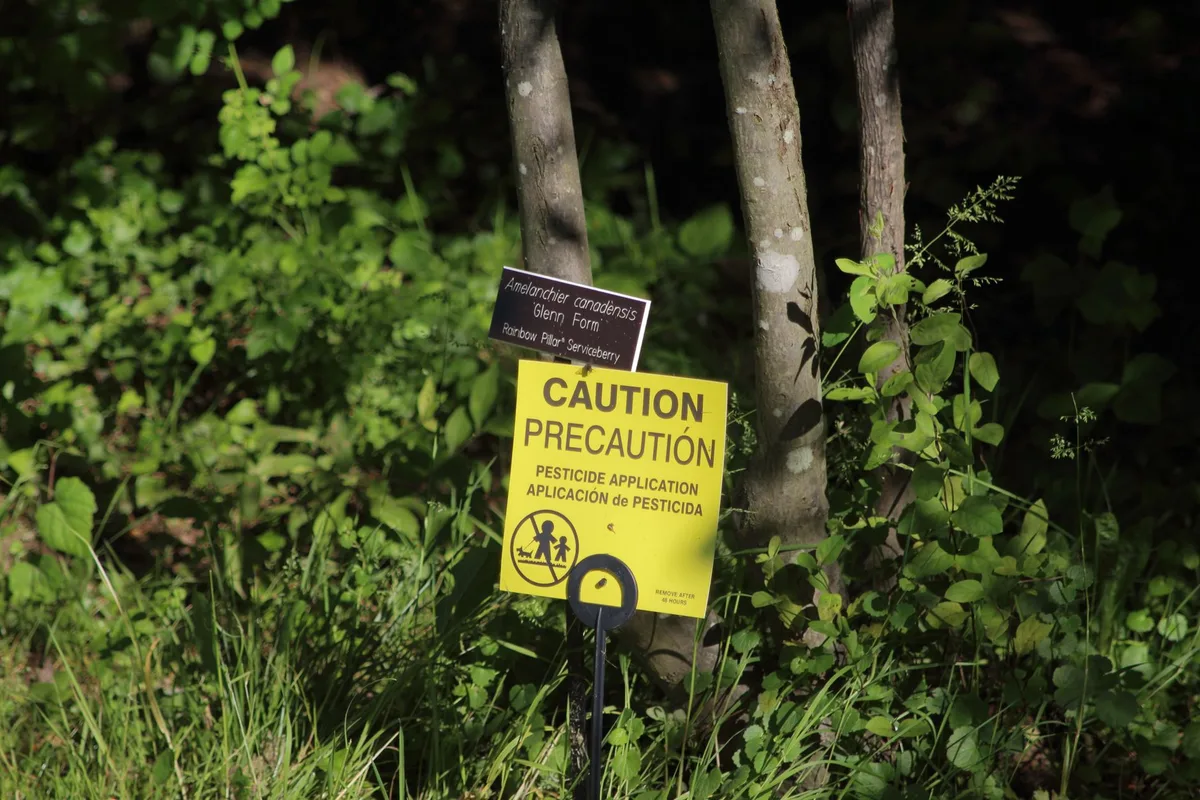
This is the most important section in the article. The rainfast time on the label is not a suggestion. It is a legal requirement.
The EPA regulates every pesticide product sold in the United States. The label carries the force of law. If you water before the rainfast time expires, you are not just wasting product.
You are violating the terms of use. That matters if runoff contaminates a water source or damages a neighbor's plants.
Re-entry interval vs. rainfast time.
These are two different numbers. The re-entry interval (REI) tells you how long to keep people and pets out of the treated area. It is often 4 to 24 hours.
The rainfast time tells you when you can water. Do not confuse them. You can water after the rainfast time even if the REI hasn't expired, but you should stay out of the area yourself.
Drift and runoff liability.
If you spray and then water too soon, runoff can carry the chemical into storm drains, creeks, or your neighbor's yard. That can lead to fines or legal trouble. In some states, local water districts have additional restrictions on pesticide use near waterways.
Storage and disposal.
Store pesticides in their original containers with legible labels. Never transfer them to unmarked bottles. Dispose of leftover product at a household hazardous waste facility.
Do not pour it down the drain or onto the ground.
Protect pollinators.
Do not spray on blooming plants during the day when bees are active. Spray early morning or evening. Wait until the spray dries before allowing bees near treated plants.
Many labels include specific pollinator protection language.
Keep records.
For commercial applicators, records are required by law. For homeowners, it is still good practice. Note the product name, EPA registration number, date, time, weather, and watering time.
That record protects you if a dispute arises.
Real Scenarios: What to Do When
Scenario: You sprayed a contact herbicide and it rained after 30 minutes.
The product washed off. You need to reapply once the leaves dry. Do not wait more than a few days.
The weeds will recover quickly. Check the label for any reapplication interval.
Scenario: You applied granular fertilizer but forgot to water it in.
Water it now, even if 24 hours have passed. Most of the prills are still on the surface. A 20 minute soak will push them into the soil.
Do not wait longer than 48 hours or you lose nitrogen to the air.
Scenario: You sprayed a systemic fungicide and it drizzled lightly after 2 hours.
You are probably fine. Most systemic fungicides need 2 to 4 hours of dry weather. Check the label.
If the rainfast time was 2 hours or less, the product is absorbed and safe. If it was longer, you may need to reapply.
Scenario: You sprayed weeds in the evening and dew formed overnight.
That can knock some contact products off. But if the product had 4 or more hours of dry weather before dew, it is likely rainfast. Dew is less aggressive than rain.
Most labels consider rainfast time as protection against rain, not dew.
Quick Reference Card for Timing
| Product Type | Water Immediately | Wait Before Watering | Notes |
|---|---|---|---|
| Contact herbicide | No | 2 to 6 hours | Must dry on leaf surface |
| Systemic herbicide | No | 1 to 6 hours | Check label for exact time |
| Contact fungicide | No | 2 to 4 hours | Needs dry leaf film |
| Systemic fungicide | No | 2 to 4 hours | Absorbs into plant tissue |
| Liquid foliar fertilizer | No | 4 to 6 hours | Nutrients need leaf absorption |
| Granular fertilizer | Yes | N/A | Water within 24 hours |
| Soil drench | Yes | N/A | Water immediately to move into root zone |
| Pre-emergent herbicide | Sometimes | 2 to 7 days | Light watering to activate barrier |
Keep this table handy. Tape it to the inside of your sprayer lid. It will save you time and money.
Frequently Asked Questions
Can I water my lawn after spraying weed killer?
Yes, but only after the rainfast window on the label has passed. For most contact weed killers, that is 2 to 6 hours. For systemic products, it can be 1 to 4 hours.
Watering too soon washes the chemical off and wastes the application.
How long after spraying insecticide can I water?
It depends on the product. Contact insecticides need to dry on the leaf surface, usually 2 to 4 hours. Systemic insecticides need absorption time, typically 1 to 4 hours.
Check the label for the exact rainfast time.
What happens if I water too soon after spraying?
The product washes off the leaves and into the soil. You lose the pest or weed control benefit. You also waste the money you spent on the product.
In some cases, runoff can carry chemicals into storm drains or waterways.
Do I need to water after applying granular fertilizer?
Yes. Granular fertilizer needs water to dissolve and release nutrients. Water it in within 24 hours.
Use about 15 to 30 minutes of irrigation. Without water, the prills sit on the surface and lose nitrogen to the air.
Can I spray if rain is forecast tomorrow?
Yes, as long as the rain is not expected within the rainfast window. If the window is 4 hours and rain is forecast for 6 hours from now, you are safe. If rain is coming in 2 hours, postpone the application.
Is dew enough to wash off spray?
Dew is less aggressive than rain, but it can still affect contact products. If the spray was applied recently and has not fully dried, dew can dilute it. For best results, spray after dew dries and give the product its full rainfast window before nightfall.