Guide to Spider Mites Vs Aphids (2026) — Everything You Need
You spot something on your plants. Leaves looking rough, curling up, or getting those tiny yellow speckles. The big question is, what’s actually causing the trouble.
Figuring out Spider Mites vs Aphids is the first step to saving your plants because these two pests look similar from a distance but need completely different treatments.
A single aphid can produce dozens of nymphs in a week. Spider mites can complete a full generation in as few as five days at 85°F. That speed means a misidentification early on can cost you an entire crop or a houseplant collection.
Our research shows that getting the identification right in the first 48 hours makes the difference between a quick fix and a month-long battle.
Quick Answer
Spider mites are tiny arachnids that spin fine webs and suck plant cells dry. Aphids are soft-bodied insects that feed on sap and excrete sticky honeydew. They attack different parts of the plant and respond to different treatments.
The white paper tap test is the fastest way to tell them apart at home.
Why Knowing Which Pest You Have Actually Matters
Treating spider mites like aphids is a waste of time. Treating aphids like spider mites can make things worse. That’s the core problem here.
These pests look similar to the untrained eye, but their biology is completely different.
Spider mites are arachnids. They have eight legs and belong to the same class as spiders and ticks. Aphids are true insects with six legs.
That difference matters because insecticides that work on insects often do nothing to mites. And miticides designed for spider mites can be overkill for aphids.
The wrong spray also kills beneficial insects. Using a broad-spectrum miticide when you only have aphids wipes out ladybugs and lacewings that would have solved the problem for free. Our research confirms that integrated pest management, or IPM, starts with correct identification.
That is the single most important rule.
There is also a timing factor. Spider mites thrive in hot, dry conditions. They become active when temperatures climb above 80°F and humidity drops below 50 percent.
Aphids prefer cooler weather in spring and fall. Knowing which season you are in helps narrow down the suspect list before you even look at the plant.
The stakes are higher indoors. A single infested houseplant can spread mites to every other plant in the room in a week. With aphids, the ants that farm them can trail across your counters and into other rooms.
Misidentifying the pest means you miss the ant interaction entirely. Check our guide on best insecticides for carpenter ants if ants are also showing up around your plants.
The Quick Difference: A 30-Second ID Test
You do not need a microscope to tell these two apart. A simple white piece of paper and a few seconds of observation will give you the answer.
Hold a clean white sheet of paper under a damaged leaf. Tap the leaf firmly several times. Whatever falls onto the paper is your clue.
If you see tiny specks moving around, you likely have spider mites. They are small enough to look like pepper flakes or dust. Watch closely.
If the specks move in a slow crawling motion, they are mites. They have eight legs and walk deliberately.
If you see larger, pear-shaped insects with legs that are clearly visible, you have aphids. They are bigger than mites. You can see their antennae and legs without magnification.
Aphids also tend to stay glued to the leaf when disturbed. Mites drop off easily.
There is a second clue. Crush one of the specks on the white paper. If it leaves a green or yellow smudge, it is an aphid.
Spider mites leave a reddish or brown stain. That is because aphids feed on the green sap. Mites feed on the cell contents and chlorophyll.
This test works on any plant. Houseplants, vegetables, ornamentals, everything. It takes thirty seconds and saves you weeks of using the wrong treatment.
For indoor plants, especially those in low light, proper identification is critical. Check our guide on best plants for a bedroom to understand which species are most vulnerable to these pests.
Spider Mites: The Tiny Web-Spinning Suckers
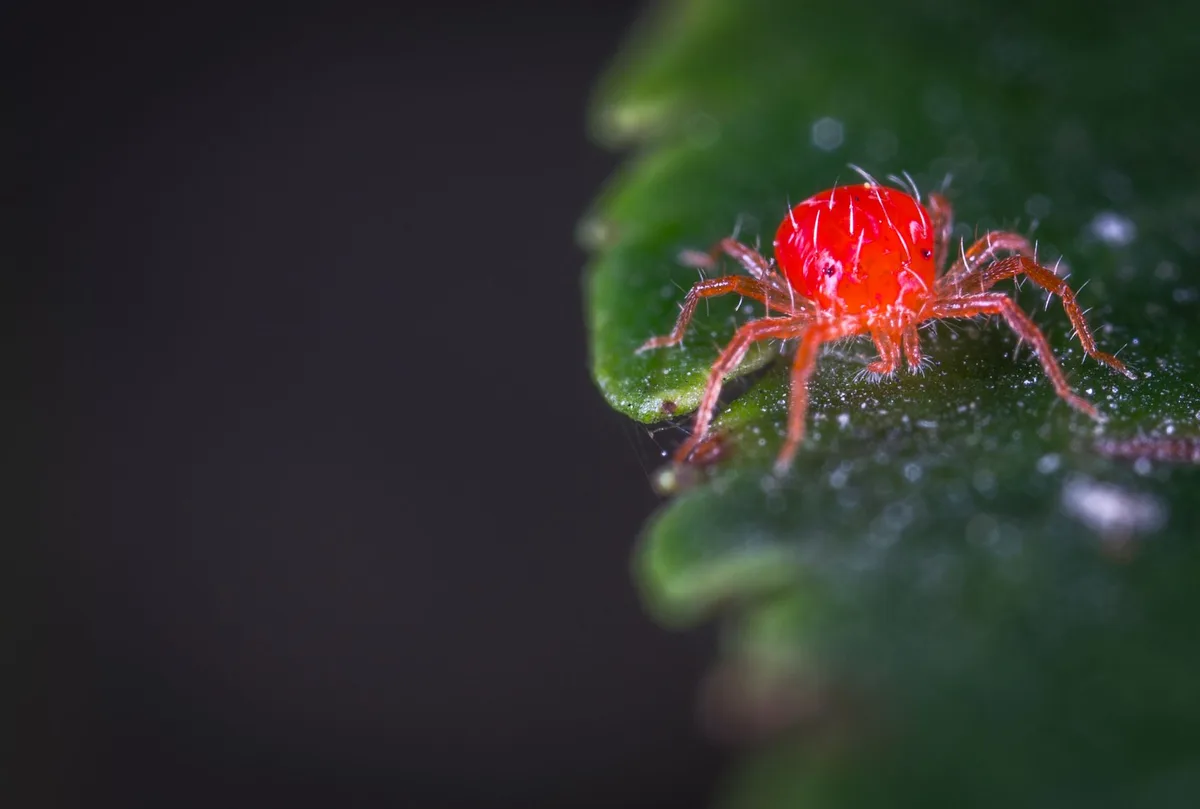
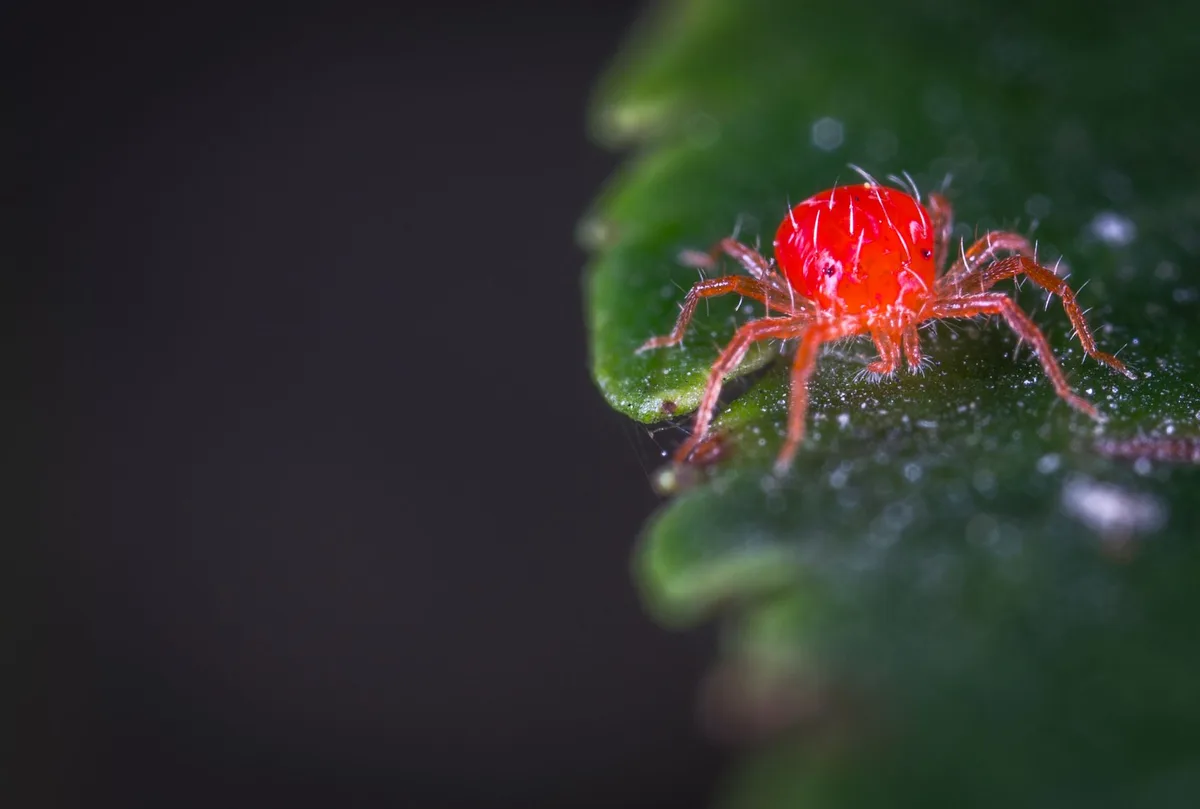
Spider mites are not insects. They are arachnids in the family Tetranychidae. The most common one you will encounter is the two-spotted spider mite.
They get their name from the two dark spots on their pale yellow or green bodies.
These mites are tiny. Adults measure about 0.4 millimeters. That is roughly the size of a period at the end of a sentence.
You will rarely see the mites themselves. You see the damage first.
The damage looks like stippling. Tiny pale yellow or white dots scattered across the leaf surface. As the infestation worsens, the dots merge into larger bronze or brown patches.
The leaf looks like it has been sandblasted. In severe cases, the entire leaf turns bronze and falls off.
The most obvious sign is webbing. Spider mites produce fine silk threads. They use it to protect themselves and their eggs from predators and weather.
You will see the webbing first on the undersides of leaves, especially where the leaf meets the stem. Later, the webbing spreads across the top surface and even connects leaves to each other.
If you see webbing on your plants, you have spider mites. Aphids do not produce any silk. That alone can confirm the diagnosis.
Spider mites reproduce very fast in hot weather. A female lays 50 to 100 eggs over a period of two to three weeks. The eggs hatch in three days at optimal temperatures.
The nymphs become adults in another week. That means a single mite can multiply into thousands in less than a month.
They love dry air. Low humidity helps them thrive. This is why spider mites are such a problem for indoor plants during winter when heating systems dry out the air.
Increasing humidity to above 60 percent slows them down significantly. It does not kill them, but it buys you time.
Treatment for spider mites requires contact. You need to hit every mite and every egg. That is why spraying is tricky.
The webbing creates a barrier that water and oils cannot penetrate. You have to break the webbing first or use a pressure sprayer to blast it off.
Most miticides work by suffocating or dehydrating the mites. Neem oil, horticultural oil, and insecticidal soap are common options. The key is multiple applications.
Because the eggs are resistant to many oils, you need to treat every three to five days for two weeks to catch each new generation as they hatch.
In our research, predatory mites are the most effective biological option. They hunt down spider mites and eat them. The two most common species are Phytoseiulus persimilis and Neoseiulus californicus.
You release them onto infested plants, and they do the work for you. They are especially effective in greenhouses.
Aphids: The Sticky, Ant-Farming Crowd
Aphids are true insects in the family Aphididae. They are soft-bodied and pear-shaped with long legs and distinctive antennae. The most common species include the green peach aphid and the melon aphid.
They come in green, black, white, yellow, and even pink depending on the species.
Aphids are much larger than spider mites. Adults range from 1 to 4 millimeters. You can see them easily with the naked eye.
They often cluster in groups on new growth, stems, and the undersides of leaves. They look like a crowd of tiny watermelons stuck to the plant.
Unlike spider mites, aphids do not produce webbing. Instead, they excrete a sugary liquid called honeydew. This is the waste product of their sap-feeding diet.
Honeydew drips onto leaves and stems below. It feels sticky to the touch.
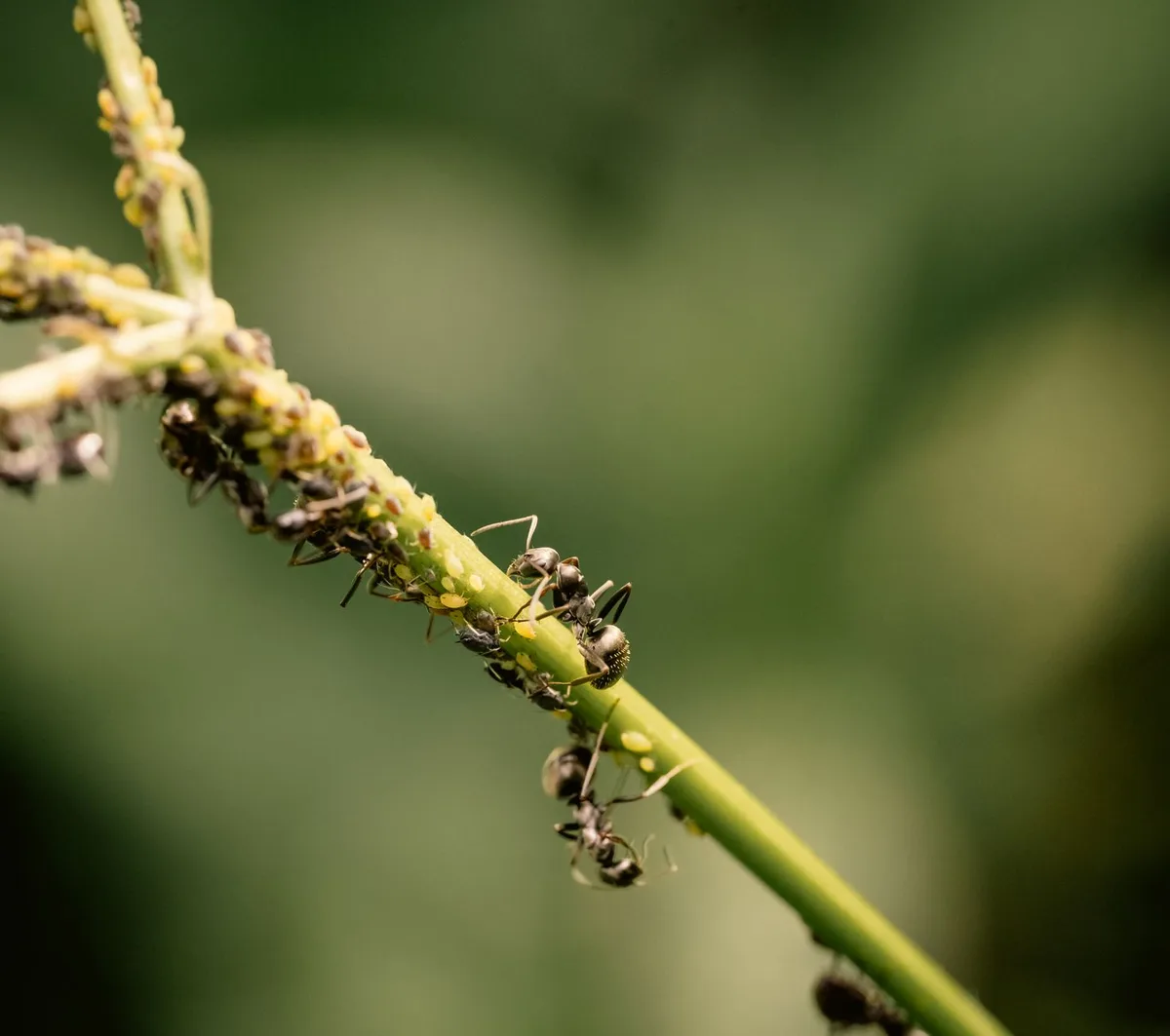
Honeydew causes a secondary problem. It attracts ants. Ants love honeydew.
They will protect aphid colonies from predators in exchange for the sweet reward. If you see ants walking up and down the stems of your plant, you almost certainly have aphids. The ants are farming them.
Honeydew also promotes the growth of sooty mold. This is a black fungus that grows on the sticky residue. It does not infect the plant directly, but it blocks sunlight from reaching the leaves.
Over time, that reduces photosynthesis and weakens the plant. Leaves covered in sooty mold look like they have a black soot coating.
The damage from aphids is different from mites. Aphids feed by sucking sap from the phloem. This causes leaves to curl, pucker, or become distorted.
New growth is especially vulnerable. You may see stunted or twisted shoots. In heavy infestations, leaves turn yellow and drop off.
Aphids can also transmit plant viruses. They act as vectors, picking up viruses from infected plants and spreading them to healthy ones. This is a bigger risk in outdoor gardens and greenhouses than in indoor houseplants.
But it still matters. Viruses have no cure. Once infected, the plant must be removed.
Reproduction is fast but not as explosive as mites. Female aphids give birth to live nymphs without mating. That process is called parthenogenesis.
Each female can produce 50 to 100 nymphs over several weeks. The nymphs mature in about seven to ten days. A single aphid can become hundreds in a month.
Treatment for aphids is simpler than for mites. They have no webbing to protect them. Sprays reach them easily.
A strong blast of water from a hose knocks most aphids off the plant. They cannot climb back up easily. Soap sprays, neem oil, and insecticidal soap all work well with thorough coverage.
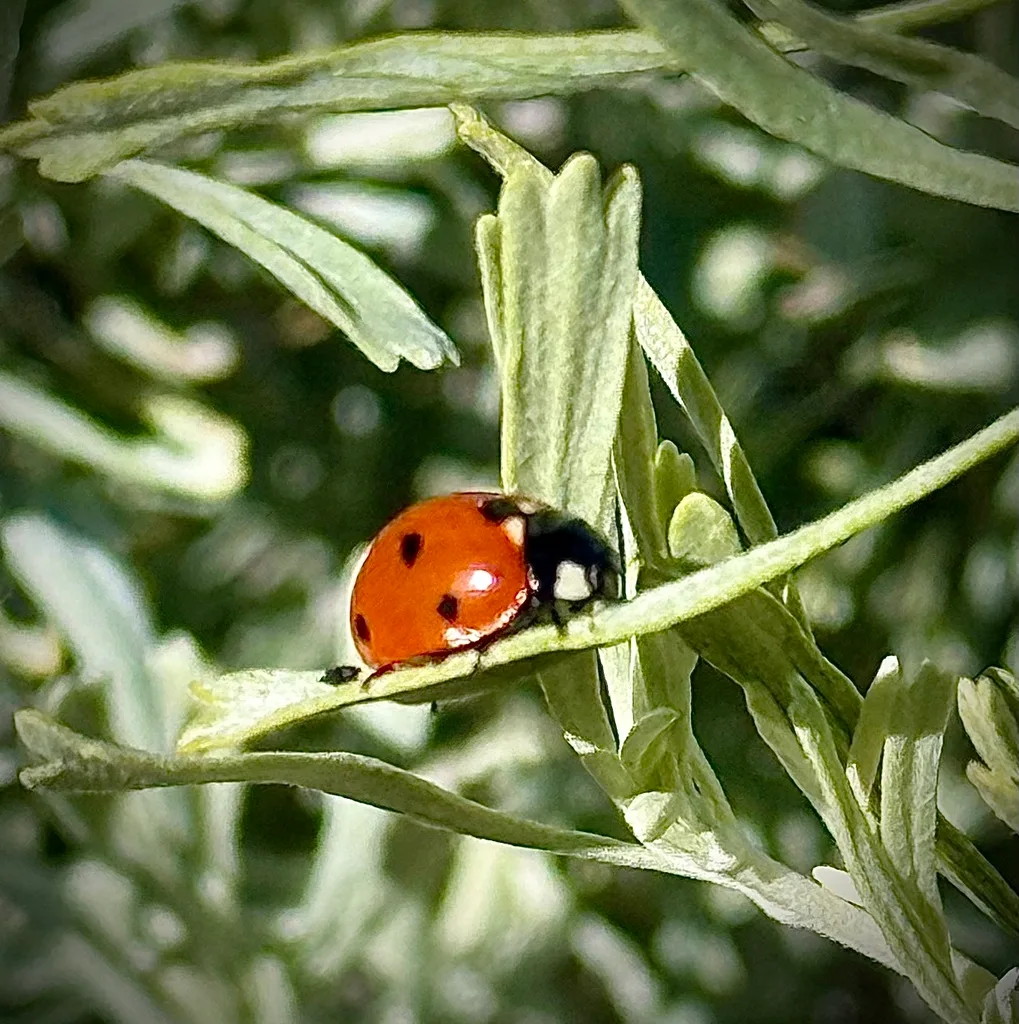
Beneficial insects are very effective against aphids. Ladybugs, lacewing larvae, and parasitic wasps all prey on them. A single ladybug can eat 50 aphids per day.
For indoor plants, releasing ladybugs can clear an infestation in a week. The key is to release them early and let them establish before the aphid population explodes.
Aphids also respond to systemic insecticides. These are absorbed by the plant and travel through the sap. When aphids feed, they ingest the poison and die.
This works well for large plants or trees where spraying is impractical. However, systemic products often harm pollinators and beneficial insects. Use them only as a last resort.
If you have fruit trees or vegetable plants, aphids can be a recurring problem. For healthy plant growth overall, using the right organic fertilizer for fruit trees helps strengthen natural resistance.
Side-by-Side: Spider Mites vs Aphids at a Glance
This comparison table summarizes the key differences at a glance. Use it as a quick reference when inspecting your plants.
| Feature | Spider Mites | Aphids |
|---|---|---|
| Body type | Oval, eight legs, arachnid | Pear-shaped, six legs, insect |
| Size | 0.4 mm (period-sized) | 1-4 mm (visible to naked eye) |
| Color | Yellow, green, red, brown | Green, black, white, pink |
| Webbing | Yes, fine silk threads | No |
| Honeydew | No | Yes, sticky residue |
| Ants present | Rarely | Often, ants farm them |
| Damage pattern | Stippling, bronzing, speckles | Curling, puckering, distortion |
| Preferred location | Underside of leaves, leaf axils | New growth, stems, leaf undersides |
| Reproduction time | 5-20 days per generation | 7-10 days per generation |
| Best treatment | Miticides, predatory mites, humidity increase | Water blast, soap sprays, ladybugs |
| Resistance risk | High, especially to miticides | Moderate |
| Sooty mold | No | Yes, from honeydew |
As of 2026, the most reliable identification method remains the white paper tap test. It works for both pests and requires no special equipment. The table above gives you the secondary clues that confirm your finding.
One more distinction worth noting. Spider mites are more likely to attack plants that are already stressed from underwatering or heat. Aphids attack healthy, vigorous growth with soft new tissue.
That means your watering habits and plant health status give you hints too. If you have been slacking on watering and it is 90°F outside, mites are more likely. If your plant is lush and actively putting out new leaves, watch for aphids.
For indoor gardeners, consider the environment. Dry indoor air in winter favors mites. Humid greenhouses with lots of new growth favor aphids.
Knowing the typical conditions helps you stay ahead of the problem.
If you are growing seedlings under lights, mites are a common issue because the warm, dry air around grow lamps creates ideal conditions. Our guide on the best grow light for seedlings covers setup tips that help reduce pest pressure.
Both pests have weak spots. Spider mites hate high humidity. Aphids hate being washed off.
Exploit those weaknesses and you will win the fight faster.
How to Tell Them Apart: Visual Cues, Damage Patterns, and the Tap Test
The white paper tap test is the quickest method. We covered that already. But there are other clues that confirm your finding while you are still inspecting the plant.
Look at the damage pattern first. Spider mites cause tiny pale dots. Aphids cause curling and distortion.
The difference comes down to how they feed. Mites puncture individual cells and suck the contents out. That leaves a speckled or stippled look.
Aphids tap into the phloem, the plant’s nutrient transport system. That disrupts growth and causes leaves to cup, twist, or pucker.
Check the new growth. Aphids love tender, young leaves. If the newest leaves at the tip of the plant are curled and small, that is aphid behavior.
Spider mites start on older, lower leaves. They move up as the population grows.
Feel the leaves. If they feel sticky to the touch, that is honeydew from aphids. Mite-damaged leaves feel dry and papery.
If the leaves have a fine layer of dust or debris on top, that may be mite webbing catching particles.
Look for ants. Ants on the stems or leaves almost always mean aphids. Ants do not protect mite colonies.
If you see them, skip the mite treatment entirely.
Check the underside of leaves. Mites hide there. Aphids are more visible on stems and new growth.
Flip a few leaves and look with a bright light or a small magnifying glass. A 10x jeweler’s loupe costs very little and makes identification much easier.
The damage timeline also tells a story. Mite damage spreads fast in hot, dry weather. You may see a whole leaf turn bronze in three days.
Aphid damage builds more slowly. The leaves curl and yellow over a week or two.
If you have both pests at the same time, treat the mites first. They reproduce faster and cause more damage quickly. Aphids can wait a few extra days.
For flowering plants like those in shade hanging baskets, early detection is key because webbing ruins the flowers faster than aphids do.
Best Treatments for Each Pest (and Why the Wrong One Fails)
Mites and aphids do not die from the same sprays. That is the hard truth. Insecticides that target insect nervous systems, like pyrethrins or imidacloprid, have little effect on mites.
Mites are arachnids. Their nervous systems are different. You may kill the aphids but leave the mites unharmed.
Then the mites explode because predators are gone too.
Miticides like bifenazate or abamectin work on mites but are unnecessary for aphids. Using them for aphids wastes money and risks resistance. Soap and oil are the safe overlap.
They work on both pests by smothering them. They are the only broad treatments that actually cover both.
For spider mites specifically, the best home treatment is a strong spray of water. Use a nozzle that creates a sharp jet. Hit the undersides of every leaf.
This dislodges mites and breaks their webbing. Follow up with neem oil or horticultural oil applied every three to five days for two weeks. The water alone buys time.
For aphids, water blasts alone often work. You can knock off 90 percent of a colony in one session. Then use insecticidal soap on any remaining clusters.
Repeat every five to seven days. Aphids are easier to clear because they do not have webbing to shield them.
Why does the wrong treatment fail? Because it never reaches the pest. Mite webbing repels water and oil.
If you spray without breaking the webbing first, the droplets bead up and roll off. Aphids are exposed on the surface, so almost any spray works. That is why treatments that work for aphids may seem to do nothing on mites.
Systemic products are tricky. Imidacloprid works well on aphids but can actually make mite infestations worse. Research from the USDA indicates that low doses of imidacloprid stimulate mite reproduction.
That is a dangerous mistake. Always confirm the pest before using a systemic.
For indoor plants, the best approach is physical removal. Wipe leaves with a damp cloth. For a large collection, consider a thorough washing in the shower.
This removes both pests without chemicals. Then inspect weekly.
Common Mistakes People Make (and How to Avoid Them)
The biggest mistake is treating without identifying. You spray something from the garden center and hope it works. When it does not, you assume the pest is resistant.
In most cases, you just used the wrong product.
Another common error is stopping treatment too early. Mite eggs survive the first spray. They hatch three to five days later.
If you stop after one treatment, the next generation emerges and the infestation returns. For mites, you need three or four treatments spaced three to five days apart. For aphids, two to three treatments spaced a week apart usually works.
Overwatering is a related issue. Many people see leaf curling and assume the plant is thirsty. They water more.
That stresses the plant further and makes it more attractive to pests. Always check for insects before adjusting water.
Using too much oil or soap can burn the leaves. High temperatures and direct sunlight make this worse. Apply any spray in the early morning or evening.
Avoid the hot midday sun. Test on a small area first.
Forgetting to quarantine new plants is another classic mistake. A single infested plant from a nursery can start an outbreak. Keep new plants separate for two weeks.
Inspect them thoroughly before placing them near your collection.
Using beneficial insects at the wrong time also fails. Ladybugs released during the day fly away. Release them at dusk near water.
Predatory mites need moderate humidity. Releasing them in dry conditions kills them fast. Check the conditions before releasing.
Should You Use Beneficial Insects or Sprays?
It depends on your situation. Beneficial insects work best for prevention and low-level infestations. Sprays work faster for heavy outbreaks.
For spider mites indoors, predatory mites are excellent. They hunt actively and reproduce alongside the pest. You release them once, and they maintain control for weeks.
They do not fly away or escape. They die only when the food runs out. This makes them ideal for indoor gardens and greenhouses.
For aphids, ladybugs are the classic choice. A single adult ladybug eats 50 aphids a day. The larvae eat even more.
Release them at dusk near an aphid colony. They will settle in and feed for days. If you provide a shallow water dish, they stay longer.
Lacewing larvae are another option. They are more aggressive than ladybugs. They eat aphids, mites, thrips, and other small pests.
They are called aphid lions for a reason. You can buy them as eggs that hatch on arrival.
Sprays are faster. If you have a severe infestation covering the whole plant, beneficial insects cannot catch up fast enough. Use a soap or oil spray first to knock down the population.
Then introduce beneficials to handle the stragglers.
Avoid combining systemic pesticides with beneficial insects. The chemicals poison the predators too. If you plan to use biological control, skip any residual sprays for at least two weeks.
When to Call It Quits: Replacing vs. Treating a Lost Plant
Not every plant is worth saving. If more than half the leaves are damaged or the infestation has spread to the stems and growing tips, replacement may be the better option. Treatment takes weeks of effort.
Sometimes it is faster to start fresh.
For spider mites, if the webbing covers the entire plant and leaves are falling off, the plant is severely stressed. It may not recover even if you kill all the mites. The damage is done.
Throw it out before mites spread to your other plants.
For aphids, the decision is easier. Aphids rarely kill a mature plant outright. Even a heavy infestation can be cleared with water and soap.
Only discard the plant if it is a small seedling or cutting that cannot handle the stress.
Quarantine the plant first if you are unsure. Move it away from your other plants. Treat it for one week.
If new growth looks healthy by day seven, keep going. If the plant continues to decline, remove it.
Dispose of infested plants in a sealed bag. Do not compost them. The pests survive in compost and reinfest your garden later.
Seal the bag and throw it in the trash.
In outdoor beds, severe soil infestations may require a break from that plant family. Rotate crops. Avoid planting the same species in that spot for at least a season.
This breaks the pest life cycle in the soil.
Frequently Asked Questions About Spider Mites and Aphids
Can spider mites and aphids infest the same plant?
Yes, they can. It is uncommon but possible. If you see both webbing and honeydew on the same plant, treat the mites first.
They cause damage faster.
How do I prevent these pests from coming back?
Inspect plants weekly. Quarantine new plants for two weeks. Keep humidity above 50 percent for mite prevention.
Wash foliage regularly. Healthy plants resist pests better.
Are neem oil and insecticidal soap safe for all plants?
No. Test on a small leaf first. Some plants, like ferns and succulents, are sensitive to oils.
Apply in the evening to avoid leaf burn. Always follow the label instructions.
How long does it take to get rid of a spider mite infestation?
About two to three weeks of consistent treatment. Treat every three to five days. Stop only when you see no new damage on fresh growth.
Can I use the same spray for outdoor and indoor plants?
Yes, but check the label. Some products are not labeled for edible crops. Others are too strong for indoor use.
Read the label before spraying anything you plan to eat.
The Bottom Line: Your Quick Decision Guide
You see damage. You do the white paper tap test. If tiny specks crawl and you see webbing, use miticides or predatory mites.
If you find larger insects, sticky honeydew, or ants, use soap sprays or ladybugs.
Treat mites every three to five days. Treat aphids every five to seven days. Never stop after one spray.
Never use a systemic miticide on aphids. Never use a broad-spectrum insecticide on mites.
The right identification saves you time, money, and your plants. Stick with the process. Check your plants weekly.
Catching the problem early is always easier than fixing a full infestation.