How to Get Rid of Aphids Naturally (2026) — Quick Guide
You spot them first on the new growth. Tiny green insects clustered on your roses, your tomatoes, your pepper plants. Figuring out how to get rid of aphids naturally can feel overwhelming, but the answer starts with a quick assessment of what you are actually dealing with.
Female aphids produce live young without mating. In warm weather, a single aphid can generate over 50 offspring in a week. That is why a few bugs on Tuesday become a full-blown infestation by Saturday.
The good news is that natural methods work when you choose the right one for your situation. Let us start with what you are up against.
Quick Answer
The best natural aphid control depends on infestation severity. For light cases, blast them off with a strong hose spray. For moderate cases, use insecticidal soap sprayed directly on colonies.
For heavy infestations with ants present, treat the ants first then apply neem oil weekly. Always spray leaf undersides and repeat every 4 to 7 days until clear.
The Real Problem: Aphids Aren’t Just “Little Green Bugs”
Aphids are sap-sucking insects from the family Aphididae. They pierce plant tissue and drain nutrients from new shoots, leaves, and stems. The damage shows up as curled, yellowed, or stunted growth.
But that is only half the story.
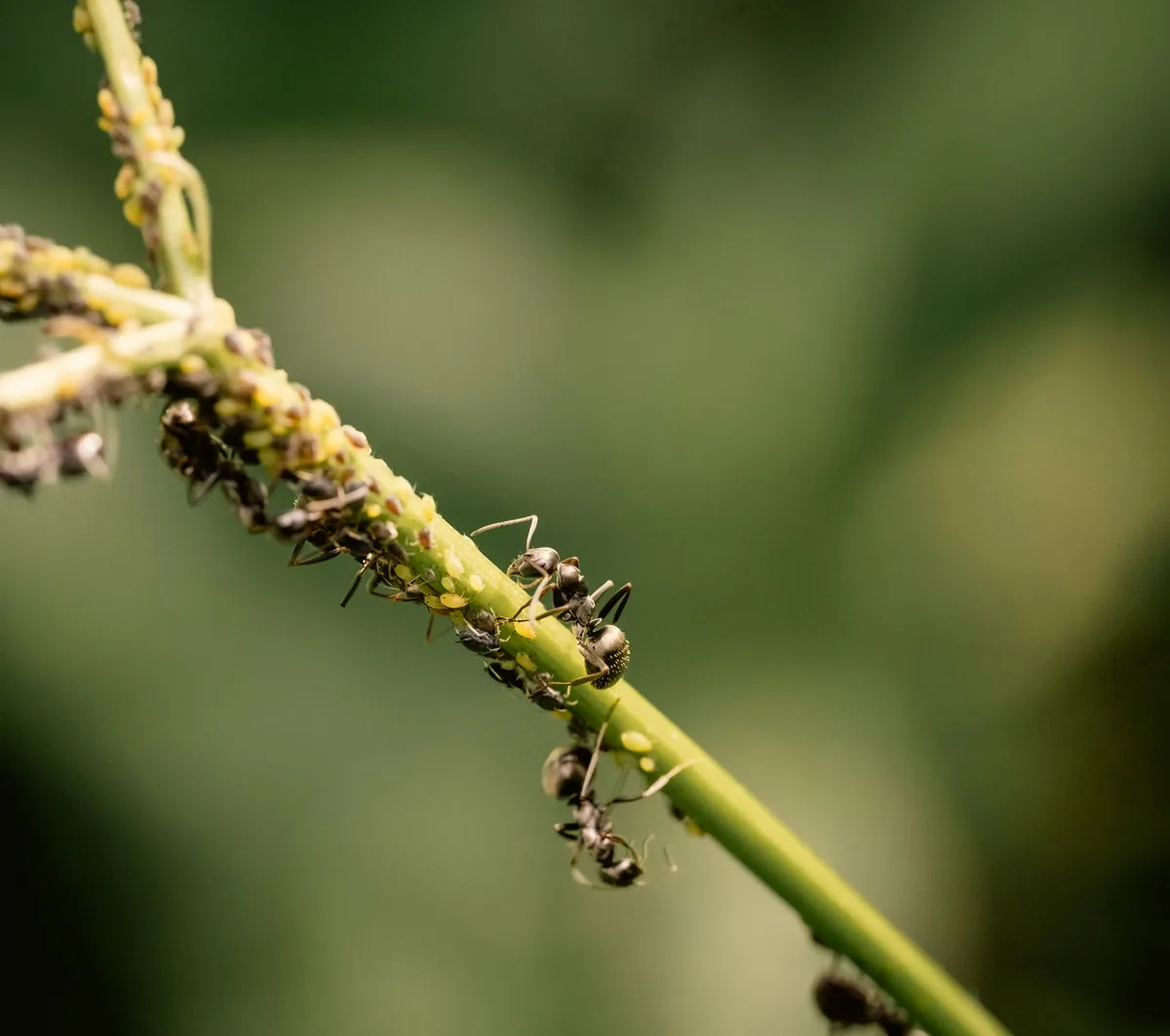
These pests excrete a sticky substance called honeydew. Honeydew attracts ants, which then protect the aphids from predators. It also feeds a black fungus called sooty mold that blocks sunlight from reaching leaves.
As of 2026, extension services across the US report that sooty mold from aphid honeydew is one of the top three secondary problems in home vegetable gardens.
You also have to factor in reproduction speed. University research confirms that aphids in warm conditions can complete a generation in as little as seven days. That means a delay of one week in treatment can turn a manageable spot into a garden-wide issue.
The key is catching them early and choosing a method that matches the stage you are dealing with.
Quick Decision Guide – What to Do Based on Your Situation
You need to answer three questions before picking a method. How many aphids do you see? Are ants present?
Do you already spot ladybug larvae or lacewing eggs? Here is how the answers guide your next move.
Light Infestation (a few aphids, no ants)
If you count fewer than twenty aphids on a single plant and see no ants, you can handle this in under five minutes. Take a garden hose with a spray nozzle set to a medium-to-high jet. Aim at the aphids from above and below the leaves.
Knock them off onto the ground. Most will not climb back up.
Follow up by pinching any remaining aphids between your fingers. Check the plant again the next day. If you see no new clusters, you are done.
Moderate Infestation (visible colonies, ants present)
This is the most common scenario. You find clusters on stem tips and leaf undersides, and you notice ants moving up and down the plant. The ants are farming the aphids for honeydew and will defend them.
Start with ant control. Place sticky barriers around the plant stem or use ant baits near the base. Once ant traffic stops, apply insecticidal soap or neem oil directly to aphid colonies.
Repeat the spray every five days until you see no new aphids. In our research, the most effective routine is spray, wait five days, check, then spray again if needed.
Heavy Infestation (leaves curling, sooty mold, all over)
When leaves curl, stems look stunted, and a black coating appears on foliage, you have a serious outbreak. Do not reach for a single spray. You need a multi-step plan.
First, prune the most heavily infested tips and dispose of them in sealed trash bags. Do not compost these because eggs can survive. Second, apply a neem oil spray to every leaf surface including the undersides.
Third, release beneficial insects like ladybug larvae or green lacewing eggs. Fourth, reapply neem oil on day seven. This layered approach stops the current generation and prevents the next one.
You Already See Beneficial Insects (ladybug larvae, lacewings)
If you spot ladybug larvae, lacewing eggs, or syrphid fly maggots on your plants, do not spray anything. These predators are already working for you. A single ladybug larva eats 200 to 300 aphids before it becomes an adult.
Spraying would kill the good bugs along with the bad ones.
Instead, encourage the predators by providing nectar-rich flowering plants nearby. Dill, parsley, and calendula are excellent choices. You can also add some of the best flowers for flower beds to your garden layout to create a continuous bloom that supports beneficial insects all season.
Why Ants Change Everything – Treat the Ants First
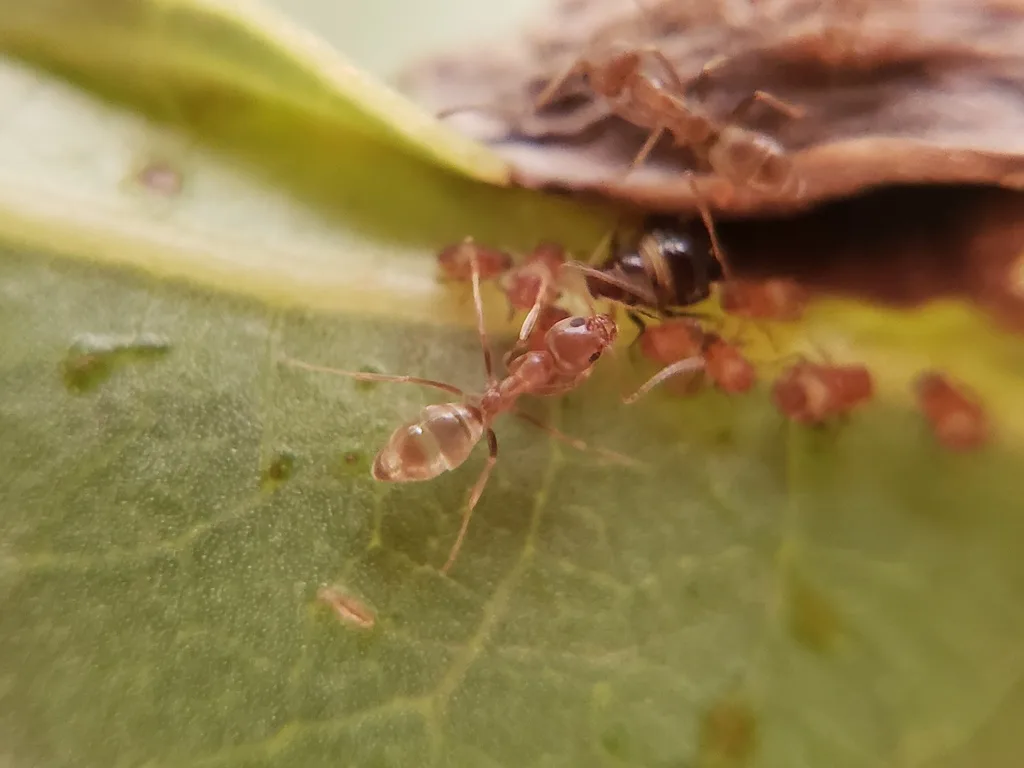
Ants and aphids have a symbiotic relationship that frustrates many gardeners. The ants drink the honeydew that aphids excrete. In return, the ants chase away predators and even carry aphids to fresh plant growth.
If you spray aphids without addressing the ants, the ants will bring new aphids back within days.
There are two reliable ways to break this cycle. The first is a physical barrier. Wrap a strip of sticky tape around the plant stem or apply a band of petroleum jelly mixed with a little salt.
Ants cannot cross it. The second is baiting. Place ant baits near the base of the plant.
The ants carry the bait back to the colony, which eliminates the workers that have been farming the aphids.
Do not use contact sprays on ants near your vegetable plants. Many sprays kill ants on contact but do not reach the colony. The survivors will rebuild within a week.
Baits or barriers are the smarter move here.
If you are dealing with a persistent ant problem around your garden, our guide on the best insecticide for carpenter ants covers the bait strategies and perimeter treatments that work for larger infestations. The same principles apply even if you are not dealing with carpenter ants.
Spray Methods That Actually Work (and When to Use Each)
Natural sprays fall into three main categories: water blast, soap, and oil. Each one works differently and suits a different situation. Here is what you need to know about each.
Strong Water Blast: When It Is Enough and When It Is Not
A forceful jet of water is the simplest method. It costs nothing and leaves no residue. It works best on young, soft-bodied aphids on sturdy plants like tomatoes, peppers, and roses.
You need a nozzle that delivers a concentrated stream.
The limitation is that water does not kill aphids. It knocks them off the plant. Most fall to the ground and cannot climb back.
But some land on nearby plants or return later. Water blasting works as a quick knockdown but rarely clears an entire infestation on its own. Use it as a first step before a soap or oil treatment.
Insecticidal Soap: The Go-To for Edibles
Insecticidal soap is the most trusted natural aphid killer among home gardeners. It works by dissolving the waxy outer layer of the aphid’s exoskeleton, causing dehydration. The effect is almost immediate.
You can buy commercial insecticidal soap or make your own. For a homemade version, mix two to three tablespoons of mild liquid soap (castile soap is ideal) with one gallon of water. Do not use dish soap that contains degreasers or antibacterial additives.
Those can damage plant leaves.
Spray directly onto the aphids until the solution drips off. Coverage matters more than concentration. Missed aphids survive and reproduce.
Test the spray on a small leaf section first, especially on sensitive plants like ferns or succulents. Wait 24 hours and check for leaf damage before spraying the whole plant.
Neem Oil: Best for Prevention and Heavy Cases
Neem oil comes from the seeds of the neem tree. It contains a compound called azadirachtin that disrupts aphid feeding and prevents them from molting into the next life stage. It does not kill on contact the way soap does.
Instead, it works over several days.
Neem oil is the right choice when you have a heavy infestation or want ongoing protection. It also suppresses fungal diseases like powdery mildew, which is a common side benefit. Mix one to two tablespoons of neem oil with one gallon of water and a few drops of mild soap as an emulsifier.
Shake well and spray every leaf surface.
Apply neem in the evening. Oil sprays can cause leaf burn if applied in direct sun or when temperatures exceed 85 degrees Fahrenheit.
Horticultural Oil vs. Neem Oil – Quick Comparison
| Factor | Insecticidal Soap | Neem Oil | Horticultural Oil |
|---|---|---|---|
| Kills on contact | Yes | No (works over days) | Yes |
| Residual protection | None | 5 to 7 days | 7 to 10 days |
| Safe for edibles | Yes (wash before eating) | Yes (7 day pre-harvest interval) | Yes (varies by product) |
| Best use | Moderate active infestations | Heavy or recurring infestations | Dormant season and early spring |
| Phytotoxicity risk | Low on most plants | Moderate in hot weather | Moderate on new growth |
The Step-by-Step Process: How to Spray Right (So It Works)
Spraying seems simple, but most failures come from rushing or missing steps. Here is the sequence that produces results.
Step 1: Identify the infested plants. Walk your garden every two to three days. Look at the undersides of new leaves and around stem tips. Aphids prefer tender growth.
Step 2: Assess severity and presence of ants. Use the decision guide above. If ants are present, set up a barrier or bait before spraying.
Step 3: Choose your spray. Water blast for light cases. Soap for active colonies on edibles. Neem for heavy cases or ongoing prevention.
Step 4: Mix your spray correctly. Follow the dilution ratios in the section above. Too strong burns the plant. Too weak does not kill the aphids.
Step 5: Spray at the right time of day. Early morning or late evening is best. Avoid temperatures above 85 degrees Fahrenheit. Avoid windy days that blow the spray away from the target.
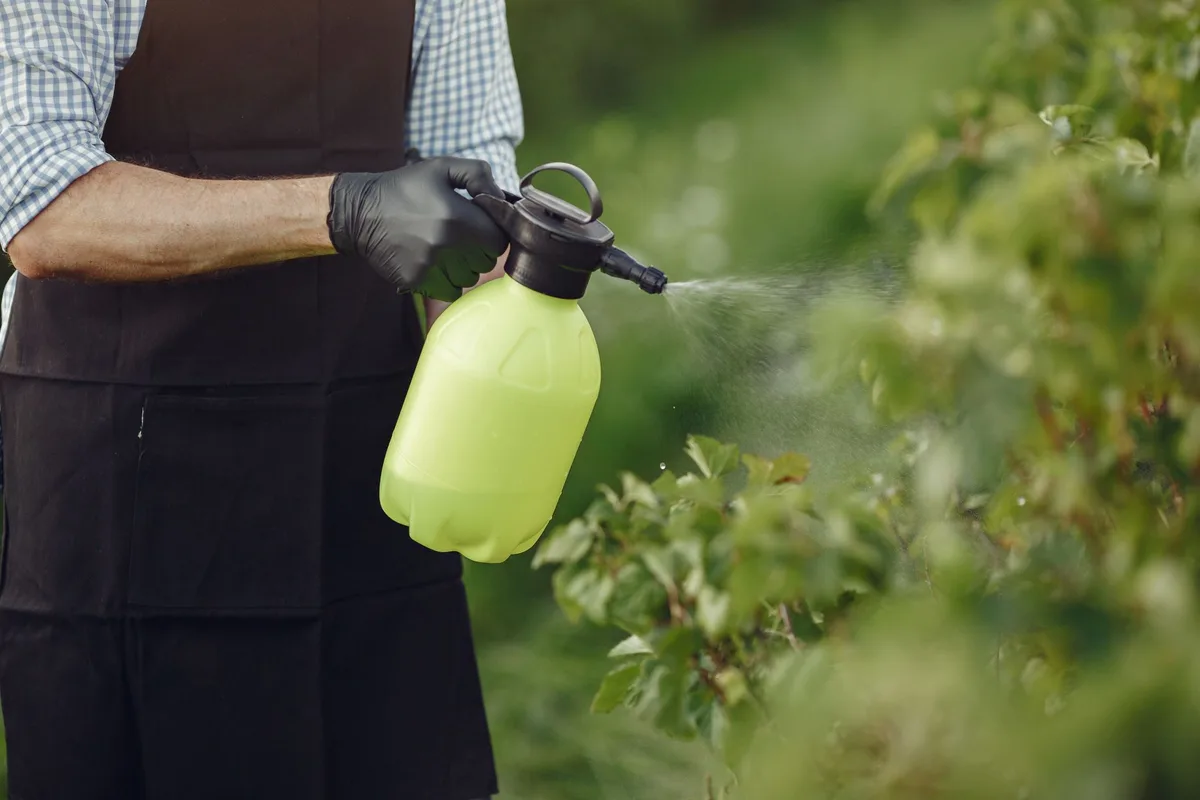
Step 6: Cover every surface. Hold the sprayer six to eight inches from the leaf. Spray the tops and bottoms of every leaf. Spray the stems.
Spray until the solution runs off.
Step 7: Check for missed spots. After spraying, turn over a few leaves and look for live aphids. If you see any, respray those areas.
Step 8: Repeat on schedule. Spray every five to seven days until you see no new aphids for two consecutive checks. Do not stop after one treatment.
Step 9: Support plant recovery. Aphid damage stresses plants. Water consistently and apply a balanced fertilizer to help new growth. Our guide on the best plant fertilizer for indoor plants covers the ratios that work for recovering foliage, and the same principles apply to outdoor plants under stress.
Beneficial Insect Release – When and How (Without Wasting Money)
Releasing beneficial insects sounds like a perfect solution. In theory, you open a bag of ladybugs and they eat every aphid in your garden. In practice, most released ladybugs fly away within hours if conditions are not right.
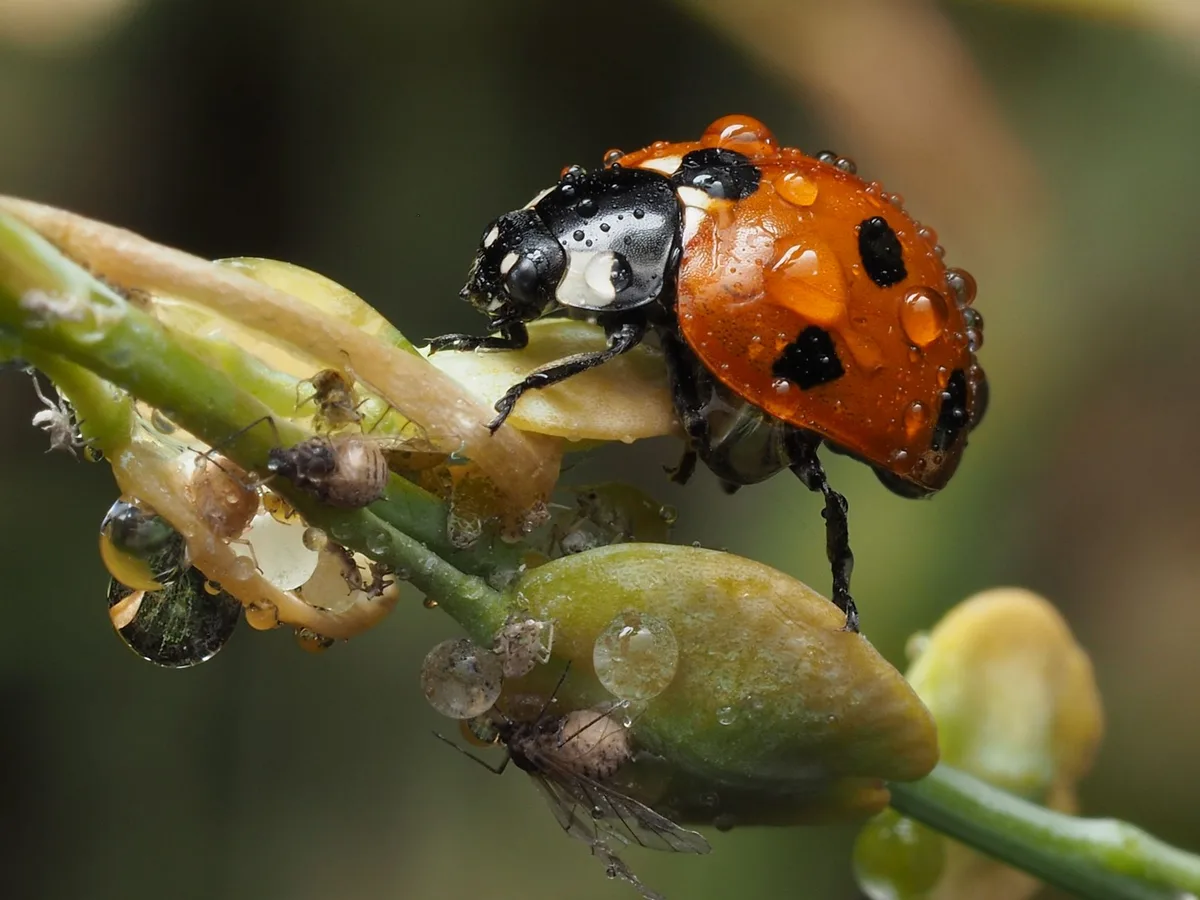
When release makes sense. Release beneficials during an active aphid outbreak when natural predator populations are low. The best time is early spring before aphid numbers explode. Release in the evening so the insects have time to settle overnight.
Which insects to choose. Ladybug adults provide quick results but often leave. Ladybug larvae stay and eat more but take longer to arrive. Green lacewing larvae are voracious and eat up to 300 aphids per week.
Parasitic wasps (Aphidius species) are tiny and harmless to humans but very effective at reducing aphid populations over time.
How to avoid wasting money. Follow these rules. Release at dusk. Mist the plants with water first so the insects drink.
Release near the aphid colonies, not in an open area. Provide flowering plants nearby so the adults have nectar to feed on. Nesting plants like dill and fennel attract native beneficials for free.
When not to release. Do not release beneficial insects if you plan to spray any pesticide including soap or neem within the next week. The spray will kill the insects you just paid for. Do not release during heavy rain or extreme heat.
Do not release if ant populations are high; the ants will attack and kill the predators.
If your garden has low natural predator numbers, consider planting more flowering species. The best plants for a bedroom can double as beneficial insect attractants if moved outside during warm months, but for outdoor beds, focus on plants with small open flowers like alyssum, dill, and fennel that provide accessible nectar.
Physical Removal and Pruning – Simple but Often Overlooked
Before you reach for any spray, look at what you can remove by hand or with pruners. Physical removal is the safest method for the plant, the soil, and the environment.
For small infestations, wipe aphids off with your fingers or a damp paper towel. Drop them into a bucket of soapy water to kill them. This takes thirty seconds per plant and costs nothing.
For larger clusters, prune off the affected stem tips. Aphids concentrate on new growth because it is tender and nutrient-rich. Cut the tip back to the first healthy leaf node.
Dispose of the pruned material in a sealed bag. Do not put it in your compost pile because aphid eggs can survive and hatch later.
Pruning also improves airflow around the plant. Good airflow reduces humidity, which discourages aphid reproduction and fungal diseases. Combine pruning with a water blast to clear any remaining aphids.
One caution: do not prune more than twenty percent of the plant at once. Heavy pruning stresses the plant and makes it more vulnerable to pests and disease.
7 Mistakes That Will Keep Your Aphid Problem Coming Back
Even experienced gardeners make these errors. Avoid them and your natural control efforts will work the first time.
Mistake 1: Only spraying the tops of leaves. Aphids live on the undersides. Spraying only the top is like washing only one side of a dirty dish. Flip the leaves and aim the spray upward.
Mistake 2: Waiting too long between treatments. A seven-day gap between sprays gives aphids time to reproduce and start a new generation. Stick to a five-day schedule until the infestation clears.
Mistake 3: Ignoring ants. If you treat aphids but not the ants protecting them, the ants will bring in more aphids. Always check for ant activity before you spray.
Mistake 4: Using dish soap from the kitchen. Many dish soaps contain degreasers, fragrances, and antibacterial agents that burn plant leaves. Use pure castile soap or a commercial insecticidal soap.
Mistake 5: Spraying in the middle of the day. Midday sun combined with oil or soap sprays causes leaf burn. Spray in the early morning or evening when the sun is low.
Mistake 6: Assuming one spray is enough. One spray kills the aphids that are on the plant right now. It does not kill eggs or aphids that arrive the next day. You need at least two to three applications spaced five to seven days apart.
Mistake 7: Over-fertilizing with nitrogen. Nitrogen-heavy fertilizer produces soft, lush new growth that aphids love. Switch to a balanced or slow-release fertilizer that promotes steady growth. Our design for the best slow release fertilizer for flowers shows how to feed plants without creating a feeding frenzy for pests.
Companion Plants and Trap Crops – Smart Prevention for Next Season
If aphids return every year, change your garden layout. Companion planting and trap crops reduce aphid pressure without any spraying.
Repellent plants. Garlic, chives, mint, and catnip emit strong scents that repel aphids. Plant them near susceptible crops like roses, tomatoes, and peppers. Mint spreads aggressively, so keep it in a container.
Trap crops. Nasturtiums are the most effective trap crop for aphids. Aphids prefer nasturtiums over almost any other plant. Plant nasturtiums ten to fifteen feet away from your main garden.
When the nasturtiums get covered in aphids, pull them up and dispose of them. This pulls aphids away from your vegetables.
Beneficial insect attractants. Dill, fennel, calendula, alyssum, and yarrow attract ladybugs, lacewings, and hoverflies. Plant these near your vegetable beds. The flowers provide nectar and pollen that adult beneficial insects need to survive and lay eggs.
For a garden focused on attracting hummingbirds and other pollinators, the best plant for hummingbirds also supports the wasp and fly species that prey on aphids. A diverse planting strategy creates a self-regulating ecosystem.
Real-World Scenarios: What Works in a Home Garden vs. Pots vs. Greenhouse
The same method does not work equally well in every setting. Here is how to adapt your approach.
Home garden (in-ground beds). Water blasts and soap sprays work well because you have space to swing a hose. Ant control is important because ants travel easily through soil. Release beneficial insects early in the season before aphids peak.
Container plants and pots. Pots are easier to manage because you can isolate the plant. For a potted plant with aphids, move it away from other plants. Spray with soap or neem.
Check daily because confined roots limit the plant’s ability to recover from stress. Consider using a self-watering pot to reduce plant stress, which makes it less attractive to aphids.
Greenhouse. Greenhouses create ideal conditions for aphids: warm, humid, and protected from rain. Beneficial insects work extremely well in greenhouses because they cannot fly away. Release parasitic wasps or lacewing larvae at the first sign of aphids.
Use yellow sticky traps to monitor population levels. Spray only as a last resort because sprays can linger in the enclosed space and damage sensitive crops.
Indoor houseplants. Indoor aphid outbreaks usually come from new plants brought home or from soil that contained eggs. Isolate the affected plant immediately. Wipe leaves with a cloth dipped in soapy water.
Do not use strong sprays indoors because the fumes can be irritating. Repeat the wipe-down every three days for two weeks.
If you grow seedlings indoors under lights, aphids can attack the tender young leaves. Using the best grow light for seedlings helps produce strong, compact plants that withstand aphid damage better than leggy, weak ones.
Expert Tips: Timing, Coverage, and Follow-Up
Three factors separate effective control from repeated frustration. Timing, coverage, and follow-up.
Timing. Spray in the evening so the solution dries slowly and penetrates better. Treat at the first sign of aphids, not after leaves start curling. Early treatment needs one or two sprays.
Late treatment needs four or five.
Coverage. Spray every leaf surface, especially the undersides. Use a sprayer with an adjustable nozzle that can reach upward into the plant. For tall plants, tip the stems sideways to access the hidden colonies.
Follow-up. Check your plants every three days after treatment. Look for new aphids on fresh growth. If you find any, spray again immediately.
Keep a garden log of when you sprayed and what you used. This helps you track what works for your specific plants and climate.
Seasonal strategy. In fall, aphids lay eggs that overwinter on plants and in debris. Clean up garden beds after harvest. Remove dead plant material.
Apply dormant oil to fruit trees and shrubs in late winter before buds break. This kills overwintering eggs before spring.
Your Action Decision Tree – One-Page Cheat Sheet
Here is the decision tree in a quick reference format. Copy this and keep it with your garden supplies.
| Your Situation | First Action | Second Action | Follow-Up |
|---|---|---|---|
| Few aphids, no ants | Hose blast | Hand remove survivors | Check in 48 hours |
| Moderate aphids, no ants | Insecticidal soap spray | None needed | Repeat in 5 days |
| Moderate aphids, ants present | Ant bait or barrier | Soap spray after ants stop | Reapply soap on day 5 |
Heavy aphids, curling leaves, sooty mold
| Prune infested tips | Neem oil spray | Release beneficial insects |
| Heavy aphids with ants | Ant bait + barrier on stem | Neem oil spray | Repeat neem on day 7 |
Ladybug larvae or lacewing eggs seen
| Do not spray | Provide nectar plants | Monitor weekly |
Frequently Asked Questions
Are aphids harmful to humans?
No. Aphids do not bite, sting, or transmit diseases to people. They are strictly plant pests.
If you accidentally eat an aphid on a leaf, it will not hurt you.
Can I use dish soap to kill aphids?
Only if it is a pure soap like castile soap without degreasers, fragrance, or antibacterial additives. Standard dish soap from the grocery store often damages plant leaves.
How often should I spray neem oil for aphids?
Apply neem oil every five to seven days during an active infestation. For prevention, apply every two weeks. Stop spraying when you see no new aphids for two consecutive checks.
Will ladybugs completely get rid of aphids?
Ladybugs reduce aphid populations but rarely eliminate them entirely. They work best as part of a combined strategy that includes pruning, water blasts, and spray treatments when needed.
Do aphids live in soil?
Some aphid species lay eggs in soil or on plant debris near the base. Most aphids live on the above-ground parts of plants. Cleaning up garden debris in fall reduces overwintering eggs.
What plants repel aphids naturally?
Garlic, chives, mint, catnip, and onion are the most effective repellent plants. Plant them around susceptible crops like roses and tomatoes for the best protection.